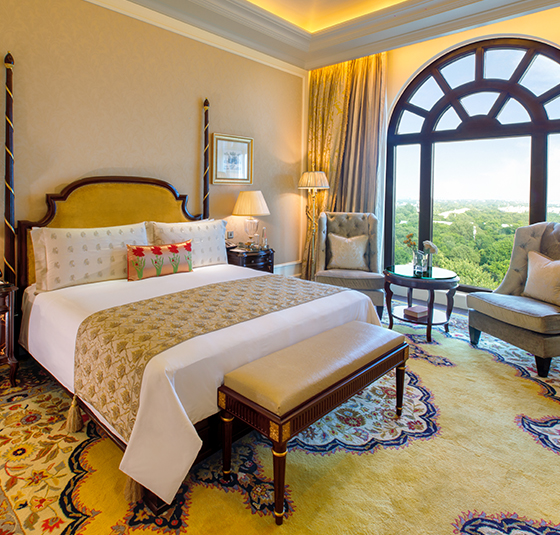
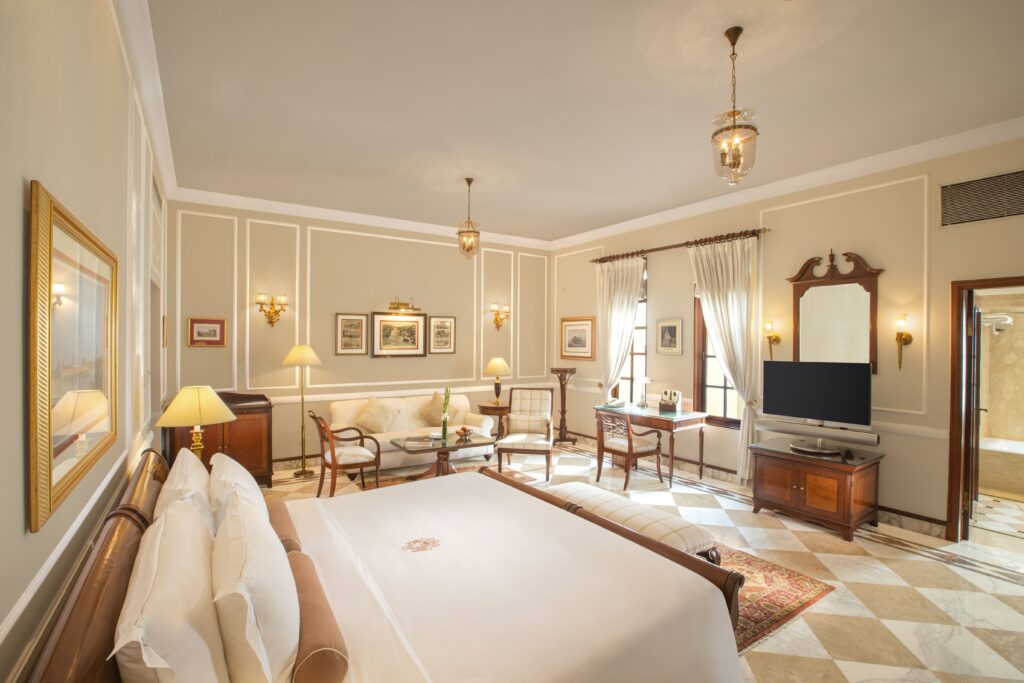
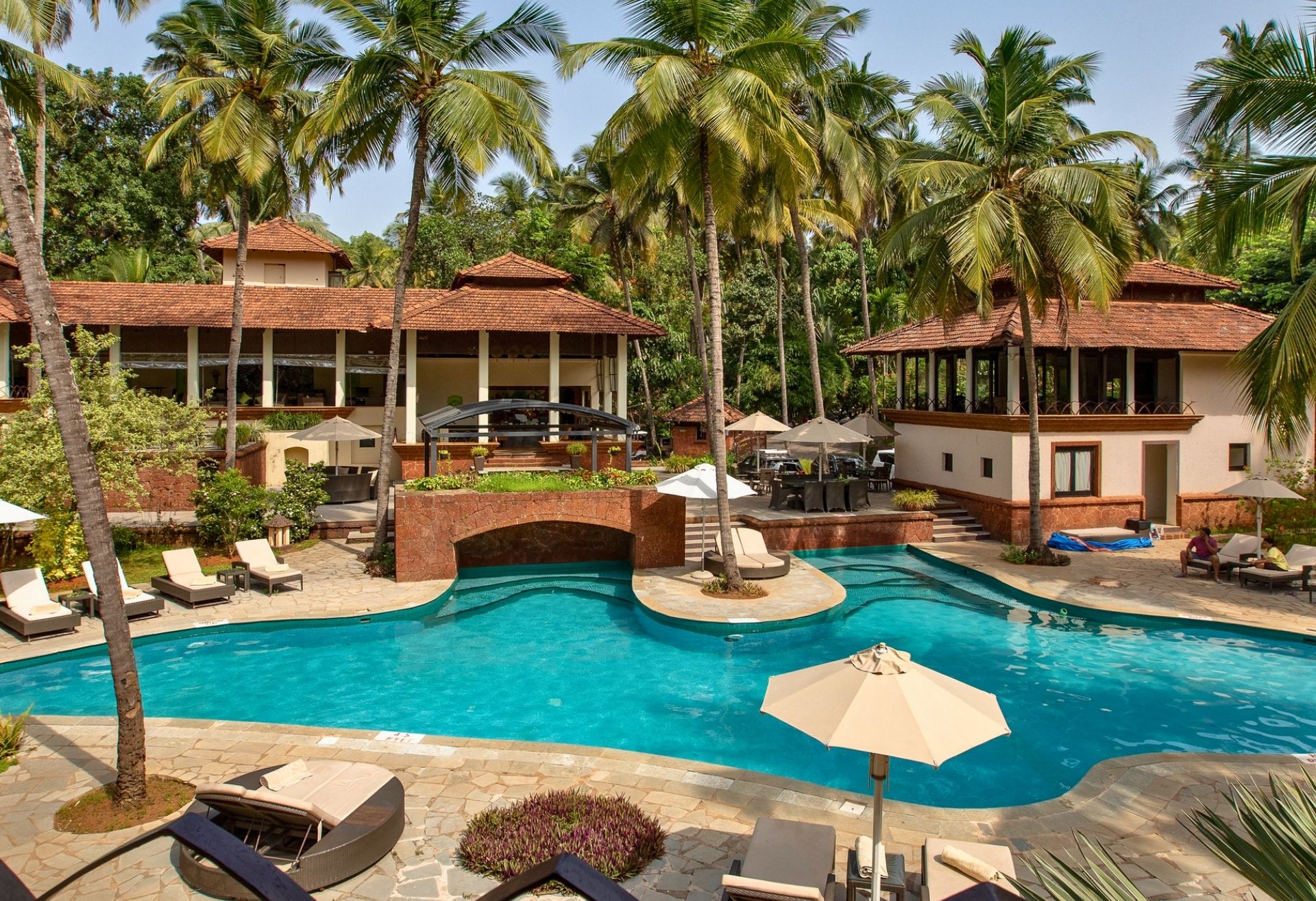
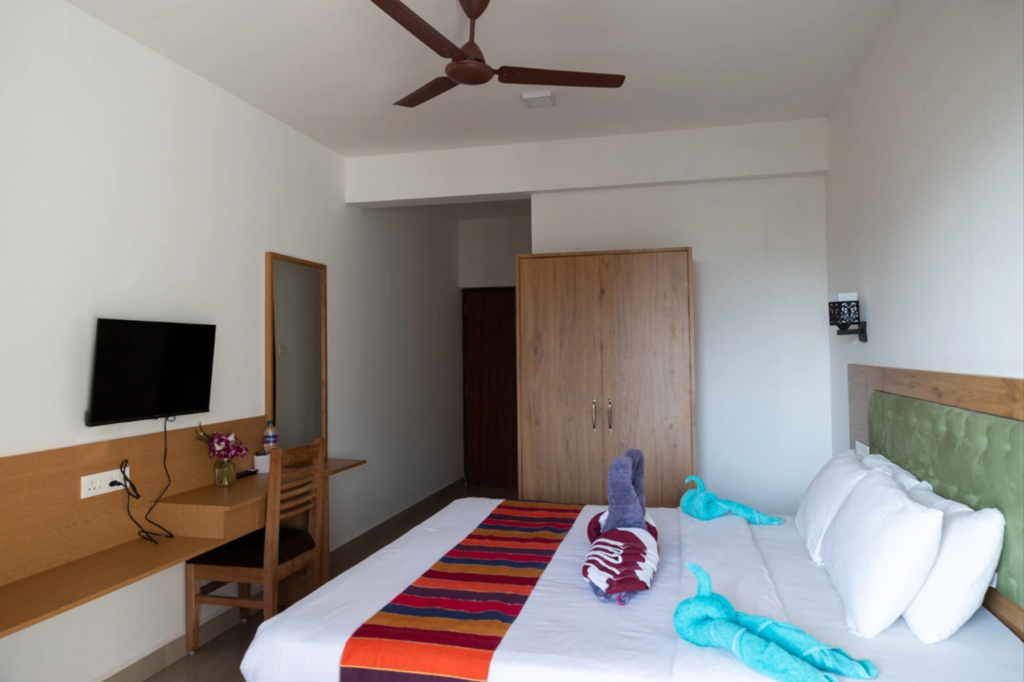
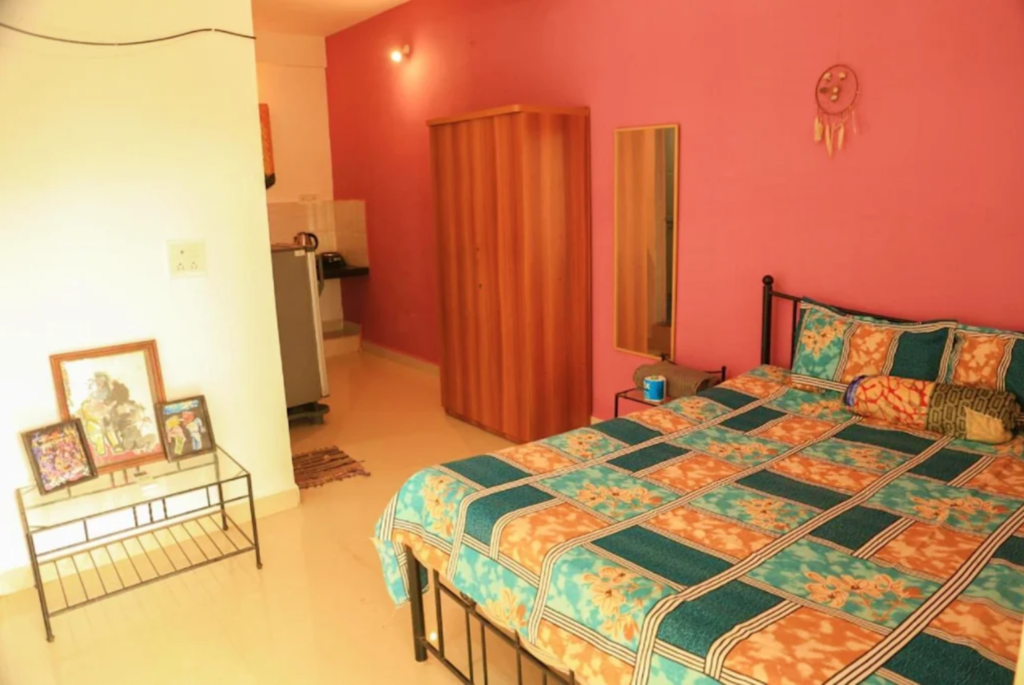
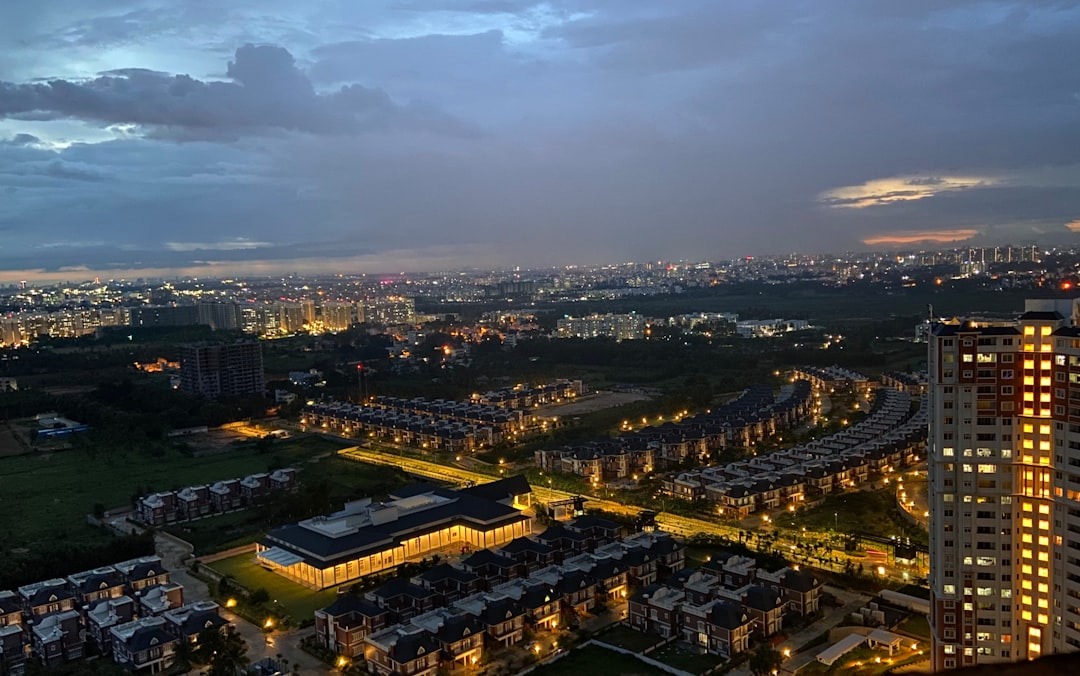
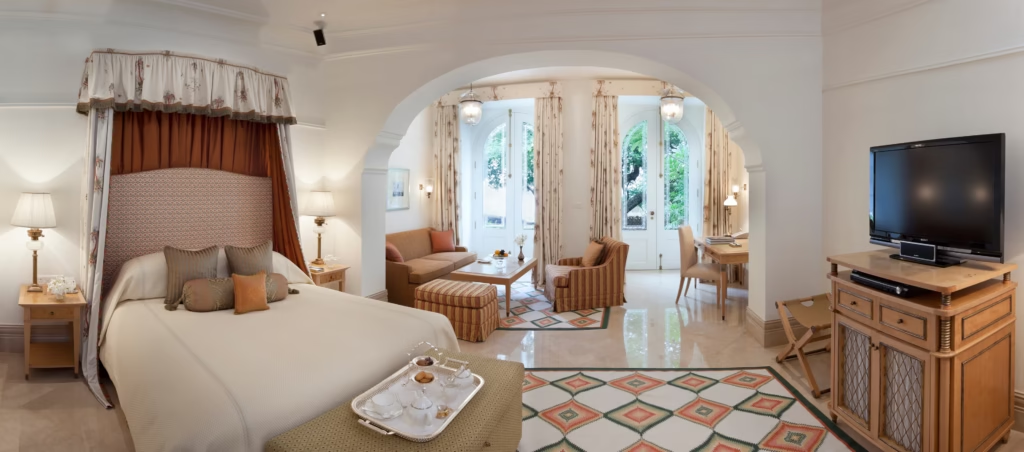
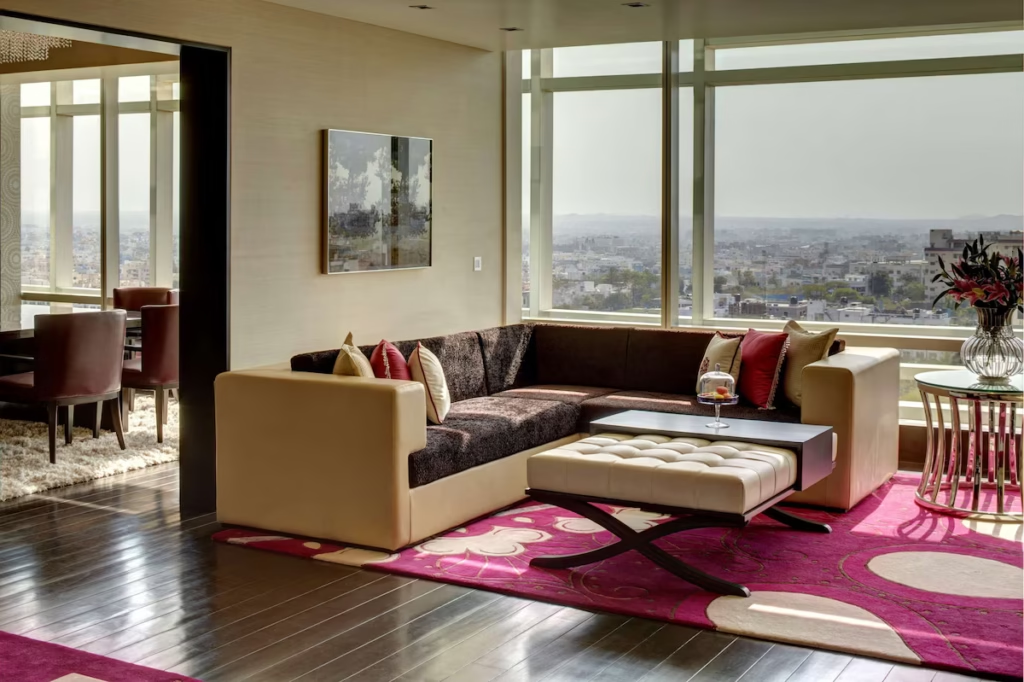
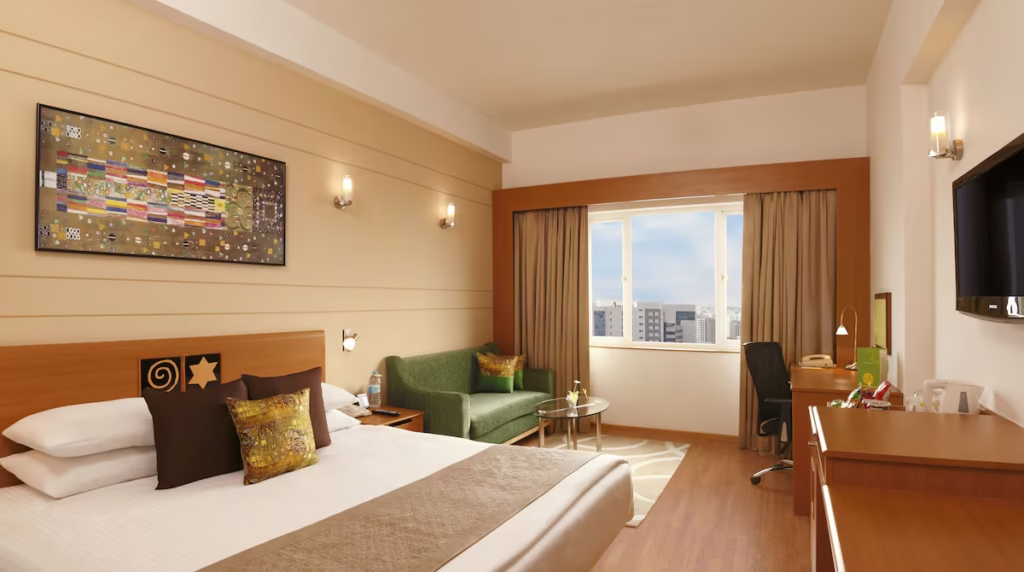
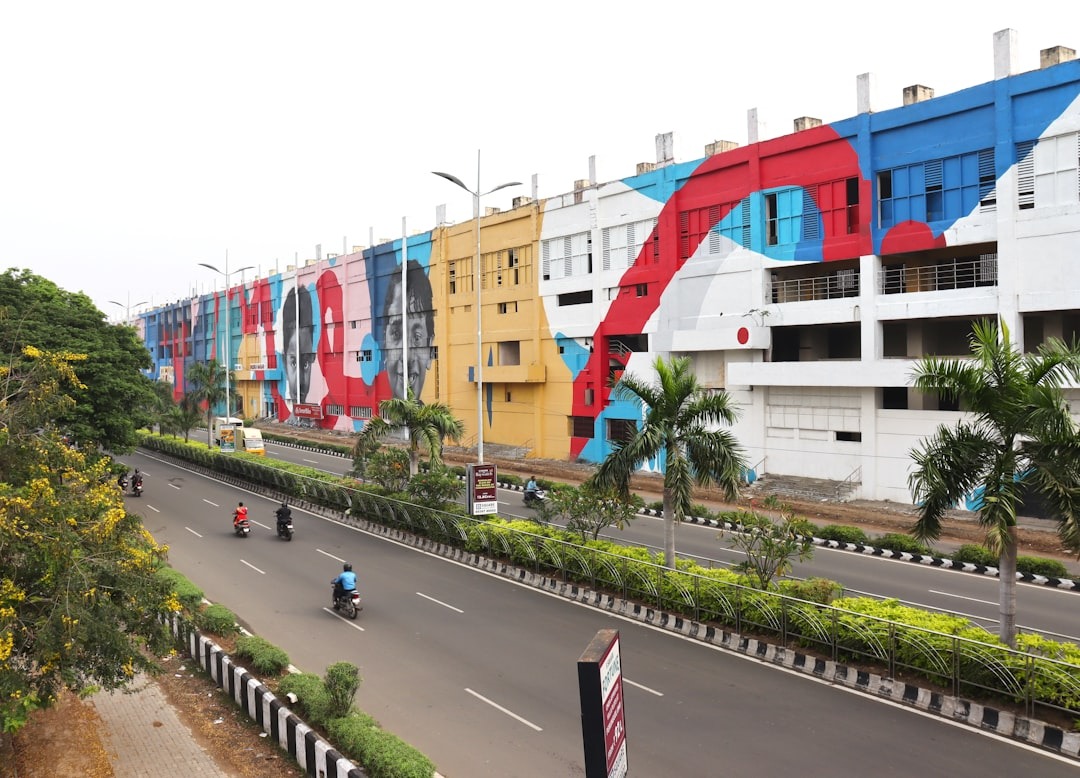
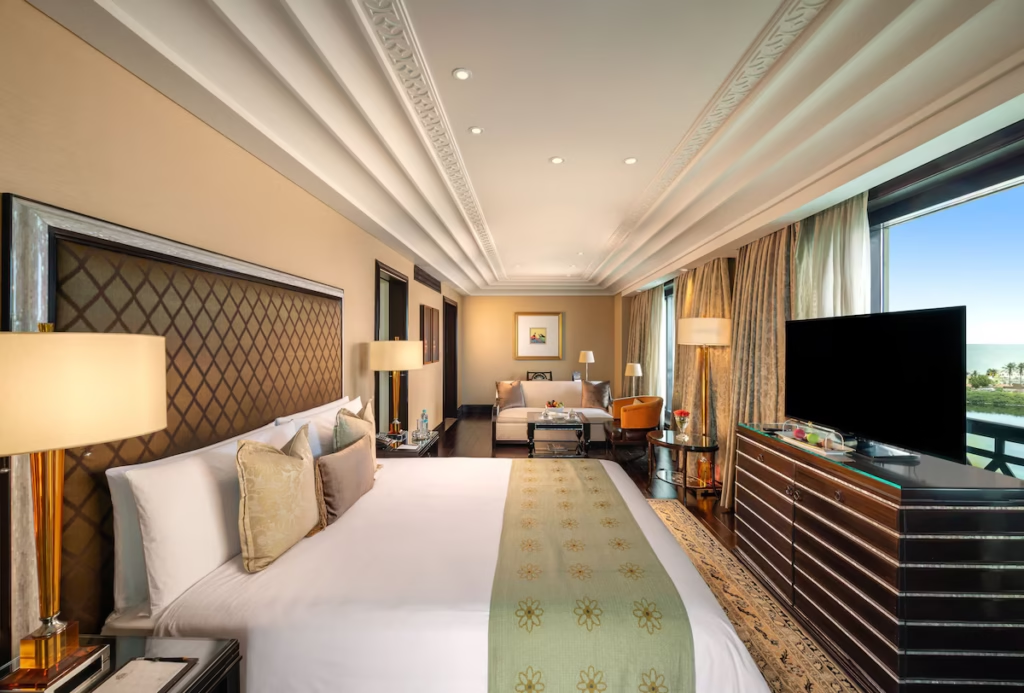
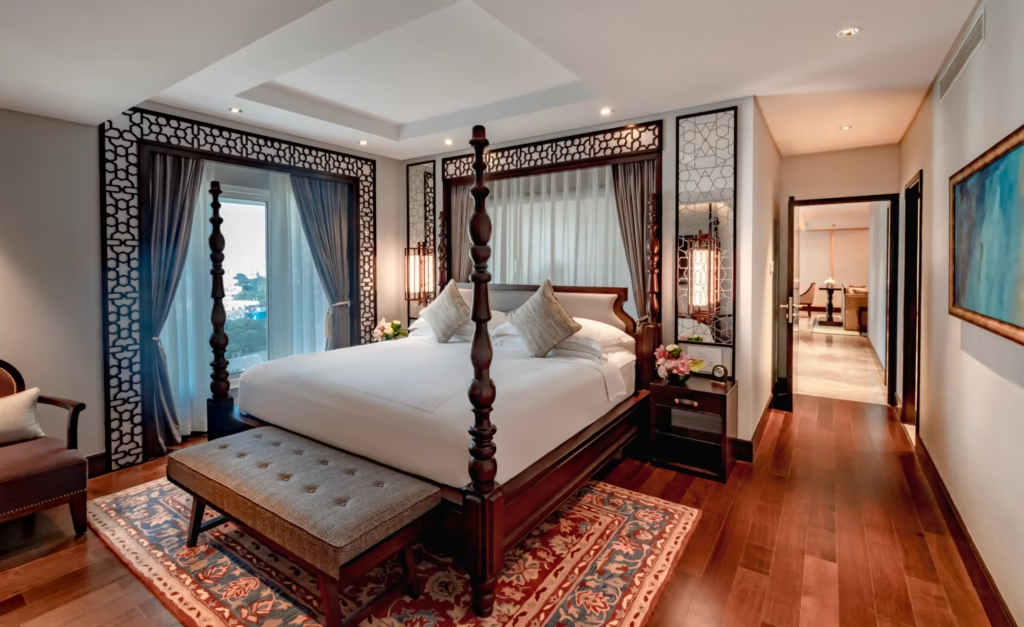
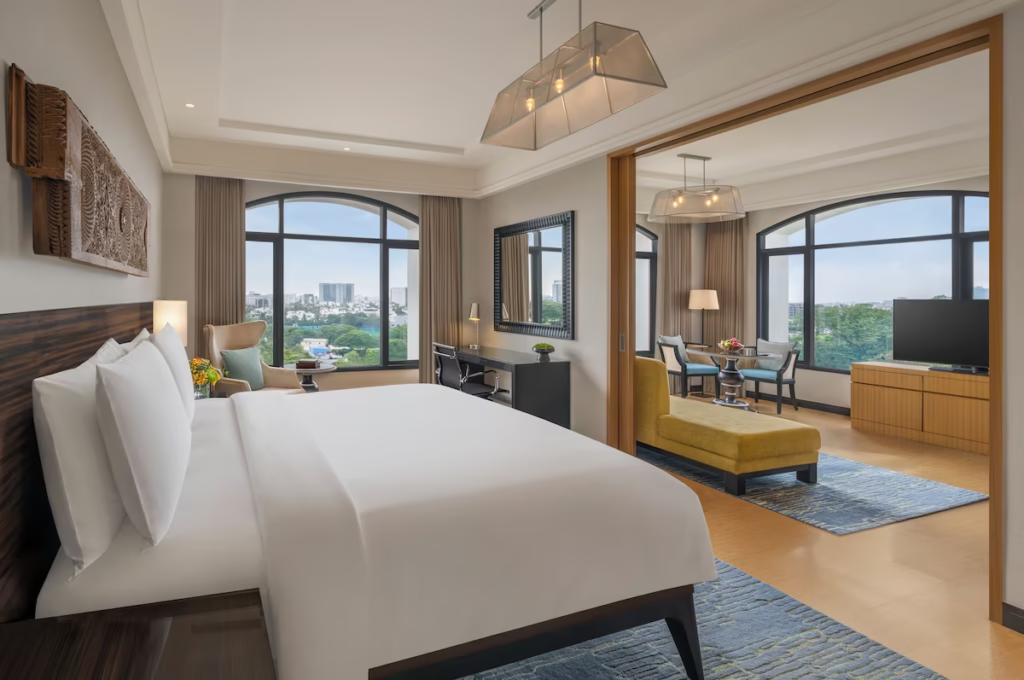
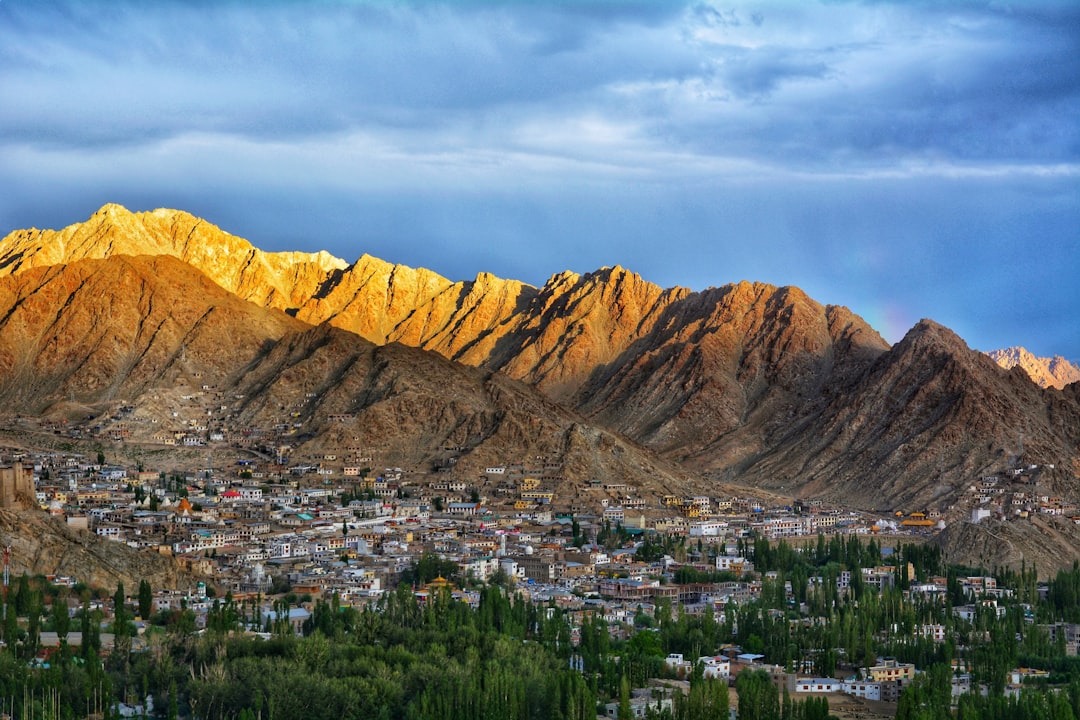
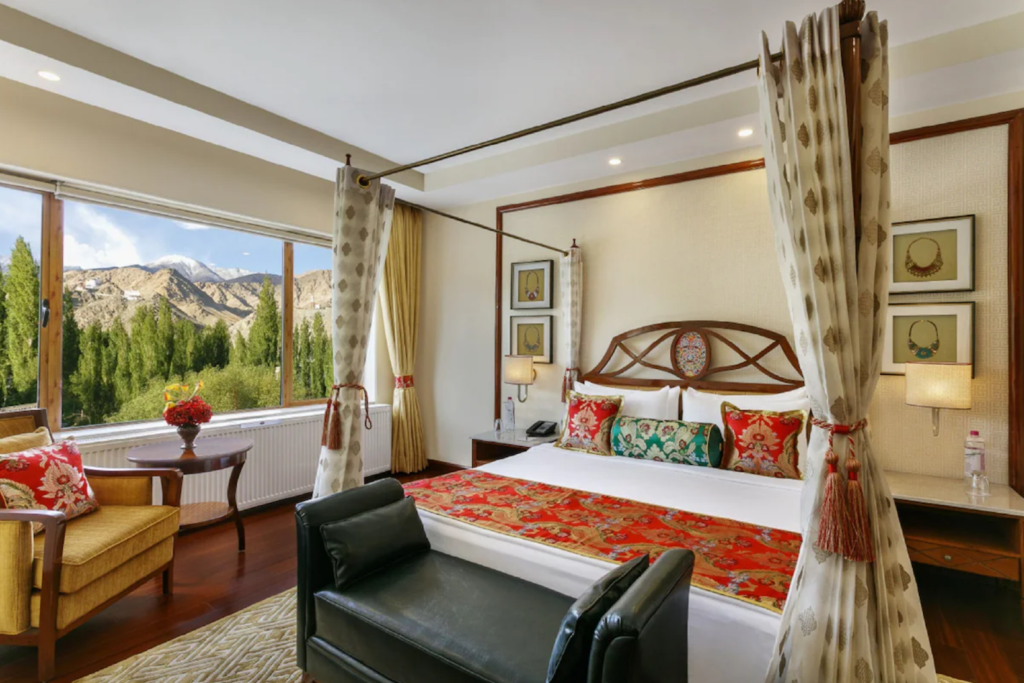
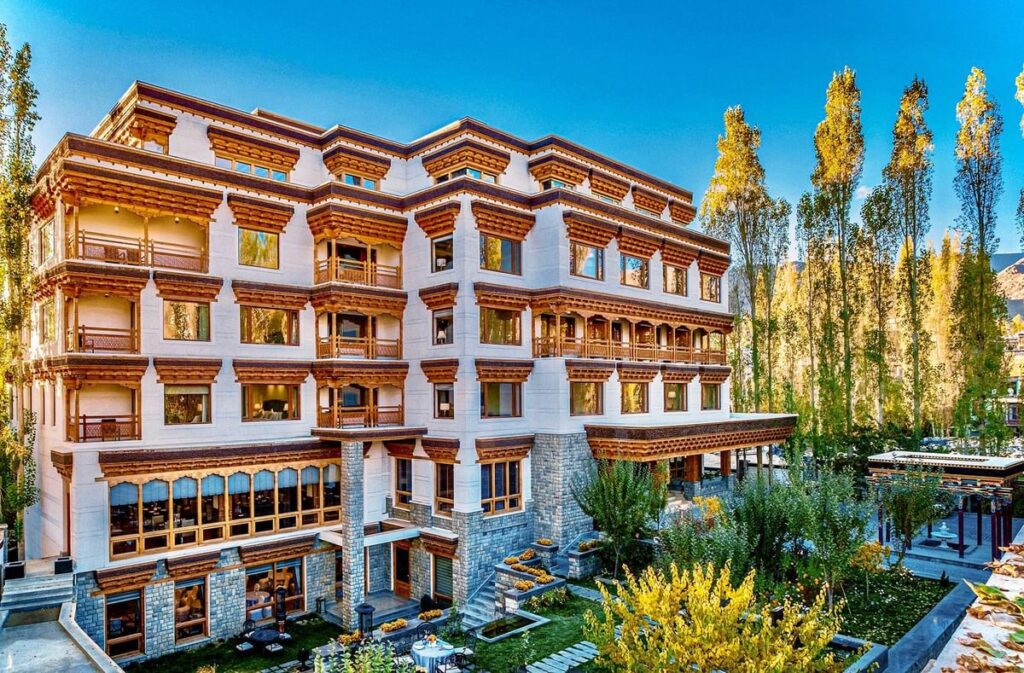
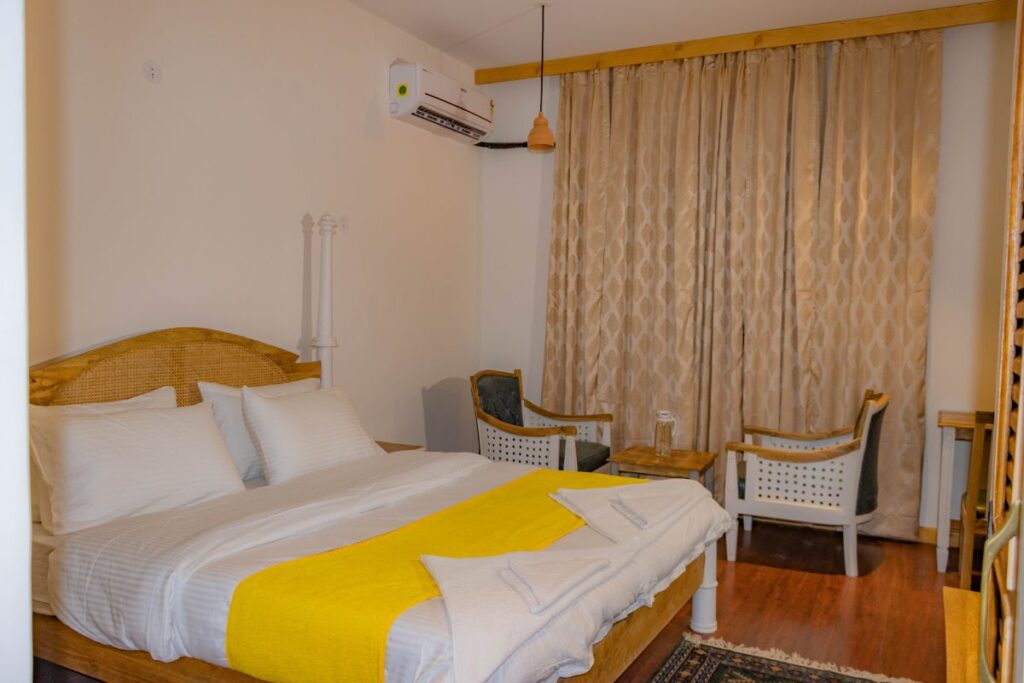
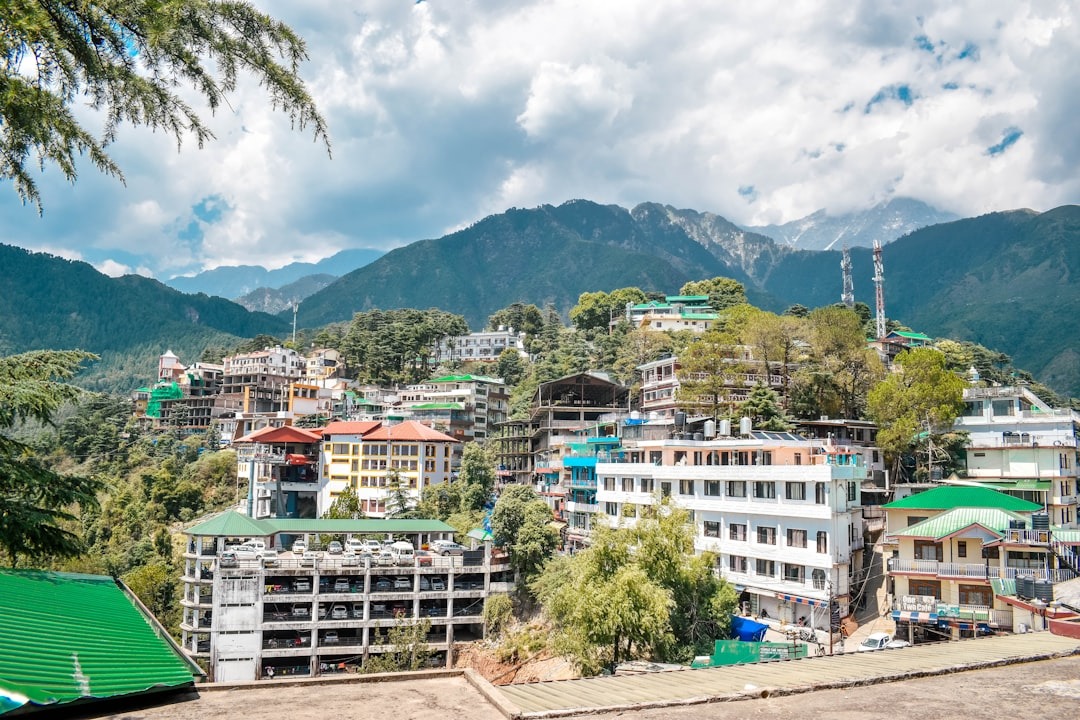
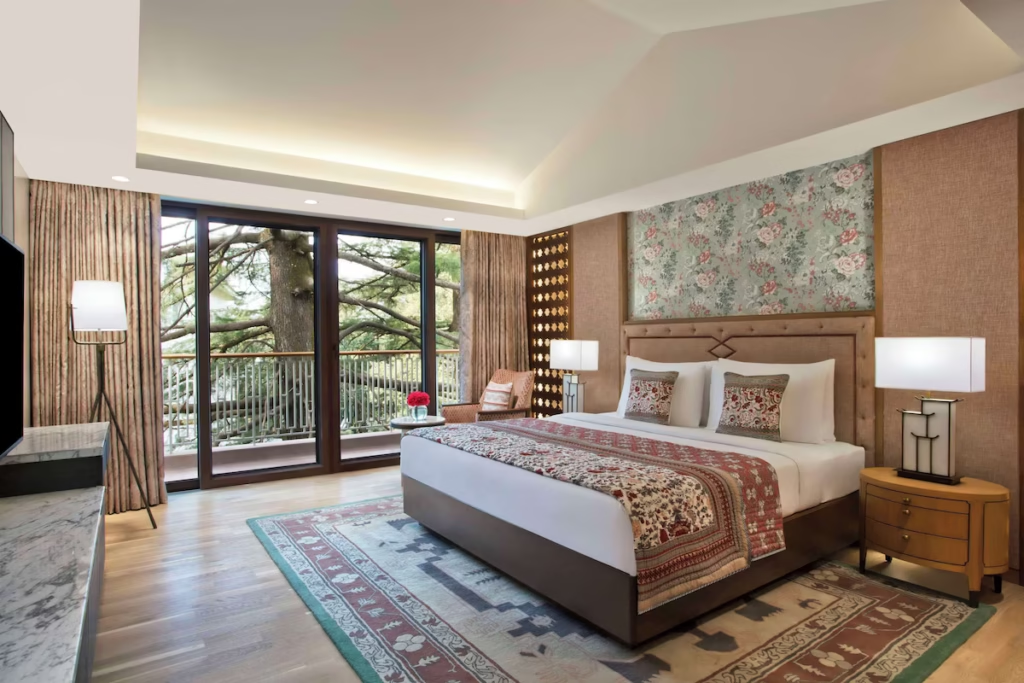
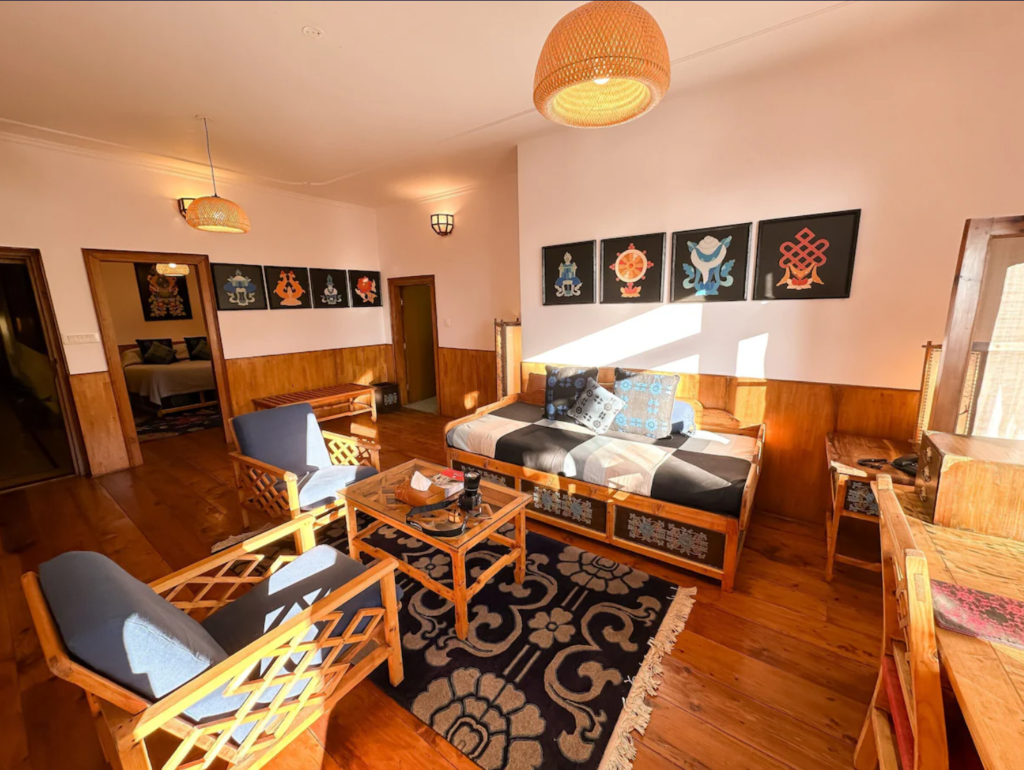
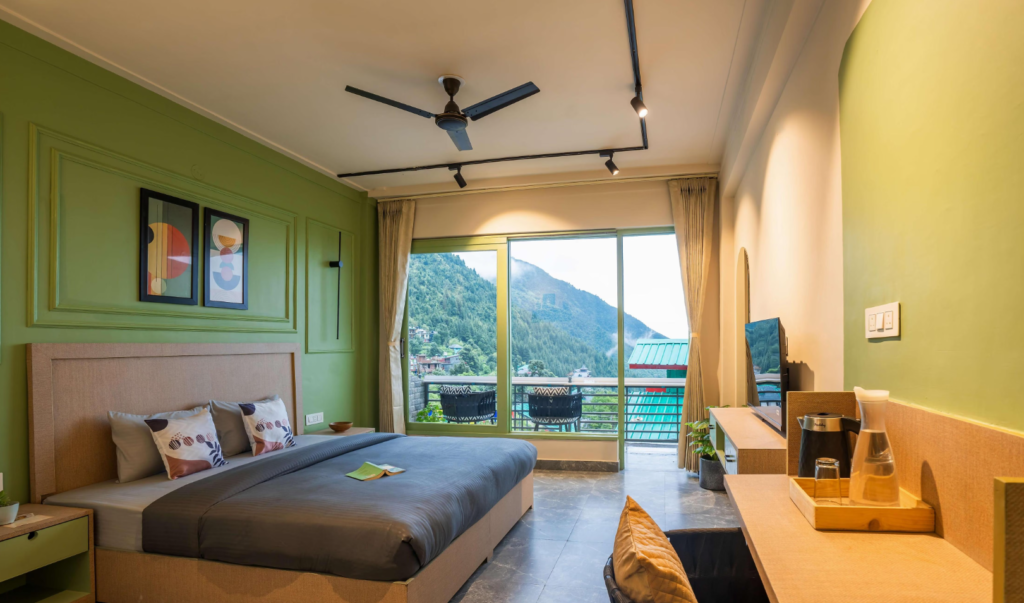
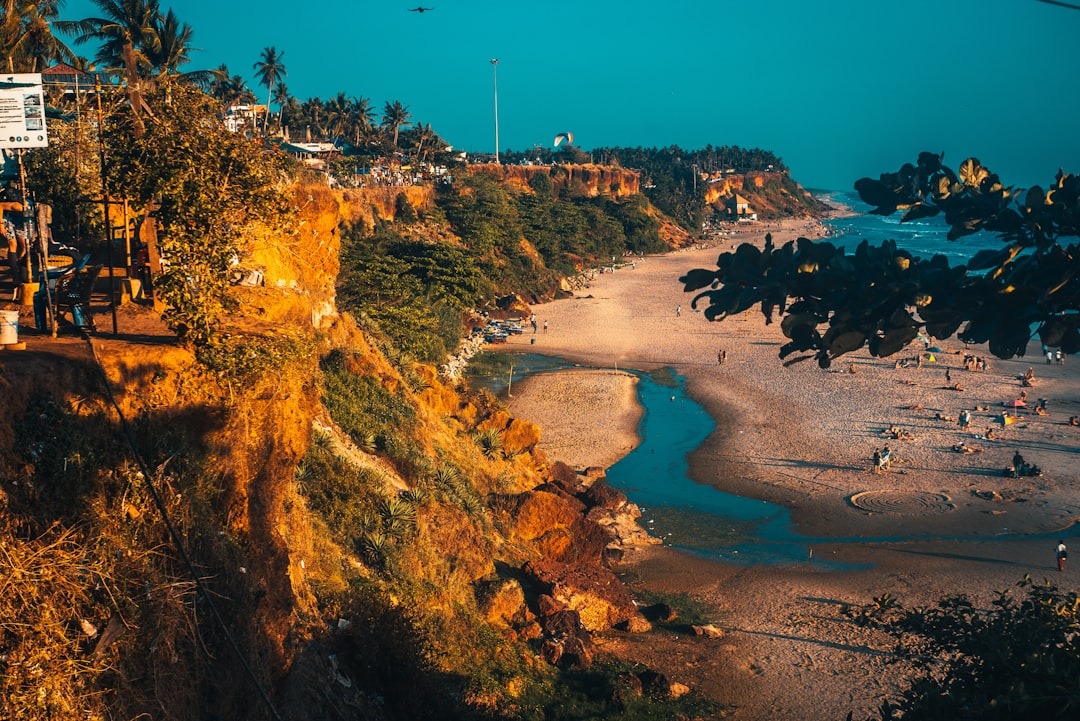
Japan blends ancient tradition with modern life in a way that feels calm, precise, and endlessly surprising. You move from quiet temples and mossy gardens to neon streets and trains that run perfectly on time in a way that;s almost supernatural. If this is your first visit, or you are coming back for a deeper journey, a good first hotel makes everything easier. You arrive, drop your bags, and already feel that things are clearer, easier, and and ready for the adventures ahead.
Japan is not just one experience. Different cities and regions each have a very distinct mood. Think of this guide as a starting map for where to stay in Japan when you want a soft landing.
Tokyo – The world’s largest metropolis, a layered city of food, fashion, pop culture, and skyscrapers. Great if you enjoy high-energy, variety, and endless possibilities.
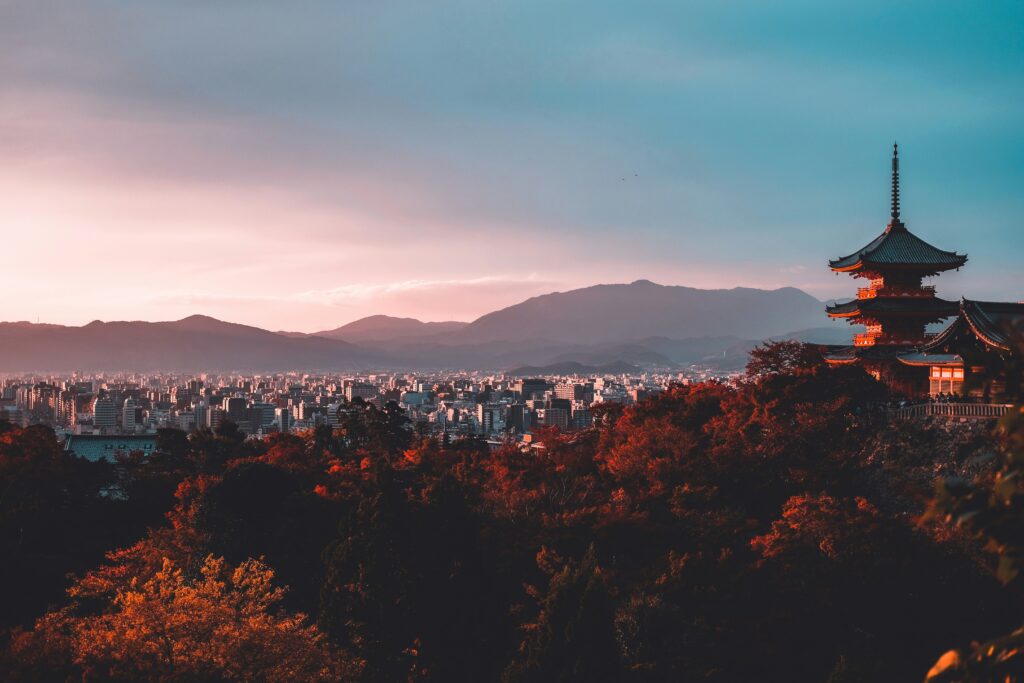
Kyoto– Elegant former capital with wooden streets, shrines, and tea houses. Ideal if you want slower days, history, and traditional atmosphere.
Osaka – Playful port city with some of the best food in the country and a casual, friendly vibe. Perfect if you like nightlife, street food, and a less formal feel.
Hokkaido/Sapporo – Wide boulevards, cooler weather, snow in winter, and easy closeness to nature. A good base if you love mountains, skiing, or open spaces.
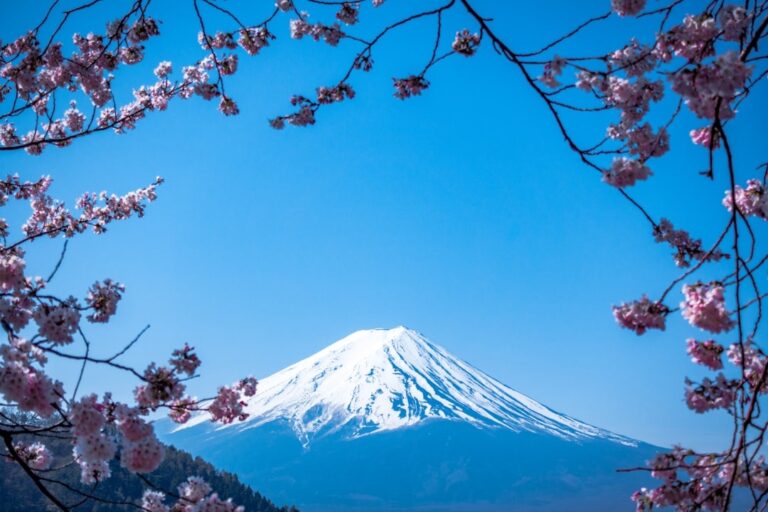
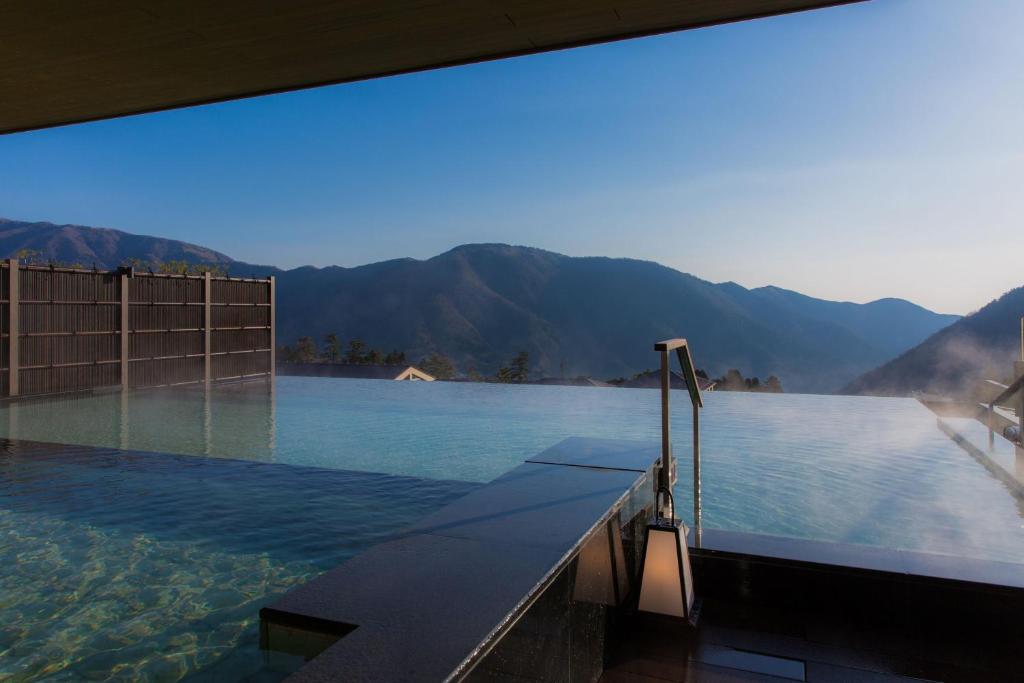
Hakone – Hot spring region in the hills near the famous Mount Fuji. Best if you want onsen baths, views, and a quiet reset not far from Tokyo.
Below are hand picked options in each of these places.
Where To Stay In Tokyo
Tokyo is a city of layers. Quiet side streets, small shrines, and family shops sit just around the corner from giant crossings and bright towers. It is a great first stop if you want to mix culture, food, and nightlife while still having very efficient trains and clear city structure. A good base in Tokyo keeps you close to subway lines, is walking distance to interesting streets, and gives you a calm room to come back to after the chaos of the world’s largest city.
Tokyo is large (the largest), by choosing the right place to stay you can make it feel approachable and efficient.
Minato. Office towers, embassies, and museums dominate the area. Streets are busy during work hours and quiet at night. Good if you want a calm, central base with reliable transport and fewer crowds.
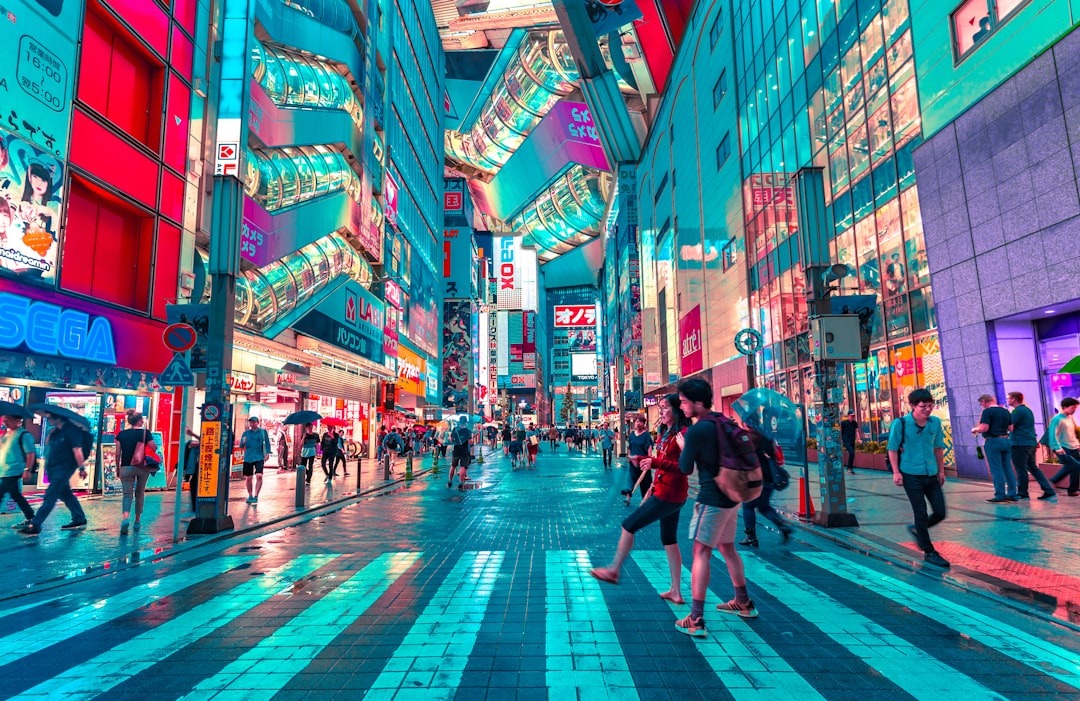
Shinjuku. Major transport hub with offices by day and heavy nightlife after dark. Crowded, loud, and always active. Good if you want late-night food, fast connections, and constant energy.
Asakusa and Taito. Temple area with markets and older streets. Very busy during the day, quiet in the evening. Good if you want history, walkable streets, and lower prices than central Tokyo.
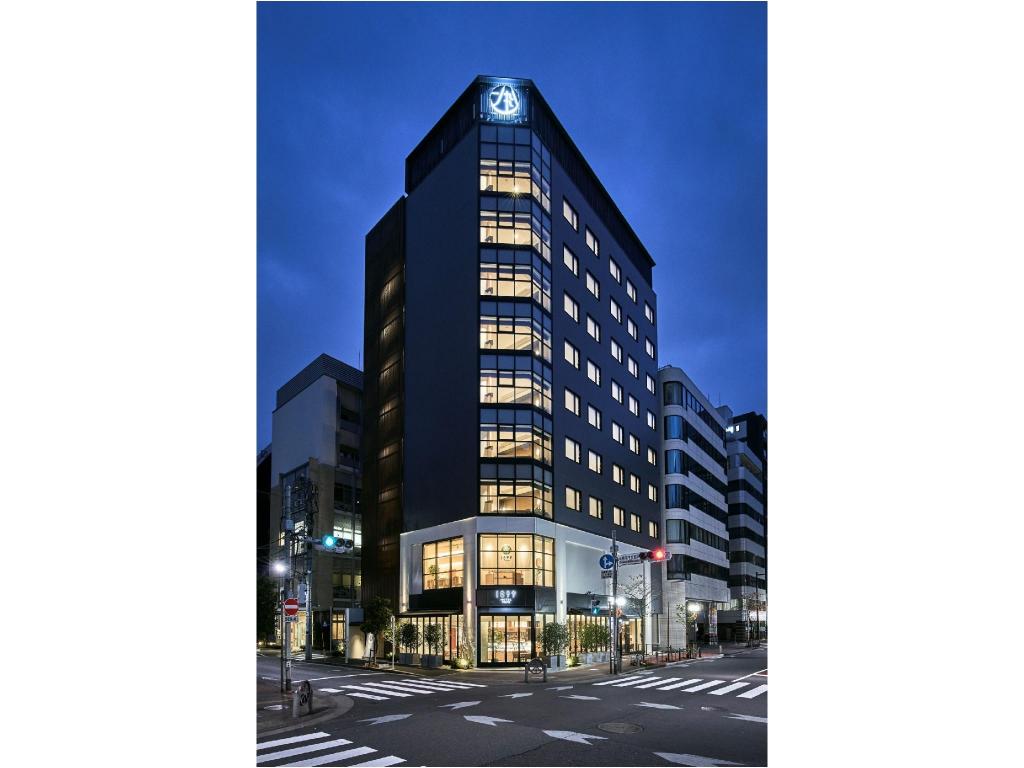
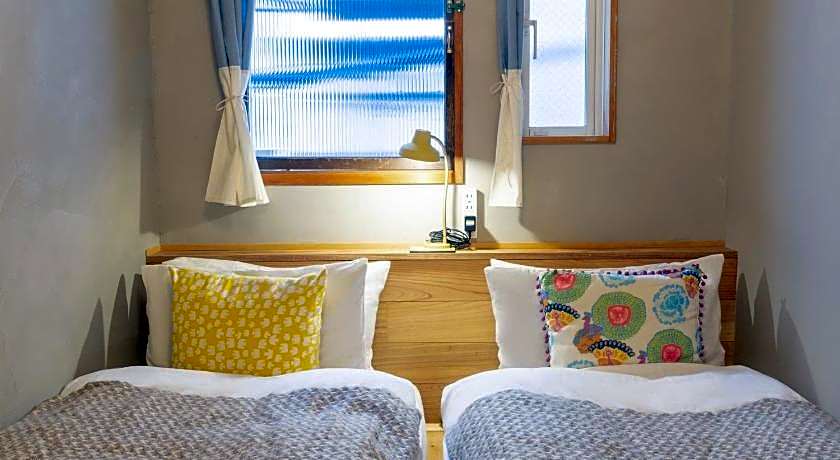
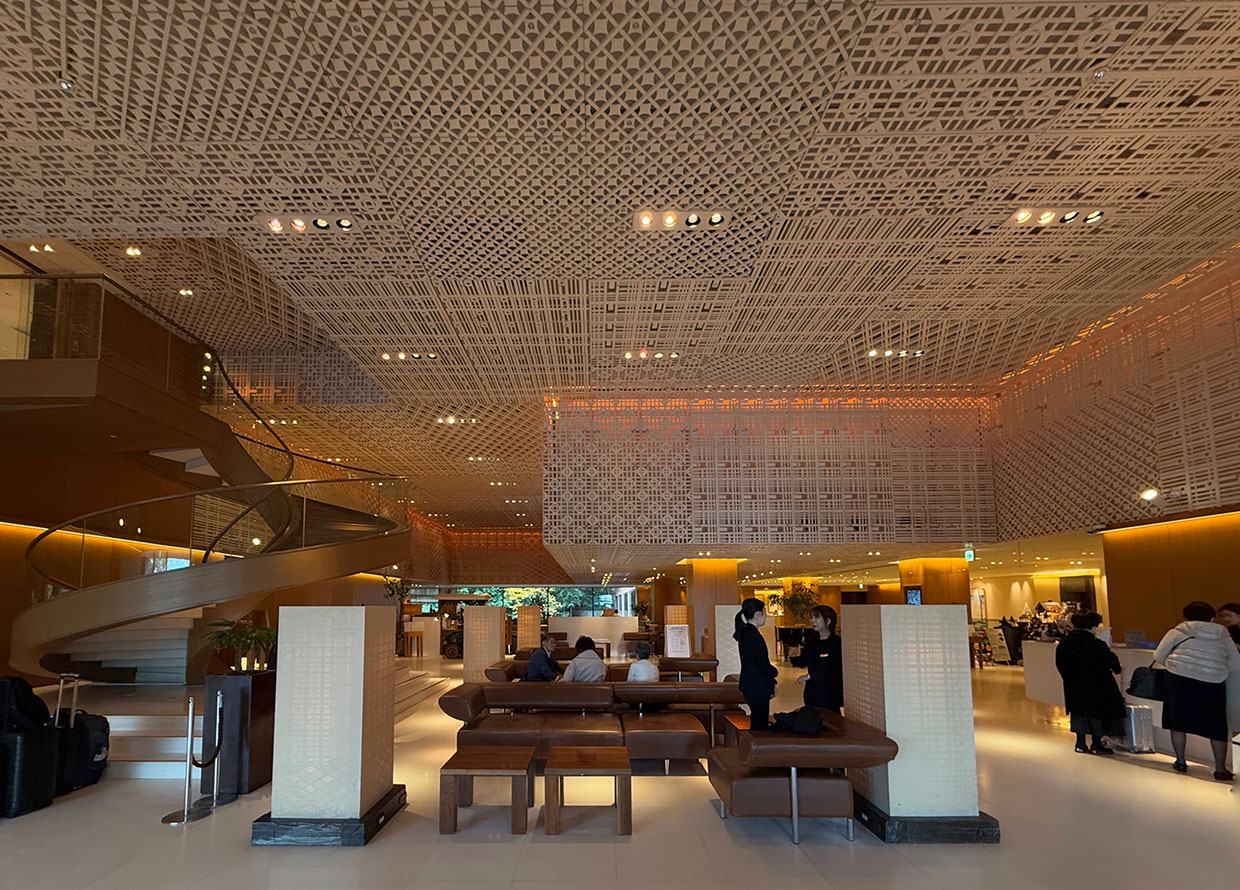
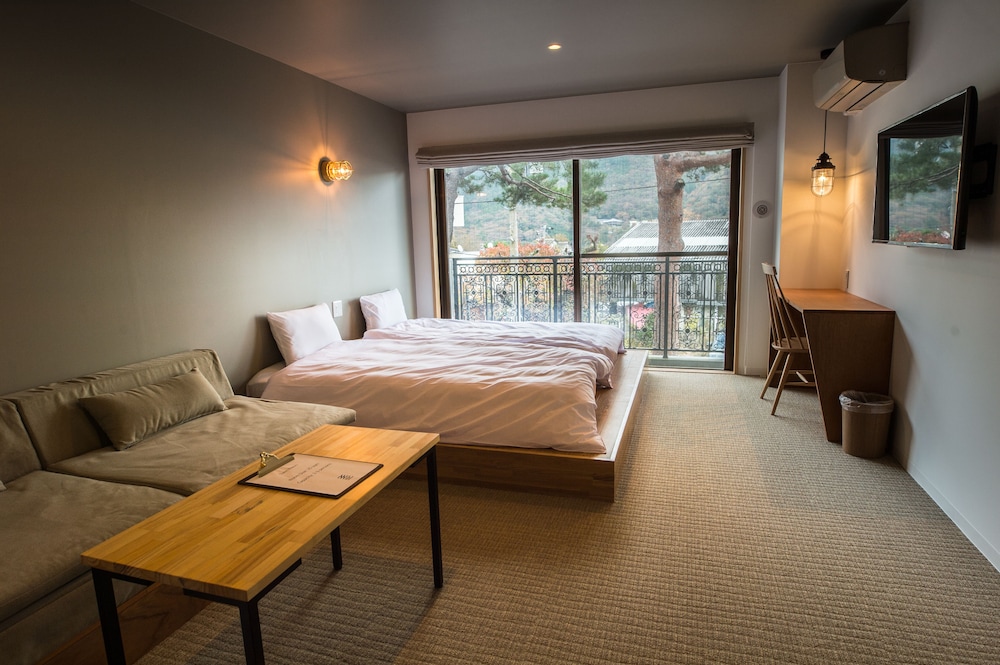
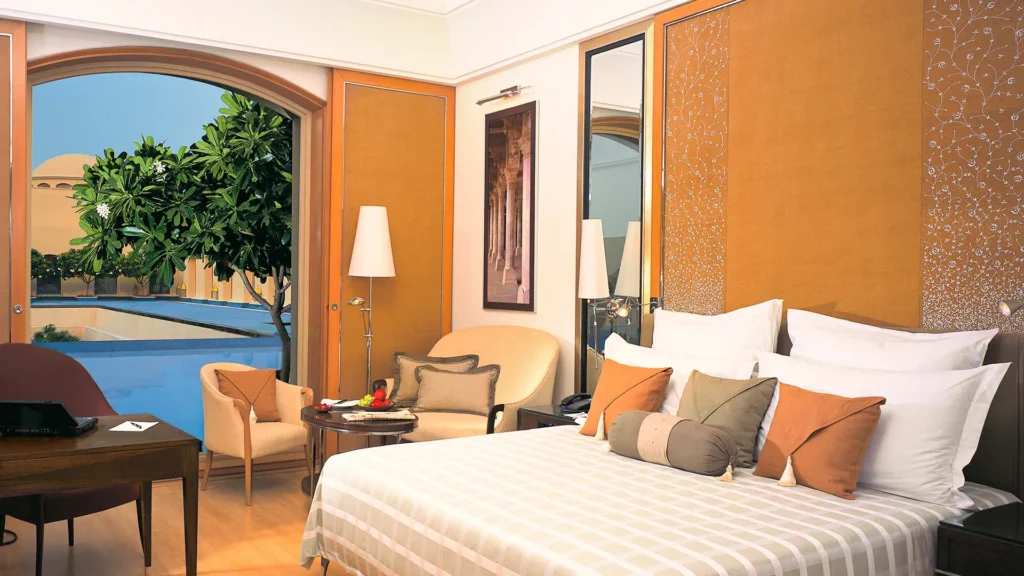
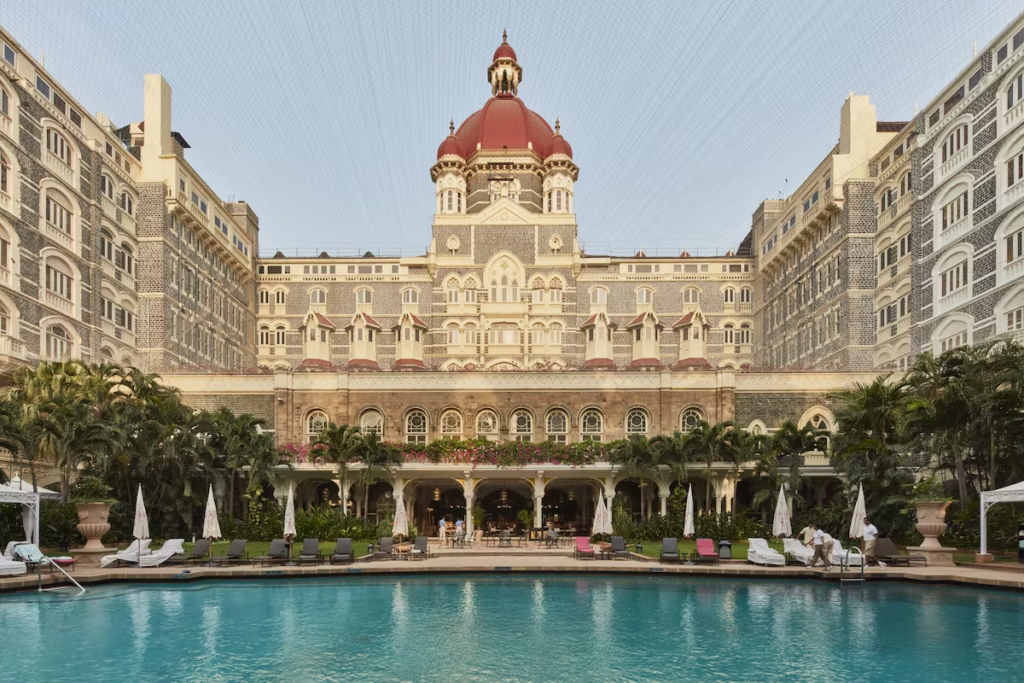
HOTEL 1899 TOKYO sits in Minato, within easy reach of Shimbashi and several subway stations. It has a calm, tea inspired design that feels peaceful the moment you step inside, and rooms that are compact but carefully planned. Most rooms include city views, good beds, and thoughtful touches like a good work surface and quality lighting, which helps a lot after a long flight.
Breakfast here leans toward a refined buffet with a focus on fresh ingredients, and you can enjoy tea and snacks in a stylish lounge rather than a standard lobby. The location makes it simple to reach places like Ginza, Tokyo Tower, and the business districts, while still feeling residential and quiet at night. It is a very good fit if you want something design focused, calm, and practical without going full ultra luxury.
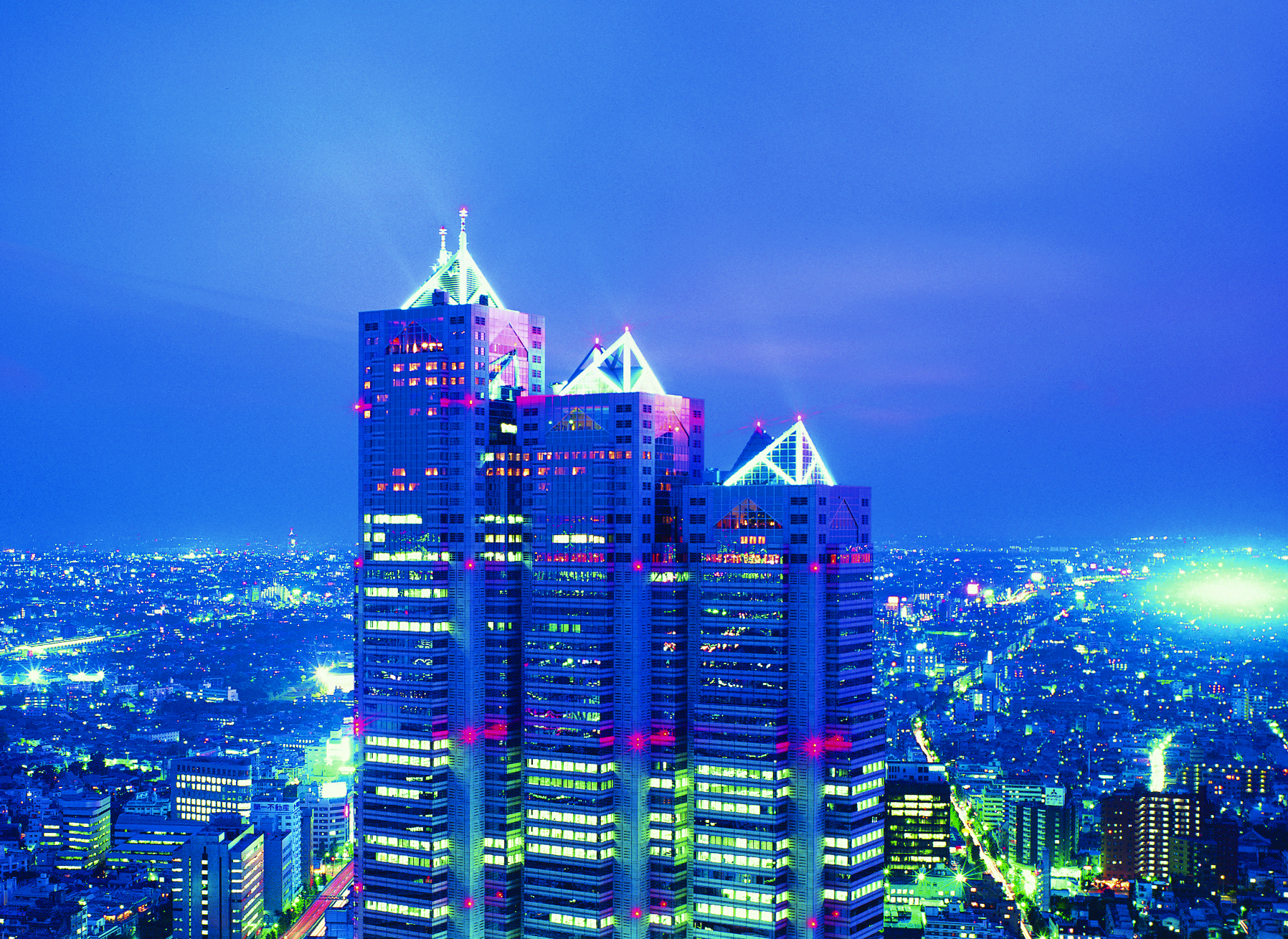
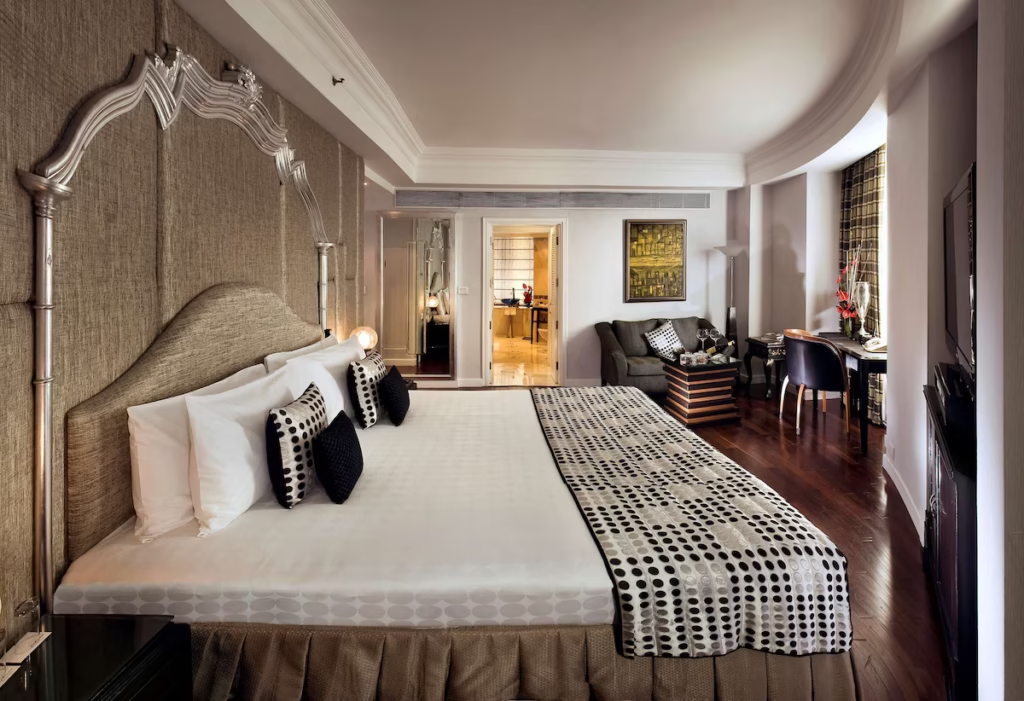
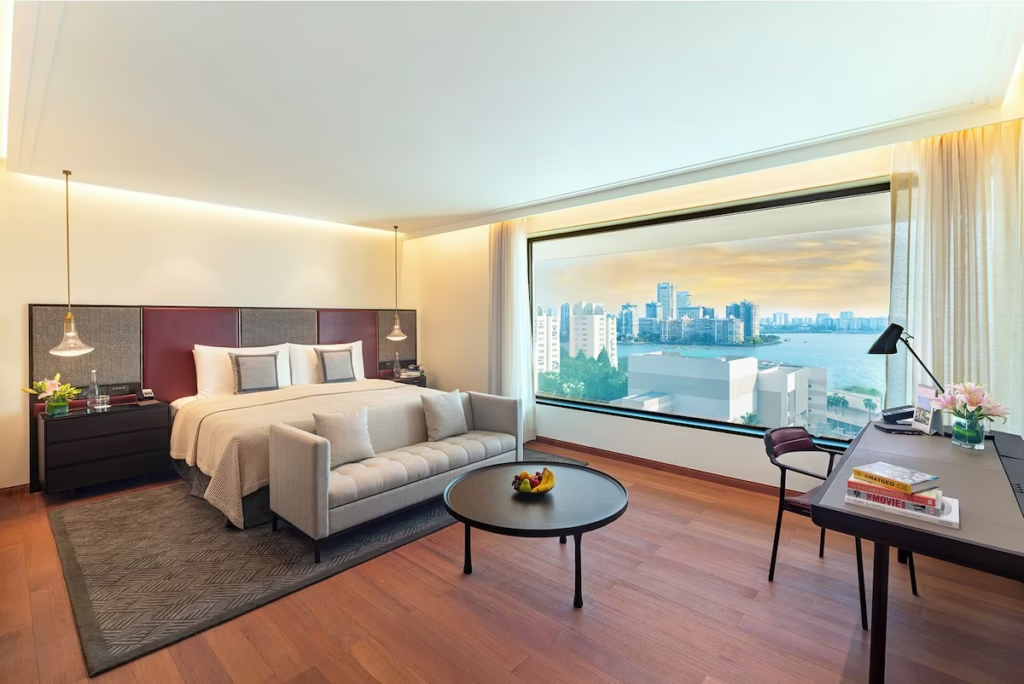
Park Hyatt Tokyo sits at the top of Shinjuku Park Tower, high above one of the liveliest districts in the city. From the lobby and the New York Bar you look out across Tokyo and, on clear days, toward Mount Fuji. Rooms are large by Tokyo standards, with a residential feel, careful lighting, and big windows that turn the city into a kind of moving artwork.
The great location in Shinjuku, means you have parks, bars, small alleys like Golden Gai, and a huge range of food options all within walking distance, but the hotel itself feels like a quiet world of its own. Even after the recent renovation, public spaces and rooms still keep the famous film like atmosphere while adding more modern finishes and updated suites. If you want a very memorable place to stay in Tokyo that still works well for families and longer stays, this is the cinematic choice.
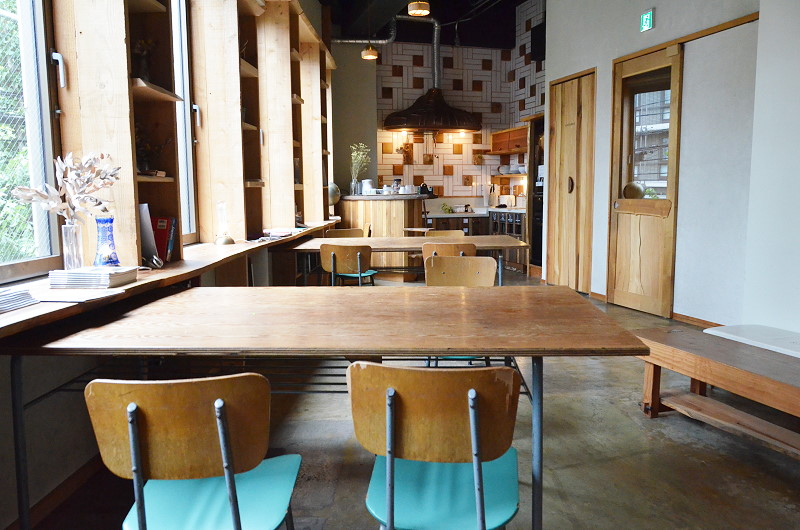
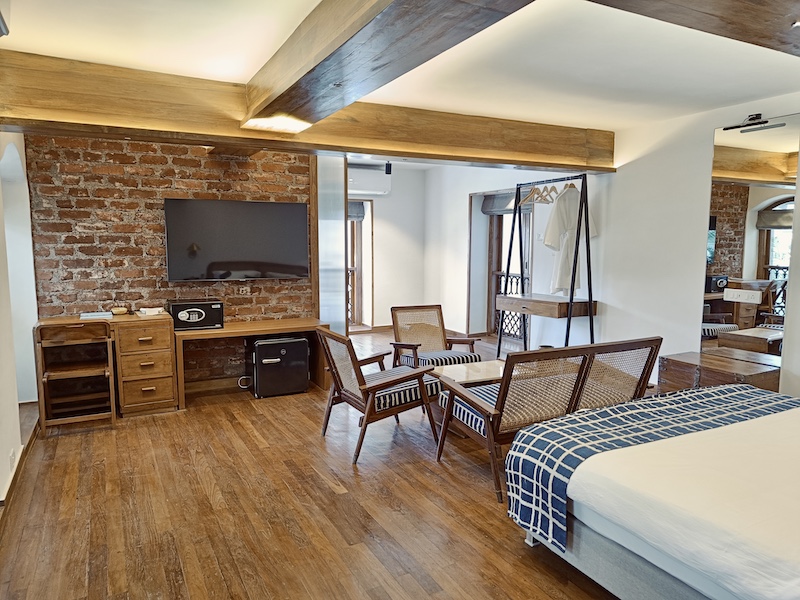
Tokyo Hikari Guesthouse is a small, family run place in Kuramae, in the Taito area. The building is a renovated traditional wooden house, which gives you a warm, lived in feeling, much nicer than a cold generic budget stay. You can choose simple private rooms or bunks in dormitories, all kept clean and functional, with shared spaces that encourage a quiet but friendly atmosphere.
The location is excellent if you want to explore older Tokyo. You can walk to Asakusa and Sensoji Temple, wander toward the river and views of Tokyo Skytree, and still reach Akihabara and Ueno quickly by train. This is a smart option if you care more about character and neighborhood feel, and really connecting with the spirit of Japan.
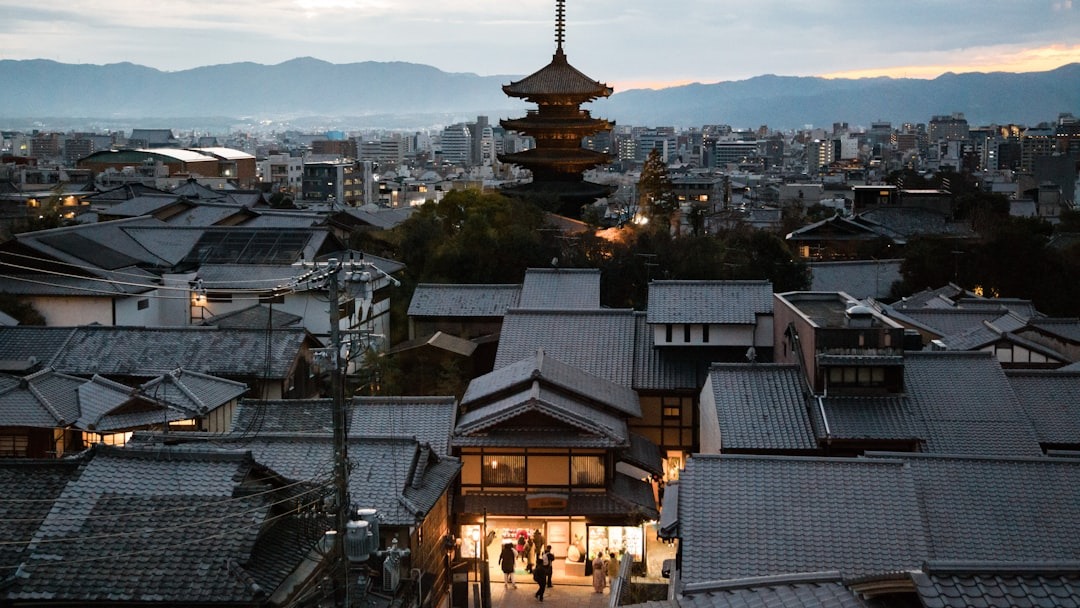
Kyoto is the gentle heart of Japan. You walk past riverside paths, lantern lit streets, and wooden houses that have stood for generations. It is a very good base if you like slower mornings, temple visits, and evenings in small local restaurants. A well placed hotel in Kyoto makes it easy to reach major sights on foot or by bus, while still giving you somewhere peaceful to retreat to after the crowds.
Kyoto is full of history, and around every corner you discover something new. These are the main areas for tourism:
Higashiyama. Temple-heavy district with tour groups during the day and very quiet nights. Good if you plan to sightsee and value traditional, historic surroundings.
Kawaramachi and downtown. Shopping, restaurants, and transit converge here. Busy most of the day and lively in the evening. Good if you want convenience and dining options.
Kamogawa riverside. Residential streets and river paths used by locals. Calm atmosphere with cafés nearby. Good if you want scenery and a slower pace while staying central.
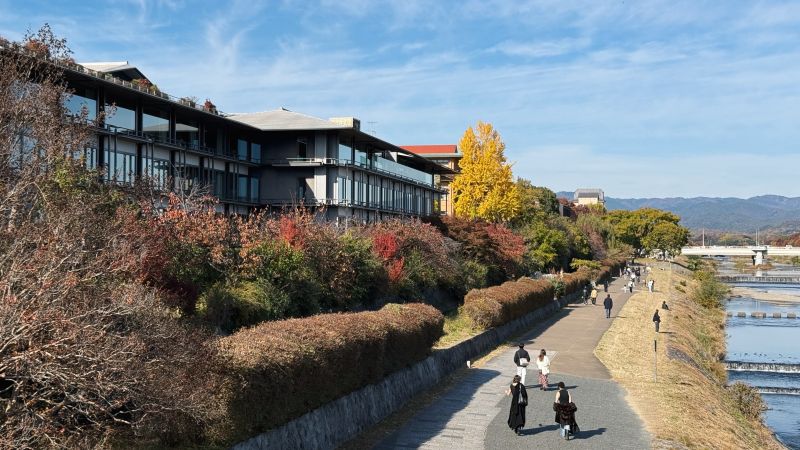
View of the Ritz-Carlton kyoyo and the Kamogawa river in autumn
The Ritz Carlton Kyoto sits directly on the gorgeous Kamogawa River, near Nijo Ohashi bridge, in a central but calm part of the city. Rooms are among the most spacious in Kyoto, many with river or garden views, and interiors that blend clean modern lines with traditional elements like washi paper, wood, and stone. The overall feeling is one of understated luxury rather than showy design
From here you can walk along the river, reach Gion and the old town on foot, or head quickly by train or taxi to major temples. The hotel also leans into local culture with seasonal menus, art pieces, and small experiences that help you feel more connected to Kyoto rather than sealed away from it. It is a strong choice if you want to truly indulge.
Hyatt Regency Kyoto is in the Higashiyama Shichijo area, close to Sanjusangendo Temple, Kyoto National Museum, and several other historic sites. Rooms are comfortable and warm, with natural materials and soft lighting that fits the mood of the district.
A landscaped inner garden and calm public spaces make it easy to slow down between sightseeing trips. You can walk straight out toward temple lined streets, or use nearby transport connections to reach other parts of the city without long transfers. If you want a soft landing that balances modern comfort and proximity to culture, this is a very reliable base.
Len Kyoto Hostel, in the heart ofKawaramchi, Kyoto’s electric downtown, offers both dorm beds and private rooms in a stylish, modern building. There is an attractive common area with a bar and café (best espresso I’ve had in Kyoto) on the ground floor, which gives the place a social but relaxed feeling. Rooms are simple and clean, with shared facilities kept to a high standard.
You stay within walking distance of many central sights and bus routes, which makes it easy to reach both Gion and the riverside, as well as shops and restaurants. This is a good option if you want something affordable and stylish, with enough character to feel like part of the city rather than just a place to sleep.
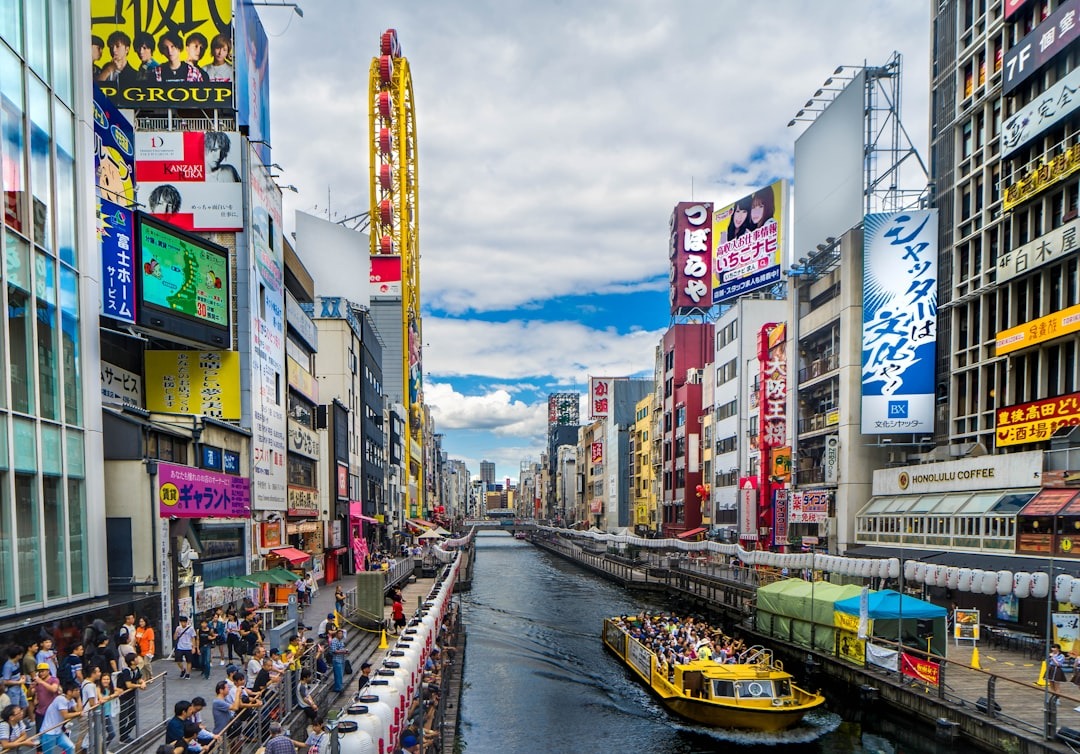
Osaka has a playful, down to earth energy. People eat late, neon signs reflect in the canal at Dotonbori, and the local motto might as well be “eat until you drop”. It is a wonderful base if you love street food, casual bars, and a less formal big city environment. A smart hotel choice in Osaka means easy access to the main food streets, efficient subway lines, and sights like Osaka Castle or Universal Studios Japan.
Where to stay for food, energy:
Namba and Dotonbori. Food stalls, bars, and neon streets stay active until late. Very crowded, loud and fun. Good if nightlife and street food are priorities.
Shinsaibashi. Major shopping streets with moderate nightlife. Busy by day, calmer than Namba at night. Good if you want central access without constant noise.
Honmachi. Business area with quiet evenings and strong subway access. Good if you prefer calm nights and fast transport.
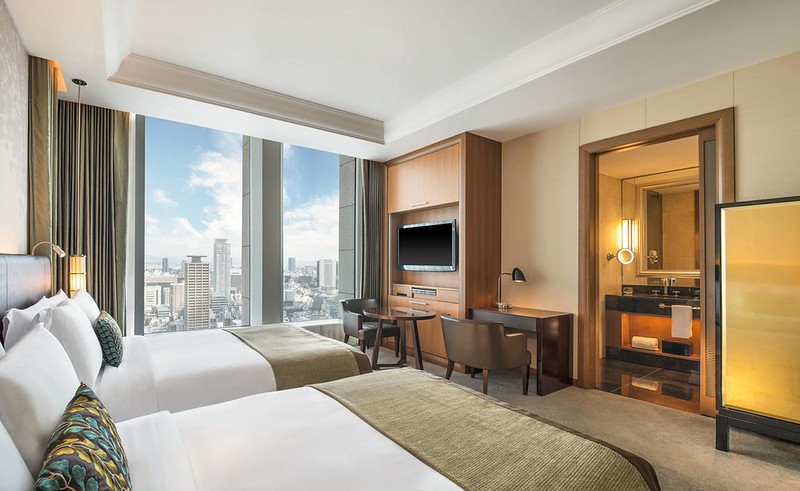
The St Regis Osaka sits on Midosuji, the city’s grand tree lined avenue, in the Honmachi area. Rooms are large and refined, with marble bathrooms, deep soaking tubs, and custom details that give them a residential feel. Service is a key part of the experience here. There’s even a personal butler for things like restaurant bookings, event tickets, and sightseeing arrangements.
From the front door you can walk or take a short train ride to Dotonbori, Shinsaibashi shopping, and many of the city’s best food streets. Osaka Castle is a quick trip, and Universal Studios Japan is reachable by train in around half an hour. If you want a very polished stay in Osaka with strong service and a central, peaceful location, the St Regis is the best option
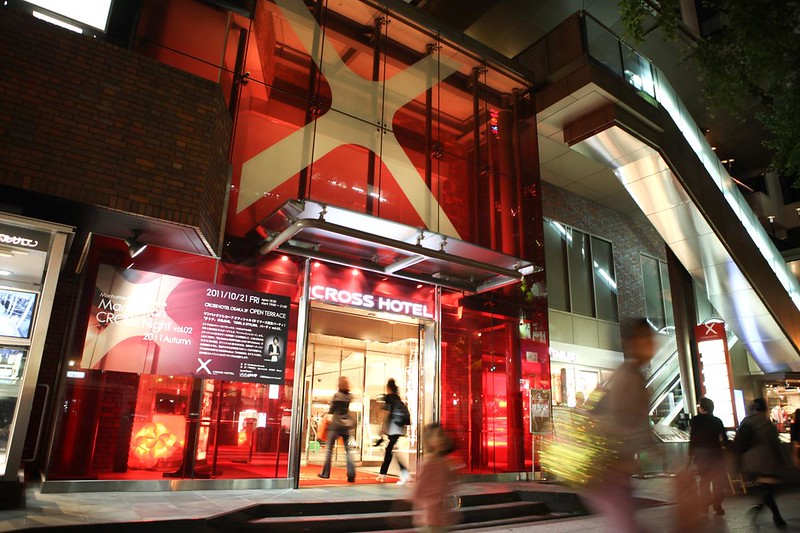
Cross Hotel Osaka sits right at the center of the action, only a minute on foot from Dotonbori and a short walk from Namba and Shinsaibashi Stations. Rooms are modern and stylish, often with bold design touches, good beds (trust me on this one), and well designed bathrooms. This hotel has amazing value for money both in terms of facilities and loaction, a rare double-unicorn.
As soon as you step outside you’re in one of the most famous nightlife and food zones in Japan, with endless options for takoyaki, okonomiyaki, ramen, and late night drinks. At the same time, once you go back inside, sound proofing and thoughtful interior design keep things calm enough to rest. This hotel works very well if you want to be surrounded by Osaka’s energy from morning to night.
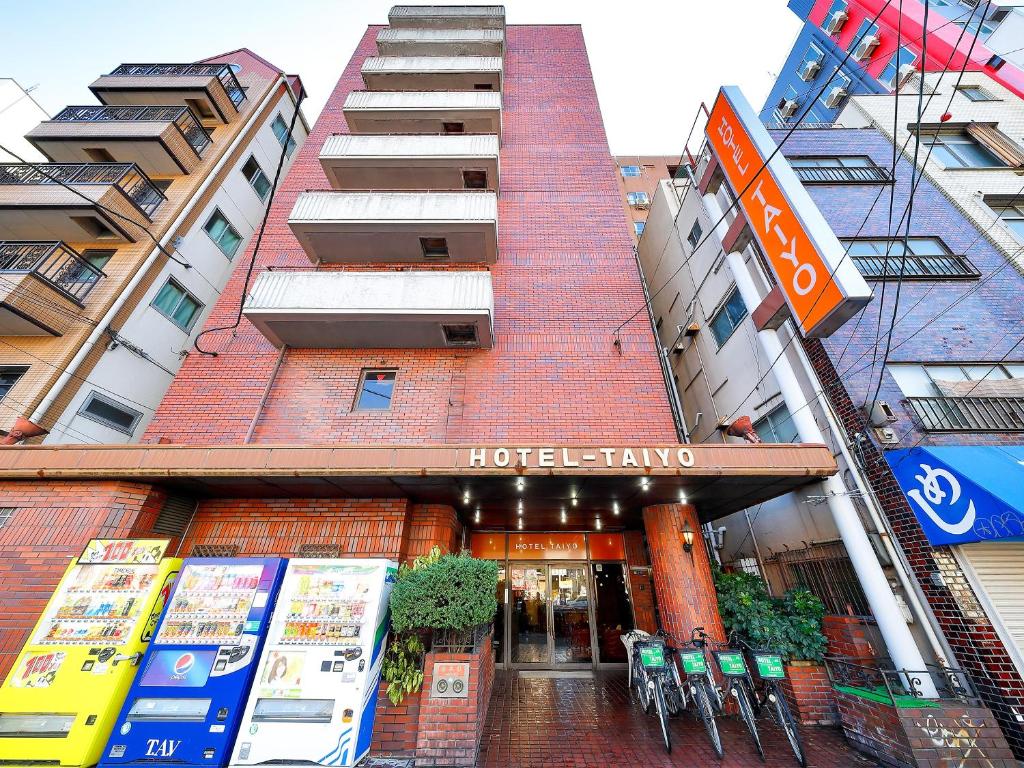
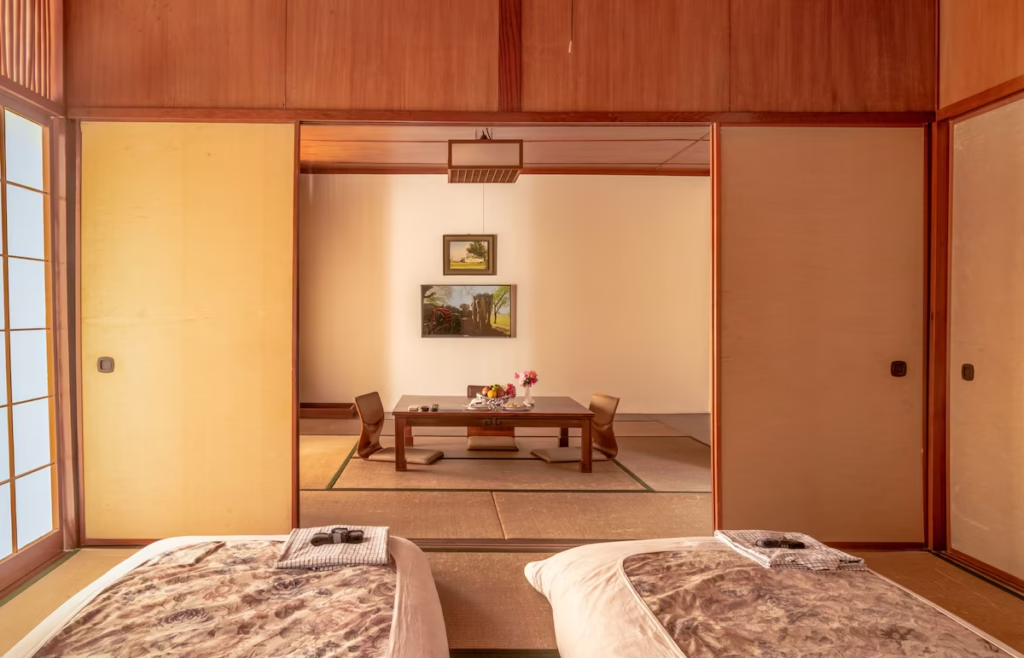
Business Hotel Taiyo is a classic choice in southern Osaka, close to Dobutsuen Mae Station and within walking distance of Tsutenkaku Tower, Tennoji Zoo, and the retro Shinsekai area. You stay in simple tatami rooms with futon bedding, or basic western style rooms, and share baths and some facilities with others.
What you gain in exchange is a very low price point and good train links. From here it is easy to reach Namba and Umeda by subway, and you can also connect to longer distance lines. If you want great location, and a more local feel and want to travel to Osaka without breaking the bank, this is the choice for you.
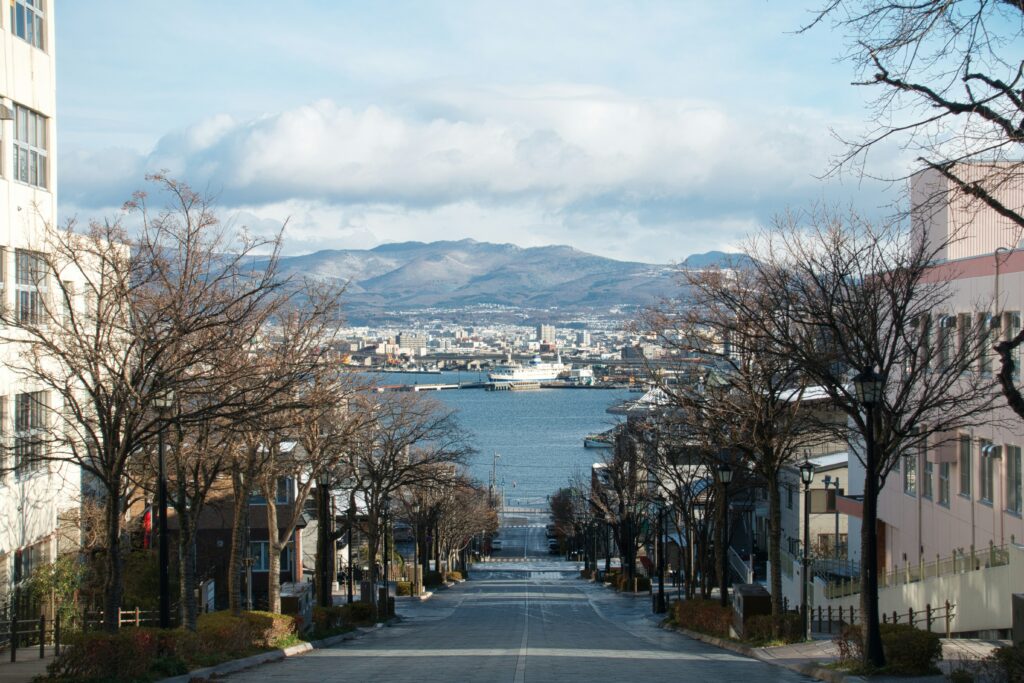
Hokkaido feels different from the rest of Japan. Wider streets, big skies, and a lot colder. Sapporo, the main city, is a good for a soft landing if you want to combine comfort with winter sports, hikes, and hot springs. In winter you can enjoy snow festivals and illumination, while other seasons bring parks, beer gardens, and easy access to the countryside.
Where to find calmness, and where to get excited:
Sapporo Station area. Offices, malls, and transit lines concentrate here. Active in daytime, quiet at night. Good if easy arrival and onward travel matter.
Odori Park area. Parks, museums, and seasonal events. Open and walkable. Good if you like green space and central location.
Susukino. Bars, ramen shops, and clubs dominate after dark. Busy evenings. Good if dining and nightlife are part of your trip.
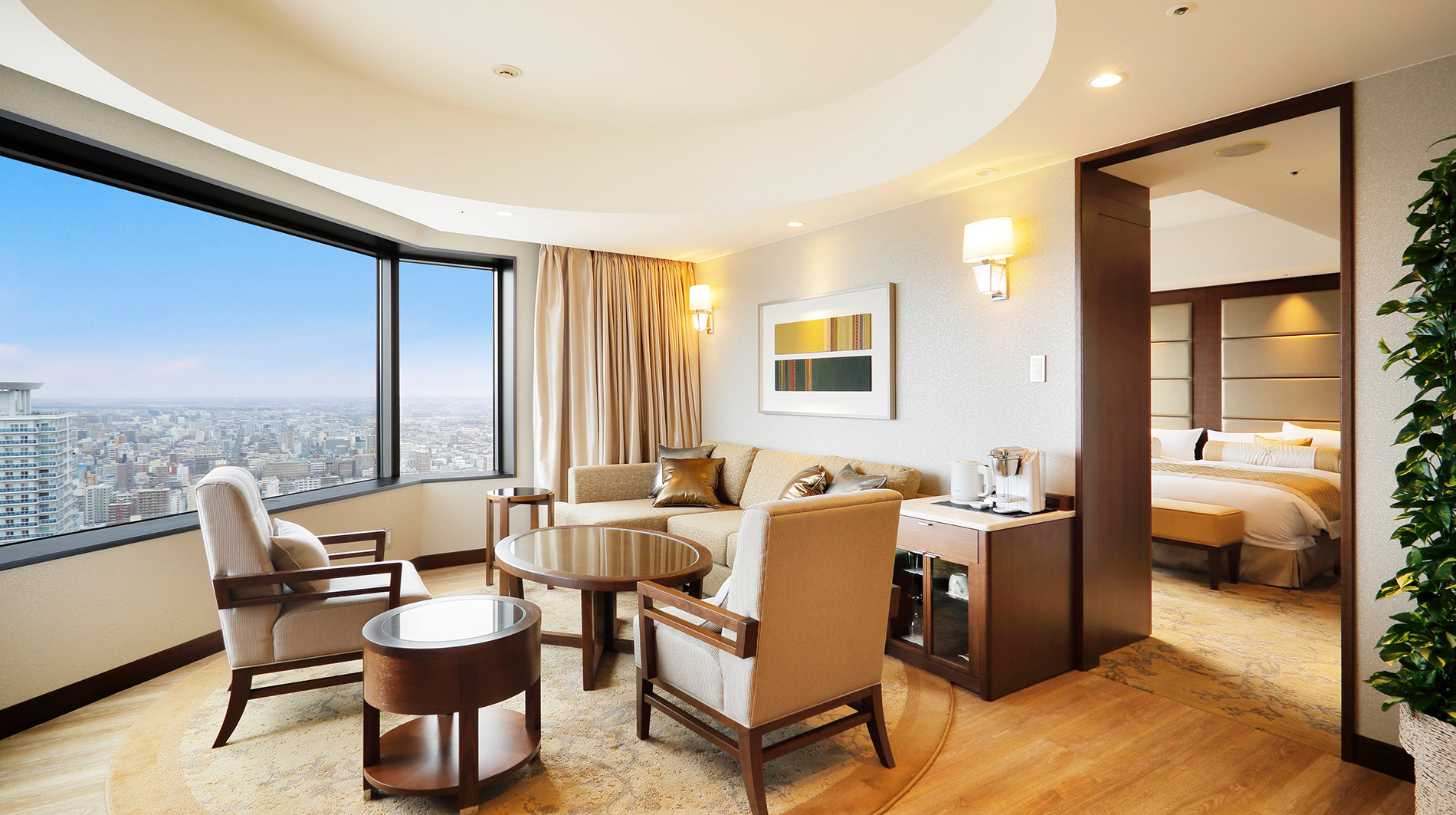
JR Tower Hotel Nikko Sapporo sits directly above JR Sapporo Station, which makes arrival extremely easy. You check in almost as soon as you step off the train. Rooms are placed on high floors, with big windows that look out across the city and toward distant mountains, and interiors that balance a clean business style with a warm, comfortable feel.
One of the major draws is the spa area with hot baths (onsen) and city views, a perfect way to recover from a long journey before heading out to explore. You also have quick access to malls, food, and local shops connected to the station complex. This is an ideal base for convenience, views(!!), and easy onward travel to ski resorts and other parts of Hokkaido.
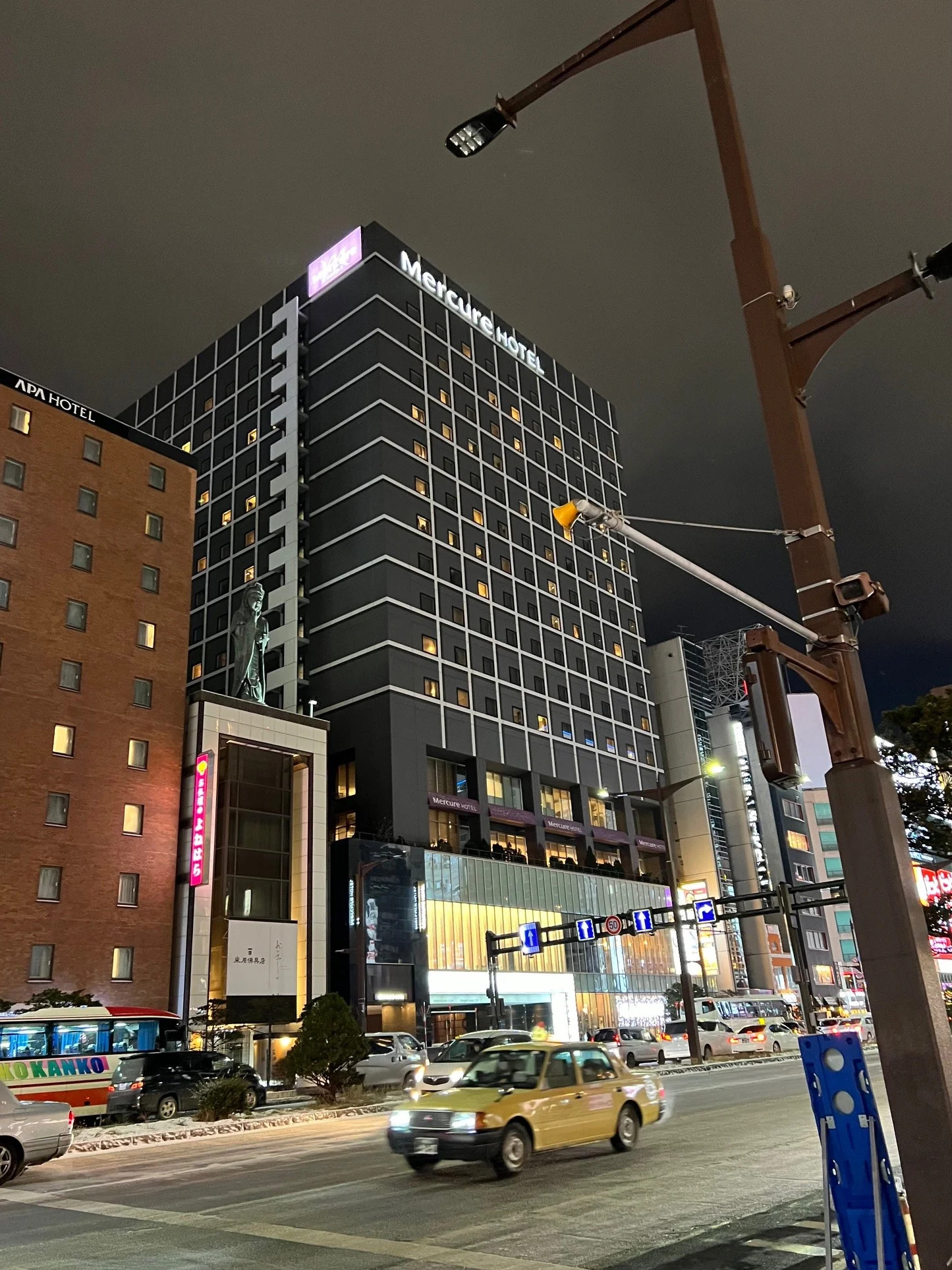
Mercure Sapporo sits near the Susukino district, Sapporo’s main entertainment and dining area. Rooms are modern, comfortable, and designed with a bit of European influence. Cleanl like everything in Japan, and comfortable layout for both short and longer stays.
From here you can walk to Odori Park, the Sapporo TV Tower, and many famous ramen shops and izakaya. The nearby subway stations give you quick access to other parts of the city. If you want a place from which you can step straight into Sapporo’s nightlife and food scene but still sleep in a quiet, well run hotel, this fits very well.
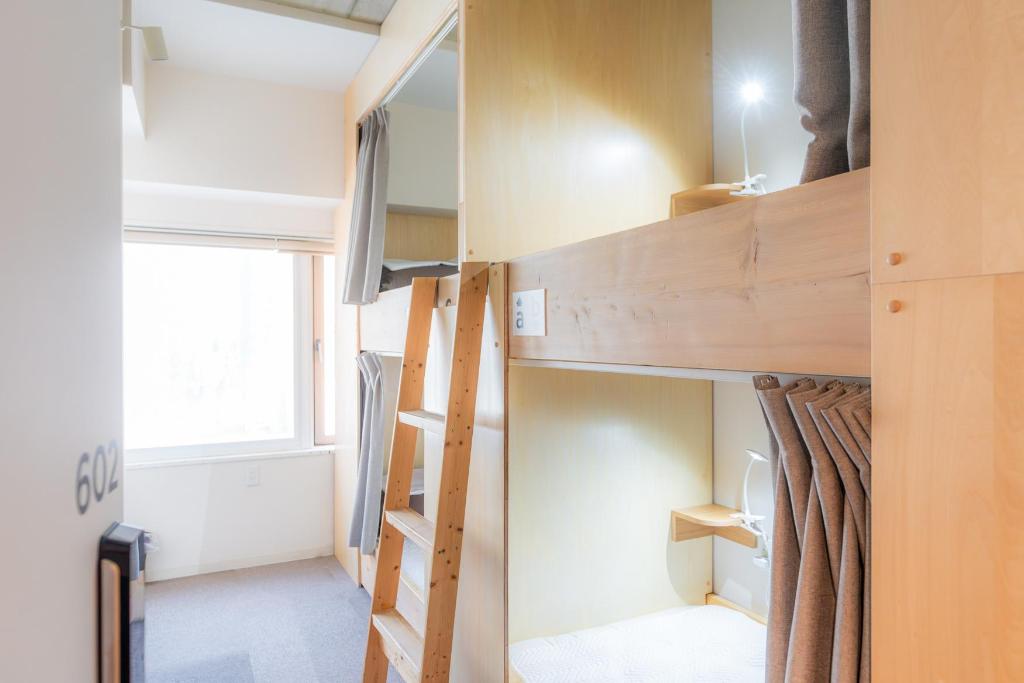
Grand Hostel LDK Sapporo, in the Odori or Susukino area, is a tall guesthouse that offers a mix of capsule beds, dorm beds, and private rooms. Rooms are simple but functional, with air conditioning, tatami floors, and a fully equipped shared kitchen and lounge.
You can walk to Odori Park and the Susukino nightlife area in a few minutes, and reach major sights and shopping streets without needing long transfers.
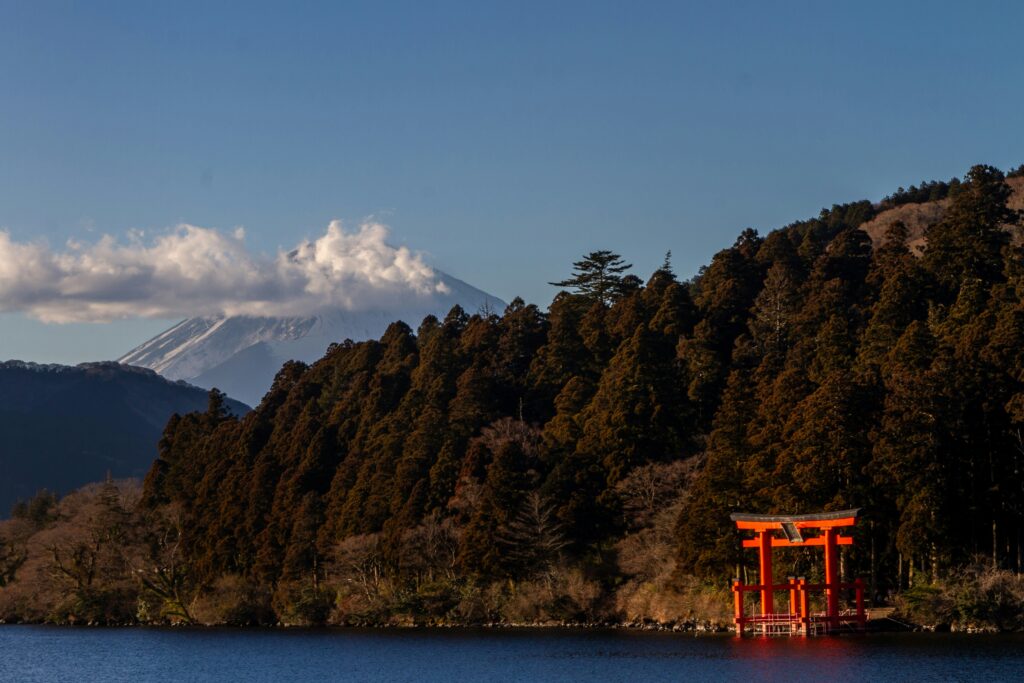
Hakone is one of the easiest places to reach from Tokyo, and one of the most rewarding. When you want mountains, hot springs, forests, the magestic Lake Ashi, and of course Mount Fuji, come here. Soak in onsen baths, look out toward forested hills or Mount Fuji, hike, and ride scenic trains and cable cars. A good base in Hakone usually means access to hot springs, a peaceful setting, amazing views from every window, and convenient links to local buses or stations.
Hakone’s areas are farther away from each other, with nature in between. Choosing the right one makes your trip 10x better:
Gora. Transport hub with many ryokan and hotels. Easy access to cable cars and trains. Good if you plan to move around Hakone.
Kowakien. Resort zone with hot spring hotels and museums. Very quiet at night. Good if relaxation is the main goal.
Lake Ashi area. Scenic but spread out. Focused on boat rides and views. Good if scenery matters more than convenience.
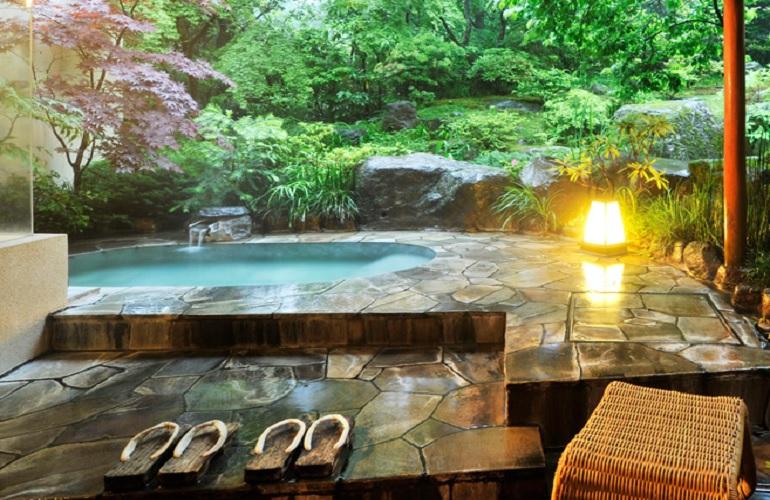
Private outdoor onsen at the Gora Kadan, considered to be one of the best in Japan
Gora Kadan sits in the Gora Onsen area inside Fuji Hakone Izu National Park. It’s a “Ryokan”, a traditional Japanese Inn whuch usually includes meals, and often has Tatari floors and private onsens, it is the height of japanese hospitality.
The Gora Kadan is built on the grounds of the former summer villa belonging to a member of the Imperial family, so you stay in a place with real history rather than a generic resort. The buildings combine traditional Japanese architecture with subtle modern comforts. Tatami rooms, sliding shoji screens, and carefully framed views make you feel like you stepped into a very refined version of old Japan.
Many rooms have private open air baths fed directly from the hot spring source, or deep wooden tubs overlooking small gardens. You eat seasonal kaiseki dinners that arrive course by course, and you can move between indoor and outdoor onsen, stone paths, and quiet corners of the garden. The ryokan is only a short walk or quick transfer from Gora Station, so you can still ride the cable car, visit Hakone Open Air Museum, and continue the Hakone circuit without effort. If you want your Hakone stay to feel deeply Japanese, calm, and a bit theatrical in the best way, this is the place.
Hakone Kowakien Tenyu is beautifully located, surrounded by hills and trees. Rooms follow a Japanese style with tatami floors and low furniture, and many have private open air baths on the balcony where you can soak while looking at the forested slopes. The design uses wood, stone, and water to create a calm, almost retreat like feeling rather than a busy hotel vibe.
You stay close to popular attractions like Yunessun hot spring theme park and several art museums, with local buses and shuttles making it easy to move around. Feels like a ryokan but still has a more contemporary look and clear English friendly structure. You can come as a couple, solo, or with family and still feel comfortable with the mix of tradition and modern convenience.
WPU Hotel Hakone, often still known by the former name Emblem Flow Hakone, is a budget friendly property in the Gora Onsen area just steps from Gora Station. It offers a mix of dorm beds, private rooms, and family rooms, designed with a simple contemporary style and bright, functional spaces.
One of its biggest advantages is the presence of hot spring baths and a very convenient location for using Hakone’s trains and cable cars. Shared lounges and a casual restaurant or bar area make it easy to relax in the evening without leaving the building. If you want an affordable way to enjoy real onsen culture in Hakone without giving up comfort or access, this is a very good fit.
Japan is a big country full of huge cities, breathtaking nature, and thousands of years of history. It can take a few days to find your legs in each new place. If you can find place that lets you arrive softly that’s half the battle won.
Tokyo gives you height and energy. Kyoto slows you down among rivers and temples. Osaka feeds you late at night. Hokkaido opens up the sky. Hakone wraps you in hot steam and mountain air.
Each hotel and hostel here is chosen to work well whether you come alone, as a couple, or with family, and to place you in a part of the city that makes sense for a first or short stay. Pick the city that matches how you want to feel on your first few days in Japan, choose the level of comfort that fits your style, and you already have the start of a very smooth trip.
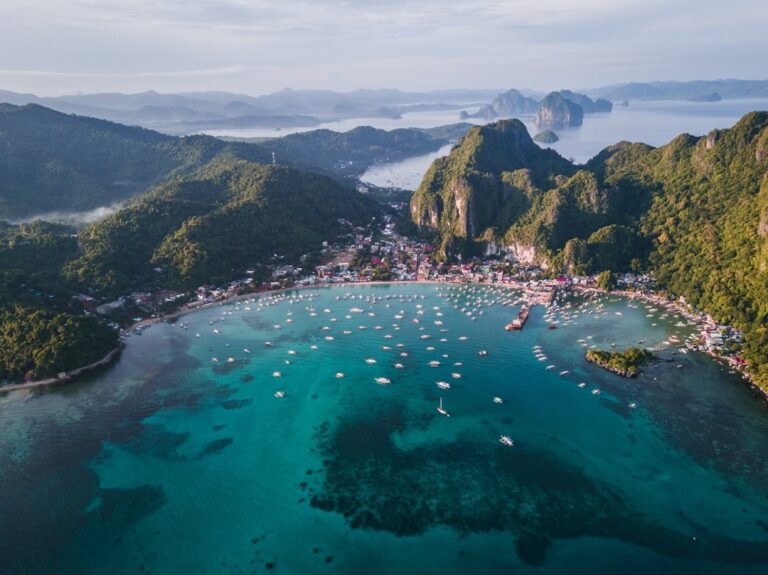
The Philippines is not a single trip. It’s a network of trips stitched together by short flights, ferry routes, and whatever traffic decides to do that day. With more than 7,000 islands in play, the smartest travelers treat geography as the main character. Not an afterthought.
Daily life runs on heat, humidity, and sudden weather changes. Even in the “good season,” rain shows up fast and leaves just as quickly. The wetter stretch usually sits around June to October, and typhoons are part of the national reality, sometimes arriving as early as August and lingering into January. A soft landing here means building buffer time into your plan and choosing hotels that don’t punish you for moving slowly.
Getting around is a mix of modern convenience and improvised local logic. Domestic flights are the glue for long distances, with Philippine Airlines, Cebu Pacific, and AirAsia covering most major routes. Boats take over for shorter jumps, especially in the Visayas, where ferries are often the only realistic way to island-hop.
Inside cities and towns, transport becomes a grab bag. Jeepneys and buses do the heavy lifting in many places, tricycles cover short distances, and motorcycle taxis show up when roads get narrow or steep. Ride-hailing apps like Grab are a major upgrade in bigger cities, because they cut out the bargaining layer and make arrivals easier to manage.
Airports deserve one practical warning. Manila’s NAIA is split across terminals, and connecting can require real time and patience. If you enter the country in Manila and then continue domestically, you may need to collect baggage, clear customs, and re-enter the system even on a through itinerary. That is normal here, and it changes how tight you can run your schedule.
Money and payments are similarly mixed. Cards work in malls, hotels, and higher-end restaurants. Cash still runs the street level, from tricycle rides to neighborhood food. ATMs exist, but planning a little cash cushion saves effort, especially outside Manila and Cebu.
The country’s history explains a lot of what you see today. Spanish rule stretched for more than three centuries, and it left the Philippines with Catholic churches, town plazas, and a cultural vocabulary that still runs deep. The American period that followed helped shape modern education, government systems, and the country’s unusually strong comfort with English.
Independence is also layered, like everything else here. The Philippines declared independence from Spain on June 12, 1898, and later gained formal recognition of independence from the United States on July 4, 1946. That double history shows up in monuments, holidays, and the way the country tells its own story.
Language is one of the easiest parts of travel. Tagalog and English are both official languages, and English is widely used in business, signage, and tourism. Regional languages dominate daily conversation, but most travelers can navigate comfortably without translation apps doing all the work.
Food is where the Philippines stops being “tropical” and starts being specific. Adobo is the famous one, meat braised in vinegar and soy with garlic and peppercorns. Sinigang is the sour counterpoint, built around tamarind and vegetables. Kinilaw is the coastal flex, fresh fish cured in vinegar and calamansi, closer to ceviche than sashimi.
Meals tend to be communal and customizable. Sauces matter. Vinegar matters. Texture matters. Filipino cooking is confident about mixing sour, salty, sweet, spicy, and smokey in the same plate, and it rarely apologizes for it.
Culture also travels well across the islands. Filipinos are famously social. Groups move together, families eat together. It’s one of the few countries where big-city chaos and small-town openness can exist in the same day without contradiction.
That’s why your first hotel matters more here than in many destinations. The right address doesn’t just give you sleep. It gives you traction. A place that’s close to the airport when you need it, close to the beach when you want it, and positioned so the next leg of the trip doesn’t turn into an unnecessary struggle.
Manila can hit hard if you arrive unprepared. Traffic is a nightmare, distances expand fast, and the city runs on neighborhood logic more than tourist zones. The smartest move is picking a hotel that reduces decisions. Close to transport, close to food, close to somewhere you can walk without negotiating a maze of highways.
Makati is the cleanest entry point for most travelers. It’s modern, dense, and built around walkable pockets like Greenbelt and Ayala Triangle. You get polished malls, strong dining, and a version of Manila that runs smoothly at street level.
Manila also rewards hotels that act like a pressure valve. Big lobbies, quiet rooms, solid service, and on-site dining matter here, because you’ll use the hotel more than you think on arrival day.
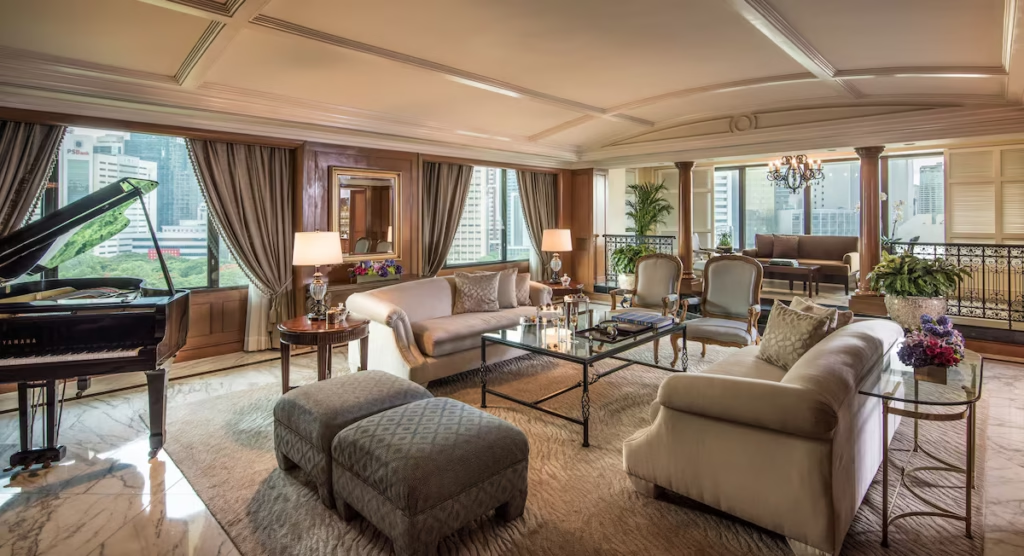
The Peninsula Manila suite with a spacious living room, grand piano, and large windows overlooking the city
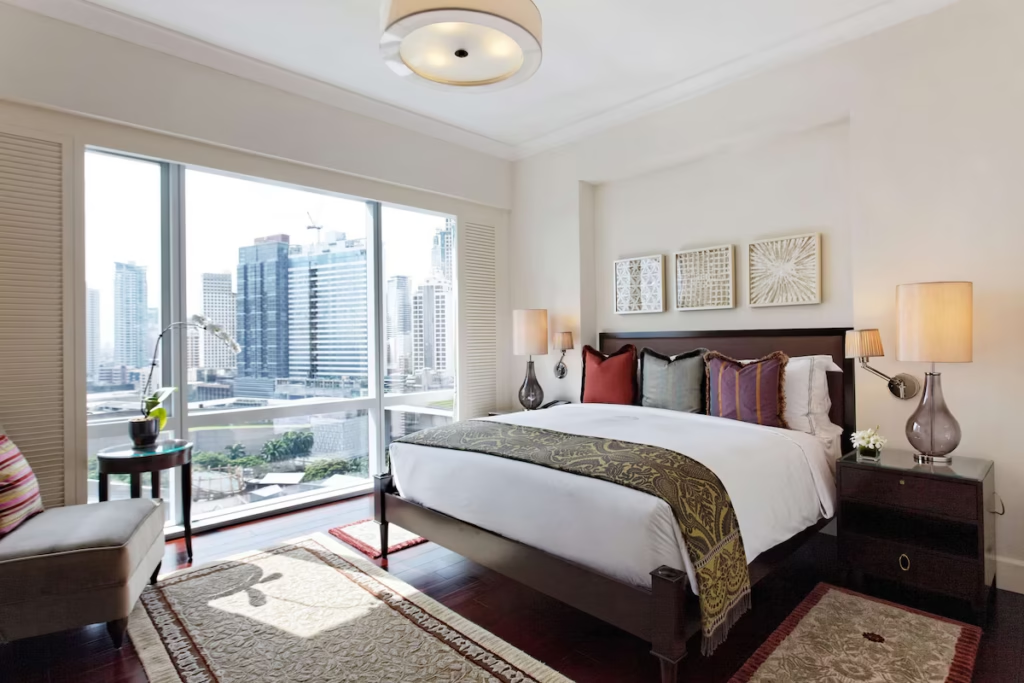
The Peninsula is old-guard Manila luxury, done with confidence. You get grand public spaces, a full-size pool, and a hotel that’s built for long pauses between plans. Rooms lean classic and spacious, with the kind of quiet that makes a difference in a city this loud.
It sits in the heart of Makati, with Ayala Triangle and Greenbelt within a short walk, plus easy Grab rides to BGC and the airport when traffic cooperates. This is one of the simplest ways to arrive in Manila and immediately have the city under control.
Raffles Makati is all suites, and it shows. Spaces are large, the setup is quiet, and the skyline views come standard in many categories. The hotel leans contemporary, with the kind of service that keeps small problems from becoming big ones.
You’re plugged directly into Ayala Center. Shops, dining, cinemas, and the Greenbelt complex sit right outside, and Ayala Triangle is close enough for an easy walk. It’s a rare Manila stay where you can land and live on foot for a couple of days.
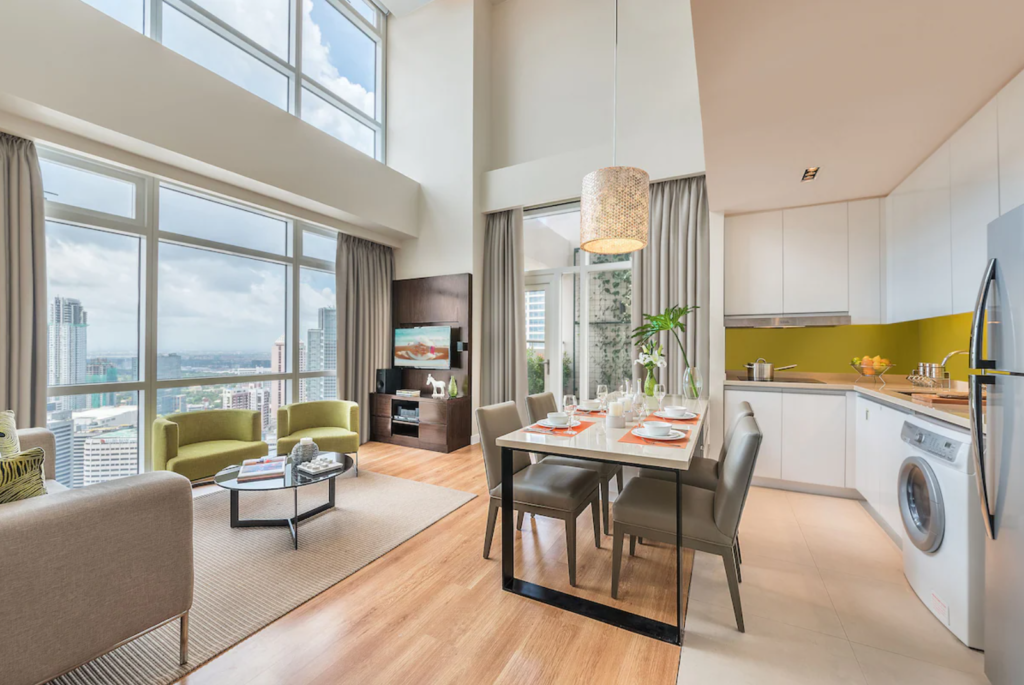
Citadines Salcedo runs more like a modern serviced residence than a standard hotel. Studios come with kitchen facilities, proper space to unpack, and a layout that works for stays longer than a weekend. It’s clean, practical, and designed for real use, not just passing through.
Salcedo Village is one of Makati’s most livable pockets. You’re a short ride from Greenbelt, and surrounded by cafés, small restaurants, and quieter side streets that make walking realistic. It’s Manila with fewer sharp edges
Cebu gives you two versions of the same trip. Cebu City brings malls, food, and urban convenience. Mactan brings beach resorts, short airport transfers, and a lower-effort start to island life. Many travelers use this area as a reset button between flights and ferries.
Mactan is where you go for water. Snorkeling, diving, and boat days are easiest when your hotel is already on the coast. Resorts here are built for staying put, with pools, beaches, and enough dining on-site to avoid planning.
Cebu City is better when you want movement. It’s easier for shopping, restaurants, and day trips inland. The best city hotels sit close to transport and give you calm rooms that block out the noise.
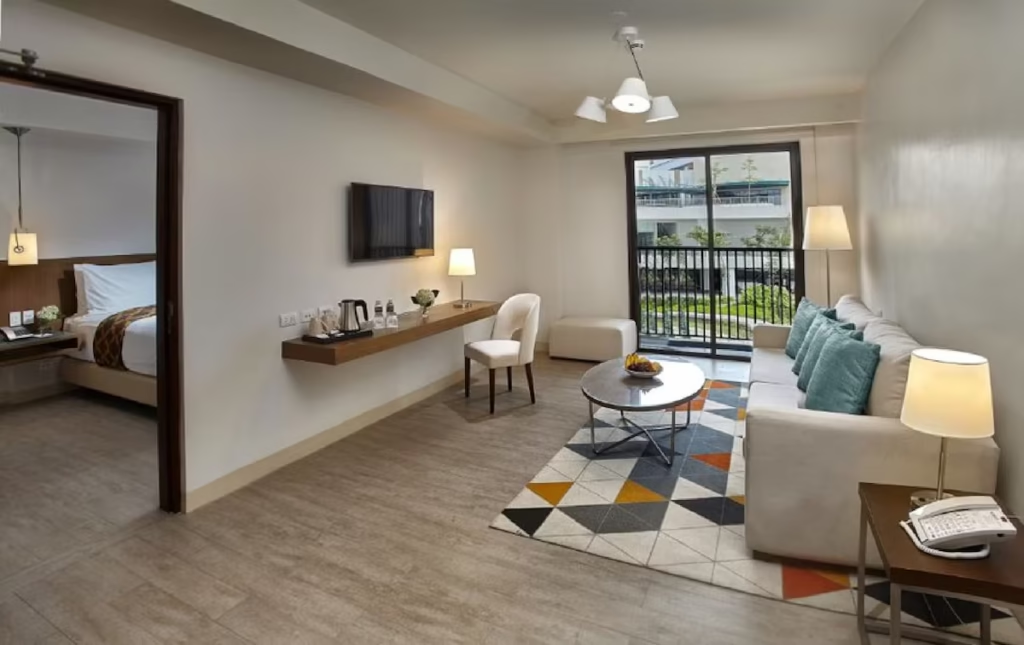
Shangri-La Mactan, suite with a living room, work desk, and sea views
Shangri-La Mactan is a full-scale beachfront resort, with a private beach, a large pool zone, and the kind of facilities that let you stay in one place all day without running out of options. It’s established, polished, and built to keep everything inside the resort running smoothly.
You’re on Mactan’s coast, away from the city grid, with quick transfers to the airport and straightforward trips across the bridge into Cebu City when you want restaurants and malls. It’s a classic “land, exhale, and begin the Philippines tomorrow” address.
Crimson is a modern beach resort with a clean layout, strong design, and plenty of breathing room across the grounds. Expect a wide pool area, direct beach access, and rooms that lean contemporary with good space standards.
It’s set on Mactan, close to the airport and within reach of island-hopping and dive day trips. Cebu City is still accessible by car, but the main advantage here is staying coastal and letting the city become optional.
Hop Inn is simple, modern, and sharply priced for what it delivers. Rooms are more spacious than average for the city, clean-lined, and built for sleep, with the basics done properly and nothing pretending to be more than it is.
You’re near Ayala Center Cebu, which puts restaurants, shops, and transport within easy reach. It’s a good landing spot when you want Cebu City access without paying for resort infrastructure you won’t use.
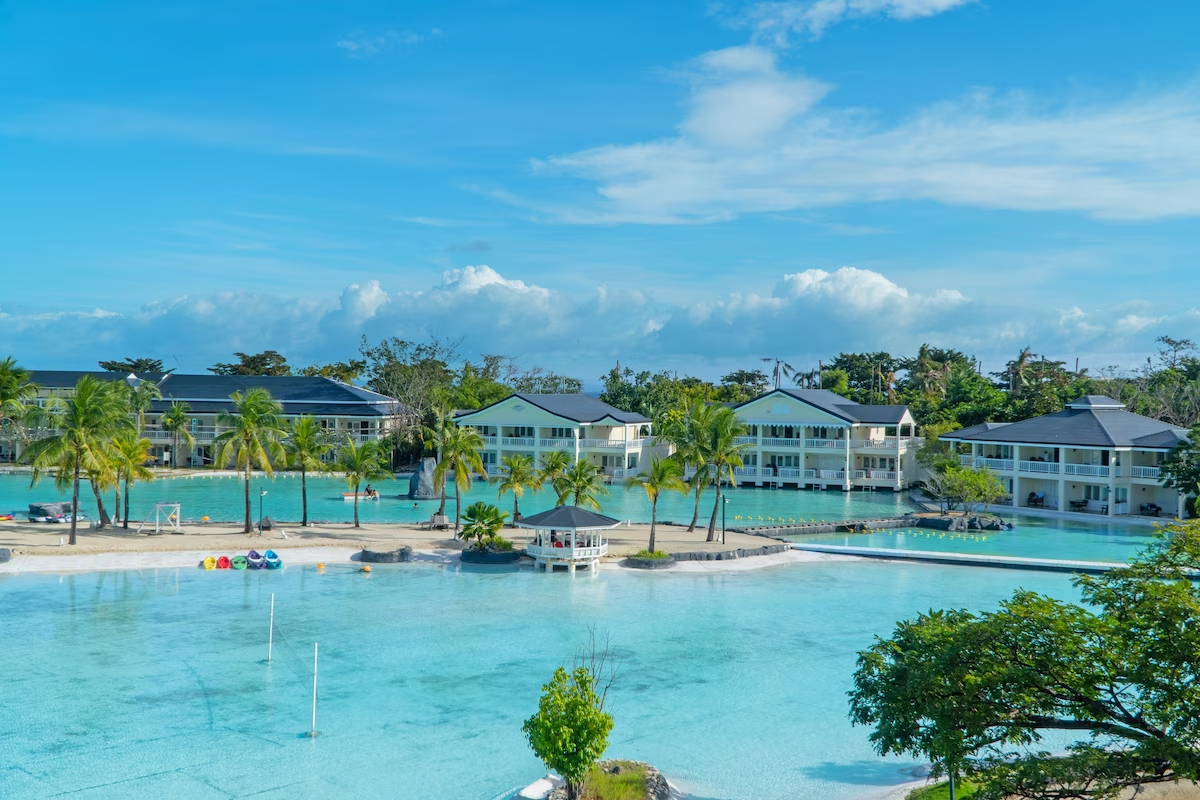
Plantation Bay Resort and Spa is a polished, resort-style stay with a strong sense of space and ease. Rooms are comfortable and well arranged, and the property has the kind of finish that makes it easy to settle in quickly. It feels expansive without being overwhelming.
It sits just outside central Cebu, set around its own private lagoons rather than on a busy public beach. The airport is within a manageable drive, and transport makes reaching the rest of Mactan and Cebu straightforward. You get full resort immersion without staying inside the city’s busiest corridors.
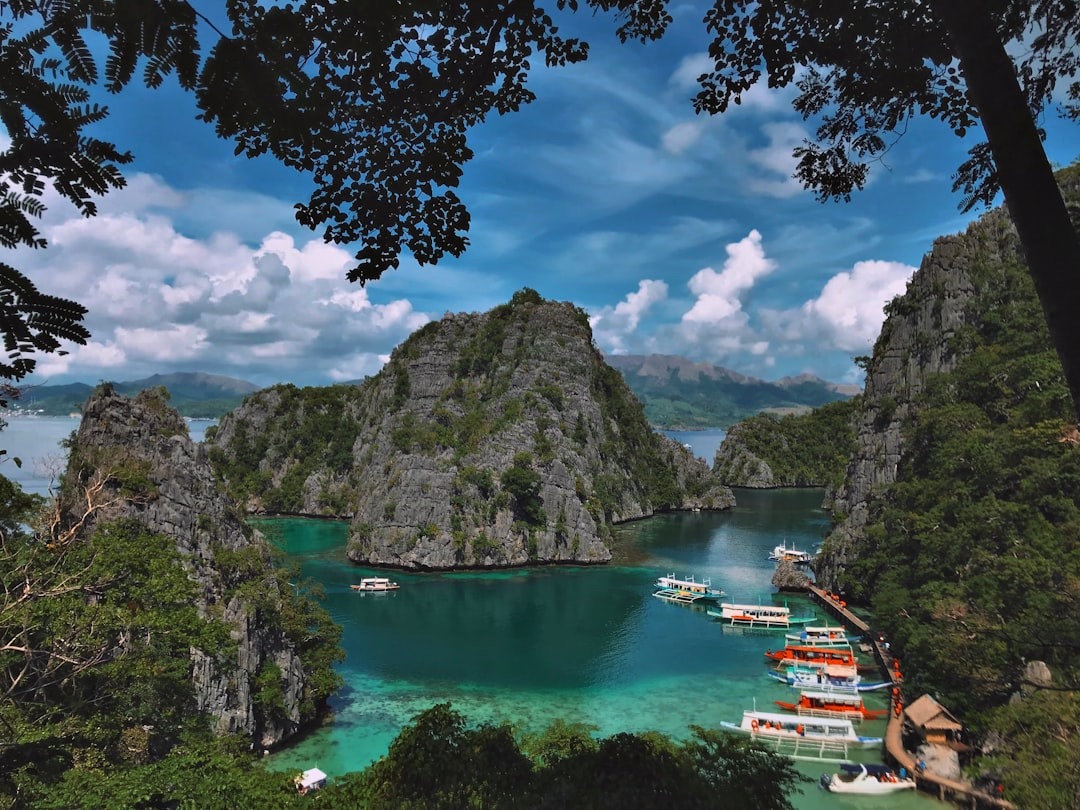
view of the clear turquoise water from the viewpoint at Kayangan Lake in Coron, Palawan
Palawan is the Philippines at its most photogenic. Limestone cliffs, clear water, and islands that look edited even when they aren’t. It’s also spread out. Coron, El Nido, and Puerto Princesa all play different roles, and choosing the right one saves you hours of transit.
Coron is best for boat days and dramatic seascapes. El Nido is the headline destination for lagoons and island hopping, with more dining and energy in town. Puerto Princesa is the practical gateway, with the main airport and a slower pace.
A soft landing in Palawan comes down to access. Close to the port if you’re doing tours. Close to the airport if you’re arriving late. A hotel that can handle logistics without making you chase answers.
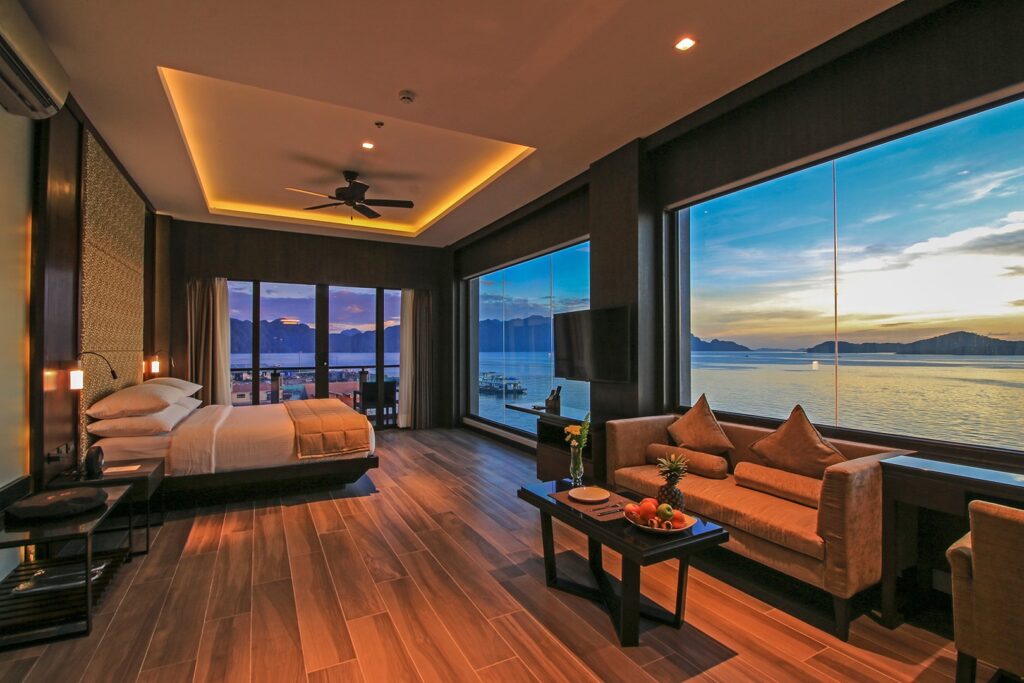
Two Seasons Coron Bayside Hotel, room with large windows overlooking the sea
Two Seasons Coron Bayside sits on the waterfront in Coron, with airy rooms and bay-facing views that make the location obvious the moment you arrive. It’s polished, modern, and built for travelers who want town access without town chaos.
You’re in the town proper, close to the port area where boats depart and where most restaurants cluster. That saves time and keeps Coron simple. Walk for dinner, book tours quickly, then come back to a quiet room above the noise.
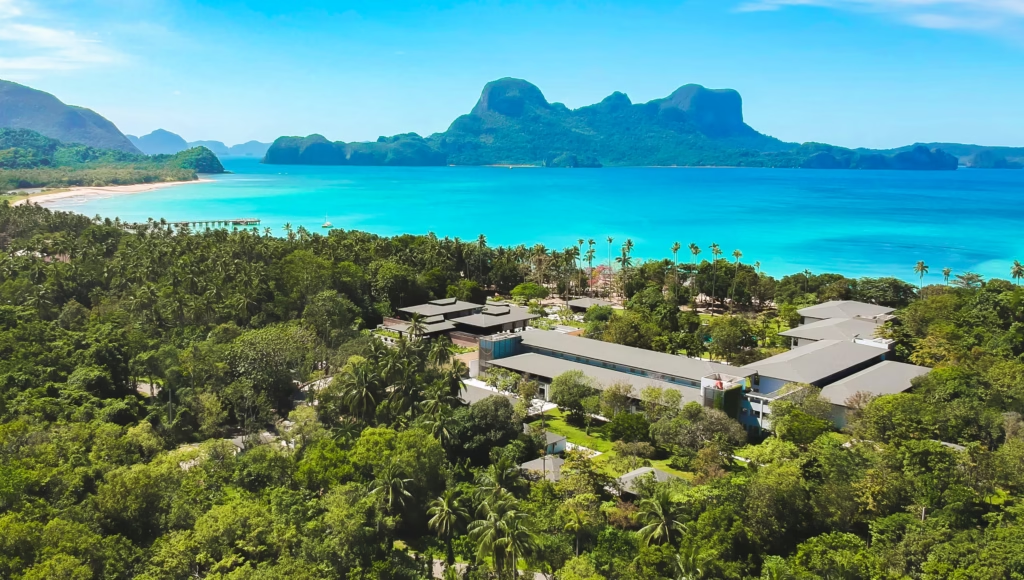
Seda Lio is a full resort setup on a calmer stretch near El Nido, with the space and polish you’d expect from a modern beach property. Expect a strong pool scene, proper dining on-site, and a layout designed for staying put between excursions.
It’s set close to El Nido’s airport area, which makes arrivals painless, and it’s still within reach of El Nido town when you want the main restaurant strip. This is El Nido without the congestion at your doorstep.
Canvas Boutique Hotel is a clean, modern city hotel with an easy layout and a practical setup for transit days. Rooms are simple but well-finished, and the hotel keeps the basics tight.
You’re in Puerto Princesa, close to the airport and the city’s main services, which makes this a smart stop before heading north to El Nido or out to island tours. It’s a good place to land, sleep properly, and move on without friction.
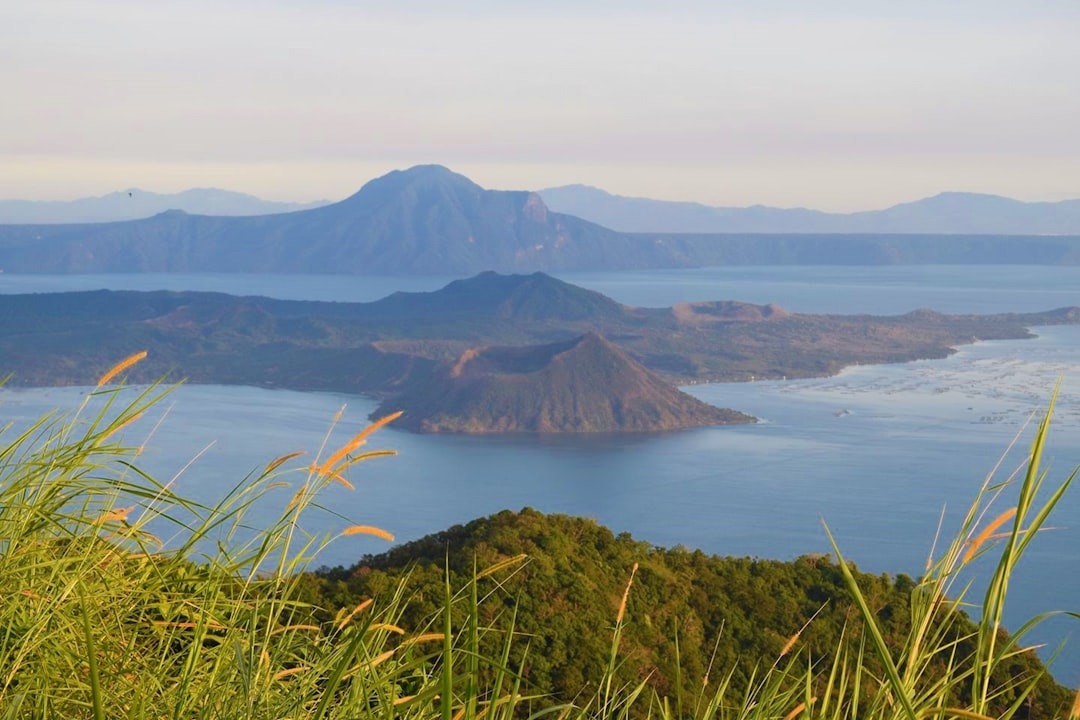
Tagaytay is famous for having a lake on an island with volcano within a lake on an island. It’s also the Philippines’ classic “weekend out of Manila” move, and it works for travelers too. It’s closer than most people expect, high enough to cool down, and built around the simple pleasure of looking out over Taal Lake and the volcano.
This is not a place for ticking off landmarks. It’s for slowing the schedule down. Good food, wide views, and hotels that lean into space and greenery matter more than being in the middle of anything.
Staying in Tagaytay makes sense when you want a break between big city days and island flights. It’s also one of the easiest ways to get a completely different version of the Philippines without leaving Luzon.
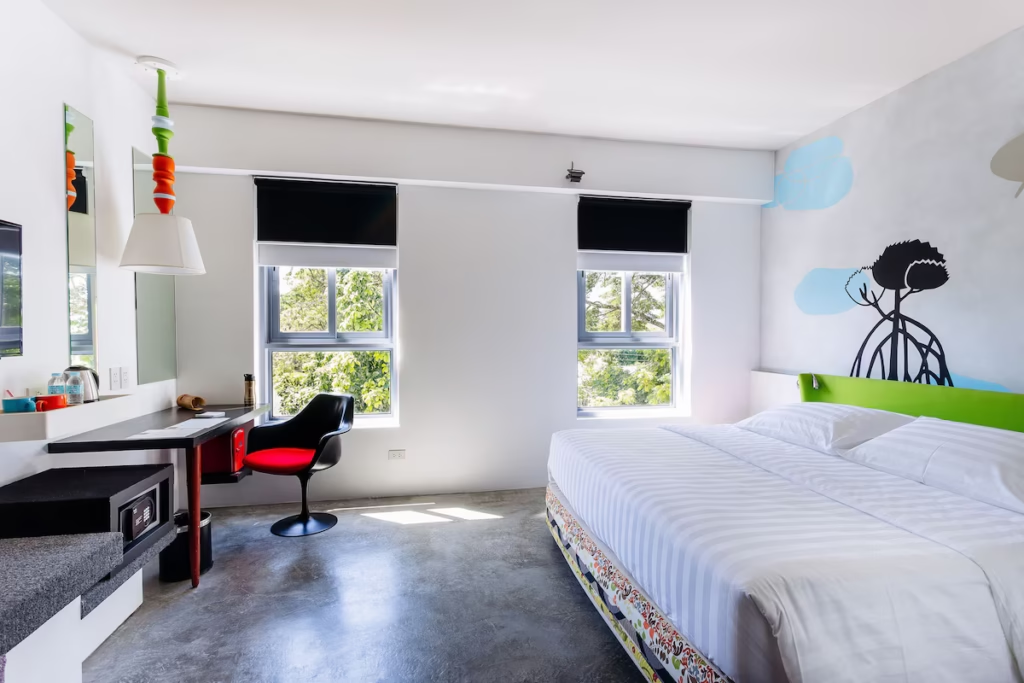
Anya Resort Tagaytay, room with wood accent wall and large windows
Anya is a modern resort-style property with strong design, a spa setup, and rooms that give you real space to settle in. The facilities are the point here. Pool time, quiet common areas, and a hotel that treats rest like an actual feature.
You’re in Tagaytay proper, close to the main road network, which keeps restaurants and viewpoints within a short drive. It’s easy to combine this with a road trip loop without turning every day into a logistics project.
Twin Lakes Hotel is a lakeside-facing stay built around views, balcony rooms, and a more resort-like pace than most city hotels in the area. It’s a good pick when you care about scenery from your room and want shared spaces that aren’t an afterthought.
It sits in the Twin Lakes area, which puts you away from the densest Tagaytay traffic and closer to the ridge-side stretches people come here for. Expect short drives for meals, plus easy access to the main Tagaytay routes.
Quest is a straightforward, modern hotel with an outdoor pool, a simple layout, and rooms built for short stays that still need proper sleep. It’s clean, efficient, and easy to navigate even on a quick stop.
You’re a few minutes from Ayala Malls Serin, which makes food, coffee, and errands genuinely convenient. It’s also a handy jump-off point for Picnic Grove and the ridge viewpoints without needing to cross the whole city.
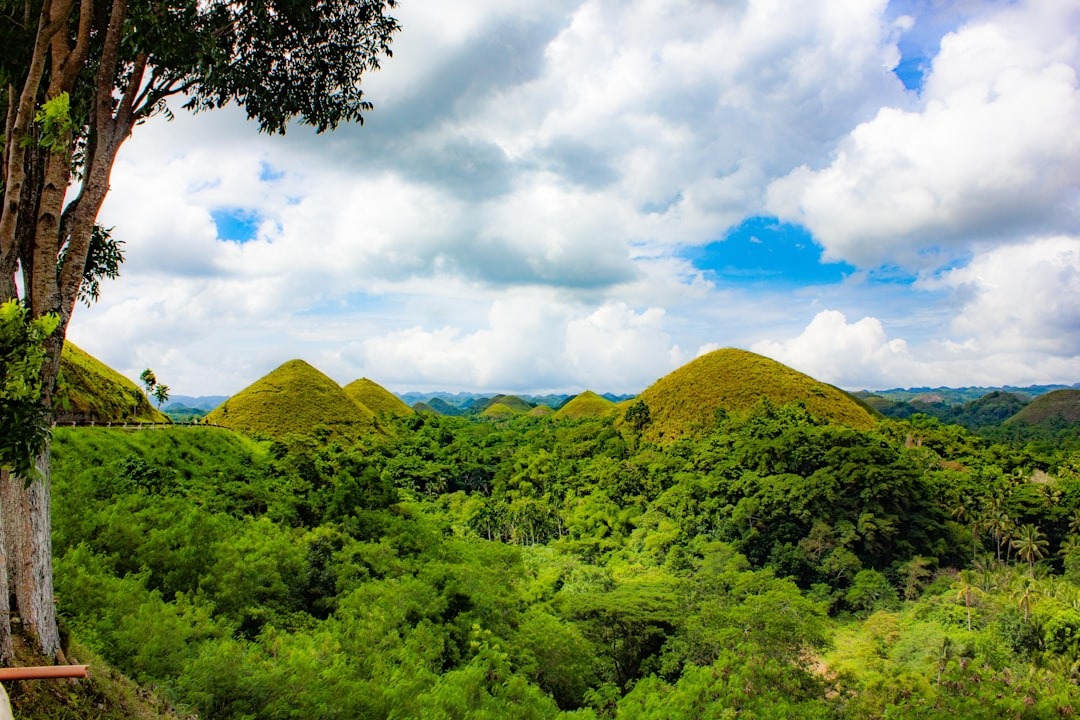
View of the Chocolate Hills in, Bohol, Philippines
Bohol is a gentle entry into island travel. You get clear water and beach access on Panglao, plus the option to day-trip inland for the Chocolate Hills, rivers, and small towns that still run at a slower pace.
Bohol is where I spent the majority of my time in the Philippines, sitting in a small fishing village near Anda, snorkeling, playing basketball, and enjoying fresh fish straight from the ocean.
Panglao is where most travelers stay, because it’s where the hotel infrastructure is. That means more dining options, more transport, and fewer compromises. You can still reach the main sights, but you don’t spend the entire trip in vans.
The soft landing advantage here is balance. You can do two days of nothing and two days of day trips, without changing hotels or fighting ferry schedules.
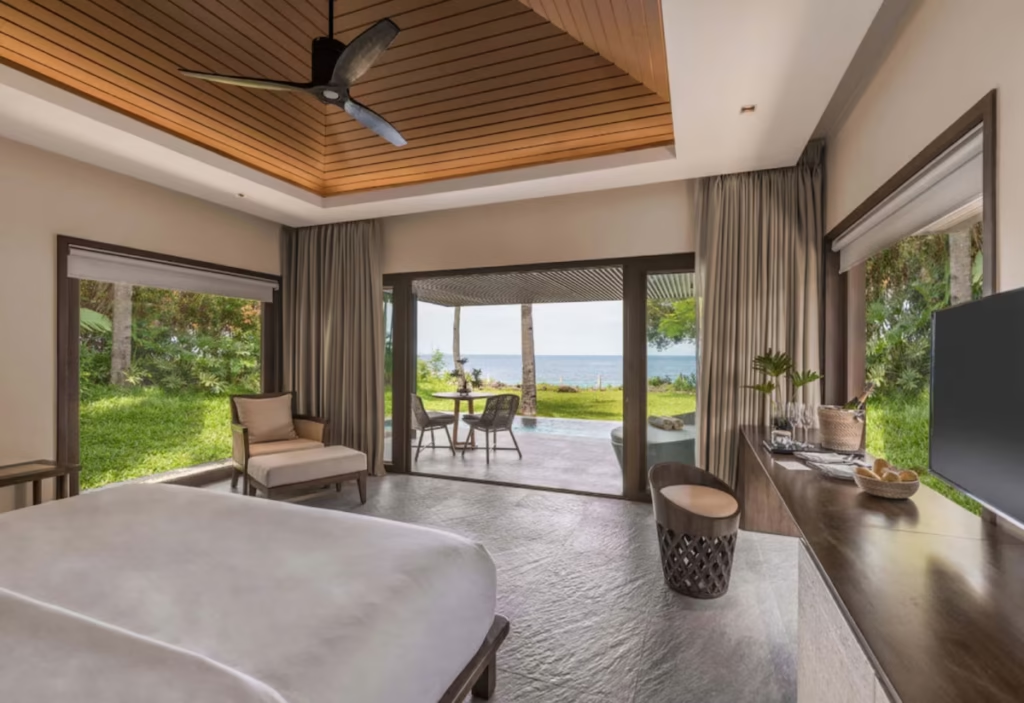
Amorita Resort, room with wood accent ceiling and private patio overlooking the beach
Amorita is a cliffside resort with serious space and a calm, high-end layout. Expect multiple pools, big rooms, and a property that’s designed to keep you inside the grounds when you want a slower day.
It sits just above Alona Beach, close enough to reach restaurants and boat bookings without relying on long rides, while keeping your room away from the loudest parts of the strip. This location gives you both access and separation.
Bluewater is a classic beach resort with a large pool area, direct shoreline access, and a wide, family-friendly layout. Rooms are built in a low-rise spread, so the place stays open and easy to move through.
It’s on Panglao, a short ride from the busiest Alona stretch, which keeps dining options close while giving you quieter nights. This area is also well positioned for day trips across Bohol without spending hours exiting the resort zone.
Bohol Beach Club is about one thing done properly. A long, clean beach with space to sit, swim, and stay all day without competing for a square meter of sand. The property keeps the look simple and lets the shoreline carry the experience.
It sits away from the busiest nightlife pocket, so the surroundings stay quieter, but you’re still within reach of Panglao’s dining and transport network by tricycle. This is one of the easiest ways to get a beach-forward stay without the party strip outside your door.
Dumaguete is a university city with a relaxed center, a coastal boulevard, and a rhythm that suits travelers who don’t want constant stimulation. It’s a good spot for a few days of decompression without the resort bubble.
The real power move here is pairing Dumaguete with Dauin. Dauin sits south of the city and is known for diving, including trips out to Apo Island. It’s one of the easiest places in the Philippines to do high-quality underwater days without complicated transfers.
Expect practical travel here. Tricycles, short rides, local restaurants, and days that are easy to adjust as you go.
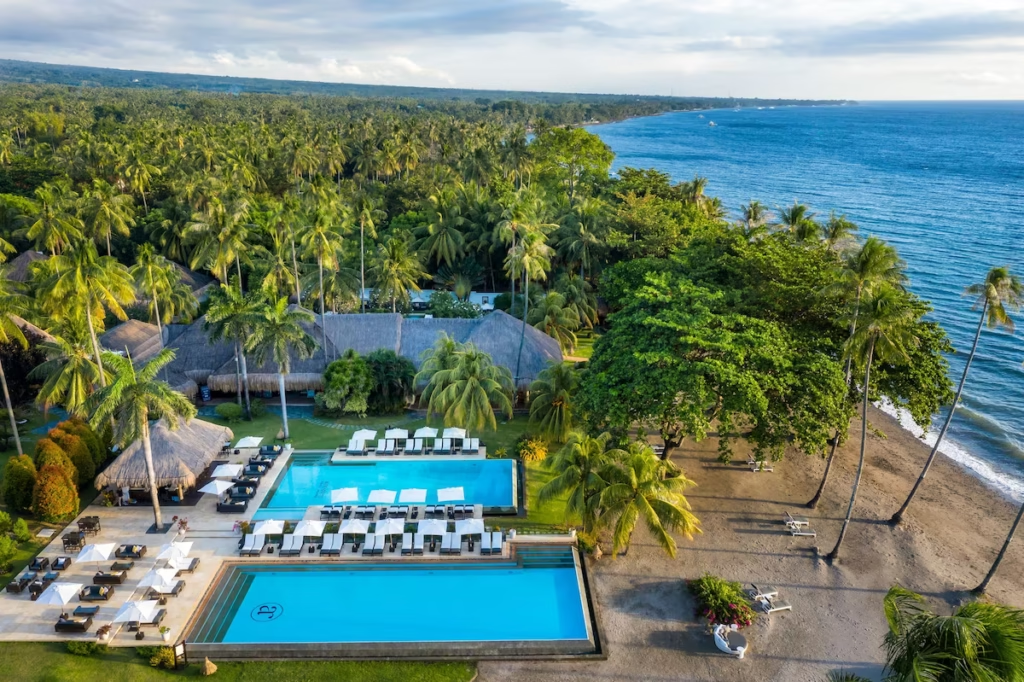
Aerial view of the pools at Atmosphere Resorts & Spa and the beach
Atmosphere is a full resort on the Dauin coast, built around diving, a spa, and a polished tropical layout. Expect large grounds, a strong pool setup, and enough dining on-site to keep things simple between excursions.
You’re in Dauin, which is the advantage. Apo Island trips and local dive sites are within easy reach, and Dumaguete City is still accessible by car when you want cafés and supplies. This location keeps the trip focused on the water without cutting you off from the city entirely.
The Bricks is small, stylish, and urban, with rooms designed around clean lines and good use of space. It’s the kind of place that prioritizes sleep, simple design, and quick check-in over resort theatrics.
You’re close to Dumaguete’s central pockets, including the boulevard and the city’s food zone, which keeps evenings easy without planning. This is also a simple launch point for day trips out to Valencia or down toward Dauin.
M.Y. Hotel is a modern city stay with a straightforward setup and a more contemporary style than most mid-city options. Rooms are clean and efficient, designed for travelers who want a sharp standard without going full resort.
It’s set close to Dumaguete’s main roads, which makes airport transfers quick and day trips painless. If your plan includes Apo Island, Valencia, and lots of short rides, this location keeps movement simple.
Salagdoong Beach, Siquijor with clear turquoise waters
Siquijor is the antidote to busy travel. It’s small, green, and slow in the best way. Roads loop the island, distances stay short, and most of what you do here can be planned in half a sentence.
The island’s reputation leans mystical in pop culture, under the Spanish the island was called Isla del Fuego (Island if Fire) because of the millions of fireflies lighting its beaches at night, making it look engulfed in blue flames. but the reality is practical. Waterfalls, snorkeling, sunset coast roads, and low-key beach bars. It’s a place that rewards travelers who like days with fewer moving parts.
A soft landing here comes from choosing a hotel with its own shoreline or a view, because Siquijor is at its best when you don’t need to “go somewhere” to enjoy it.
Coco Grove Beach Resort, beachfront room with private patio overlooking the sea
Coco Grove is a full-feature beach resort with its own stretch of sand, cabanas, and multiple pools. It’s built for staying on-property without getting bored, with enough space between areas that it never turns into one long queue.
You’re in San Juan, the island’s main dining and beach zone, with short tricycle rides to restaurants and easy routes to the island loop. Apo Island trips typically run via Dumaguete, but local snorkeling and beach days are right here.
Infinity Heights is a hilltop stay designed around wide views and quiet nights. The headline is the infinity pool and the open-air vantage point, which gives you Siquijor’s landscape without needing a beachfront address.
It sits above the main coastal road, which means a short ride down to the beach zone and restaurants, and a more private setting once you’re back on site. This is a good pick if you want scenery and sleep quality over being on the sand.
Mandala Tribe Treehouses leans into the jungle side of Siquijor, with elevated rooms and a more nature-forward layout. It’s not a resort. It’s a small, distinctive place that makes the stay part of the story.
You’re closer to inland sights like waterfalls and forest roads, with the coastline still reachable by scooter or tricycle. This location fits travelers who plan to explore the island loop and want something different from a standard beachfront strip.
Aerial view of Daku Island in Siargao with white sand beach and turquoise waters
Siargao is surf-first, but it’s not only for surfers. The island has grown into a real travel hub, with good cafés, solid restaurants, and that mix of beach culture and long-stay expat comfort that keeps people extending their trips.
General Luna is the center of gravity. It’s where the restaurants cluster, where Cloud 9 sits nearby, and where most visitors want to be. The best hotels here understand that you’ll spend the day outside, then come back for a shower, a swim, and dinner without needing transport drama.
If you want a soft landing in Siargao, pick a property with direct beach access or a strong pool scene. The island is humid, you will swim, and it matters.
Aerial shot of Nay Palad Hideaway from the beach in the evening
Nay Palad is the kind of resort the Philippines rarely does at this level. You’re looking at a tiny number of exclusive villas, a serious design concept, and a full-on luxury experience that’s built to remove friction from the trip.
It’s set outside the busiest General Luna strip, which keeps the surroundings quieter while staying close enough for a short ride into town. Surf breaks and island exploration are still within reach, but the property itself is a destination-grade stay
Isla Cabana is a beachfront resort with a private beach area, an outdoor pool, and spacious villa-style rooms with balconies. It’s built for travelers who want a real resort setup without leaving General Luna’s main action behind.
Cloud 9 is around 3 km away, and the main restaurant stretch of General Luna is close enough to do on foot or by a quick tricycle ride. This location is the best part of the stay. You’re near the surf, near the food, and still sleeping by the water.
Bravo is a smaller beachfront stay with a clean, modern setup and an on-site restaurant that’s genuinely useful. Rooms keep things simple, and the place is built around easy beach access and a social, relaxed layout.
You’re in General Luna, close to the main road where most of the island’s transport and dining sits. That keeps scooter rentals, cafés, and surf lessons within minutes, without needing to plan your day around long rides.
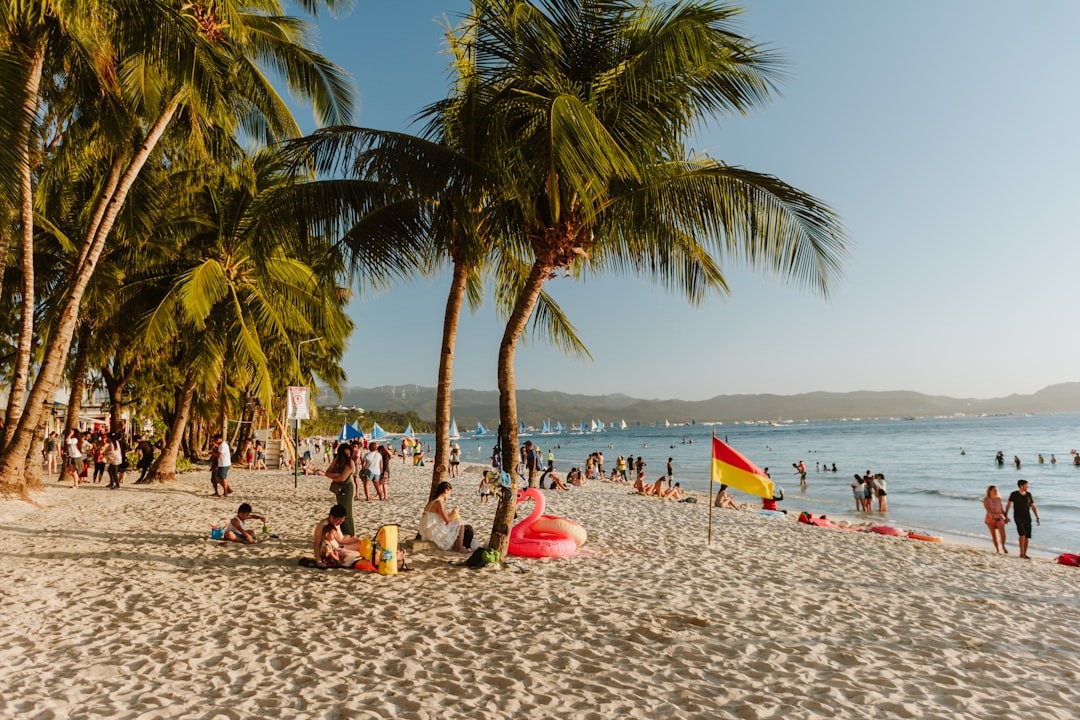
Boracay is busy because it’s good at what it does. White Beach is long, swimmable, and lined with hotels and restaurants that make a beach trip easy even if you’ve done zero planning. It’s one of the few places in the Philippines where you can arrive and immediately understand the whole setup.
The island is split into stations. Station 1 is quieter and more upscale. Station 2 is central and convenient. Station 3 runs cheaper and looser. Where you stay shapes the trip more than almost anywhere else in the country.
Boracay is also logistics-heavy on arrival. Transfer boats, short vehicle hops, and some waiting. A good hotel here helps with that, or at least makes the last leg worth it.
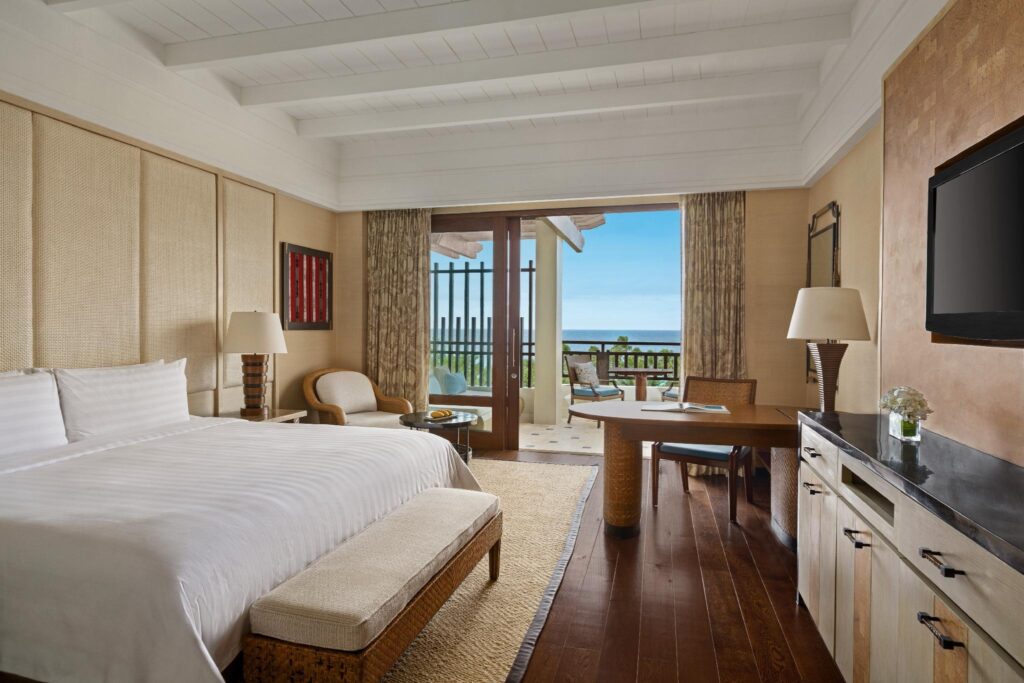
Shangri-La Boracay, room with wood flooring and a patio overlooking the sea
Shangri-La Boracay is a true resort escape with its own private beach, beachfront pools, and a large-scale setup designed to keep everything in one place. The rooms are big, the grounds are lush, and the whole property is built around staying on-site without compromise.
It sits away from the White Beach crowds, with a short ride into town when you want restaurants and nightlife. This location is the point. You get Boracay’s best water and calm shore time, without living inside the busiest strip.
Discovery is a Station 1 beachfront classic, with resort-level service, strong dining, and direct access to the calmest stretch of White Beach. It’s polished without being stiff, and it delivers the Boracay experience people picture.
Station 1 keeps things quieter while staying walkable to Station 2 when you want more restaurants and shopping. You can move down the beach on foot, then come back to a section that stays less chaotic at night.
Coast Boracay is a modern beachfront hotel with a pool, a tight layout, and a service style that keeps logistics smooth, including a free airport shuttle. Rooms are contemporary and practical, and the hotel keeps the energy upbeat without turning into a party property.
You’re on Station 2, which puts you in the most convenient part of the island. Dining, bars, and water activities are right outside, and you can walk the length of White Beach without planning transport. This is Boracay on easy mode.
A soft landing in the Philippines is mostly a logistics decision disguised as a hotel choice. Choose the right neighborhood, pick a property with real sleep quality and real access, and the country becomes dramatically easier to travel.
Manila rewards precision. Cebu rewards choosing city or shore, and committing. Palawan rewards planning around ports and airports. The islands. Siquijor, Siargao, Boracay. Reward you for placing yourself close to the thing you actually came for.
Do that, and the Philippines stops being intimidating. It becomes what it’s meant to be. A chain of great days, linked together by good decisions you made early.
Nepal is one of the world’s most “authenic” countries. Not because it’s quiet. It isn’t, not all of it. Kathmandu can hit like a wall of sound and scooters. Trails can humble you fast. Weather changes plans. Nepal rewards travelers who arrive with a little patience and a lot of spirit of adventure.
The magic sits in the mountains, and the contrast between them and Nepal’s southen flatlands. Nepal holds eight of the world’s fourteen 8,000-meter peaks, including Everest at 8,848m. Yet the country also drops into the subtropical Terai, where jungle and wildlife replace altitude and cold air. That variety is why Nepal trips can feel like three different journeys stitched together.
A soft landing in Nepal means choosing places that remove friction early. Good sleep. Helpful staff. Calm spaces that make the first days smoother, especially if you’re adjusting to the pace, the dust, or the altitude. Get the start right and Nepal opens up fast.
Pilgrimage town near one of the world’s highest temples
A meaningful stop, but built around basics
Pilgrims, Mustang travelers, focused itineraries
Kathmandu, where the noise holds centuries
Kathmandu is Nepal’s capital. A city of courtyards and chaos, where sacred sites sit beside workshops, markets, and small shrines that still run daily life. It’s also one of Asia’s densest heritage zones. The Kathmandu Valley’s UNESCO clusters include the main Durbar Squares, Boudhanath and Swayambhunath stupas, and major temples like Pashupatinath.
The city’s geography shapes the experience. Kathmandu sits at about 1,400 meters above sea level, inside a bowl-like valley, which keeps the air cooler than the plains and makes it a comfortable first stop before heading higher. It also means the city can trap dust and traffic noise, especially during busy seasons. Choosing a hotel that gives you quiet and space pays off fast.
Kathmandu also works as a staging ground. You can lock in practical errands in Thamel, then switch to deep history in Patan or Bhaktapur, or step into the Buddhist circuit around Boudhanath. Most travelers end up doing a mix. Your “soft landing” hotel is what makes that mix enjoyable, instead of exhausting.
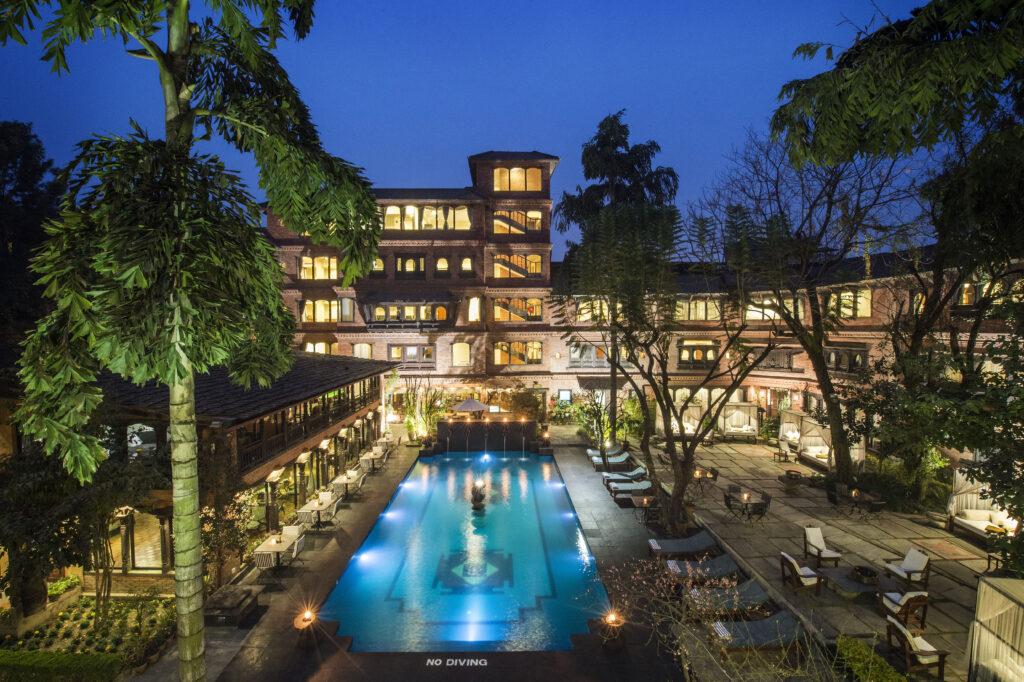
Dwarika’s Hotel is a luxury hotel in Kathmandu, Nepal. It is located in Battisputali. The hotel is a collection of various traditional heritage Nepali houses that congregate around courtyards and considered one of Nepal’s finest hotels.
Dwarika’s Hotel is built around rescued traditional carpentry and old Newari homes, which gives the property a museum like quality. Rooms and suites feature carved woodwork, terracotta tiles, and locally made furnishings, creating an authentic feel that highlights Nepali craftsmanship. The hotel includes several restaurants and a courtyard pool inspired by historic royal baths. Its spa focuses on regional treatments, and guests often praise the sense of calm and the cultural depth that the property brings to a stay in Kathmandu.
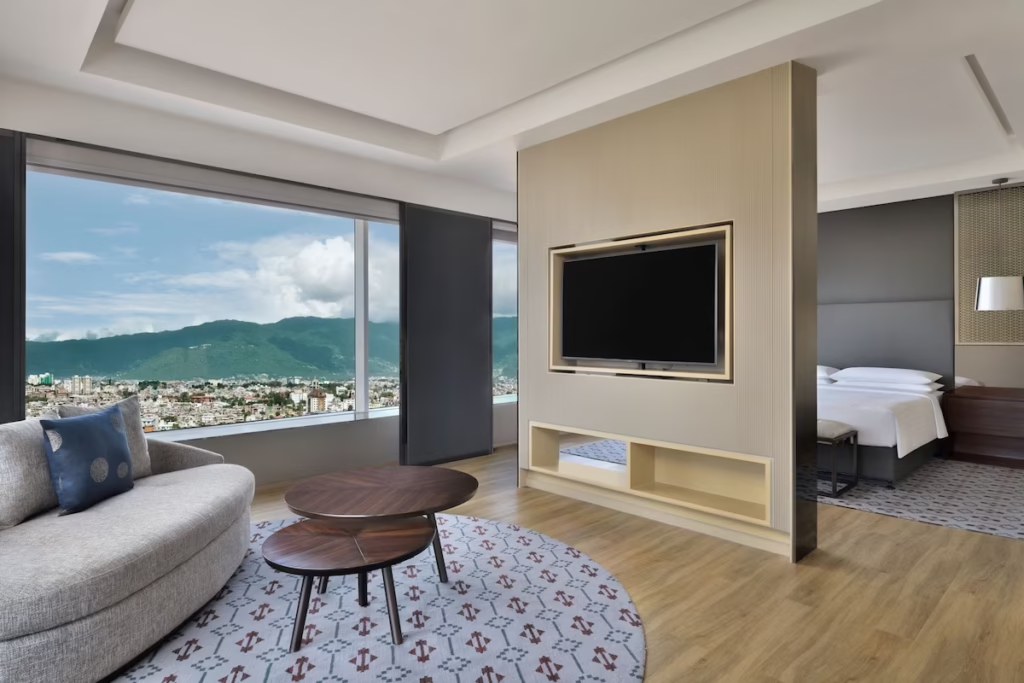
Hyatt Regency Kathmandu sits on huge grounds near Boudhanath Stupa, offering a resort like atmosphere close to the city center. The architecture draws on local motifs and the rooms overlook gardens or the stupa, giving a quiet, green setting for arrival. Facilities include a large outdoor pool, fitness and spa options, jogging paths, and multiple dining venues that suit families, mountaineers, and business travelers alike. The hotel is practical for visitors who want easy access to pilgrimage sites and city attractions while staying in a tranquil environment.
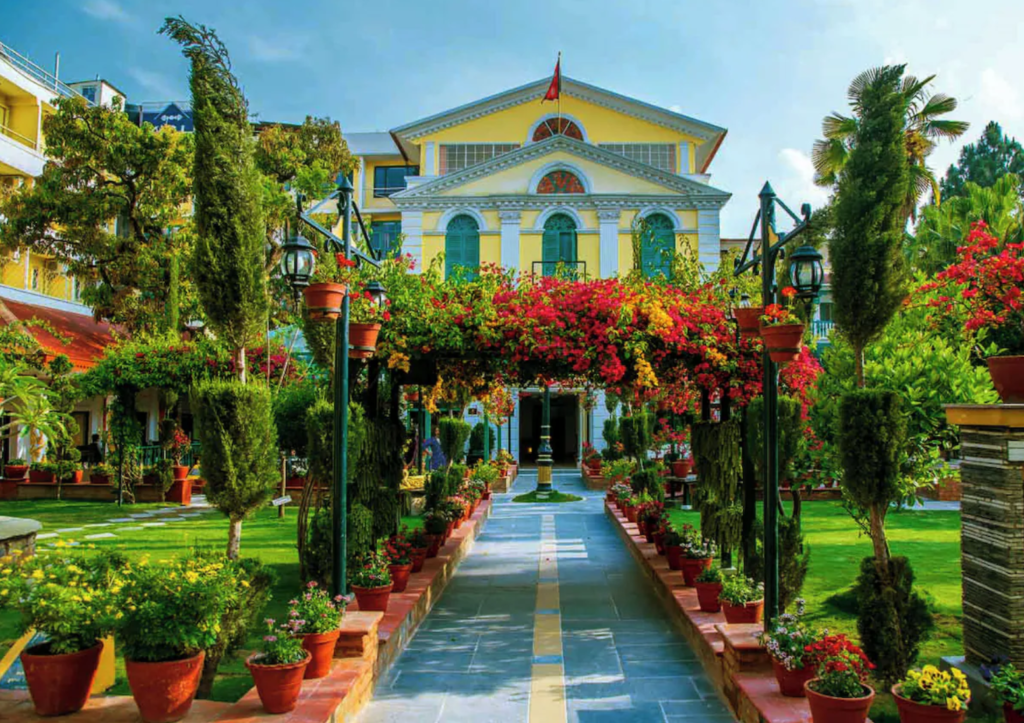
Kathmandu Guest House is a long established property in the heart of the Thamel neighborhood, Kathmandu’s main tourist district. Known for its green front garden and heritage charm. The building dates back decades and combines old style architecture with comfortable rooms and a welcoming atmosphere. Beyond lodging, the guest house hosts a small museum of Nepali art and spaces where local artists display work. Its central location makes it simple to reach shops, restaurants, and transport, while the gardens provide a calm retreat from the busy streets.
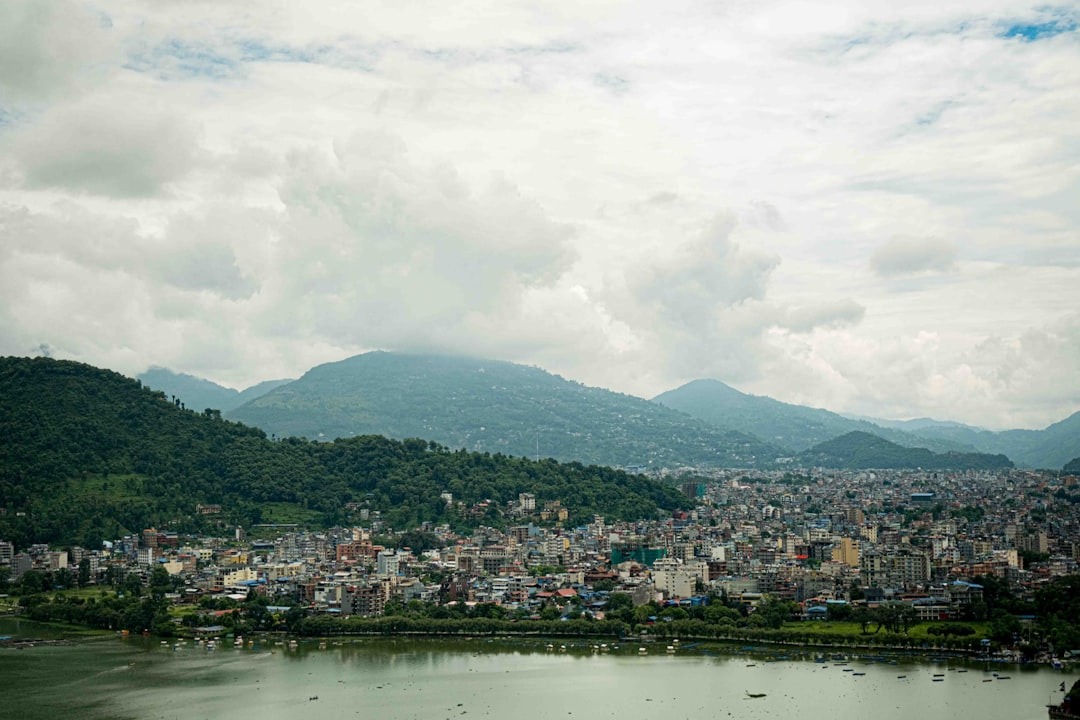
Pokhara is Nepal’s pause button. It sits at 822 meters above sea level, on the eastern shore of Phewa Lake, with the Annapurna range sitting close enough to dominate the skyline on clear days. It’s the gateway city for the Annapurna region, so it pulls in trekkers, families, and anyone who wants mountain scenery without committing to serious effort.
Lakeside is the only area that makes sense for a true soft landing. It’s where the cafés are, where you can walk without planning, and where the lake is part of daily life. Boats drift out to Tal Barahi Temple, which sits on an island in the middle of the water and anchors the whole shoreline visually and culturally.
The key is choosing the right pocket of Lakeside. Some stretches are busy and bright at night. Others sit back behind gates and gardens. In Pokhara, the best hotels keep you close to the lake’s, then give you quiet once you’re inside.
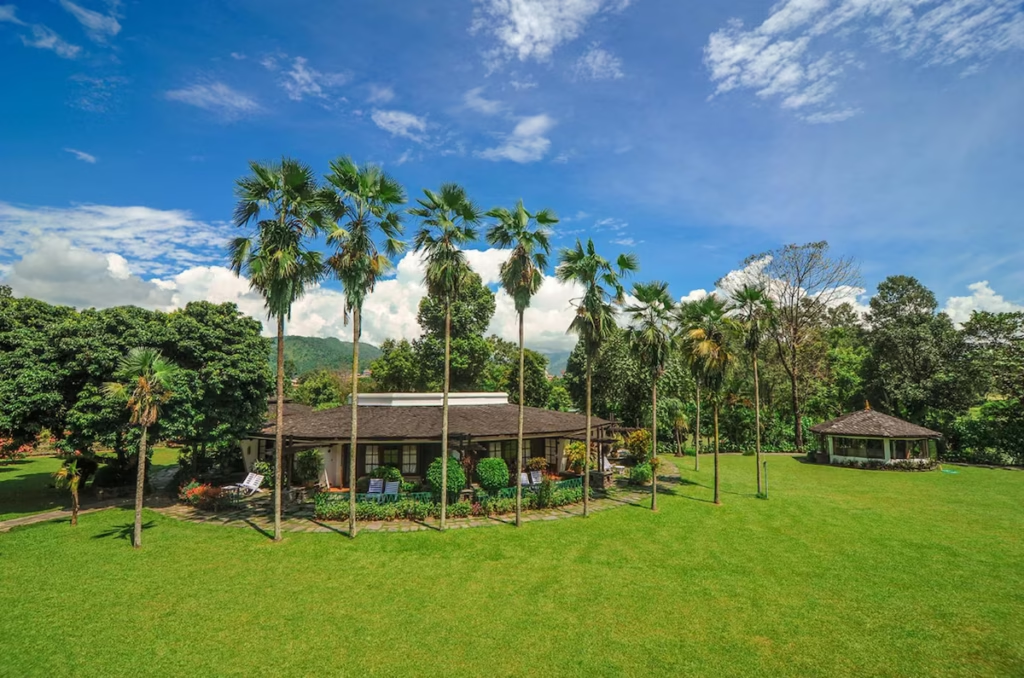
Fish Tail Lodge is a classic for a reason. It sits on its own peninsula, surrounded by water and greenery, with views that make the whole place feel slightly unreal in the best way. The layout is low-rise and relaxed, the grounds are generous, and the pool and open space give you that rare “I can actually slow down” sensation.
The location is its own experience. You reach the property by a short boat crossing from Lakeside, which creates instant separation from the busy shore. You’re still minutes from Pokhara’s restaurants and shops, but the lodge stays quiet and self-contained once you’re back on its side of the lake.
Hotel Barahi is a long-running Lakeside classic that’s been updated without losing its identity. Rooms are polished and comfortable, the pool is a proper feature, and the property runs like a full-service resort without being oversized. The spa and on-site dining help too, especially if you want an easy day without planning anything.
It sits right on the Lakeside strip, close to Phewa Lake and the main restaurant zone, which keeps everything walkable and flexible. This is the kind of address where you can step out for the lake, shops, and cafés in minutes, then come back behind the gates to something calmer and more contained.
Temple Tree blends boutique design with resort comfort, with a private garden in central Lakeside. The architecture nods to traditional forms without going theatrical, and the property runs on calm routines: clean rooms, a pleasant pool area, and a pace that makes sense after a long travel day.
It’s about 150 meters from Phewa Lake, which puts you close to the waterfront without living on the loudest strip. Restaurants, shops, and boat points are an easy walk, and the airport is a quick drive when you’re moving on.
Chitwan is Nepal’s lowland reset button. A UNESCO-listed national park in the subtropical Terai, it protects one of South Asia’s most important pockets of wildlife, including the greater one-horned rhinoceros and the Bengal tiger. It’s also Nepal’s first national park, established in 1973, which gives the place a long track record of conservation and infrastructure that actually works.
The landscape is full of variety. Sal forest, open grassland, and river systems like the Rapti and Narayani create the mix that keeps sightings possible and days varied. Chitwan’s “signature” activities are jeep safaris and river time, with canoe sections that bring gharials and birdlife into the frame without turning the whole experience into a theme park.
On the ground, most travelers base themselves around Sauraha or Meghauli, depending on whether they want more restaurants and comfort nearby, or more space and quiet at the edge. Chitwan is an easy add-on from Kathmandu or Pokhara by road, and it lands well after long flights because the pace drops instantly, even when the surroundings stay vivid.
Green Park is a comfortable, well-equipped base with a strong resort layout, including a pool and generous outdoor space. It’s a good “arrive, exhale, reset” property, especially if you’re coming from dusty road travel.
It’s within about 300 meters of the Rapti River, Chitwan National Park, and the Elephant Riding Point area, which puts you close to the park edge while still being near Sauraha’s services and transport links.
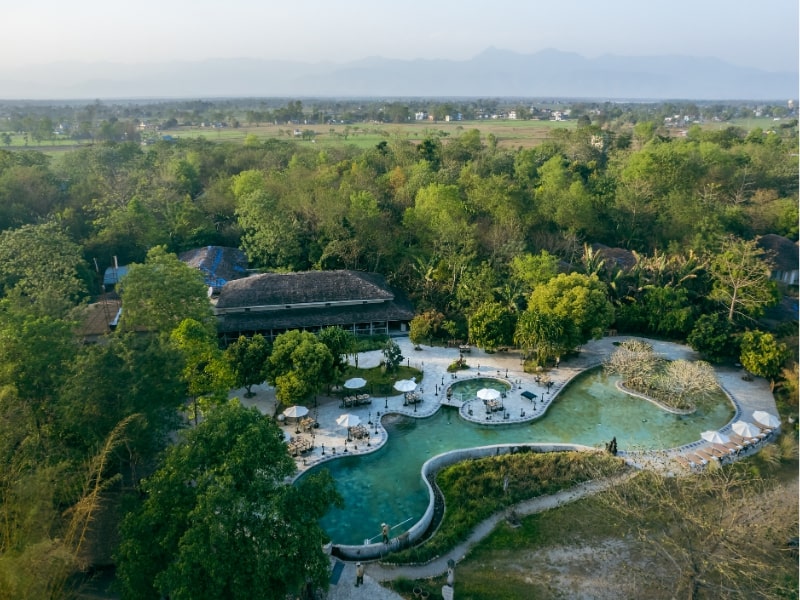
Barahi Jungle Lodge sits on the banks of the Rapti River in Meghauli, right on the edge of the park. The setup is lush and composed, with a strong lodge atmosphere, thoughtful rooms, and the kind of property design that keeps you connected to the landscape without living rough.
Meghauli is quieter than Sauraha and works well when you want nature front and center. You’re positioned for river views, park access, and early starts that don’t require chaotic town traffic.
Kasara goes minimalist and gets away with it. The design is contemporary, using local materials and clean lines, and the rooms are set up for calm recovery between jungle drives. It’s polished, but not precious.
The resort sits on the border of Chitwan National Park, which keeps safari logistics simple and quick. You get the advantage of access without sacrificing sleep quality or comfort.
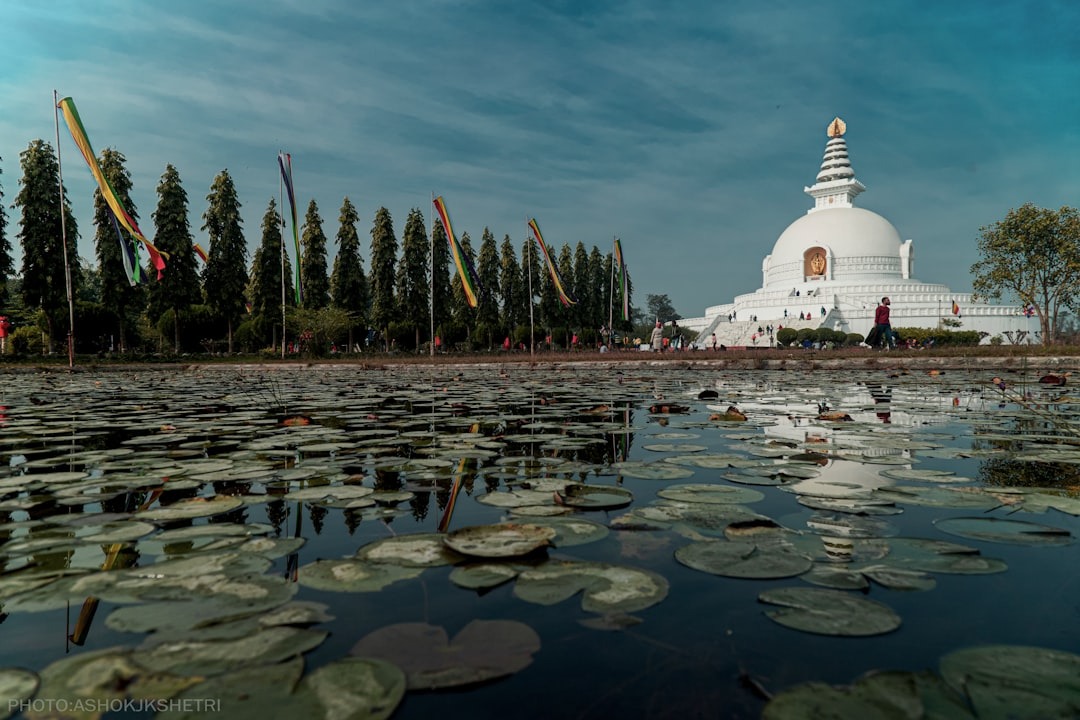
Lumbini is one of the most significant addresses in Buddhism. It’s recognized by UNESCO as the birthplace of The Buddha, Siddhartha Gautama. That’s THE Buddha, capital T, the original. The core site revolves around the Sacred Garden area, where the Maya Devi Temple and Ashoka’s commemorative pillar anchor the historic claim. The result is less “tourist attraction” and more living pilgrimage ground, with archaeology, devotion, and quiet gravity in the same space.
What makes Lumbini unusually interesting is its design. The wider zone follows the Kenzo Tange Master Plan, which organizes the area into distinct sections including a monastic zone split by a central canal, with monasteries funded and built by Buddhist communities from around the world. Architecturally, it turns into a slow walk through global Buddhism, from Thai and Burmese forms to more modern interpretations.
Practicalities are simple, but the climate is not subtle. Lumbini sits in the Terai lowlands near Bhairahawa, with broad open paths and limited shade in places, so the experience leans on pacing and hydration more than stamina. Access is easiest via Siddharthanagar and the Gautam Buddha International Airport area, built to improve connectivity to the region.
Buddha Maya Gardens leans into the wellness side of Lumbini. The property is calm, green, and set up for travelers who want quiet comfort, good meals, and a stay that doesn’t compete with the destination.
Its biggest advantage is proximity. Maya Devi Temple, the Ashoka Pillar, the museum, and the monastery area are all within walking distance, so you can move through Lumbini at the pace it’s designed for.
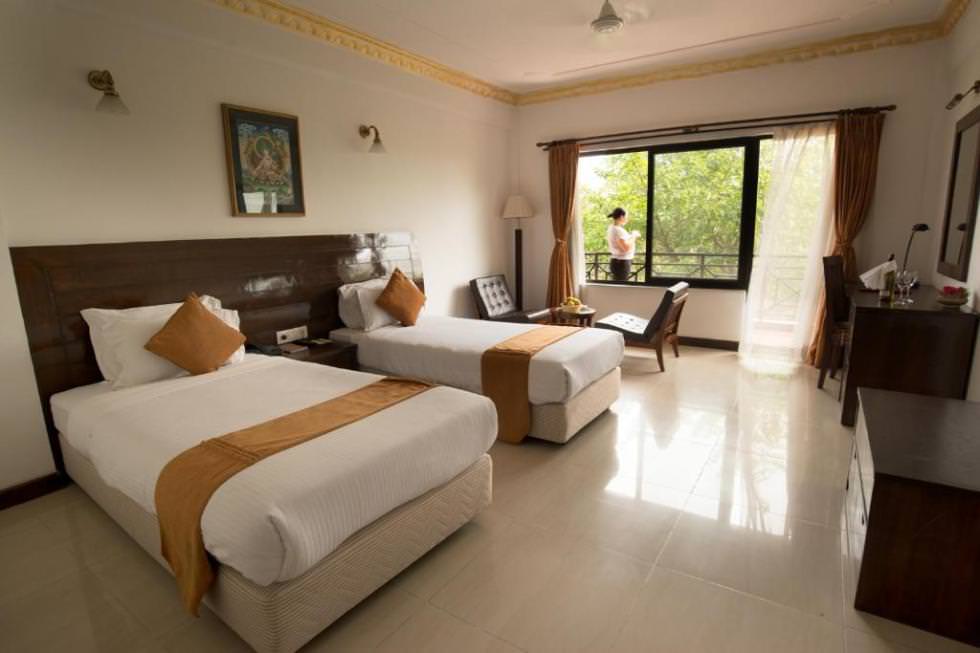
Hokke Lumbini blends Japanese simplicity with a calm, efficient approach to hospitality. Rooms are straightforward and well-kept, with a quiet tone that matches the destination. It’s the sort of hotel that supports rest without trying to entertain you.
It’s located in Lumbini’s main visitor area, with easy access to the monastery zone and the central sacred sites. You can get around without over-planning, which is exactly what this stop deserves.
Lumbini Buddha Garden Resort is a classic full-service option with space, a resort-style layout, and practical comforts. It’s easy to settle in here, especially after a long drive or a hot day moving between monasteries.
The resort sits about 2.5 km from Maya Devi Temple, with a straightforward route into the sacred zone, and Bhairahawa Airport is around 14 km away for arrivals and departures.
Jomsom, the gateway town to Mustang and the Everest region
Jomsom is Mustang’s practical hub. A small town at about 2,743 meters above sea level in the Kali Gandaki valley, it acts as the administrative center and the main staging point for Lower Mustang routes. Landscapes here shift hard from green hills to drier trans-Himalayan terrain, with big sightlines and a stripped-back palette that signals you’re entering a different Nepal.
Its role is simple and useful. Jomsom connects the dots between Pokhara, Muktinath, and Kagbeni, the historic gateway toward Upper Mustang. That makes it a natural stop for trekkers, jeep travelers, and anyone threading the Annapurna Circuit pieces together without committing to the full long route.
Travel logistics here reward flexibility. Flights run in the morning window because wind and visibility can shut plans down later, and road access has improved, but conditions still depend on season and weather. Jomsom’s rain-shadow positioning also shapes the experience. Dust, wind, and sun become daily constants, and the town’s best quality is that it gives you a stable base in the middle of big terrain.
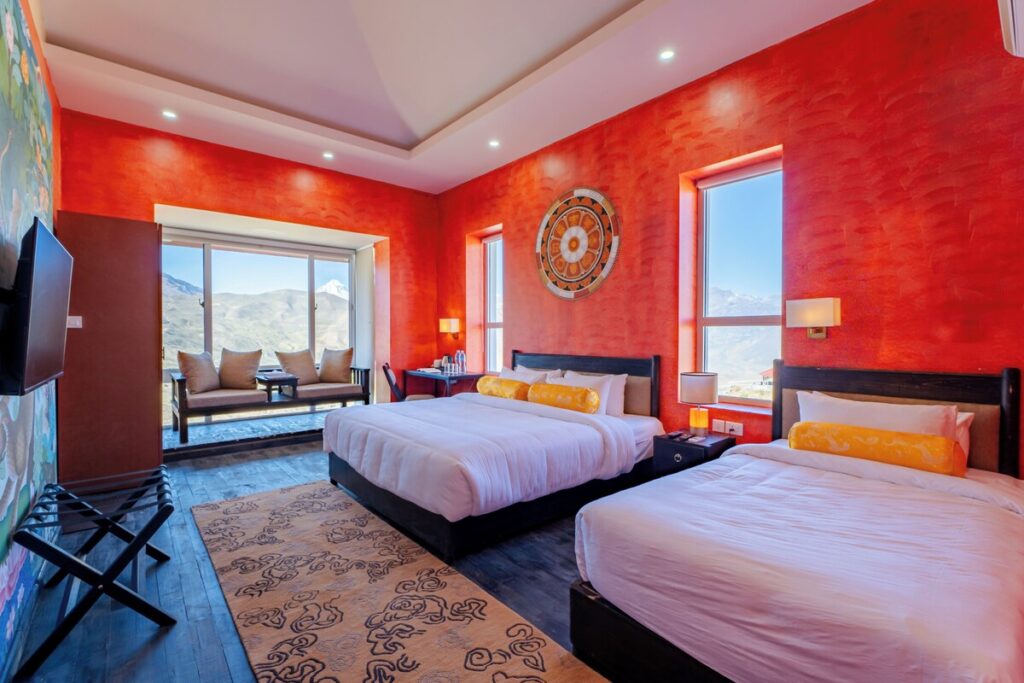
Shinta Mani Mustang, Jomsom, Double Room With Mountain Views
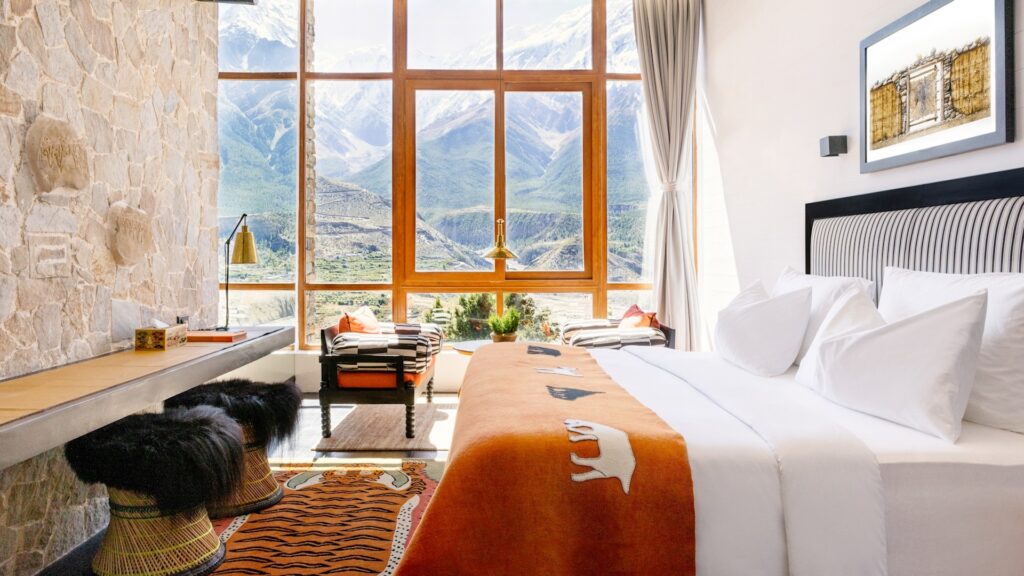
Shinta Mani Mustang is the rare mountain property that combines serious design with genuine regional grounding. Suites are polished and spacious, and the wellness focus is real, with dedicated treatments and a proper sense of retreat built into the stay.
It sits above Jomsom with access to Mustang’s villages, monasteries, and high-desert landscapes. This is a base for exploring the region with support, structure, and comfort baked in.
Om’s Home is a long-running heritage hotel in Jomsom, built in 1976 and designed in a traditional Mustang style. It has the kind of grounded character that fits the region, with straightforward rooms and an emphasis on warmth, simplicity, and taking care of the basics well.
It’s set in central Jomsom, which keeps logistics easy. You’re close to the airport and positioned well for onward travel toward Muktinath or deeper Mustang routes, without needing to engineer your day around transport.
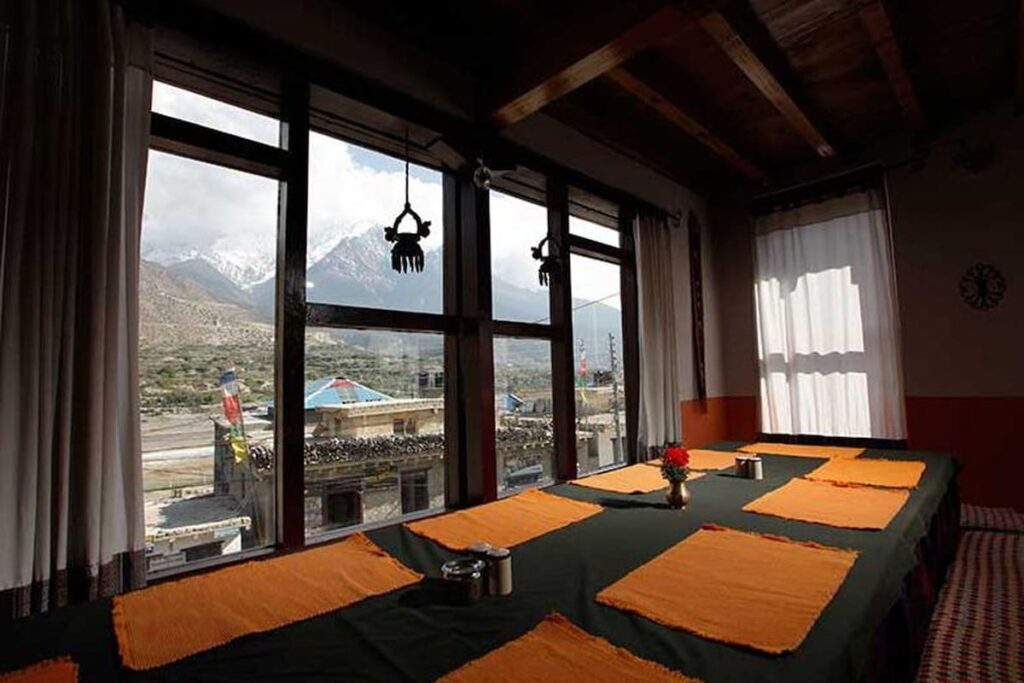
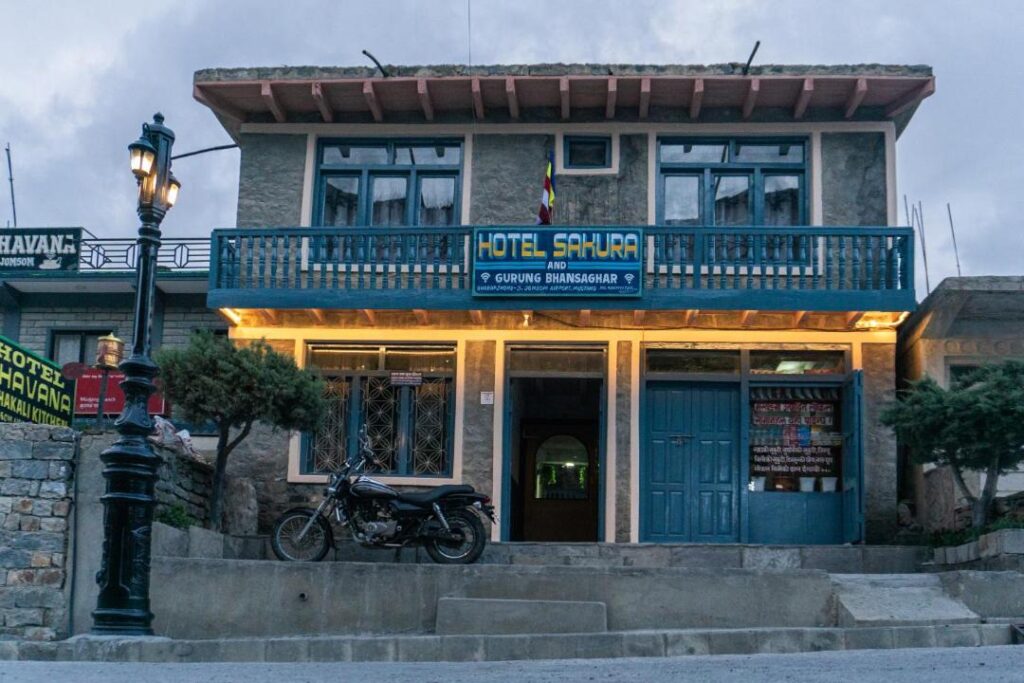
Hotel Sakura is a small, straightforward hotel built for comfort in a high-altitude transit town. Rooms are simple and practical, with private bathrooms and clear mountain views in many categories. There’s an on-site restaurant, plus room service, and the overall setup focuses on warmth, cleanliness, and an easy stopover rhythm.
The address is a major part of the appeal. Hotel Sakura sits on the Beni–Jomsom Highway just steps from Jomsom Airport, and about 400 meters from the town center. That makes it an efficient base for early flights, weather-dependent arrivals, and quick onward movement toward Kagbeni, Marpha, or the road up to Muktinath.
Muktinath, world famous pilgrimage at serious altitude
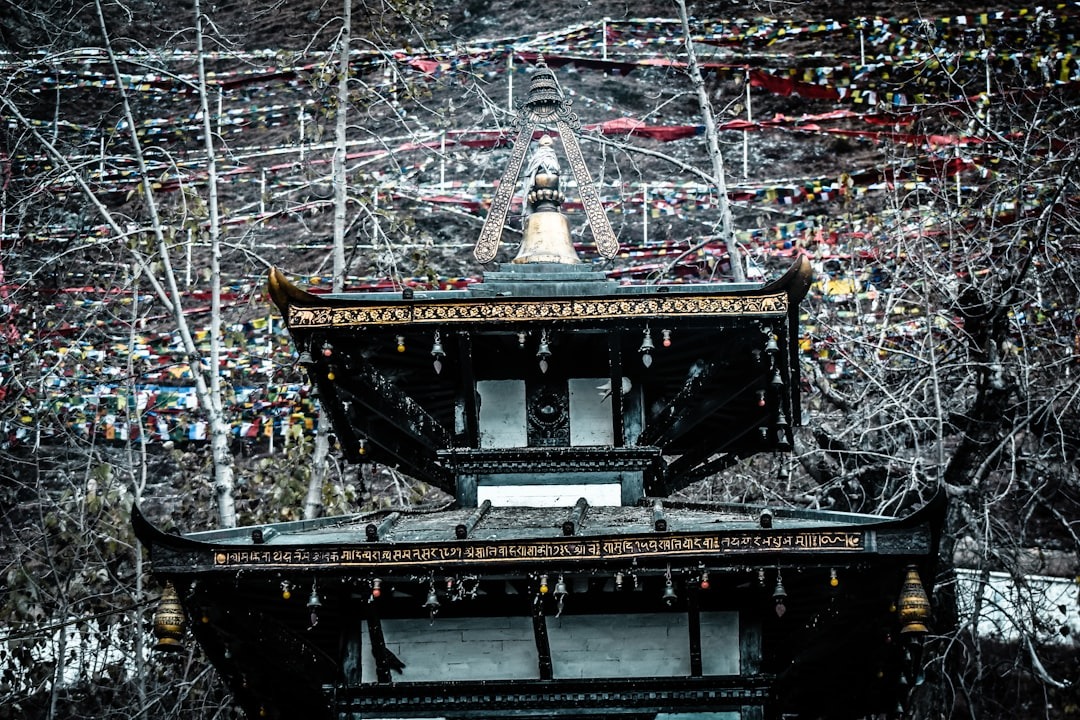
Muktinath Temple
Muktinath is high, exposed, and deeply important. The temple sits in Mustang at around 3,710 meters above sea level, revered by both Hindus and Buddhists, and known in Tibetan as Chumig Gyatsa, “Hundred Waters.” It’s one of those places where pilgrimage is not a concept. It’s the main event.
The site itself is compact but loaded with symbolism. The famous 108 water spouts are part of the ritual landscape, alongside the natural flame shrine associated with Jwala Mai, creating that rare mix of mountain austerity and spiritual detail that people travel very far to experience. Even visitors coming for scenery end up clocking how multicultural the devotion is, with different traditions sharing the same ground without needing to explain themselves.
Getting here is part of the story. Most routes run through Jomsom, either by rough road from Pokhara or by short flights scheduled early because the Kali Gandaki valley winds build fast. Services in Muktinath are functional and aimed at pilgrims and trekkers, so comfort exists, but simplicity stays baked into the setting.
Lo Mustang Himalayan Resort, Room With Mountain View
Lo Mustang Himalayan Resort is built for travelers who want Muktinath without going fully basic. Rooms lean warm and comfortable, with a design that pulls from Himalayan and Tibetan motifs while still prioritizing modern convenience.
It’s positioned near the temple area, keeping the main reason you’re here close and simple. The mountain backdrop is constant, and once you arrive, the town runs on short walks and quiet evenings.
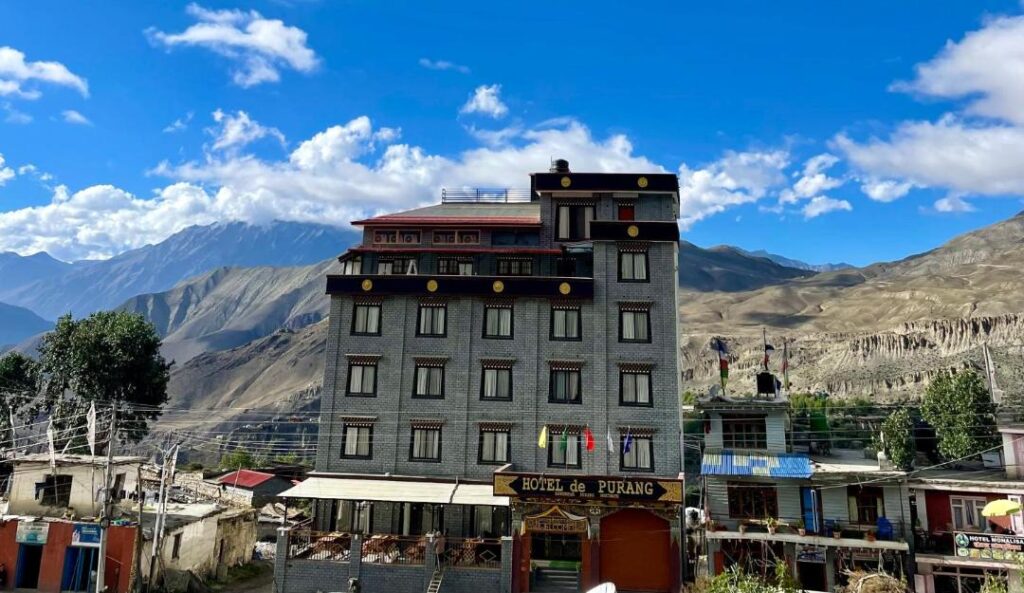
Hotel De Purang is one of the more modern, better-finished options in Ranipauwa, with a clean, simple setup designed for rest. It has a restaurant and terrace space that’s actually useful in a town where indoor comfort counts.
You’re very close to Muktinath Temple, around 300 meters, which is the whole point here. That proximity lets you keep everything tight and manageable in an environment where small distances still add up.
Nepal is not a country you “consume.” It’s a place you calibrate to. Once that happens, everything starts working. Cities make sense. Distances become normal. The intensity stops feeling like friction and starts reading like texture.
A soft landing gives you control over that adjustment. Kathmandu brings culture at full volume, so a calm hotel keeps the first days enjoyable. Pokhara smooths the edges, gives you air, and sets up whatever comes next. Lumbini slows the tempo further. Chitwan flips the landscape entirely. Mustang towns like Jomsom and Muktinath demand simpler expectations and reward you with scale.
The best Nepal trips aren’t built around speed. They’re built around contrast. Sleep well early, choose bases that match the pace you want, and Nepal will do what it always does. It will outclass your plan
Thailand is easy to enter, and deceptively easy to mis-enter. Most international arrivals funnel through Bangkok, landing at Suvarnabhumi Airport (BKK) or Don Mueang International Airport (DMK), with DMK handling a lot of low-cost regional traffic and domestic hops.
Seasonality matters on night one because it changes the commute you are about to take. The broad pattern is drier weather in roughly November to February, and heavier rain in roughly May to October, but the Gulf side and Andaman side can peak at different times. That difference is why “quick beach” does not always mean “quick comfort.”
Thailand’s history sits right under the pavement. Ayutthaya became a major power in 1351 and fell in 1767, and the Rattanakosin Kingdom era begins in 1782 with Bangkok as the center. Temples are not side attractions here. They are living institutions, and they come with real-world etiquette, including covered shoulders and knees at many major sites.
Transport is the difference between “I arrived” and “I arrived intact.” Bangkok has two rapid transit networks. BTS Skytrain and Bangkok MRT cover a lot of what tourists need, and they do it without street-level gridlock. In most cities and resort towns, Grab is the default backup when walking stops being practical.
Money is simple, Thailand uses the Thai Baht (THB). As of writing this, 1 Euro is worth 37 THB and 1 USD is worth 32. You can buy a street food meal for 30-50 THB, or a meal at a restaurant for around 200-300 THB at a normal spot or around 500-700THB at a fancier spot. Tourist areas take cards, but plenty of small restaurants and street vendors still prefer cash. QR payments through local systems are common, but visitors should not treat them as universal on day one.
Food is the fastest way to understand the country, and it changes hard by region. Central Thai is balanced and aromatic. Northern Thai is herby and often pork-heavy. Isan brings heat, lime, sticky rice, and grilled meats. The deep south goes louder on turmeric, seafood, and ferments. On your first night, that translates into one practical rule. Pick an area where dinner is easy to find within a short walk, not a negotiation with traffic.
A “soft landing” is not a vibe. It is logistics plus sleep mechanics. That means fast airport access, predictable check-in, strong air conditioning, and an area where you can eat without planning a campaign. The destinations below are realistic first-night picks because you can reach them quickly, and because they give you an easy second day.
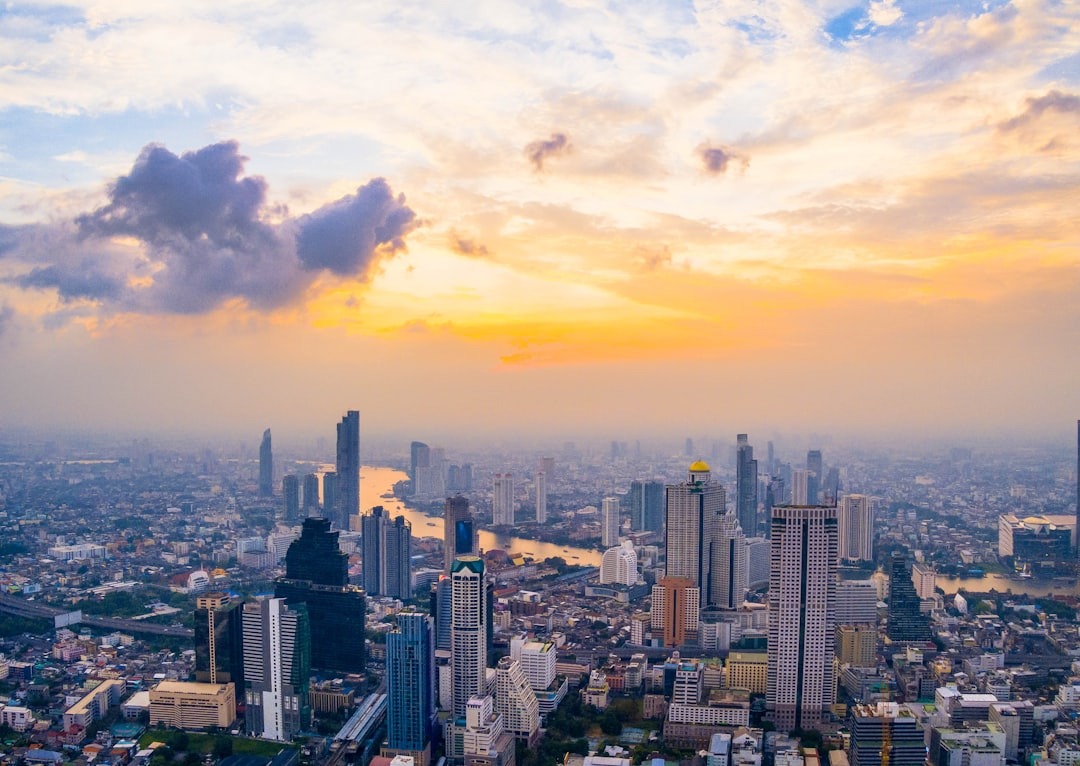
In my opinion, Bangkok is the capital of Asia, not just Thailand. Everything flows through Bangkok, and it behaves like it. International flights arrive all day, hotel staffing is built for late check-ins, and the city can absorb a jet-lagged traveler without drama. Two airports feed the city, and that alone makes Bangkok the most forgiving first night in Thailand.
The city’s real trick is that you do not need to “beat traffic” if you plan around rail. BTS and MRT can move you across central Bangkok without street-level congestion, and river boats cover the historic spine along the Chao Phraya River. When a hotel is walking distance to a station, your first night stops being a logistics puzzle.
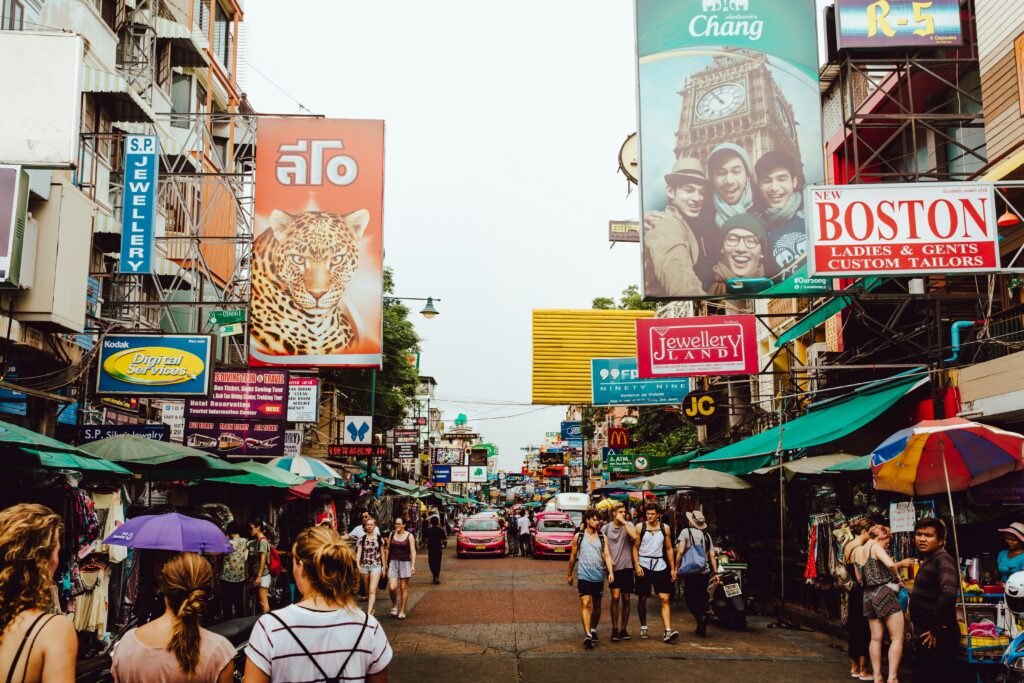
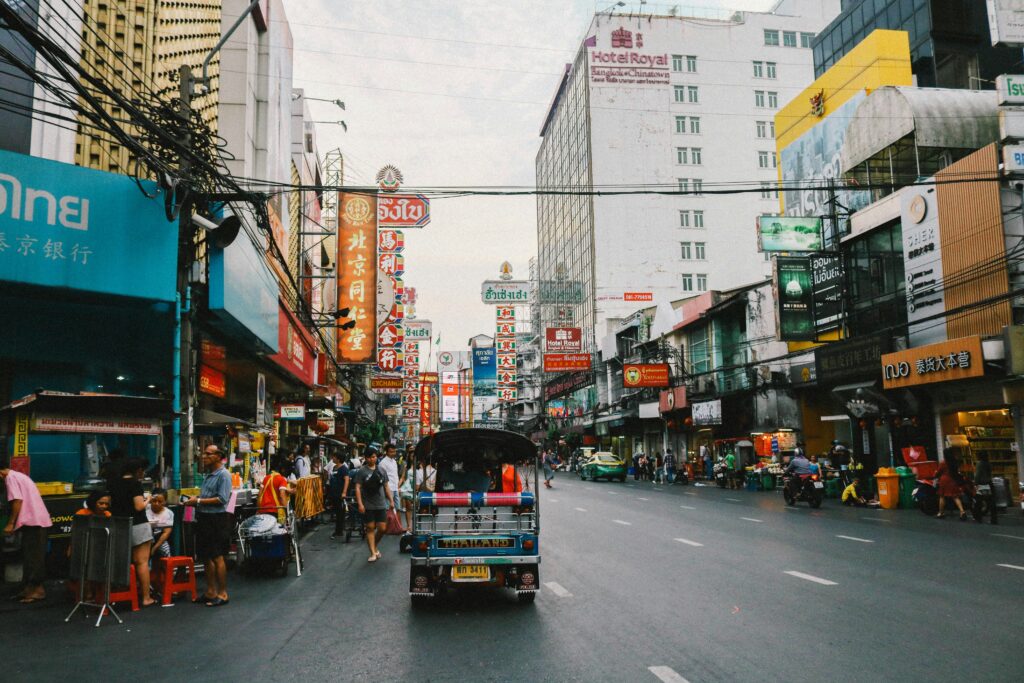
For a soft landing, focus on three pockets. Riverside if you want quiet and water access. Siam if you want malls, easy trains, and zero friction for supplies. Lower Sukhumvit if you want dining density and quick BTS links. The wrong choice is not “too touristy.” It is “too far from transit.” As a side note, I personally never recommend Khao San for anyone, it’s loud, chaotic, and way too far from any transport that isn’t a taxi.
Bangkok cuisine. This is Thailand’s capital, and it is also Thailand’s most mixed dining city. Chinatown’s Yaowarat corridor is a famous night market zone, and the city’s everyday staples include noodle shops, curry-and-rice counters, and serious dessert culture. Bangkok also makes it easy to eat well late. That matters when your body still thinks it is in a different time zone.
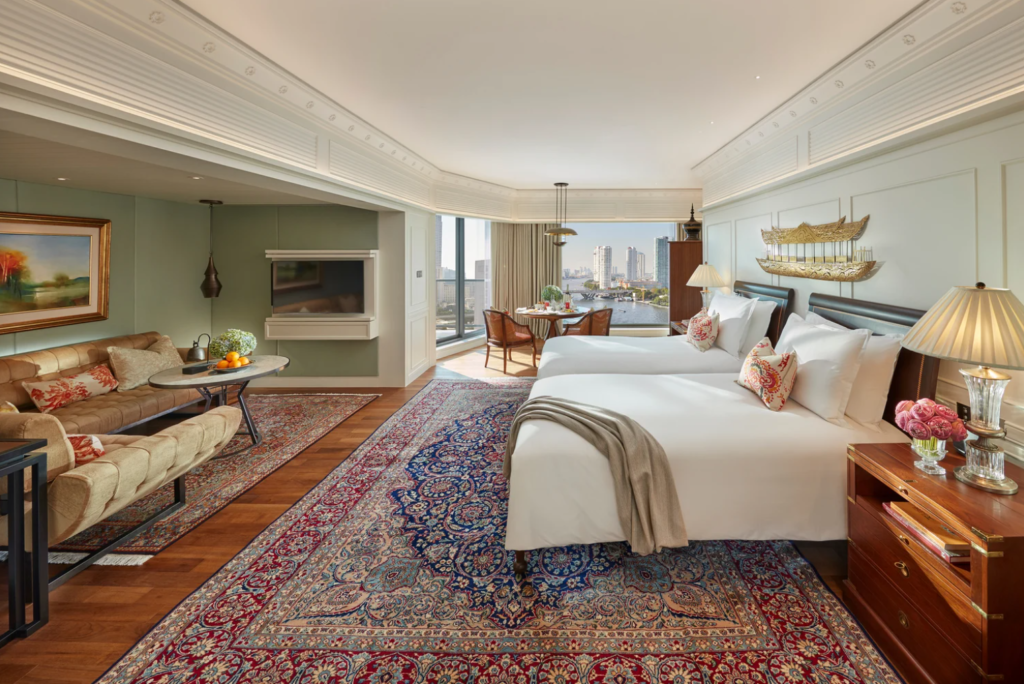
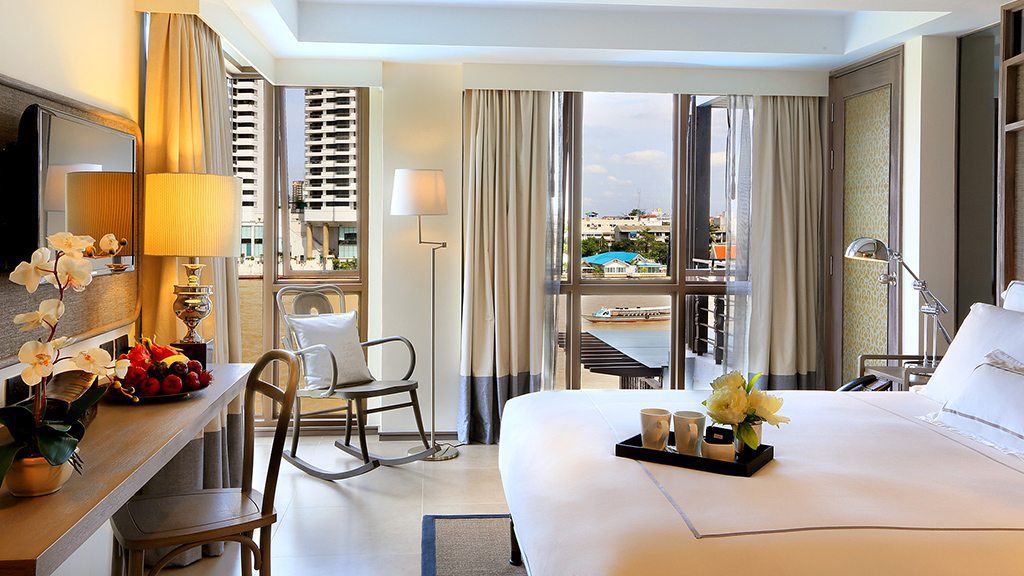
Mandarin Oriental, suite with traditional wall art and large windows with river views
Bangkok’s riverside classic, with a polished old-school feel and the kind of scale you notice immediately. You’re getting a full spa, a proper fitness centre, and multiple restaurants on-site, plus rooms that are built for quiet, sleep-first comfort even though you’re in the middle of the city. If you like details that feel expensive, this is full of them: formal lobby energy, refined public spaces, and a property layout that keeps the riverfront areas calm while the city churns behind you.
If you ask me, this river stretch is Bangkok’s gentlest arrival. Saphan Taksin BTS is a 10-minute walk, and the Chao Phraya riverfront is 1 minute on foot. The hotel sits right on the water, so the city feels close without sitting in it. That 10-minute walk to the BTS is the difference between “Bangkok is loud” and “Bangkok is handled.”
A modern high-rise that makes first-night logistics stupidly simple. The big sell is the direct Skytrain connection via the Surasak BTS skybridge, so you can land, check in, and move around Bangkok without wrestling traffic. There’s also a rooftop infinity pool, a full gym, and contemporary rooms that go heavy on clean lines and city views, with the kind of sound insulation you’ll appreciate when Bangkok decides to be Bangkok.
You step out and you are effectively at Surasak BTS, with the hotel connected by a direct skybridge. From there, Saphan Taksin is about a 2-minute ride. That puts the river piers and the whole Chao Phraya boat network within easy reach without needing a car plan on night one. Expect more business-district energy than old-town charm, with most of the friction removed by the Skytrain access.
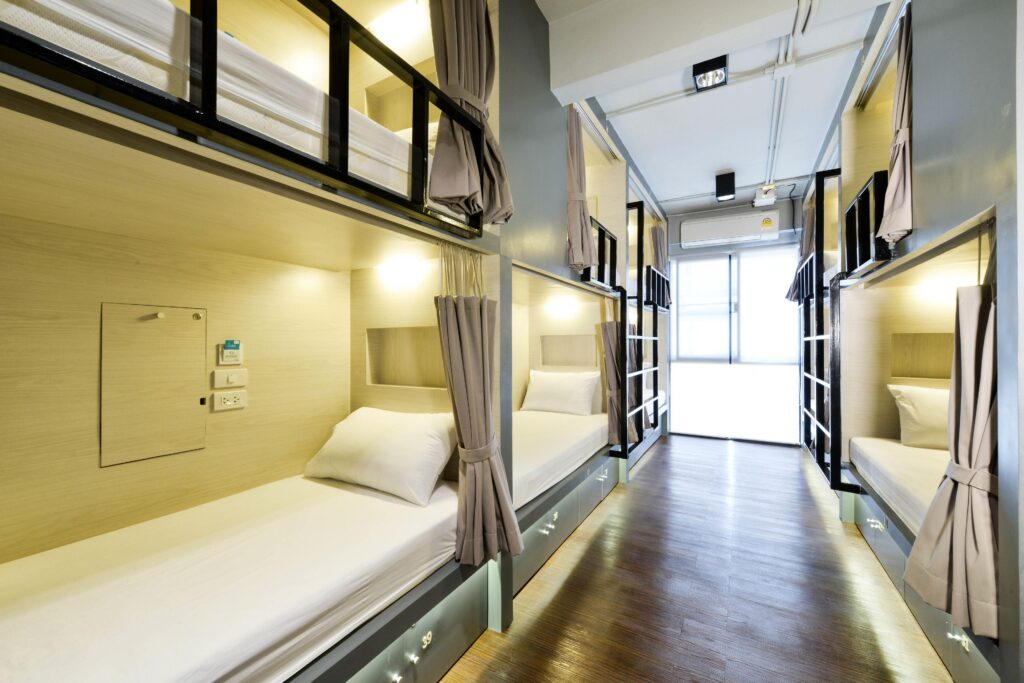
This one treats “cheap” like a design brief, not a compromise. It’s a hostel with real private rooms and dorm setups that come with the basics that actually matter on night one: strong air-conditioning, secure storage, and beds arranged for privacy with individual lights and power points. The shared areas are big and social without being chaotic, and the overall setup is built for quick check-in, quick showers, and getting functional again after a flight.
This one wins on pure first-night convenience in the Siam core. National Stadium BTS is about a 7-minute walk, and Siam BTS is about an 8-minute walk, which means you can jump onto either line without decoding Bangkok’s road layout on arrival. The same radius also covers the “eat something normal immediately” problem, because the mall clusters start in the same walkable grid.
Chiang Mai, Café streets and temple lanes, tightly packed.
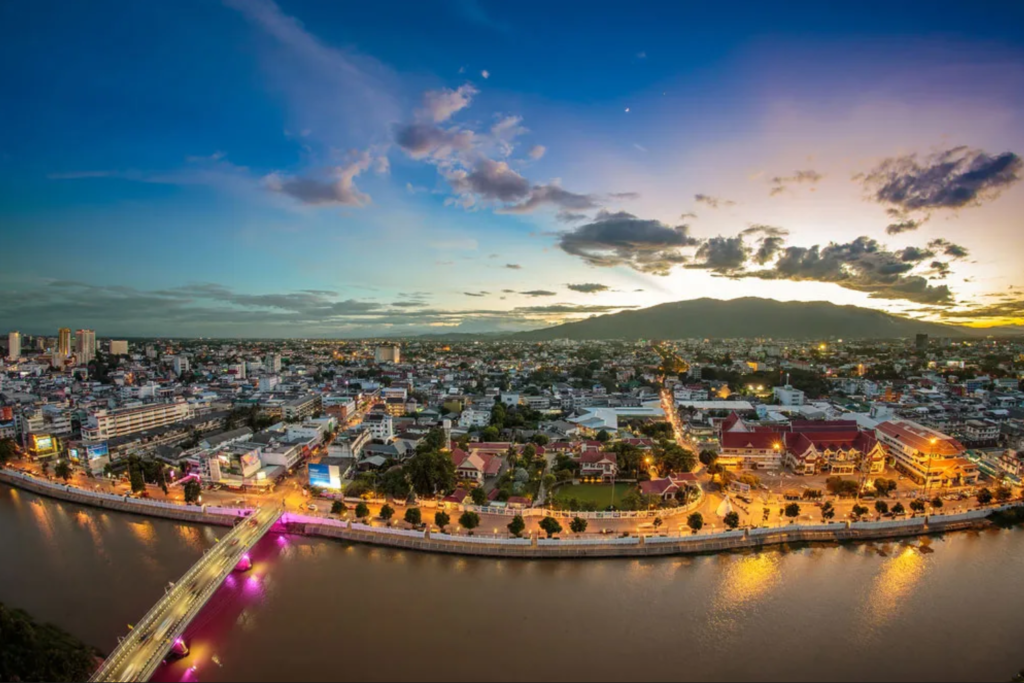
Aerial view of Chiang Mai lit up during sunset
Chiang Mai is the soft-landing alternative to Bangkok if you want the north immediately. The city has its own airport, and transfers are short, so you can land and be checked in without adding another long leg. It is also one of the few Thai cities where “walkable” is not a marketing claim.
The Old City is a compact grid inside the historic walls and moat, with temples, cafes, and small hotels packed tightly together. Just outside, Nimman and the university area bring a more modern dining and coffee culture. Short distances make taxis cheap and easy, and you can do a lot on foot if you stay central.
A good first-night stay here is about quiet streets and early access to the city’s most useful lanes. Old City edges are ideal because you get temple density without being trapped in the busiest market blocks. Nimman is ideal if you want dining and modern shops immediately, with less tourist churn than the main gates.
Chiang Mai cuisine. Northern Thai food is distinct and worth prioritizing early. Look for khao soi, a coconut curry noodle soup with crunch, plus grilled sausage like sai ua and herb-heavy dips such as nam prik noom. The city also has strong night markets, which makes “easy dinner” a realistic promise.
An all-suite boutique stay with a heritage-leaning look and a deliberately quiet footprint. Suites are spacious by Chiang Mai standards, and many categories come with balconies or terrace space, plus the kind of finishing that prioritizes sleep quality over flash. You also get a pool and a full-service, hotel-grade set of facilities, not a token “boutique” setup, so arriving late still feels easy and complete.
You get a quieter address, but you are not marooned. The Night Bazaar is about a 15-minute walk, so dinner and a low-effort first stroll are easy. Chiang Mai International Airport is about a 20-minute drive, which keeps the first transfer simple even if you land late or in bad weather. You are close enough to slide into the city, without being stuck in the Old City’s tighter lanes and tour-van clutter.
This place is all about the courtyard layout. It’s a low-rise, inward-facing design with shaded walkways, enclosed gardens, and an outdoor pool that stays tucked away from street noise. The tone is restrained and gallery-like, with a library and carefully controlled public spaces, and it runs adults-first with an age policy that keeps the property noticeably quieter than most Old City hotels.
If you ask me, the Old City is Chiang Mai’s smoothest first stop. Wat Phra Singh is 1 minute on foot, and the Sunday Walking Street route is 9 minutes away. The lanes here are small and slow, so getting around feels human-scale even with luggage. Wat Chedi Luang is 7 minutes on foot, which gives you a real landmark you can navigate by on day one.
A compact, modern hotel that over-delivers on the small things that make the first night painless. There’s a pool, and the whole setup is geared for low-friction travel: bright rooms, efficient layouts, and a service model that includes generous inclusions like snacks and drinks that stay available beyond breakfast hours. It feels intentionally simple, but not bare, which is exactly what most people want right after landing.
For me, the gate area wins for late arrivals and easy walks. Tha Phae Gate is a 4-minute walk, and Chiang Mai Night Bazaar is 15 minutes on foot. The streets around the gate have a high density of cafés, pharmacies, and late-ish food, so you can land and function without a plan. The Old City’s main temple grid starts within that same short walk.
Phuket is realistic for night one because it has a major international airport and constant domestic connections. You can land here directly from abroad or connect via Bangkok, then choose between beaches, Old Town, and quieter northern sands. The wrong move is picking a beach that is far from the airport when you are tired.
The island is big enough that micro-location is everything. Old Town is cultural and compact. Patong is dense and loud. The northwest beaches near the airport are calmer and reduce transfer time. If your priority is sleep, choose calm geography, not famous geography.
For a soft landing, two patterns work. Stay near the airport on night one, then relocate south once you have your bearings. Or stay in Old Town if you want dining, architecture, and easy day trips without beach traffic. Both are low-friction starts.
Phuket cuisine. Phuket sits in southern Thailand’s flavor zone, with more seafood, more spice, and more Chinese influence than Bangkok. Old Town is known for local noodle shops and small cafes, while beach areas skew toward seafood grills and southern curries. The practical advantage is density. You can eat well without planning.
A resort with a strong design identity and the facilities to back it up. You’re looking at multiple pools, a proper spa, and family infrastructure like a kids’ club, so it handles everything from jet-lag recovery to full beach-week mode without leaving the property. Rooms and suites skew spacious, and the overall layout is built like a real resort campus, not a single-block hotel pretending to be one.
My vote for an effortless island landing is Nai Yang. Nai Yang Beach is a 5-minute walk, and Phuket airport is a 5-minute drive. You avoid the long cross-island haul on night one, and you still get a real beach and sunset within minutes. It’s one of the few Phuket arrivals where “drop bags, eat, sleep” is genuinely quick.
A small, heritage-styled boutique stay with a courtyard pool at its centre, which is rare in Old Town at this size. The look nods to Phuket’s Sino-Portuguese character, and the scale stays intentionally intimate, with a limited room count and a calm, residential feel. Rooms are straightforward and bright, and many categories include balcony space, which matters more than you think in humid Phuket.
If you ask me, Phang Nga Road is Old Town’s chillest address. Phuket Weekend Market is a 4-minute walk, and Phuket Sunday Night Market is 5 minutes on foot. You’re right in the Sino-Portuguese core, so cafés and casual Thai restaurants stack up quickly around you. It’s a good “arrive late, still eat well” zone because the walking radius actually works.
A value-focused hotel that still gives you key comforts: an outdoor pool, modern air-conditioned rooms, and balconies in many categories. It also does a rare first-night trick well, which is keeping small conveniences always available, including snacks and light breakfast items in the common area. The rooms are set up for simple recovery, with kettle and mini-fridge basics that make late arrivals feel less annoying.
If you ask me, Dibuk Road is where Old Town stays easy. Limelight Avenue is within a 5-minute walk, and the Old Town shophouse core is about 10 minutes on foot, so dinner and basic errands stay walkable even when you land late. The hotel sits on Dibuk Road itself, so you’re on a real city street, not tucked into a silent lane, but you’re still close enough to step into the quieter heritage blocks quickly. Phuket Indy Market is a couple of minutes away on foot, which is a great first-night move when you want street food without committing to a long outing.
Koh Samui is one of the few Thai islands that can genuinely work as a first-night destination because it has its own airport. That cuts out the ferry problem that makes other islands, including Koh Phangan, a tougher landing after a long-haul flight.
The island is still spread out. Chaweng is the busy strip. Bophut and Fisherman’s Village are calmer and easier to navigate on foot. Choeng Mon is quieter still, with less nightlife spill. For first night, calm usually wins.
Soft landing logic on Samui is simple. Pick a beach with restaurants and minimarts within a short walk, and keep your transfer time short. Samui’s roads are not hard, but they are slower at night, and taxi costs add up fast if you place yourself badly.
Samui cuisine. You get southern Thai flavors with island seafood. Coconut-based curries, grilled fish, and spicy salads show up everywhere, and Fisherman’s Village has a reliable concentration of restaurants. The practical difference versus Bangkok is that “great street food” is less guaranteed, but “easy dinner near the hotel” is realistic in the right pocket.
W Koh Samui, villa with a private infinity pool overlooking the sea
An all-villa resort where the headline feature is consistent across the board: private pools paired with big deck space, so you’re never fighting for a lounger on day one. Facilities are full-scale, with a spa, fitness centre, and a resort layout that feels self-contained without being remote. It’s the kind of place where you can land, disappear into your villa, and still have everything you need on-site.
I like Maenam for arrivals who still want Bophut access. Fisherman’s Village is a 4-minute drive, and Samui Airport is about 22 minutes by car. You get the quieter north-coast feel without cutting yourself off from the island’s best first-night dining strip. Bo Phut Beach is a 7-minute walk when you want white sands without a drive.
A classic beachfront resort done with polish. Rooms sit in landscaped grounds, and you get the full set of big-resort comforts: a large pool area, a well-equipped gym, and a spa that feels like a real destination inside the property. The public spaces are designed for hanging out comfortably, with restaurant options on-site so your first night doesn’t require planning or transport chess.
Bophut keeps Samui easy on night one. Fisherman’s Village is 14 minutes on foot, and Bo Phut Beach is a 6-minute walk. The whole strip works well for a first evening because dinner, massages, and convenience shops sit in the same walkable run. That 14-minute walk to Fisherman’s Village is the practical difference between “resort seclusion” and “I can actually go out.”.
A 4-star resort that keeps the first night easy while staying in a saner price band. You get two pools, rooms with private balconies, and the option to upgrade into villa-style categories without jumping into ultra-luxury territory. It’s also the kind of resort that’s built for normal travel realities: quick meals on-site, plenty of shaded outdoor space, and a layout that feels relaxed instead of mega-resort sprawling.
In my experience, Bophut is Samui’s smoothest first-night coastline. Fisherman’s Village Walking Street is a 5-minute walk, and Samui International Airport is within about a 15-minute drive, so you can land, eat well, and stop thinking about logistics. The resort sits directly on Bo Phut Beach, so getting to the sand does not involve crossing a road, which matters when you’re tired and carrying bags. For a first-night hook that actually delivers, Coco Tam’s is about a 10-minute walk, and it’s one of the easiest places on the island to get dinner and a drink without booking anything.
Aerial view of Ao Nang Bay in Krabi and turquoise water at sunset
Krabi works on night one because the airport-to-beach transfer is short and simple. Krabi International Airport (KBV) connects domestically, and many travelers route via Bangkok, then land and reach Ao Nang in roughly half an hour by road.
Krabi is not one place. Ao Nang is the main hub, with boats, tour desks, and dense dining. Klong Muang is quieter and more resort-focused. Railay is beautiful but ferry-dependent, which makes it a poor first-night plan if you arrive late.
A comfortable first-night stay usually means Ao Nang for convenience, or Klong Muang for quiet. If you arrive after dark, Ao Nang makes dinner and supplies easy. If you arrive earlier and want a calmer shoreline, Klong Muang is the cleaner landing.
Krabi cuisine. This is southern Thailand, which means seafood, spice, and brighter sour notes. Expect grilled fish, rich curries, and lots of casual roti and snack stands around Ao Nang. The “easy meal” factor is high here, especially in the Ao Nang strip.
A full-scale beachfront resort with the infrastructure you want after a flight. Expect multiple pools, a spa, and a resort layout that spreads out enough to feel quiet even when occupancy is high. The rooms read classic Thai-resort, with balcony categories common and enough on-site dining that you can keep night one entirely contained if you want to.
I recommend Klong Muang for its calm start that still connects. The main beach area is a 10-minute walk, and Koh Kwang Beach is 17 minutes on foot. It’s quieter than Ao Nang, with fewer bars and less street noise, which helps if you’re landing jet-lagged. Those two beaches give you immediate ocean time without needing to hop in a car.
A modern Ao Nang resort that’s heavy on facilities for its category. The rooftop pool is the signature feature, and room choices include options like whirlpool-style tubs and layouts aimed at couples or small families. It’s built to feel current, with a clean, contemporary finish and a property footprint that keeps everything close, from pool to lobby to restaurants.
I’d start in Ao Nang when I want everything on foot. there are many restaurants within a minute’s walk, and Ao Nang Beach is 7 minutes on foot. You’re right on the promenade zone where tour desks, minimarts, and casual restaurants cluster tightly together. That 7-minute walk to the beach also makes sunrise boat plans feel painless the next morning.
A garden-style resort that gives you more breathing room than many cheaper Ao Nang hotels. There’s an outdoor pool, a low-rise layout, and rooms that open onto greenery instead of a corridor, which helps the place feel calmer. It’s not flashy, but it covers the important mechanics: reliable air-conditioning, straightforward rooms, and enough facilities on-site to make the first night feel settled.
Mid-Ao Nang keeps the first night simple. Ao Nang Beach is within a 5-minute walk, and most restaruants 3 minutes on foot. You’re close enough to the strip for easy meals, but not so exposed that the nightlife noise keeps you awake at night. Ao Phai Plong Beach is 15 minutes on foot when you want a quieter bay without a long ride.
Hua Hin is the beach landing for travelers who want coast without island logistics. It sits a few hours south of Bangkok, which makes it reachable by train, bus, or private car the same day you arrive internationally. That simplicity is why it works. This is where families from Bangkok go on vacation
The town is long and linear. The beachfront runs north to south, with a central area near markets and malls, and quieter resort pockets further down. It is not an “explore everything on foot” city, but it is an easy place to rest, eat well, and reset your schedule.
For a first night, the best placement is either central Hua Hin for walkable food, or Khao Takiab for a slightly quieter beach feel with restaurants still close. Avoid being too far inland on night one unless you are in a full-service resort.
Hua Hin cuisine. Seafood is the headline, and the town is known for night market eating, grilled fish, prawns, and simple Thai comfort food done well. Compared with Bangkok, the pace is slower and dining is more concentrated into a few areas, which makes location choice more important.
The Standard, Hua Hin, suite with living room and a private pool
Beachfront, playful, and properly full-service. You’ve got a big central pool scene, a spa program, and the recovery kit that matters on day one, including a fitness center and sauna. Food is not an afterthought. The property runs several distinct venues, so a late arrival still gets a real meal without leaving the grounds.
It’s in central Hua Hin, which I’d put first for train-and-beach simplicity. Hua Hin Station is a 9-minute walk, and Hua Hin Beach is 8 minutes on foot although you have a private beach on property. You can arrive by rail and be checked in quickly without feeling stranded far from the sea.
Pool-first and quietly set up, with the kind of small-hotel layout that’s easy to understand five minutes after check-in. There’s an outdoor pool, a fitness room, and an on-site restaurant that covers breakfast and daytime meals, so your first night doesn’t require extra planning for basics. Rooms are modern and uncluttered, and some come with balconies facing the pool, which is a simple upgrade when you want air and space without leaving the property.
I find that the north side keeps Hua Hin easier and quieter. Hua Hin Night Market is 12 minutes on foot, and Hua Hin Airport is a 6-minute drive. You’re close enough to the center for dinner, but you’re not sleeping inside the main late-night strip. That 12-minute walk is my sweet spot for “I can go out” without being surrounded by crowds.
A compact, no-drama hotel that nails the first-night essentials without trying to cosplay as a resort. Rooms come with private balconies, which is rare at this tier in Hua Hin, and the building has a pool plus an on-site restaurant for simple, contained evenings. The standout feature is the rooftop pool setup, which gives you a proper “cool off” option even if you don’t feel like heading to the beach straight away.
I keep this block in mind for walkability. Hua Hin Railway Station is a 5-minute walk, and Hua Hin Night Market is 7 minutes on foot. It’s a very straightforward part of town to navigate because the main landmarks are close and the streets are direct. Hua Hin Beach is also 7 minutes on foot, so you can do a first-morning sand walk without planning anything.
Pattaya (Jomtien), a practical first night when Bangkok can wait.
Aerial view of Pattaya Beach and the city
Pattaya is the quickest beach-adjacent landing from Bangkok. Buses and private transfers run constantly, and the ride is typically a couple of hours. The city itself is busy and loud in the center, which is why Jomtien is the smarter first-night target.
Jomtien sits south of central Pattaya, with a longer beach feel and fewer nightclub streets. It is still a resort city, but the volume is lower, and the roads are less chaotic. If you land tired, that difference is not philosophical. It is sleep.
For a soft landing, look at Na Jomtien and the southern end of Jomtien Beach for resorts, or the Pratumnak area for quieter streets between Pattaya and Jomtien. The center is fine for a party trip. It is a rough place to do your first Thailand check-in.
Pattaya cuisine. Seafood is everywhere along the coast, and the city also has a lot of Isan-style casual dining thanks to migration patterns. Compared with Hua Hin, the options are broader and louder, and the best meals often come from simple spots off the main beach road.
U Pattaya, outdoor bath with uninterrupted sea views
Beachfront and low-rise, with a rooftop swimming pool that gives you sea views without leaving the building. The hotel leans into small-but-useful comforts, including a library, a gym, and an all-day dining setup at SALT, so a late arrival can stay contained and civilized. The signature perk is its flexible service concept. It includes “Breakfast Whenever Wherever” and a 24-hour room policy that lets you time your stay around your flight instead of the other way around.
I recommend Jomtien when Pattaya’s core feels like too much. Jomtien Beach right out the door, and central Pattaya is 20 minutes on foot. You get the sea right away, with less chaos than the main nightlife spine. That proximity to the beach matters when you arrive sweaty and tired just want to dunk yourself in the ocean and then get a drink and a meal.
A modern resort on Na Jomtien beach with a proper resort spine. Beachfront setting, multiple pools, a fitness center, and a dining lineup that runs from casual meals to rooftop cocktails, which is a real win when you arrive and want one good dinner without chasing the city. The thing it does that most Pattaya resorts don’t is mix hotel rooms with villa-style stays and “pool villa” energy, so you can go bigger without committing to a mega-chain vibe.
I like Na Jomtien for beach time without the central crush. You’re right on South Na Jomtien Beach, and Walking Street is a 15-minute drive. The resort strip here is more spaced out than central Pattaya, which keeps evenings calmer around the hotel. Mimosa Pattaya is a 20 minute swalk away if you want an easy stroll-and-snack option.
This is how you keep the price down without giving up the recovery tools. You get an outdoor pool plus sauna and steam room access, which is unusually generous at this tier in Pattaya, and there’s an on-site café for quick meals when you cannot be bothered to negotiate dinner plans. The rooms are simple, air-conditioned, and built around the basics that matter after a long day. Shower, sleep, repeat.
If you ask me, inner Jomtien is almost better tha the beachside. Jomtien Beach is a 10-minute walk, and Jomtien Night Market 15 minutes. You’re far enough from the loudest parts of Pattaya, but still close to the places that make an arrival night easy, like casual dining and massage shops.
Khao Lak is the calm answer to “I want the Andaman coast, but I do not want Phuket’s traffic.” It is reached by road, usually via Phuket airport, and transfers are straightforward for travelers who want beach on night one without ferry schedules.
This is a long coastal area, not a single compact town. The main strips are Nang Thong and Bang Niang, with resorts spread along the highway and beach access points. That spread is why hotel placement matters. A resort that is isolated can become annoying fast if you want dinner off-site.
Soft landing logic here is about choosing a resort that has walkable basics nearby, or choosing a resort that is so complete you do not care. Khao Lak is excellent for sleep, but it is not built for wandering without planning.
Khao Lak cuisine. Southern Thai flavors show up hard, especially seafood, spicy soups, and rich curries. Markets and casual seafood restaurants are common around Bang Niang, and resort dining is generally stronger here than in more chaotic beach towns.
This is a high-end resort designed around privacy, landscaped grounds, and a calm service rhythm. Facilities are built for staying on-site, with a large pool, a strong dining program, and rooms that feel like proper hideaways instead of standard hotel boxes. It’s the kind of property where the first night can stay simple, shower, dinner, sleep, with no extra planning.
Khao Lak’s coastline is quieter than Phuket’s busiest beaches, and this hotel is positioned to take advantage of that. You get long, calmer beach time and a more sleep-first atmosphere, without needing ferries or domestic connections on day one. The concrete advantage is recovery. After a long flight, this is the “stop moving” option.
A big, modern beachfront resort that feels designed for people who actually use hotel facilities. The headline is the huge free-form pool complex, plus a full-service spa and multiple dining options, including a beach club setup that makes dinner feel easy on night one. If you want something with energy but still on the sand, this is the cleanest version of it in Bang Niang.
It’s positioned in Khao Lak’s more useful zone, close enough to reach restaurants and everyday services without needing a car for every meal, since the market is about a 10 minute walk away. That makes it a soft landing even when you arrive early and want to walk, because you’re not stranded in a remote stretch of highway and sand. The actionable advantage is choice. You can stay on-site, or step out easily.
Low-rise and green, with rooms oriented toward pool or garden views instead of parking lots and back walls. You still get real facilities. Two outdoor pools, a fitness center, and an on-site restaurant, which means you can land, eat, and shut your brain off without hunting for basics. It’s built like a small resort campus, not a roadside stop.
I keep Nang Thong in mind for a simple Khao Lak start. you’re right on the beach, and central Khao Lak is 10 minutes on foot. It’s an easy stretch for first-night basics like food, minimarts, and low-key bars without the party vibe.
Chiang Rai, the north’s quiet gateway to day trips.
Wat Rong Khun (the White Temple) in Chiang Rai
Chiang Rai is a first-night option for travelers who want the far north without building a multi-day plan. Chiang Rai International Airport (CEI) is close to town, and transfers are short, so you can land and settle quickly.
The city itself is compact, quieter than Chiang Mai, and built for day trips. That means your first night can be calm, then your second day can be full. It is also a useful staging point for the Golden Triangle region if that is on your list.
For soft landing purposes, stay near the river for calm resort energy, or stay near the central grid for easy night markets and quick exits in the morning. Chiang Rai is not a nightlife city in the Bangkok sense. It is an early-night city.
Chiang Rai cuisine. This is northern food territory, with Lanna staples and Shan influence. Expect herb-heavy sausages, chili dips, and noodle dishes that feel different from Bangkok’s sweeter central Thai profile. Night markets are a practical win here because they compress dinner choices into one easy loop.
The Riverie, interconnecting room with mountain views
This is Chiang Rai’s most “full resort facilities” hotel, which matters when you want your first night to feel complete without leaving the property. You’re getting a big pool complex with family features like a water slide and aqua-play areas, plus a fitness center and riverfront walking space. It’s a large, modern setup with enough on-site structure that arriving late still feels easy.
Riverside Chiang Rai is without a doubt the easiest welcome. The famous Chiang Rai Clock Tower is 20 minutes on foot, and Chiang Rai Airport is a 15-minute drive. You’re close enough to the center to walk in for dinner, but the riverfront setting keeps the immediate surroundings calmer. Wat Phra Kaew is 10 minutes on foot for a clean first-day temple visit.
A riverside resort with a more intimate, villa-leaning feel than the big city hotels. The facility mix is strong. A spa, an infinity-edged pool, and two distinct restaurants, including a riverside one and an Italian option, which gives you real dinner choice without leaving the grounds. The vibe is lush and low-rise, with room categories that open to gardens or river views.
I’ve always liked the Kok River side for when I want space and quiet. Chiang Rai Airport is a 20-minute drive, and the city center is 10 minutes by car. It’s a softer landing than being directly downtown, especially if you want greenery and less traffic noise around the hotel. That 10-minute drive still keeps night markets and restaurants within easy reach.
This is a compact city hotel built for convenience, clean rooms, and quick movement. Expect modern, air-conditioned rooms, a straightforward layout, and a front desk used to short stays and early departures. It’s the kind of place you book when you want the city to be simple and sleep to be the main event.
A compact city hotel that does one memorable thing better than most. An indoor saltwater pool set into an atrium-style lobby, so you get a swim even when the weather is ugly or you arrive exhausted. Add an on-site restaurant and small traveler-friendly touches like free bicycles, and it covers the first-night basics with a little personality.
I’d stay downtown Chiang Rai when I want everything close. Chiang Rai Night Bazaar is 8 minutes on foot, and the Clock Tower is 11 minutes away on foot. The benefit is simple. You can check in, walk to dinner, and walk back without thinking about transport at all. The Saturday Walking Street route is 11 minutes on foot when the weekend market is on.
Thailand is at its best when your first night feels handled. Not heroic. Not chaotic. Just clean, fed, cooled down, and ready for tomorrow.
The country makes that easier than most of Southeast Asia because the transport network is mature and built for visitors. Domestic flights stitch the big regions together. Long-distance buses run frequently. Tourist transfers by minivan are routine. Even the guides that usually complain about everything agree Thailand is easy to move around in.
Bangkok is the obvious landing for a reason. The city’s public transport does the heavy lifting when traffic is being dramatic. BTS and MRT cover the parts travelers actually use. River boats give you a second route through the city that can feel faster and calmer than a taxi crawl. That mix is why Bangkok can be intense and still function as a soft landing.
The coasts and islands are the other smart first-night move, as long as you pick the places that do not demand extra logistics when you are jet-lagged. Phuket and Krabi work well because you can land, transfer, and be eating the same evening. Samui is especially smooth because it has its own airport, so you skip the ferry puzzle on day one. Guidebooks and travel resources tend to describe Thailand’s transport menu the same way. Flights, trains, buses, ferries, taxis, and ride-hailing are all in the mix, so your first night choice can be based on comfort, not scarcity.
Up north, Chiang Mai and Chiang Rai are a different kind of welcome. Cooler evenings, quieter streets, and a pace that feels less caffeinated than Bangkok. Chiang Mai is also one of the easiest places to reach without friction because it has strong air connections, and the Bangkok to Chiang Mai rail route is one of the country’s best-known overland options when you want a slower, sleep-on-the-way move.
A good first-night hotel in Thailand does three things. It shortens transfers, it removes decision fatigue, and it buys you a calm start. Pick a place where dinner is not a quest, where the street outside is legible, and where tomorrow’s transport is simple to arrange. Thailand will gladly supply the temples, beaches, night markets, and late-night noodles. Your job is to arrive like a professional.
India is where I spent the most time, and where I’ve traveled the most. Around 4 years total, in over 15 visits. I;ve never met anyone that saw quite as much of India as I have, I even spent the Covid lockdown in Rajasthan. India is incredible, and difficult, and rewards travelers like no other place in the world. It’s a continent pretending to be a country. The scale alone boggles the mind. Distances between regions are closer to “different countries” than “different cities,” and that shows up in language, food, dress, climate, and even how cities move. The Constitution recognises 22 scheduled languages, and you will hear plenty more on the street.
Logistics here aren’t something you just figure out, not unless you get real comfortable with bumpy overnight local busses (which I love, but it’s an acquired taste), logistics are something you have to map out in advance. India is built for long-distance travel. Rail can be brilliant and shockingly comfortable for overnight routes and big corridors when you book ahead, and flights are often the easiest and cheapest way to jump between far-apart regions. If you plan to use trains, set up IRCTC app and account early. Rules can change, and as of January 2026 there are added requirements for booking reserved tickets on the first day of the advance booking window.
Within cities, the “soft landing” advantage usually comes from simple systems. App cabs cut out negotiation and language friction. Metros do heavy lifting in the places that have them, and Delhi NCR is the standout. It’s one of the largest urban rail networks in the country, reaching deep into the wider region that includes Noida and Gurugram.
Money has also changed the travel experience. UPI, India’s instant payments system, has been live since 2016 and is now used at enormous scale, from hotels to corner shops. Cards still matter in bigger properties, and cash is till king, but day-to-day transactions in many cities are now phone-first.
Food is where India becomes most “real” most quickly. Regional cuisines are not variations. They are different toolkits. Delhi swings north Indian and Mughlai. Mumbai mixes coastal, Gujarati, Parsi, and street-snack culture. The south runs on dosa, idli, filter coffee, and seafood where the coast allows. Spice level is adjustable if you ask, but the bigger adjustment is pacing. Many travelers do better with smaller meals and more water during the first 48 hours.
Now the weather. India has seasons that are predictable in structure, unpredictable in detail. The big frame is winter, pre-monsoon heat, and monsoon. The main rainy season is the Southwest Monsoon, typically June to September.
The useful rule of thumb is not “best time to visit India.” It’s “best time to visit this part of India.” October to March is the broad sweet spot for most of the country, especially the northern plains and Rajasthan. April to June can be punishing in the plains, but it’s when the Himalaya and high-altitude north come into their own. Ladakh’s road season is typically late spring through early autumn, and that is when you can actually treat it as a classic sightseeing region.
South india is better in the drier winter. Goa is at its busiest in the dry months, especially November to February, with the heavier rains concentrated in the June to September monsoon period. Kerala can be lush in monsoon, but humidity rises and outdoor plans become more weather-dependent.
One more seasonal detail that catches people out. The southeast coast gets a separate rain pattern, the Northeast Monsoon, and Tamil Nadu often receives more rainfall in October to December than during the southwest monsoon months. That matters if Chennai or Puducherry is on your route.
So how do you “soft land” in India, in a way that actually holds up in real life. You choose places that reduce friction. Short airport transfers, predictable transport, dining within a few minutes and with options you can trust won’t make you sick, and hotels that take sleep seriously. Sound insulation, good air-con, reliable hot water (not always to be taken for granted, especially in South India), and clear pickup points are not luxuries here. They are quality-of-life infrastructure.
That’s the logic behind the picks below. I divided this article into 2 sections. The first section features the big cities, the well known areas with big international airports where most people land. The second section features slightly less known places, places you maybe wouldn’t think of for your first night in India. But I’ve been to all these places, big and small, and I chose the smaller places exactly because they’re the best place for your first breath of this incredible country.
You’ll notice many names (Taj, Leela, Hyatt, Bloomrooms) repeating themselves here, a lot more than in other countries. You’ll also notice that more hotels qualify as “luxury” with less cheap finds than I list in other countries. That’s because the most important thing is consistency. India is chaos, and the chaos begins as soon as you leave your hotel. Staying in a place with consistent, international standards can be the thing that gives you the time and peace of mind to fall in love with india without getting overwhelmed by the chaos.
Section 1. Big gateway cities and easy first stops
Delhi, India’s beating heart, monuments and megacity in the same frame
Street view of Kartavya Path in Delhi with Rashtrapati Bhavan in the background
Delhi is two cities layered on top of each other. Shahjahanabad. Old Delhi. Tight lanes around Jama Masjid and Chandni Chowk, with the Red Fort sitting at the edge like a bouncer. New Delhi is the counterpoint. Broad boulevards, government buildings, and the Mughal tomb circuit. Humayun’s Tomb and Qutub Minar are the kind of sights that reset your sense of scale.
Arrival logistics are friendlier than people expect. Indira Gandhi International Airport is DEL, about 16 km from the city center, with the Airport Express Metro running into town fast. The wider Delhi Metro system is huge. About 394 km, 12 lines, 289 stations, including the Gurugram Rapid Metro and the Noida–Greater Noida Aqua Line. For most travelers, the practical trio is Metro, app cabs, and auto rickshaws.
Where you sleep changes Delhi more than it changes most cities. Chanakyapuri and the Diplomatic Enclave keep streets wider and evenings quieter. Connaught Place puts you on top of transport and colonial-era shopping arcades. Aerocity sits next to the airport and the Airport Express line, with a straight shot to New Delhi Railway Station in about 25 minutes. Season matters. October to March is the easiest window for walking and monuments. April to June is heat-management mode.
The Leela Palace New Delhi, room with a traditional carpet and an arch window with park view
The Leela Palace is a classic big-city five-star with real insulation between you and Delhi. Expect large rooms, a full spa, and an outdoor pool on the upper levels, plus multiple restaurants that cover both Indian and international menus.
Chanakyapuri is the point. You are in the Diplomatic Enclave, with wide roads and security-managed blocks, and you can reach India Gate, Khan Market, and Lodhi Road corridors with short drives. The airport run stays direct, without the Old Delhi traffic puzzle.
The Imperial leans into heritage without turning into a museum piece. Expect high ceilings, deep corridors, a serious art collection on the walls, a full spa, and a pool set away from the street line.
Location is central and walkable by Delhi standards. Janpath and Connaught Place sit close, so cafés, bookshops, and ATM logistics stay easy, and the city’s main arteries are right there for quick rides to Humayun’s Tomb, Lodhi Gardens, and the national museums.
bloomrooms is modern, compact, and sharply run. Rooms are bright, minimalist, and designed for sleep, with good air-con, proper showers, and a layout that avoids the “echo chamber” problem common in cheaper city hotels.
Janpath is the win. You are a short walk from Connaught Place’s grid, close to metro access, and surrounded by the kind of everyday infrastructure travelers actually use. pharmacies, cafés, SIM kiosks, and simple meals that do not require a plan
Gurugram is Delhi NCR’s corporate high-rise belt and most multinationals have their India headquarters here. Built around Cyber City, Golf Course Road, and a mall-and-office rhythm that business travelers recognize instantly. It is plugged into Delhi by the Yellow Line and the Rapid Metro, so meetings in South Delhi and flights out of DEL stay realistic without heroic planning. Hotels here are about predictable arrivals, quick airport access, and modern infrastructure, not sightseeing.
Trident Gurgaon, room with an art wall and work desk
Trident Gurgaon is a low-rise, courtyard-driven hotel that prioritizes quiet. Expect a large outdoor pool, landscaped gardens, multiple dining outlets, and rooms that keep noise out with thick glazing and controlled corridors.
Its pocket keeps you close to major business zones and a straight shot toward the airport. Cyber Hub and the main DLF corridors sit within quick rides, so dinners and meetings stay simple, and the hotel’s inward-facing layout means the return home stays calm even when the roads are not.
Noida is another NCR business node, with a different rhythm from Gurugram. Wider roads. More residential high-rises. Big malls. Large event venues. It’s useful for trade fairs, filming, tech offices, and anyone whose schedule lives east of the river.
Metro connectivity is strong by Indian standards, and that matters. Noida links into the wider Delhi Metro system, which reduces dependence on road traffic at the worst times.
The best stays here are the ones that behave like self-contained hotels. Real restaurants on-site. Clear pickup points. Staff used to business travel.
Radisson Blu MBD Hotel Noida, room with a textured headboard wall and work desk
This is a full-service modern hotel with scale. Expect large rooms, a proper pool, spa and fitness facilities, and multiple restaurants that cover breakfast through late dinner without making you leave the building.
Sector 18 is the practical anchor. You are next to Noida’s main mall and dining strip, with straightforward rides to film city and office clusters. Delhi’s central sights are still doable. They just sit behind a longer commute.
Mumbai, culture capital and India’s coastal engine
Mumbai from the air, one of the world’s largest urban jungles
Mumbai is India’s coastal megacity with an island-city core and a long, linear sprawl north. The heritage hit list sits tight. Colaba Fort, the Gateway of India, Victorian-era streets, and Marine Drive’s curve along the water. Then you push outward into Bandra, Lower Parel, and the newer commercial zones where the city runs on deadlines and dinner reservations.
Transport is the constant negotiation. The airport is BOM, split across terminals, and road travel times swing hard depending on traffic. Local trains do the heavy lifting for commuters, and the Metro network is expanding, but most visitors still rely on app cabs for point-to-point moves. Pick hotels with clear access to the parts of the city you actually plan to use, because Mumbai punishes vague plans.
Neighborhood choice is the whole strategy. Colaba and Fort keep you close to the classic sights and ferry points. Nariman Point and Marine Drive give you water frontage and quick links into South Mumbai. Bandra and Juhu shift you toward restaurants and a more residential-city pace, plus easier access to the airport side.
Taj Mahal Palace, Mumbai, a stay that feels truly regal
The Taj is the city’s headline act, and it earns it. Expect multiple restaurants, a full spa, a serious pool setup, and rooms that range from heritage mood to modern tower views, depending on which wing you book.
Colaba puts the tourist core under your feet. Gateway of India is right there, Marine Drive is a short drive away, and the art galleries, cafés, and waterfront promenades do not require a long commute. For first-time Mumbai, this location removes friction.
The Oberoi is sleek, modern, and designed around the sea-facing curve of Marine Drive. Expect large rooms with bay views in many categories, an outdoor pool, a full spa, and a service style that stays quietly efficient.
Marine Drive is one of the city’s best “walk and breathe” corridors. You are close to Nariman Point, Art Deco streets, and the southern business district. South Mumbai landmarks stay accessible, and you can still escape north with a driver when the schedule demands it.
Abode Bombay is a small boutique hotel in a restored heritage building, with a calm, mininal design where every installment is there for comfort not appearance. Expect good bedding, strong air-con, and a tone that is more “quiet retreat” than “big lobby.”
The address keeps you in Colaba’s walkable zone. You can reach cafés, galleries, and the waterfront without negotiating transport every time, and the area stays active late, which helps when you arrive jet-lagged and hungry.
Street view of Hawa Mahal in Jaipur with decorated horses and auto rickshaws in front
Jaipur is the gateway to Rajasthan’s palace-and-fort circuit, and it plays its role well. The Pink City still holds its geometry inside the old walls, with the City Palace, Jantar Mantar, and Hawa Mahal clustered close enough to combine without turning the day into a transit problem. The shopping scene is not a side quest, it’s the main attraction. Textiles, block prints, jewelry, and craft markets are part of the city’s main event.
The airport is JAI, about 10 km from the city, so arrivals are simple. Getting around is mostly auto rickshaws and app cabs, with walking working best in pockets, not as an all-day plan. Jaipur also works as a launch point for Amber and the hill forts, where travel time is short enough to keep the day civilized.
Where you stay decides what kind of Jaipur you get. Inside the walled city gives you markets and monuments at your doorstep, plus tighter lanes and more noise. Civil Lines and Bani Park have wider roads, more predictable hotel entrances, and quicker exits when you’re day-tripping. Season is blunt here. October to March is the sweet spot. Late spring and early summer push everything indoors.
Rambagh is a former royal residence turned top-tier hotel, with formal gardens, a full spa, and an outdoor pool that really makes a difference in Jaipur’s heat. Rooms are ‘heritage’ in tone, with high ceilings and classic detailing.
It sits on the quieter side of the city’s core, with easy drives to the City Palace and Hawa Mahal, and a straight run out toward Amber Fort. You get palace atmosphere without being trapped in the Old City traffic web.
Samode Haveli is heritage Jaipur at human scale. Expect courtyards, carved details, a pool tucked inside the property, and rooms that keep the old-house character while still delivering modern bathrooms.
The location keeps you close to the Old City without placing you in it. Markets, temples, and the central sights stay reachable, but you come back to a property that blocks out the street noise better than most.
Pearl Palace is a colorful, long-running favorite with a rooftop restaurant and rooms that keep things simple but polished. Expect compact categories, bright decor, and the kind of staff who can sort practical needs fast.
It sits in a convenient pocket for getting around Jaipur by short rides. You are not walking to the forts, but you are close enough to hit the main landmarks without spending half your day in transit.
View of Aspinwall House in Fort Koch from the water
Kochi is Kerala’s port city collage. Fort Kochi and Mattancherry bring the old trading-world layers. Portuguese, Dutch, British, Jewish, and spice-route history in a compact area that’s easy to explore on foot. Ernakulam is the modern counterweight across the water, where offices, malls, and transport connections run the show.
The airport is COK, and Fort Kochi is roughly 42 km away and traffic can make that a 2+ hour drive (took me 3.5 hours once…), so transfers are real-world long, not “nearby.” Ferry rides across the backwaters are part of daily movement here, not a tourist add-on, and they can be faster than driving at the wrong hour. That mix of road and water access is why Kochi can be surprisingly efficient once you understand the map.
Staying in Fort Kochi puts you closest to the heritage streets, galleries, and café life, with the tradeoff of longer rides to intercity rail and business districts. Ernakulam flips that. Better connectivity, faster logistics, less atmospheric wandering. Monsoon months change the texture of the city fast, with heavy rain and humidity, so hotel placement near what you plan to do matters even more.
Brunton Boatyard (Fort Kochi), living room with arched doors and windows, and a balcony overlooking the water
Brunton Boatyard is a heritage waterfront hotel with a colonial-era aesthetic, a pool, and public spaces that invite lingering. Rooms are airy and traditional in style, with modern comfort layered underneath.
You are right on the Fort Kochi waterfront, close to the Chinese fishing nets and the main promenade. Heritage sites, galleries, and cafés sit within easy walks, and boat activity across the harbor gives the neighborhood its daily texture.
Fragrant Nature is a more contemporary take on Fort Kochi heritage, with large rooms, a pool, spa facilities, and a rooftop restaurant that pulls in the sea air.
Its placement keeps you near the heritage core and the waterfront lanes, without being on the noisiest tourist corners. You can reach Mattancherry, Jew Town, and the ferry points with short rides, and return to a hotel that stays quiet inside.
Forte Kochi is a small heritage-style property with a pool, a leafy courtyard setup, and rooms that stay simple and clean. It’s the kind of place where the hotel stays out of your way, in a good sense.
The address keeps you inside Fort Kochi’s walkable grid. You are close to cafés, art spaces, and the waterfront without needing constant transport. Evening traffic stays manageable because you are already where you want to be.
View of Arambol beach Sweet lake, one of Goa’s chillest beaches
Goa is not one destination. It’s a long beach state with distinct zones that don’t blend into each other casually. North Goa is busier and more built-up, with beach towns that stack restaurants, bars, and day-trip operators. South Goa spreads out more, with longer beach arcs and more space between properties.
Arrival has two airport options now. Dabolim is GOI. Manohar International in Mopa is GOX, opened in December 2022. Which one you land at changes your drive time a lot, especially if you’ve chosen a far-north or far-south beach belt.
Where you stay should match your Goa intent. Anjuna to Candolim concentrates nightlife, cafés, and quick activity booking. Palolem and the south is quieter and more resort-oriented. Panjim is the city option, useful for restaurants, Fontainhas’ old Latin Quarter streets, and easier access to churches and inland sights. Dry season is the classic window, with the monsoon shifting the focus to greenery, slower days, and fewer beach services.
large pool at Coconut Creek Resort surrounded by palm trees
Coconut Creek is a boutique resort set in dense coconut gardens, with a lagoon shaped outdoor pool at the center of the property. Rooms come with satellite TV, minibar, and tea and coffee facilities, plus the kind of layout that suits short stays near the airport without feeling like an airport hotel.
It sits by Bogmalo, around 5 km from Dabolim Airport, and about 8 km from Vasco town. You get beach access without committing to South Goa’s longer drives, and quick hops to the port side of Goa when timing matters.
Eve Resort is a small, tidy property with a garden, terrace, shared lounge, and an on site restaurant and bar. Rooms are air conditioned, and the setup is practical, with parking on site and a straightforward, low fuss layout.
You are in Patnem, with Palolem about 2.4 km away and Agonda about 10 km away. This pocket is quieter than Palolem’s main strip, but still close enough for a short ride when you want more choice for food and nightlife.
Dreamcatcher is a beachfront guesthouse and hostel with a garden, terrace, shared lounge, and a bar. Some room categories include air conditioning, balconies, and kitchenettes, which makes it easier to keep things self contained between beach time and day trips.
It is on Arambol Beach Road, about a 20 minute walk to Arambol’s centre and roughly a 30 minute walk to Sweet Lake. Dabolim Airport is about 60 km away, so this is a North Goa pick that rewards longer stays or a committed Arambol chapter.
Bangalore is India’s tech capital with a surprisingly liveable core when you pick the right pocket. MG Road and the central grid give you classic city hotels near Cubbon Park and the older commercial streets. Indiranagar and Koramangala skew toward restaurants, coffee, and evening energy, with a younger, more local mix.
The airport is BLR, and it sits far enough out that the airport run needs planning. MG Road is about 35 km away by road. Traffic is the city’s main tax, so a well-placed hotel near your meetings or your preferred neighborhoods saves real time.
Hotel choice should follow geography, not brand. Stay central if you want parks, museums, and walkable streets. Stay Indiranagar if dining and cafés are the point. Stay Whitefield or the Outer Ring Road corridor if you’re in the tech campuses. Bangalore’s weather is kinder than most Indian metros, but rain still hits hard in monsoon months, and commuting slows accordingly.
The Oberoi Bengaluru, suite with a living room, chandelier, and patio
The Oberoi is central Bangalore done properly. Expect a pool set in landscaped grounds, a full spa, and rooms designed for quiet, with many categories facing greenery instead of traffic.
MG Road is a practical address. You are close to Ulsoor Lake and the city’s central shopping corridors, and you can reach Indiranagar’s restaurant streets with short rides. For business travelers, the city’s key districts stay within manageable distances.
Taj West End is known for its garden setting. Expect a low-rise layout, a large pool, a spa, and rooms that sit away from the main roads, which changes sleep quality dramatically in Bangalore.
Race Course Road keeps you near the city’s older, greener core. Cubbon Park and the central business districts sit close, and airport transfers, while still long, stay straightforward via main arteries
bloomrooms in Bangalore keeps the same brand logic. Compact rooms, clean lines, good air-con, and a setup that favors sleep over spectacle. You get the basics done sharply.
The city-center placement keeps daily logistics easy. cafés, malls, and transport links sit close enough to avoid long cross-city rides for simple needs, and you can reach Indiranagar and MG Road areas without turning it into a project.
Street view of Charminar, Hyderabad, during the evening
Hyderabad is two cities living side by side. The Old City brings Charminar, bazaars, and temple-and-mosque density that’s still properly intense. The west, around HITEC City, is glass-and-concrete Hyderabad, built for IT campuses, malls, and wide roads. The food scene bridges both worlds, here is where Biryani was invented after all, with biryani and Irani cafés doing real cultural work.
The airport is HYD at Shamshabad, with HITEC City roughly 33 km away by road, so transfers are not trivial. The Metro covers useful corridors inside the city, but it doesn’t solve airport movement, which stays taxi-driven for most travelers.
Where you stay depends on why you’re here. Banjara Hills and Jubilee Hills sit in the middle, with strong dining density and easier cross-city movement. HITEC City is the direct pick for business schedules. Old City stays are best treated as a deliberate choice, because traffic and street layout can slow everything down fast.
Taj Falaknuma Palace, Hyderabad, room with artistic tile flooring and a separate lounge area
This is palace-scale hospitality. Expect formal interiors, large rooms, expansive grounds, and a service style built for slow, unhurried stays, plus spa and dining that keep you on-property easily.
Its hilltop location gives you separation from the city’s noise, with clear drives into central Hyderabad. Charminar and the old city are reachable by car, and the return journey ends in a setting that is deliberately removed from street-level intensity.
Park Hyatt is modern luxury with a strong food and spa program. Expect large rooms, an outdoor pool, a full spa, and a layout designed for business and leisure without mixing the two in awkward ways.
Banjara Hills puts you near upscale dining streets, malls, and the city’s more polished neighborhoods. You can reach Jubilee Hills quickly, and HITEC City is a manageable drive for meetings, without locking you into the conference zone.
Lemon Tree Premier is a practical, modern hotel with a pool, gym, and rooms built for business travelers. The design stays straightforward, with good air-con and consistent room layouts.
HITEC City placement puts offices, convention venues, and newer malls close. Old Hyderabad is farther, but the trade is clean roads, modern infrastructure, and quick commutes if business is the reason you landed here.
Street view of the Kannagi Art District in Chennai
Chennai is India’s coastal Tamil capital, with a strong everyday rhythm and a deep cultural spine. Mylapore’s temple streets and classical music legacy matter here. Marina Beach is a landmark, but it’s also part of how the city moves and gathers. Compared with some northern metros, Chennai can read as less flashy, but it’s exceptionally coherent once you understand its neighborhoods.
The airport is MAA, located in the Tirusulam area, about 21 km from the city center. The Metro helps on some corridors, suburban rail helps on others, and app cabs fill the gaps. Heat and humidity are constants most of the year, so hotel details like blackout curtains and reliable air conditioning stop being luxuries and start being survival gear.
Neighborhood choice is practical. Nungambakkam and T Nagar keep you central for shopping and dining. Adyar and Besant Nagar shift you toward greener streets and the coast. The East Coast Road is the long-stay beach corridor, useful when you want resort-style properties without leaving the metro region entirely.
The Leela Palace Chennai, room with a sitting area and city views
The Leela is a large waterfront hotel with sea-view rooms in many categories, a big pool setup, a full spa, and multiple restaurants that cover Indian and international menus well.
MRC Nagar puts you close to Marina Beach drives and the city’s upscale residential belt. Mylapore’s temple district is a short ride away, and the coastal road makes evening movement easier than many inland corridors.
Taj Coromandel is a classic city hotel with modern rooms, a strong restaurant lineup, a pool, and a full spa. It’s built for travelers who want everything handled in-house without drama.
Nungambakkam is central and practical. You are close to shopping, restaurants, and cultural venues, and airport transfers stay manageable. This location keeps you connected to both the heritage side and the newer business zones.
The Raintree is compact by five-star standards, but well-equipped. Expect a rooftop pool, a gym, and rooms that prioritize quiet, with good bedding and reliable air-con.
Alwarpet places you in an upscale, useful pocket between Mylapore and the city’s central corridors. Restaurants and cafés are close, and you can reach Marina Beach and the main shopping districts without crossing the entire city.
Section 2, My personal recommendations. Softer, calmer India with more breathing room.
Leh, mountains first, everything else second
Leh, Ladakh, an oasis surrounded by mountains
Leh is a high-altitude town with big landscapes and small logistics. It sits in Ladakh, with monasteries and viewpoints in every direction, and a main bazaar area that keeps the town walkable once you’re acclimatized. The scenery is the headline, but the real skill is pacing the first days so altitude doesn’t derail the trip.
Leh’s airport is IXL, and it sits at about 3,256 meters elevation, so the altitude shift can hit immediately. The travel season is short. Late spring through early autumn is when flights and mountain roads are most reliable, with winter narrowing options heavily.
Staying near the Main Bazaar keeps restaurants, tour agencies, and short walks realistic. Outskirts stays buy quiet and views, but they add taxi dependence, and in a place with limited late-night services that matters. Even in peak season, nights can drop cold fast, so room heating and insulation become real decision points.
The Grand Dragon Ladakh, room with a canopy bed and mountain views
Grand Dragon is the polished end of Leh hospitality, with large rooms, strong heating, on-site dining that covers multiple cuisines, and landscaped grounds that give you somewhere to sit outside without being on a street.
It sits a short drive from Leh Market and the main town lanes, which keeps access simple while avoiding the tightest bazaar noise. You can reach Shanti Stupa and Leh Palace drives without long transfers, and return fast when altitude fatigue taps you on the shoulder.
Indus Valley is a resort-style property with open grounds, mountain-facing views, and rooms designed for longer stays. Expect a multi-building layout, a restaurant on-site, and plenty of outdoor seating when the weather cooperates.
The location keeps you close enough to town for supplies and café stops, but far enough to reduce street clutter. It’s also convenient for heading out toward monasteries and day trips without crossing the bazaar every time.
El Castello is a smaller hotel with modern rooms, clean finishes, and the basics done right for Leh. Expect heating, straightforward dining options, and a scale that stays easy to navigate when you are tired.
It’s placed close to Leh’s central lanes, so you can reach the market area without a long drive, and you are not stranded when you want a simple meal outside. At this altitude, shorter transfers matter.
Dharamshala, India’s Tibetan chapter, with monasteries, trails, and cool air
Street view of Dharamshala and the mountains
Dharamshala is the home of the Dalai Lama, the “pope” of buddhism. A mountain town with a split personality. Lower Dharamshala is more local and spread out. McLeod Ganj is the traveler hub, with the Tibetan community, monasteries, and a dense strip of cafés and guesthouses. The Tibetan influence is not decorative here. It shapes food, culture, and the town’s daily rhythm.
The nearest airport is Kangra, DHM, with McLeod Ganj about 17 km away by road. Taxis handle most airport arrivals, with buses filling in for budget routes. Weather is a real factor. Monsoon season can bring heavy rain and road disruption, and winter nights get sharp.
Staying in McLeod Ganj puts you closest to the main walking streets and the Dalai Lama temple complex area, with more foot traffic and tighter roads. Staying lower down gives you more space and easier vehicle access, but you’ll be riding uphill for the things most visitors came to see. Choose based on how much you want to walk versus how much you want to drive.
Hyatt Regency Dharamshala Resort, room with a padded accent wall
Hyatt Regency is a modern hillside resort with large rooms, an outdoor pool, spa facilities, and wide views across the valley. It’s designed to keep you on-property comfortably when weather turns.
Its setting is above the main town, which means quieter nights and cleaner air, with short drives down to McLeod Ganj’s cafes and the Tsuglagkhang complex. You are also well placed for day trips toward Kangra Valley viewpoints.
Chonor House is a small, Tibetan-influenced heritage stay with a strong sense of place. Expect fewer rooms, thoughtful interiors, and a quieter rhythm than the average hill hotel, plus a restaurant that makes staying in a valid choice.
It sits near the heart of McLeod Ganj, keeping monasteries, bookshops, and cafés within easy reach. You can walk to the main complex without relying on taxis, and still retreat to a property that stays calm inside.
Zostel Dharamkot is a social, modern hostel-style stay with private rooms available, shared spaces, and a hillside layout that leans into views. Expect simple rooms, consistent cleanliness, and common areas designed for hanging out.
Dharamkot is uphill from McLeod Ganj. You get quieter surroundings and forest-edge access, with walking routes down into town. It’s a good spot if you plan to spend time on trails or want a less crowded immediate neighborhood.
Varkala is Kerala’s cliff-and-beach town, compact enough to learn quickly. The cliff line is the signature, with views over the Arabian Sea and a string of cafés, small hotels, and shops. Away from the cliff, the town turns residential fast, with quieter streets and more local Kerala life.
Arrival is straightforward. The nearest airport is Thiruvananthapuram, TRV, about 40 km away, with a drive time commonly around 40 to 45 minutes. Varkala also has rail access through Varkala Sivagiri station, which makes it easy to combine with other Kerala stops.
Where you stay changes the terrain more than the vibe. Cliff properties trade stairs and uneven paths for sea views and immediate access to the main strip. Inland properties trade the view for flatter walking and quieter nights. Monsoon season roughens the sea and can limit swimming, so if beach time is central, timing matters.
Gateway Varkala is an upscale, garden-heavy resort on roughly 20 acres, with the kind of facilities that make sense in Varkala. An outdoor pool, a Green Leaf certified Ayurveda centre, and proper sports amenities including tennis and badminton courts. The layout is spread out, with public spaces designed for downtime, plus multiple dining and bar options on-site.
The address is Janardhanapuram, on a cliff edge above the Arabian Sea. Janardanaswamy Temple is about 0.5 km away, Varkala Beach about 0.8 km, and the main Varkala Cliff strip about 1.3 km, close enough to walk, far enough to avoid the constant cliff-front traffic under your window. Varkala railway station sits around 2 km away for onward moves.
Villa Varkala is a modern, design-led property with clean rooms, a pool, and an intimate scale. It’s built for travelers who want polish without a giant resort footprint.
The location keeps you close to the cliff zone without being directly on the loudest stretch. You can reach restaurants and viewpoints quickly, and still return to a quieter pocket when the promenade is at peak traffic.
Lima Beach House is simple, tidy, and built around the basics that matter. good air-con, clean rooms, and a straightforward layout. It keeps the “guesthouse” spirit, with more consistency than many in this price band.
You are close to the cliff area’s cafes and the beach access points, so you do not need transport for daily movement. This is Varkala at walking scale, which is exactly how the town is best used.
Udaipur, water, marble, and old lanes, Rajasthan’s slowest stunner
view of the City Palace at Udaipur from the water
Udaipur is Rajasthan’s lake city, built around palaces, ghats, and narrow lanes that keep the old center tightly knit. Lake Pichola is the postcard core, with the City Palace complex dominating the skyline. The city also has an easy café culture by Indian standards, which makes it popular for slower travel days between faster-moving destinations.
The airport is UDR, located about 22 km east of the city. Local movement is mostly walking in the old center, plus auto rickshaws for anything beyond it. Boats connect lake sights, and the lakeside ghats act like practical landmarks for navigation.
Staying in the Old City near the lake keeps you close to the main ghats and the densest sight cluster, with tighter access for cars and more street noise. Staying around Fateh Sagar Lake gives you wider roads and more open space, with a short drive into the old core. Summer heat spikes hard in late spring, so properties with shaded courtyards or pools become more than nice-to-haves.
Aerial view of The Oberoi Udaivilas overlooking Lake Pichola
Udaivilas is one of India’s flagship luxury stays, built around domes, courtyards, and lake-facing views. Expect expansive grounds, a major pool setup, multiple dining options, and rooms designed around privacy and quiet.
It sits on Lake Pichola’s edge, which means the lake is not a day trip. It’s your immediate environment. Boat access, city palace views, and the old city’s waterfront are all close enough to keep logistics simple.
Trident is a large resort-style hotel with gardens, a big pool, and rooms that keep things modern and comfortable without going heavy on palace theater.
Its position keeps you near the lake corridor and within short drives to the City Palace and the main ghats. It’s also convenient for moving out toward quieter viewpoints and hill roads when you want Udaipur without crowds.
Jaiwana Haveli is a smaller heritage-style stay with simple rooms, a rooftop restaurant, and a classic old-city atmosphere. Expect comfort, compact corridors, and staff used to helping travelers with practical planning.
The old city placement puts you near the lakefront ghats and walkable lanes, with quick access to the City Palace area. You trade resort grounds for being inside the historic grid, which is often what people actually want in Udaipur.
Taj Lake Palace is the white-marble icon sitting on Jag Niwas island in Lake Pichola, originally built as a royal pleasure palace in the 1740s. It’s a full heritage hotel experience with multiple restaurants and a spa, plus the simple logistical truth that shapes everything here. Arrival is by boat. Parts of the James Bond film Octopussy were filmed here, and the hotel still leans into that piece of pop culture history without turning itself into a theme.
The location is the whole point. You are literally in the middle of the lake, with the City Palace and the old-city waterfront a short boat ride away. On land, Gangaur Ghat and the main lakefront lanes are close, so you can be in the thick of Udaipur quickly, then disappear back onto the water when you want the city at arm’s length.
Puducherry, a coastal reset without leaving the mainland
Puducherry Beach during high tide
Puducherry, also called Pondicherry, is a coastal town with a split layout. White Town is the French-era grid, with colonial façades and a promenade along the seafront. Tamil neighborhoods sit around it with markets, temples, and a more typical south Indian street pattern. It’s one of the rare Indian destinations where walking is genuinely part of the appeal.
Access is flexible but uneven. Puducherry has a small domestic airport, PNY, about 6 km from the city center, with limited schedules compared with major hubs. Many travelers arrive through Chennai and come down the coast by road. Puducherry to Chennai is about 151km by road.
Location choice is simple and high-impact. White Town puts you near the promenade and the central café scene, plus quick access to the Sri Aurobindo Ashram area. Auroville sits about 10 to 15 km north of town, so staying on the north side can shorten that run. Outside White Town, hotels tend to be larger and more car-oriented, with easier parking and faster exits for beach drives.
La Villa, room with a curved wooden headboard and floor-to-ceiling windows
La Villa is small, design-forward, and built around privacy. Expect a limited number of rooms, a pool, and a calm, curated interior style that suits Puducherry’s slower pace.
Its location keeps you close to the core White Town lanes, with quick walks to the promenade and the main café strip. You can also reach the busier market areas by short rides when you want a more local side.
Palais de Mahe is a heritage-style boutique hotel with a pool, refined interiors, and a quiet, inward-facing layout. Rooms lean classic, with modern bathrooms and strong air-con.
You are in White Town’s grid, close to the promenade and the French Quarter streets that most visitors come to photograph. Cafés, galleries, and the waterfront are within easy walks, and the area stays calmer than the busier Tamil neighborhoods inland.
Villa Shanti is a compact heritage property with a popular restaurant and rooms that stay simple, clean, and consistent. It’s the kind of place where the lobby and courtyard do a lot of the atmosphere work.
White Town placement puts you close to the promenade and the best walking streets. It also keeps day trips. Auroville, beach roads, and the inland temples, easy to arrange without needing a full planning session.
India does not reward rushing. It rewards getting the first decisions right. The first hotel, the first neighborhood, the first city. Those choices decide whether your first 48 hours are spent trying to deal with the chaos and noise, or actually learning the country. A soft landing is not a retreat from India’s intensity. It’s a way to meet it with enough sleep, enough control, and enough breathing room to stay curious.
The pattern becomes obvious once you’ve been on the ground a few days. Big gateway cities are easiest when you pick districts that handle noise and transit for you. Delhi is manageable when the Metro is within reach and the street outside your room is not a constant horn. Mumbai becomes readable when you stop crossing the whole city for dinner. The “second section” places do something else. They narrow the frame. Leh forces pacing with altitude and scale. Dharamshala shifts the soundtrack and the slopes. Varkala simplifies the day into a cliff line and a set of steps. Udaipur and Puducherry make walking feel normal again.
India is also wildly seasonal, and that’s not trivial. Rajasthan in October is a different planet from Rajasthan in May (and I’ve been in Rajasthan in May, would not wish that upon anyone). Goa in dry season runs smoothly. Goa in monsoon gets stuck in the mud. Ladakh is a summer country. The south has its own rain logic. If you match your route to the calendar, the whole trip gets easier without becoming less interesting.
If you take one thing from this guide, make it this. Choose hotels that give you a strong arrival and a clean exit. Reliable air conditioning, real sound control, a clear pickup point, and a neighborhood you can understand within ten minutes of stepping outside. India will handle the rest. It always does.
Bangkok is built around the Chao Phraya River. Most of what you came to see is on the east bank. That is where the historic city sits, where the classic temples are, and where Bangkok’s “first timer” landmarks cluster. The west bank is Thonburi. It is older, slower, and often feels like a different city entirely.
The original royal core is Rattanakosin. This is the Old Town area where you find the Grand Palace, Wat Pho, and the National Museum, plus canals and remnants of the old defensive line that once ringed the city. On the opposite bank is Thonburi, which existed before Bangkok and was briefly the capital. Wat Arun is here, and so are canals and neighborhoods that still feel residential, even when the city around them is huge.
Move north and the city starts changing by layers. Banglamphu is the Old Town backpacker zone, and Khao San Road is its famous strip. Dusit sits a bit farther north and east. It is greener, more institutional, and tied to royal and government Bangkok, with Chitlada Palace and the parliament area nearby. Chinatown, Yaowarat, runs along the east side closer to the river and turns into one of the city’s most intense food and market districts as the day goes on.
Silom sits farther north from the river and plays two roles. By day it is business and finance. By night it shifts hard, especially around Patpong. North of that is Bangkok’s shopping spine. Siam Square is the core, surrounded by the major malls. Pratunam is close by and is all about clothing wholesale. Sukhumvit runs west and outward, and it is one of the city’s main hotel corridors, packed with restaurants, bars, and places to stay for every budget.
Bangkok’s Main Street: Sukhumvit
Recommended transport: the excellent BTS Skytrain. If you plan to move around the city often, it is a good idea to book accommodation within a short walking distance of a BTS station.
Bangkok: Where to Stay
Bangkok is divided into several main areas. Here is a guide to help you understand the main districts and what makes each one special.
Siam Square – This is Bangkok’s shopping center of gravity. Malls, cafés, cinemas, and constant movement all day. Stay here if shopping, convenience, and BTS access are the priorities.
Khao San Road and Banglamphu – Budget focused and social, with street food and nightlife concentrated into a small area. Stay here if you want Old Town access and do not mind noise, crowds, and a more chaotic rhythm.
Sukhumvit – A long central corridor of hotels, restaurants, nightlife pockets, and expat-heavy streets. Stay here if you want easy transport, lots of dining options, and a base that works for almost any itinerary.
Silom – Business district by day, nightlife district by night. Good transport, central location, and easy access to parks and other key areas. Stay here if you want a city-center base with options after dark.
Chinatown. Yaowarat – Markets, temples, and some of the best eating in Bangkok, especially in the evening. Stay here if food is the main plan and you want a neighborhood that feels intense and alive.
Bangkok Old Town. Rattanakosin – Temples, museums, riverside walks, and the city’s historic heart. Stay here if you want to be close to the Grand Palace area and you prefer walking to sightseeing over malls and nightlife.
Dusit – Greener, quieter, more residential, with royal and government landmarks nearby. Stay here if you want calm nights and do not mind using taxis or public transport to reach the main tourist zones.
Thonburi – West bank Bangkok. Slower streets, canals, temples, and a more local feel, with excellent riverside views in the right spots. Stay here if you want space, a softer pace, and a different angle on the city.
Where To Stay In Siam Square
Siam Square fountain
Siam Square is a shopping paradise. It is full of luxury malls, discount shops, designer brands, and international boutiques. Small side streets are filled with record shops, bookstores, cafes, and bars. This is one of the best places to shop in Bangkok. It is also full of amenities like cinemas, massage places, and salons. Siam Square is busy and safe at all hours.
Main attractions: MBK, Siam Center, Siam Discovery, Siam Paragon, CentralWorld, APEX, Siam Vintage, Tokyu, Zen.Has easy access to BTS.
Our Recommended Hotels:
Siam Kempinski Hotel Exterior and swimming pool(s)
his is the classic “walk out and you are already in Siam” choice. You are right by Siam Paragon and the whole Siam spine, which means malls, cafés, cinemas, and BTS access are all easy, even in heat or rain. The mood is polished but not stiff. The design leans lush and garden like, with multiple pools threaded through the property, so you get a resort feeling in the middle of Bangkok’s busiest district.
This one wins on pure practicality. You are next to MBK and opposite Siam Square, plus you are directly connected to National Stadium BTS, so getting around Bangkok is genuinely simple.
It’s also the first hotel I ever stayed at in Thailand, on a family vacation when I was 8 years old. I still remember the great breakfast buffet and the swimming pools. It is a big, full service hotel that still feels easy to use. When you want maximum convenience for shopping days and quick BTS hops, this is one of the best addresses in the area.
If you want to stay in Siam without paying Siam prices, this is the clean, no fuss answer. It sits right next to National Stadium BTS, and you can walk to MBK and several major malls without planning your whole day around transport. Rooms are compact, but the location does the heavy lifting. It is ideal when the plan is to be out all day and come back to something reliable and central.
This one-kilometer strip is full of shops, bars, restaurants, and street stalls. It is the center of the backpacker scene. However, year more and more luxurious hotels and boutiques open in the area. (Banglamphu is the name of the surrounding neighborhood.) Khao San is located in central Bangkok, close to many major attractions (like the Grand Palace). If you arrive late at night without a hotel reservation, Khao San can be a convenient choice because the area is active until late at night and is easy (and safe) to walk in.
Positives: cheap accommodation and lots of food and entertainment options.
Negatives: the BTS and the metro do not pass near Khao San, so you will rely on buses, taxis, and tuk tuks.
Our Recommended Hotels:
Riva Surya, room with a rocking chair and a view of the river
This is how you do Khao San without the chaos living in your room. You are on Phra Athit Road, about a five minute walk to Khao San, close enough for the action, far enough for sleep. It leans boutique and calm, with stylish rooms and an address that also makes Old Town sights feel straightforward, like the National Museum and riverside walks.
This is a comfortable middle ground when you want a proper hotel near Khao San, but you do not need ultra luxury. The location works well for temple days because major Old Town sights are within easy reach. It is a modern, easy stay that suits short visits well. Think simple logistics, quick access to the neighborhood, and a calmer base to reset between nights out and early mornings.
If you want to be extremely close, this is about as close as it gets, around a two minute walk from Khao San Road. It is a strong budget pick for people who want convenience first. The key benefit is that you can walk to the Old Town highlights without needing BTS or long taxi rides, since several major sights are nearby.
A “soi” is a side street or lane. Odd numbers are usually on the left side of the main road, and even numbers on the right side. For example, Sukhumvit Road has many sois on both sides. The numbers rise according to their position along the road.
Many sois have both a number and a name. Some became main roads over time and are now known mainly by their names. Examples include Asoke (Soi Sukhumvit 21) and Ekkamai (Soi Sukhumvit 55).
Where To Stay In Sukhumvit
Sukhumvit road and skytrain bridge at sunset, Thong Lor station
If you want luxury hotels, top restaurants, and busy nightlife, Sukhumvit is the place. Many expats live here, and tourists will find excellent services and Bangkok’s top spots. There are many clubs and cosmopolitan restaurants along the road. Quiet cafes full of atmosphere hide in the smaller sois. And the BTS runs along the entire length of Sukhumvit.
Our Recommended Hotels:
The Okura Prestige, room with a glass wall and view of Bangkok skyline at night
This is Sukhumvit done with Japanese precision. The location puts you in the central Bangkok corridor, which is perfect for quick BTS moves to Siam, Silom, and riverside connections. The vibe is serene and very design forward. It is the kind of place that makes Bangkok feel quiet, even when the city is not.
This is a modern, very comfortable base in the middle of Sukhumvit’s restaurant and shopping energy. It suits “walk a lot, eat a lot, hop on BTS” days really well.
It is also a smart choice when you want a hotel that works for couples, families, and solo stays without feeling like any of those are an afterthought.
Pillow & Bread is a small, design led hostel and guesthouse set in a residential part of Sukhumvit, within walking distance of the BTS. The surrounding area feels lived in rather than touristic, with local cafés, small shops, and everyday Bangkok street life close by.
Inside, the space is calm and thoughtfully styled, with both private rooms and dorm options that feel more like a boutique stay than a typical hostel. It suits you well if you want a relaxed base, easy access to the rest of the city, and a place that feels intentional without being expensive.
Silom is Bangkok’s version of Wall Street during the day, but everything changes after sunset. The skyline is full of skyscrapers with banks, law firms, and corporate offices. The small street (soi) between Silom Road and Surawong Road fills with life, street, stalls, and food vendors. Many visitors come to see Patpong, the city’s famous red-light district. There are many luxury hotels along nearby Sathorn Road.
Attractions: Bangkokian Museum, Daimasu Izakaya, Patpong Night Market, Sky Bar. Easy access to BTS.
Our Recommended Hotels:
banyan Tree skybar and restaurant and dusk, one of the best places to have a cocktail even if you’re not staying at the hotel
Silom and Sathorn are built for skyline views, and Banyan Tree leans into that. It is a great match when you want to feel Bangkok’s vertical scale, then retreat into a calm, high end bubble at night. Location wise, it works well for a “business by day, cocktails by night” rhythm, with easy access to the central city and a short hop to Lumpini Park.
Eastin Grand Hotel Sathorn is one of the most practical places to stay in central Bangkok. Its defining feature is the private sky bridge that connects the hotel directly to Surasak BTS station, which removes much of the friction of getting around the city. From here, you can reach Silom, Siam, and the riverside without relying on taxis or long walks in the heat.
The hotel itself is large, comfortable, and easy to use. Rooms are well sized, quiet, and designed for rest after long days out. This is a strong choice if you want a reliable base that makes Bangkok feel simpler and more navigable, especially on a first visit.
The Cube Hostel Silom is set just off Silom Road, a short walk from both BTS Sala Daeng and MRT Silom. That location makes it easy to move between Silom’s business district, Lumpini Park, and nearby nightlife without dealing with long walks or taxis.
The hostel focuses on clean design and functionality rather than party energy. Dorm rooms are modern and well kept, and common areas are quiet and practical. This is a good choice if you want a budget stay in Silom that feels organized and calm, with strong transport access and no reliance on large hotel chains.
Take the kids to the 88th floor of the Baiyoke Sky Hotel, the tallest hotel in Thailand:-). you can relax with a coffee or a cocktail and take in the glorious city skyline.
Where To Stay In Chinatown Bangkok
Chinatown on a calm afternoon
Chinese traders settled on the east bank of the Chao Phraya River in the early 1680s. This makes Chinatown the oldest neighborhood in Bangkok! Today, Chinatown is a real working community, not a tourist-oriented attraction. Its streets are busy and crowded, full of people, market stalls, restaurants, tradional medicine and herb shops, and a high concentrations of jewellery gold shops.
Positives: excellent restaurants and Chinese specialty stores.
Negatives: there is not much nightlife and few services for typical tourists.
Shanghai Mansion is one of the most atmospheric places to stay in Chinatown. The building and interiors lean heavily into a vintage Shanghai aesthetic, which fits the energy of Yaowarat particularly well after dark. Staying here feels immersive rather than neutral.
The location puts you right in the middle of Bangkok’s most diverse food district, while rooms provide a quiet retreat once you close the door. This is a good option if you want your hotel to feel like part of the neighborhood rather than just a place to sleep.
The Quarter Hualamphong sits between Chinatown and Old Town, close to MRT Hualamphong station. This makes it a flexible base if you want to split your time between temples, markets, and central Bangkok without changing hotels.
Rooms are modern and comfortable, and the overall feel is calmer than the surrounding streets. This hotel works well when you want good transport access and a quieter place to come back to at night, without paying Old Town or riverside prices.
ASAI Bangkok Chinatown places you directly inside Yaowarat, surrounded by some of the best street food and late night dining in the city. You step outside and you are immediately in the middle of the action, with food stalls, markets, and constant movement from afternoon into the night.
Inside, the hotel feels modern and efficient, with compact rooms that are designed for short stays and active days. MRT access is close, so you can leave Chinatown easily when you want a change of pace. This is a good choice if food and location matter more than space.
Aerial view of the Bangkok Treehouse Hotel, surrounded by woods
Despite the name, the rooms are not made of wood, but they are built high among the trees. These unique rooms are called “luxury nests.” They include family rooms, double rooms, and more. Each room has its own character. There is also Wi-Fi. The view is of nature and the river. For very adventurous travelers, there are floating rafts with beds for sleeping right on the water.
The hotel offers three-floor family suites with air conditioning and balconies. Breakfast is included. There is also a selection of movies, including animation for kids. A nice highlight is the fresh fruit ice cream made on site, available at any time.
Prices start at 110 USD per night for a couple. Family rooms cost about 290 USD.
Wat Arun temple, “The Temple of the Dawn”, at dawn across the Chao Phraya river. Probably Bangkok’s most recognisable landmark.
Bangkok Old Town, also called Rattanakosin, is a historic area next to the Chao Phraya River and the old canals. that were used for transport. Many of the most important historical attractions are located here, including historic Buddhist temples, palaces, monuments, and museums. The area is small and easy to explore on foot.
Remember to dress properly when visiting temples. Cover your shoulders and wear closed toe shoes.
If you want the most beautiful views in Bangkok, stay here. The river and the temples create a stunning scene you can take in straight from you hotel balcony.
Our Recommended Hotels:
Chakrabongse Villas dining balcony, with view of Wat Arun lit up at night
This is a rare Old Town stay with real heritage weight. It is a former royal residence by the river, with views toward Wat Arun, so the setting feels cinematic in the best way. If you want Old Town to feel intimate and special, this is a top tier choice. You are close to the river piers, which helps you move without depending on road traffic.
Sala Rattanakosin is all about location. You stay directly by the river, close to Wat Pho and within walking distance of the Grand Palace area. Wat Arun sits just across the water, making sunrise and sunset views particularly memorable.
The hotel is small and focused, with rooms that prioritize views and atmosphere over size. This is a strong choice if your plan is to explore Bangkok’s historic core on foot and by boat, and you want to feel close to the city’s past rather than its shopping districts.
Inn A Day sits near the river and Old Town temples, offering rooms with direct views toward Wat Arun. The setting makes Bangkok feel quieter and more intimate, especially in the early morning and evening hours.
Rooms are comfortable and well suited for couples or small groups, including family rooms. This hotel works well if you want to focus on temples, riverside walks, and photography, and prefer to avoid Bangkok’s busier commercial zones.
Dusit Central Park, an island of calm and tranquility within bangkok’s bustle
Dusit is known for the Dusit Zoo and for being the political center of Thailand. It is home to the national parliament, the royal palace, and large tree-lined boulevards. There is not much to see for regular tourists except political institutions and international organizations. The neighborhood is popular with business travelers. The district is growing in leaps and bounds and may become one of Bangkok’s trendier areas in the future.
Neighborhood attractions: the National Library, the Ananta Samakhom Throne Hall, Vimanmek Mansion, the Antique Clock Museum, and the Dusit Zoo.
Our Recommended Hotels:
The Siam Dusit pier, view of Chao Phraya at sunset
Dusit is calmer and more residential, and The Siam matches that. It is on the city side of the Chao Phraya, with a resort like sense of space that is hard to find in central Bangkok. It is also a design destination. The property is known for its Bill Bensley design, and it is the kind of stay you pick when the hotel is part of the reason you came to Bangkok.
SSIP Boutique Dhevej feels more like staying in a historic home than in a conventional hotel. The interiors use antiques and colonial-era details, creating a personal, lived-in atmosphere that matches the slower pace of the Dusit area.
The neighborhood itself is quieter and more residential, with fewer tourist crowds. This is a good option if you want calm evenings, a sense of character, and a stay that feels distinctly local rather than standardized.
Cozycomo Bangkok is tucked away from main roads, which gives it a noticeably quieter feel than many budget hotels in the city. The small garden and relaxed layout help soften the surrounding urban environment.
Rooms are simple and affordable, making this a practical choice if you want value and peace over proximity to major attractions. It works well when you plan to use taxis or public transport and prefer a low-key place to rest.
Thonburi by the river, with traditional architecture and a lot of plants
Thonburi covers the entire western bank of the Chao Phraya River. If you are sensitive to air pollution, staying here can make a world of difference. Life is slower and more peaceful on this side of the river, the area gives visitors a look at more traditional Thai culture. Canals run through many of the neighborhoods. Food vendors sell noodle dishes from long-tail boats. Many locals prefer to cycle through the small lanes. The most popular tourist activity here is renting a long-tail boat to explore the waterways and floating markets.
The BTS only reaches the southern Khlong San area. Most transportation in Thonburi depends on tuk tuks and boats.
Main attractions in the neighborhood: the Khlong Bang Luang Artist Village, the Taling Chan Floating Market, the Princess Mother Memorial Park, the Princess Maha Chakri Sirindhorn Anthropology Centre, the Wang Lang Market, and Arun Amarin Road.
Avani Plus Riverside sits on the west bank of the Chao Phraya River and is best known for its rooftop infinity pool with wide city views. The perspective from this side of the river gives you a sense of Bangkok’s scale without the constant noise of central districts.
The hotel feels contemporary and spacious, with river-facing rooms that highlight the setting. This is a good choice if you want strong views, a calmer environment, and a slightly removed take on the city.
Anantara Riverside feels like an urban resort rather than a city hotel. Set within landscaped grounds along the river, it creates a clear separation between the energy of Bangkok and your accommodation.
The location works well if you want to mix sightseeing with downtime. You can explore Old Town and central areas during the day, then return to a setting that feels green and relaxed in the evening.
This is a smart value option in the Thonburi side of the city, with an easy walk to Wongwian Yai BTS. That matters because it connects you back to central Bangkok without paying riverside resort prices. It is simple and well located for exploring the less touristy side of Bangkok, plus it still keeps the Grand Palace zone within reach.
Bangkok is not one city. It is several cities stitched together by the river, the BTS, and whatever mood you wake up with. Pick Siam Square when shopping and convenience are the whole point. Pick Sukhumvit when you want dining, nightlife, and easy movement. Pick Old Town and Chinatown when you want Bangkok’s story at street level. Pick Thonburi and Dusit when you want breathing room. Whichever area you choose, aim for a stay that matches your days. Then Bangkok stops feeling overwhelming, and starts feeling like it was designed for you.