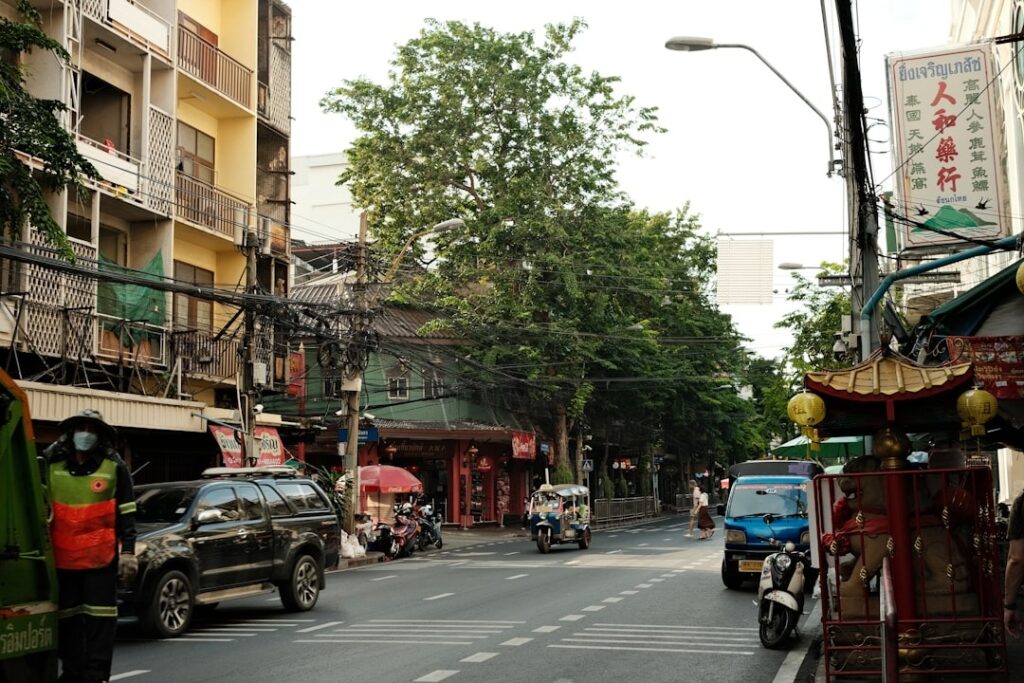
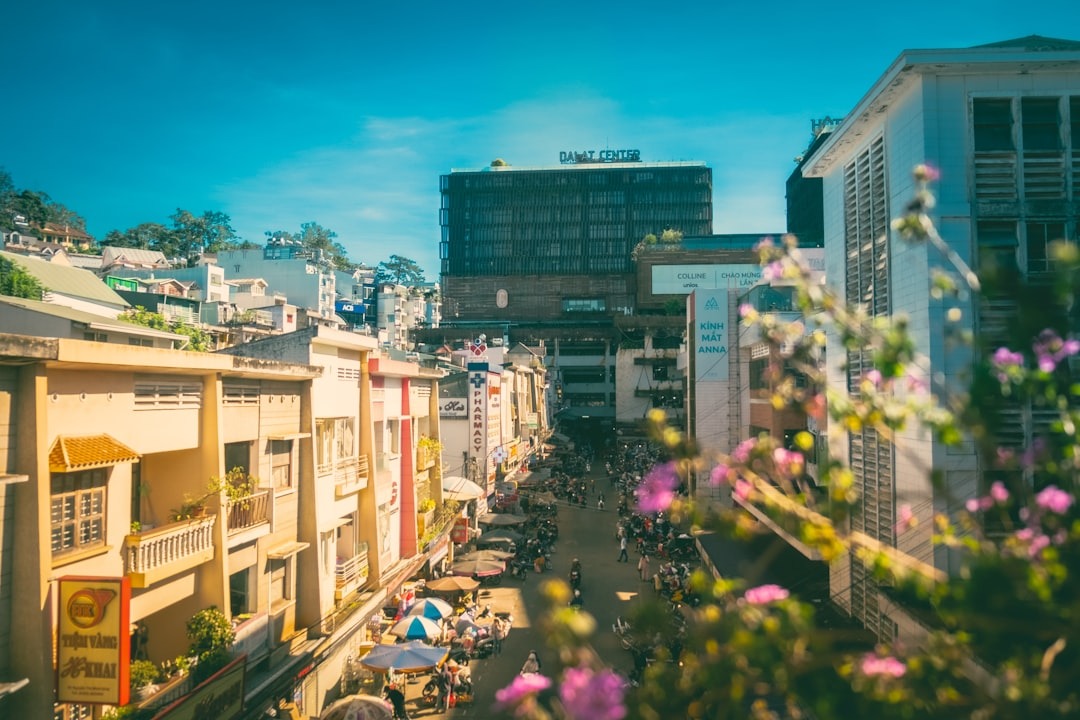
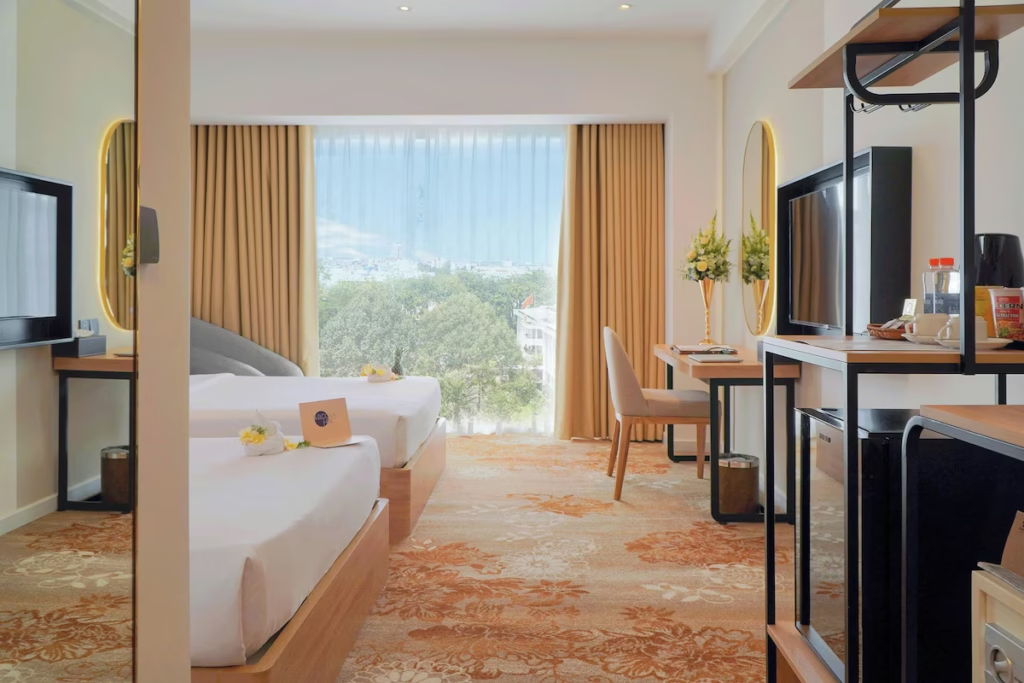
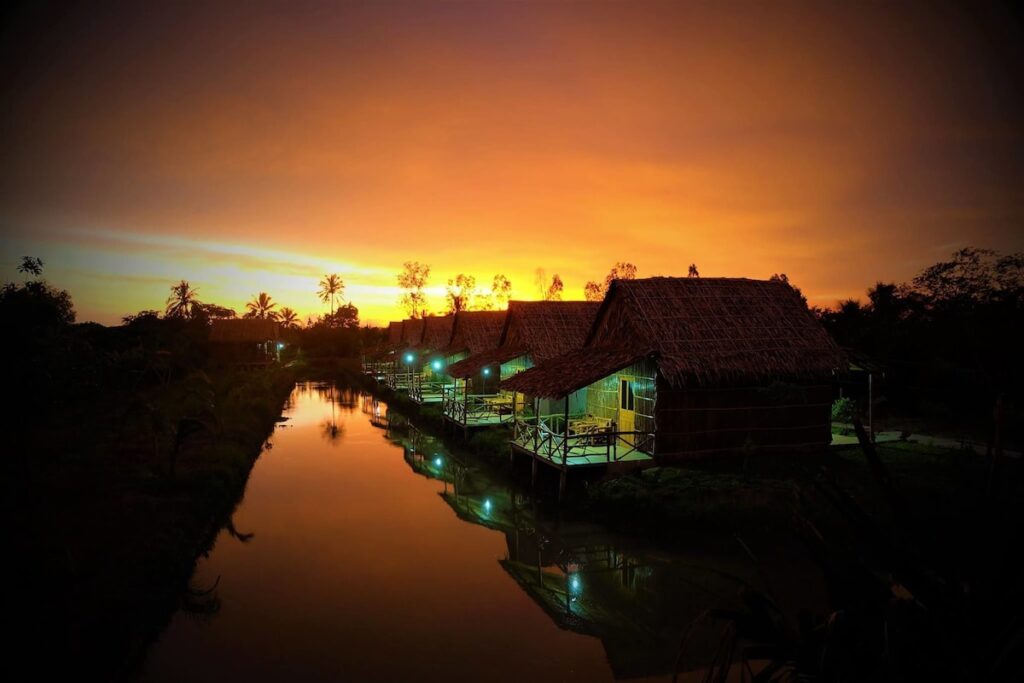
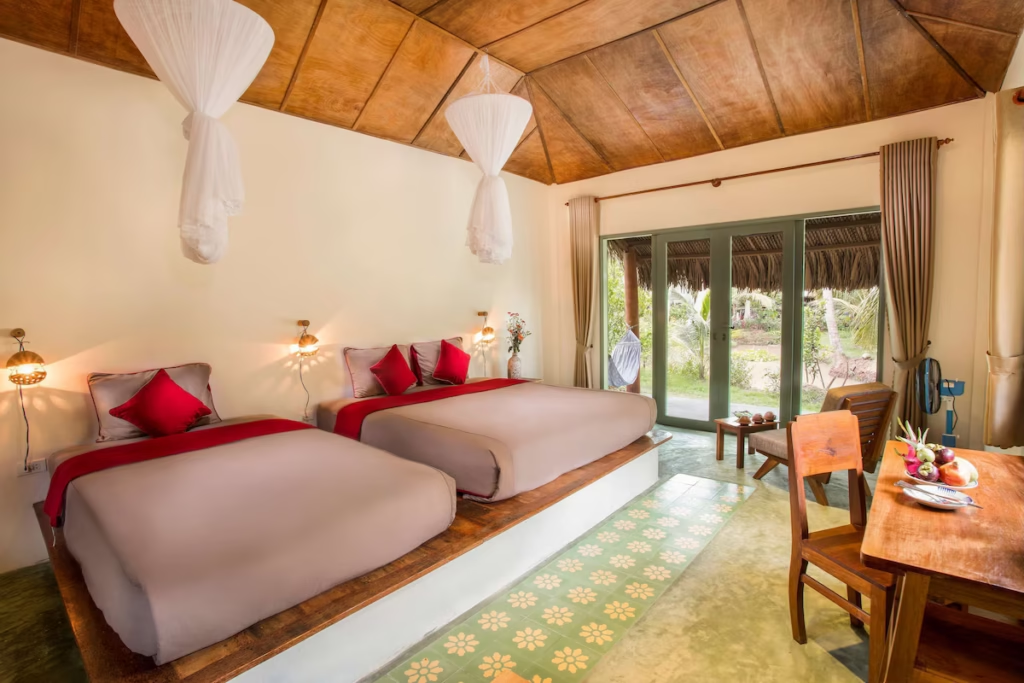
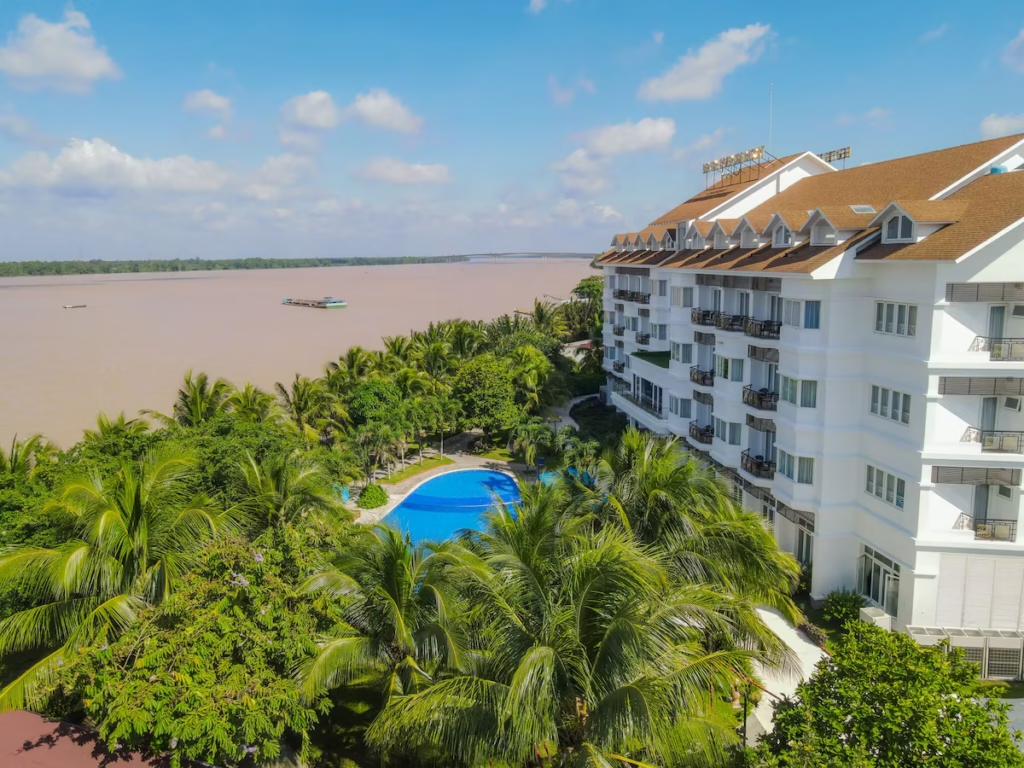
Ho Chi Minh City sits in southern Vietnam on the Saigon River, close to the Mekong Delta. It’s Vietnam’s largest city and the country’s financial and commercial engine. The city is home to more than 8 million people and spreads across roughly 2,061 square kilometers.
It has a layered history. Once the capital of French Indochina, then the capital of South Vietnam during the Vietnam War. Today it blends colonial landmarks with aggressive modern growth. You feel it everywhere, from old façades to glass towers.
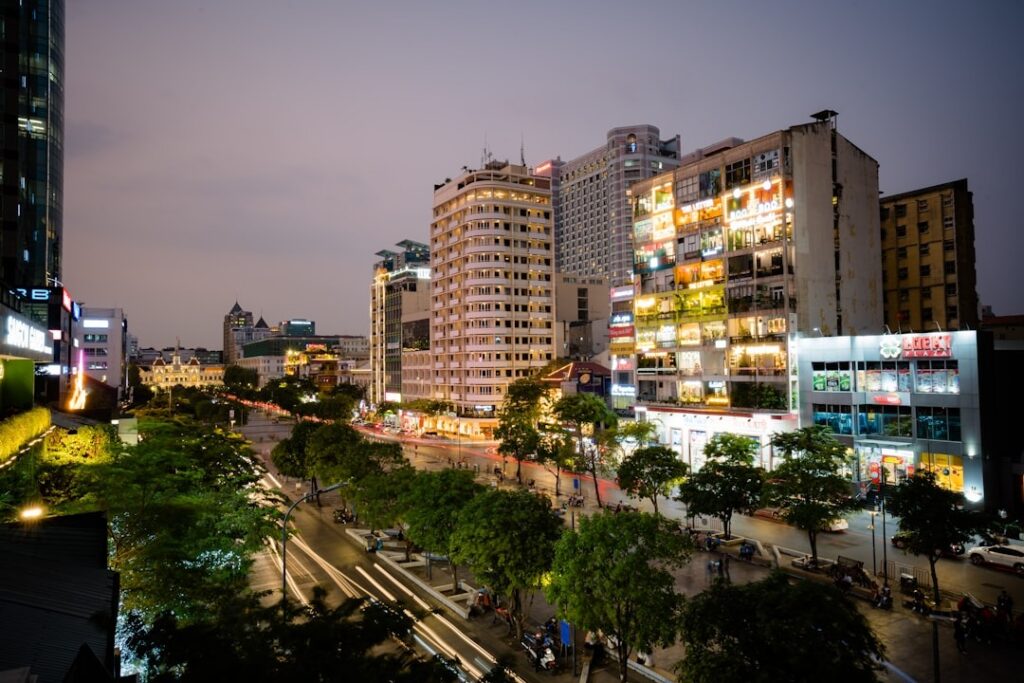
I remember the drive at from the airport to my hotel in Disctrict 1 my first night in Vietnam, back in 2011, and having my “New York” moment, looking up at the skyscrapers and lights, and then the contrast with the $0.80 street Pho.
The main street in the central core is Dong Khoi, running through District 1 with shops, cafés, hotels, and a lot of the city’s “first time” energy.
Getting around: buses exist, the metro is developing, but the easiest way is Grab Car or motorbike. It is reliable, priced upfront, and it removes the language friction. Yes, you get a helmet.
Ho Chi Minh City. where to sleep
Before you choose a hotel, here are the main areas and what each one feels like:
District 1: The central core with historic landmarks, nightlife, and the easiest base for first timers.
District 3: Calmer, leafy streets, French colonial architecture, and a more local feel while still central.
District 5, Cholon: Chinatown. one of the coolest areas for street food and culture.
Phu My Hung, District 7: Modern, planned, clean, international.
District 2: A quieter corner but still near the center, very green.
Phu Nhuan: Where the locals hang out, a more artistic neighborhood.
Pham Ngu Lao: inside District 1. budget heavy, backpacker energy, bars, and constant motion.
Binh Thanh: On the river, a burging business center.
Ho Chi Minh City. 8 popular areas at a glance
Area
Style
Energy
Close to sights
Crowding
Best for
District 1
central, touristic
very high
top landmarks
high
nightlife, convenience, first time Saigon
District 3
leafy, local
medium
quick access to D1
medium
calmer base, good food scene
District 5, Cholon
Chinese Vietnamese, historic
high
markets, pagodas
high
street food, culture, atmosphere
District 7
modern, upscale
low
farther out
low
space, calm, families
District 2
green, quiet
low
farther out
low
relaxed stays
Phu Nhuan
trendy, café culture
medium
close to center
medium
coffee, neighborhoods
Pham Ngu Lao
budget, nightlife
very high
central
very high
cheap stays, bars, constant motion
Binh Thanh
mixed, developing
medium
good access
low
local feel, modern pockets
District 1. the city’s spark plug
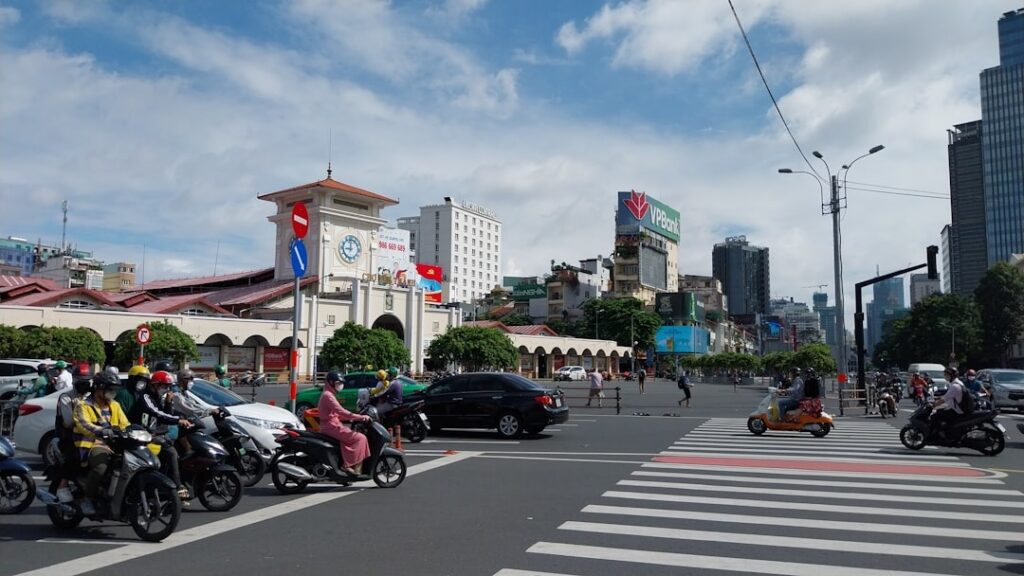
Street View Of Ben Thanh Market
This is the bubbling center where most people naturally end up, especially the first time around. Within District 1 you have a few recognizable pockets:
• Dong Khoi: historic spine, polished, central. • Pham Ngu Lao: budget core with nightlife and low prices for everything. • Bui Vien: crowded, loud, bars, Western food, convenience stores open all night. • Ben Thanh area: famous market and the square around it, often with ongoing construction nearby.
Hidden gem: Café Apartment at 42 Nguyen Hue. An old building refilled with cafés, boutiques, and concept shops stacked floor by floor.
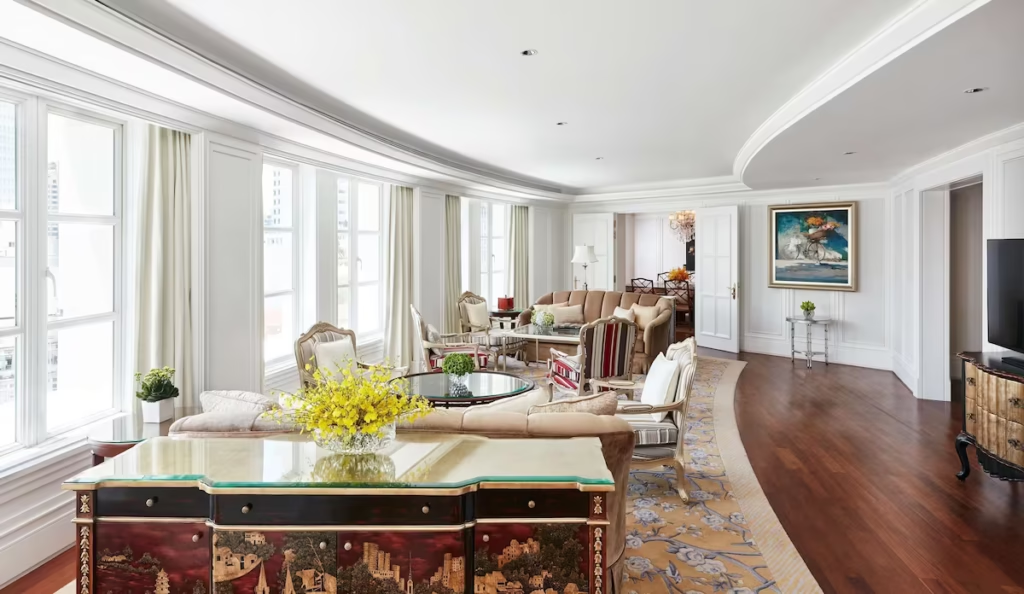
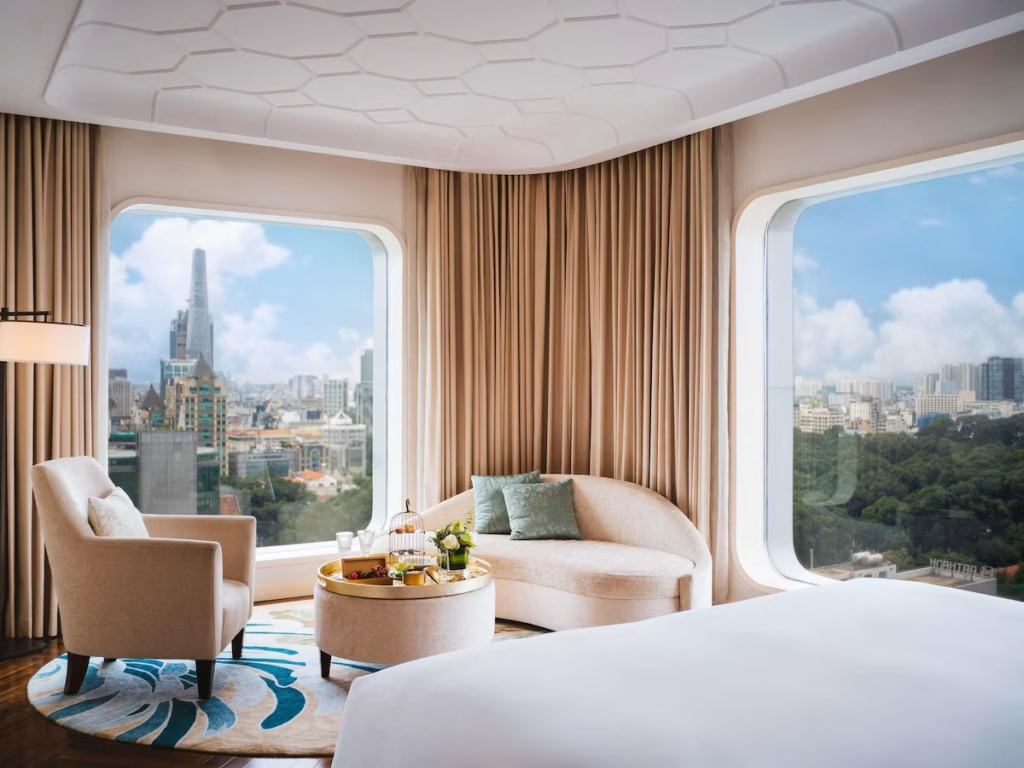
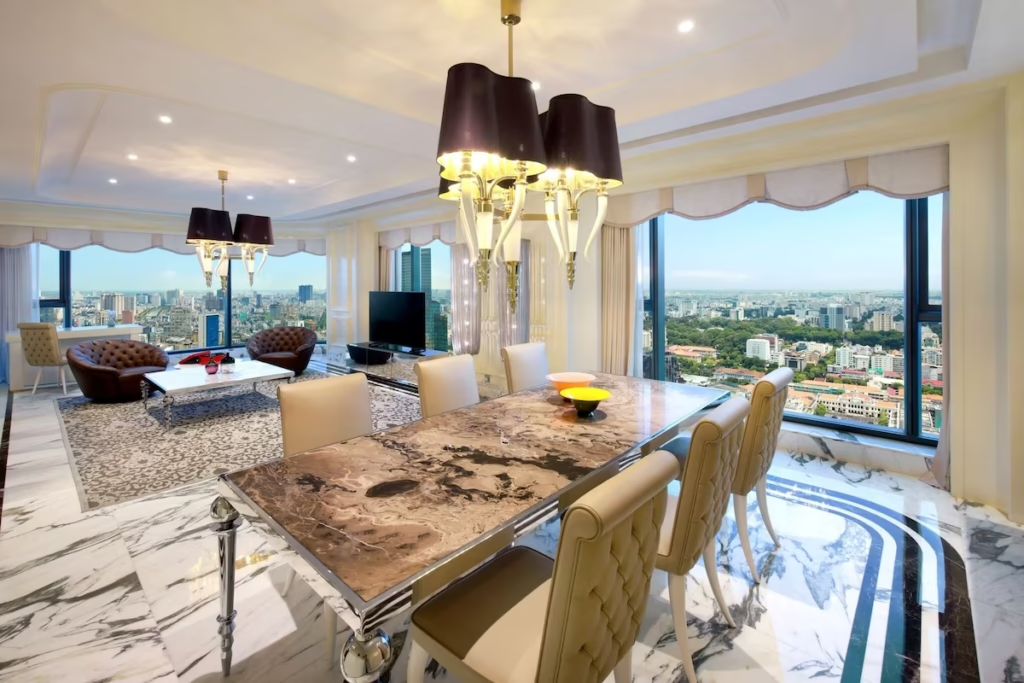
Park Hyatt Saigon, Bright Living Room Of The Presidential Suite With City Views And Work Station
Park Hyatt occupies a rare position just off Dong Khoi, where the surrounding streets are spacious rather than compressed. The building is formal, balanced, and deliberately inward-facing. Public spaces are generous, circulation is calm, and the interior environment remains insulated from the street outside.
This is a hotel that sets tone immediately. It anchors a District 1 stay with clarity and restraint, allowing you to move through the city at full intensity and return to something calm and composed.
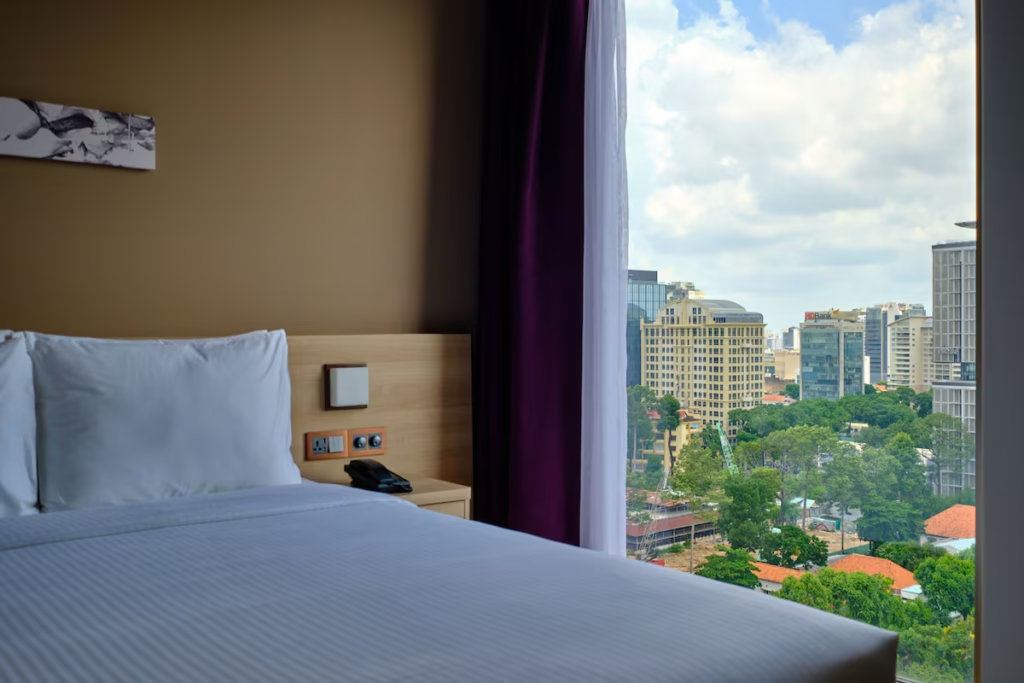
Sotetsu Grand Fresa is modern, efficient, and tightly run, positioned squarely within District 1’s walkable core. Rooms are minimal but thoughtfully designed, with excellent sound proofing and clean spatial logic. The operation feels precise without becoming impersonal.
It suits a stay built around movement. You step out into the city easily, then return to a space that resets you quickly and quietly, keeping the hotel firmly in service of the location.
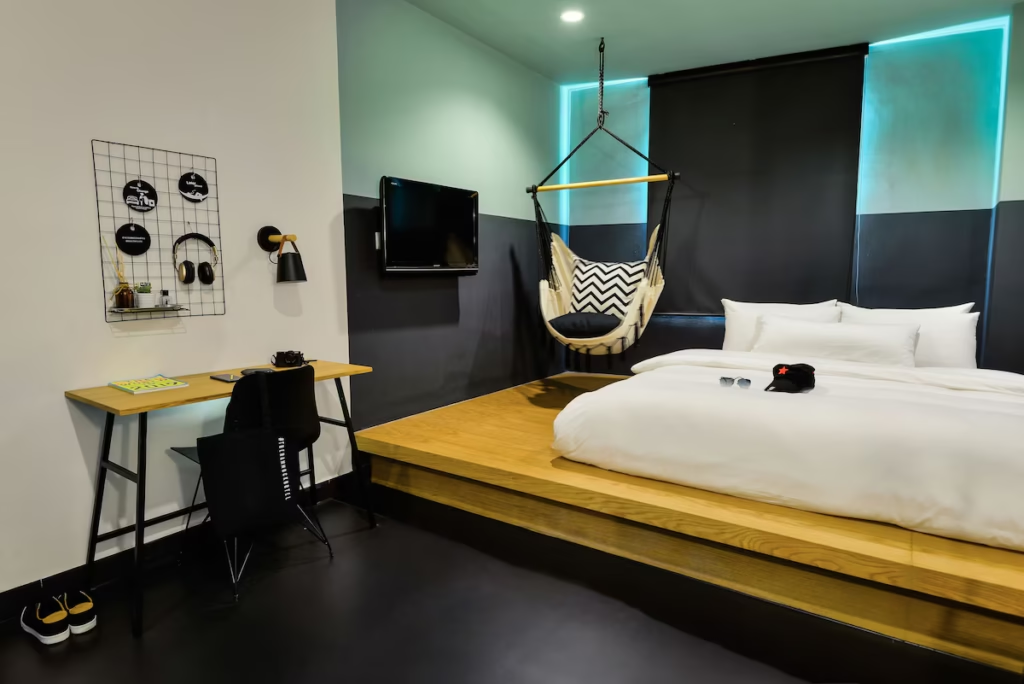
The Hammock offers a softer take on central Saigon, with comfortable rooms, relaxed common spaces, and a distinctly human scale. Interiors lean warm and functional, and of course every room comes with a hammock. The hotel’s atmosphere stays calm despite its central placement.
It works well for travelers who want District 1 access without a hard-edged hotel experience. The emphasis is on ease, comfort, and a feeling of being looked after more than wooed.
District 3 is immediately west of District 1, but the city presents itself differently here. Streets are wider, tree cover increases, and the built environment shifts toward villas, civic buildings, and long-established residential blocks. Traffic still moves quickly, but the density eases. Sidewalks function. Cafés, offices, and small restaurants rely more on regulars than turnover.
This is one of the most balanced parts of Ho Chi Minh City for staying central without living inside constant stimulation. Access to District 1 is fast and direct, yet the surrounding streets support a steadier daily cadence. District 3 works particularly well for travelers who want proximity without the stress, and who value continuity in the urban fabric over spectacle.
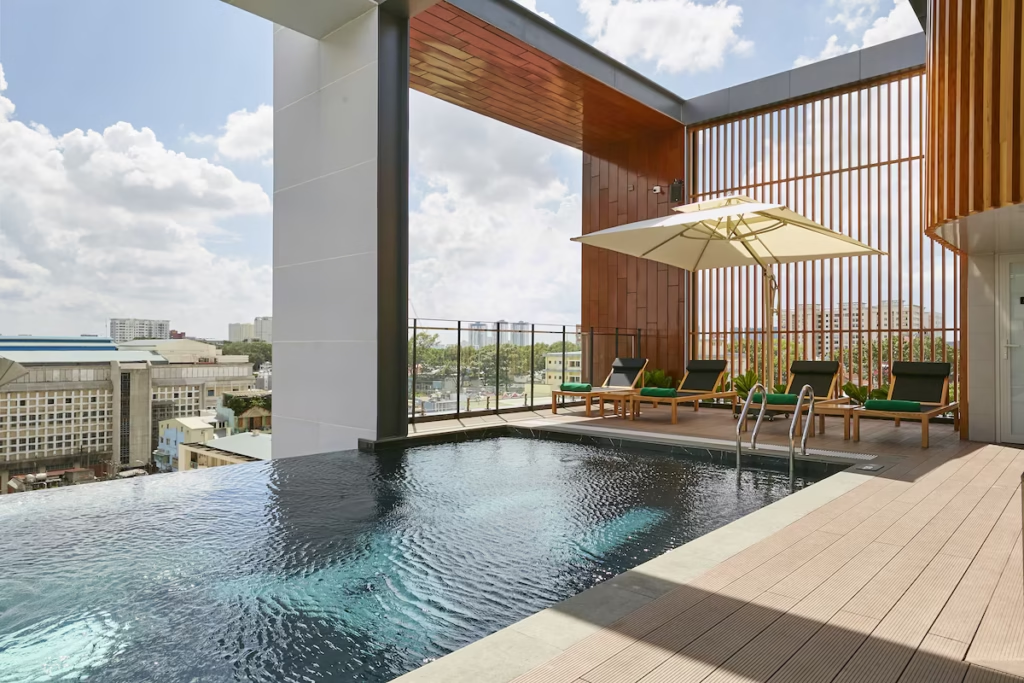
Hôtel des Arts is a composed, design-led property that draws on French colonial proportions and contemporary detailing. Rooms are generous, ceilings are high, and interiors are carefully resolved without leaning into nostalgia. Public areas are structured and intentional, with a rooftop pool and bar integrated into the building’s overall layout.
The hotel aligns closely with District 3’s character. It supports a stay that is central but controlled, offering a sense of order that carries through both the building and its immediate surroundings. This is a place where the hotel reinforces the district’s stability, making it easy to move into the city and retreat back without disruption.
Mai House is substantial in scale and deliberately understated in presentation. The building favors horizontal space, with wide corridors, large rooms, and a layout that prioritizes space and separation between areas. Design choices lean classic-modern, with attention placed on proportion, comfort, and durability.
Its strength lies in how seamlessly it fits into the district. The hotel supports longer stays and unhurried travelers, while remaining close enough to the center to keep logistics simple. It suits travelers who want a stable, composed base that mirrors District 3’s residential orientation and doesn’t compete with the city’s louder districts.
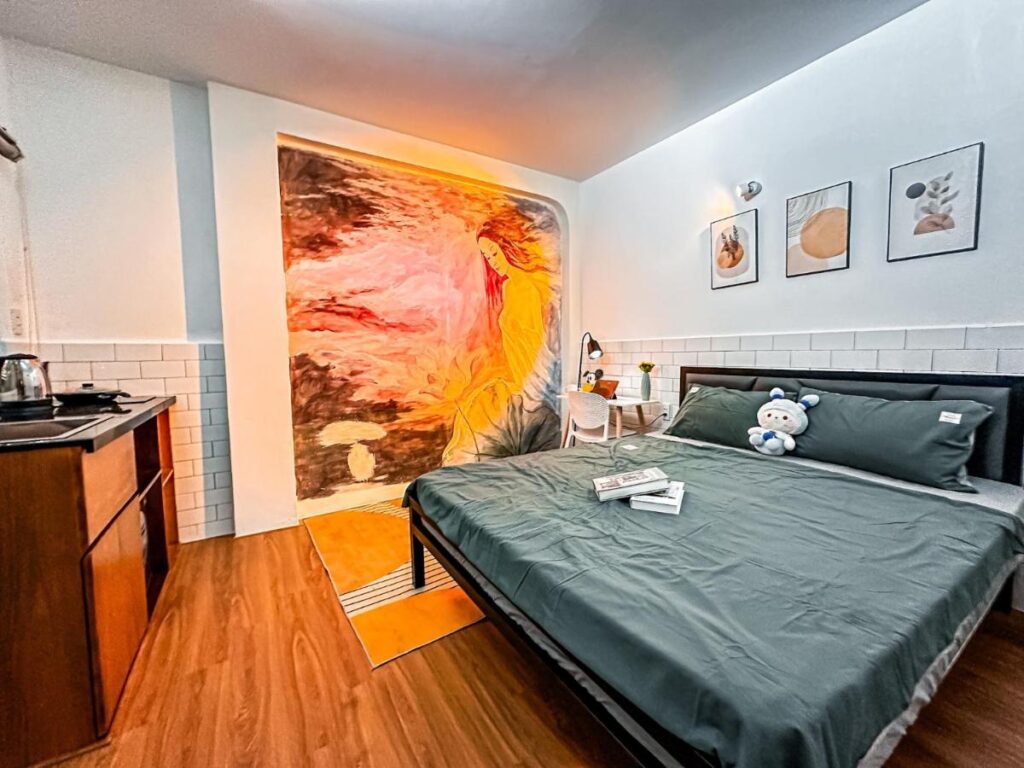
M Village Living Võ Thị Sáu operates more like a compact residential building than a conventional hotel. Rooms are clean, functional, and designed around day-to-day use rather than short-term turnover. Common areas are comfortable, and overall remain quiet and focused.
This fits naturally into District 3’s everyday structure. It supports independent stays where the city becomes the main focus, not the hotel itself. For travelers who want a modern, contained base embedded in a lived-in neighborhood, it offers clarity and consistency without distraction.
District 5, Cholon. Chinatown energy, food, and culture
District 5, Chinatown Street View
District 5 is one of the city’s oldest working cores, built around commerce. Cholon developed as a Chinese-Vietnamese trading center, and that function still defines it. Markets, medicine shops, temples, warehouses, and wholesale streets operate at close range, often layered vertically and rarely simplified for visitors. This part of the city moves through repetition and volume, not novelty.
Staying here places you inside one of Ho Chi Minh City’s most culturally concentrated areas. Daily life dominates the streets, and the urban fabric rewards attention and immersion, not speed. Hotels that work in District 5 provide structure and calm internally, allowing the surrounding intensity to remain accessible without overwhelming.
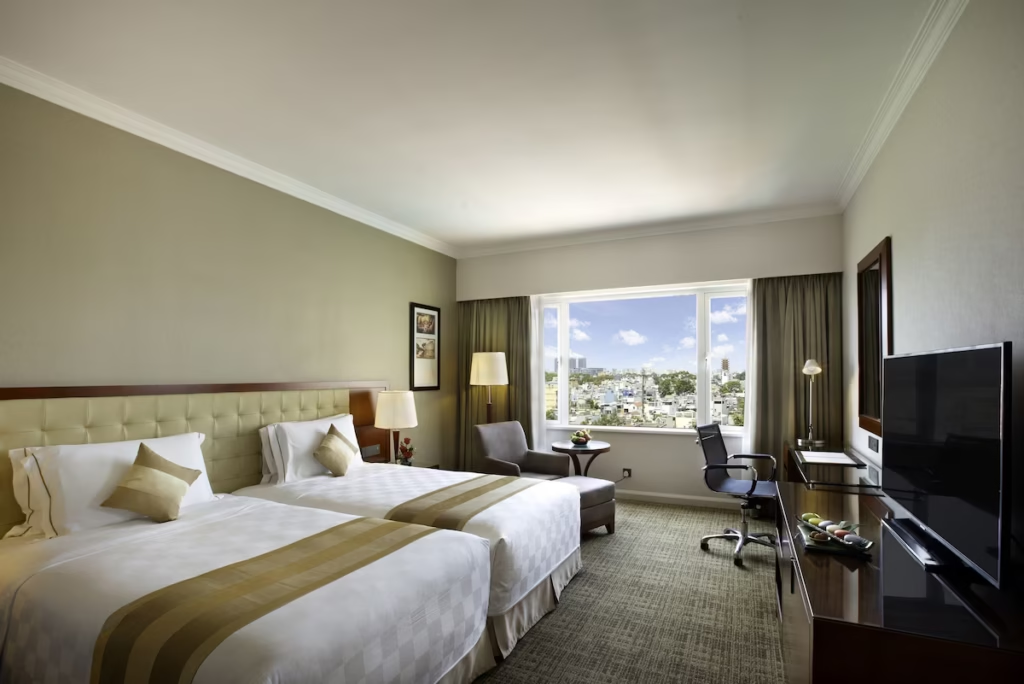
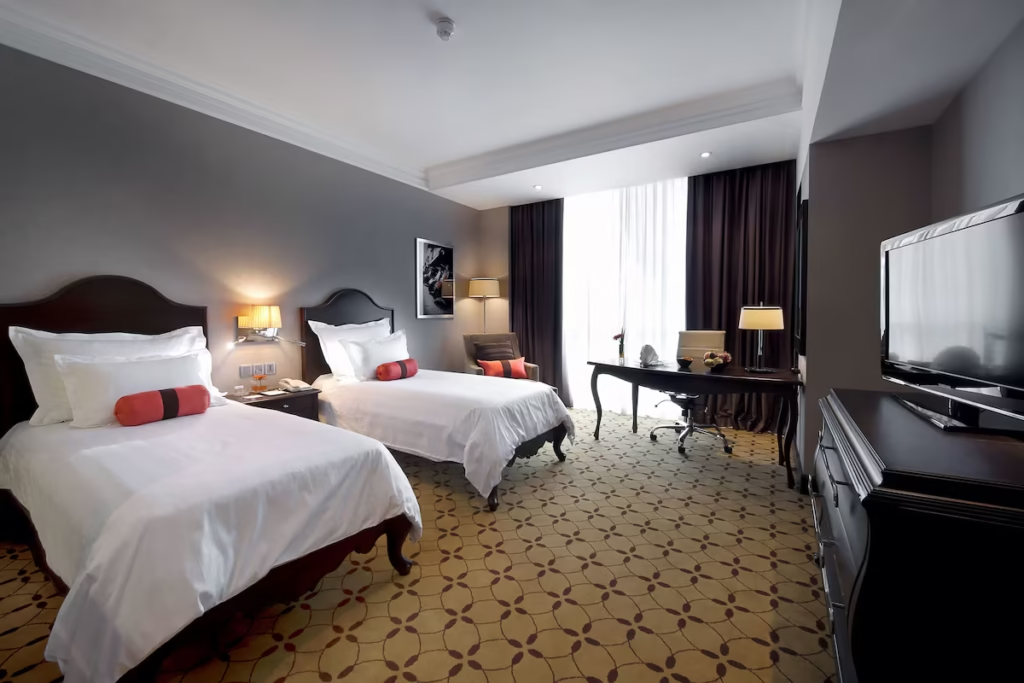
Equatorial Ho Chi Minh City, Twin Room With Work Station And City View
Equatorial is a large, composed hotel with the scale to absorb its surroundings. Rooms are spacious, quiet, and aimed toward comfort and separation from the street. Public areas are wide and orderly, and the hotel runs with a level of consistency in service that stands out in this part of the city.
The hotel functions as a stable anchor within Cholon’s density. It supports long walks through markets and temples by providing a clear return point that restores order and space. This placement allows full engagement with the district while keeping the accommodation experience controlled and cohesive.
Windsor Plaza occupies a prominent block near An Dong Market, with a vertical layout that lifts rooms above street level. Interiors are straightforward and generous, with solid sound insulation and an emphasis on practicality. Facilities are extensive and well integrated into the building.
Its location makes it particularly effective for exploring Cholon on foot. Markets, pagodas, and food streets sit within easy reach, and the hotel provides a clear boundary between the external environment and the interior experience. It works well for travelers who want immersion during the day and clarity at night.
Zazz Urban introduces a contemporary option into a historically dense district. Rooms are modern, well maintained, and designed with careful attention to layout and sound control. The building includes fitness and pool facilities.
This hotel suits a stay that balances cultural exploration with modern comfort. Its presence in District 5 offers a clear, current counterpoint to the surrounding streets, supporting a stay that remains grounded in the neighborhood while maintaining a clean, composed interior environment.
District 7. modern Saigon, clean lines, breathing room
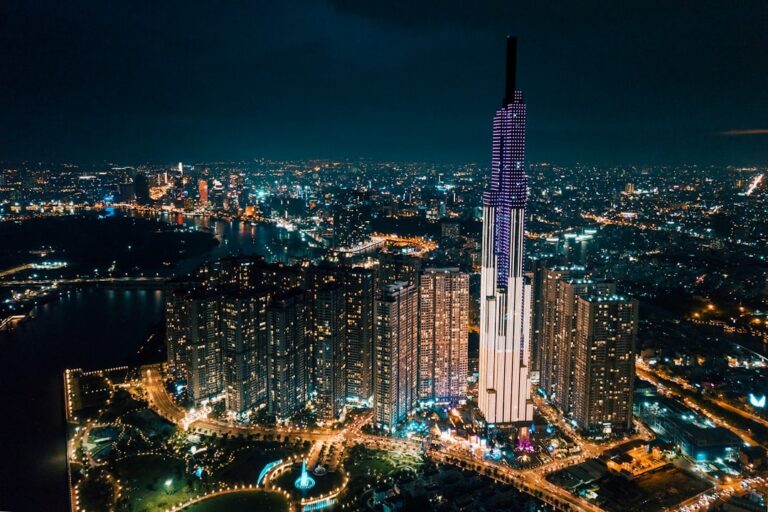
Aerial Street View Of District 7 At Night
District 7 sits south of the historic core and is a deliberate departure from the rest of the city. Streets are wide, blocks are organized, and development follows a plan rather than accumulated history. Phu My Hung anchors the area with residential towers, offices, schools, and shopping centers arranged around open roads and green buffers. Traffic moves differently here. Density is managed and planned, not absorbed.
Staying in District 7 reshapes how Ho Chi Minh City opens to you. Daily logistics become simpler, noise recedes, and the city’s intensity turns into something you visit instead of inhabit. This area suits travelers who value structure, predictability, and space, and who prefer a base that supports longer routines.
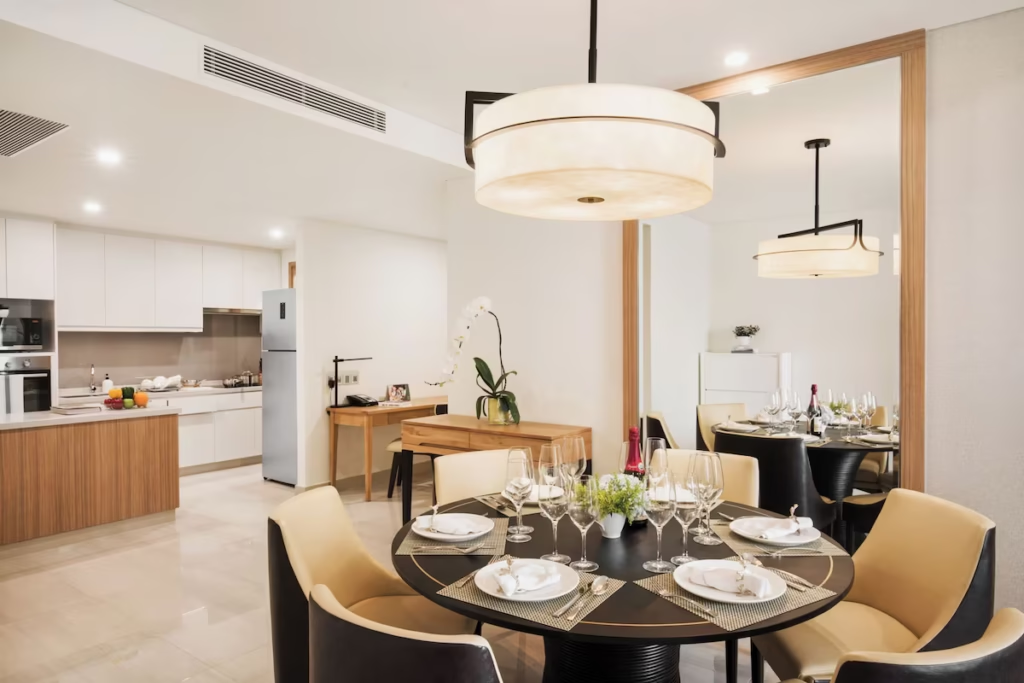
Oakwood Residence Saigon, Three-Bedroom Suite With Fully Furnished Kitchen and City View
Oakwood Residence Saigon is a modern serviced residence set within the Phu My Hung zone, designed around long-term comfort and daily use. Apartments are large, with full kitchens, living areas, and generous storage. The building includes a pool, fitness center, and shared spaces that really add to the social aspects.
The property works as a self-contained base in District 7. For travelers spending extended time in the city, it offers comfort, amenities for everyday life, and a sense of settlement and home.
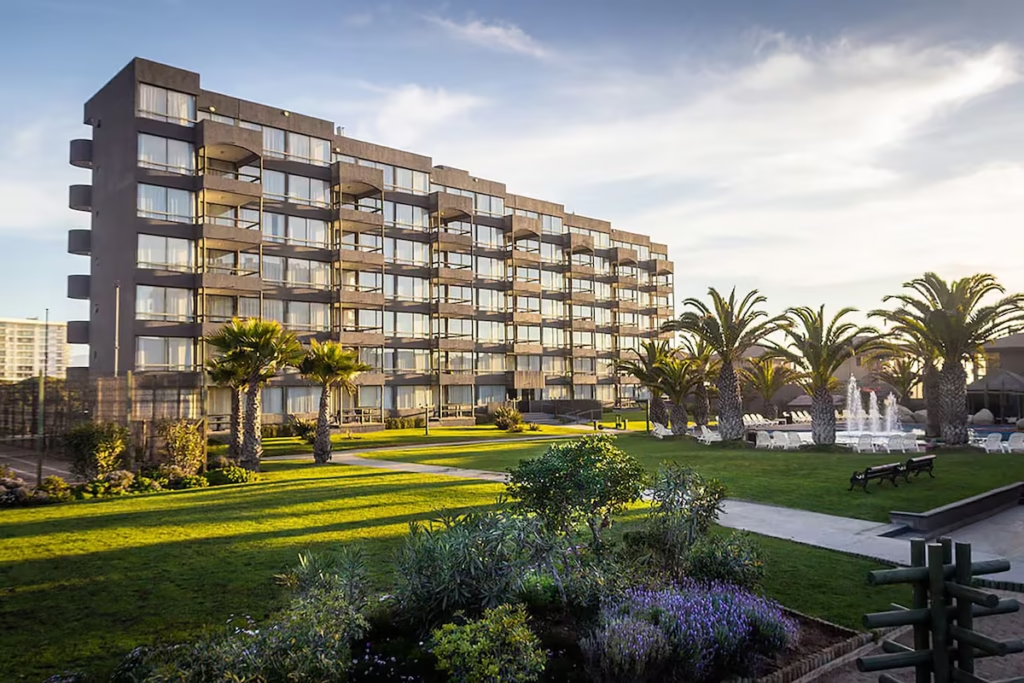
La Serena combines hotel services with apartment-style suites in a well-lit, well-managed building. Rooms are bright, clean, and organized for practical living. It also features many common and communal areas, and has great gardens and outdoor spaces.
The location is central in district 7’s well-ordered grid. The La Serena makes life easy, walking distance from malls, international dining, and daily errands, with quick transport into the center or any other part of the city.
Golden Tree operates as a small hotel-apartment hybrid tucked into a calm section of District 7. Rooms have everything you need for a longer stay, are carefully maintained, and have great soundproofing. The building is quiet, with minimal shared traffic and a restrained footprint.
This hotel fits travelers who want District 7’s environment without scale or ceremony. It’s a stay that prioritizes smooth days, low noise, and routines, allowing the district’s openness and order to define the experience rather than the hotel itself.
District 2. distance, greenery, intentional separation
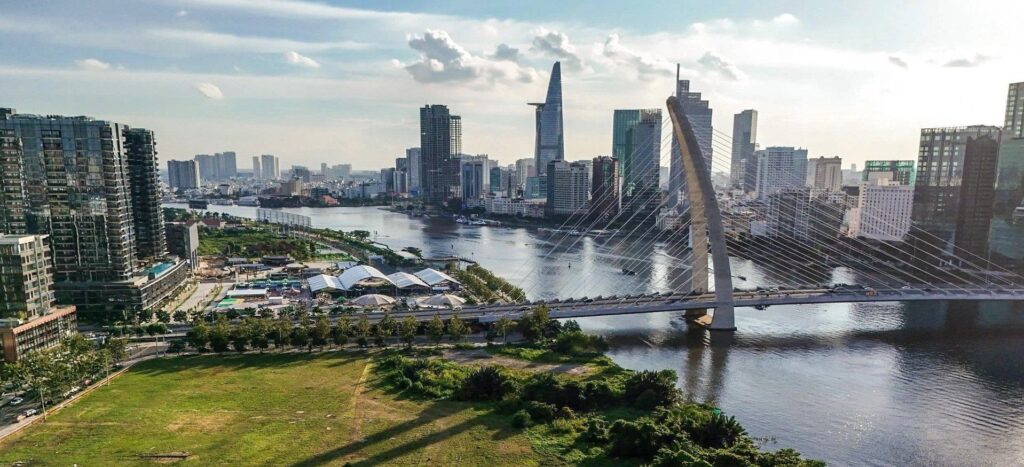
Aerial View Of The River And Bridge In District 2
District 2 sits east of the Saigon River and operates on a different spatial logic than the historic core. Streets widen, buildings lower, and greenery becomes part of the urban structure. Thao Dien anchors the district with cafés, restaurants, and low-rise residential blocks that serve a largely international population, while quieter pockets extend toward the river and surrounding neighborhoods.
Staying in District 2 means living a little apart from the city’s main current. Days are less about stumbling into things and more about choosing where you’re going next. Most trips involve a short ride, and routines tend to stay local, with the river acting as a natural boundary between everyday life and the historic core. It’s a part of the city that rewards planning and patience, and it suits travelers who don’t need the center within arm’s reach at all times.
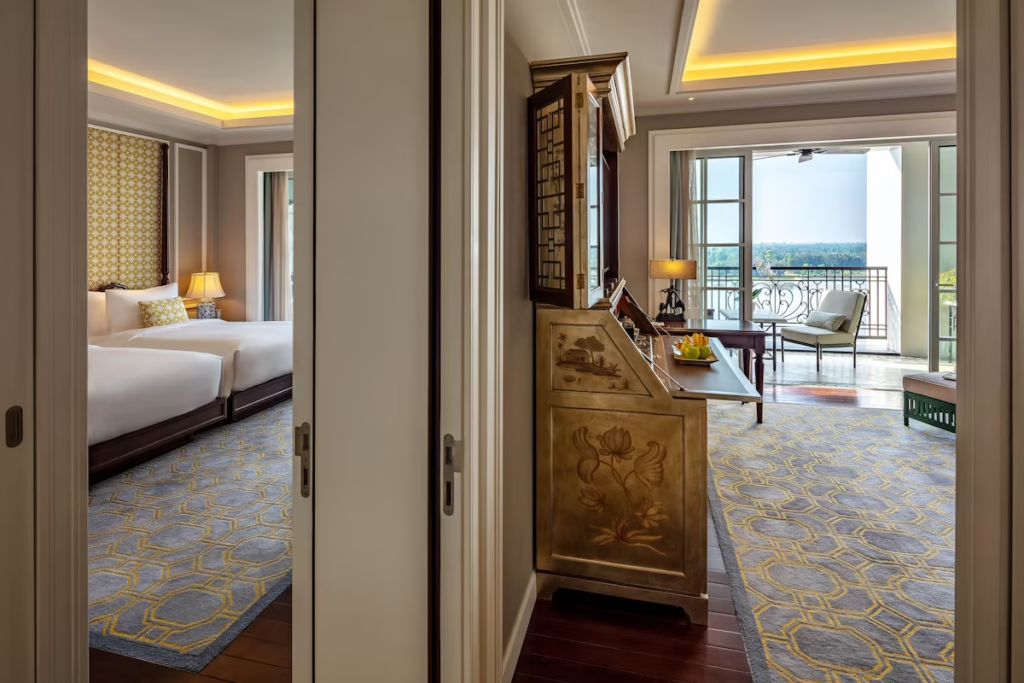
Mia Saigon Luxury Boutique Hotel, A Bright Room With Separate Living Room And Balcony With River View
Mia Saigon is a polished, low-rise riverside hotel with a boutique scale and a clearly defined design language. Rooms are large and quietly finished, with strong sound insulation and a layout that prioritizes privacy. Public spaces are calm and self-contained, and service is attentive without being intrusive. The overall atmosphere is controlled and consistent, with an emphasis on comfort and separation from the city.
The hotel sits on a quiet stretch of the Saigon River in An Phu, set back from Thao Dien’s main commercial streets. Access is by car or taxi, with the closest activity concentrated a short drive away along Nguyen Van Huong and Xuan Thuy. The location keeps the riverfront isolated and controlled, with most dining and shopping handled off-site or about 15-20 minutes away by foot.
Amanaki Thao Dien combines the space and practicality of serviced apartments with hotel-level maintenance and amenities. Rooms are generously sized, modern, and set up for extended use, with kitchens and work-friendly layouts. Shared facilities, including a pool and fitness area, are compact but well kept, supporting both longer and short stays.
The property is located within Thao Dien’s main residential and café zone, close to international restaurants, bakeries, and everyday services. Streets around the hotel are walkable, and daily needs are easily handled nearby. Reaching central districts requires a short drive across the river, making the location convenient for local routines while keeping the city center at a distance.
Nexus House is a small, quietly run property with a residential character and limited shared space. Rooms are bright, functional, and arranged for longer stays, with an emphasis on usable floor space and straightforward furnishings. It’s intimate, and the atmosphere remains low-key throughout the building.
The hotel is set on a side street in Thao Dien, away from major traffic and nightlife. Nearby cafés, small restaurants, and convenience stores are reachable on foot, while larger commercial areas are a short ride away. The location suits travelers who want a local setting, with easy access to the rest of the city when needed.
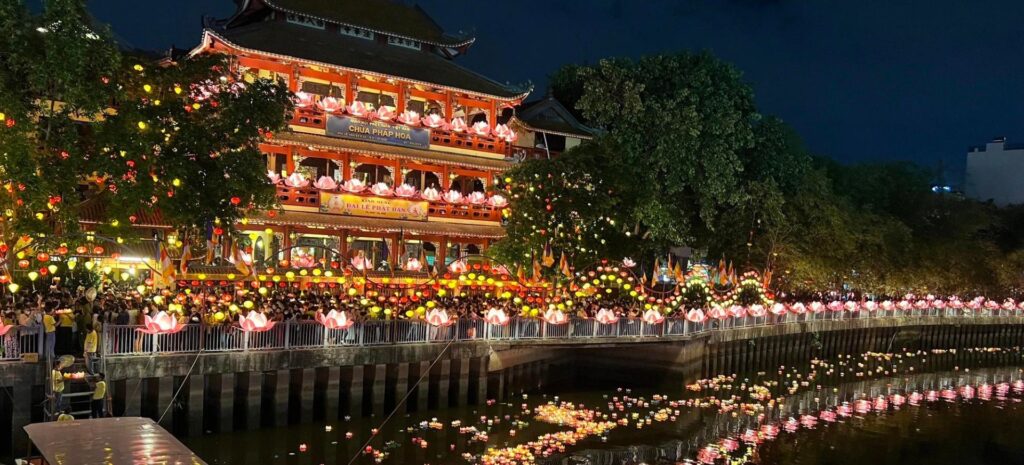
Street View Of Chùa Pháp Hoa, Phu Nhuan, And The Canal At Night
Phu Nhuan sits between the historic center and the airport corridor, functioning less as a destination and more as connective tissue. Streets are busy but familiar, shaped by schools, offices, markets, and long-standing residential blocks. Cafés, small restaurants, and neighborhood shops dominate the landscape.
Staying in Phu Nhuan places you inside the city’s daily mechanics. Movement in all directions is straightforward, and the district’s rhythm reflects how Saigon works for itself without thinking about tourists. It suits travelers who want proximity to the center without being in its most touristic zones, and who value neighborhoods that feel active without being “performative”.
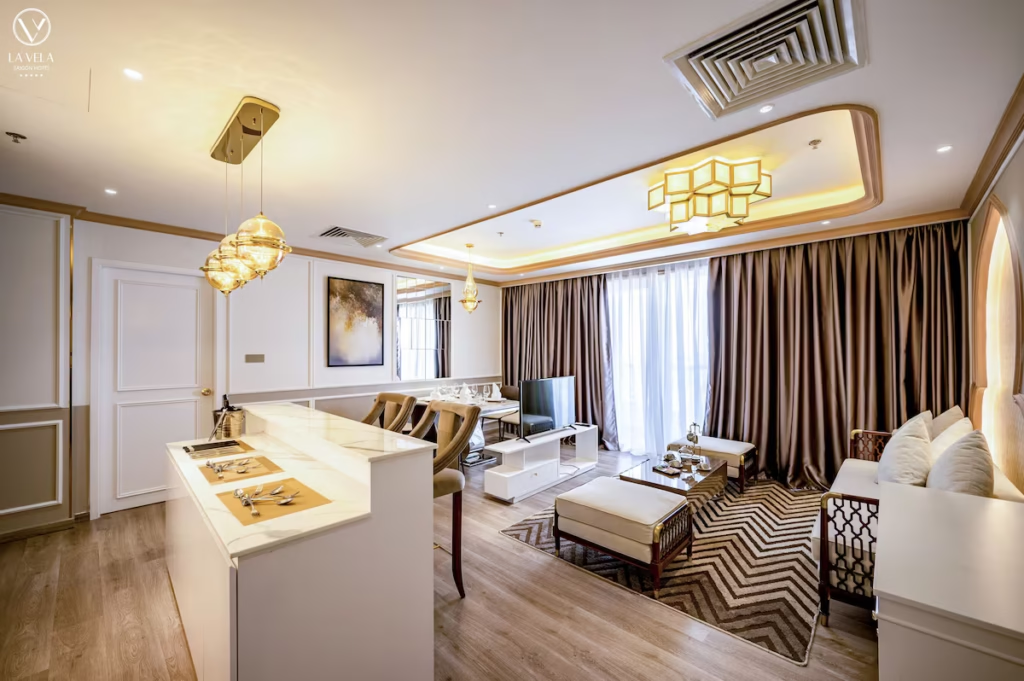
La Vela Saigon Hotel, Room With A Minibar, Living Room, And City View
La Vela Saigon is a large, modern high-rise with a full-service setup and a clear emphasis on comfort. Rooms are spacious, well soundproofed, and designed to make both the endings and beginnings of your days as smooth as possible. Public spaces are expansive, including a prominent rooftop pool and lounge area that’s a defining feature of the hotel.
The hotel sits along Nguyen Van Troi, one of the city’s main north–south arteries, with fast access to Tan Son Nhat Airport and central districts. Dining and cafés cluster along nearby Le Van Sy and Phan Xich Long, both reachable by a short ride. This location works well for travelers moving frequently across the city, with transport links taking priority over walkable sightseeing.
Eastin Grand is a long-established business hotel with a straightforward, professional setup. Rooms are large and well finished, with layouts geared toward rest and work, with desks and office chairs in many rooms. Facilities include a pool, fitness center, and multiple dining options, all maintained with consistency and flourish.
The hotel is located near the airport corridor, close to Nguyen Van Troi and the White Palace convention complex. Access to District 1 and District 3 is direct by car, while the immediate surroundings are largely residential and commercial. This placement suits travelers who value easy airport access and smooth cross-city movement over being close to the sightseeing areas.
MoMo Residence is a small apartment-style property designed for independent stays. Units are compact but efficient, with kitchenettes and simple furnishings arranged for everyday use. The building stays quiet, with shared areas and a low guest turnover.
It’s set within a residential part of Phu Nhuan, close to local cafés, neighborhood restaurants, and small shops. Phan Xich Long’s busy food streets are a short ride away, and connections into central districts are easy by taxi. The location supports a local feel and short trips across the city without placing you in a tourist corridor.
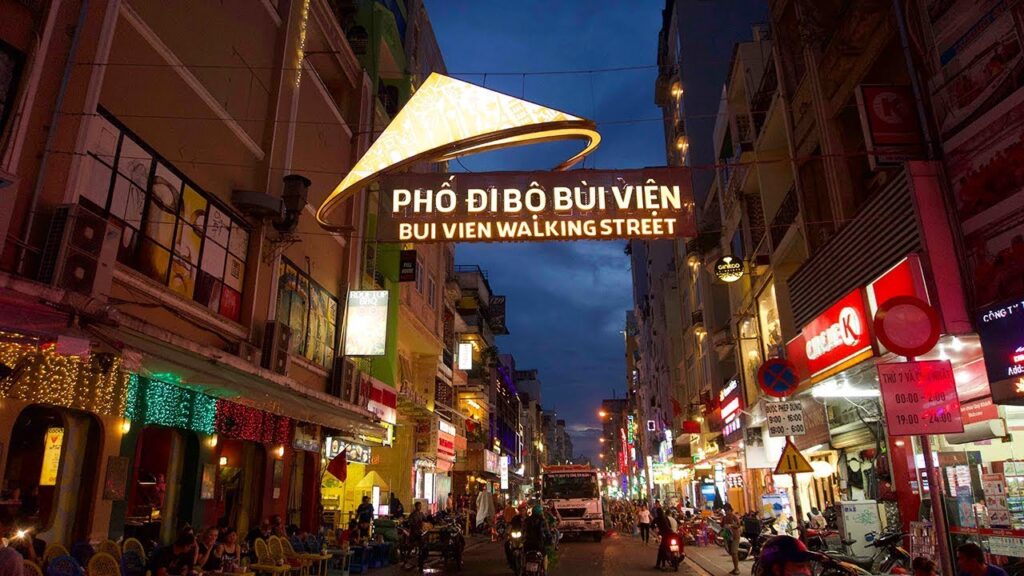
Entrance To Bui Vien Walking Street Lit Up At Night
Pham Ngu Lao is the part of District 1 most associated with budget travel and backpacker infrastructure in Ho Chi Minh City. The streets around Phạm Ngũ Lão, Bùi Viện, and Đề Thám are lined with guesthouses, hostels, travel agencies, restaurants, and bars built to serve international visitors at every hour. Accommodations range from dormitories to compact hotels, and the pedestrian network is a tight grid of narrow streets and alleys that stay active late into the night. The overall pattern is high density, high turnover, and amenities clustered within a small area.
The district sits high in Ho Chi Minh City’s center, with large public spaces like September 23rd Park and historic sites such as Ben Thanh Market, the Notre Dame Basilica, and the War Remnants Museum within about 10–15 minutes’ walk. Several major bus and sleeper coach operators have ticket offices here, making this area a logistical hub for onward travel. Street food vendors, inexpensive cafés, and bars with late-night hours fill the blocks around you, while the main roads funnel traffic toward central landmarks and transport links
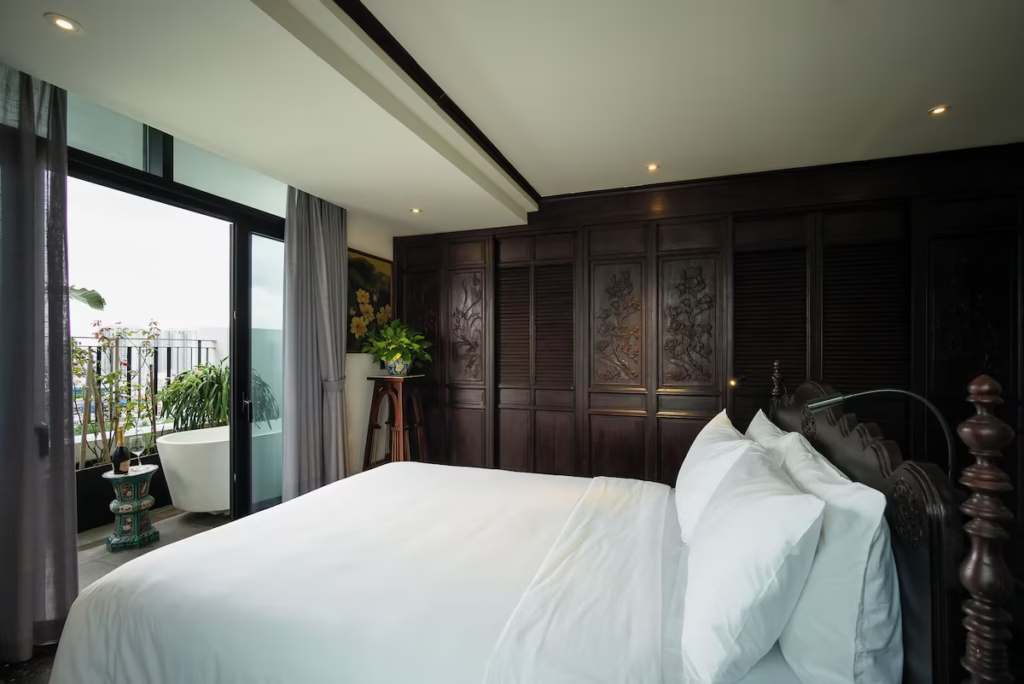
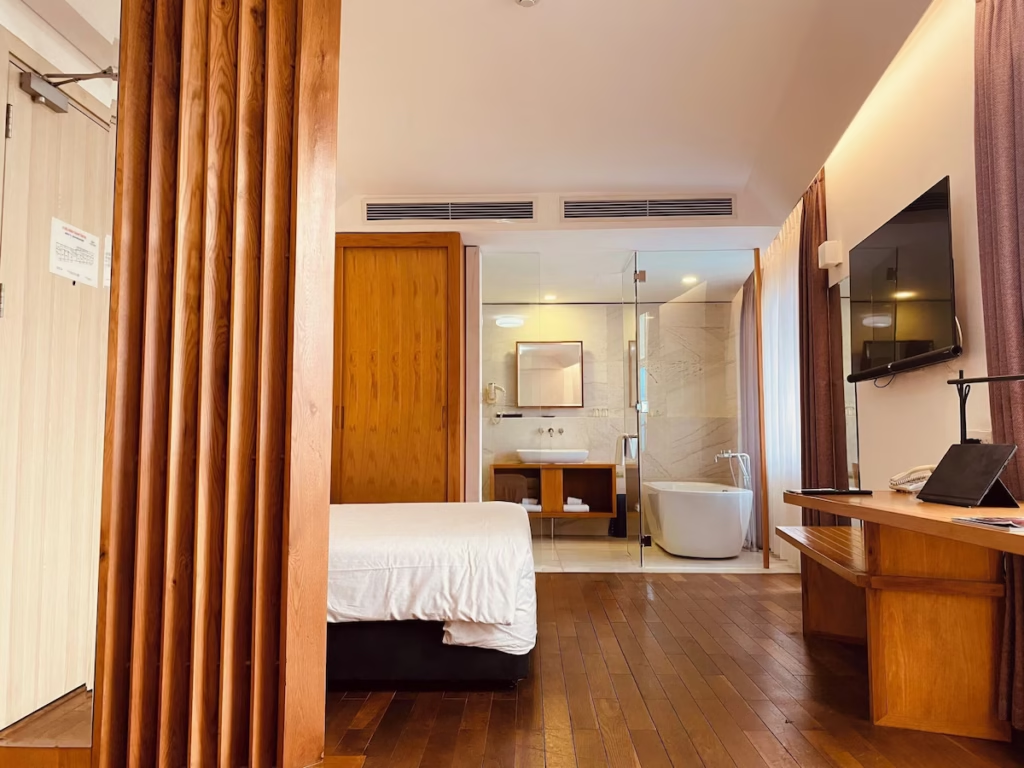
Liberty Saigon Greenview, Double Room With Bathtub And A Work Desk
Liberty Saigon Greenview is a mid-sized city hotel with a practical, no-frills setup. Rooms are luxurious, comfortable, and designed to block out street noise, which matters in this part of the city. Public areas are functional and clearly laid out, and the hotel runs at a scale that handles constant guest turnover without feeling chaotic.
The hotel sits at the western edge of the Pham Ngu Lao area, close to September 23 Park and within a short walk of Bui Vien and De Tham streets. You’re near bus offices, travel agencies, and late-night food, while still slightly removed from the loudest blocks. Ben Thanh Market and central District 1 landmarks are reachable on foot in about 10–15 minutes.
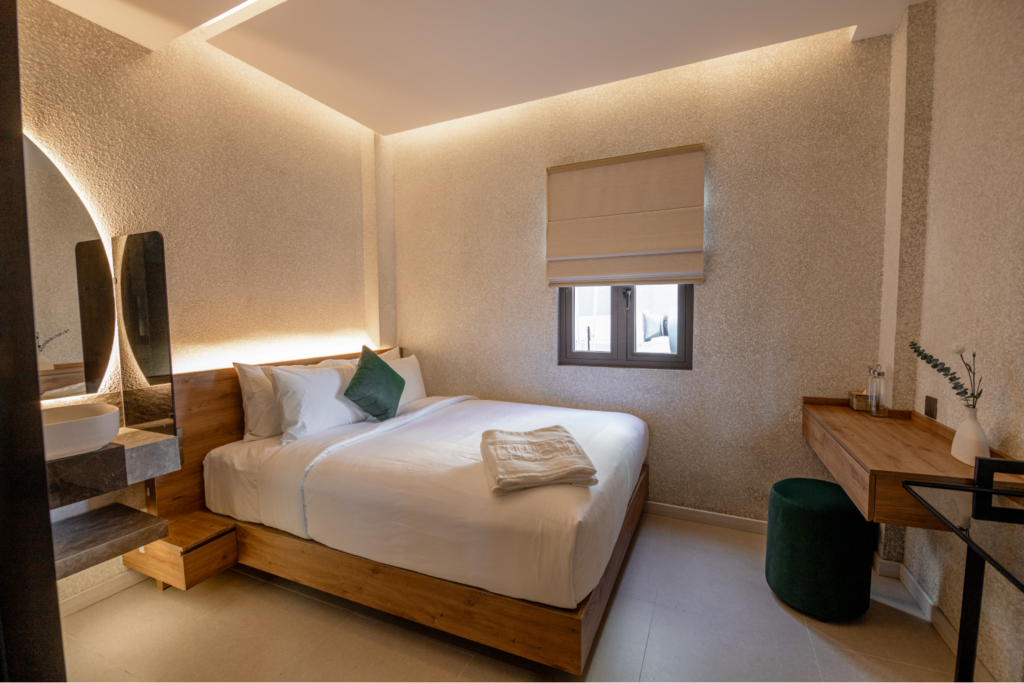
The Common Room Project is a small, modern property focused on clean design and efficient use of space. Rooms are small but well organized, with good sound insulation for the area. Shared spaces are a core part of the setup, offering a calm place to sit or work without feeling like a party hostel.
It’s located just off Pham Ngu Lao’s main streets, within easy walking distance of Bui Vien and the surrounding nightlife. Cafés, convenience stores, and travel services are scattered through the nearby blocks, and September 23 Park is a few minutes away. The location keeps you inside the action while avoiding the most congested corners.
Vy Khanh is a long-running guesthouse known for its reliability and attentive management. Rooms are basic but clean, with straightforward furnishings and good upkeep. The scale is small, and the focus stays on clear communication and consistent standards rather than amenities.
The guesthouse is tucked into a side street near Pham Ngu Lao, close to De Tham Street and the area’s bus and tour offices. Food, bars, and services are immediately nearby, and most of District 1 is accessible on foot. The location makes it easy to move in and out of the city without relying heavily on transport.
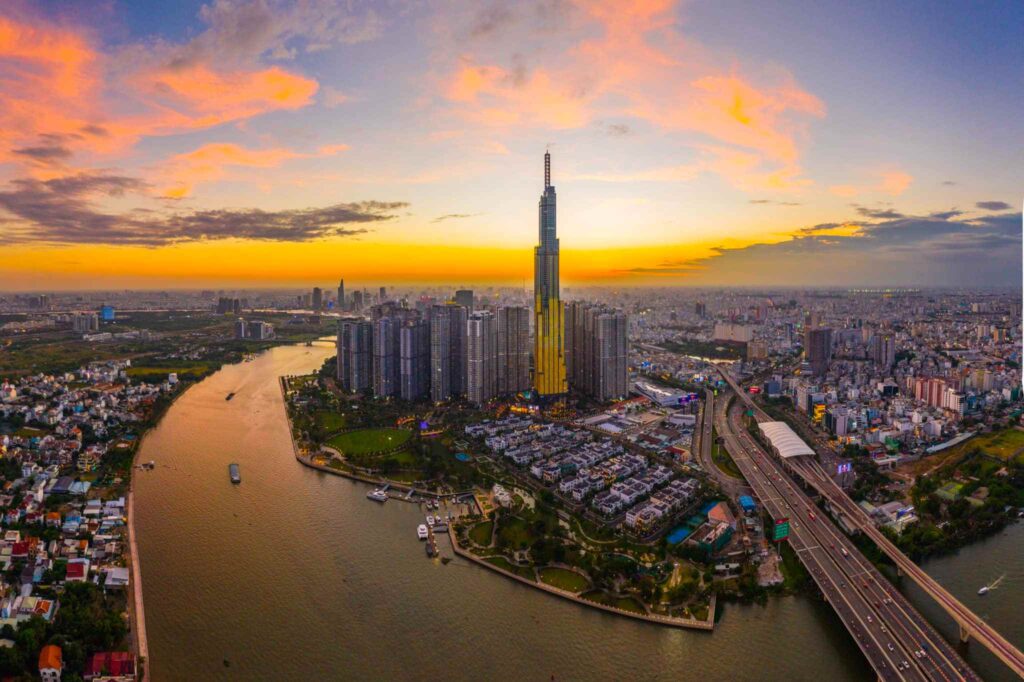
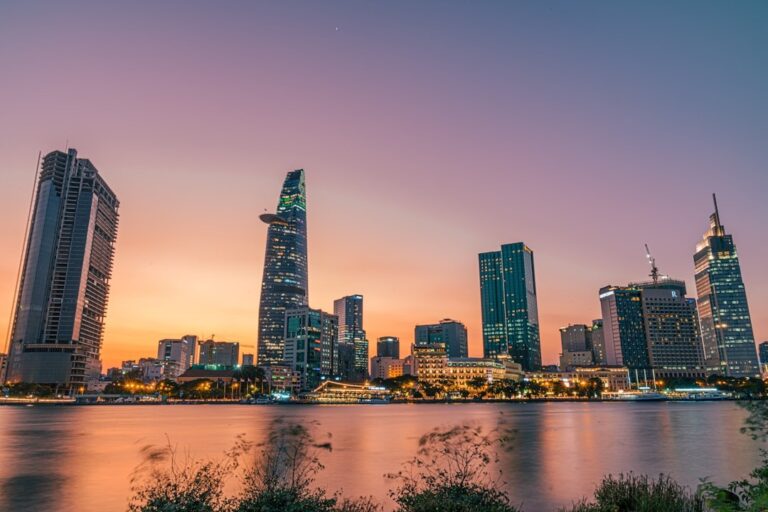
View Of Binh Thanh And River From Above During Sunset
Binh Thanh sits just northeast of District 1, where the city shifts gears. Older residential streets, canal edges, and informal commerce intersect with new towers, riverside parks, and large-scale development. The district is neither fully central nor peripheral. It operates as a hinge, absorbing pressure from the core while reshaping itself upward and outward.
Staying in Binh Thanh places you close to the center without living inside its tight grid. Access into District 1 is fast, but the surrounding streets reflect a more local cadence. Cafés, small eateries, and residential pockets sit alongside major developments, creating a district defined by overlap rather than uniformity. It suits travelers who want proximity with breathing room, and who are comfortable staying where the city is actively reorganizing itself.
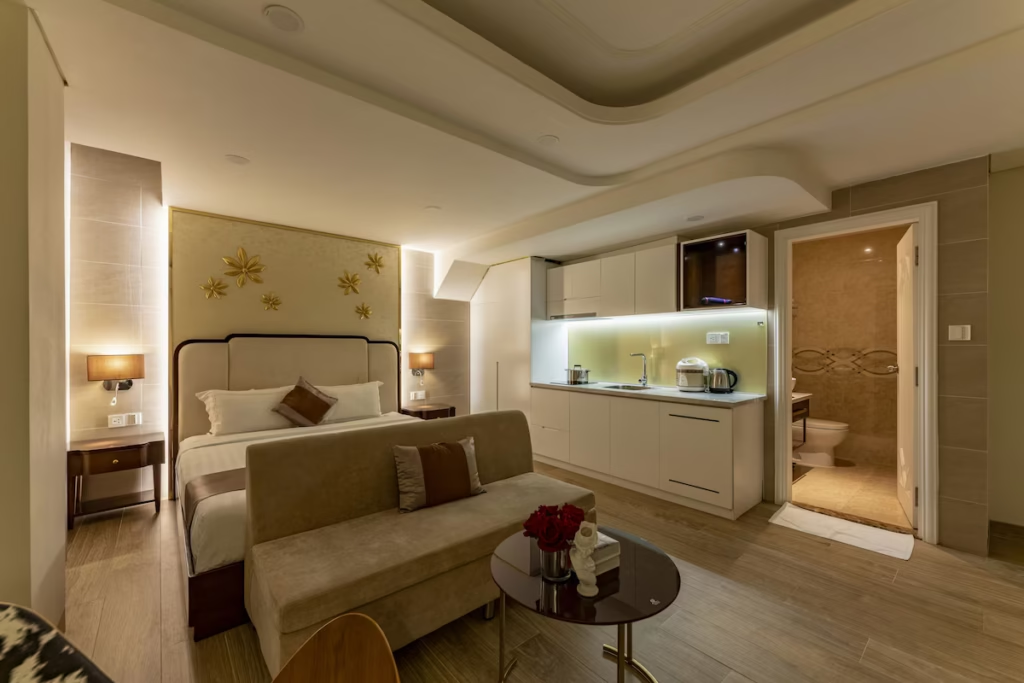
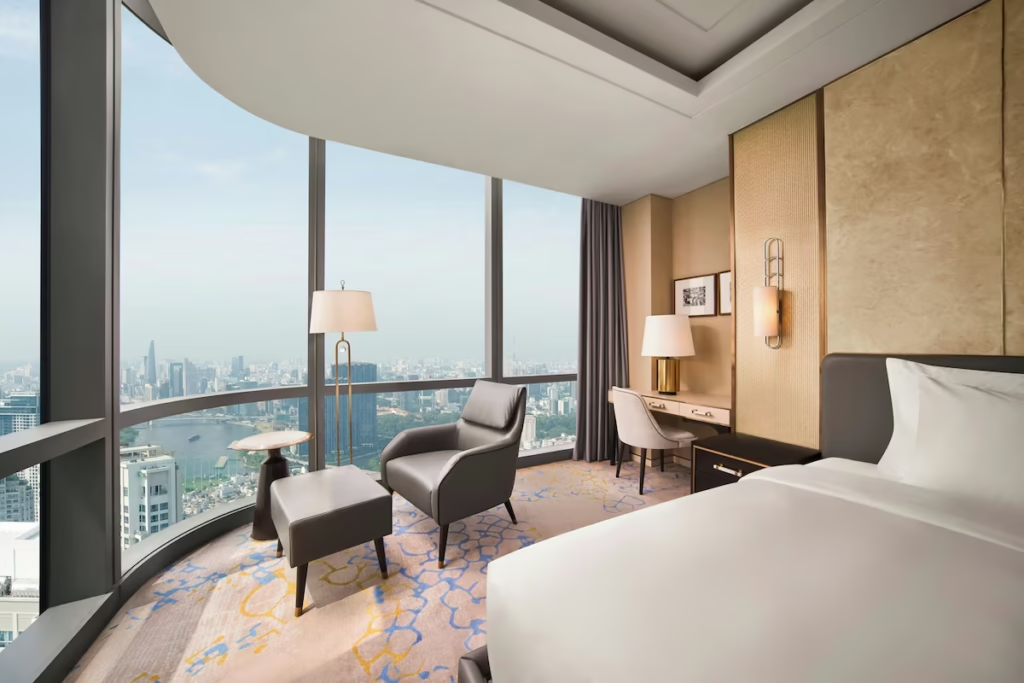
Vinpearl Landmark 81 Saigon, Double Room With Floor To Ceiling Windows And City Skyline Views
Vinpearl Landmark 81 is a large-scale luxury hotel occupying the upper floors of Landmark 81, the tallest building in Vietnam. Rooms are expansive and modern, with floor-to-ceiling windows, contemporary furnishings, and a strong emphasis on comfort and privacy. Facilities are extensive and integrated into the tower, including multiple dining venues, a spa, fitness center, and indoor pool, all delivered with a polished, international hotel standard.
The hotel sits on the Saigon River within Vinhomes Central Park, a planned riverside development with green space, walking paths, cafés, and retail at ground level. District 1 is a short drive away across the river, while the immediate surroundings remain quieter and more residential. The location suits travelers who want riverfront space and views, with easy vehicle access into the city’s core when needed.
Maison De Camille is a small boutique hotel with a refined, residential character. Rooms are individually styled, well proportioned, and finished with attention to detail, focusing on comfort, light, and quiet. The scale is intimate, and service is personal, with an emphasis on calm and consistency.
The hotel is set on a quiet street in Binh Thanh, within walking distance of local cafés, small restaurants, and neighborhood shops. Landmark 81 and Vinhomes Central Park are nearby, while District 1 is easily reached by a short taxi ride. The location places you in a lived-in part of the city, close to major developments without being surrounded by them.
La Casa Di Dicembre is a compact, modern hotel designed around simplicity and order. Rooms are clean, functional, and well maintained, with straightforward layouts that prioritize rest and everyday use. Shared areas are limited, keeping the overall environment quiet and low-key.
The property is located in a residential part of Binh Thanh, close to local food streets and everyday services. Connections into District 1 and other central areas are quick by taxi, while the immediate neighborhood remains calm and practical. This setting works well for travelers who want easy access to the city without staying inside its busiest zones.
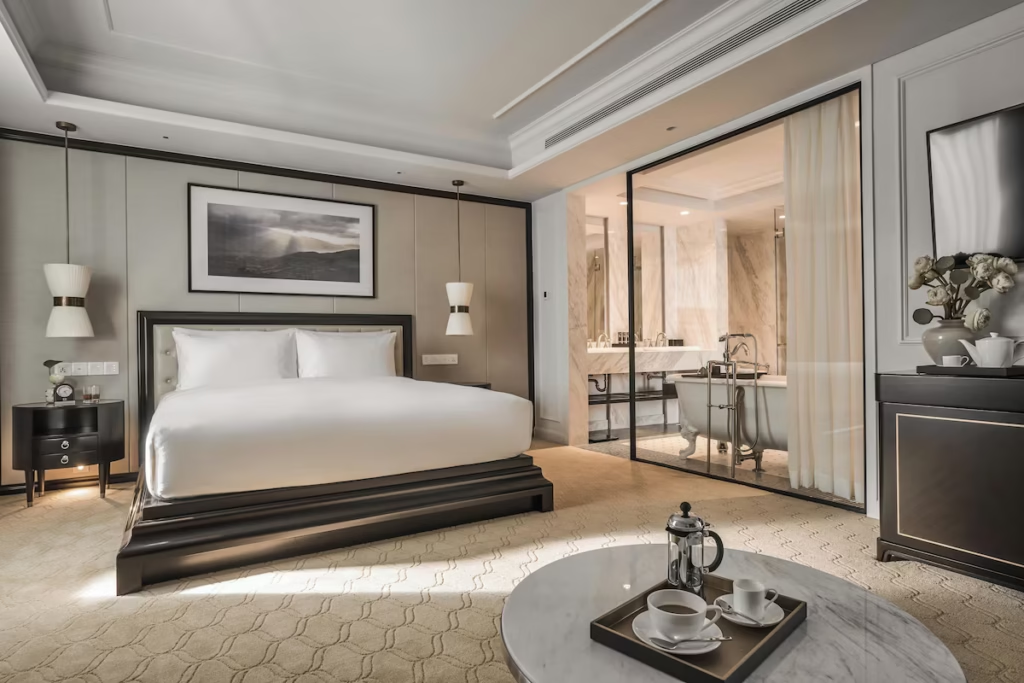
This is not subtle. It’s maximalist, Italian leaning, and unapologetically glamorous. If you want one night that feels like a statement, this is the one.
The reason it works is that it commits fully. You are not paying for a bed. You are paying for a mood, a skyline, and a level of polish that turns the hotel into an attraction.
Ho Chi Minh City stays with you because it refuses to resolve into a single idea. It is not orderly, not graceful, not especially forgiving. It is direct. It works. It absorbs. The city runs on movement and negotiation, on thousands of small adjustments made every minute, and once you tune into that rhythm, it becomes deeply compelling.
What I love about Saigon is its refusal to pause for presentation. Commerce comes first. Life happens out loud. Streets are built for use, not admiration, and the city doesn’t slow itself down to be understood. Sidewalks turn into cafés, repair shops, storage, conversation. Neighborhoods don’t announce themselves. You learn them by walking, by crossing the same intersection twice, by noticing which streets thicken and which ones thin out.
There is also a generosity here that isn’t performative. People make space when they can. The city teaches you how to move through it, not by instruction, but by example. You learn when to wait, when to edge forward, when to commit. It’s a place that sharpens awareness without demanding reverence.
Ho Chi Minh City rewards return visits. Not because it reveals secrets, but because it becomes legible. Patterns emerge. Shortcuts make sense. Districts stop blurring together. What once felt overwhelming turns precise. The noise becomes information. The density becomes energy. You stop trying to master the city and start moving with it.
That’s the appeal. Saigon doesn’t try to be loved. It just keeps going. And if you stay long enough, or come back often enough, you realize how much life it manages to hold at once.
Welcome to Vietnam. The country that rolls around in red sand dunes, boasts the world’s largest cave, serves coffee with egg, and seems to have more motorbikes than people.
To keep you from drowning in options, I’m laying it out simply. Where it makes the most sense to sleep, and not just in Ho Chi Minh or Hanoi.
Vietnam sits in Southeast Asia and has a coastline stretching for over 3,200 kilometers. The country covers about 331,210 square kilometers (127,880 square miles) and is divided into 58 provinces and 5 municipalities, including the capital Hanoi and the largest city, Ho Chi Minh City, once called Saigon.
The scenery changes almost every time you move. Green mountains and hills in the north. Wide rivers and deltas in the middle. Tropical coastal plains in the south. The highest peak is Fansipan at 3,143 meters in northwestern Vietnam.
Down south you have the Mekong Delta. One of the largest river deltas in the world. A living, green, water rich region of villages and floating markets.
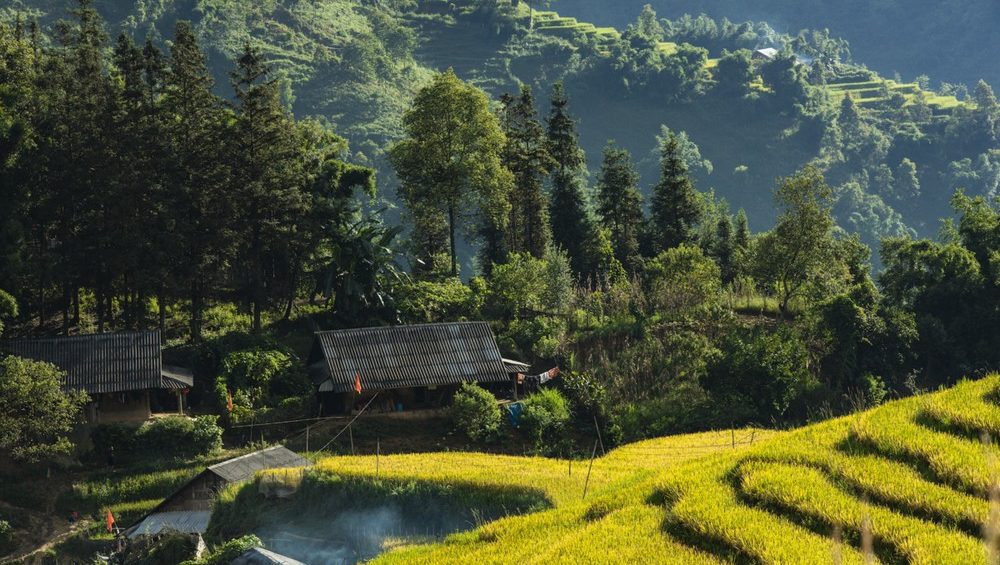
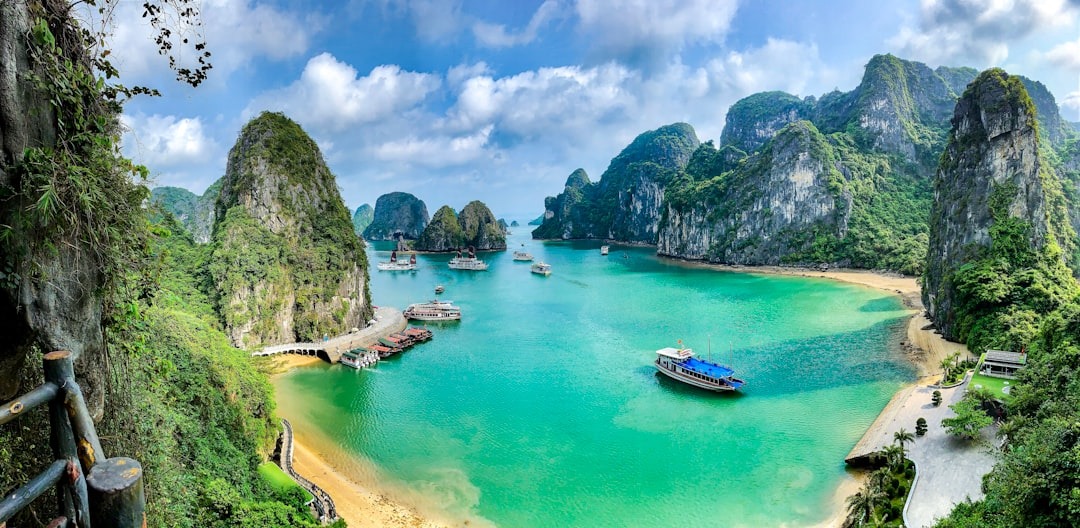
Vietnam also delivers some of Asia’s best nature. Ha Long Bay with its dramatic limestone islands. Phong Nha Ke Bang National Park with some of the world’s most spectacular caves. The terraced rice fields of Sapa, which are hard to look at without going quiet for a second.
Vietnam is the world’s second largest coffee exporter and produces over a million tons of coffee beans a year. And with the heat as a near permanent background soundtrack, it makes sense that a local beer can cost around 5,000 VND. Sometimes you even get the second one on the house.
Before we dive into neighborhoods and hotels, here’s a quick sense of what each stop in Vietnam actually feels like, and why you might want to stay there.
Sapa – You come here for air, space, and scenery. Sapa isn’t about ticking boxes. It’s about slowing down and taking in the harmony between ancient civilization and overwhelming nature.
Ha Long Bay – Dramatic and almost unreal. Limestone islands rise straight out of the water, and the entire area feels designed to be experienced slowly, from sunrise to sunset.
Da Nang – Open, modern, and surprisingly relaxed. A coastal city with room to breathe, easy movement, and a balance between urban life and long stretches of beach.
Hoi An – Intimate and atmospheric. Lantern-lit streets, river evenings, and a rhythm that invites wandering without a plan.
Da Lat – Cooler, greener, and calmer. Da Lat is where many travelers take that deep breath they haven’t realized they’ve been holding.
Hue – Quiet, historical, and reflective. Hue isn’t loud about what it offers, but it rewards those who give it time and space.
Mui Ne – Wind, sand, and long beach days. A place where time loosens its grip and the main goal is to do very little, very well. My favorite “vacation from my holiday”.
Phu Quoc – Tropical and varied. From busy beach towns to quiet stretches of coastline, the island shifts character quickly depending on where you go.
Nha Trang. Lively, coastal, and built for ease. It’s a city that knows how to host travelers, especially if you want everything close and straightforward.
The Mekong Delta. This is about rhythm rather than landmarks. Life here moves with the water’ here’s flow, and staying in the right place lets you experience that from the inside, not the sidelines.
Sapa, Vietnam goes vertical
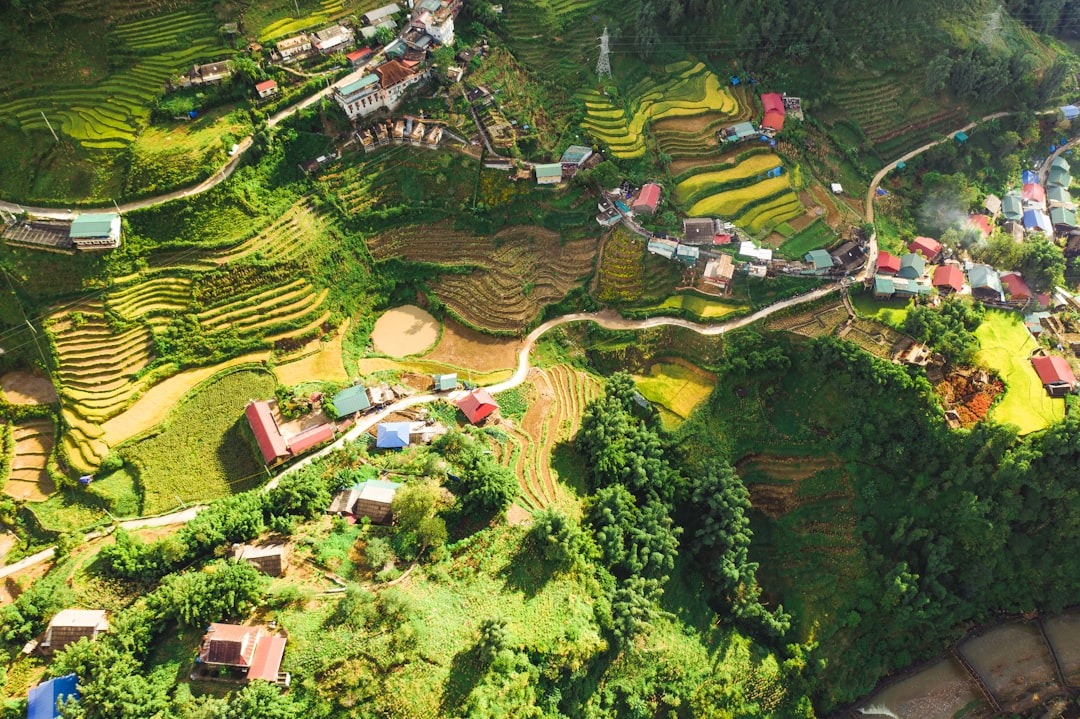
Sapa village amidsts rice terraces
Sapa is one of those places where the environment is everyting. You feel it as soon as you arrive, the air becomes cooler, the light changes faster, and the mountains demand attention. Terraced rice fields wrap around steep hillsides, villages cling to slopes, and clouds roll in and out like they have their own agenda.
Most days in Sapa follow a simple rhythm. Early mornings belong to hikers, farmers, and market stalls coming to life. Midday is about movement. Walking, driving, or riding through valleys and between villages. Evenings slow down quickly. Temperatures drop, the fog covers, and everything turns inward. Hot food, warm drinks, and early nights are the norm.
Where you sleep here matters more than almost anywhere else in Vietnam. Staying in town keeps things efficient and flexible. Staying outside town turns Sapa into a place you experience quietly, from the inside out. Choose based on how much of the landscape you want to live in, not just visit.
Sapa main areas to stay
Area
What actually goes on
Why it works
Who it suits
Sapa Town Center
Markets, cafes, tour pickups, quick meals, constant movement
You can organise everything fast
Short stays, first timers, convenience
Ta Van and Lao Chai
Terrace walks, village roads, homestay culture, slow evenings
You wake up inside the scenery
Nature focus, couples, longer stays
Ban Ho and deeper valleys
Fewer crowds, quiet roads, more “local day” feel
Real reset, fewer tour buses
Escape mode, slow travel
Sapa Town Center, a bit of modernity between the terraces
This is not the version of Sapa you see on postcards, it’s a large modern city with everyting that brings. Staying in Sapa town means you are plugged directly into the daily flow of the place. Streets are busy from early morning, with tour groups forming, guides calling names, and cafés filling up fast. Everything you need is close. Restaurants, transport, gear shops, nightlife, and markets are all within a short walk.
This area works best if you want flexibility. You can decide what to do each morning based on weather and energy levels, change plans last minute, and organise transport without thinking twice. The tradeoff is no terrace view from your window. Noise and crowds are part of the package, especially in peak season.
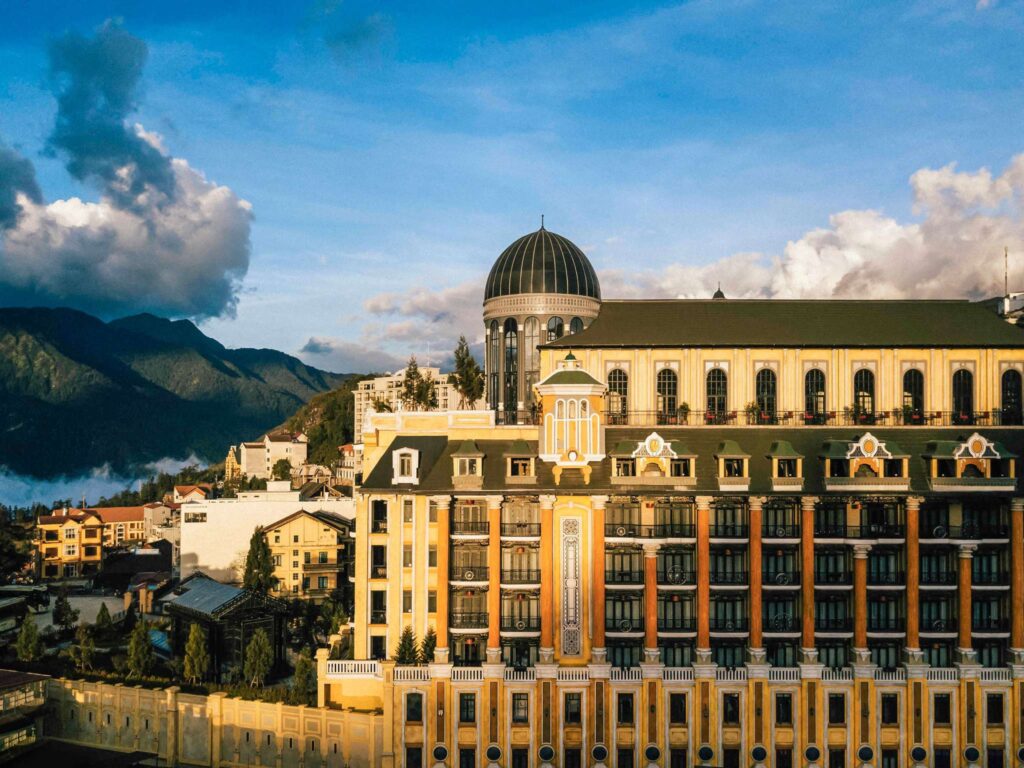
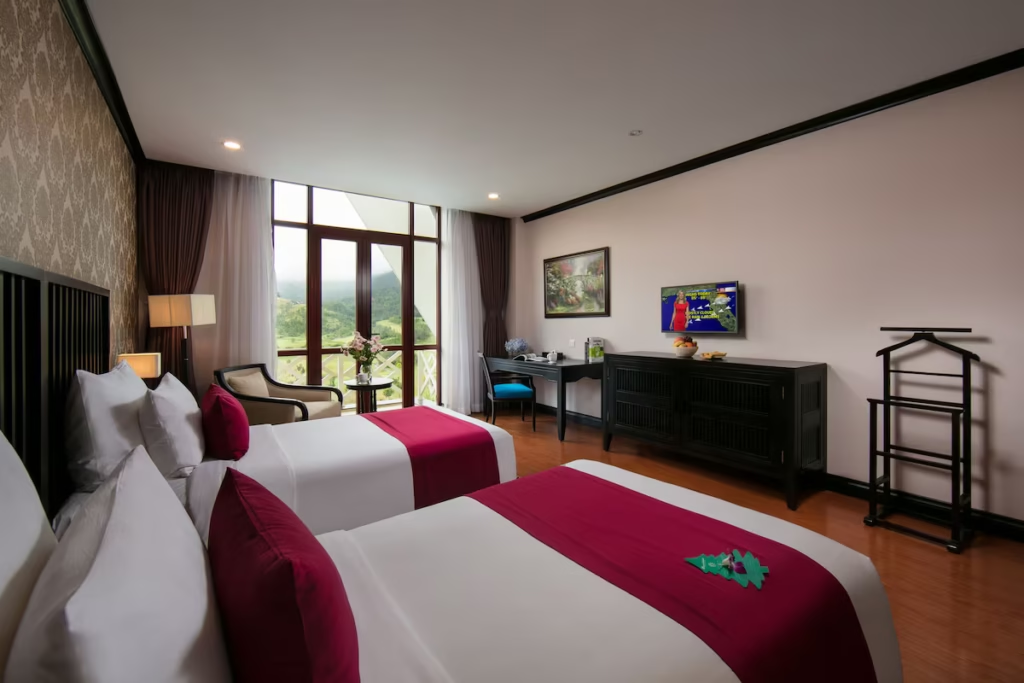
This is the most “controlled” environment you’ll find in Sapa town. The hotel is unapologetically theatrical, blending French haute couture aesthetics with mountain textures. But beyond the visuals, the real luxury here is insulation. After a long, cold, muddy day outside, you return to warmth, quiet corridors, and a sense that everything is handled.
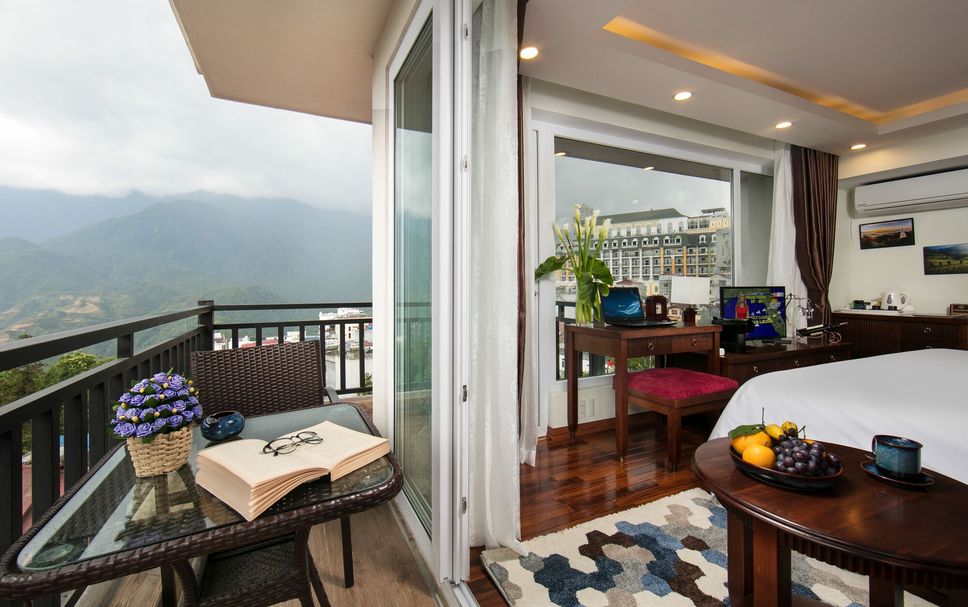
Rooms are spacious, soundproofed, and intentionally inward-facing. You can be in the middle of Sapa and still feel removed from it. The spa, pool, and dining areas make this a place you could comfortably stay inside for an entire afternoon without feeling like you’re missing out.
A reliable option that understands why people come to Sapa. Many rooms face outward, opening toward the valley, which helps balance the town location with a sense of landscape. Mornings here tend to start quietly, even though you’re only minutes from the main streets.
Service is personal rather than polished, and the hotel works well for travelers who want comfort without paying for extras they won’t use. Ideal if your days are spent hiking or exploring, and you need a good place to rest at night.
This is a practical, social hub rather than a retreat. Plans are made over breakfast, revised over coffee, and changed entirely by dinner. If you’re moving fast and feeding off other travelers’ energy, this place is a dream.
Rooms are simple, shared spaces are lively, and staff are usually happy to help organise transport or treks on short notice. You stay here for momentum, and to make connections you’ll remember for a lifetime.
Ta Van and Lao Chai, where the mountains touch the heavens
This is the version of Sapa you see on the postcards. These villages sit around Sapa town, surrounded by rice terraces, footpaths, and slow-moving water. Life here winds down early. Nights are quiet, mornings arrive gently, and the scenery never really leaves your field of vision.
This area suits travelers who want to wake up straight into the landscape rather than commute to it. You trade convenience for immersion, and my oh my is the exchange good. Getting into town requires planning, but most people staying here are happy not to go back at all.
Topas ecolodge, right in the middle of the terraces
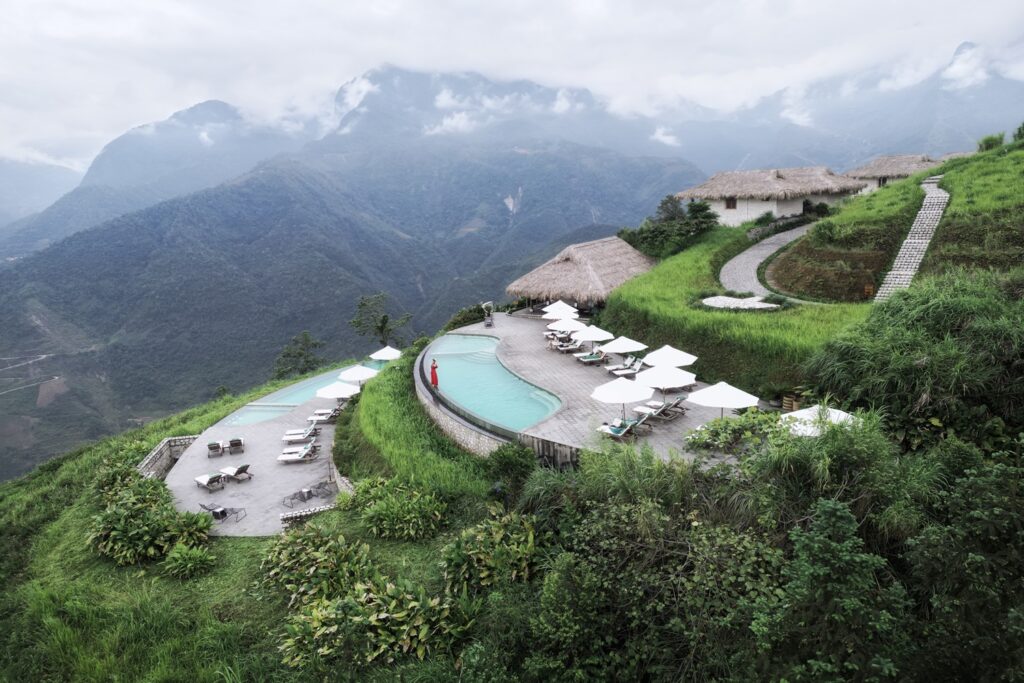
Topas is about commitment to place. The lodges are spaced apart, positioned deliberately so that terraces, valleys, and sky dominate every angle. There’s no background noise from town, no passing traffic. Just wind, light, and breathtaking views.
Days here are unstructured by design. Walks begin at your doorstep, meals slow everything down, and evenings are about watching clouds settle into the valleys. This is where you stay when you want Sapa to feel expansive, not busy.
Clay House strikes a careful balance. It offers real comfort without disconnecting you from village life. Architecture blends into the hillside, and communal areas encourage lingering rather than rushing off.
It works especially well for couples or small groups who want quiet evenings, scenic mornings, and enough comfort to stay multiple nights without restlessness setting in.
A lighter, more informal stay that still places you deep inside the terraces. Rooms are simple but thoughtfully oriented toward the landscape, and the atmosphere is relaxed and personal.
This is a good choice if you want the setting without the premium price, and if the most important thing to you is proximity to nature.
Further out, Ban Ho and surrounding valleys feel lived-in rather than visited. Daily routines continue around you. Farming, school mornings, and local markets become part of the background rather than attractions.
Staying here requires intention. Transport needs to be planned, evenings are quiet, and there’s very little happening after dark. That’s exactly why people choose it, this and the sunsets over the rice terraces.
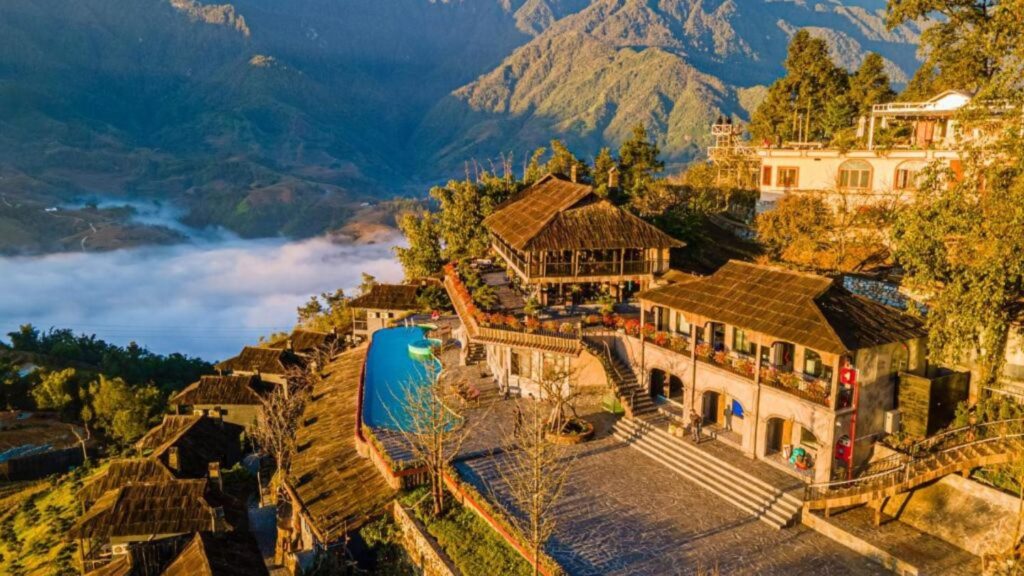
Jade Hill is designed for withdrawal. The distance from town is part of its value, creating a sense of separation that settles in quickly. The setting encourages slow mornings and long pauses.
Rooms are private and well-spaced, and the overall layout avoids crowding. You stay here when the goal is to stop moving for a bit.
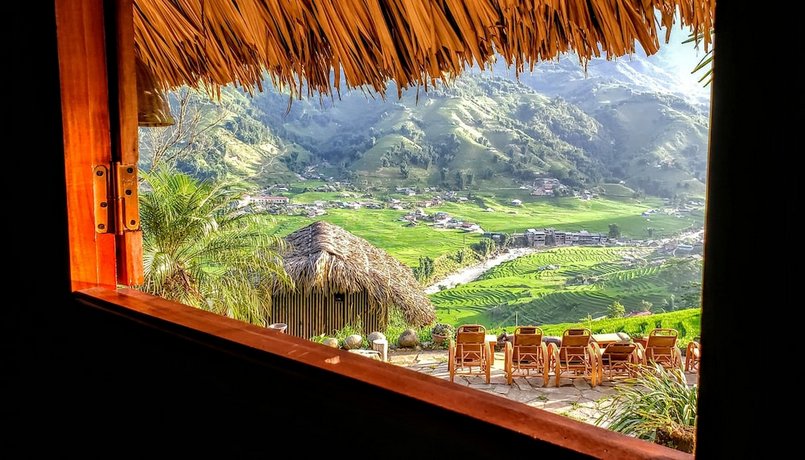
Bees Homestay sits in Ban Ho village, below Sa Pa town, surrounded by rice fields and low hills. The setup is informal and guest-run, with simple rooms that open toward gardens or valley views. Facilities are basic but functional. Common areas and an outdoor pool give the property space to spread out, and the atmosphere feels residential.
Bees Homestay works well if you want a grounded place that feels tied to its surroundings, and if your define luxury in terms of location and view.
These are about connection rather than consistency. Rooms are basic, routines are local, and days unfold according to village rhythms. Choose this option if you value experience over refinement and are happy adapting as you go.
Ha Long Bay. Limestone, water, and the illusion of stillness
Ha Long Bay, crystal waters and Karsts that make you feel like you’re on a different planet
Ha Long Bay looks calm in photos. In reality, it’s layered, busy, and constantly shifting. Thousands of limestone karsts rise straight out of the water, creating corridors, hidden coves, and narrow channels that feel almost theatrical. The light changes by the hour. Morning mist softens everything. Midday sharpens the edges. Sunset turns the bay metallic and quiet again.
The experience here depends almost entirely on where you sleep. A night on the water feels detached from both the mainland and time itself. Staying onshore gives you control, but less immersion. Cat Ba Island sits somewhere in between. More grounded than a cruise, more natural than the mainland, and often misunderstood as just a cheaper alternative. It isn’t.
Ha Long Bay rewards intention. Rushing through it flattens the experience. Choosing the right base lets the landscape do the work for you, instead of turning it into a checklist.
Area
What actually goes on
Why it works
Who it suits
Overnight Cruise
Kayaking, caves, sunset decks, quiet mornings on the water
Full immersion, no logistics
Short stays, first timers, experience seekers
Ha Long City (Bai Chay / Hon Gai)
Hotels, transport hubs, restaurants, easy access
Practical base, flexible schedules
Budget stays, families, road trips
Cat Ba Island
National park, beaches, boat routes, town life
Nature + land-based freedom
Longer stays, active travelers, couples
Overnight Cruise, where the bay rocks you to sleep
Sleeping on the water is the most direct way to experience Ha Long Bay. Once the day boats leave, the bay changes character. Engines quiet down, the water smooths out, and the limestone formations feel suddenly massive and close.
Cruises are structured but not rigid. Days usually include kayaking, a cave visit, and time on deck. Evenings slow quickly. Dinner, soft lighting, and nothing around you but water and stone. You give up flexibility, but gain atmosphere.
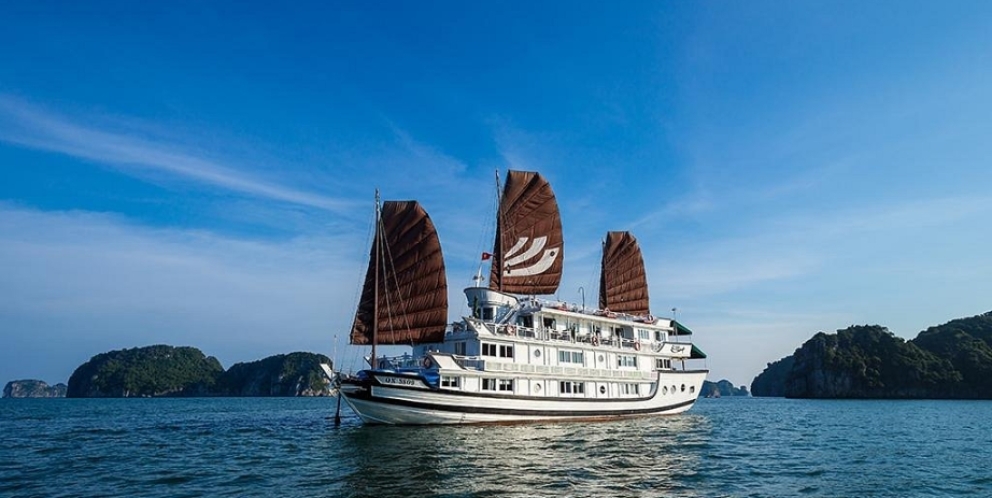
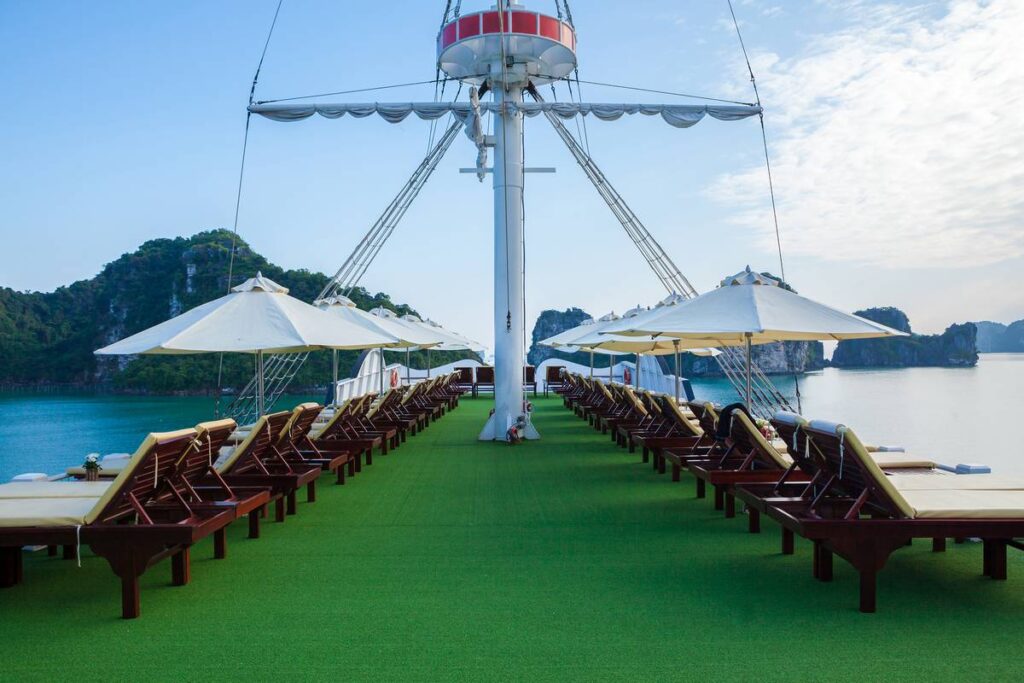
Bhaya Classic delivers exactly what most people imagine when they think of Ha Long Bay. Wooden junk-style boats, polished cabins, and a well-paced itinerary that balances sightseeing with downtime.
Cabins are compact but thoughtfully designed, with large windows that keep the landscape constantly present. Days include kayaking, cave visits, and floating villages, while evenings slow down with sunset drinks and quiet decks. This cruise works best for travelers who want a refined, reliable introduction to the bay without overcomplication.
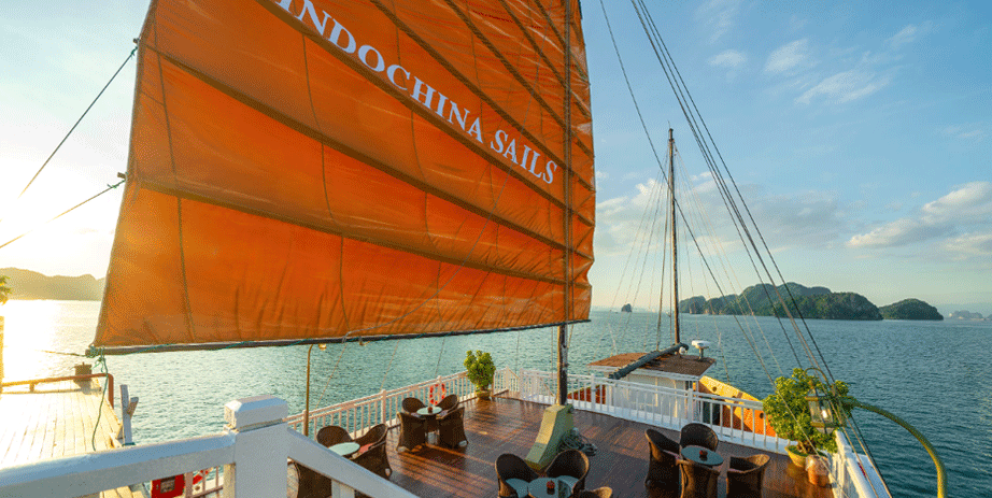
Indochina Sails sits comfortably in the midrange category, offering a traditional cruise experience with good service and solid value. Cabins are clean and functional, and communal spaces are designed to encourage relaxed social interaction.
The itinerary covers the essential highlights without feeling rushed, and the overall atmosphere is friendly rather than formal. It’s a good fit for couples and small groups who want the overnight experience without luxury pricing.
Dragon Legend offers a more comfortable way to stay overnight on the bay, without sacrificing safety or scenery. Cabins are simpler and smaller, but still comfortable enough for a night or two.
The focus here is on the environment and indulgence. If your priority is being on the water and seeing the landscape up close, this delivers the absolute best experience.
Ha Long City is functional. It exists to support access to the bay, not to compete with it. Staying here makes sense if you’re arriving late, leaving early, or traveling with family and want predictability.
Bai Chay is more tourist-facing, with beaches, hotels, and restaurants. Hon Gai feels more local, quieter, and less polished. Neither offers the romance of the bay itself, but both give you control over timing and cost.
Built on its own artificial island, Vinpearl is visually dramatic and unapologetically resort-style. Rooms are large, modern, and oriented toward sea views, with facilities that make it easy to stay put for a full day.
This is not about authenticity or intimacy. It’s about comfort, space, and predictability. Best suited for families or travelers who want Ha Long to feel like a resort break and not an expedition.
Hotel Soleil offers solid accommodation without breaking the bank, right in the heart of Bãi Cháy, close to the bay, cruise piers, and entertainment areas. Rooms are modern, well maintained, and practical, with a design that prioritizes comfort and convenience.
It’s a good stay if you plan to take day trips onto the bay but want evenings that are all yours to do with as you please.
Simple, clean, and well located. Palette Collect’s Boutique is geared toward travelers who want a functional place to sleep between activities in the heart of Bãi Cháy.
You won’t spend much time in the room, but it does its job well. Ideal for short stays and budget-conscious travelers who want easy access to food, shops, and the bay.
Cat Ba is where Ha Long Bay becomes livable. The island combines the limestone cliff scenery with organized roads, beaches, and a real town. You can kayak in the morning, hike in the national park midday, and eat in town at night. That balance is why people stay longer here.
It’s not as dramatic as sleeping on the bay, but it’s far more flexible. Weather delays don’t ruin your plans. You’re not locked into a schedule. And the landscape is still very much present.
Flamingo Hotel Cat Ba, a botanical garden right on Ha Long’s best beach
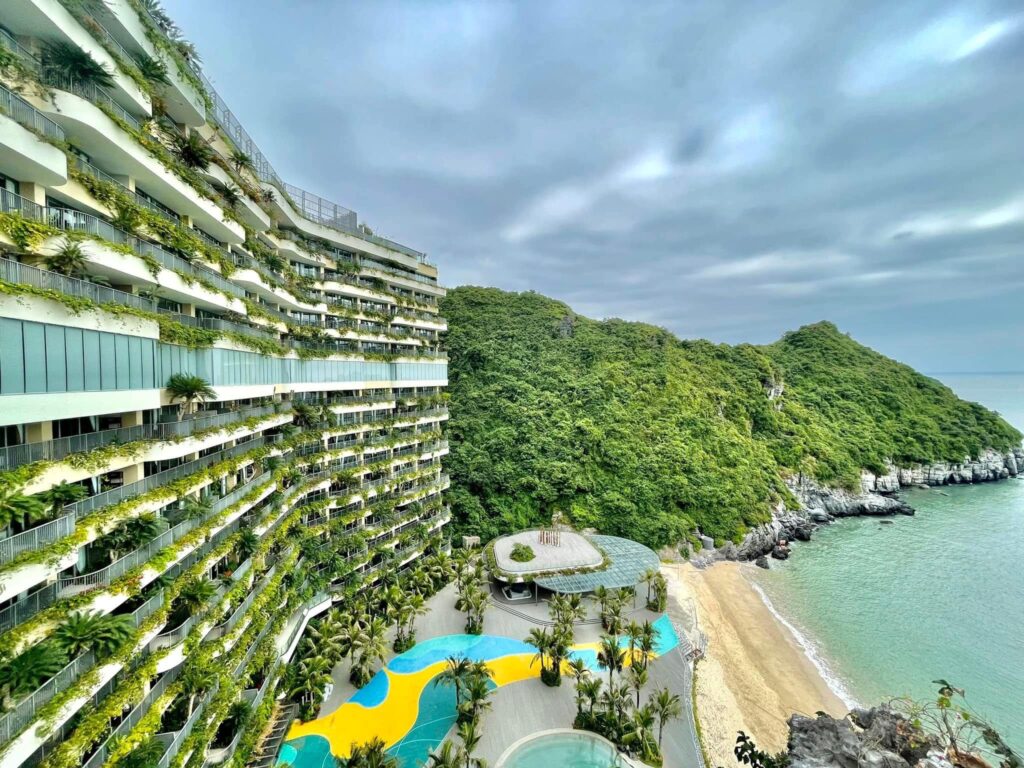
Flamingo Cat Ba combines dramatic architecture with a prime beachfront location. The design is striking, with terraced greenery and panoramic views over the bay.
Rooms are modern and spacious, and facilities are extensive. This is a good choice for travelers who want Cat Ba’s scenery with resort-level comfort and minimal planning.
Located on a quieter stretch of beach, this resort offers a calmer experience than Cat Ba town itself. Rooms are comfortable and many face the water, creating a sense of separation from the island’s busier areas.
Well suited for couples and travelers who want beach access without crowds.
Woodstock Beach Camp is informal, social, and very much about atmosphere over amenities. Accommodation ranges from simple rooms to bungalows, all set close to the water.
Best for backpackers and younger travelers who value community, scenery, and affordability.
Da Nang, space, light, and a city that knows how to breathe
Da Nang, sprawling on the sea
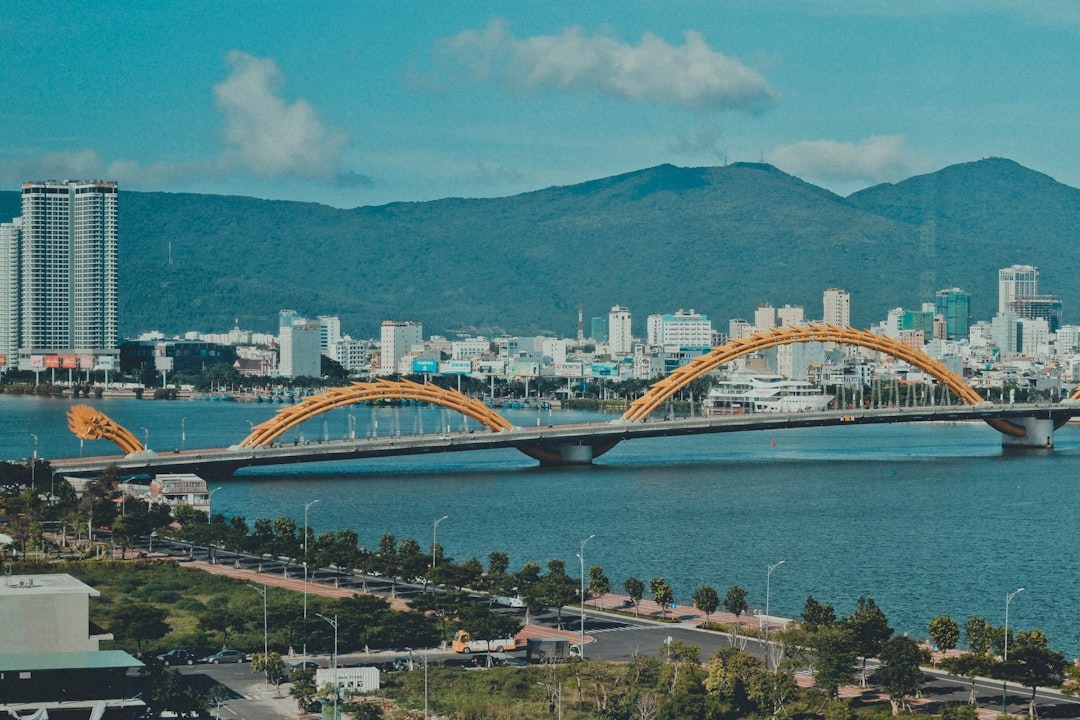
Da Nang is Vietnam’s pause button. After the intensity of Hanoi and Ho Chi Minh City, it feels wider, calmer, and a lot less chaotic. The streets are broad. The river cuts cleanly through the city. The sea is always nearby. Even traffic feels less like a fight.
What makes Da Nang special is its balance. It’s a real city with office blocks, schools, and industry, but it’s also a beach destination, a base for nearby heritage sites, and increasingly a place people come to stay, not just visit. You can wake up near the ocean, have lunch downtown, and watch the sunset from a bridge without feeling like you’ve crossed cities to do it.
Where you stay in Da Nang defines your version of it. Beachside feels luxurious and open. Riverside feels urban but relaxed. The city center is practical, local, and efficient. None of them are wrong. They’re just different moods of the same place.
Area
What actually goes on
Why it works
Who it suits
My Khe Beach
Swimming, cafes, sunrise walks, relaxed evenings
You live by the sea without isolation
Beach lovers, couples, longer stays
Han River / City Center
Restaurants, bridges, markets, city life
Central, walkable, well connected
First timers, short stays, families
Son Tra Peninsula
Nature roads, viewpoints, quiet resorts
Green buffer between city and sea
Slow travel, nature focus, retreat mode
My Khe Beach, wide sands as far as the eye can see
This is where Da Nang slows down. The beach runs long and open, with space to breathe and a daily rhythm you feel quickly. Early mornings belong to walkers and swimmers. Cafes come online one by one. The sea is always there. Not loud. Not demanding. Just present.
Staying here gives you light and room from the moment you wake up. Even on busier days, nothing feels tight. Food and bars are easy to find, but nights stay low-key. The beach leads the pace. Everything else follows.
You are directly on Vo Nguyen Giap, facing My Khe Beach. That matters. Morning swims are effortless, sunset walks start at the lobby door, and the long beachfront promenade gives structure to the day without planning. Cafes, seafood spots, and casual beach bars sit within a few minutes’ walk.
Rooms are modern and comfortable, many with full sea views over the curve of the beach. The hotel feels practical in a good way. A solid pool, easy logistics, and staff that help without hovering. This works if you want Da Nang to feel coastal and relaxed, while still staying plugged into the city.
Sala sits directly opposite My Khe Beach, and the location does most of the work. Beach access is immediate, while the city stays close enough to be useful, not intrusive. You can move between white sands, cafés, and main roads without planning your day around transport.
Rooms are modern and functional, with good light and enough space to feel settled. The rooftop pool stands out for its height and openness, especially later in the day when the coastline and city come into view. This works well if you want reliable comfort, strong location, and the beach as a daily constant without isolating yourself.
This is Da Nang’s functional core. Offices, apartments, cafes, and wide roads built to move people through the city without friction. The river runs straight through it, bridges connect everything cleanly, and nothing feels accidental. It’s urban, but not heavy.
Staying here keeps options open. Markets, museums, local restaurants, and transport sit close together, so moving around is simple. The beach stays within reach by a short ride, not a commitment you have to make every day. Practical. Central. Easy to live with.
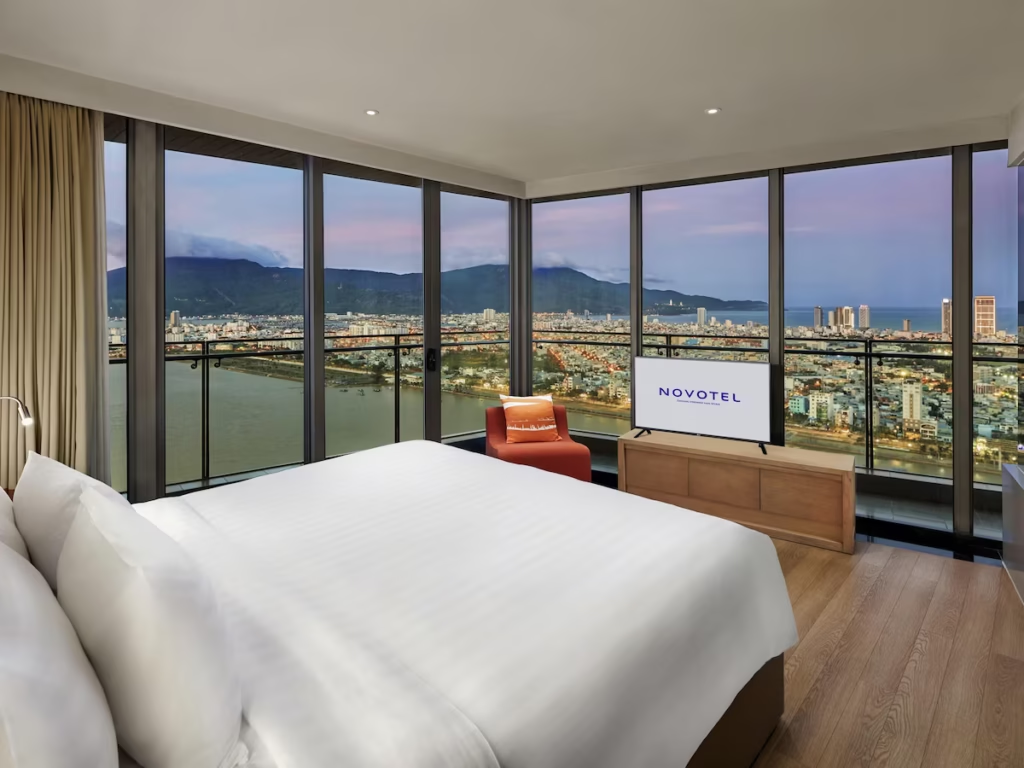
Novotel Danang, room with full length widows and river view
Tall, central, and confidently polished. This is one of those hotels where the height actually matters. From the upper floors, Da Nang opens up in in its glory. Rooms are spacious, quiet, and designed to feel uncluttered, which matters more than luxury finishes when you’re staying more than a night or two.
What really works here is balance. You’re firmly in the city, but not swallowed by it. As soon as you go out the door you’re easy walking distance from everywhere you’d want to go. Ideal if you want Da Nang to feel urban and put-together, and if your idea of a good view is moving water and glowing bridges.
Satya sits in that sweet spot between boutique and practical. The design is modern but restrained, with no unnecessary flourishes and no attempt to be “cute.” Rooms feel fresh and functional, and everything works the way it should, which becomes noticeable only when it doesn’t. This is a hotel that respects your time.
Location is the quiet strength here. You’re close to the river, not far from the beach road, and well positioned for short rides in any direction. That flexibility changes how you move through the city. You can decide your day late, adjust plans easily, and never feel like you chose the wrong side of town. A strong all-rounder for travelers who want freedom without constantly packing up and relocating.
Fivitel is straightforward in the best way. No grand statements, no forced personality. Just a clean, reliable base in a central location, with rooms that do what they’re supposed to do and staff who make things easier rather than more complicated. After long travel days or early departures, that kind of reliability matters.
This is a smart choice if Da Nang is part of a longer route rather than the emotional centerpiece of the trip. Easy access to transport, quick in and out of the city, and no friction when you’re moving on. Best for travelers using Da Nang as a hub, or anyone who values efficiency, and wants a hotel that quietly does its job.
Son Tra is where Da Nang pulls back. The city gives way to forest, curved roads, and long stretches without buildings. It’s close on the map, but distance shows up quickly once you arrive. Traffic drops off. The air shifts.
Staying here means fewer conveniences and more space. You plan meals. You move by scooter or car. In return, you get quiet, open views, and nights without city noise. This fits people who want separation and calm, not constant access.
TIA Wellness Resort, closest you can get to the sea in perfect luxury
A villa-only wellness resort on Son Tra Paninsula, built around routine rather than sightseeing. Every stay includes daily spa treatments. Villas are large, private, and light-filled, many with plunge pools. The design is minimal and deliberately quiet.
Food follows a wellness approach without being extreme, and days tend to stay on-site. This is not a base for exploring Da Nang, it’s the all-inclusive vacation of your dreams.
A low-rise resort on the Son Tra Peninsula with spacious bungalow-style villas, many with private pools or direct beach access. The layout spreads guests out, creating a calm, uncrowded feel even when full.
You’re between the sea and forested hills, close to nature but still within reach of the city. Best if you want a resort stay without feeling completely cut off.
A small, practical hotel along the beach road with clean, functional rooms and straightforward service. There’s no strong design focus, but it’s reliable and easy to use.
Location is the main advantage. Close to the beach, well connected, and surrounded by everyday dining options. A good fit for short stays or transit nights.
Hoi An, lantern evenings, river walks, and the art of slowing down
Hoi An, magical river kingom
Hoi An is one of the easiest places in Vietnam to understand. It’s small, contained, and built around a clear center. The Old Town is the visual and cultural anchor, protected and pedestrian-friendly, with low buildings, narrow streets, and a river that runs straight through daily life. It’s busy, but it’s controlled. Nothing sprawls. Nothing overwhelms.
Outside the historic core, the town opens up quickly. Residential streets, rice fields, and quiet lanes sit just minutes away, and the beaches are close enough to feel like part of town, not a separate destination. That proximity shapes how Hoi An works. You don’t plan your days around transport. You move between areas easily, often by bike, sometimes on foot, without friction.
Hoi An suits people who want a base that’s simple to live in. Clear layout. Short distances. Enough variety to stay interested, without the sense that you’re constantly catching up. It’s not a place that demands energy. It rewards staying a little longer and letting the town set the pace.
Area
What it feels like
Why it works
Best for
Ancient Town and riverside
Walkable, atmospheric
You can do everything on foot
First time, short stays
Cam Chau and rice fields
Calm, green, close
Quiet nights, easy ride to town
Longer stays, balance
An Bang Beach
Beachy, relaxed
Swim breaks, calmer pace
Families, beach time
Old Town, history meets comfort
Staying in the Old Town means choosing immersion over distance. This is the Hoi An everyone imagines before they arrive. Yellow walls. Wooden shutters. Lanterns switching on as the sun drops. During the middle of the day it can feel busy, sometimes even performative, but the rhythm changes quickly. Early mornings belong to locals sweeping storefronts and opening cafés. Late evenings quiet down once the tour groups drift away, and suddenly the town feels real again.
Staying here means you don’t have to plan Hoi An. You’re already inside it. You wander out for coffee without checking a map, stumble into temples between meals, and let the river dictate your pace. It’s ideal if this is your first time in Hoi An, or if you value atmosphere over space. You trade silence for character, and convenience for texture. For many travelers, that trade is exactly the point.
Anantara Hoi An feels like a graceful buffer between the bustle of the Ancient Town and the calm of the river. The resort leans heavily into colonial-era design, with long corridors, shuttered windows, and lush courtyards that soften the heat and the noise of the town.
Rooms are large by Hoi An standards, many with river-facing balconies where boats drift by slowly throughout the day. Service is polished but relaxed, and the location lets you walk straight into the old town while still feeling removed from its crowds. It’s ideal for travelers who want heritage and comfort in equal measure, without sacrificing space or quiet.
This boutique hotel strikes a rare balance between charm, location, and comfort. The design blends local elements with modern touches, creating rooms that feel warm rather than generic. Beds are comfortable, bathrooms are well thought out, and soundproofing is better than expected for such a central location.
The spa and pool add value for travelers who want to unwind after walking-heavy days, and the staff consistently stands out for attentiveness. It’s a strong choice for couples or solo travelers who want to stay inside the Ancient Town without paying luxury prices or compromising on comfort.
The most unique hotel on the list, build in an old library.
Vinh Hung Heritage is one of those rare budget-friendly hotels that actually feels connected to its surroundings. The building retains original architectural elements, and the rooms reflect a more traditional style rather than a modern hotel template.
Facilities are simple but well maintained, and the location is excellent for exploring the Ancient Town on foot. This is a good option for travelers who value character and position over amenities, and who want their stay to feel rooted in Hoi An rather than detached from it.
Cam Chau and Cam Pho, a taste of real vietnamese life
Cam Chau is where Hoi An exhales. Just a short bike ride from the Old Town, the scenery shifts quickly. Souvenir shops give way to rice paddies, small canals, and quiet residential roads. You still hear scooters, still have cafés nearby, but the background noise drops noticeably. Mornings are slower here. Evenings feel local, not staged.
This area works well if you want Hoi An to feel like somewhere you’re staying, not somewhere you’re visiting. You get space to breathe, greener views, and a daily routine that doesn’t revolve around peak hours. It’s especially good for longer stays, couples, and anyone who plans to cycle. Close enough to dip into the Old Town when you want it. Far enough to step away when you don’t.
Hoi An Chic Green Retreat, airy room with garden view
Hoi An Chic Green Retreat is designed around space. Space to breathe, to look outward, and to slow down. Set among rice fields, the property feels deliberately removed from the town’s energy, while still being close enough to access it easily by bike or shuttle.
Rooms are bright and generously sized, many with private terraces that open directly onto green fields. The atmosphere is calm and restorative, with thoughtful design choices that emphasize natural light and airflow. This is a strong choice for longer stays, couples, and travelers who want Hoi An to feel like a retreat.
Lasenta offers a polished, contemporary take on boutique accommodation, positioned between the Ancient Town and the countryside. The hotel’s rooftop pool and bar overlook rice paddies, creating a sense of openness that’s rare so close to the center.
Rooms are comfortable and well designed, with modern finishes and good sound insulation. Service is professional without being stiff, and the overall experience feels balanced and easy. This is a reliable option for travelers who want comfort, style, and a calmer environment without feeling disconnected from Hoi An.
Green Grass Homestay offers a genuinely local experience, without sacrificing cleanliness or comfort. Rooms are simple but thoughtfully kept, and the hosts are actively involved in helping guests navigate the area.
The atmosphere is relaxed and personal, and staying here often leads to small, meaningful interactions that hotels rarely provide. It’s ideal for budget travelers, families, or anyone who prefers homestays over formal accommodation and wants to experience Hoi An from the inside out.
An Bang Beach, the backpacker’s paradise (and everyone else’s)
An Bang sits about four kilometers from Hoi An’s Old Town, far enough to change the atmosphere but close enough to stay connected. The beach itself is wide and swimmable, with gentler surf than Da Nang and long stretches that never feel built up. Development stays low. Most places are small hotels, homestays, and beachside restaurants that grew organically rather than arriving as a resort strip.
What defines An Bang is how self contained it is. You eat where you swim. You drink where you walk. Cafés, seafood spots, yoga studios, and casual bars line the sand without pushing into nightlife territory. Staying here means you plan trips into town by scooter, bike, or taxi, usually every couple of days. That separation works well if the beach is the priority, or if you want Hoi An as an option, not a constant presence.
Palm Garden Beach resort and spa, room on the beach with ocean view
Palm Garden is a classic beachfront resort, spread out across lush grounds with direct access to An Bang’s quieter stretch of sand. The layout prioritizes privacy and flow, with winding paths, mature gardens, and open common areas.
Rooms are spacious and comfortable, suited for families and longer stays, and the on-site facilities make it easy to spend full days without leaving the property. While it doesn’t feel boutique or intimate, it offers reliability, space, and comfort in a beachside setting that’s still close to Hoi An.
An Bang Beach Hideaway is small, personal, and quietly confident. The design is simple but tasteful, and the proximity to the beach means mornings and evenings revolve around light, air, and sound rather than schedules.
Rooms feel intimate, and the staff keeps the experience warm and unforced. This is a good fit for couples and solo travelers who want beach access without the scale or formality of a resort.
Life Beach Villa focuses on location and ease. Villas are straightforward, functional, and well maintained, offering comfortable stays just steps from the sand.
It’s not about luxury or design statements, but about being close to the water and living at beach pace. Ideal for travelers who spend their days outside and want a clean, affordable place to return to.
Da Lat. Pines, coffee, cool air, and a city that feels like a curveball
Dalat, main street, french architecture in the mountains
Da Lat sits high in Vietnam’s Central Highlands, far from the heat, humidity, and density that define much of the country. At around 1,500 meters above sea level, the air is cooler, the light softer, and the rhythm noticeably slower. Mornings arrive wrapped in mist. Evenings cool down enough to justify a jacket. After Vietnam’s coastal chaos, Da Lat often feels like a reset button.
The city was shaped heavily by the French, who built it as a hill station retreat. That legacy still shows. Pine forests, lakes, villas, flower gardens, and winding roads give Da Lat a vaguely European outline, filtered through Vietnamese daily life. It’s not pristine or polished, but it’s atmospheric. A little odd. Slightly romantic. Occasionally chaotic in a very gentle way.
People come to Da Lat for different reasons. Some for coffee farms and waterfalls. Some to slow down after weeks on the road. Others because it’s one of the few places in Vietnam where “doing very little” actually feels like the point. Where you stay matters here. Da Lat feels very different depending on whether you’re in the center, by the lake, or up in the hills.
Da Lat: Where to base yourself
Area
What it feels like
Why it works
Best for
Central Da Lat. near the market
Busy, walkable
Food, cafes, transport
First time, short stays
Xuan Huong Lake
Scenic, relaxed
Lake walks, quieter nights
Couples, families
Tuyen Lam Lake
Forest roads, resorts, silence, early nights
Full retreat mode, nature first
Rest seekers, longer stays
Da Lat City Center, a French city in the middle of Vietnam
This is Da Lat at its most active. Markets spill into the streets, cafes are busy from early morning, and tour vans come and go constantly. It’s practical, energetic, and a little scruffy. You’re close to everything, but rarely far from noise.
Staying here makes sense if Da Lat is a stop rather than a retreat. You can organise day trips easily, walk to food at night, and stay connected to the city’s pulse. Just don’t expect silence.
Ana Mandara is built across a hillside of restored French colonial villas, surrounded by pine trees and gardens that feel removed from the city without being remote. The architecture is the point here. High ceilings, wooden floors, fireplaces in some rooms, and layouts that feel closer to a private home than a hotel room.
The setting is quiet and green, with paths connecting the villas, a central pool, and a spa tucked into the landscape. You stay here for atmosphere and space, not proximity. Dalat’s center is a short drive away, but the appeal is coming back to something calmer, older, and more settled.
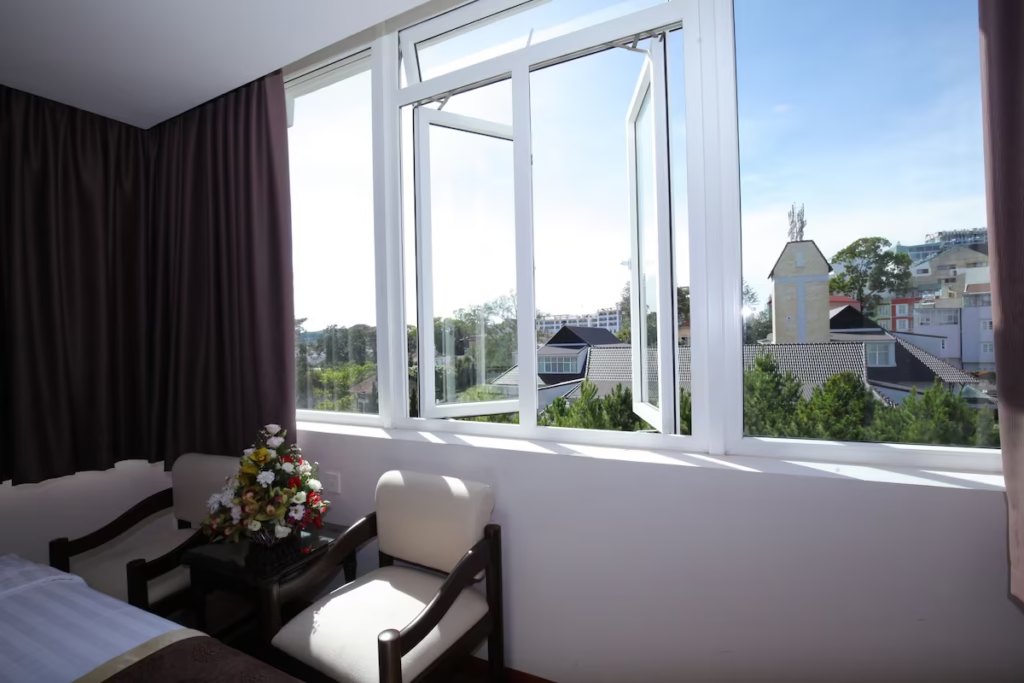
Hôtel Colline is a large, contemporary hotel set right in Da Lat’s central grid, close to the lake and main commercial streets. The scale is noticeable, but operations are tight. Rooms are modern and restrained, with good sound insulation and layouts that prioritize comfort over decoration. Upper floors and select rooms offer open city views, which helps offset the urban setting.
This works well if you want to stay central without sacrificing sleep quality or basic comfort. Service is consistent, circulation is efficient, and the hotel handles volume without feeling chaotic. It suits travelers who prefer clean lines and reliability.
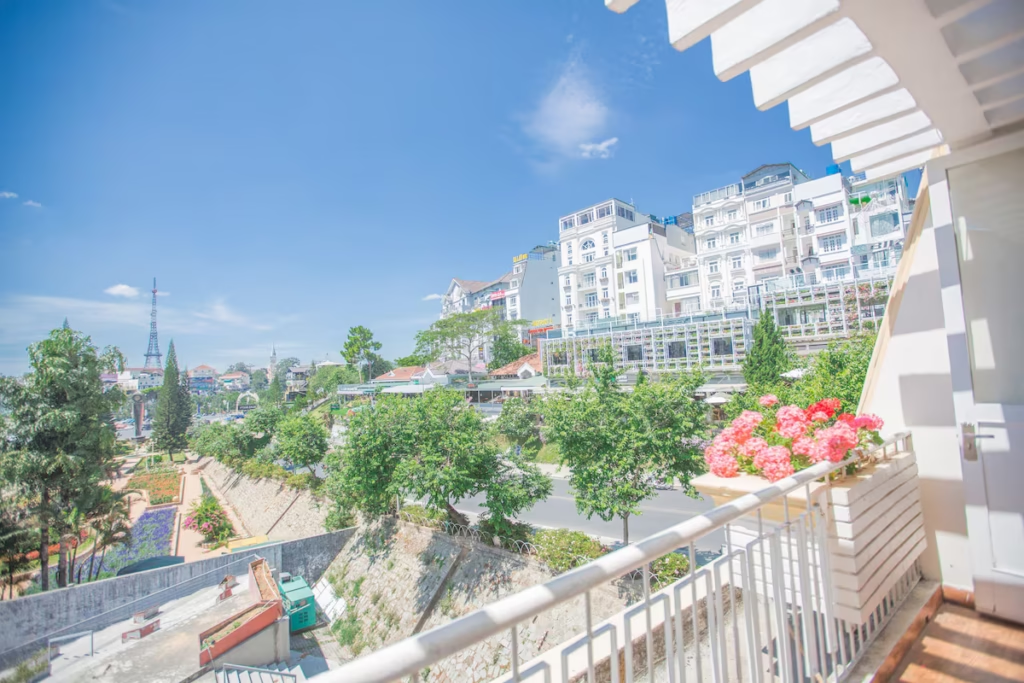
TTC Ngoc Lan sits directly across from Xuan Huong Lake, which gives many rooms clear, unobstructed views of the water. The building is older, but well maintained, and the layout favors location over refinement. Rooms are simple and functional, with balconies in the lake-facing categories.
The strength here is placement. You’re steps from the lake loop, cafés, and the city’s most walkable streets. It’s a sensible choice if you want to anchor yourself near the lake and are comfortable trading design detail for outlook and access.
Xuan Huong Lake Area, where the city opens instead of closing in
Staying near Xuan Huong Lake puts you in one of Da Lat’s most practical areas. The roads are wider, the layout is clear, and moving around on foot is easy compared to the hillier parts of the city. Hotels, cafés, bakeries, and rental shops line the lake, and most central attractions are a short walk or quick drive away.
This area works well if you want Da Lat to feel organized without losing its scenery. The lake keeps the surroundings open and uncluttered, while the location keeps you connected to the city’s main services, restaurants, and transport routes. It’s a solid choice for first-time visitors and for anyone who wants convenience without staying deep in traffic-heavy streets.
Du Parc Hotel Dalat, a French era hotel from a different age
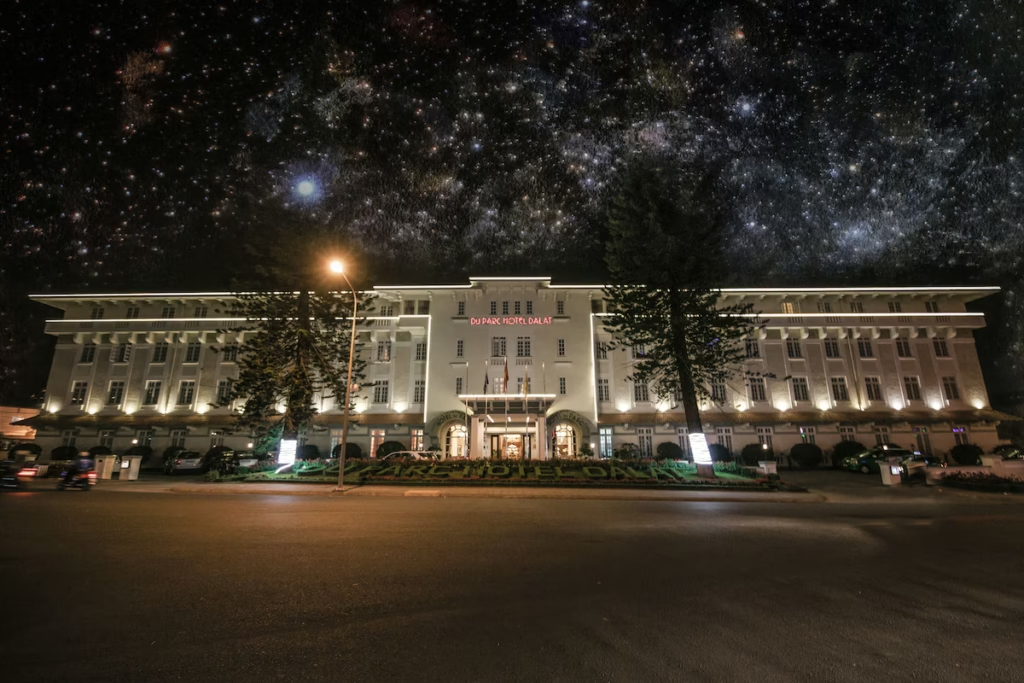
Du Parc is one of Dalat’s few remaining French-era hotels, with original architectural elements, wide corridors, and a formal layout that reflects its history. Rooms are spacious, ceilings are high, and furnishings lean classic without being precious. The building carries age, but it’s maintained with restraint.
This suits travelers drawn to continuity and context. The hotel doesn’t chase modern luxury, but it offers calm, proportion, and a sense of permanence that newer properties can’t replicate. It works best if character is important to you.
Kings Hotel sits directly along the lake, close to the night market and main pedestrian routes. Rooms are straightforward and serviceable, with some offering direct lake views that compensate for the simple interiors. Public areas are compact and utilitarian.
This is a location-first option. It functions well for short stays or tightly planned itineraries where proximity matters. Reliable, central, and easy to use.
Nice Dream is a small, well-kept hotel set just off the main streets, close enough to walk to the lake and market without sitting directly in traffic. Rooms are modest but clean, and the operation feels personal and attentive. Noise levels stay manageable for the location.
It’s a good fit if you want calm evenings without leaving the center. This works especially well for travelers who value quiet, helpful staff, and straightforward comfort.
This part of Da Lat sits away from the city’s built-up core. Roads thin out, development drops, and the surroundings turn greener fast. You’ll notice fewer shops, fewer cars, and longer distances between places. The lake and forest do most of the visual work, and the city stays firmly in the background.
Staying here changes how Da Lat functions for you. Dining options are limited, transport matters more, and hotels tend to be self-contained by design. What you gain is space, low noise, and a setting that feels removed without being remote. It suits travelers who value separation over access, and who are comfortable trading flexibility for calm.
Dalat Edensee Resort, aerial view, feel like you own the lake
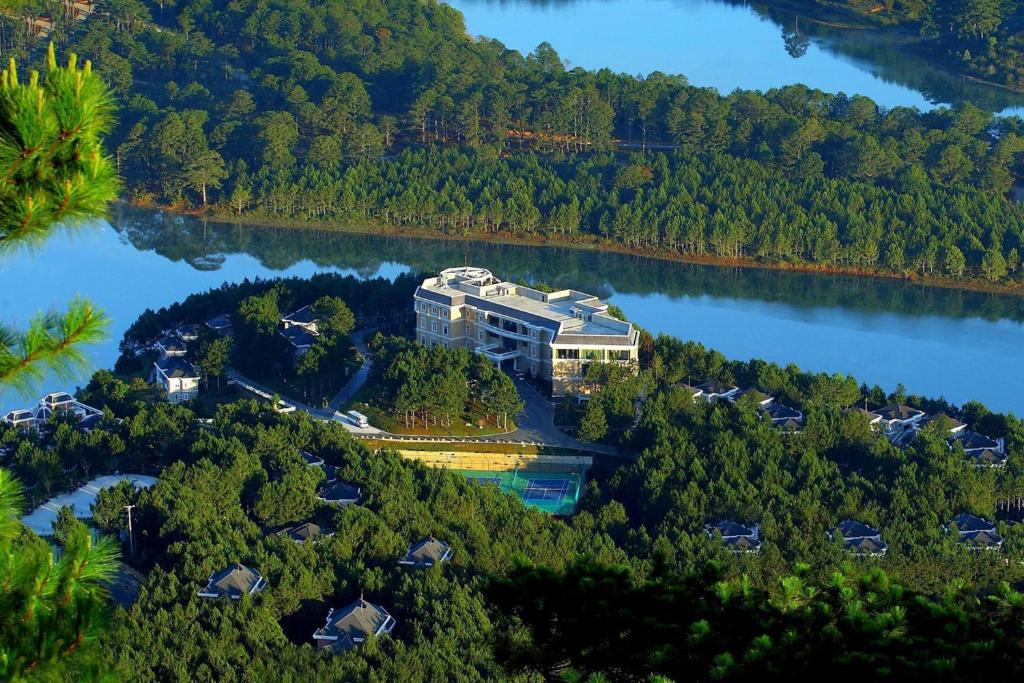
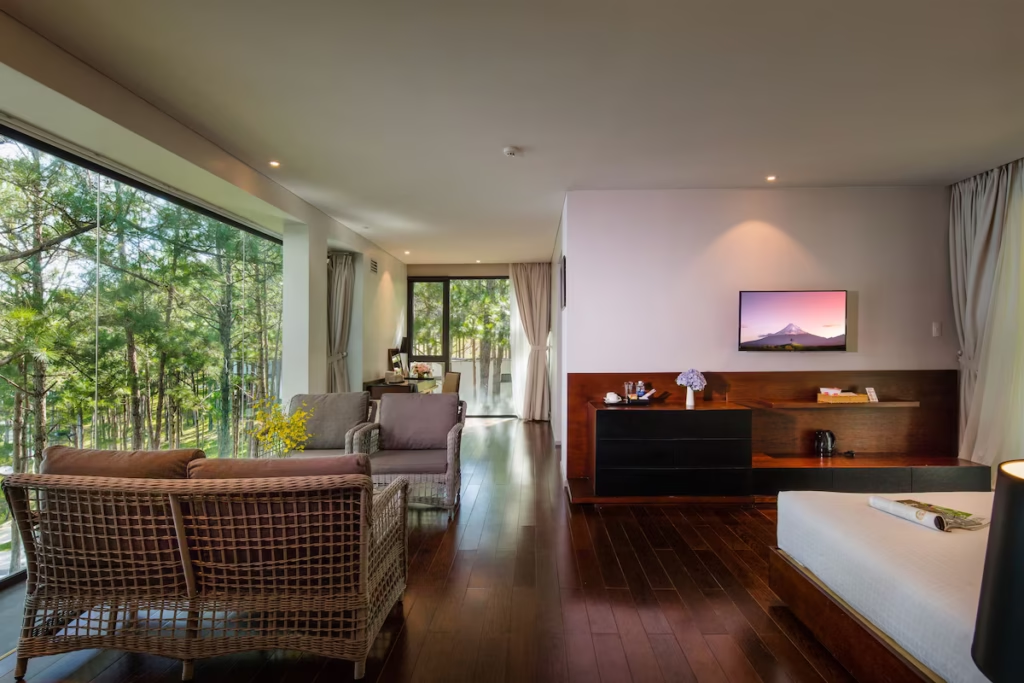
Edensee spreads along the edge of Tuyen Lam Lake, with chalet-style buildings set among trees and open lawns. Rooms are spacious, many with lake-facing balconies, and the property is arranged to feel expansive rather than dense. Paths, gardens, and water views shape how you move through the resort.
This is a place that lets the setting lead. The lake, forest, and distance from the city define the stay, and the resort supports that with space, calm circulation, and a sense of continuity. It suits travelers who want their accommodation to carry the atmosphere of Tuyen Lam on its own.
Terracotta sits deeper into the forest, with wooden villas dispersed along the hills above the lake. The layout emphasizes separation and privacy, with interiors that are warm, restrained, and consistent throughout the property. Nature is present from every angle, without feeling unmanaged.
This resort works by staying cohesive. Architecture, materials, and setting all point in the same direction, creating a stay that feels contained and intentional. It’s well suited to travelers who want immersion in landscape without interruption.
Swiss-Belresort overlooks a golf course near Tuyen Lam Lake, with broad sightlines and a structured, open layout. Rooms are large, modern, and designed for comfort, and public areas are spacious and orderly. The setting feels calm and composed.
This is a dependable full-service resort in a quiet natural pocket of Da Lat. It works especially well for travelers who value space, clear organization, and a relaxed environment where everything functions smoothly within the property.
Hue. Imperial history, riverside calm, and a quieter kind of city
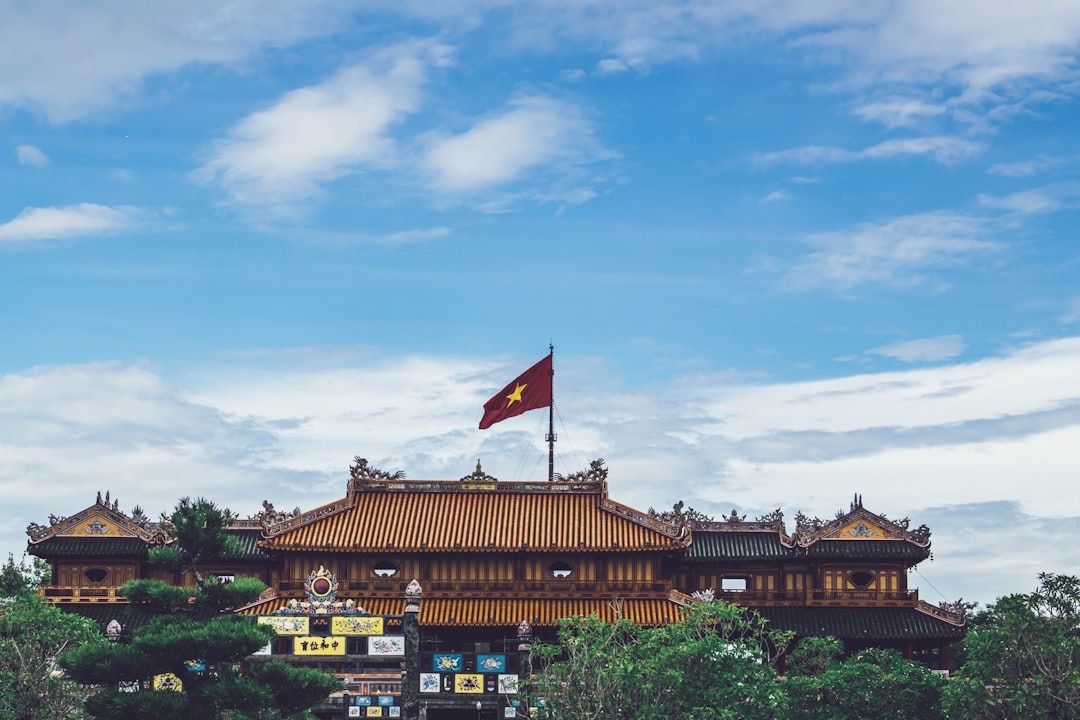
Hue imperial palace
Hue doesn’t announce itself loudly. It doesn’t buzz, doesn’t sprawl, and doesn’t rush you. Vietnam’s former imperial capital moves at a slower, heavier pace, shaped by history more than momentum. The Perfume River cuts the city in two, wide and calm, and much of Hue’s identity lives along its banks.
This was once the seat of the Nguyen emperors, and that legacy still defines the city. Citadels, royal tombs, pagodas, and gates are not side attractions here. They are the city. Even when you’re sitting in a café or crossing a bridge, there’s a sense that Hue remembers things. That it has layers beneath the surface.
Travelers often describe Hue as “sleepy”, but that undersells it. Hue is contemplative. Introspective. It’s a place for slower mornings, longer walks, and evenings that end early. Where you stay matters less for logistics and more for atmosphere. Hue feels very different depending on whether you’re inside the old city walls, along the river, or tucked into the countryside.
Area
What actually goes on
Why it works
Who it suits
Citadel and Dong Ba
Early mornings inside the Imperial City. Market runs. Local breakfast streets. Night food stalls
You are close to the “reason you came” version of Hue
History focus, short stays, first timers
South Bank and Le Loi
Riverside walks. Cafe stops. Restaurants and bars. Easy taxi hops to everywhere
Citadel and Dong Ba, wake up inside the old capital
This is Hue at its most classic. You walk out and it feels like the city is still half in the imperial era. Mornings are for the Citadel before the heat builds. Afternoons are for Dong Ba Market, small craft shops, and finding a good bowl of bun bo Hue that does not need a “top rated” label to be perfect.
Stay here if your plan is simple. See the monuments, eat well, sleep early, repeat. It is less polished than the south bank, but more “Hue” per minute.
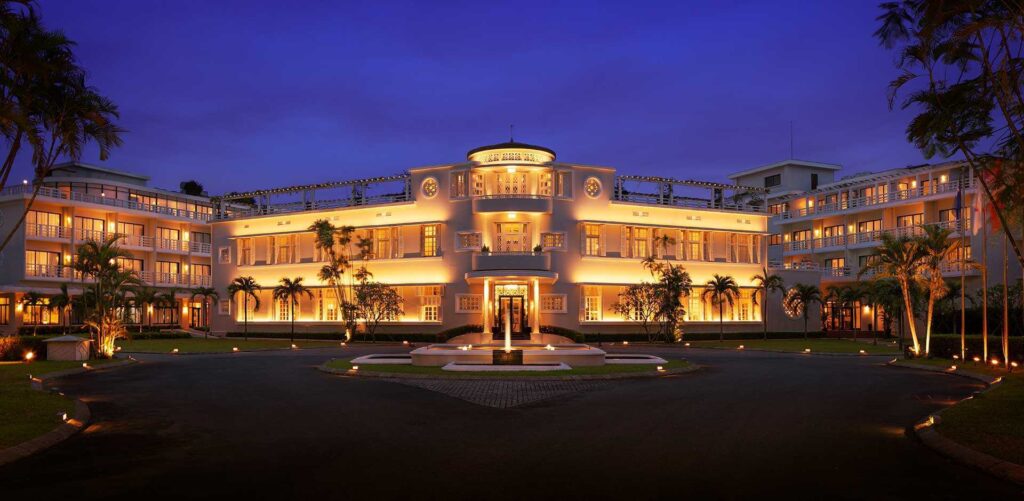
This is the grown up, old world choice, built around an Art Deco mansion with serious heritage weight. The mood is calm and curated, not flashy. You get the feeling you are staying somewhere with a story, not just a room with a keycard.
It works best when you want Hue to feel elegant and slightly cinematic. You are close enough to the Citadel zone to plan days around history, but the hotel itself is the kind of place that makes you slow down on purpose.
A big, central hotel that leans into a grand look, with a layout that feels like a proper city base rather than a resort hidden away from everything. It is the kind of place you come back to midday, cool off, reset, then head out again for dinner and a walk.
Choose it if you want comfort and a “full service” feel without paying for historic prestige. It is especially practical when you want Hue to run smoothly. Check in, organise your routes, and keep the city within easy reach.
This is the type of budget stay that works because it is simple and well located. You get a clean base, a straightforward routine, and you spend your energy on Hue itself.
Pick it if you want to stay close to the action and keep your costs down, without doing the “barely functioning room” thing. It suits short stays where you are out most of the day and just want an easy return at night.
South Bank and Le Loi, river walks, cafes, and the easy version of Hue
The south bank is where Hue feels most liveable. You get the Perfume River promenade, the hotel strip, and that gentle rhythm of coffee shops, dinner spots, and evening strolls. It is not party central. It is “nice, calm, and convenient” central.
Stay here if you want Hue to be effortless. You can cross to the Citadel when you want history. You can also stay on your side of the river and let the city come to you.
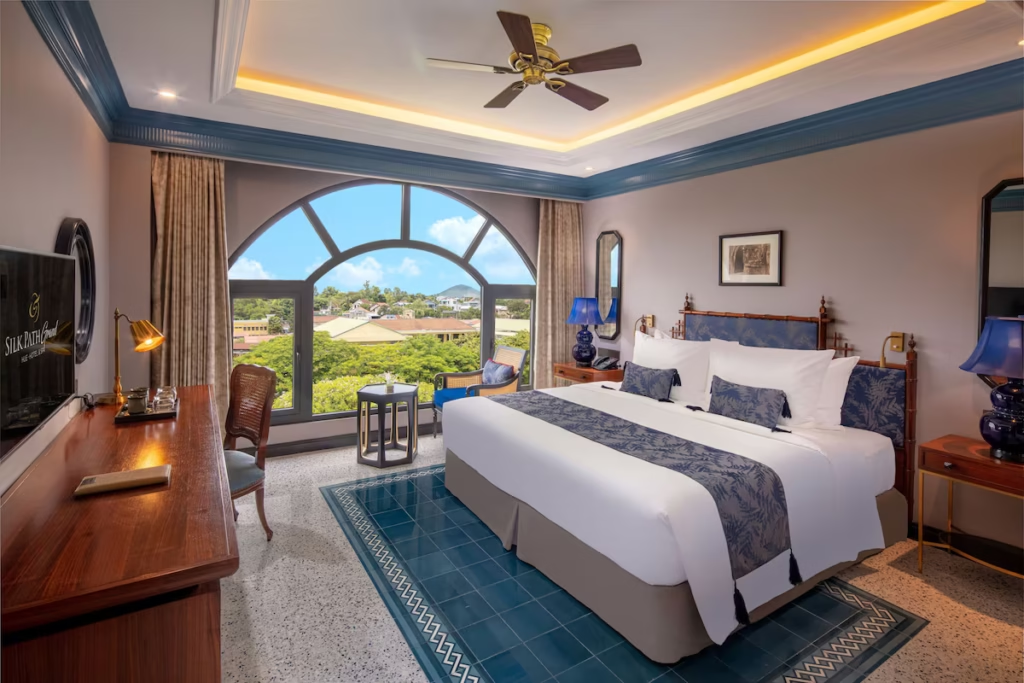
Eldora leans into a very deliberate, old school glamour aesthetic. Think more boutique grand hotel vibe than minimalist modern. The feeling is dressed up and fun, without being stiff.
It is a strong pick when you want a central base but also want your hotel to feel like part of the experience. You can do a full day of Hue, then come back and feel like the evening still has style left in it.
This is a comfortable midrange base that keeps you close to the river side rhythm. It is the kind of place that makes it easy to plan your day around short walks and quick Grab rides, rather than long commutes.
Choose it if you want a reliable, central stay that feels put together, without paying luxury premiums. It is very “do Hue properly, then come back to a calm room” energy.
Garden villages and lagoon outskirts. The quiet Hue you came for
This is where Hue gets lush. You swap city blocks for greenery, garden houses, and quieter roads. Days turn into long breakfasts, slow afternoons, and that feeling that you are not “doing Hue”, you are living beside it for a bit.
Stay here if you want rest to be the main attraction. It is also ideal when you want to balance Hue’s temples and tombs with proper downtime.
Vedana Lagoon Resort, private luxury huts on the sea
This is a full retreat, built around lagoon scenery and silence. It is not trying to keep you busy with city access. It is trying to make you exhale, then keep you there.
Pick it if you want Hue as a “reset chapter”. You do a day trip into town if you feel like it, then come back to a place that feels like it was designed for slowing down.
A garden style resort that feels green and lived in, with a calm, village like layout rather than a tower hotel structure. It is built for wandering paths, finding quiet corners, and letting the day stretch.
Choose it when you want comfort and atmosphere, but still want Hue to stay accessible. It is a great fit if you want your mornings to be peaceful, and your afternoons to be optional.
This is the only slot where I am intentionally not naming one property, because the best budget stays in the garden village area change quickly and depend heavily on exact location. I would even recommend not booking one in advance, just go and speak to the locals, visit a teahouse, and let the accomodation come to you.
Mui Ne. Sand dunes, sea air, and a beach town that runs on wind and light
I am actually writing this article from Mui Ne.
Mui Ne isn’t really a town in the classic sense. It’s more of a long, sun-bleached stretch of coastline where everything happens along one road, slowly and sideways. Resorts, kite schools, seafood places, cafés, massage huts, and the occasional fuel station all line up facing the sea, with fishing villages quietly filling in the gaps. You don’t arrive in Mui Ne to explore neighborhoods. You arrive to decelerate.
The landscape here does a lot of the heavy lifting. On one side, the South China Sea, usually windy, often dramatic, and rarely still. On the other, red and white sand dunes that feel almost misplaced, as if someone accidentally dropped a desert into coastal Vietnam.
Mui Ne works best when you stop trying to “do” it. This is not a place for ticking off attractions or stacking plans. It’s a place for long breakfasts, salt in your hair, and days that blur together in a good way. Whether you’re here for kitesurfing, post-city recovery, or just to give your nervous system a break, Mui Ne rewards travelers who let go of structure. You stay, you float, you leave lighter than you arrived.
Area
What it feels like
Why it works
Best for
Ham Tien
Main strip, lively
Cafes, restaurants, beach access
First time, easy stay
Mui Ne area. closer to dunes
Quieter, spread out
Quick dune access, calmer feel
Couples, slower days
Phan Thiet
More local, less resorty
Better everyday prices
Longer stays, local rhythm
Where to stay in Mui Ne
Anantara Mui Ne, the definition of a beach resort vacation
This is classic Mui Ne luxury done properly. Low-rise villas and rooms spread across landscaped grounds, direct beach access, and a layout that encourages wandering rather than staying put. Everything is spaced out, calm, and deliberately unhurried.
You stay here when Mui Ne is not a stop, but a pause. Days revolve around breakfast by the water, long pool sessions, and dinners that feel like events without being formal. It works especially well if you want comfort without isolating yourself completely from the town’s easy rhythm.
Right on the sand, relaxed, and unfussy. The bungalows and rooms are simple but thoughtfully placed, with the beach doing most of the heavy lifting. It feels personal rather than polished, and that is part of the appeal.
This is a strong choice if you want to wake up close to the water, spend most of the day barefoot, and keep things uncomplicated. Mui Ne feels very “correct” from here. Easy mornings, lazy afternoons, and no pressure to do much at all.
Set slightly back from the beach, this is about value, views, and a social-but-not-chaotic atmosphere. The hilltop location gives you perspective over the coastline, especially at sunrise and sunset.
It works best if you are staying a bit longer and want comfort without paying beachfront prices. You get pools, open spaces, and a relaxed crowd. Mui Ne becomes a base for slow living rather than a postcard fantasy, and that is exactly why many people end up staying longer than planned.
Phu Quoc. Tropical beaches, sunset roads, and island days that stay easy
Phu Quoc bay, with fishing boats in the marina
Phu Quoc operates at a lower intensity than most of the country. The island is built for low friction. Roads are direct, distances are short, and logistics rarely dominate decisions. Even at busier points in the year, the baseline pace stays measured.
This is not a place organized around sights, It’s organized around ease. The question that matters is not what you plan to see (spoiler alert, all around you is the prettiest damn beach you’ve ever seen in your life), but how much structure you want around you. Some parts of the island concentrate dining, resorts, and social spillover. Others thin out quickly and trade convenience for space and quiet. Both function well. They simply serve different tolerances for activity.
Choosing where to stay shapes the stay more than any single attraction. Get that part right, and the island does what it’s good at. Stay out of the way.
Area
What actually goes on
Why it works
Who it suits
Long Beach
Resorts, sunset dining, beach walks, easy transport
Central, convenient, flexible
First timers, short stays, families
Ong Lang Beach
Quiet resorts, local cafes, soft beaches
Slower pace, less traffic
Couples, longer stays, calm trips
Duong Dong Town
Night market, local food, daily life
Most local feel, walkable
Budget stays, short visits, curiosity-driven
Northern Phu Quoc
Large resorts, nature, space
Total escape, minimal movement
Resort-focused trips, reset mode
Long Beach, central and easy
Long Beach is where most people land. Not emotionally, just logistically. It runs south of Duong Dong town and stretches for kilometers, with resorts, guesthouses, restaurants, cafés, massage places, and scooter rentals layered one after the other. It’s not curated, and it’s not pretending to be untouched. That’s exactly the point.
This is the most convenient place to stay on Phu Quoc. You’re close to the airport, close to night markets, close to services, and close enough to everything else that nothing feels like an effort. The beach itself is pleasant rather than spectacular, but sunsets are excellent, and days here flow easily between swimming, eating, and doing nothing in particular.
Long Beach suits first-time visitors, short stays, and travelers who want flexibility. If Phu Quoc is one stop among many, this is where the island makes the least demands on your energy.
Salinda Resort Phy Quoc, huge rooms and top quality service
Salinda is a tightly run beachfront resort on the west coast, set back just enough to feel buffered from the road and open enough to feel connected to the sea. The grounds are lush but orderly. Moving between rooms, pool, restaurants, and beach feels natural, almost a part of the experience. It’s a place designed to absorb guests without ever feeling busy.
Rooms are generous and calm, with restrained design and practical layouts. Service is polished and reliable. The spa and dining are not secondary amenities. They are integral to how the resort functions, which means staying in never feels like settling. You might enjoy Salinda if you want a complete resort that feels composed, confident, and capable of carrying the entire stay without effort.
This is a colonial-style resort with a clear identity. Buildings stay low and spread across the property, with beautiful gardens doing most of the visual work. The design leans traditional, not retro. Public areas are quiet and spacious, and the beachfront is one of the property’s strongest assets.
It suits travelers who value character over novelty. You get space, comfort, and a sense of continuity that many newer resorts lack. You might enjoy it if you’re drawn to places that feel settled and self-contained, and if you plan to stay long enough for that atmosphere to matter.
Set slightly back from the beachfront section of Famiana Resort, this option offers space, greenery, and access to resort facilities at a lower price point. Rooms are large and practical, and the grounds feel open and calm.
Best if you want comfort and beach access without paying premium beachfront rates. It works especially well for families or longer stays where value matters.
Ong Lang sits north of Duong Dong and immediately feels like a step back. Roads narrow, buildings spread out, and the island’s greener side starts to show. Resorts here tend to be lower, more spaced out, and more intentional about blending into the landscape rather than dominating it.
The beach is calmer and more contained than Long Beach, with fewer jet skis and lighter crowds. The rhythm is unstructured, shaped more by conditions than schedules, and the place feels oriented toward staying put rather than moving through.
Ong Lang works best for couples, longer stays, and travelers who want the island to feel restorative rather than stimulating. You’re still close enough to town to dip in when needed, but far enough out that silence becomes part of the experience.
Chen Sea Resort, every room is a slice of paradise
Built into a natural cove, this resort focuses on privacy and space. Villas are separated, many with sea views, and the beach feels sheltered and intimate. The atmosphere is quiet without feeling isolated.
You stay here when the island is meant to slow you down completely. Days revolve around the water, long meals, and not much else. Ideal for couples or anyone looking for a true pause.
Positioned on a hillside overlooking the water, Sea Sense offers wide views and a feeling of openness. Rooms are generous, balconies are usable, and the layout keeps things calm even when the resort is busy.
This works well if you want views, comfort, and quiet without disappearing into a private villa setup. It suits longer stays where scenery becomes part of the daily routine.
Small, friendly, and well placed near Ong Lang’s quieter beaches. Rooms are simple but well kept, and the overall vibe is relaxed rather than resort-heavy.
A good option if you want to stay near the calmer side of the island without committing to a large resort environment.
The southern end of Phu Quoc feels different. Whiter sand, clearer water, and a sense that the island opens up rather than compresses. Sao Beach is the visual star, calm and bright, with water that stays shallow and inviting for long stretches.
This area is quieter in terms of nightlife and services, and that’s intentional. You come here to stay put, not to roam. Resorts are more self-contained, days revolve around the beach, and evenings tend to be early and low-key.
Sao Beach and An Thoi suit travelers who want a classic island escape. Honeymooners, families, and anyone looking to disconnect without going fully remote will feel comfortable here.
Lahana Resort Phu Quoc, a bit of everything, at the highest level
Lahana sits slightly uphill from Duong Dong, using elevation and greenery to create distance from the street without cutting ties to town. The property is organized around a long, well-positioned pool and a compact spa, with rooms opening onto balconies or terraces that face inward toward gardens. The layout favors quiet and containment over views.
This works well as a hybrid base. You get calm, space, and a resort feel on-site, while restaurants, the night market, and everyday conveniences remain walkable. You might enjoy Lahana if you want access to local life without noise following you back, and prefer a hotel that functions as a buffer rather than a destination.
Langchia Home is a small, garden-set property tucked off Tran Hung Dao in Duong Dong. The setup is simple and practical. Private rooms and a few shared options cluster around a pool and shaded common areas, giving the place a residential feel instead of a resort one. Design is minimal, rooms are clean, and the value for money is astounding.
It works best as a functional base. Town services, local food, and transport are close, while the property itself stays quiet and low key. You might enjoy Langchia Home if ease and location matter more than amenities, and if you want a place that feels local, informal, and unobtrusive between moves around the island.
Further north, Phu Quoc becomes less polished and more raw. Rivers cut through mangroves, beaches feel wider and emptier, and development thins out. This part of the island leans into nature rather than amenities.
Staying here means trading convenience for space. You’ll rely more on your hotel or resort, plan meals a bit more intentionally, and spend more time on-site. In return, you get quieter days, darker nights, and a sense of distance from everything else.
The north suits slow travelers, longer stays, and people who actively want fewer choices. If your idea of luxury is silence and sky rather than options, this is where Phu Quoc makes the most sense.
Vung Bau Fusion Resort Phu Quoc, private villas with private pools and space to breathe
Villa-only, spacious, and intentionally slow. Each villa comes with private outdoor space, and the resort design emphasizes privacy and routine. Meals and spa treatments are integrated into the stay experience.
You choose this if you want Phu Quoc to feel restorative rather than exploratory. Everything happens on-site, and that is exactly the point..
Green Bay is a low-rise resort set into the trees along the island’s northwest coast. Villas and rooms are spaced widely, with architecture that stays quiet and natural. The beach is calm and sheltered, and the overall layout prioritizes separation and stillness over spectacle.
This works best if you’re the kind of traveler that want the setting to do most of the work. It’s self-contained, deliberately removed from town, and consistent in how it handles space, sound, and movement.
Nha Trang. Beach city energy with islands right offshore
Nha Trang bay, bluest waters in Vietnam
Nha Trang is not subtle, and it does not pretend to be.
This is a full-scale coastal city built directly on top of its beach. High-rises face the water, traffic runs parallel to the sand, and daily life blends into tourism without clear borders. In the morning, locals exercise along the promenade. By midday, umbrellas and tour groups take over. At night, the city lights up again, this time for dining, bars, and late walks along the sea.
Where you stay determines whether Nha Trang feels overwhelming or easy. The beachfront is intense but efficient. A few blocks inland, life becomes more local and practical. Further north, the coast quiets down noticeably. And offshore, the islands strip the experience down to nothing but water, hills, and silence.
Area
What actually goes on
Why it works
Who it suits
Tran Phu Beach
Promenade life, tours, dining, constant movement
Everything at your feet
First timers, short stays
City Center
Markets, local food, daily routines
Cheaper, functional
Longer stays, value focused
Hon Chong
Quieter coast, viewpoints, cafes
Slower rhythm, still connected
Couples, calmer trips
Offshore Islands
Resorts, snorkeling, isolation
Full separation
Reset trips, resort stays
Tran Phu Beach, central and energetic
Tran Phu Road runs parallel to Nha Trang’s main beach and is the city’s most obvious base. Most large hotels, beachfront towers, tour offices, restaurants, and cafés cluster here, which makes it the easiest area for first-time visitors. You can walk to the beach, walk to food, and organize day trips without much planning.
The downside is density. This is the loudest, most tourist-facing part of Nha Trang, especially in the evenings. Traffic is constant, and the beach can feel crowded at peak hours. That said, higher floors and well-insulated hotels largely solve the noise issue.
This area works best for short stays, first-time visitors, and travelers who want everything within walking distance. If convenience matters more than peace, this is the safest choice.
InterContinental Nha Trang, in the middle of everything, and yet you feel all alone on the beach
This is one of the few large beachfront hotels in Nha Trang that actually manages flow well. Rooms are generous, with wide balconies designed for sitting rather than just standing, and higher floors give uninterrupted bay views without feeling detached from the street below. The interior design stays restrained, modern, and calm, which matters in a city that can feel visually loud.
What sets it apart is how easy the stay feels. Breakfast does not feel crowded. Public spaces absorb guests rather than funnel them. You can dip into the city all day and come back to something that feels composed. It suits stays where comfort and predictability matter more than novelty.
Set just behind the main beachfront strip, this hotel trades direct sand access for better value and a slightly quieter atmosphere. Rooms are modern and practical, with clean lines and good sound insulation considering the location. Upper floors open to clear water views without the beachfront premium.
The rooftop pool becomes the hotel’s anchor point, especially in the late afternoon when the beach is busiest. This works well if you want to be central, walk everywhere, and still have a place to step back from the noise without leaving the area.
Compact and straightforward, this hotel focuses on doing basics properly. Rooms are small but efficiently laid out, cleanliness is consistent, and the location keeps you within easy walking distance of both the beach and city streets.
It works best for shorter stays or packed itineraries where the room is a base, not a destination. You stay here for location and value, and for many trips that is exactly the right tradeoff.
A few blocks inland, the city changes noticeably. Hotels become smaller, prices drop, and local life takes over. You’ll find more local restaurants, markets, cafés, and services here, and fewer organized tours or beach-facing bars.
You’re still close to the beach, usually a 5–10 minute walk, but you’re not paying beachfront premiums. This area feels more functional than scenic. Streets are busier, but in a local way rather than a tourist one.
This is a good option for travelers who want value, longer stays, or a more everyday Vietnamese city feel. It’s also practical if you plan to use Nha Trang as a base rather than spend all day on the sand.
Maple Hotel and Apartments, the best basecamp in Vietnam
Designed with longer stays in mind, this property offers apartment-style rooms with real space to spread out. Kitchens are functional, storage is generous, and layouts make sense for stays beyond a few nights. The building is quieter than beachfront hotels, with a more residential feel.
You choose this if you want Nha Trang to feel manageable and routine-based. Grocery runs, regular cafes, and slower mornings become part of the stay, rather than tours and schedules.
Astica Hotel sits a few blocks back from Tran Phu Beach, right in Nha Trang’s central grid. The building is compact and modern, with clean, functional rooms and a quiet, well-managed feel. Common areas are minimal, which keeps the focus on rest and movement rather than lingering.
This works well as a practical base. The beach, restaurants, cafés, and transport routes are all close, and the hotel handles the basics reliably. It suits travelers who want to stay central, move easily, and keep the emphasis on the city itself.
North of the main beach strip, the city thins out. Hon Chong offers a calmer atmosphere, with fewer tour groups, less nightlife, and more residential buildings. The beach here is still accessible, often quieter, and the pace is noticeably slower.
Hotels in this area tend to be mid-range to upscale, often offering good sea views without the intensity of Tran Phu. Dining options exist but are more spread out, and evenings are generally quiet.
This area suits couples, longer stays, and travelers who want beach access without being in the center of activity. It’s still easy to get into town by taxi or scooter when needed.
Amiana Resort Nha Trang, set into the hill, inches from the sea
Set slightly away from the city center, this resort is built around space. Natural seawater lagoons, wide grounds, and low-rise buildings create a sense of separation without full isolation. Rooms are large, airy, and oriented toward water rather than roads.
Staying here turns Nha Trang into a backdrop rather than the main event. Days stretch longer, evenings quiet down earlier, and the city becomes optional instead of constant.
One of the older beachfront properties, but well positioned and well maintained. Rooms are spacious, balconies face the bay, and the surrounding area is noticeably calmer than Tran Phu proper.
It suits travelers who want direct beach access without the full intensity of the central strip. Everything is still close, just softened around the edges.
Across the bay, island resorts operate as closed ecosystems. Everything. Beach, pools, dining, activities, is handled on-site, with transport arranged via cable car or boat.
These stays are designed for people who do not want to navigate the city at all. You trade flexibility for simplicity. Once you arrive, there’s little reason to leave.
Best for families, honeymooners, or travelers who want Nha Trang as a resort destination rather than a city to explore.
Six Seenses Nha Trang, widely considered the best hotel in Vietnam
Accessible only by speedboat, this is full removal from the mainland. Villas are scattered across hillsides and coves, with privacy engineered into the landscape itself. Movement slows naturally because everything is spaced intentionally far apart.
You stay here when the goal is not to see Nha Trang at all. The resort becomes the trip, and the city exists only as a distant outline across the bay.
Mekong Delta, Where The Magic Of The Fairytale Orient Comes Alive
Mekong delta, where the flow of the river dictates everything
The Mekong Delta demands adjustment, because it’ll not adjust to you. The landscape is woven with canals and rivers. Boats are the main form of transport. Markets, schools, shops, and fields line the waterways. Life moves at a pace set by water levels and weather, not clocks.
This is a working region, not a list of sights. Activity concentrates in floating markets, rice towns, and ferry crossings, and is a lot more “local”. Days unfold in patterns born of rhythm and repetition. This is the rawest version of Vietnam out of all the places on this article.
Where you stay shapes how you see it. A riverside lodge places you in the flow of daily life. A hotel at a town’s edge keeps you at the perimeter. Both are useful. One puts you next to river traffic and labor. The other offers a base for excursions. The choice changes context, not convenience.
Area
What actually goes on
Why it works
Who it suits
Can Tho
Floating markets, river traffic, early mornings
Most accessible hub
First timers, short stays
Ben Tre
Canals, coconut groves, village paths
Slower, greener
Couples, nature focused trips
Chau Doc
Border river life, religious sites
Distinct culture shift
Curious travelers, extensions
Can Tho, the Delta’s working capital
Can Tho is the Mekong Delta’s largest city and the most practical place to base yourself. This is where infrastructure works. Hotels are reliable, transport is simple, and tours leave early without logistical friction. You are still very much in the Delta, but with air-conditioning, proper roads, and the option to go out at night.
Most travelers stay near the riverfront or around Ninh Kieu Wharf, where boats depart for the Cai Rang floating market before sunrise. Staying here makes early mornings manageable and evenings easy. Restaurants, cafés, and riverside walks give structure to days that would otherwise feel fragmented. Best for first-timers, families, or anyone who wants to see the Mekong without surrendering comfort.
Victoria Can Tho resort, where nobles used to stay
Set directly on the riverbank, this resort feels deliberately detached from the surrounding city. Low-rise buildings spread across gardens rather than stacking upward, and paths lead you gradually toward the water. Rooms are large, airy, and designed to face outward, with terraces that encourage sitting rather than passing through.
Staying here makes Can Tho feel balanced. You can join early market tours at dawn, then retreat into quiet grounds by late morning. It works best if you want structure without pressure, and a sense of calm without isolation.
Positioned along the river promenade, this hotel keeps you plugged into the city’s daily rhythm. Rooms are modern, functional, and higher floors open to wide river views that shift constantly with traffic and light.
This is a good choice if you want to step straight into Can Tho life. Cafes, docks, and evening walks begin the moment you leave the lobby, and everything feels immediate and navigable.
More intimate than a city hotel, this riverside guesthouse focuses on simplicity and atmosphere. Rooms are basic but clean, and common spaces open directly toward the water.
You stay here if you want closeness rather than polish. It suits travelers who value quiet mornings, personal interaction, and a slower pace over amenities.
Ben Tre sits deeper inside the Delta’s agricultural heart and feels immediately more rural than Can Tho. This is coconut land. Narrow canals, low bridges, bicycles instead of buses, and homestays that sit directly on the water. Life here moves slowly, and staying overnight just means more than sightseeing.
Accommodation is usually small-scale. Garden lodges, riverside bungalows, and family-run places that organise boat trips, cycling routes, and home-cooked meals. Days revolve around canals rather than schedules. This area suits travelers who want a tangible sense of Delta life and are happy with fewer choices in exchange for authenticity and quiet.
Mekong Home, An eco lodge that cares about you and about the surroundings
This eco-focused lodge blends into its surroundings rather than standing apart from them. Bungalows are spaced across gardens and waterways, built from local materials, and oriented toward shade and airflow.
Staying here feels grounded. Days revolve around boat trips through narrow canals, walks through villages, and meals that reflect the region’s agricultural rhythms. It works best if you want the Delta to slow you down rather than entertain you.
Set along a wide stretch of river, this resort-style property offers comfort without removing you from the landscape. Rooms are spacious, grounds are open, and the river remains visible throughout the stay.
This is a solid option if you want Ben Tre’s calm with familiar structure. It suits relaxed stays where the hotel becomes a base rather than a highlight.
A family-run homestay surrounded by orchards and canals. Rooms are simple, meals are shared, and daily routines unfold around you rather than behind closed doors.
You choose this if connection matters more than comfort. It offers one of the clearest windows into Delta life, especially for longer stays.
Chau Doc sits near the Cambodian border and feels different from the rest of the Delta. More movement, more trade, and a distinct mix of Vietnamese, Cham, and Khmer cultures. The river is wider here, traffic heavier, and the pace more transitional.
Travelers often stay here for Mount Sam, religious sites, or onward travel toward Phnom Penh by boat. Accommodation tends to be simple but scenic, often overlooking the river. Chau Doc works best as a short stay. One or two nights to experience a different side of the Delta before moving on.
Victoria Chau Doc Hotel, spacious rooms with a view of the river and all its commerce
Positioned at a river junction, this hotel captures constant movement. Boats pass day and night, and rooms facing the water feel connected to trade routes rather than scenery alone.
It works well as a transitional stay. You use it to explore floating villages, Mount Sam, and border crossings, while still sleeping comfortably and predictably.
Vietnam works best when you stop trying to “do it all.” The country changes constantly as you move through it. In pace, in landscape, in mood. Hanoi pulls you inward. Ho Chi Minh City pushes you forward. The mountains slow you down, the coast stretches time, and the Mekong quietly asks you to let go of schedules altogether.
Where you stay matters more than most people expect. The right area can soften a chaotic city or give structure to a slow one. This guide is less about ticking off highlights and more about choosing places that fit how you want your days to feel. Fast or slow, social or quiet, central or tucked away.
Plan with intention, but leave space for drift. Most of my best moments in Vietnam happened when nothing is scheduled. A conversation with strangers over coffee. A view I didn’t expect. An extra night I didn’t plan for. That is usually when the country opens up.