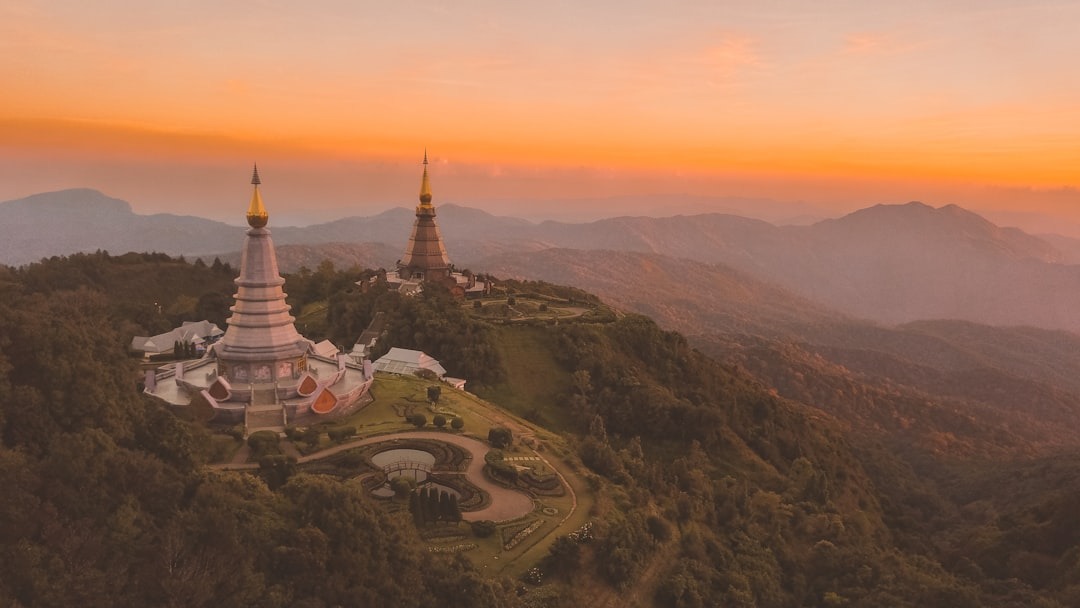
Chiang Mai is Thailand’s northern capital in the practical sense. It’s the biggest city in the north, it has a major airport, and the centre is easy to navigate on foot. The historic core sits inside a square moat and wall line, so you can navigate by gates and temples instead of street names.
The city was founded in 1296 by King Mangrai as the capital of the Lanna Kingdom, and that lineage still shows up in the architecture and the pace of daily life. The Old City footprint is compact. Think roughly 1.6 km per side inside the moat. It’s why Chiang Mai works so well for travellers who want to see a lot without spending half the day in traffic.
Getting around is simple once you accept the local logic. Walking covers a lot inside the moat and around the east and west edges. For everything else you’ll use red songthaews, the shared pickup-truck taxis that are basically Chiang Mai’s default public transport, plus ride-hailing when you want point-to-point. Chiang Mai International Airport sits close enough to town that a late arrival does not become a logistics project. If you’re coming overland, sleeper trains run between Bangkok and Chiang Mai, and the overnight option is a common way to trade a travel day for a morning arrival.
Seasons matter here more than people expect. November to February is the easiest window for walking and day trips. February through April is often the roughest for air quality in the north, and it can change the experience of the city fast, especially if you’re sensitive to haze. The rains usually ease the air later in the year, and the city feels greener once the wet season settles in.
Chiang Mai’s food is a reason to come, not a side benefit. Northern Thai cooking brings deeper herbs, more grilled meats, and a different set of staples than the central Thai flavours many visitors meet first in Bangkok. Khao soi, a dish of noodles in coconut curry soup, is the headline, but it’s the supporting cast that keeps things interesting. sai ua sausage, nam prik dips, and plates built around vegetables and crisp pork. For a crash course in local appetite, Warorot Market, also called Kad Luang, is where locals actually shop, and it’s the kind of place where snacks and curry pastes are treated with the respect and gravity they deserve.
The cultural calendar is loud in the best way. Songkran in April turns the city into a water-fight ring, with Chiang Mai’s moat area often acting as the centre of gravity. In November, Loi Krathong brings floating offerings on water, and Chiang Mai pairs it with Yi Peng lantern traditions, which is beautiful and also heavily regulated for safety. This is a city where temples are not museum pieces. They’re active spaces, and you’ll notice the small etiquette basics quickly, shoes off, shoulders covered, voices down.
Quick area guide
| Area | Style | Energy | Close to sights | Crowding | Best for |
|---|---|---|---|---|---|
| Old Town | Historic core | Medium | Very high | High | Temples, walk-first days |
| Nimman | Modern cafés, malls | Medium-high | Medium | Medium | Coffee, shopping, night one ease |
| Night Bazaar and Chang Khlan | Hotel belt | Medium | High | Medium-high | Simple logistics, big-hotel facilities |
| Riverside and Wat Ket | Quieter streets by the Ping | Low-medium | Medium | Low-medium | Calm stays with river air |
| Wua Lai and South Gate | Markets and local lanes | Medium | High | Medium | Street food, Saturday market nights |
| Near the airport and Mae Hia | Practical edge | Low | Medium | Low | Late arrivals, early flights |
| Mae Sa and Mae Rim | Countryside north | Low | Low | Low | Nature-first Chiang Mai, slower pace |
Chiang Mai Old Town, Thailand’s most orderly quarter
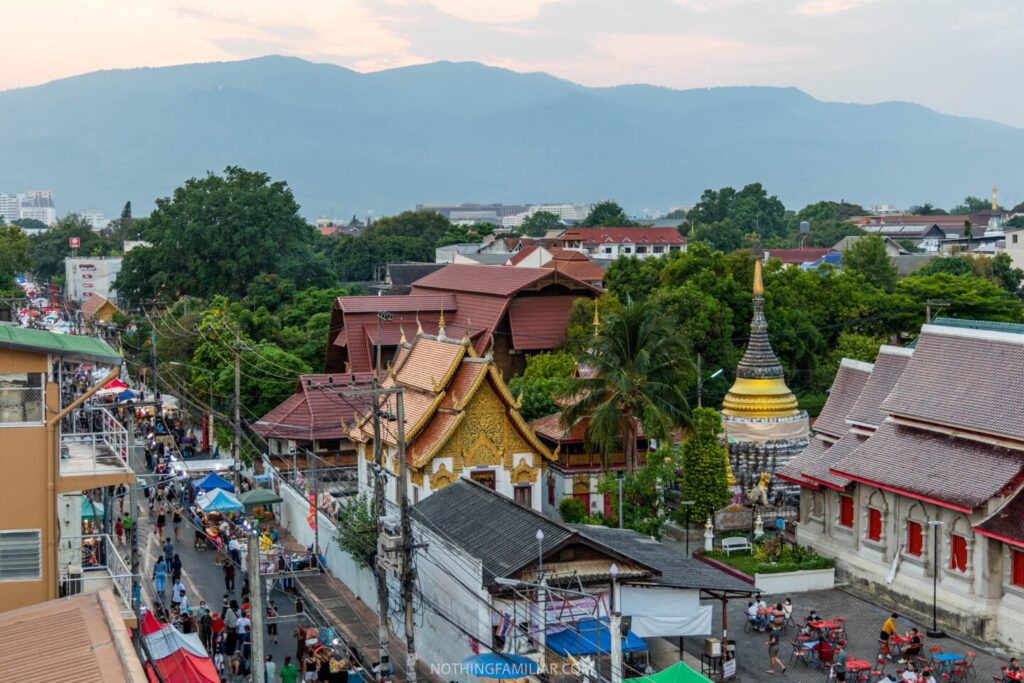
Chiang Mai’s historic centre is the square inside the moat and wall line, and it’s small enough to understand in one loop. Each side of the moat is about 1.6 km, so the whole perimeter comes out around 6.4 km if you walk it. The practical benefit is ease of navigation. The moat, the gates, and the big temples give you landmarks you can actually remember.
The Old City works best when you treat it like a walking neighbourhood, not a “take transport everywhere” base. Rachadamnoen Road is the central spine, and on Sundays it becomes the Walking Street market for about 1 km, typically running 5:00 pm to 10:30 pm. That market footprint tells you a lot about the area. Streets are compact, traffic is slower, and most of what visitors want to do on day one sits inside a tight grid.
The tradeoff is crowding in the obvious lanes, especially around the most photographed temples and market routes. The payoff is density. You can string together temples, cafés, massages, and casual dinners without planning a route. The Old City is also the easiest place to “see Chiang Mai” quickly, because the most recognisable sights sit inside that 1.6 km by 1.6 km box.
The Inside House
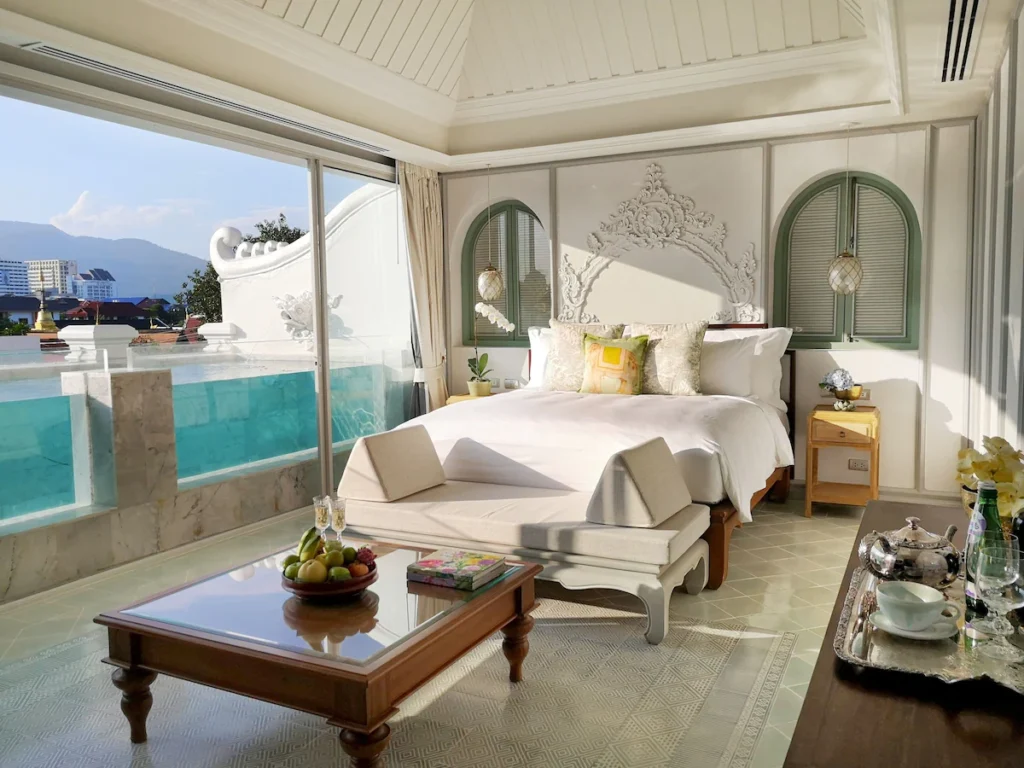
A boutique Old Town stay that feels deliberately quiet the moment you walk in. The design leans heavily on white and calming elements, with a courtyard setup that keeps noise off the rooms, and the whole place is built around first-night mechanics. easy check-in, easy sleep, and a property layout that does not make you hunt for what you need.
If you ask me, this is the Old Town’s best hotel. Wat Phra Singh is a 7-minute walk, and Chiang Mai University is a 12-minute walk, so you get big, legible anchors without needing transport planning on day one.
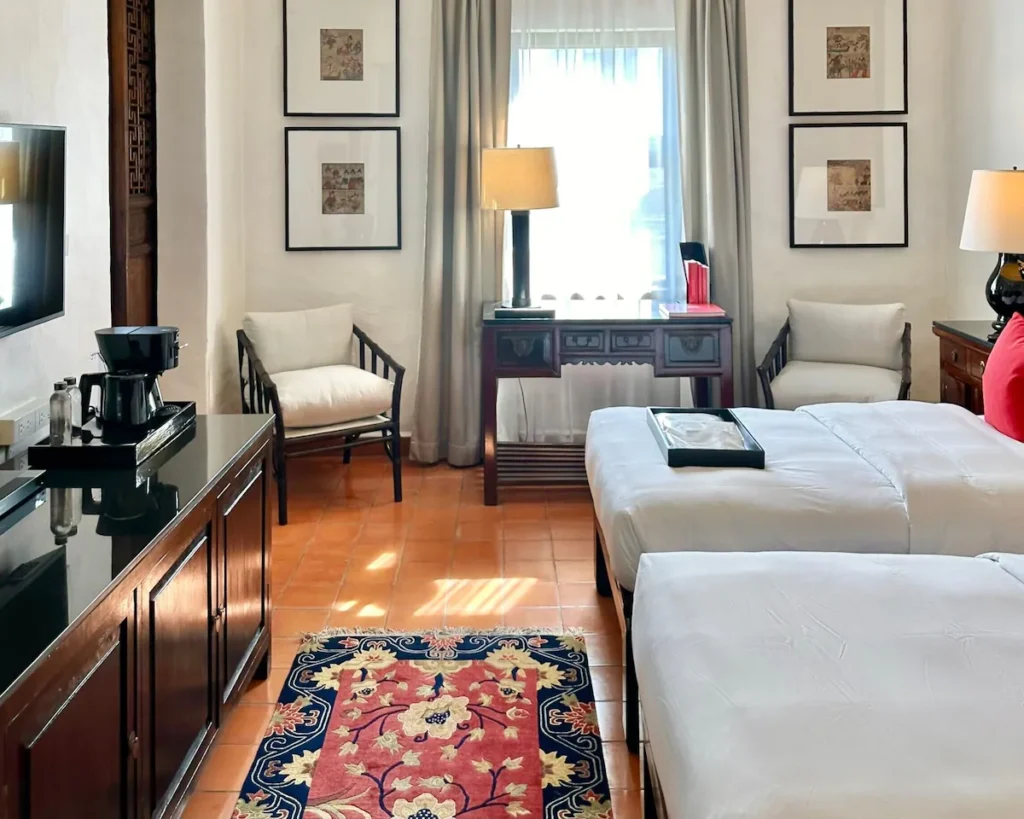
Rachamankha
A low-rise, inward-facing courtyard hotel that earns its reputation with restraint. You get a tucked-away pool, shaded walkways, and a sense of separation from the street that matters when you arrive tired and your patience is thin. It is the kind of place where the public spaces are part of the stay, not a hallway you rush through.
I think this part of the Old City stays calm because it sits off the main flow. Wat Phra Singh is a 5-minute walk, and Tha Phae Gate is a 10-minute walk, so you can do the temple grid by foot and still pop east for markets and riverfront without a taxi plan.
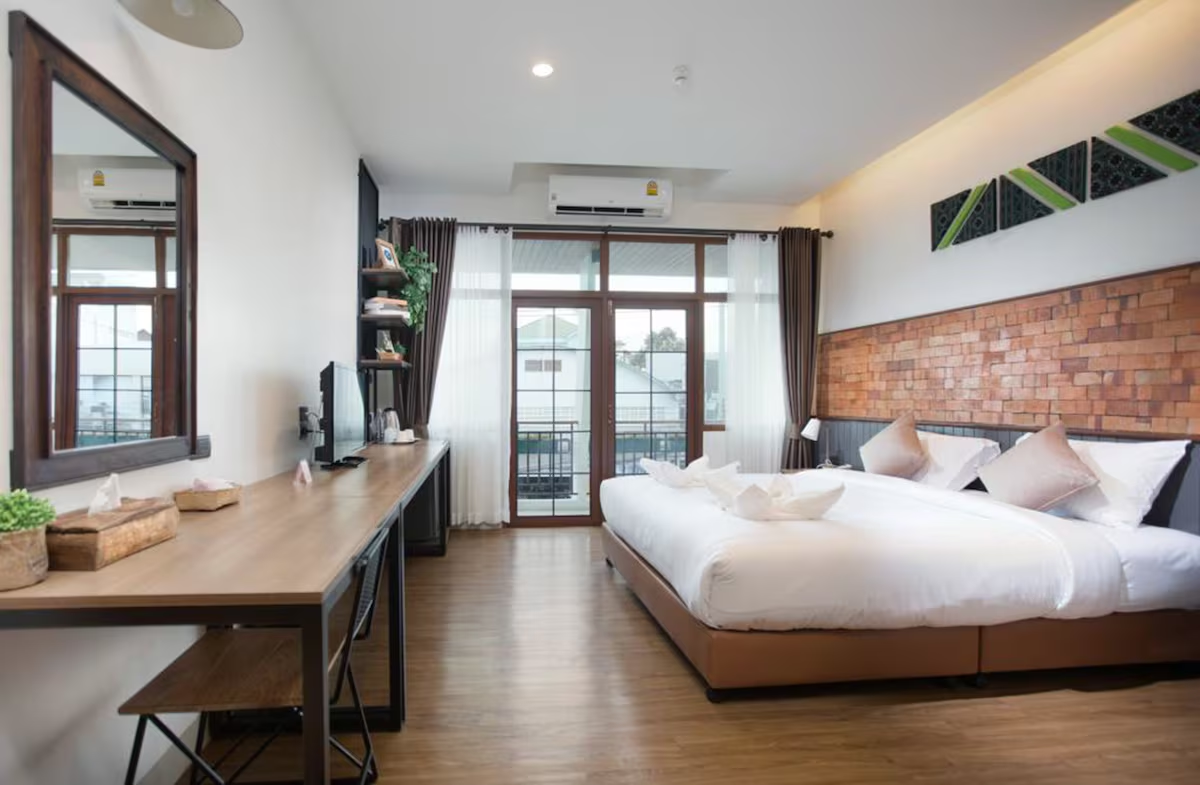
The Old City Rooms
A compact, apartment-style stay that keeps things simple. Rooms come with air-conditioning, an en-suite bathroom, and a proper desk , plus a small terrace and courtyard feel that makes it quieter than you’d expect for such a central address. The surprise is the wellness angle. You get access to a sauna and steam-style bath facilities, with a jacuzzi-style soak listed on major platforms, which turns “first night recovery” into an actual feature.
If you ask me, this is the Old City at its easiest. Three Kings Monument is a 5-minute walk, Wat Phra Singh is about 4 minutes on foot, and Chedi Luang is roughly 5 minutes away, so you can navigate day one by landmarks instead of phone signal. Chiang Mai International Airport is typically a 15-minute car ride depending on traffic, which keeps the first transfer short even after a late landing.
Nimman, Chiang Mai’s modern heartbeat
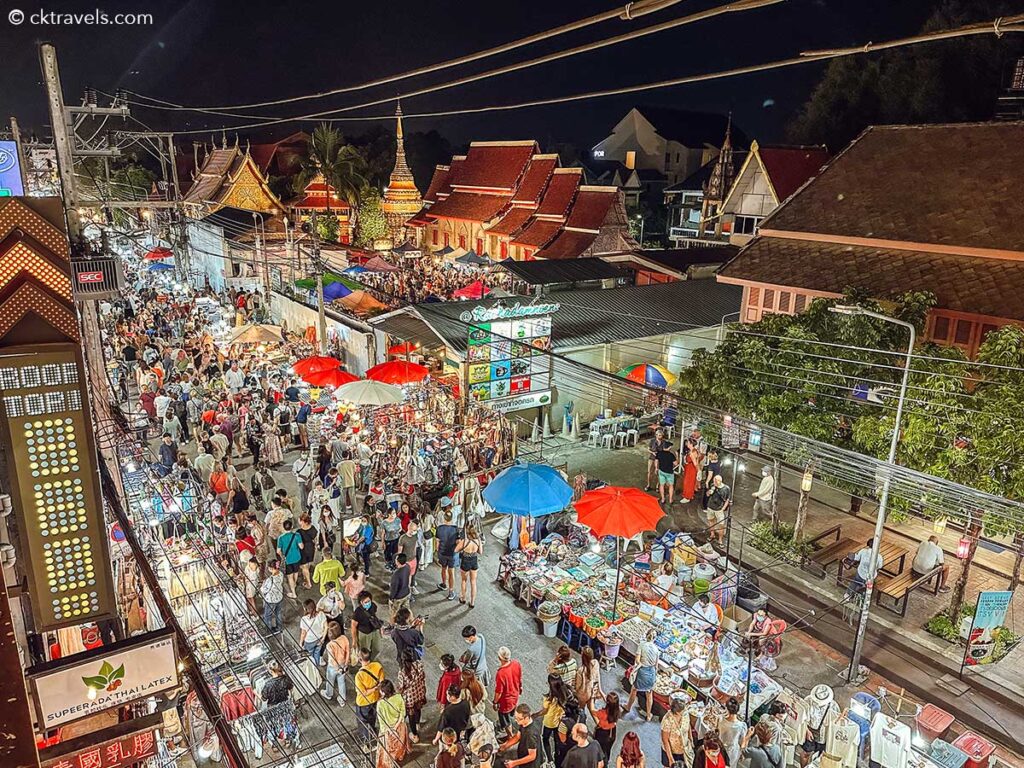
Nimman is Chiang Mai’s modern, café-heavy zone, and it’s built around a few big anchors that make it easy to orient yourself. MAYA Lifestyle Shopping Center sits at the corner of Nimman and Huay Kaew Road, and it’s a true all-in-one errand stop with multiple floors of shops, restaurants, and entertainment. Nearby, One Nimman is positioned by that same Maya corner, so the area has two “you can’t miss it” landmarks within the same few blocks.
This side of town tends to feel newer, more legible, and less compressed than the Old City alleys. Streets are wider, sidewalks are usually more usable, and the late-day crowd is more about dining and cafés than tour groups funneling between temples. Chiang Mai University’s edge adds to the rhythm. You get a steady flow of students, bookshops, and low-key bars, plus the kind of daytime energy that makes the area feel lived-in.
Nimman makes sense when you want modern convenience without committing to big-hotel corridors. It’s also a straightforward base for people who like to start their mornings with coffee, then work outward to temples or day trips. The area’s strengths are practical. predictable streets, big malls for basics, and food density that does not require research to eat well on the first try.
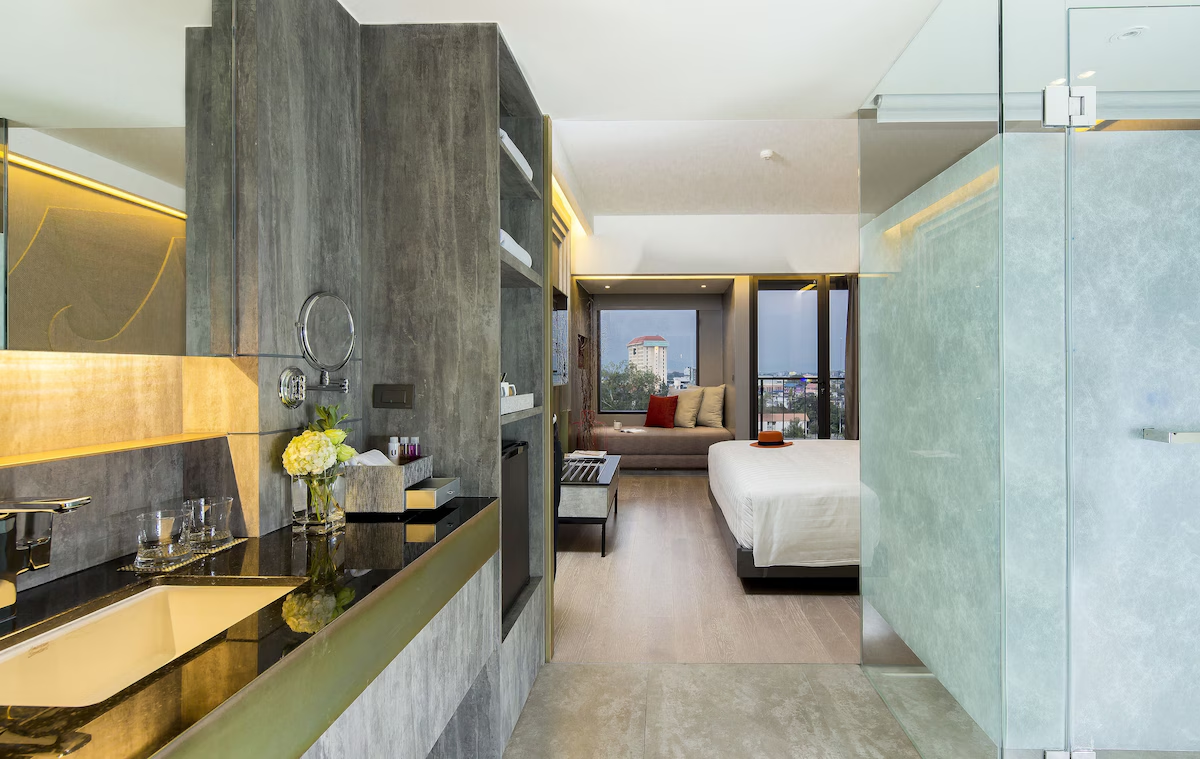
U Nimman Chiang Mai
U Nimman is a big, polished city hotel that feels like an anchor for the whole neighborhood. You get a rooftop pool, a full gym, and multiple on-site dining options, plus rooms that keep things quiet and orderly even when Nimman gets lively outside. The look is modern and slightly grand, with public spaces that feel intentional and put-together, not like a hallway you rush through.
For me, this is the easiest part of Nimman to navigate without thinking. One Nimman is connected to the hotel, and MAYA is a 9-minute walk, so food, pharmacies, coffee, and mall errands all sit in one simple grid. The streets here are built around those anchors, so it stays legible at street level, with minimal reliance on taxis for everyday needs.
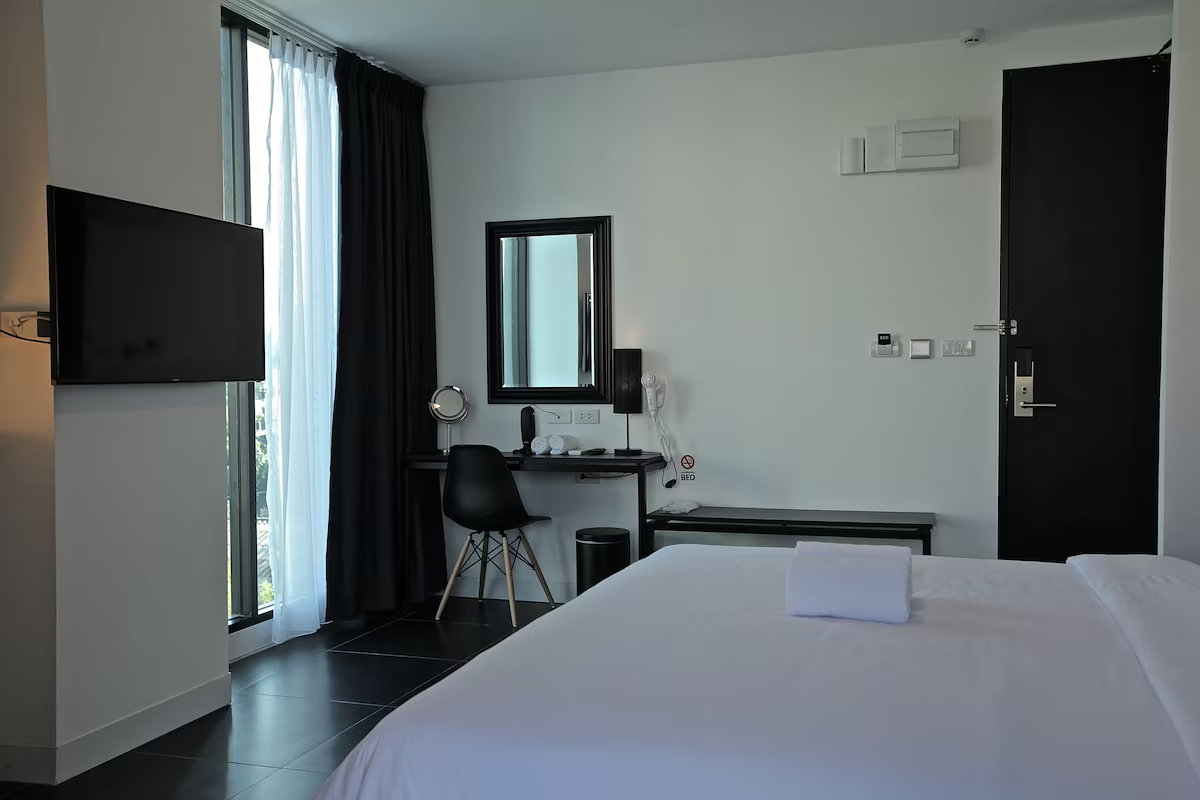
BED Nimman
BED Nimman keeps the concept tight. Adults-only, clean lines, and a service model that prioritizes speed and simplicity. Rooms stay bright and uncluttered, and the whole setup is designed around sleep quality and low noise, not decorative theatrics. The common areas are useful without turning into a party scene, which matters in a neighborhood that can run late.
I’d call this Nimman at its most walkable. One Nimman is a 3-minute walk, and MAYA is a 6-minute walk, so the area’s best dining density and shopping basics are covered on foot. You are also close enough to the Huay Kaew corridor that grabbing a ride to the Old City or the river side stays quick and predictable.
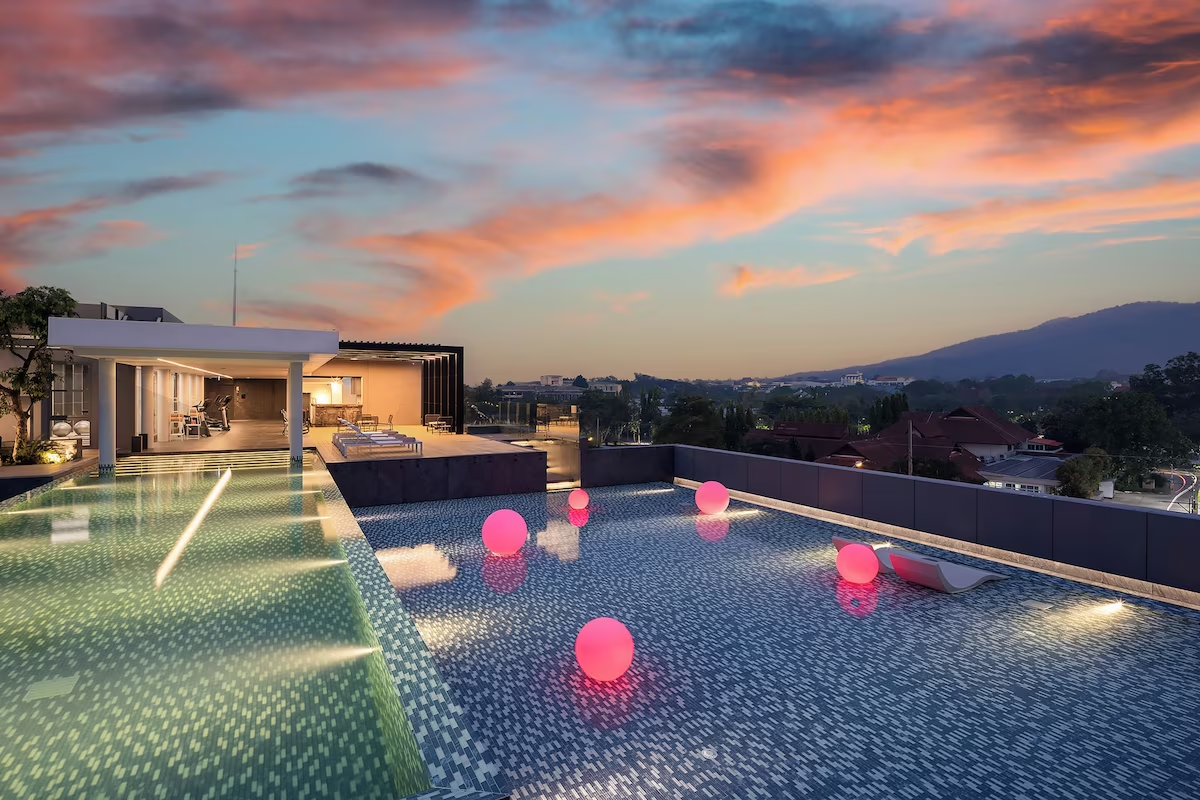
Travelodge Nimman
A clean, modern hotel that keeps the pitch simple. predictable rooms, straightforward layouts, and the kind of finish that prioritises sleep over decoration. It is a good choice when you want a private room and a normal hotel routine on a budget..
For me, the advantage is how quickly you can plug into the city’s easiest strip. MAYA Lifestyle Shopping Center is a 10-minute walk, and Chiang Mai Zoo is a 10-minute drive, which gives you a walkable first-night zone plus an easy day-two move if you want greenery and space.
Night Bazaar and Chang Khlan, The city’s tourist spine
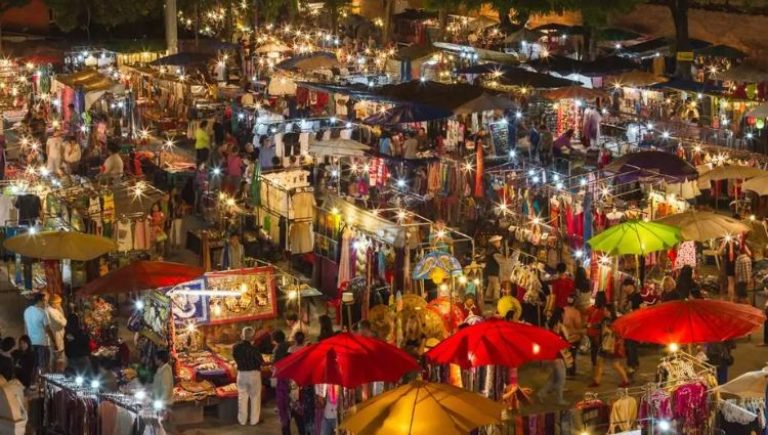
This corridor is Chiang Mai’s classic visitor infrastructure zone, and it’s built around the Night Bazaar on Chang Khlan Road. The bazaar area is commonly described as east of the Old City walls, with the main cluster stretching around the Chang Khlan Road and Loi Khro Road intersection. It runs daily from about 5 pm to midnight, so it worth checking even when you’re not trying to “do a big night out.”
The feel here is more “hotel belt” than “old town charm,” and that’s the point. Streets are busier, lobbies are larger, and the area is designed to handle constant check-ins and tour pickups. If you like structure, this part of the city behaves predictably. You can land, drop your bags, and find food without learning the city.
It’s also a strong choice when you want the Old City close, but not literally outside your door. Many hotels and listings frame the bazaar area as being near Tha Phae Gate, which tracks with how travellers tend to move between the east gate and the market corridor. The upside is convenience and services. The downside is that the streets can feel more commercial, with less of the quiet lane atmosphere you get near the river or deeper inside the moat.
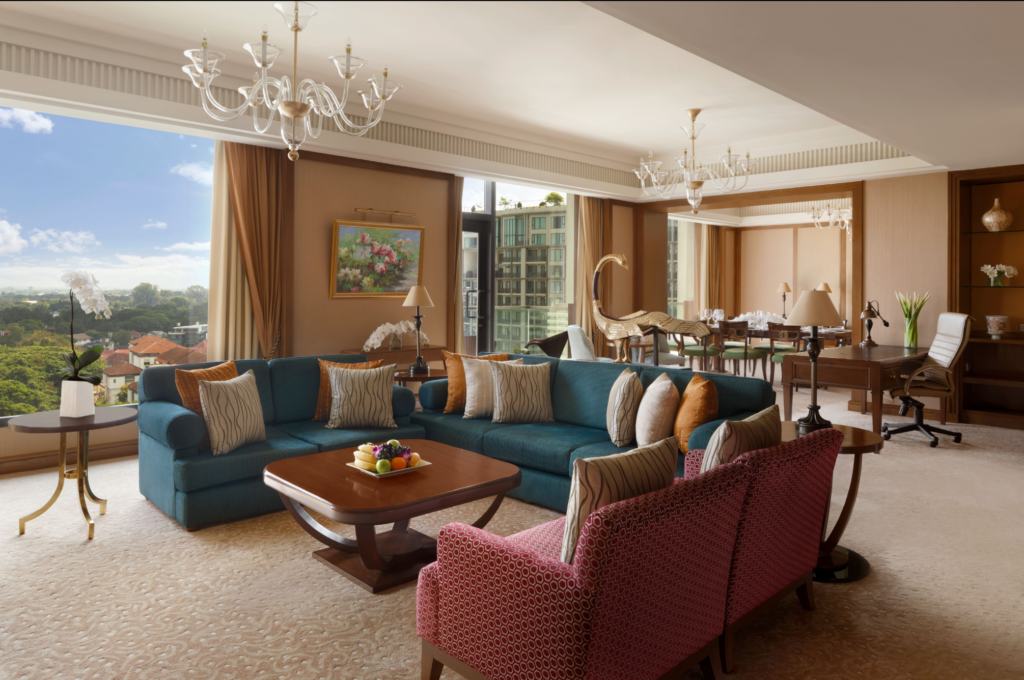
Shangri-La Chiang Mai
Shangri-La is Chiang Mai’s full-scale resort-style city hotel. Big pool complex, proper gym, and a real on-site dining lineup that lets you keep meals simple without hunting. The rooms are contemporary and calm, and the overall feel is deliberately buffered, with enough space and structure that the property never feels cramped, even when the neighborhood is busy.
Chang Khlan is the city’s most straightforward hotel corridor. The Night Bazaar is a 13-minute walk, and Warorot Market is a 7-minute drive, so evening browsing is easy on foot while daytime shopping stays a short ride away. Expect wider streets and more commercial energy than the Old City, with most daily friction removed by the infrastructure.
Chiang Mai Marriott Hotel
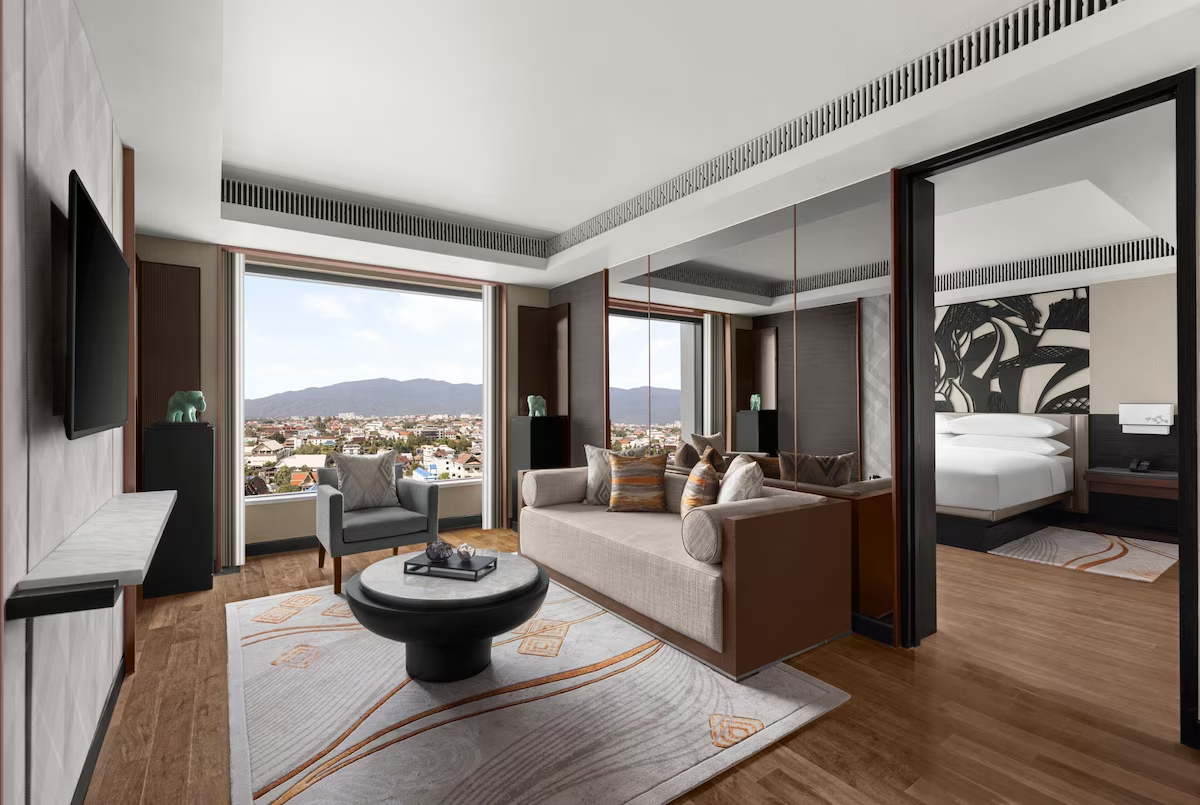
Chiang Mai Marriott is the modern high-rise choice here. Clean, contemporary rooms, a big-hotel service, and facilities that feel complete, including a pool and a full gym. It suits travelers who want a polished, predictable stay with enough on-site options that you can keep things contained when you feel like it, and step out only when you want the city.
The location is the big seller here. The Night Bazaar is a 4-minute walk, and Tha Phae Gate is a 15-minute walk, so you can move between the market belt and the Old City without turning it into a transport project. Street life is active, but the walking routes are simple and direct.
Hotel Montha
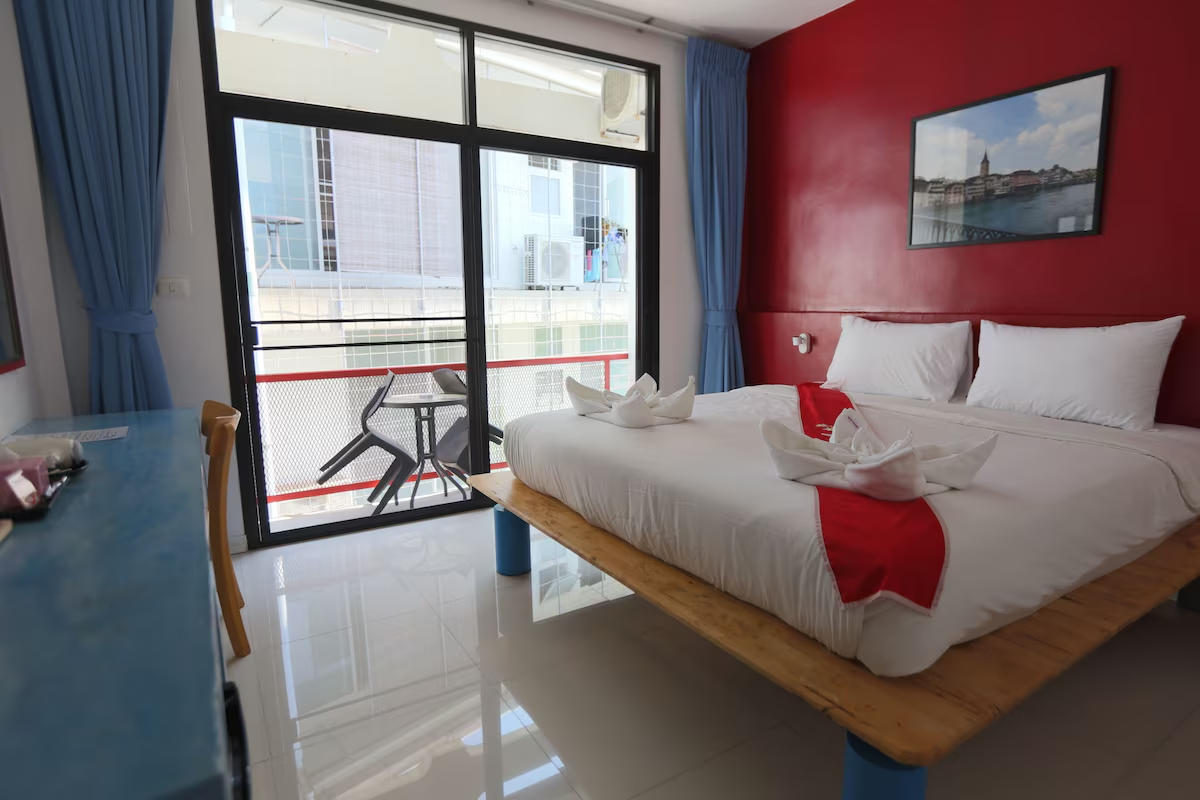
A small hotel that focuses on the basics travellers actually use. clean rooms, a calm feel, and a scale that avoids the “conference hotel” vibe. It suits people who want a private room and a quiet reset without paying for facilities they will not touch.
In my experience, this is one of the gentlest corners of the bazaar zone. Chiang Mai Night Bazaar is a 6-minute walk, and Tha Phae Gate is a 17-minute walk, so you can eat and browse on foot, then walk into the Old City without committing to transport.
Riverside and Wat Ket, Chiang Mai’s slow side
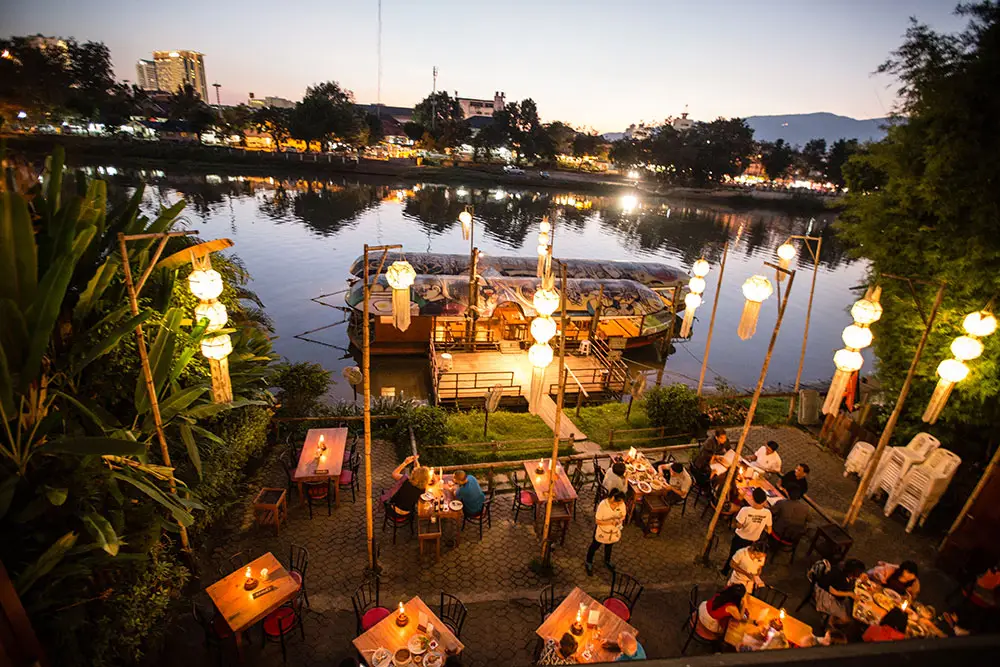
Wat Ket sits on the east side of the Ping River, and it’s one of Chiang Mai’s most distinct pockets because the river changes how the city feels. The area has a long history as a landing point and trading zone, which is why you’ll see a mix of communities and architectural influences layered into the neighborhood. It feels more like an older river town than a tourist center, even though it’s close to the centre.
The riverside experience is slower by design. The streets don’t force you into constant browsing, and the river edge gives you a natural “walk for air” option that the Old City simply can’t. Lonely Planet frames Wat Ket as a place to wander the banks and dip into shops and restaurants along the Ping, which is a good description of the day-to-day feel.
This is a smart area for travellers who care more about sleep quality and pace than being in the middle of the temple circuit. You’ll still be within easy reach of the centre, but evenings can feel calmer because the neighborhood isn’t built around markets and tour vans. It’s also one of the better parts of town for boutique properties that feel specific to Chiang Mai, not a generic city hotel dropped onto a busy road.
Anantara Chiang Mai Resort
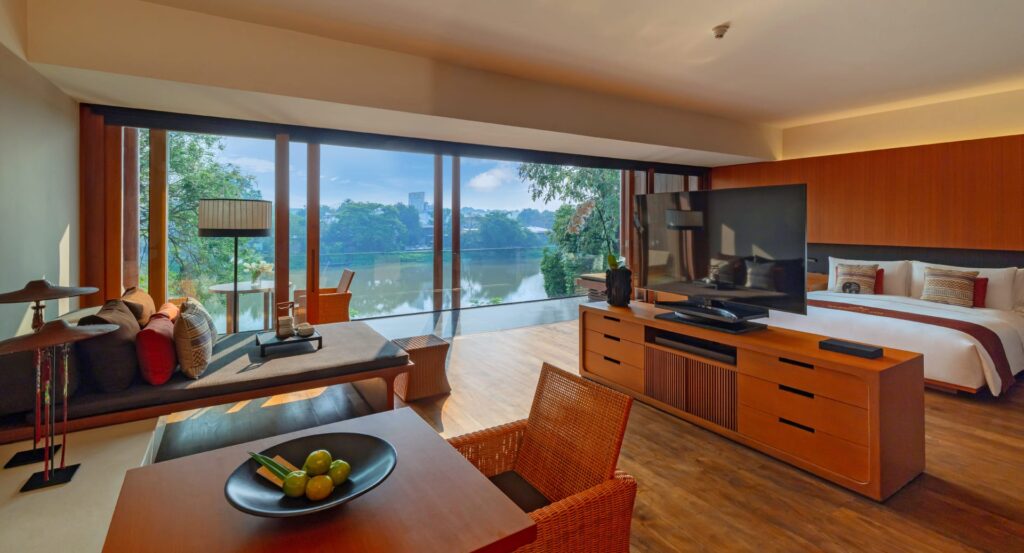
A riverfront hotel with real heritage bones and a high-end finish. The property is known for its 1920s-era house and a sense of place that feels specific to Chiang Mai, not interchangeable luxury. It is the kind of stay where you can arrive, eat well on-site, and not leave the property until you feel like it.
If you ask me, this river stretch fixes Chiang Mai’s noise problem. Chiang Mai Night Bazaar is a 4-minute walk, and Warorot Market is an 8-minute walk, so you get calm by the water without losing the city’s most useful shopping and food zones.
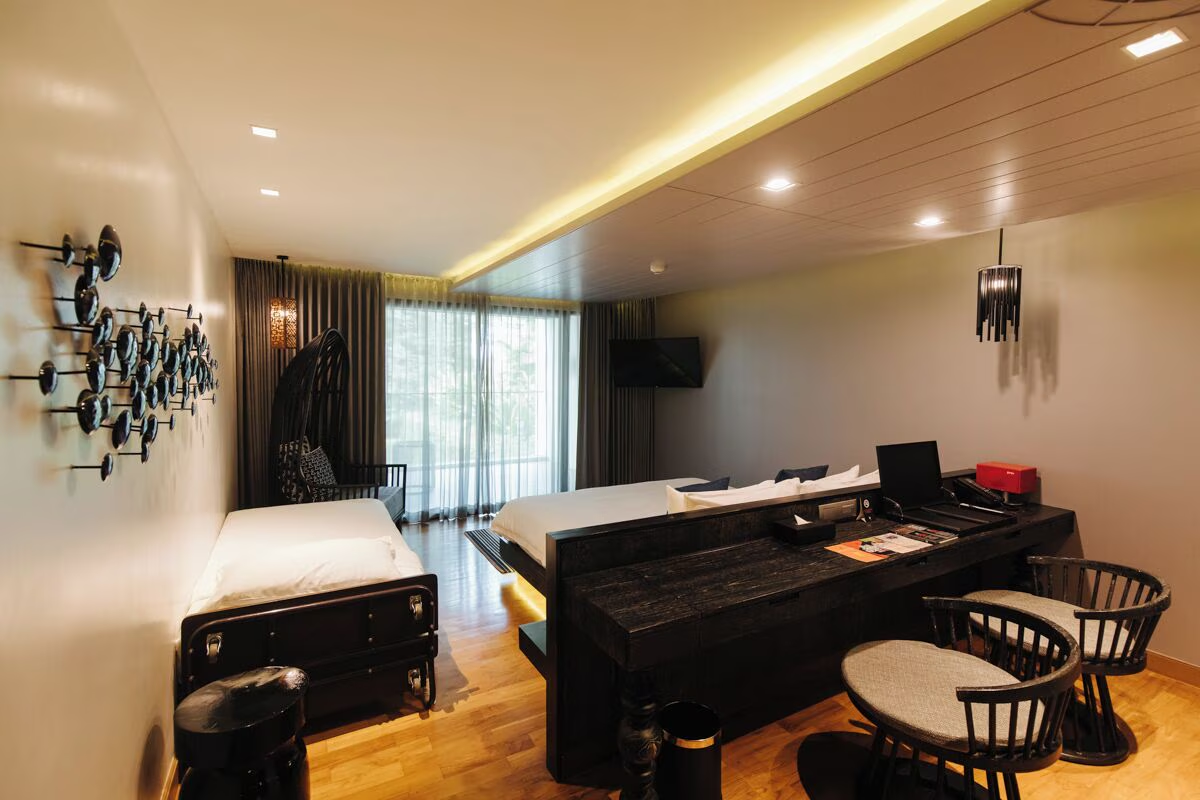
Cross Chiang Mai Riverside
Cross Chiang Mai Riverside is design-forward and deliberately controlled, the kind of hotel that treats space and quiet as the main luxury. Rooms and public areas feel modern and curated, with a layout that keeps the property insulated from street energy. You get a pool and a gym, and the overall mood is more boutique and architectural than “big city hotel.”
The location works because the city stays close without crowding you. The Night Bazaar is a 4-minute drive, and the railway station is a 6-minute drive, so day trips and transit connections stay easy. Evenings feel calmer than the market belt, with the river doing most of the heavy lifting.
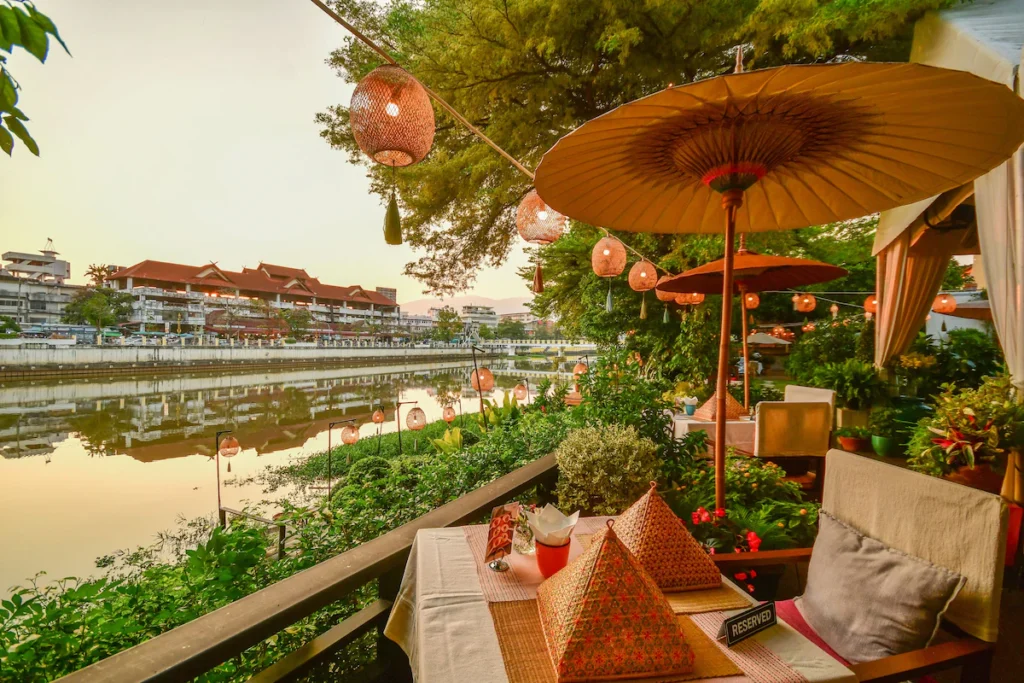
Sala Lanna Chiang Mai
A smaller boutique hotel on the river, with a rooftop angle that makes the setting part of the stay. It is not trying to compete with the mega-resorts. It focuses on location, a tighter footprint, and the kind of atmosphere that suits travellers who want Chiang Mai to feel gentle from the start.
In my opinion, this is the river area at its most walkable. Warorot Market is a 12-minute walk, and Tha Phae Gate is a 14-minute walk, so you can do daytime shopping and Old City exploring without relying on rides every time.
Wua Lai and South Gate, north Thailand’s cuisine “main event”
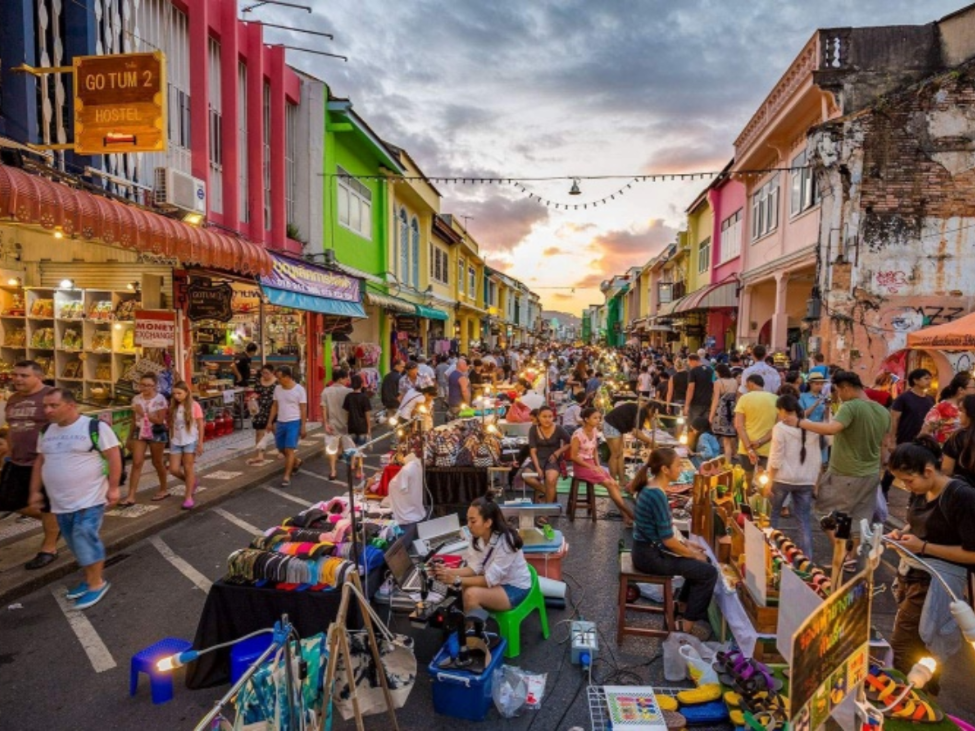
Wua Lai runs just outside the south edge of the Old City near Chiang Mai Gate, and it’s best known for its Saturday night Walking Street market from around 5:00 pm to 10:30 pm, and the street is commonly closed to traffic during that window.
Outside the market hours, the neighborhood still works because it sits right on the edge of the moat. You can walk into the Old City quickly, but you’re not stuck in the densest tourist lanes. Streets around the gate have a very practical mix. pharmacies, cafés, and casual restaurants that make day one easy without feeling like you’re trapped in a mall zone.
Wua Lai is also one of the better areas for travellers who care about street food as part of the trip, not an occasional snack. The Saturday market is the headline, but the south gate side has enough everyday dining that you can keep meals simple without planning. It’s a good “evening first” neighborhood, especially if you want your nights to be active and your days to stay walkable.
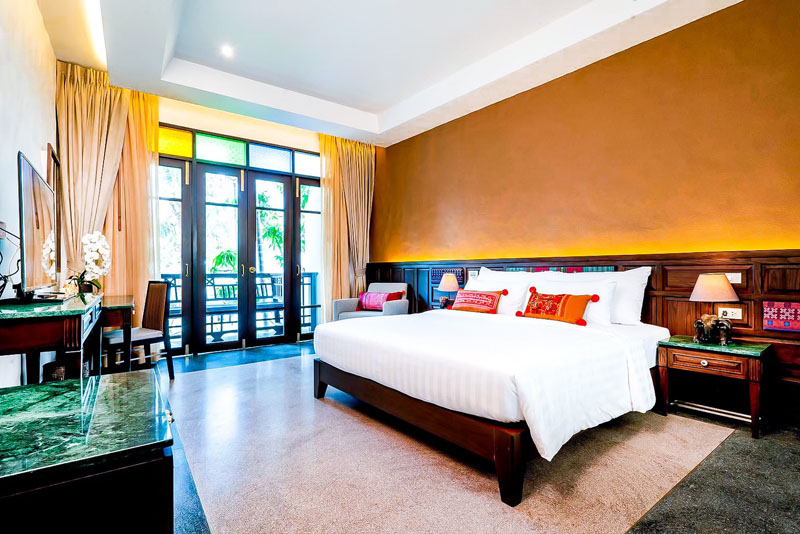
Smile Lanna Hotel
Smile Lanna feels like a small retreat inside the city, with a controlled, resort-like calm that’s rare this close to the moat. A large pool, greenery around the property, and rooms that are designed for quiet sleep, contemporary décor. It’s the kind of place where the hotel itself does some of the work, so you don’t need to manufacture downtime.
This place makes city life feel easy. Saturday Walking Street Night Market is an 11-minute walk, and Chiang Mai University is a 14-minute walk, so food and major anchors sit inside one simple radius. The hotel sits off the loudest traffic lines, so the area feels calmer than the market suggests once you step a block away.
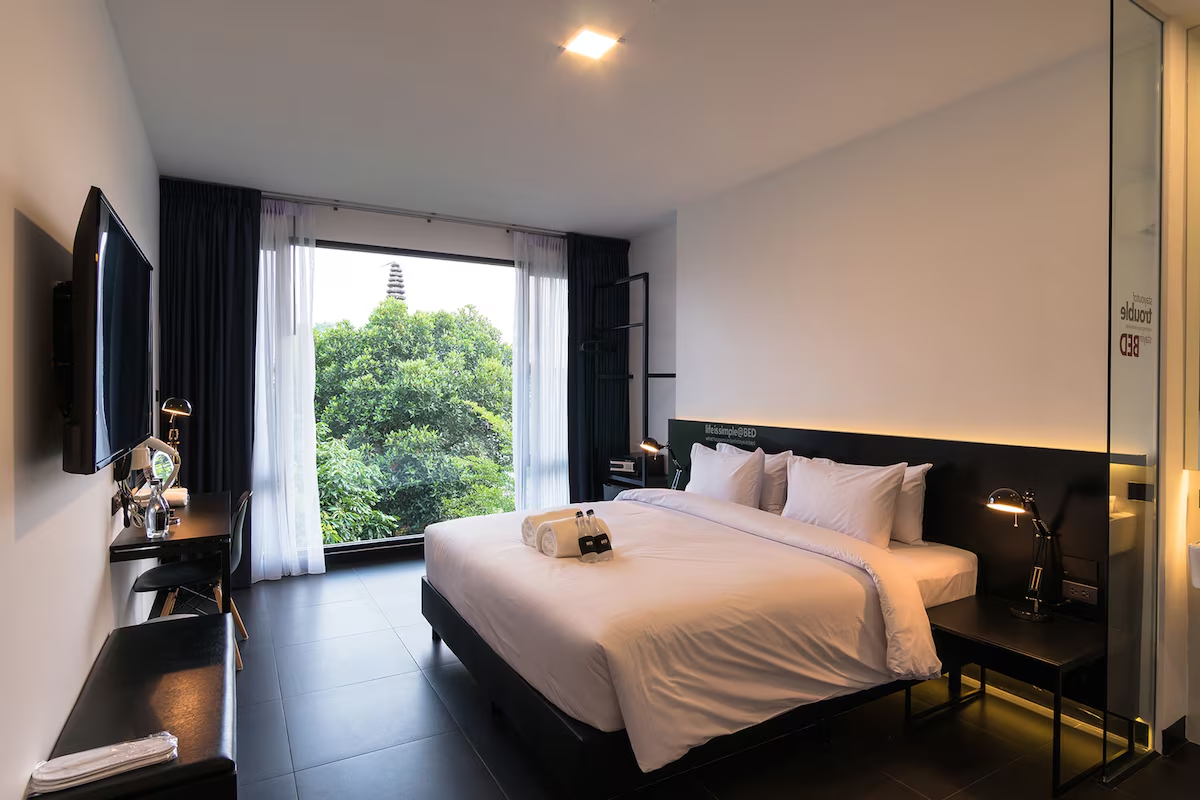
BED Chiangmai Gate
BED Chiangmai Gate is adults-only and engineered for simplicity. Clean design, fast routines, and rooms that keep things quiet even when the surrounding streets are busy. It’s a compact property that does the basics properly. good air-conditioning, efficient layouts, and a service style that stays crisp and unobtrusive.
The hotel is greatly located on the south side of Chiang Mai. Tha Phae Gate is a 15-minute walk, and the Night Bazaar is a 19-minute walk, so you can stitch together the Old City, the east gate corridor, and the markets on foot. The roads here are also easier for ride pickups than deep inside the moat.
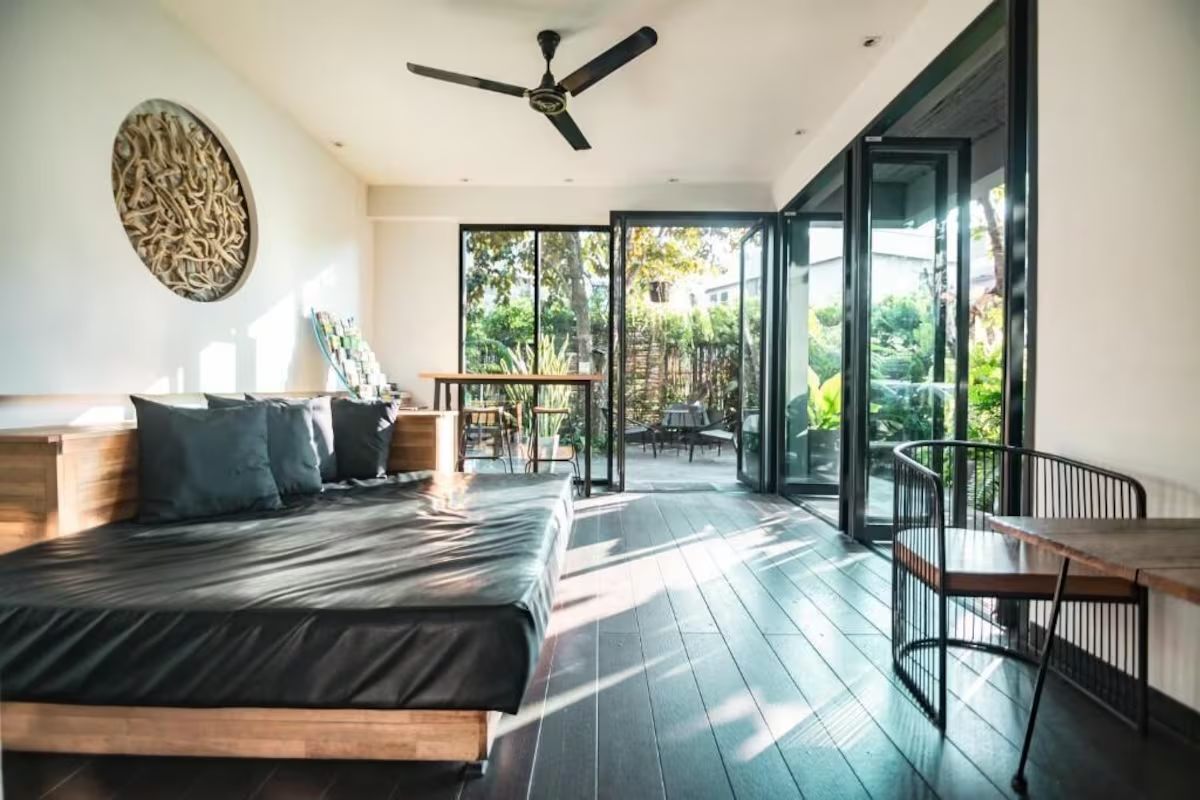
iWualai Hotel
A smaller hotel on Wualai Road that keeps things straightforward and sleep-friendly. It is a good choice when you want a private room, a proper hotel feel, and the ability to step into Chiang Mai’s best Saturday-night food zone without crossing the city or breaking the bank.
In my experience, Wua Lai is the most rewarding first-night street in town. Saturday Walking Street Night Market is a 2-minute walk, and Chiang Mai Gate is a 5-minute walk, so the whole evening is handled on foot, with the Old City sitting right there when you are ready.
Near the airport and Mae Hia, fast, convenient, ready for day trips
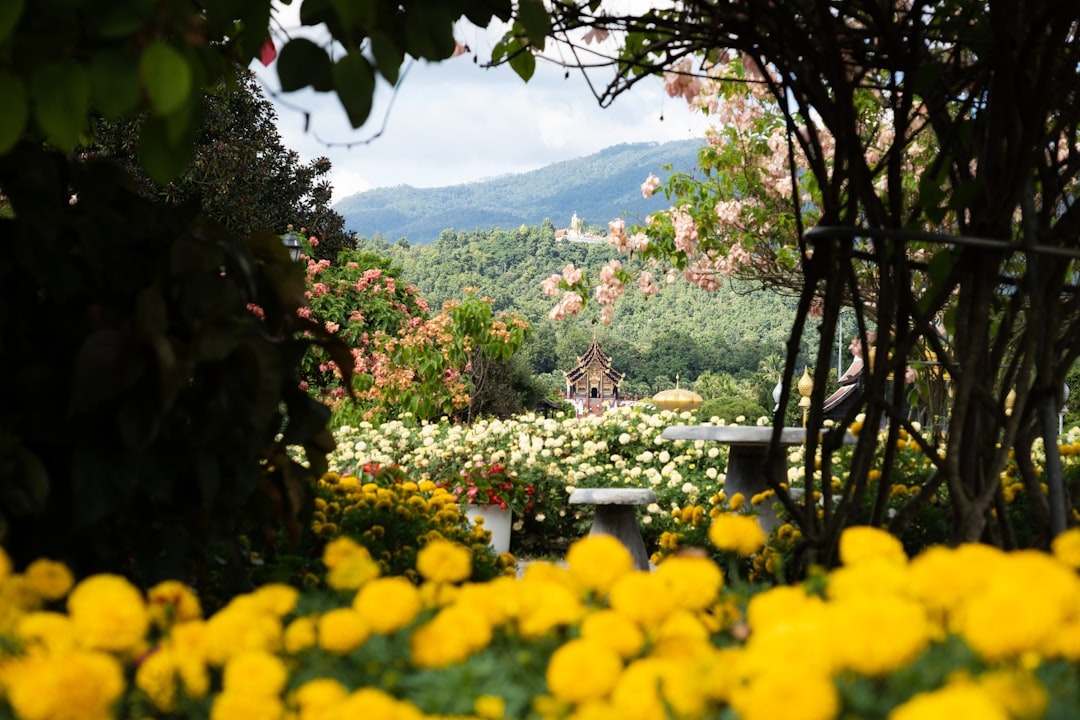
Near the airpot is the practical side of Chiang Mai. Chiang Mai International Airport sits about 3KM (2 miles) southwest of central Chiang Mai, which makes transfers much shorter and more convenient than other big-city airports.
The streets here are broader and more car-oriented than inside the moat, and many properties are designed around quick access rather than scenic walks. That can be exactly what you want if you have an early flight, a late arrival, or a short stay that’s more about logistics than atmosphere. It’s also a sensible base if you plan to do day trips by car and don’t want to cut across the city every time you leave.
As a visitor neighborhood, it’s less romantic, but it can be smart. You can spend more time actually doing the things you came for, and less time dealing with transfers. The area’s biggest selling point is that it reduces friction, and it does it with real infrastructure, not just good intentions.
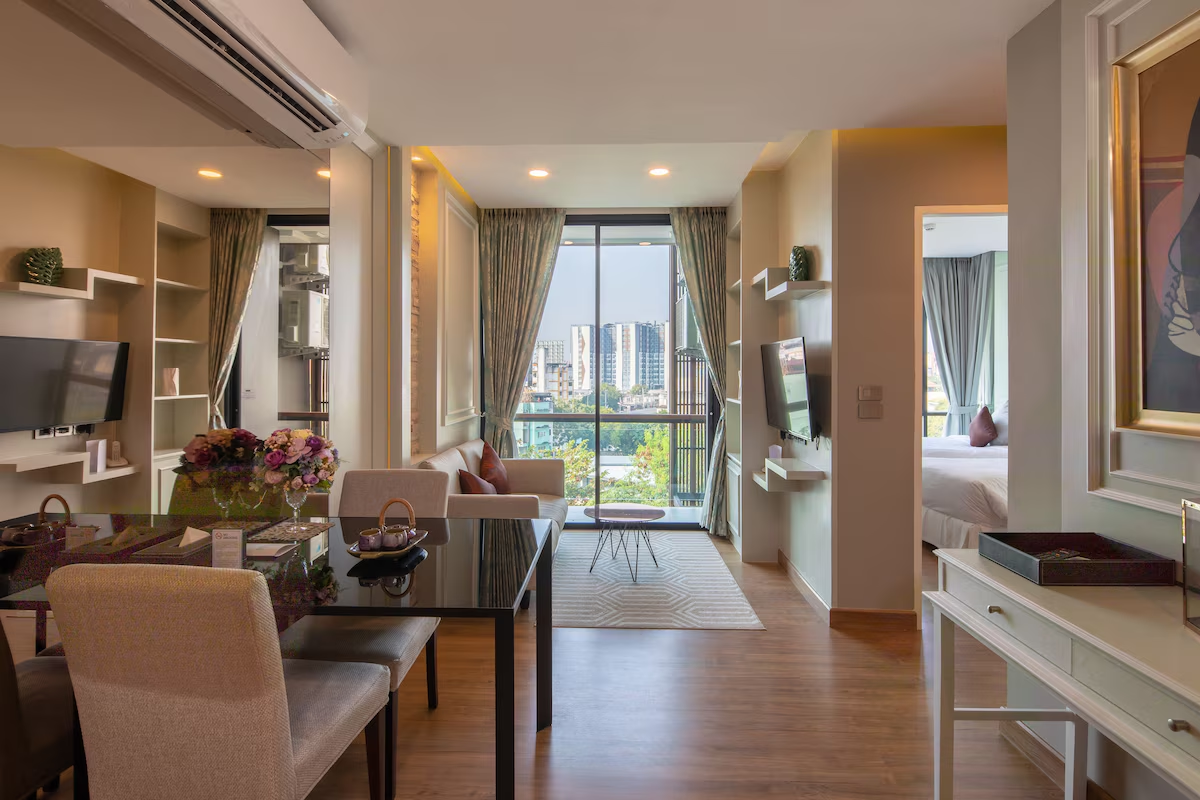
Parc Borough City Resort
Parc Borough is an all-suite property with an “apartment comfort” feel. Every suite comes with a separate living room and a full kitchen, so the setup is built for people who like space and self-contained routines. There’s an outdoor pool, a spa, and a full gym, plus deep soaking tubs that make the suites feel closer to serviced residences than standard hotel rooms.
If you ask me, this is one of Chiang Mai’s most convenient corner for errands. The airport is a 5-minute drive, and Central Chiang Mai Airport mall is a 5-minute walk, so groceries, pharmacies, cafés, and basics are handled quickly. The streets are broader and more car-friendly than the moat area, which keeps ride pickups painless.
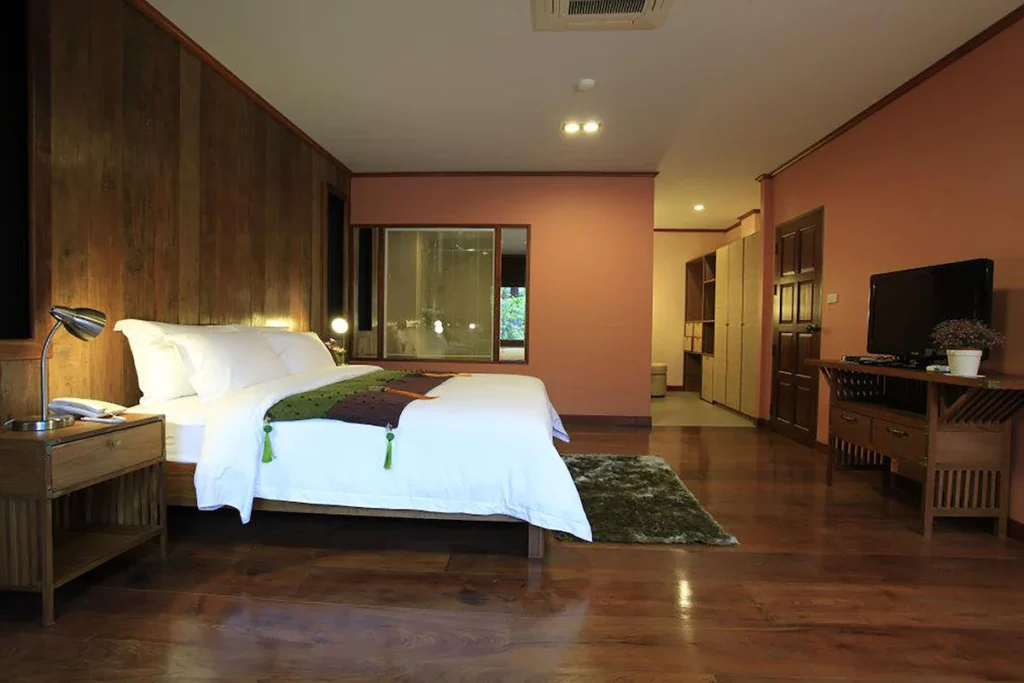
VC@Suanpaak Hotel and Serviced Apartments
A serviced-apartment style stay that’s built for travellers who like space and calm. Kitchens and living areas matter on longer stays, but even on night one, the big advantage is how easy the whole setup feels. fewer hotel theatrics, more room to breathe.
For me, this is as friction-free as Chiang Mai gets. Chiang Mai Airport is a 10-minute walk, and Central Chiang Mai Airport shopping mall is a 2-minute walk, so flights, SIM cards, and basic errands are solved without rides or planning.
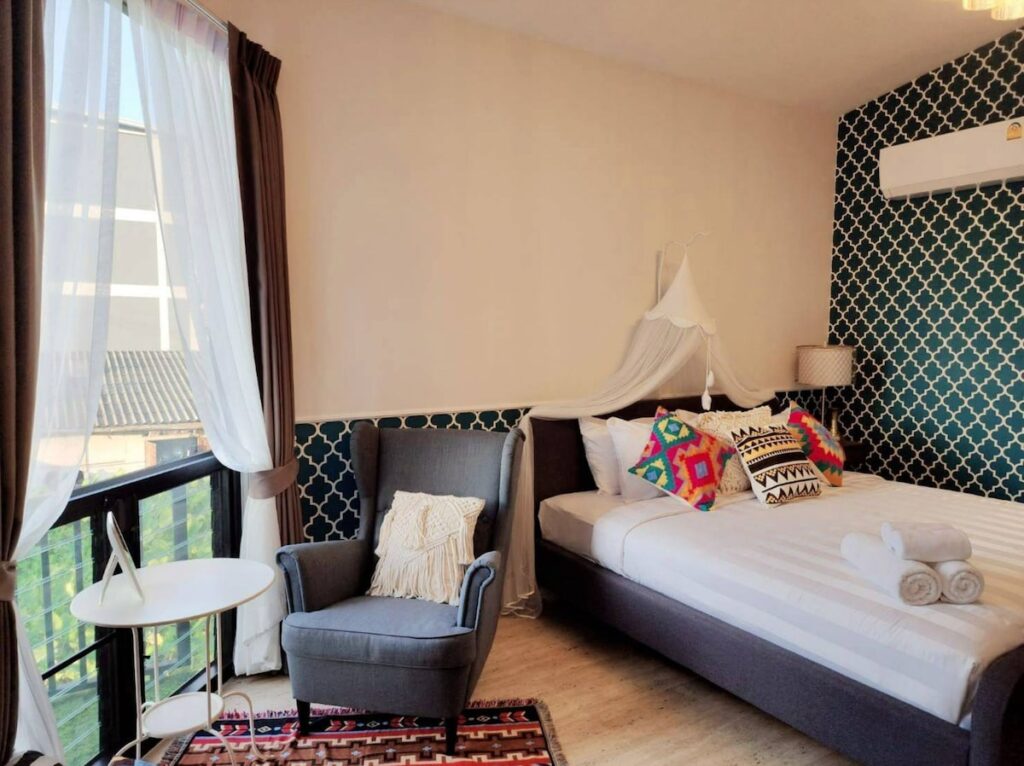
Capital O 75422 Million Pillows
A small, simple hotel that focuses on privacy and clean basics. It is a good pick when you care about sleep and a private bathroom, and you want the airport side of town to feel calm, not industrial.
In my opinion, this area is Chiang Mai’s most forgiving for late arrivals. Central Chiang Mai Airport shopping mall is a 17-minute walk, and Chiang Mai Airport is a 14-minute drive, so you can handle food and supplies on foot, with an easy ride to departures when it is time.
Mae Sa and Mae Rim, Chiang Mai’s green escape
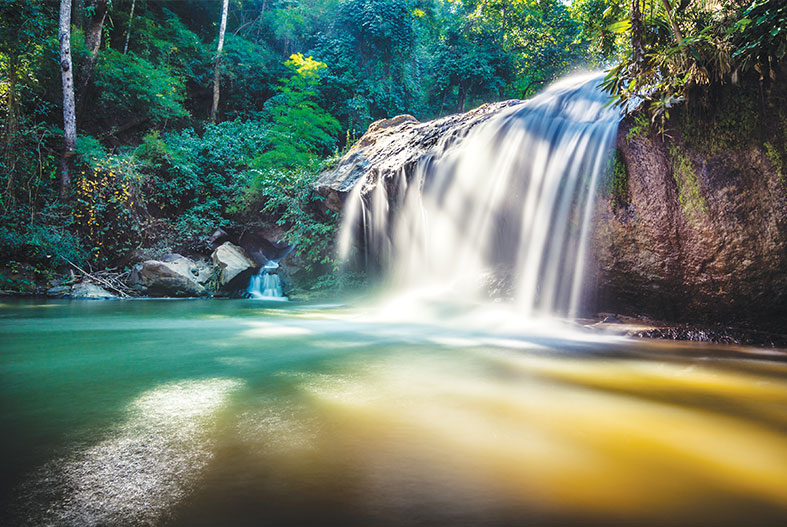
Mae Sa is the closest “green escape” that still feels like Chiang Mai, not a separate trip. Chiang Mai to Mae Sa Waterfall is roughly a 25 minutes drive away. That’s why Mae Sa works for travellers who want mornings in gardens and hills, then an easy return to the city for dinner.
The valley is also tied into one of the region’s most popular self-drive day loops. The Samoeng Loop is around 100 km total and 4 to 5 hours without stops, running through Mae Rim and Mae Sa before bending toward Samoeng. That gives you a concrete sense of what this area is for. nature, viewpoints, slower lunches, and the kind of road time that feels pleasant when you’re not rushing.
Staying out here makes your trip feel different fast. It pushes you toward resort-style days and quieter nights, and it reduces the temptation to pack your schedule with “just one more temple.” The price you pay is dependent on cars or arranged transport for most meals and errands, because you’re no longer in Chiang Mai’s dense walkable grid. The reward is space, air, and a setting that actually looks like northern Thailand.
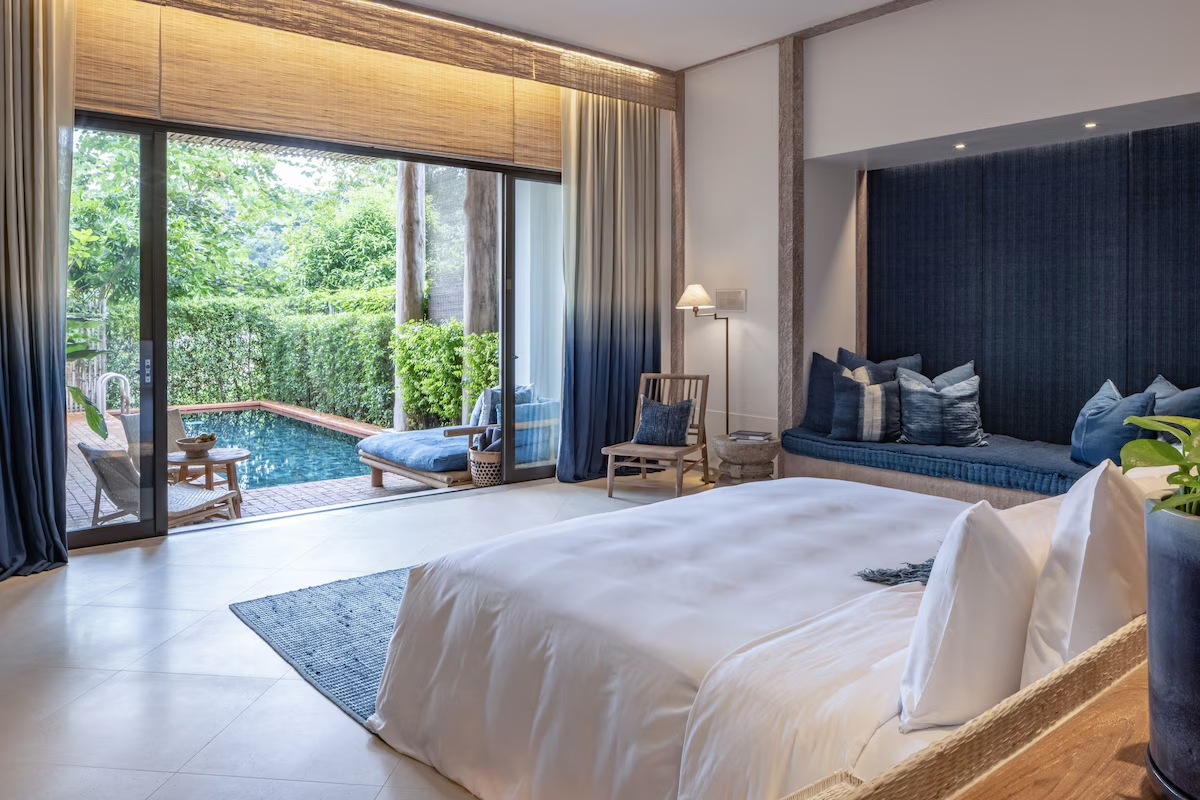
Raya Heritage
A luxurious designer resort on the river, with a controlled, grown-up calm that feels specific to the north. It is not a “big lobby” place. It is a quiet, architectural stay that makes sense when you want Chiang Mai to slow down immediately.
This is the countryside without losing the city completely. Nimman Road is a 10-minute drive, and Mae Ping River is literally 1 minute on foot, so you can dip into café life when you want, then come back to something quieter.
Panviman Chiang Mai Spa Resort
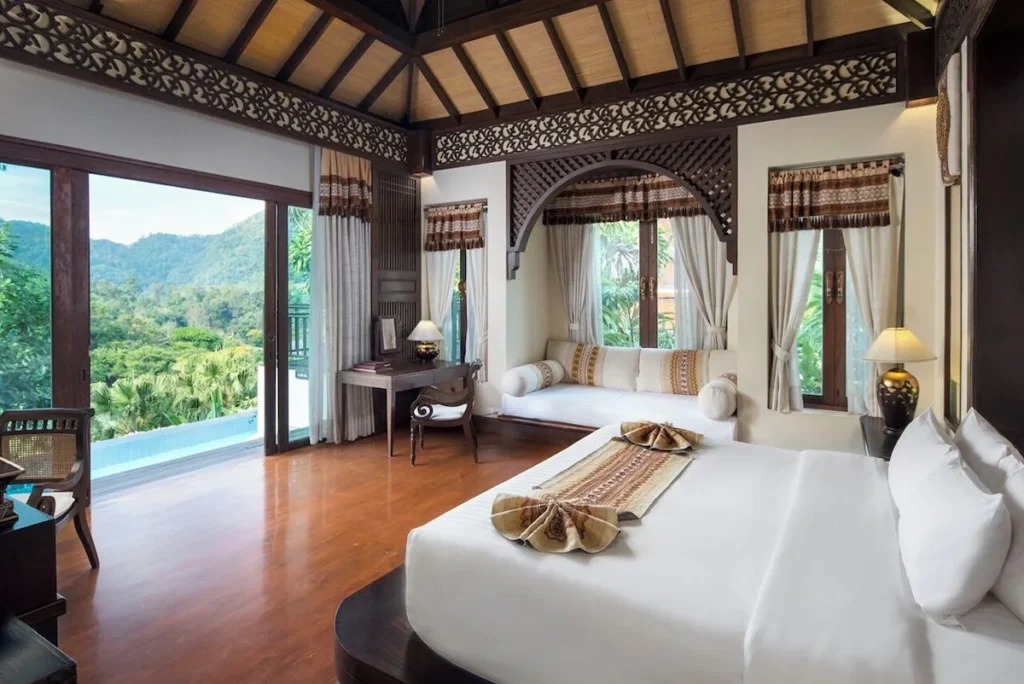
A hillside resort built around views and a “stay on property” philosophy. The draw is the spa-and-pool style setup and the fact that you can treat the first day like recovery without feeling stranded in a tiny hotel room.
In my opinion, this is a better fit when you are committing to the north right away. You should expect ride-hailing for most meals, with the city coming second to the resort routine, and your easiest days being the ones you spend mostly on-site.
Jirung Health Village
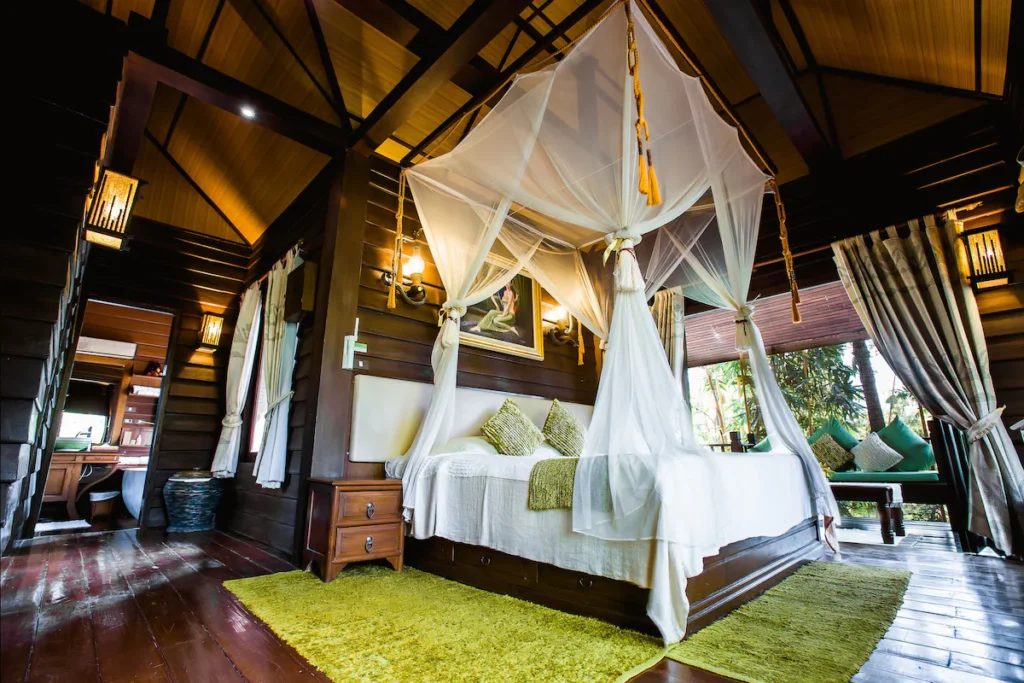
Jirung is a wellness-leaning retreat with space and quiet as the main features. It’s a low-input environment built around greenery and calm routines, with accommodation that’s meant to feel separate from the city’s noise and commerce. Think simple grounds, slower pacing, and a stay that makes sense when you want nature as the default view.
Mae Rim works best when you plan around movement by car. Central Chiang Mai is a 15-minute drive, and the valley’s day-trip loop routes start close by, so the geography supports exploring the north without weaving through the city every time. It’s the opposite of a walk-out-for-dinner neighborhood, and that’s the point.
Final thoughts
Chiang Mai is easiest to enjoy when you choose your base based on how you actually move. The Old City is the obvious pick for temple days and human-scale walks, because the moat grid gives you instant orientation and order.
Nimman is the “modern city” answer. It’s where café streets, malls, and newer hotels cluster, which makes errands and meals feel automatic when you have low patience for detours. Riverside Wat Ket is the calmer counterweight. You still reach the centre quickly, but evenings feel less compressed because the neighborhood is not built around a single market strip.
Night Bazaar and Chang Khlan are the big-hotel belt. They win on predictable routines. Large lobbies, easy taxis, lots of dinner options with minimal planning. If you like structure, stay there and take day trips into the Old City on your own terms.
Santitham is the quiet value move. It’s close enough to reach both Nimman and the moat without feeling like you’re living inside the tourist lanes. Wua Lai and the South Gate side are for people who want their evenings to be food-led, with the market streets and gate area doing the heavy lifting for dinner plans.
Two practical realities matter more than people admit. Air quality, and transport. Chiang Mai’s smoke season is not a myth. Air pollution issues often peak in late dry season, with February to April commonly cited as the worst stretch, and it can reshape the trip if you’re sensitive.
On transport, accept the red songthaew logic and your days get simpler. They work like shared taxis around the city, and many sources cite a common in-town fare around 30 THB per person, with real-world variation depending on route and whether you negotiate a private run.
Mae Sa and Mae Rim are worth doing when you want the north to look like the north. Hills, gardens, and space. It’s close enough to feel connected, but far enough that you should plan on car-based movement for most meals and errands.
Chiang Mai rewards knowing your pace. Pick a neighborhood that matches your daily rhythm, then use the rest of the city as day trips, not obligations. Keep a light plan. Save energy for the food, the markets, and a temple or two that you actually linger in.
