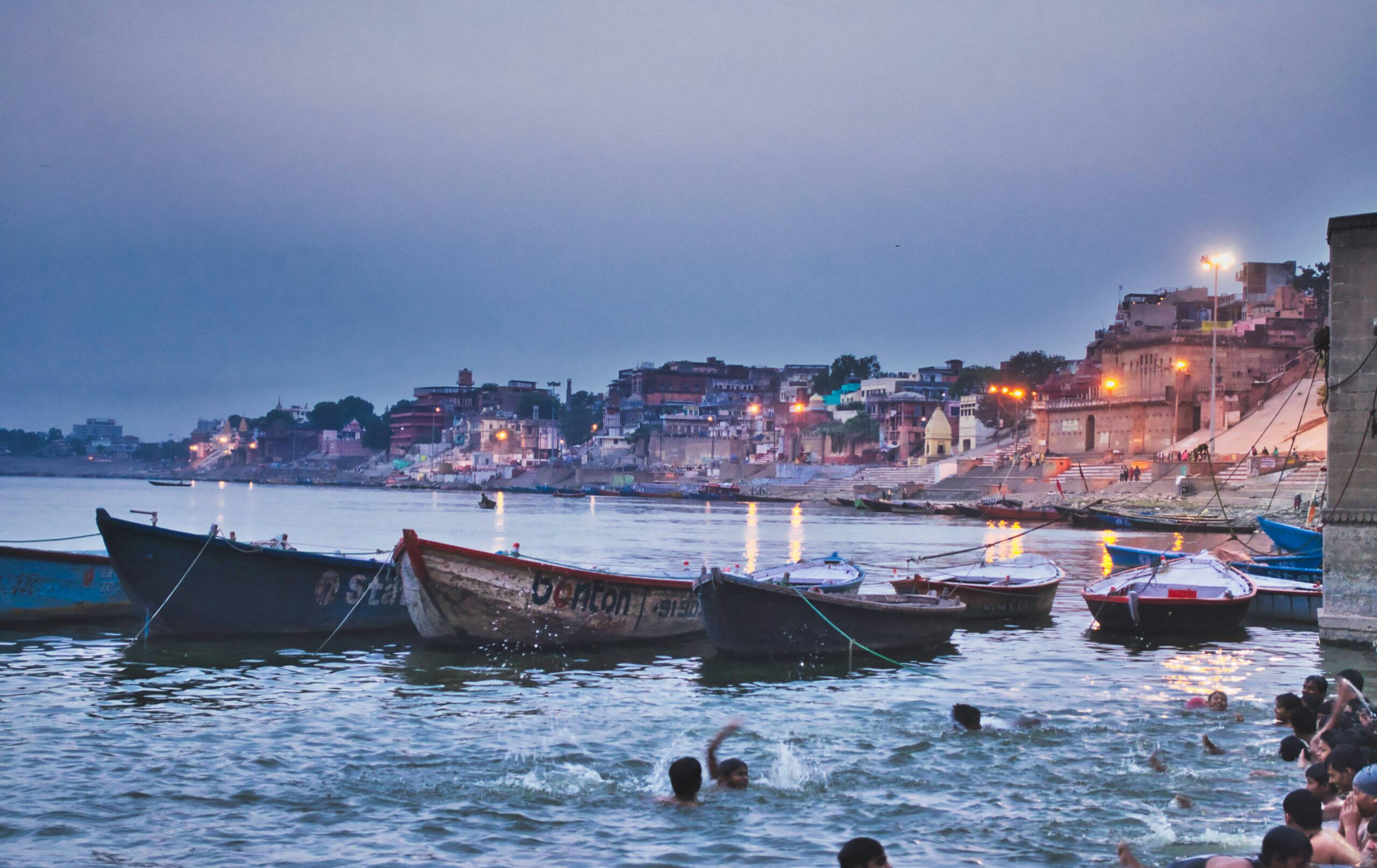
India is where I spent the most time, and where I’ve traveled the most. Around 4 years total, in over 15 visits. I;ve never met anyone that saw quite as much of India as I have, I even spent the Covid lockdown in Rajasthan. India is incredible, and difficult, and rewards travelers like no other place in the world. It’s a continent pretending to be a country. The scale alone boggles the mind. Distances between regions are closer to “different countries” than “different cities,” and that shows up in language, food, dress, climate, and even how cities move. The Constitution recognises 22 scheduled languages, and you will hear plenty more on the street.
Logistics here aren’t something you just figure out, not unless you get real comfortable with bumpy overnight local busses (which I love, but it’s an acquired taste), logistics are something you have to map out in advance. India is built for long-distance travel. Rail can be brilliant and shockingly comfortable for overnight routes and big corridors when you book ahead, and flights are often the easiest and cheapest way to jump between far-apart regions. If you plan to use trains, set up IRCTC app and account early. Rules can change, and as of January 2026 there are added requirements for booking reserved tickets on the first day of the advance booking window.
Within cities, the “soft landing” advantage usually comes from simple systems. App cabs cut out negotiation and language friction. Metros do heavy lifting in the places that have them, and Delhi NCR is the standout. It’s one of the largest urban rail networks in the country, reaching deep into the wider region that includes Noida and Gurugram.
Money has also changed the travel experience. UPI, India’s instant payments system, has been live since 2016 and is now used at enormous scale, from hotels to corner shops. Cards still matter in bigger properties, and cash is till king, but day-to-day transactions in many cities are now phone-first.
Food is where India becomes most “real” most quickly. Regional cuisines are not variations. They are different toolkits. Delhi swings north Indian and Mughlai. Mumbai mixes coastal, Gujarati, Parsi, and street-snack culture. The south runs on dosa, idli, filter coffee, and seafood where the coast allows. Spice level is adjustable if you ask, but the bigger adjustment is pacing. Many travelers do better with smaller meals and more water during the first 48 hours.
Now the weather. India has seasons that are predictable in structure, unpredictable in detail. The big frame is winter, pre-monsoon heat, and monsoon. The main rainy season is the Southwest Monsoon, typically June to September.
The useful rule of thumb is not “best time to visit India.” It’s “best time to visit this part of India.”
October to March is the broad sweet spot for most of the country, especially the northern plains and Rajasthan. April to June can be punishing in the plains, but it’s when the Himalaya and high-altitude north come into their own. Ladakh’s road season is typically late spring through early autumn, and that is when you can actually treat it as a classic sightseeing region.
South india is better in the drier winter. Goa is at its busiest in the dry months, especially November to February, with the heavier rains concentrated in the June to September monsoon period. Kerala can be lush in monsoon, but humidity rises and outdoor plans become more weather-dependent.
One more seasonal detail that catches people out. The southeast coast gets a separate rain pattern, the Northeast Monsoon, and Tamil Nadu often receives more rainfall in October to December than during the southwest monsoon months. That matters if Chennai or Puducherry is on your route.
So how do you “soft land” in India, in a way that actually holds up in real life. You choose places that reduce friction. Short airport transfers, predictable transport, dining within a few minutes and with options you can trust won’t make you sick, and hotels that take sleep seriously. Sound insulation, good air-con, reliable hot water (not always to be taken for granted, especially in South India), and clear pickup points are not luxuries here. They are quality-of-life infrastructure.
That’s the logic behind the picks below. I divided this article into 2 sections. The first section features the big cities, the well known areas with big international airports where most people land. The second section features slightly less known places, places you maybe wouldn’t think of for your first night in India. But I’ve been to all these places, big and small, and I chose the smaller places exactly because they’re the best place for your first breath of this incredible country.
You’ll notice many names (Taj, Leela, Hyatt, Bloomrooms) repeating themselves here, a lot more than in other countries. You’ll also notice that more hotels qualify as “luxury” with less cheap finds than I list in other countries. That’s because the most important thing is consistency. India is chaos, and the chaos begins as soon as you leave your hotel. Staying in a place with consistent, international standards can be the thing that gives you the time and peace of mind to fall in love with india without getting overwhelmed by the chaos.
| Place | Style | Energy | Close to sights | Crowding | Best for |
|---|---|---|---|---|---|
| Delhi (+Gurugram and Noida) | historic capital plus modern sprawl | high | India Gate, Humayun’s Tomb, Taj Mahal | high | first-time India, history, big-city logistics |
| Mumbai | coastal megacity, film and finance | very high | Colaba, Marine Drive, major landmarks | very high | city energy, food, architecture, iconic hotels |
| Jaipur | royal city, forts, Pink City lanes | medium | City Palace, Hawa Mahal, Amber Fort | high | Rajasthan first stop, heritage-heavy itineraries |
| Kochi | port heritage, slow coastal neighborhoods | low to medium | Fort Kochi, Mattancherry, waterfront | medium | culture with breathing room, café-and-walk days |
| Goa | beaches plus Portuguese-era layers | medium | beach belts, Old Goa churches, Panaji | medium to high | easy beach entry, short breaks, resort stays |
| Bangalore | tech capital with green pockets | medium to high | MG Road, Cubbon Park, dining districts | high | business plus leisure, long dinners, mild weather |
| Hyderabad | Deccan history plus modern business hubs | medium to high | Charminar, Golconda, HITEC City | medium to high | food-forward trips, mixed heritage and meetings |
| Chennai | coastal city, temples, South Indian culture | medium | Marina Beach, Mylapore, central shopping | high | cuisine, classical culture, practical city stays |
| Leh | high-altitude Himalayan desert | low | Leh bazaar, monasteries, viewpoints | low to medium | mountain scenery, slow starts, acclimatization days |
| Dharamshala | Himalayan foothills, Tibetan influence | low to medium | Many small villages, monasteries, mountain trails | medium | quieter hill town entry, culture and walks |
| Varkala | cliff-top beach town | low | cliff promenade, beach access points | medium | low-effort sea days, small-town coastal rhythm |
| Udaipur | lakes and palaces | medium | Lake Pichola, City Palace, old city lanes | medium to high | romantic heritage, easy sightseeing geometry |
| Puducherry | French Quarter grid, seaside promenade | low | White Town, seafront, café streets | medium | walkable small-city entry, slower coastal days |
Section 1. Big gateway cities and easy first stops
Delhi, India’s beating heart, monuments and megacity in the same frame

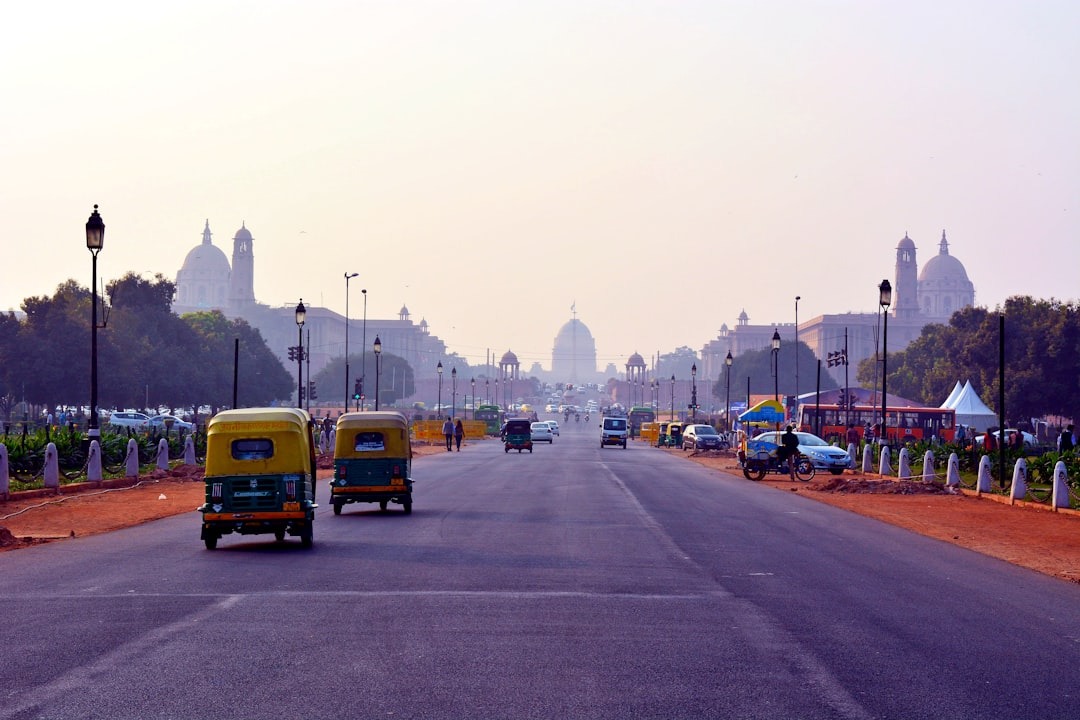
Delhi is two cities layered on top of each other. Shahjahanabad. Old Delhi. Tight lanes around Jama Masjid and Chandni Chowk, with the Red Fort sitting at the edge like a bouncer. New Delhi is the counterpoint. Broad boulevards, government buildings, and the Mughal tomb circuit. Humayun’s Tomb and Qutub Minar are the kind of sights that reset your sense of scale.
Arrival logistics are friendlier than people expect. Indira Gandhi International Airport is DEL, about 16 km from the city center, with the Airport Express Metro running into town fast. The wider Delhi Metro system is huge. About 394 km, 12 lines, 289 stations, including the Gurugram Rapid Metro and the Noida–Greater Noida Aqua Line. For most travelers, the practical trio is Metro, app cabs, and auto rickshaws.
Where you sleep changes Delhi more than it changes most cities. Chanakyapuri and the Diplomatic Enclave keep streets wider and evenings quieter. Connaught Place puts you on top of transport and colonial-era shopping arcades. Aerocity sits next to the airport and the Airport Express line, with a straight shot to New Delhi Railway Station in about 25 minutes. Season matters. October to March is the easiest window for walking and monuments. April to June is heat-management mode.

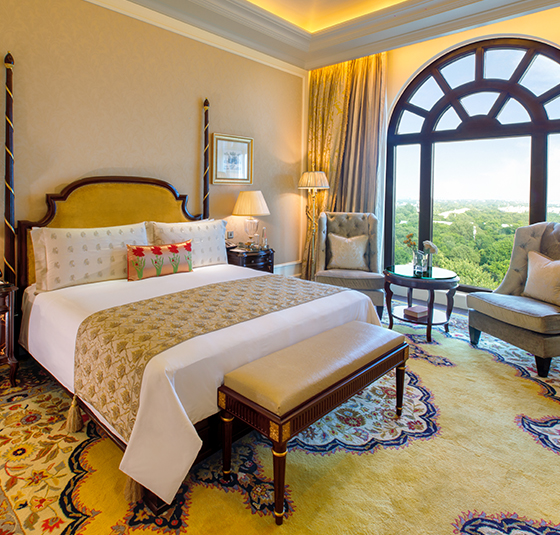
The Leela Palace New Delhi
The Leela Palace is a classic big-city five-star with real insulation between you and Delhi. Expect large rooms, a full spa, and an outdoor pool on the upper levels, plus multiple restaurants that cover both Indian and international menus.
Chanakyapuri is the point. You are in the Diplomatic Enclave, with wide roads and security-managed blocks, and you can reach India Gate, Khan Market, and Lodhi Road corridors with short drives. The airport run stays direct, without the Old Delhi traffic puzzle.

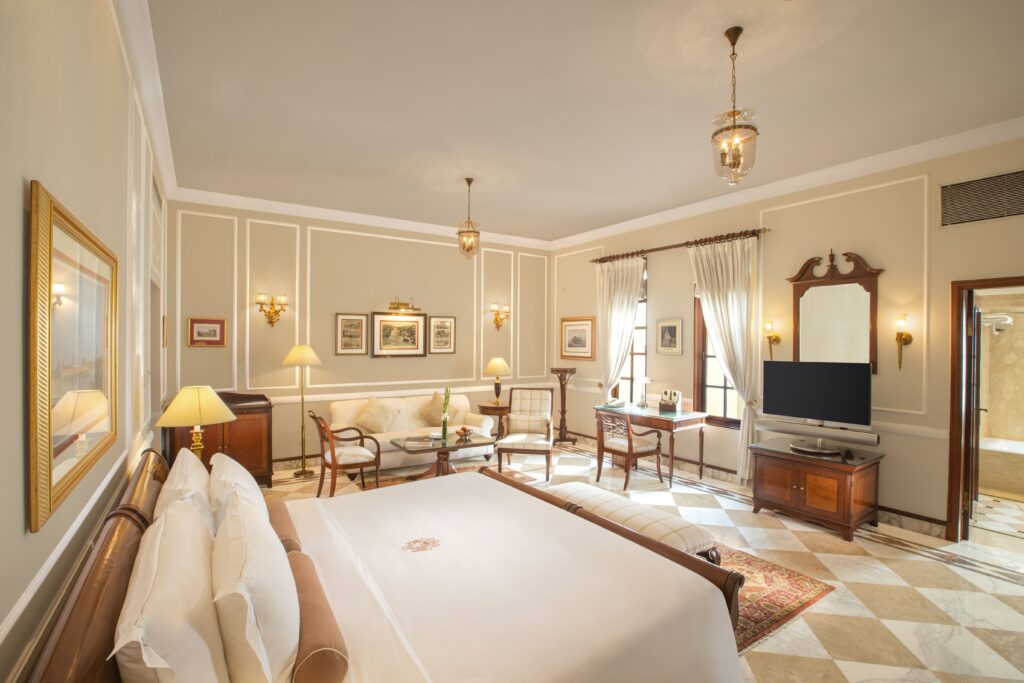
The Imperial, New Delhi
The Imperial leans into heritage without turning into a museum piece. Expect high ceilings, deep corridors, a serious art collection on the walls, a full spa, and a pool set away from the street line.
Location is central and walkable by Delhi standards. Janpath and Connaught Place sit close, so cafés, bookshops, and ATM logistics stay easy, and the city’s main arteries are right there for quick rides to Humayun’s Tomb, Lodhi Gardens, and the national museums.

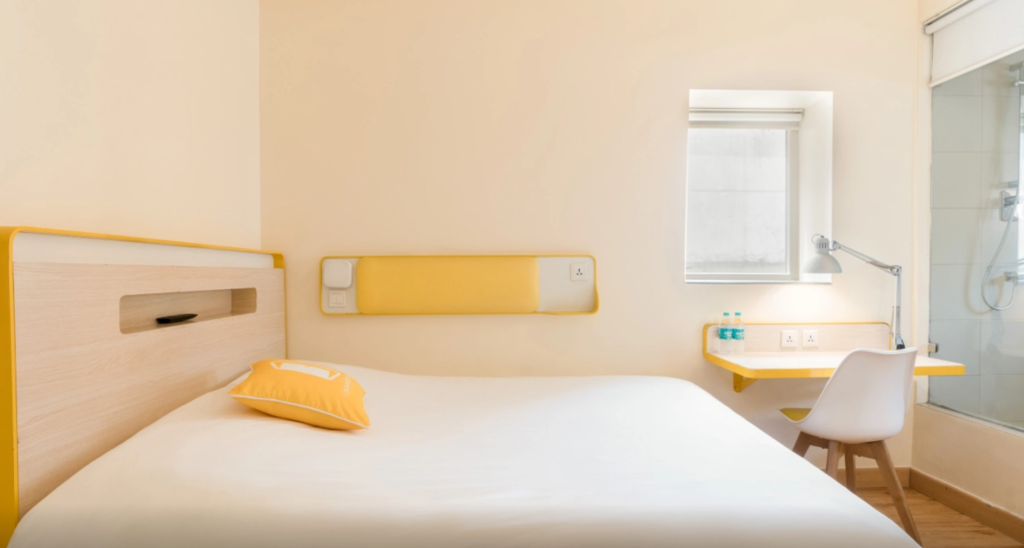
bloomrooms
bloomrooms is modern, compact, and sharply run. Rooms are bright, minimalist, and designed for sleep, with good air-con, proper showers, and a layout that avoids the “echo chamber” problem common in cheaper city hotels.
Janpath is the win. You are a short walk from Connaught Place’s grid, close to metro access, and surrounded by the kind of everyday infrastructure travelers actually use. pharmacies, cafés, SIM kiosks, and simple meals that do not require a plan
Gurugram, where the NCR goes corporate
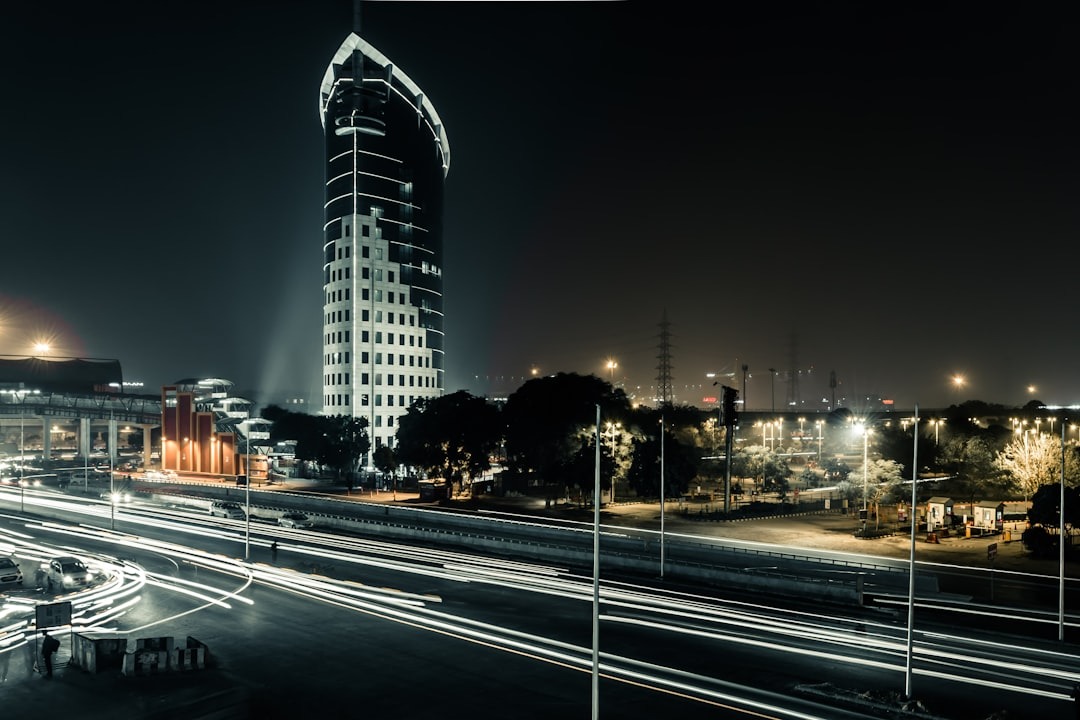
Gurugram is Delhi NCR’s corporate high-rise belt and most multinationals have their India headquarters here. Built around Cyber City, Golf Course Road, and a mall-and-office rhythm that business travelers recognize instantly. It is plugged into Delhi by the Yellow Line and the Rapid Metro, so meetings in South Delhi and flights out of DEL stay realistic without heroic planning. Hotels here are about predictable arrivals, quick airport access, and modern infrastructure, not sightseeing.

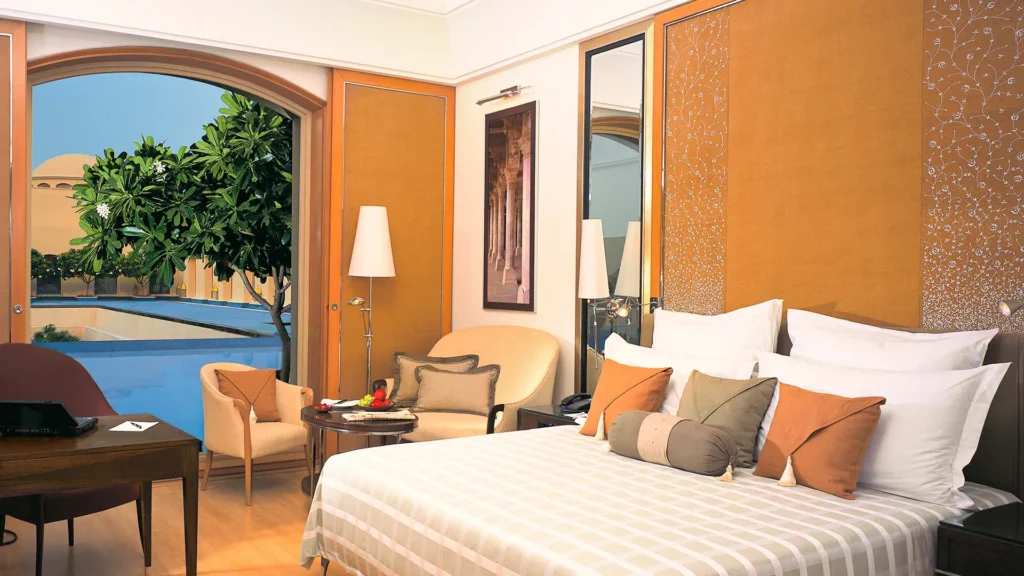
Trident Gurgaon
Trident Gurgaon is a low-rise, courtyard-driven hotel that prioritizes quiet. Expect a large outdoor pool, landscaped gardens, multiple dining outlets, and rooms that keep noise out with thick glazing and controlled corridors.
Its pocket keeps you close to major business zones and a straight shot toward the airport. Cyber Hub and the main DLF corridors sit within quick rides, so dinners and meetings stay simple, and the hotel’s inward-facing layout means the return home stays calm even when the roads are not.
Noida, the NCR’s east-side business grid

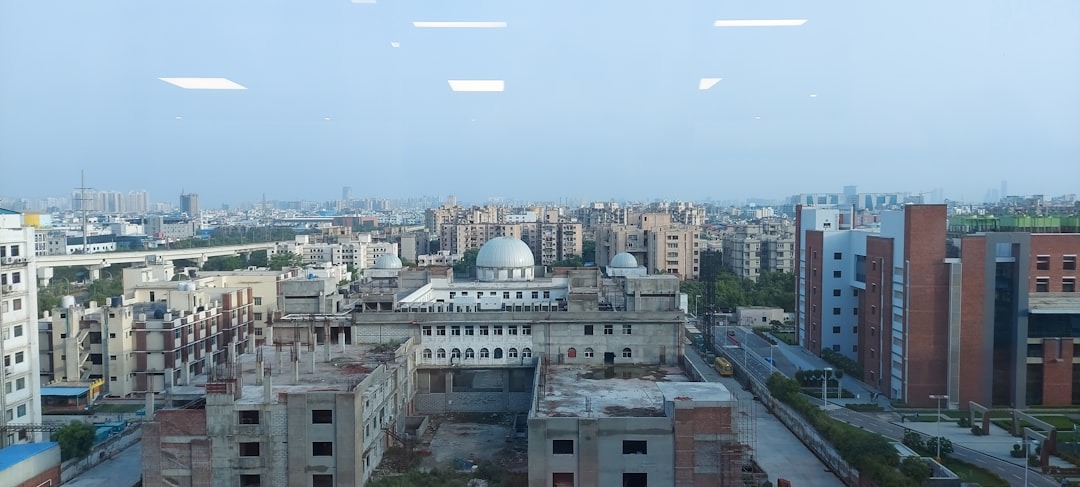
Noida is another NCR business node, with a different rhythm from Gurugram. Wider roads. More residential high-rises. Big malls. Large event venues. It’s useful for trade fairs, filming, tech offices, and anyone whose schedule lives east of the river.
Metro connectivity is strong by Indian standards, and that matters. Noida links into the wider Delhi Metro system, which reduces dependence on road traffic at the worst times.
The best stays here are the ones that behave like self-contained hotels. Real restaurants on-site. Clear pickup points. Staff used to business travel.

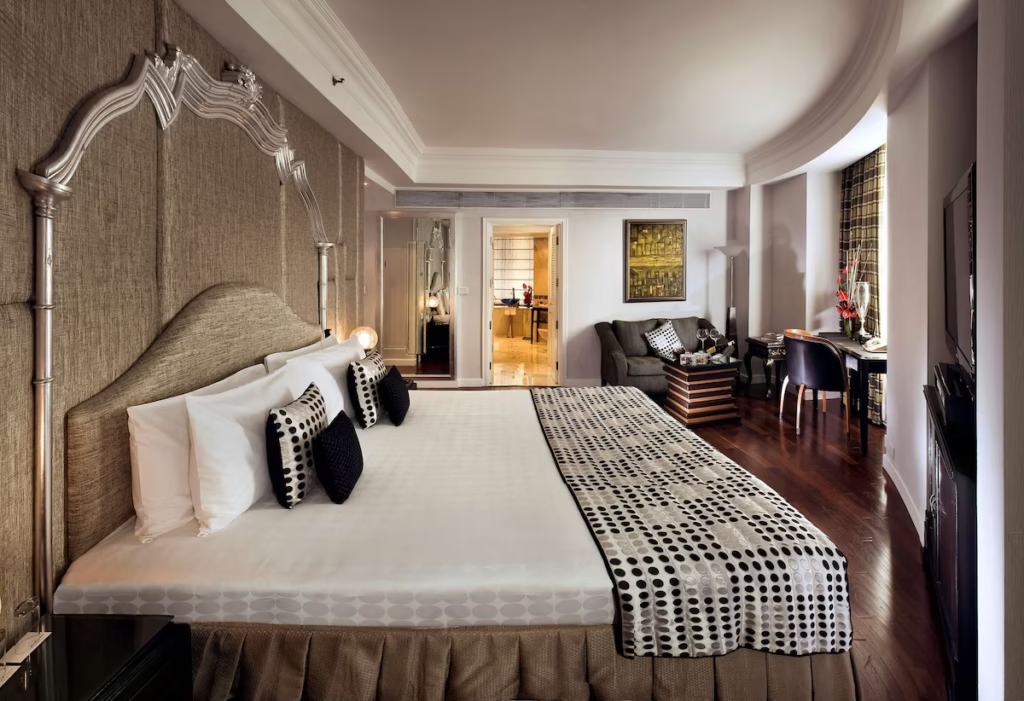
Radisson Blu MBD Hotel Noida
This is a full-service modern hotel with scale. Expect large rooms, a proper pool, spa and fitness facilities, and multiple restaurants that cover breakfast through late dinner without making you leave the building.
Sector 18 is the practical anchor. You are next to Noida’s main mall and dining strip, with straightforward rides to film city and office clusters. Delhi’s central sights are still doable. They just sit behind a longer commute.
Mumbai, culture capital and India’s coastal engine

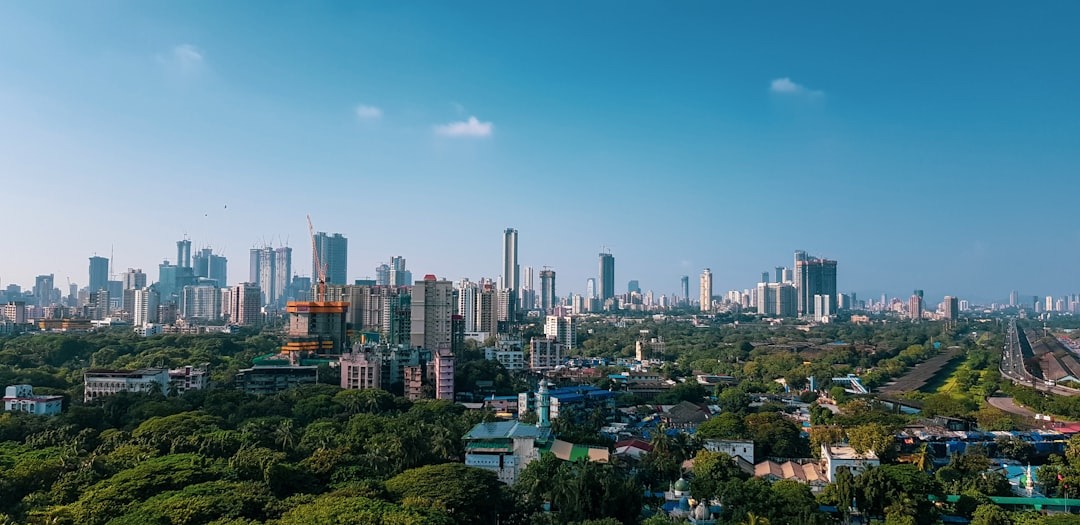
Mumbai is India’s coastal megacity with an island-city core and a long, linear sprawl north. The heritage hit list sits tight. Colaba Fort, the Gateway of India, Victorian-era streets, and Marine Drive’s curve along the water. Then you push outward into Bandra, Lower Parel, and the newer commercial zones where the city runs on deadlines and dinner reservations.
Transport is the constant negotiation. The airport is BOM, split across terminals, and road travel times swing hard depending on traffic. Local trains do the heavy lifting for commuters, and the Metro network is expanding, but most visitors still rely on app cabs for point-to-point moves. Pick hotels with clear access to the parts of the city you actually plan to use, because Mumbai punishes vague plans.
Neighborhood choice is the whole strategy. Colaba and Fort keep you close to the classic sights and ferry points. Nariman Point and Marine Drive give you water frontage and quick links into South Mumbai. Bandra and Juhu shift you toward restaurants and a more residential-city pace, plus easier access to the airport side.
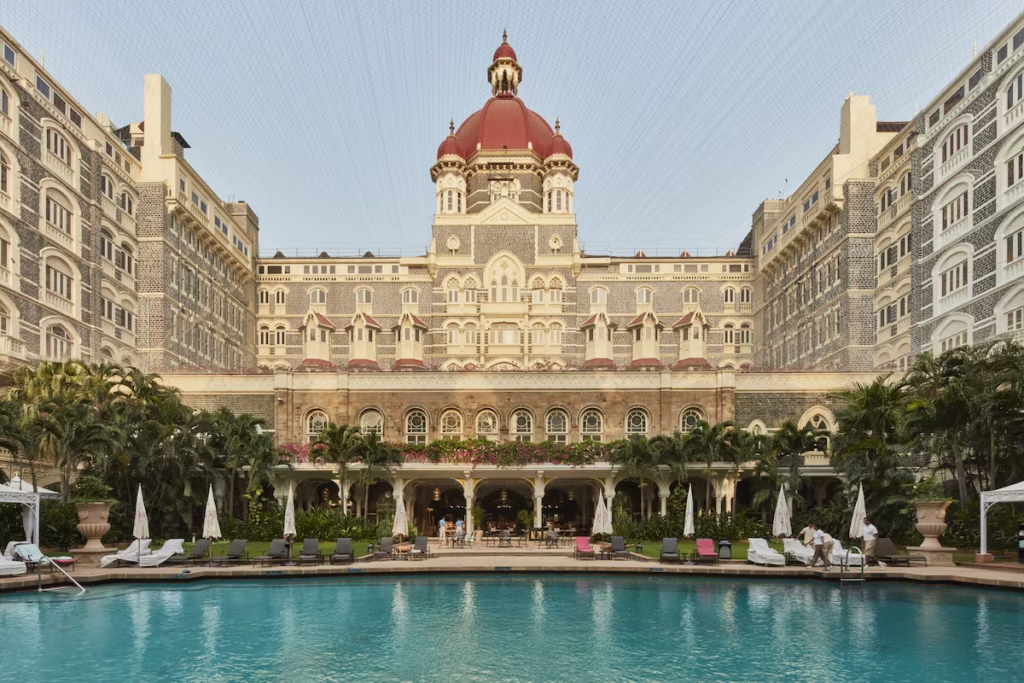
Taj Mahal Palace, Mumbai
The Taj is the city’s headline act, and it earns it. Expect multiple restaurants, a full spa, a serious pool setup, and rooms that range from heritage mood to modern tower views, depending on which wing you book.
Colaba puts the tourist core under your feet. Gateway of India is right there, Marine Drive is a short drive away, and the art galleries, cafés, and waterfront promenades do not require a long commute. For first-time Mumbai, this location removes friction.

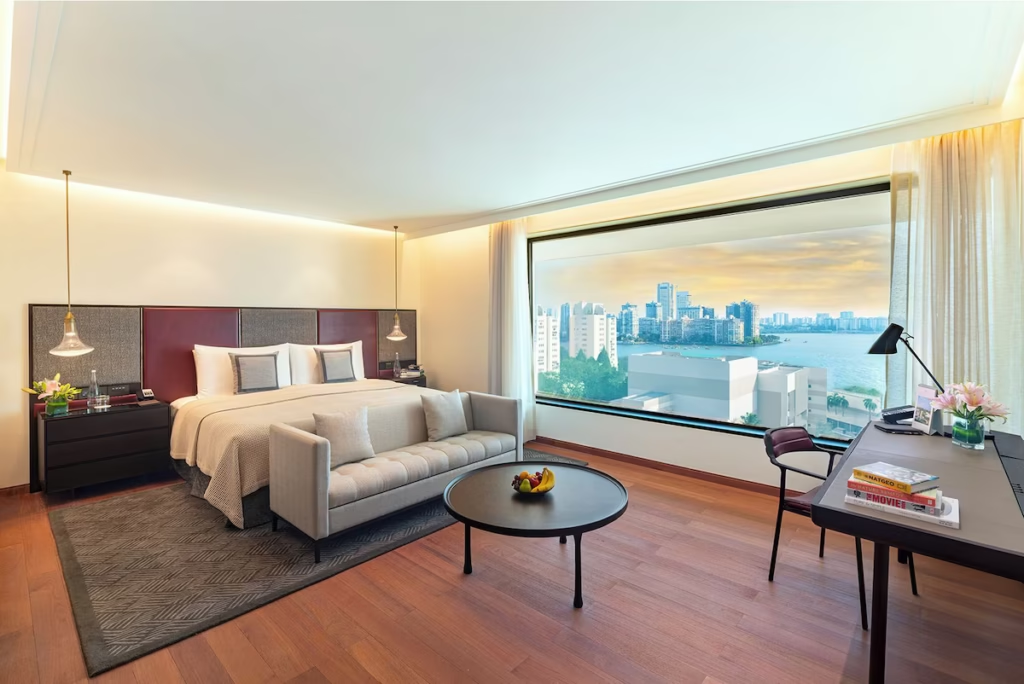
The Oberoi, Mumbai
The Oberoi is sleek, modern, and designed around the sea-facing curve of Marine Drive. Expect large rooms with bay views in many categories, an outdoor pool, a full spa, and a service style that stays quietly efficient.
Marine Drive is one of the city’s best “walk and breathe” corridors. You are close to Nariman Point, Art Deco streets, and the southern business district. South Mumbai landmarks stay accessible, and you can still escape north with a driver when the schedule demands it.

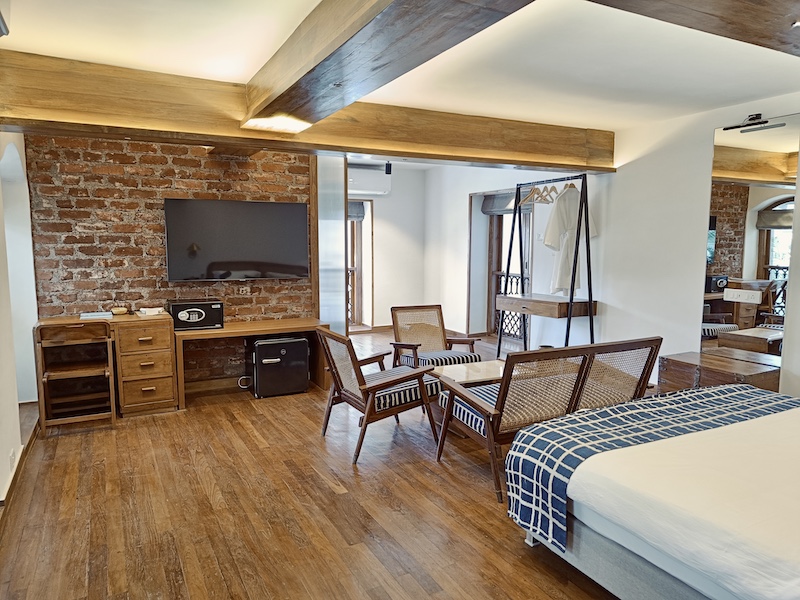
Abode Bombay
Abode Bombay is a small boutique hotel in a restored heritage building, with a calm, mininal design where every installment is there for comfort not appearance. Expect good bedding, strong air-con, and a tone that is more “quiet retreat” than “big lobby.”
The address keeps you in Colaba’s walkable zone. You can reach cafés, galleries, and the waterfront without negotiating transport every time, and the area stays active late, which helps when you arrive jet-lagged and hungry.
Jaipur, the Pink City
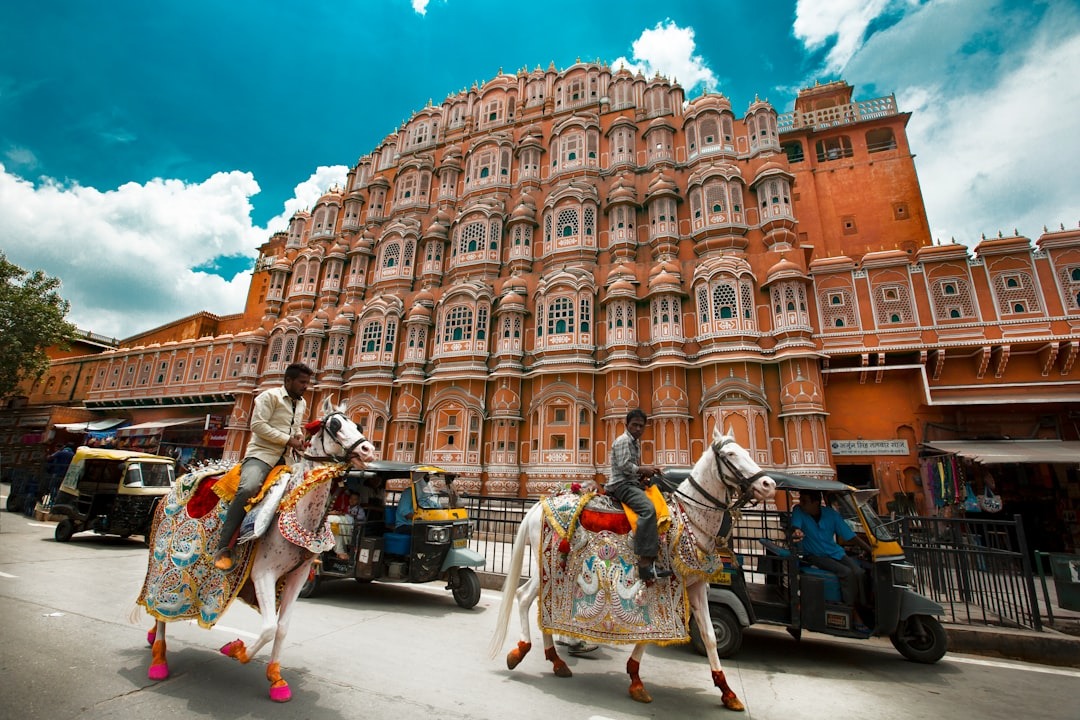
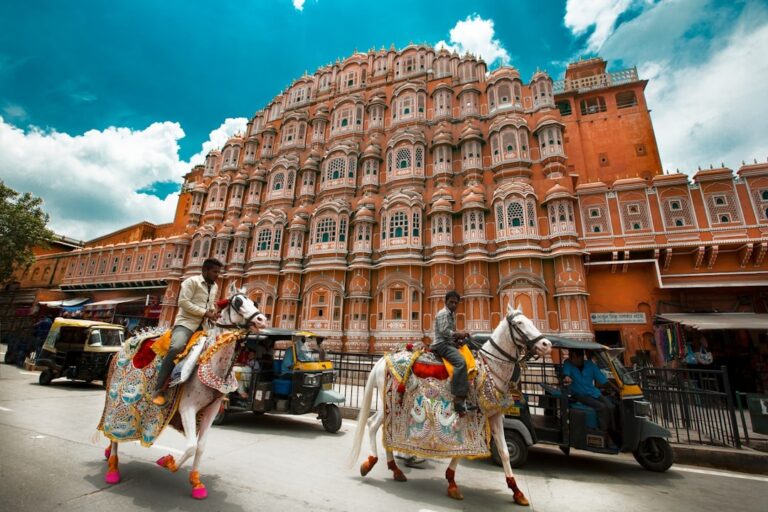
Jaipur is the gateway to Rajasthan’s palace-and-fort circuit, and it plays its role well. The Pink City still holds its geometry inside the old walls, with the City Palace, Jantar Mantar, and Hawa Mahal clustered close enough to combine without turning the day into a transit problem. The shopping scene is not a side quest, it’s the main attraction. Textiles, block prints, jewelry, and craft markets are part of the city’s main event.
The airport is JAI, about 10 km from the city, so arrivals are simple. Getting around is mostly auto rickshaws and app cabs, with walking working best in pockets, not as an all-day plan. Jaipur also works as a launch point for Amber and the hill forts, where travel time is short enough to keep the day civilized.
Where you stay decides what kind of Jaipur you get. Inside the walled city gives you markets and monuments at your doorstep, plus tighter lanes and more noise. Civil Lines and Bani Park have wider roads, more predictable hotel entrances, and quicker exits when you’re day-tripping. Season is blunt here. October to March is the sweet spot. Late spring and early summer push everything indoors.
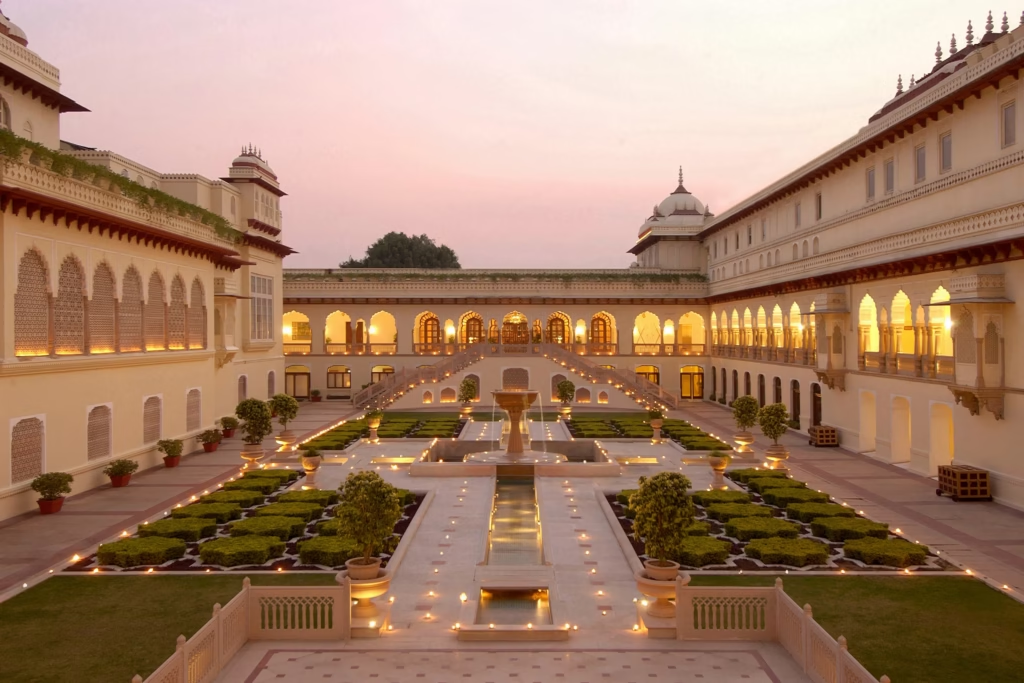
Rambagh Palace
Rambagh is a former royal residence turned top-tier hotel, with formal gardens, a full spa, and an outdoor pool that really makes a difference in Jaipur’s heat. Rooms are ‘heritage’ in tone, with high ceilings and classic detailing.
It sits on the quieter side of the city’s core, with easy drives to the City Palace and Hawa Mahal, and a straight run out toward Amber Fort. You get palace atmosphere without being trapped in the Old City traffic web.

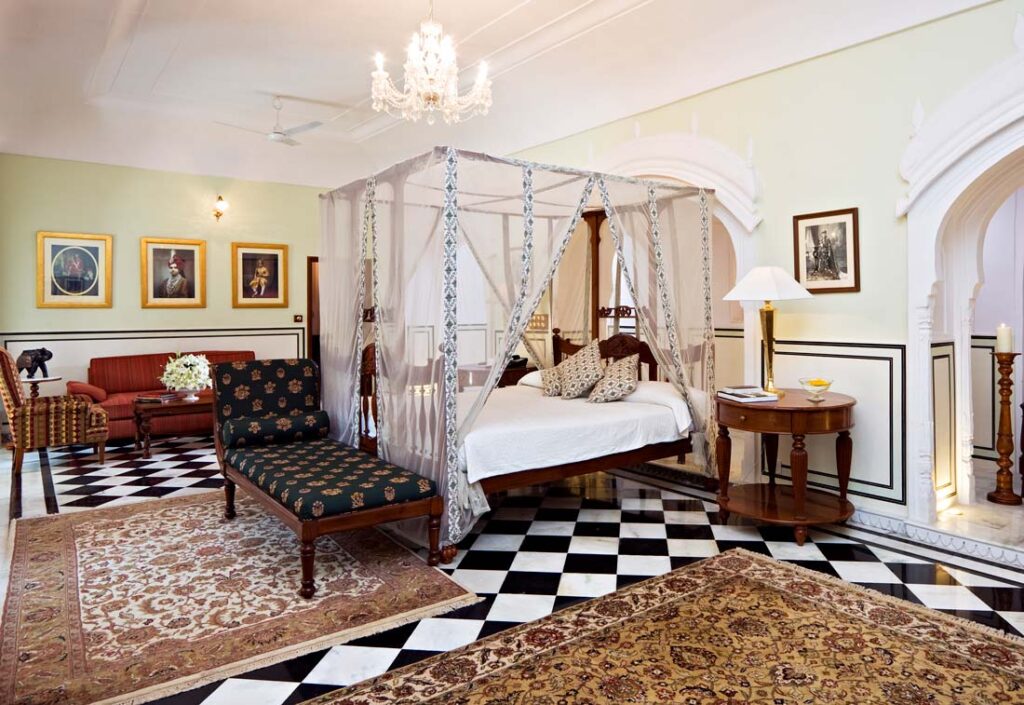
Samode Haveli
Samode Haveli is heritage Jaipur at human scale. Expect courtyards, carved details, a pool tucked inside the property, and rooms that keep the old-house character while still delivering modern bathrooms.
The location keeps you close to the Old City without placing you in it. Markets, temples, and the central sights stay reachable, but you come back to a property that blocks out the street noise better than most.

Pearl Palace Heritage
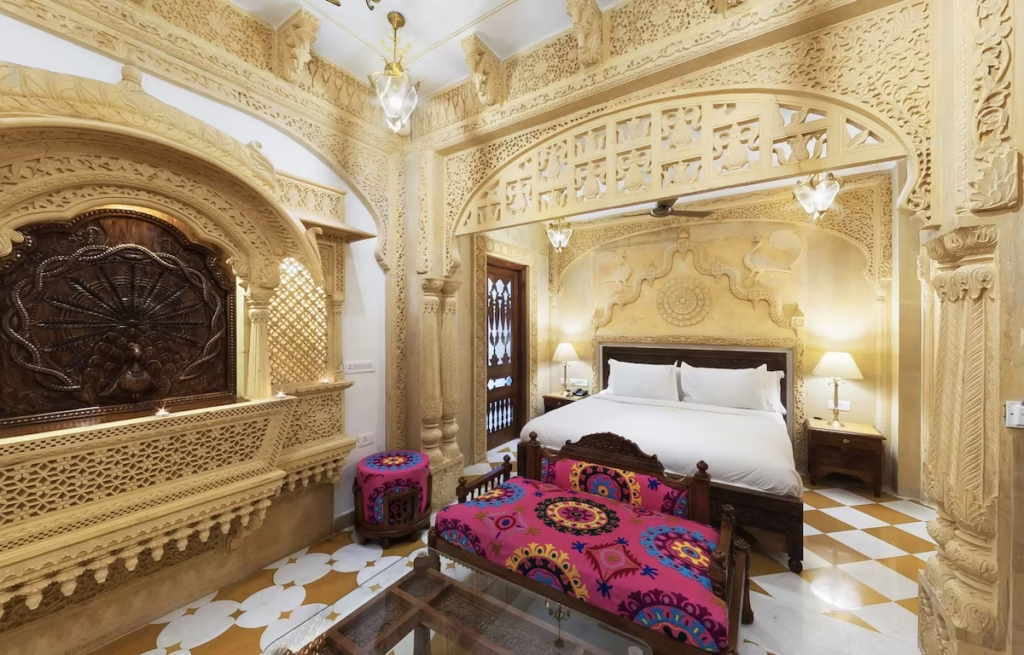
Pearl Palace is a colorful, long-running favorite with a rooftop restaurant and rooms that keep things simple but polished. Expect compact categories, bright decor, and the kind of staff who can sort practical needs fast.
It sits in a convenient pocket for getting around Jaipur by short rides. You are not walking to the forts, but you are close enough to hit the main landmarks without spending half your day in transit.
Kochi, Kerala’s most walkable history lesson

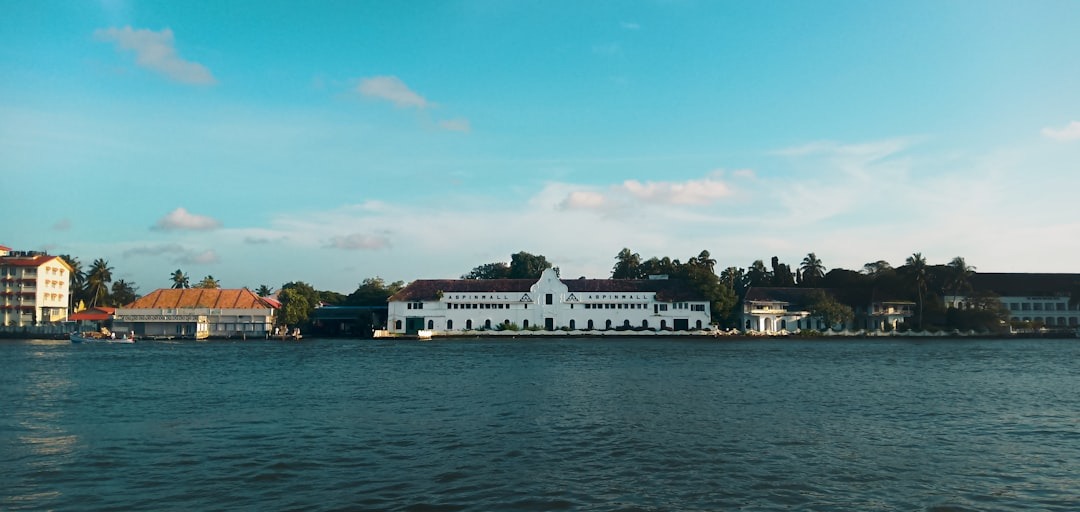
Kochi is Kerala’s port city collage. Fort Kochi and Mattancherry bring the old trading-world layers. Portuguese, Dutch, British, Jewish, and spice-route history in a compact area that’s easy to explore on foot. Ernakulam is the modern counterweight across the water, where offices, malls, and transport connections run the show.
The airport is COK, and Fort Kochi is roughly 42 km away and traffic can make that a 2+ hour drive (took me 3.5 hours once…), so transfers are real-world long, not “nearby.” Ferry rides across the backwaters are part of daily movement here, not a tourist add-on, and they can be faster than driving at the wrong hour. That mix of road and water access is why Kochi can be surprisingly efficient once you understand the map.
Staying in Fort Kochi puts you closest to the heritage streets, galleries, and café life, with the tradeoff of longer rides to intercity rail and business districts. Ernakulam flips that. Better connectivity, faster logistics, less atmospheric wandering. Monsoon months change the texture of the city fast, with heavy rain and humidity, so hotel placement near what you plan to do matters even more.
Brunton Boatyard (Fort Kochi)
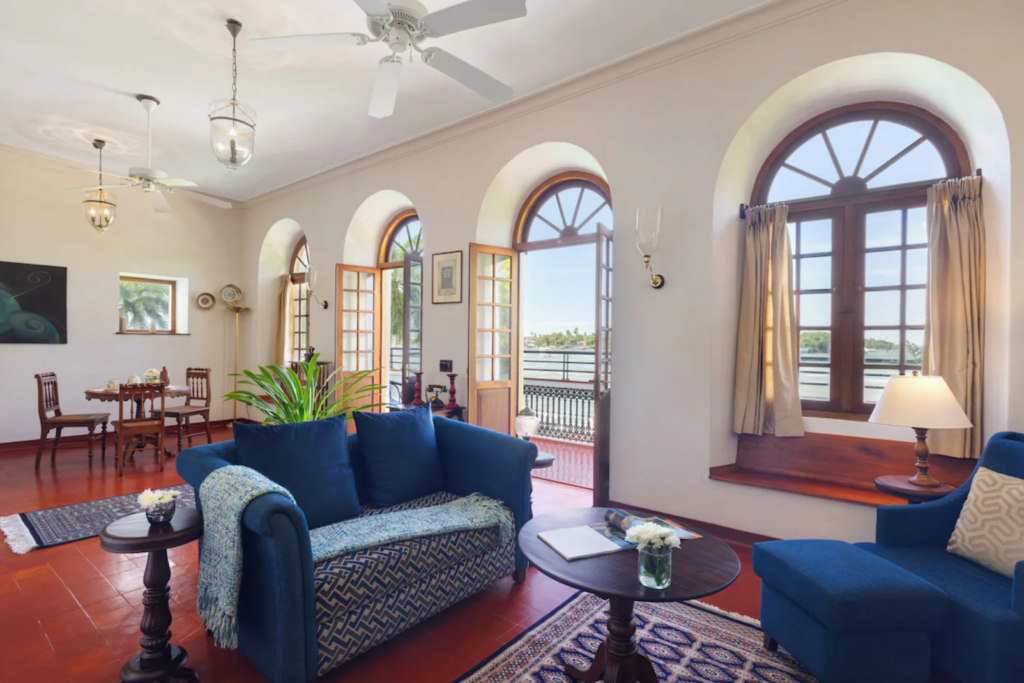
Brunton Boatyard is a heritage waterfront hotel with a colonial-era aesthetic, a pool, and public spaces that invite lingering. Rooms are airy and traditional in style, with modern comfort layered underneath.
You are right on the Fort Kochi waterfront, close to the Chinese fishing nets and the main promenade. Heritage sites, galleries, and cafés sit within easy walks, and boat activity across the harbor gives the neighborhood its daily texture.

Fragrant Nature Kochi
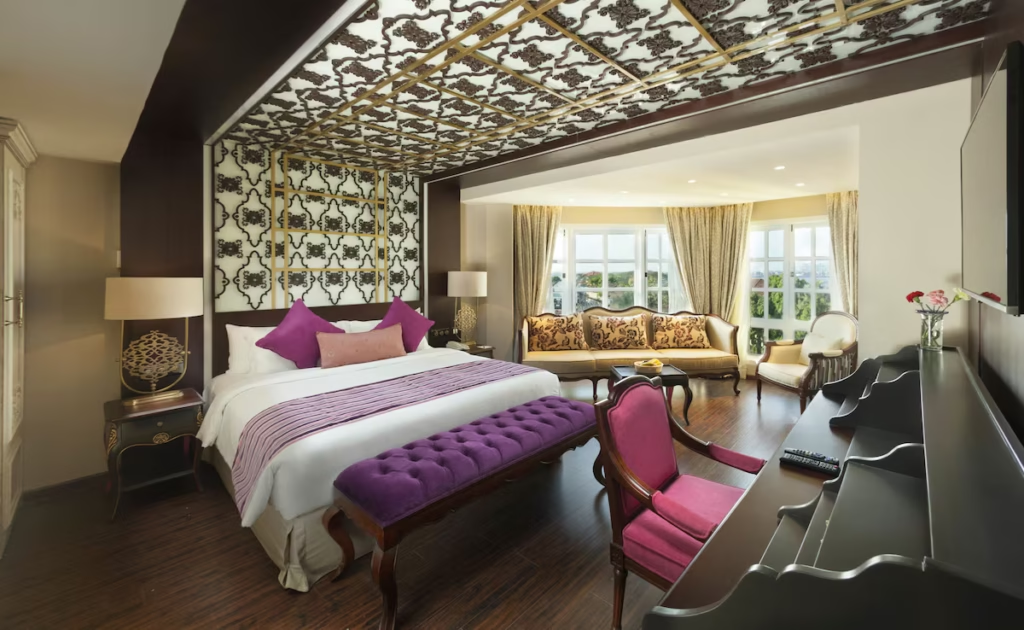
Fragrant Nature is a more contemporary take on Fort Kochi heritage, with large rooms, a pool, spa facilities, and a rooftop restaurant that pulls in the sea air.
Its placement keeps you near the heritage core and the waterfront lanes, without being on the noisiest tourist corners. You can reach Mattancherry, Jew Town, and the ferry points with short rides, and return to a hotel that stays quiet inside.

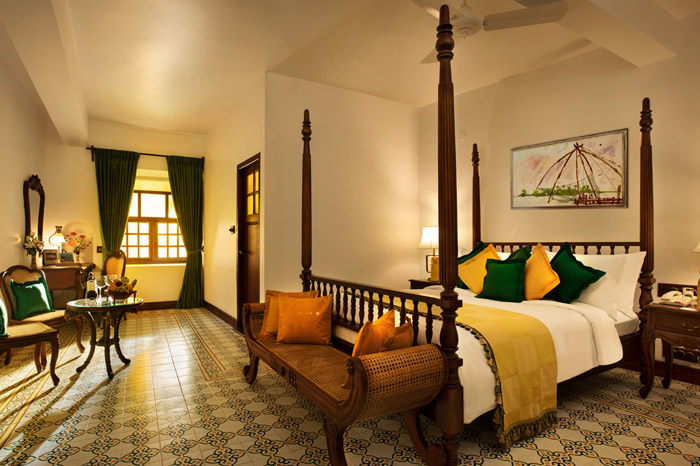
Forte Kochi
Forte Kochi is a small heritage-style property with a pool, a leafy courtyard setup, and rooms that stay simple and clean. It’s the kind of place where the hotel stays out of your way, in a good sense.
The address keeps you inside Fort Kochi’s walkable grid. You are close to cafés, art spaces, and the waterfront without needing constant transport. Evening traffic stays manageable because you are already where you want to be.
Goa, sand, shade, and late dinners

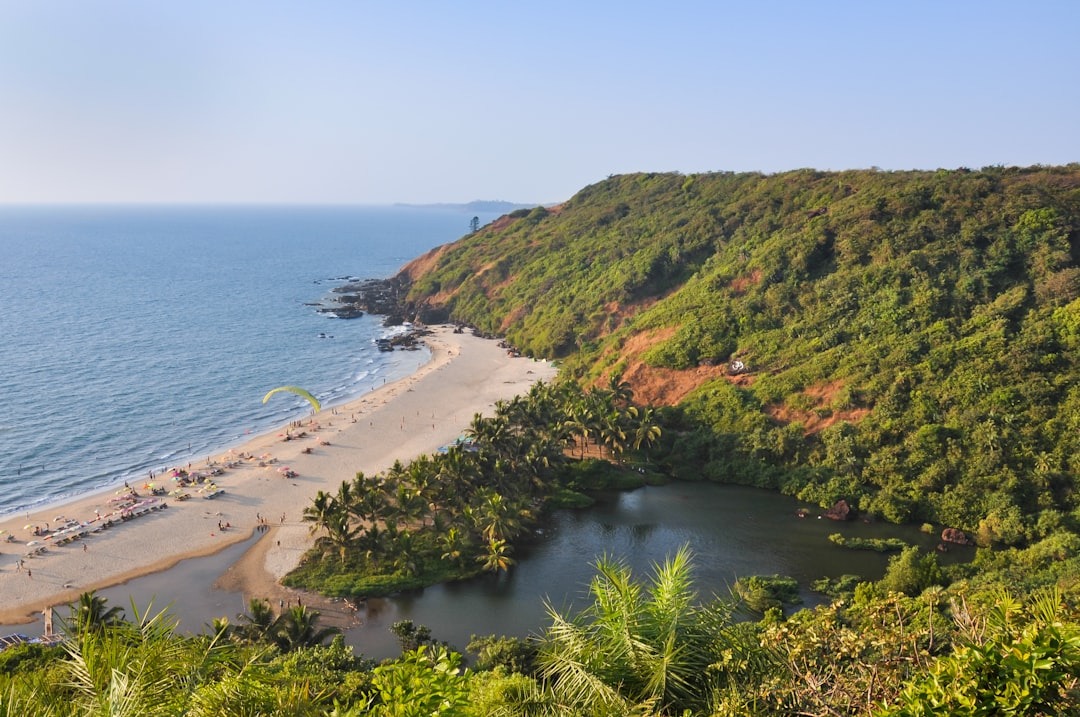
Goa is not one destination. It’s a long beach state with distinct zones that don’t blend into each other casually. North Goa is busier and more built-up, with beach towns that stack restaurants, bars, and day-trip operators. South Goa spreads out more, with longer beach arcs and more space between properties.
Arrival has two airport options now. Dabolim is GOI. Manohar International in Mopa is GOX, opened in December 2022. Which one you land at changes your drive time a lot, especially if you’ve chosen a far-north or far-south beach belt.
Where you stay should match your Goa intent. Anjuna to Candolim concentrates nightlife, cafés, and quick activity booking. Palolem and the south is quieter and more resort-oriented. Panjim is the city option, useful for restaurants, Fontainhas’ old Latin Quarter streets, and easier access to churches and inland sights. Dry season is the classic window, with the monsoon shifting the focus to greenery, slower days, and fewer beach services.

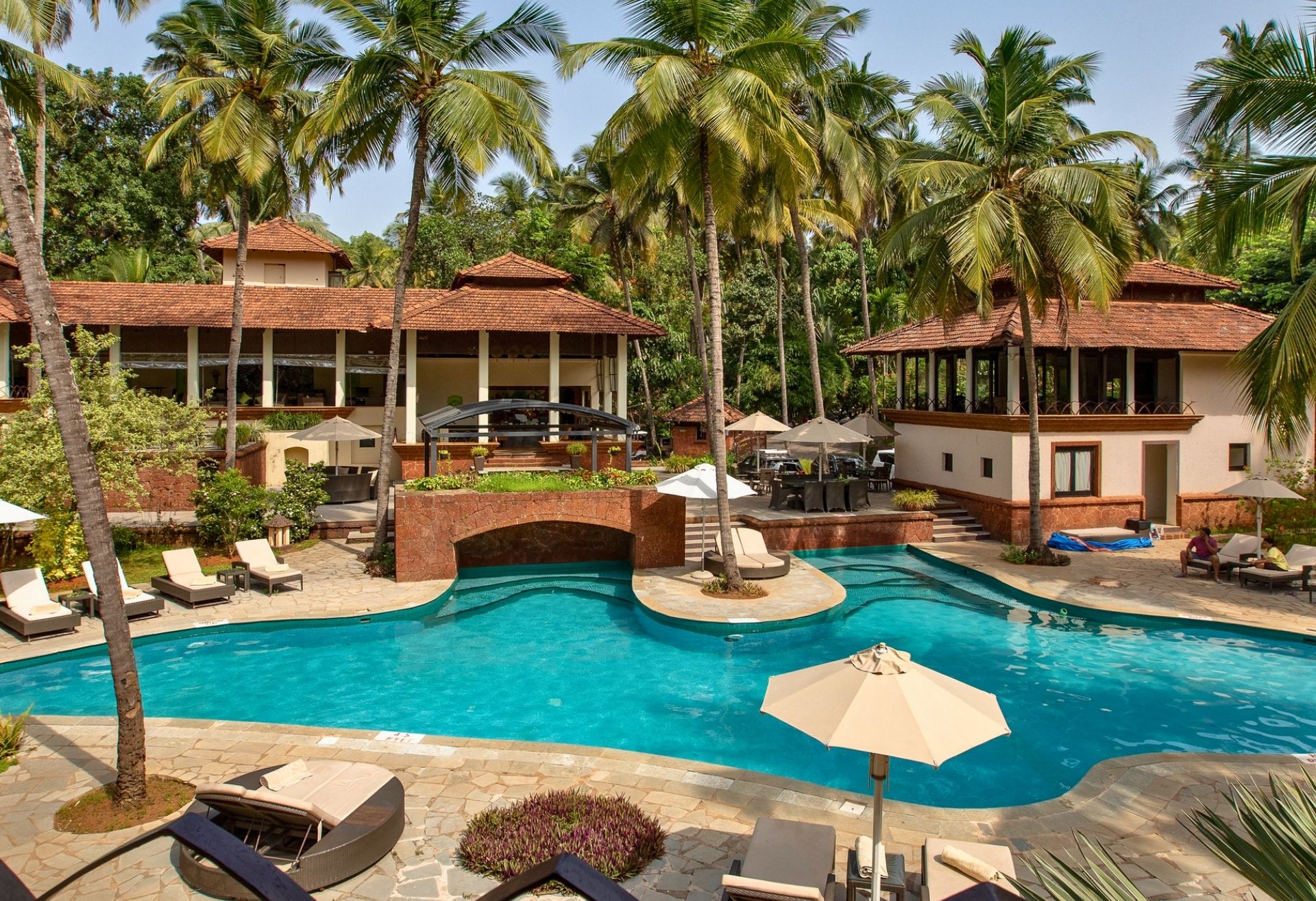
Coconut Creek Resort
Coconut Creek is a boutique resort set in dense coconut gardens, with a lagoon shaped outdoor pool at the center of the property. Rooms come with satellite TV, minibar, and tea and coffee facilities, plus the kind of layout that suits short stays near the airport without feeling like an airport hotel.
It sits by Bogmalo, around 5 km from Dabolim Airport, and about 8 km from Vasco town. You get beach access without committing to South Goa’s longer drives, and quick hops to the port side of Goa when timing matters.

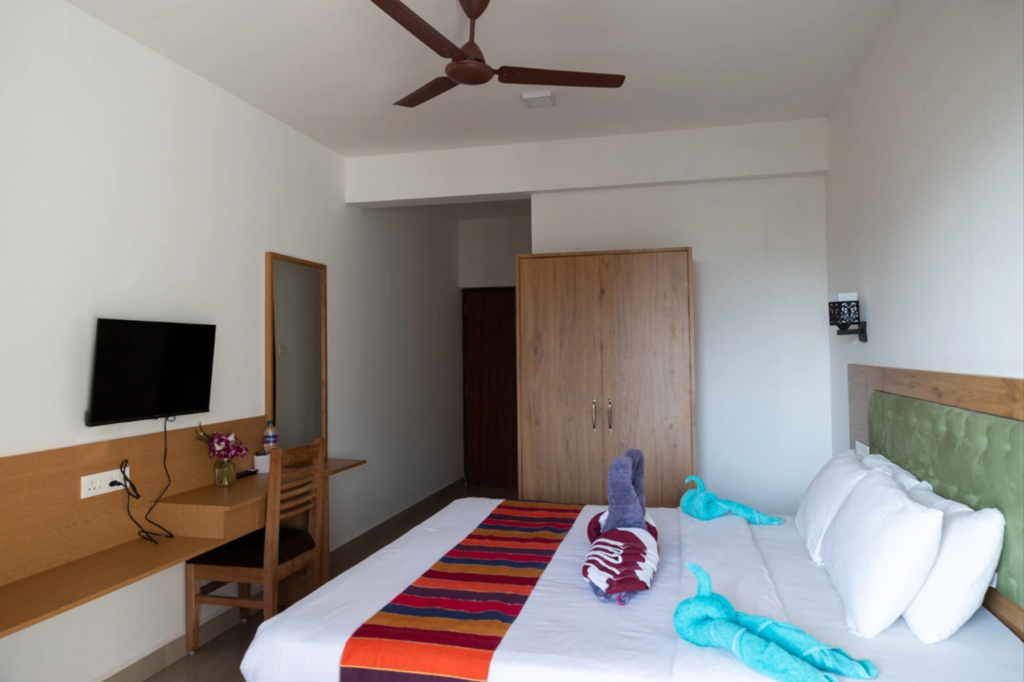
Eve Resort
Eve Resort is a small, tidy property with a garden, terrace, shared lounge, and an on site restaurant and bar. Rooms are air conditioned, and the setup is practical, with parking on site and a straightforward, low fuss layout.
You are in Patnem, with Palolem about 2.4 km away and Agonda about 10 km away. This pocket is quieter than Palolem’s main strip, but still close enough for a short ride when you want more choice for food and nightlife.

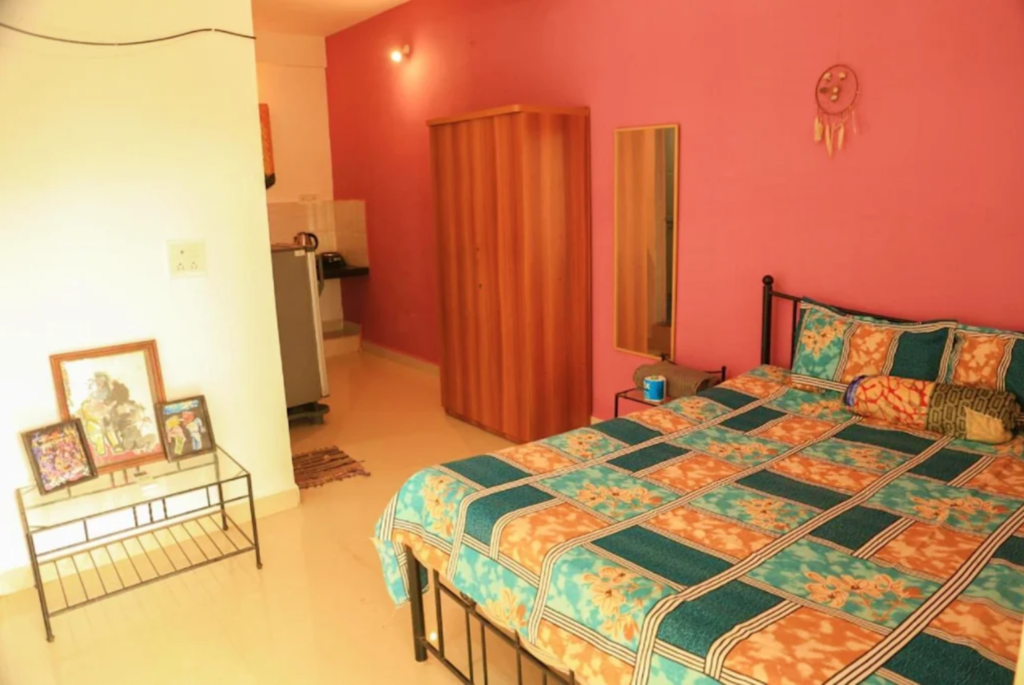
Dreamcatcher House & Hostel
Dreamcatcher is a beachfront guesthouse and hostel with a garden, terrace, shared lounge, and a bar. Some room categories include air conditioning, balconies, and kitchenettes, which makes it easier to keep things self contained between beach time and day trips.
It is on Arambol Beach Road, about a 20 minute walk to Arambol’s centre and roughly a 30 minute walk to Sweet Lake. Dabolim Airport is about 60 km away, so this is a North Goa pick that rewards longer stays or a committed Arambol chapter.
Bangalore, the country’s most liveable big city

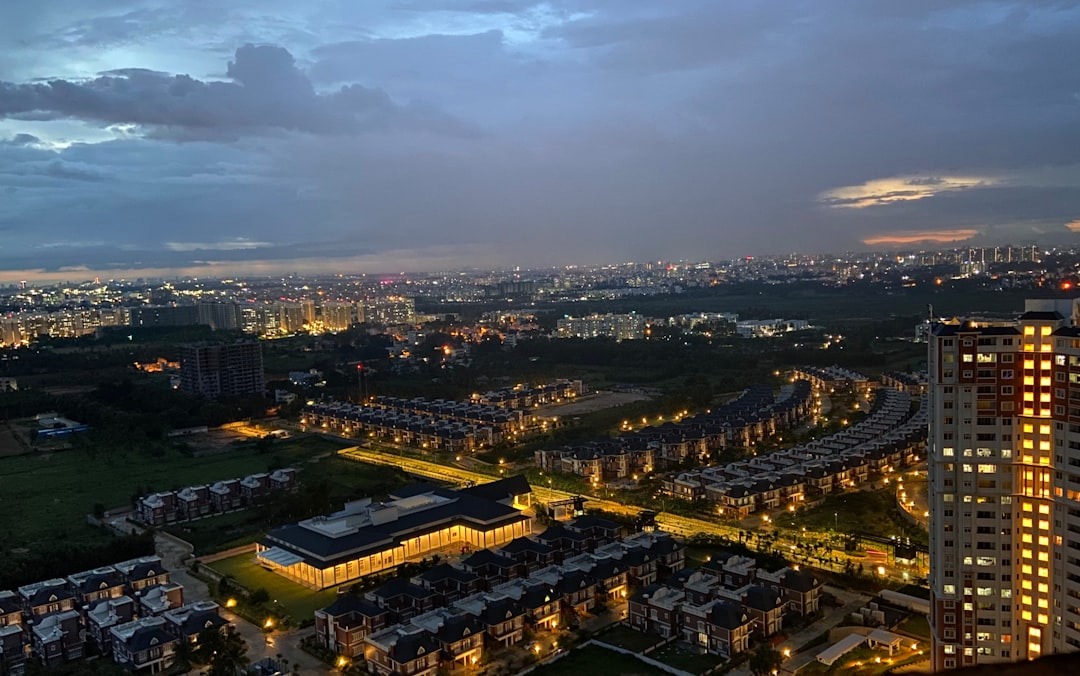
Bangalore is India’s tech capital with a surprisingly liveable core when you pick the right pocket. MG Road and the central grid give you classic city hotels near Cubbon Park and the older commercial streets. Indiranagar and Koramangala skew toward restaurants, coffee, and evening energy, with a younger, more local mix.
The airport is BLR, and it sits far enough out that the airport run needs planning. MG Road is about 35 km away by road. Traffic is the city’s main tax, so a well-placed hotel near your meetings or your preferred neighborhoods saves real time.
Hotel choice should follow geography, not brand. Stay central if you want parks, museums, and walkable streets. Stay Indiranagar if dining and cafés are the point. Stay Whitefield or the Outer Ring Road corridor if you’re in the tech campuses. Bangalore’s weather is kinder than most Indian metros, but rain still hits hard in monsoon months, and commuting slows accordingly.

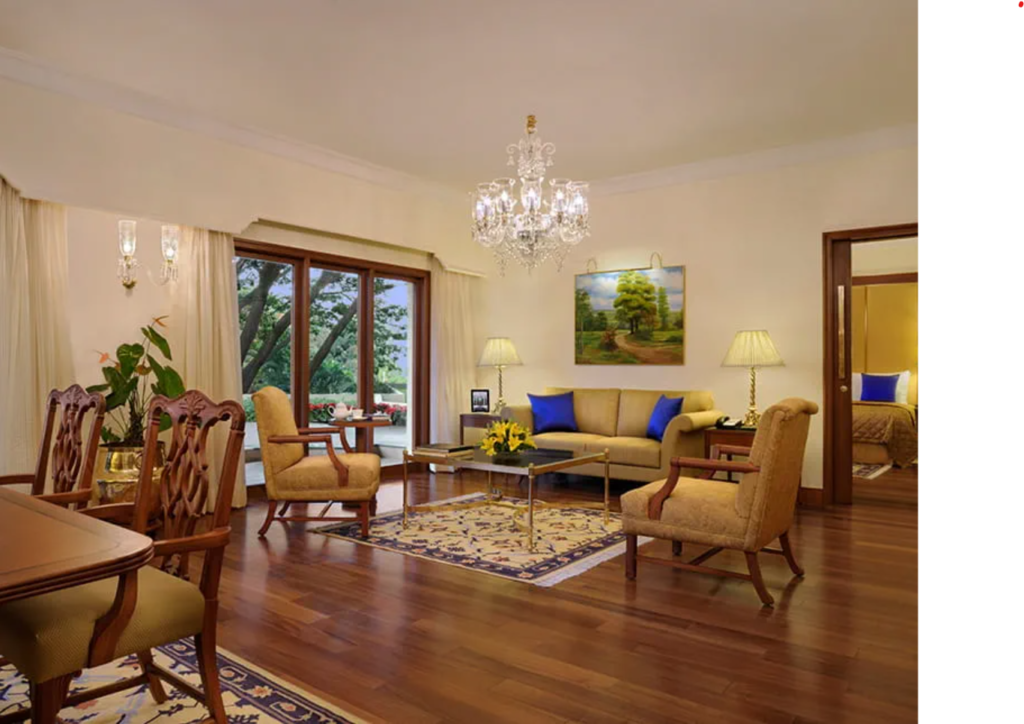
The Oberoi Bengaluru
The Oberoi is central Bangalore done properly. Expect a pool set in landscaped grounds, a full spa, and rooms designed for quiet, with many categories facing greenery instead of traffic.
MG Road is a practical address. You are close to Ulsoor Lake and the city’s central shopping corridors, and you can reach Indiranagar’s restaurant streets with short rides. For business travelers, the city’s key districts stay within manageable distances.
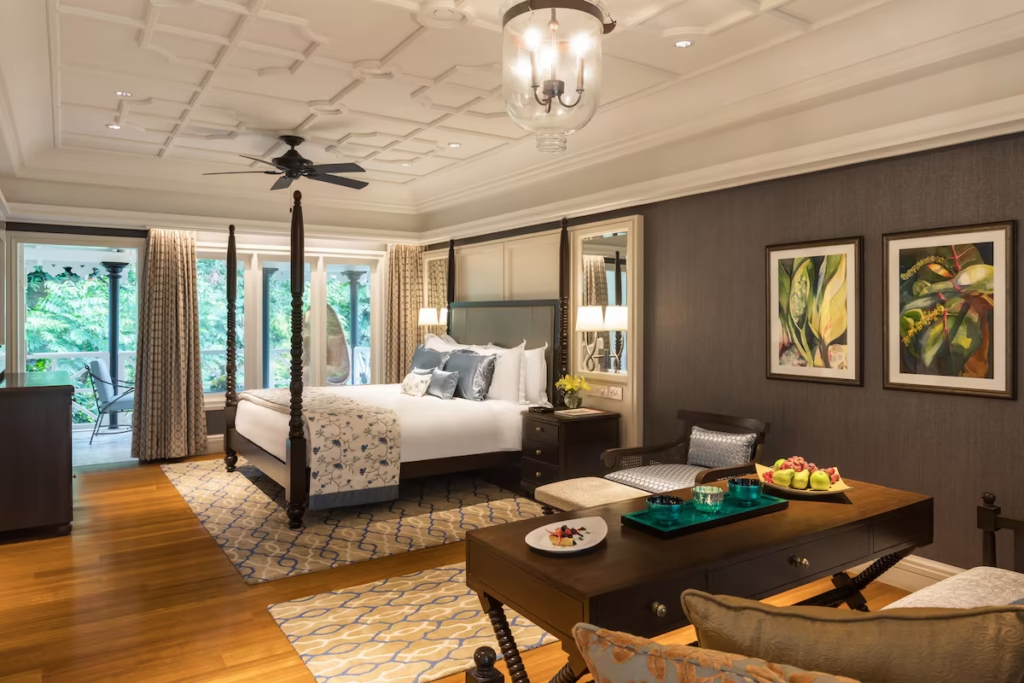
Taj West End
Taj West End is known for its garden setting. Expect a low-rise layout, a large pool, a spa, and rooms that sit away from the main roads, which changes sleep quality dramatically in Bangalore.
Race Course Road keeps you near the city’s older, greener core. Cubbon Park and the central business districts sit close, and airport transfers, while still long, stay straightforward via main arteries

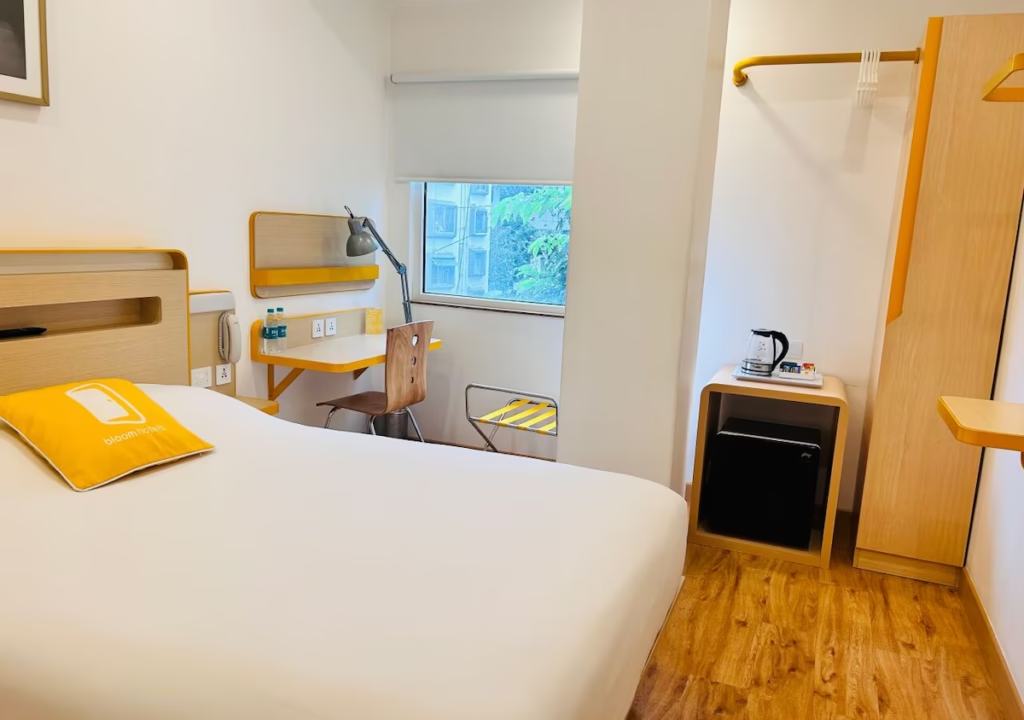
bloomrooms Bangalore
bloomrooms in Bangalore keeps the same brand logic. Compact rooms, clean lines, good air-con, and a setup that favors sleep over spectacle. You get the basics done sharply.
The city-center placement keeps daily logistics easy. cafés, malls, and transport links sit close enough to avoid long cross-city rides for simple needs, and you can reach Indiranagar and MG Road areas without turning it into a project.
Hyderabad, bazaars, tech, and Biryani

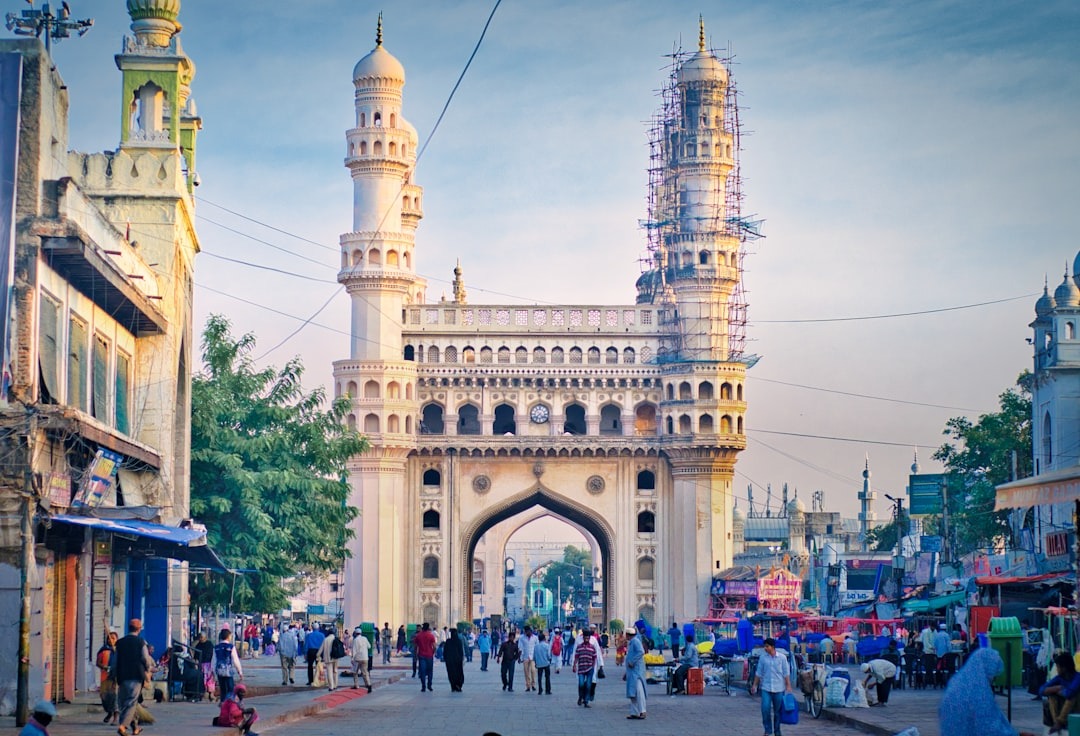
Hyderabad is two cities living side by side. The Old City brings Charminar, bazaars, and temple-and-mosque density that’s still properly intense. The west, around HITEC City, is glass-and-concrete Hyderabad, built for IT campuses, malls, and wide roads. The food scene bridges both worlds, here is where Biryani was invented after all, with biryani and Irani cafés doing real cultural work.
The airport is HYD at Shamshabad, with HITEC City roughly 33 km away by road, so transfers are not trivial. The Metro covers useful corridors inside the city, but it doesn’t solve airport movement, which stays taxi-driven for most travelers.
Where you stay depends on why you’re here. Banjara Hills and Jubilee Hills sit in the middle, with strong dining density and easier cross-city movement. HITEC City is the direct pick for business schedules. Old City stays are best treated as a deliberate choice, because traffic and street layout can slow everything down fast.

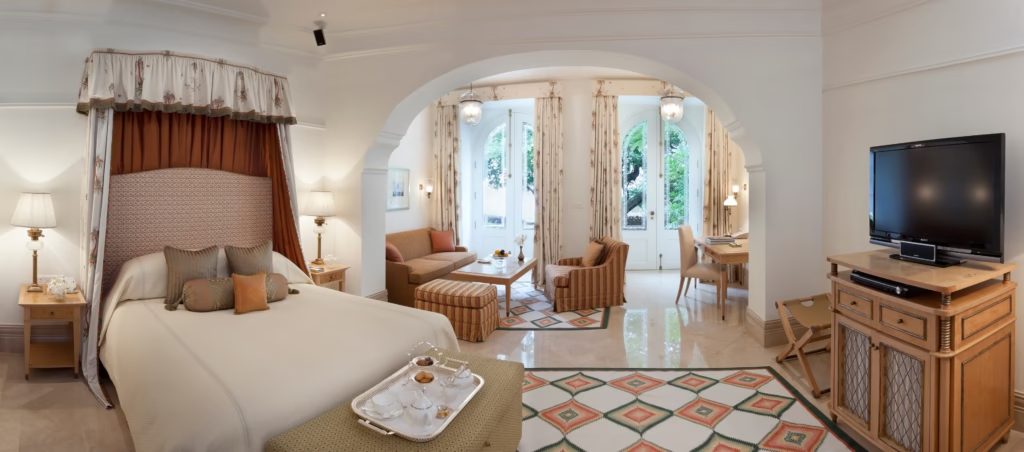
Taj Falaknuma Palace
This is palace-scale hospitality. Expect formal interiors, large rooms, expansive grounds, and a service style built for slow, unhurried stays, plus spa and dining that keep you on-property easily.
Its hilltop location gives you separation from the city’s noise, with clear drives into central Hyderabad. Charminar and the old city are reachable by car, and the return journey ends in a setting that is deliberately removed from street-level intensity.
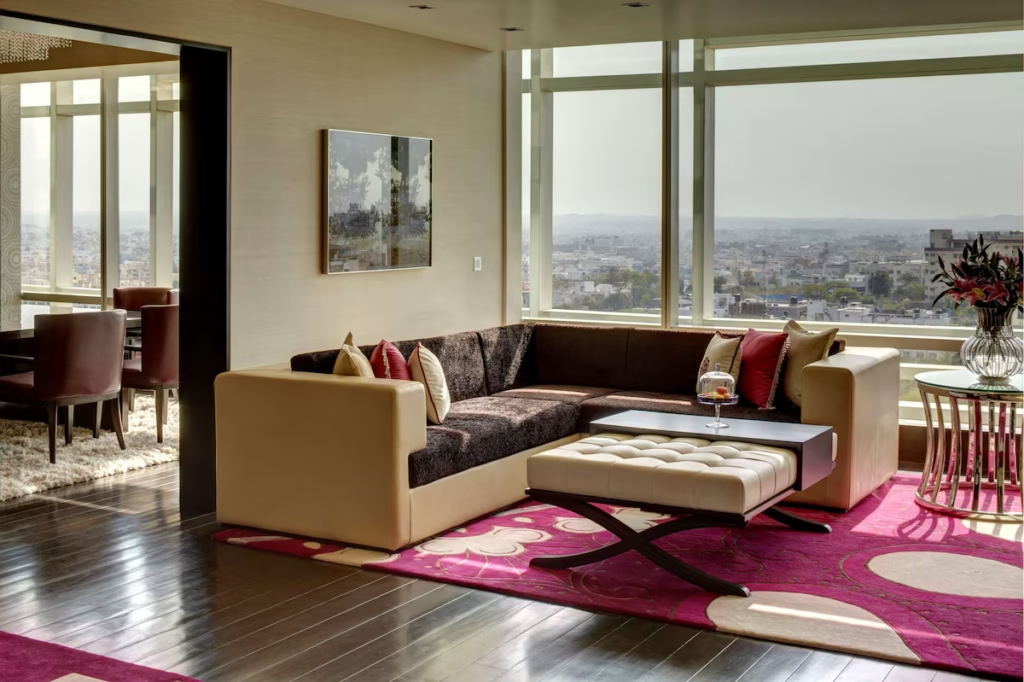
Park Hyatt Hyderabad
Park Hyatt is modern luxury with a strong food and spa program. Expect large rooms, an outdoor pool, a full spa, and a layout designed for business and leisure without mixing the two in awkward ways.
Banjara Hills puts you near upscale dining streets, malls, and the city’s more polished neighborhoods. You can reach Jubilee Hills quickly, and HITEC City is a manageable drive for meetings, without locking you into the conference zone.

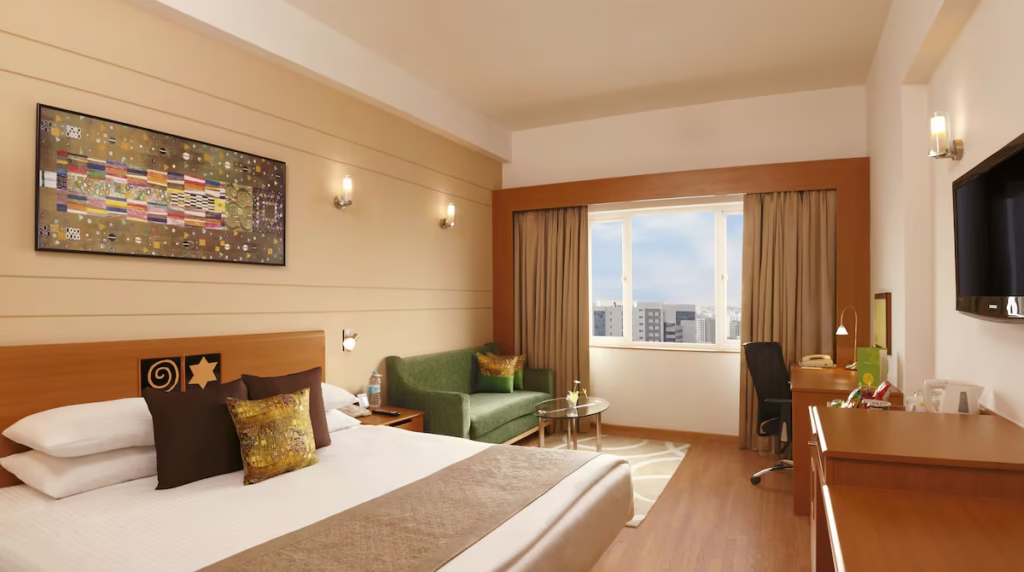
Lemon Tree Premier (HITEC City)
Lemon Tree Premier is a practical, modern hotel with a pool, gym, and rooms built for business travelers. The design stays straightforward, with good air-con and consistent room layouts.
HITEC City placement puts offices, convention venues, and newer malls close. Old Hyderabad is farther, but the trade is clean roads, modern infrastructure, and quick commutes if business is the reason you landed here.
Chennai, the south’s cultural capital by the sea

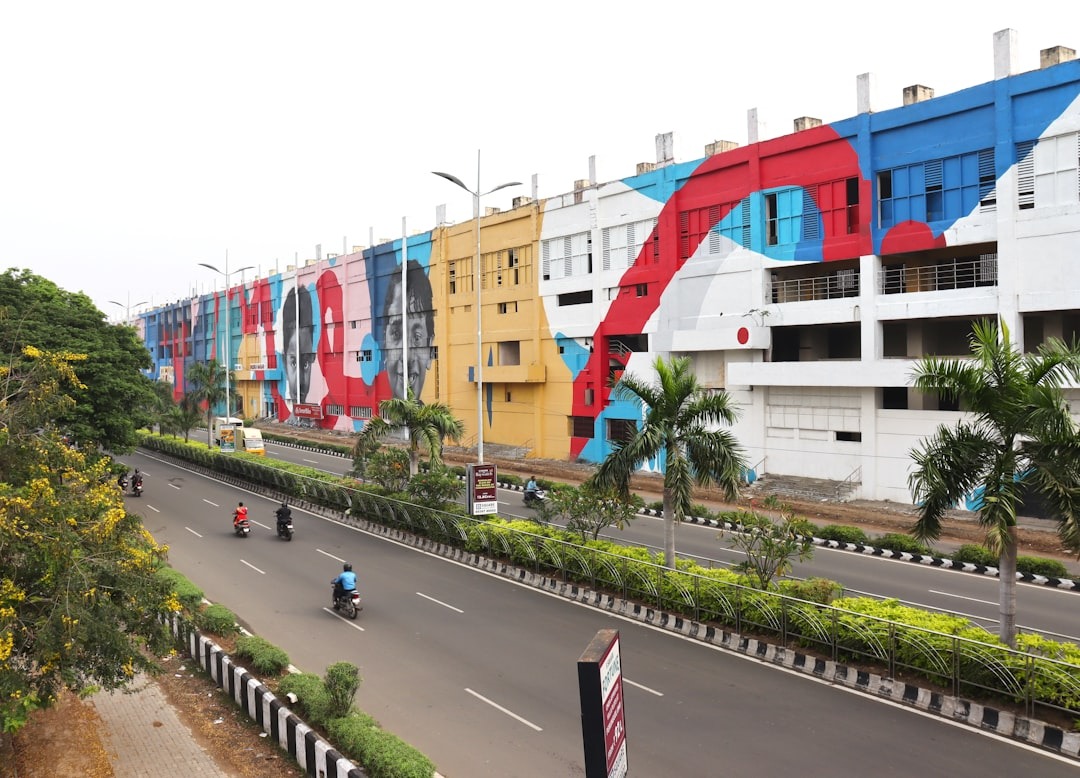
Chennai is India’s coastal Tamil capital, with a strong everyday rhythm and a deep cultural spine. Mylapore’s temple streets and classical music legacy matter here. Marina Beach is a landmark, but it’s also part of how the city moves and gathers. Compared with some northern metros, Chennai can read as less flashy, but it’s exceptionally coherent once you understand its neighborhoods.
The airport is MAA, located in the Tirusulam area, about 21 km from the city center. The Metro helps on some corridors, suburban rail helps on others, and app cabs fill the gaps. Heat and humidity are constants most of the year, so hotel details like blackout curtains and reliable air conditioning stop being luxuries and start being survival gear.
Neighborhood choice is practical. Nungambakkam and T Nagar keep you central for shopping and dining. Adyar and Besant Nagar shift you toward greener streets and the coast. The East Coast Road is the long-stay beach corridor, useful when you want resort-style properties without leaving the metro region entirely.

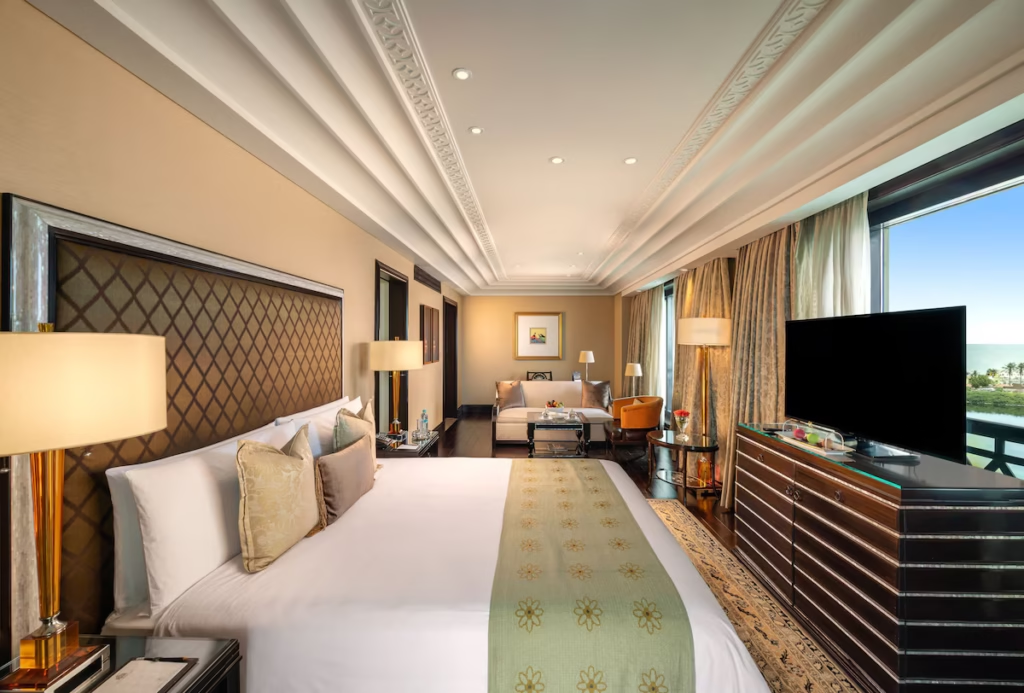
The Leela Palace Chennai
The Leela is a large waterfront hotel with sea-view rooms in many categories, a big pool setup, a full spa, and multiple restaurants that cover Indian and international menus well.
MRC Nagar puts you close to Marina Beach drives and the city’s upscale residential belt. Mylapore’s temple district is a short ride away, and the coastal road makes evening movement easier than many inland corridors.

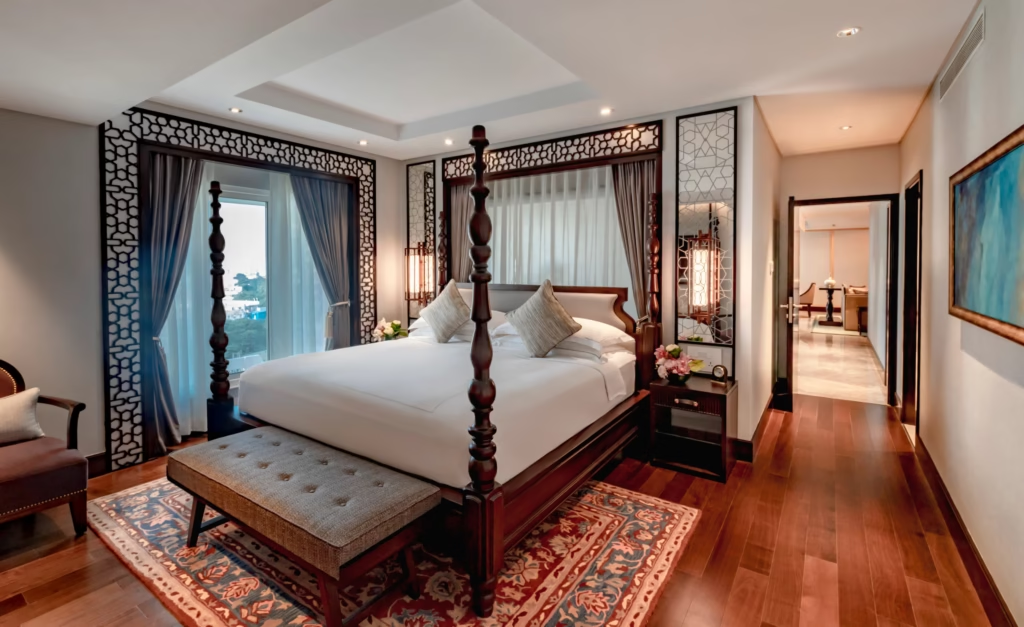
Taj Coromandel
Taj Coromandel is a classic city hotel with modern rooms, a strong restaurant lineup, a pool, and a full spa. It’s built for travelers who want everything handled in-house without drama.
Nungambakkam is central and practical. You are close to shopping, restaurants, and cultural venues, and airport transfers stay manageable. This location keeps you connected to both the heritage side and the newer business zones.

The Raintree
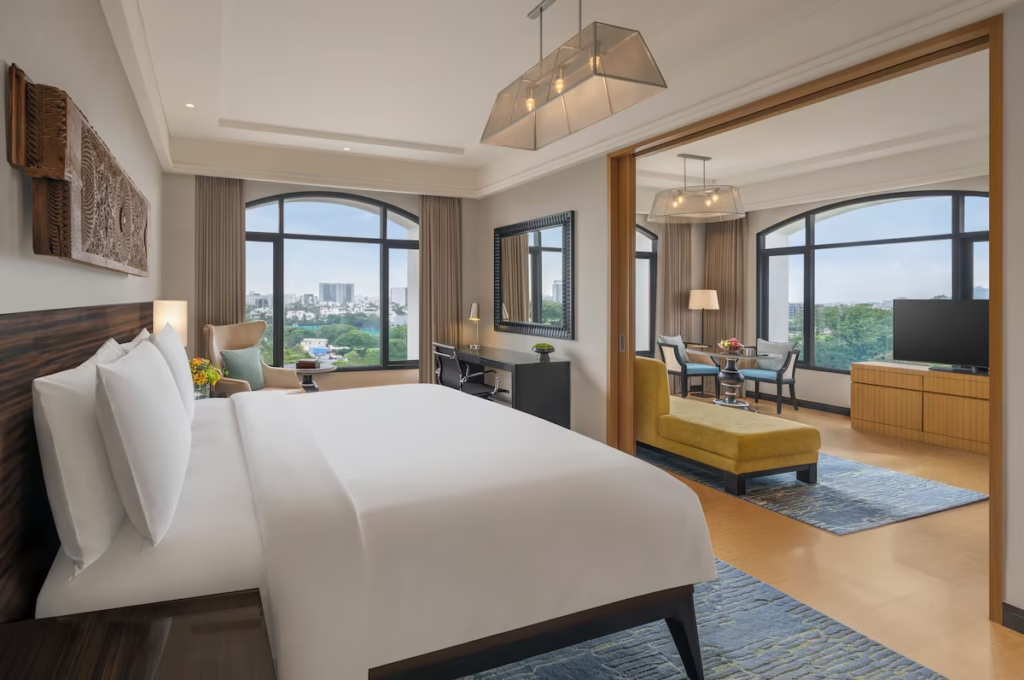
The Raintree is compact by five-star standards, but well-equipped. Expect a rooftop pool, a gym, and rooms that prioritize quiet, with good bedding and reliable air-con.
Alwarpet places you in an upscale, useful pocket between Mylapore and the city’s central corridors. Restaurants and cafés are close, and you can reach Marina Beach and the main shopping districts without crossing the entire city.
Section 2, My personal recommendations. Softer, calmer India with more breathing room.
Leh, mountains first, everything else second
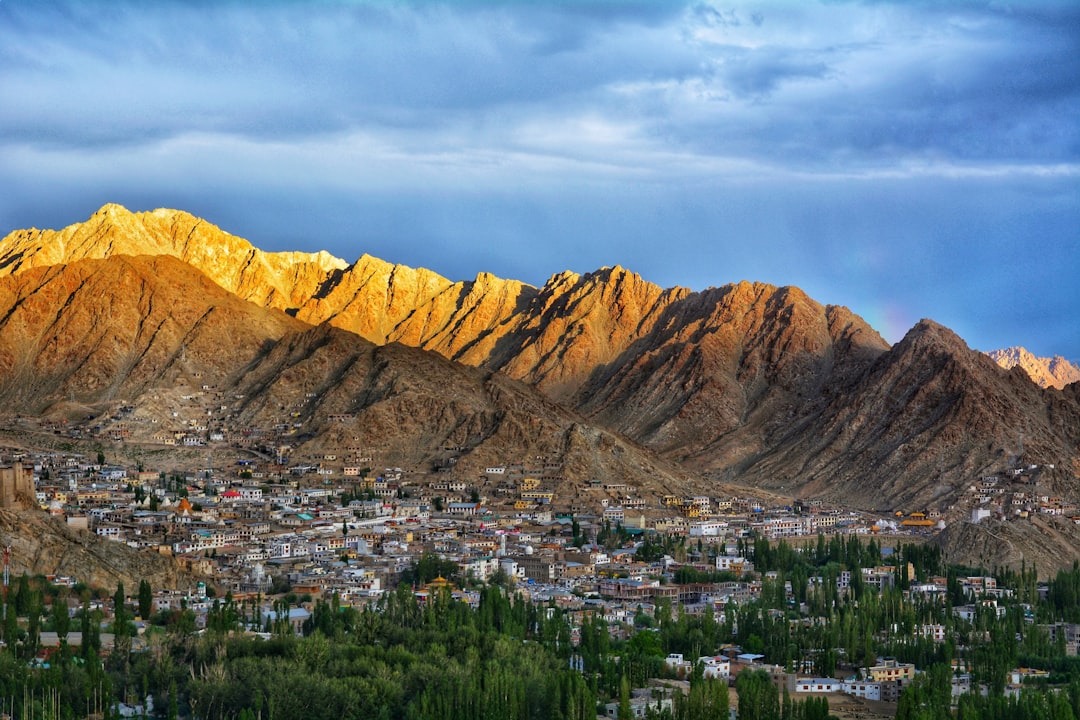
Leh is a high-altitude town with big landscapes and small logistics. It sits in Ladakh, with monasteries and viewpoints in every direction, and a main bazaar area that keeps the town walkable once you’re acclimatized. The scenery is the headline, but the real skill is pacing the first days so altitude doesn’t derail the trip.
Leh’s airport is IXL, and it sits at about 3,256 meters elevation, so the altitude shift can hit immediately. The travel season is short. Late spring through early autumn is when flights and mountain roads are most reliable, with winter narrowing options heavily.
Staying near the Main Bazaar keeps restaurants, tour agencies, and short walks realistic. Outskirts stays buy quiet and views, but they add taxi dependence, and in a place with limited late-night services that matters. Even in peak season, nights can drop cold fast, so room heating and insulation become real decision points.
The Grand Dragon Ladakh
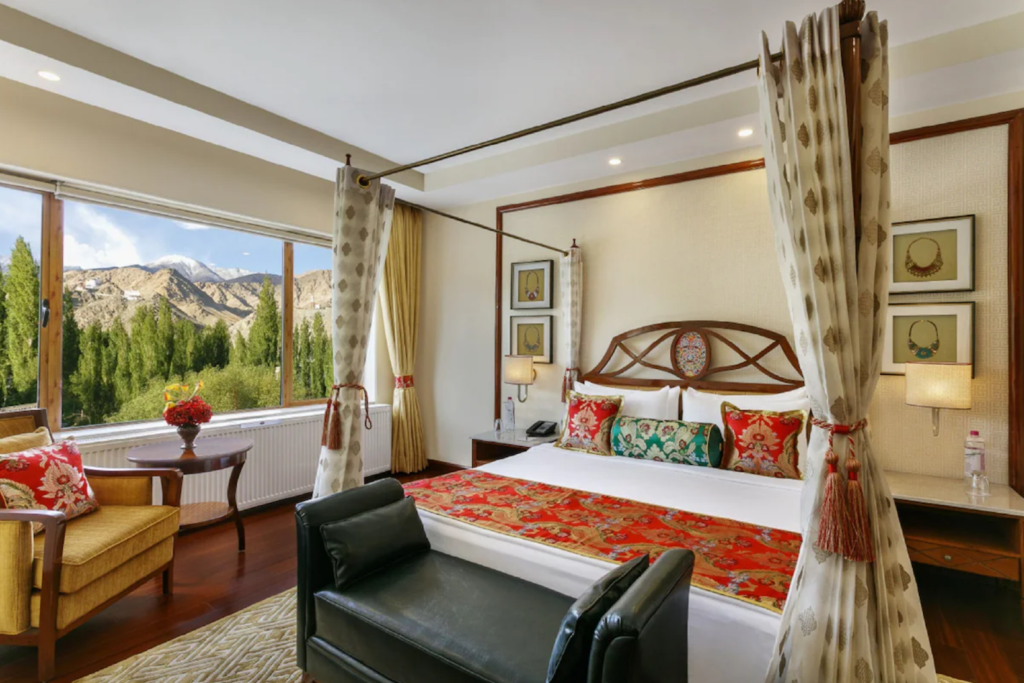
Grand Dragon is the polished end of Leh hospitality, with large rooms, strong heating, on-site dining that covers multiple cuisines, and landscaped grounds that give you somewhere to sit outside without being on a street.
It sits a short drive from Leh Market and the main town lanes, which keeps access simple while avoiding the tightest bazaar noise. You can reach Shanti Stupa and Leh Palace drives without long transfers, and return fast when altitude fatigue taps you on the shoulder.

The Indus Valley Ladakh
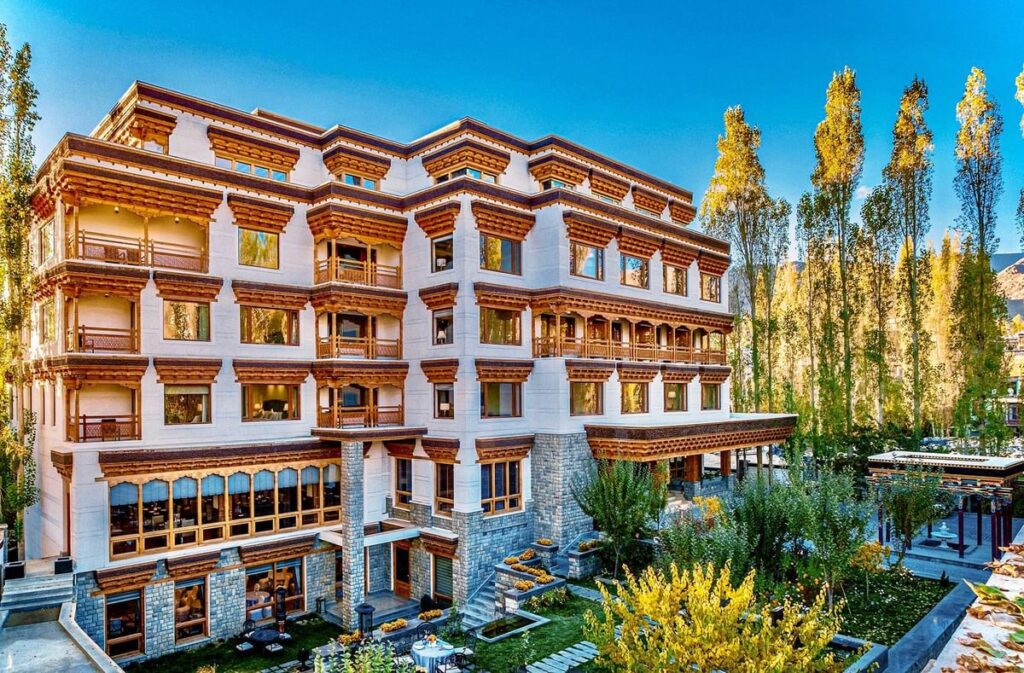
Indus Valley is a resort-style property with open grounds, mountain-facing views, and rooms designed for longer stays. Expect a multi-building layout, a restaurant on-site, and plenty of outdoor seating when the weather cooperates.
The location keeps you close enough to town for supplies and café stops, but far enough to reduce street clutter. It’s also convenient for heading out toward monasteries and day trips without crossing the bazaar every time.
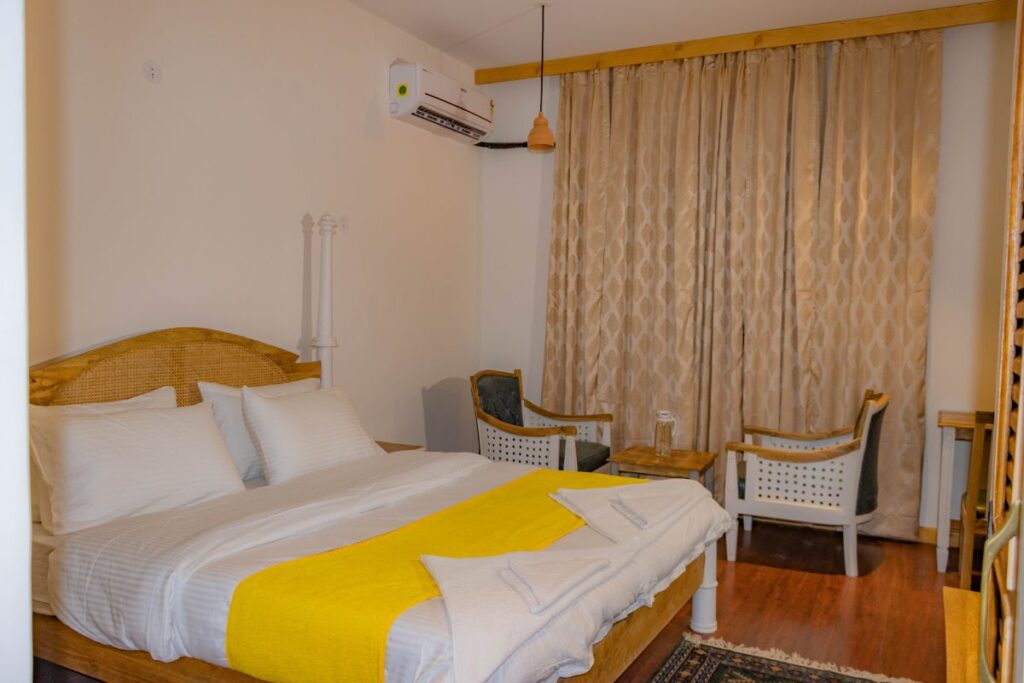
Hotel El Castello
El Castello is a smaller hotel with modern rooms, clean finishes, and the basics done right for Leh. Expect heating, straightforward dining options, and a scale that stays easy to navigate when you are tired.
It’s placed close to Leh’s central lanes, so you can reach the market area without a long drive, and you are not stranded when you want a simple meal outside. At this altitude, shorter transfers matter.
Dharamshala, India’s Tibetan chapter, with monasteries, trails, and cool air
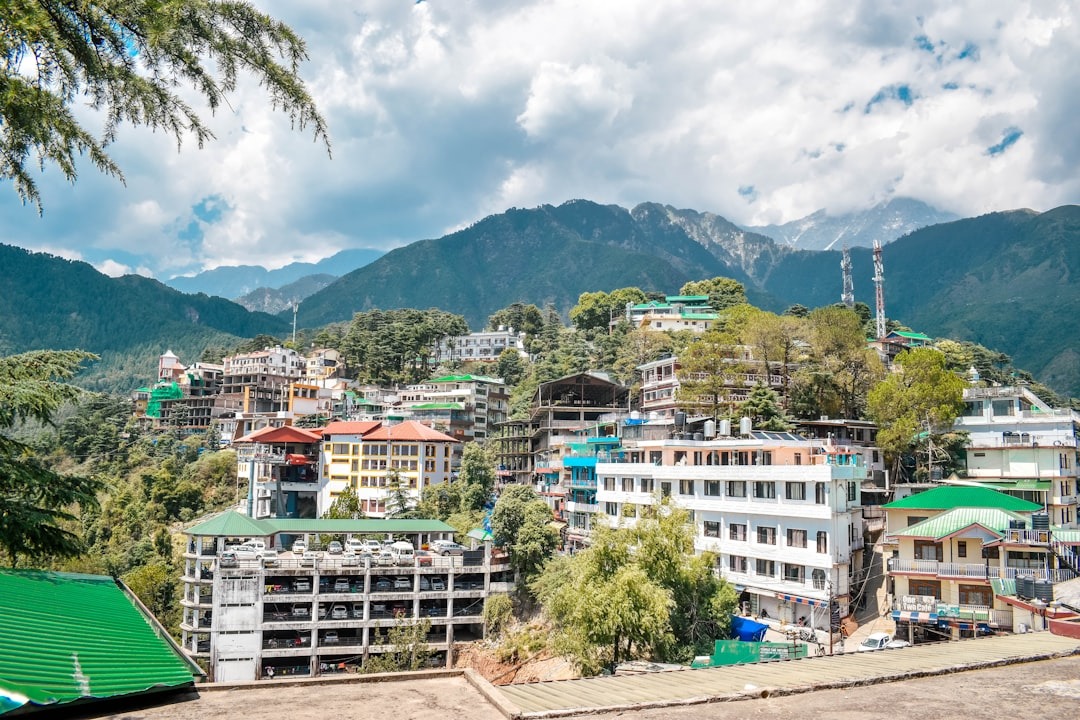
Dharamshala is the home of the Dalai Lama, the “pope” of buddhism. A mountain town with a split personality. Lower Dharamshala is more local and spread out. McLeod Ganj is the traveler hub, with the Tibetan community, monasteries, and a dense strip of cafés and guesthouses. The Tibetan influence is not decorative here. It shapes food, culture, and the town’s daily rhythm.
The nearest airport is Kangra, DHM, with McLeod Ganj about 17 km away by road. Taxis handle most airport arrivals, with buses filling in for budget routes. Weather is a real factor. Monsoon season can bring heavy rain and road disruption, and winter nights get sharp.
Staying in McLeod Ganj puts you closest to the main walking streets and the Dalai Lama temple complex area, with more foot traffic and tighter roads. Staying lower down gives you more space and easier vehicle access, but you’ll be riding uphill for the things most visitors came to see. Choose based on how much you want to walk versus how much you want to drive.
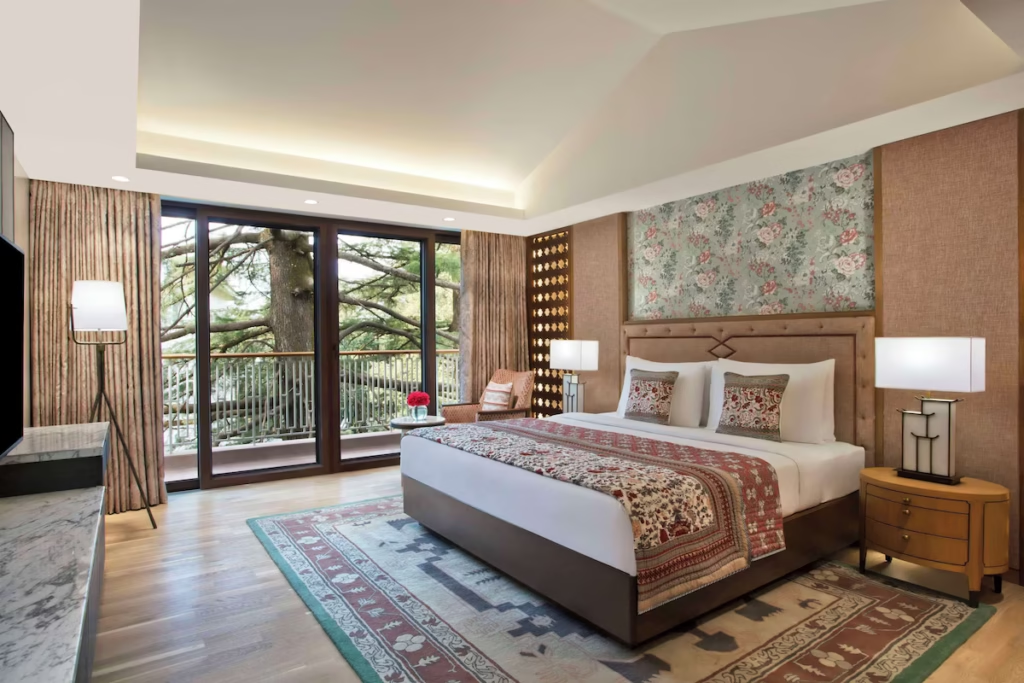
Hyatt Regency Dharamshala Resort
Hyatt Regency is a modern hillside resort with large rooms, an outdoor pool, spa facilities, and wide views across the valley. It’s designed to keep you on-property comfortably when weather turns.
Its setting is above the main town, which means quieter nights and cleaner air, with short drives down to McLeod Ganj’s cafes and the Tsuglagkhang complex. You are also well placed for day trips toward Kangra Valley viewpoints.

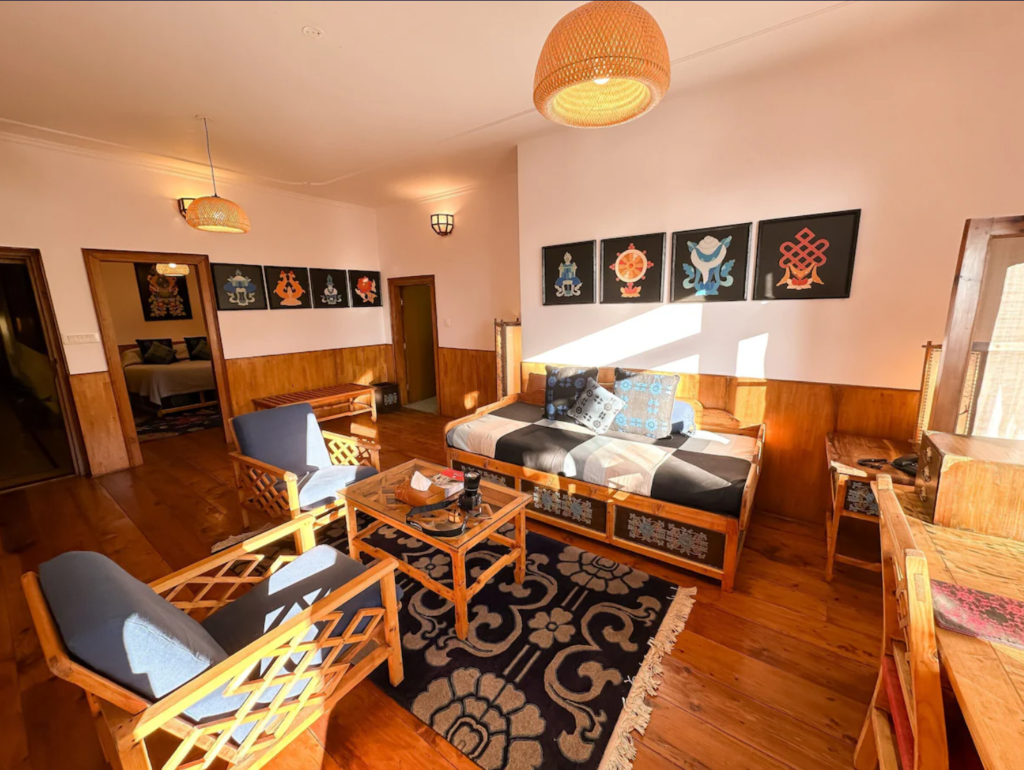
Chonor House (McLeod Ganj)
Chonor House is a small, Tibetan-influenced heritage stay with a strong sense of place. Expect fewer rooms, thoughtful interiors, and a quieter rhythm than the average hill hotel, plus a restaurant that makes staying in a valid choice.
It sits near the heart of McLeod Ganj, keeping monasteries, bookshops, and cafés within easy reach. You can walk to the main complex without relying on taxis, and still retreat to a property that stays calm inside.

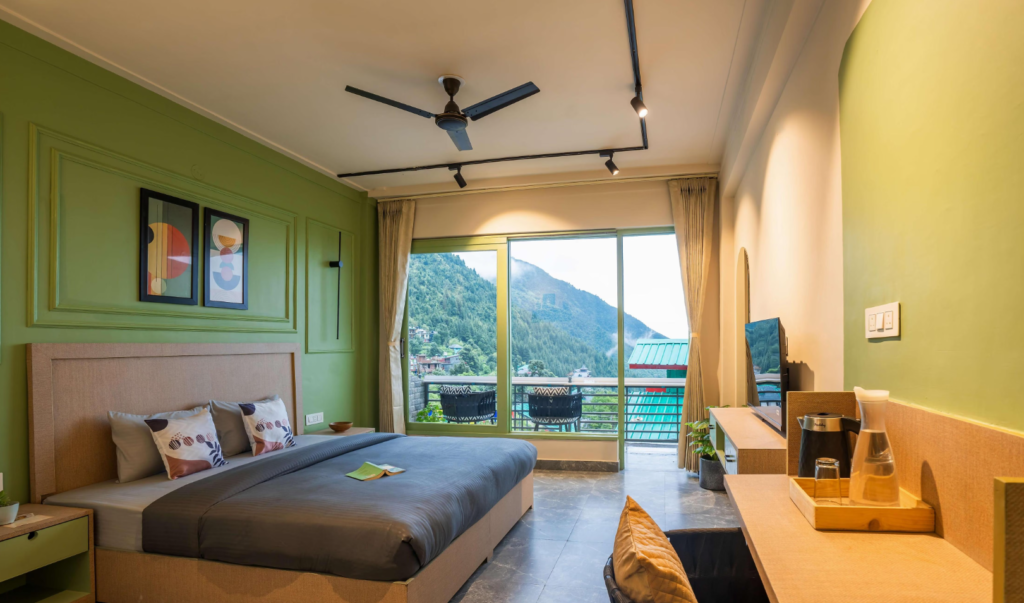
Zostel Dharamkot
Zostel Dharamkot is a social, modern hostel-style stay with private rooms available, shared spaces, and a hillside layout that leans into views. Expect simple rooms, consistent cleanliness, and common areas designed for hanging out.
Dharamkot is uphill from McLeod Ganj. You get quieter surroundings and forest-edge access, with walking routes down into town. It’s a good spot if you plan to spend time on trails or want a less crowded immediate neighborhood.
Varkala, beach town, not beach circus

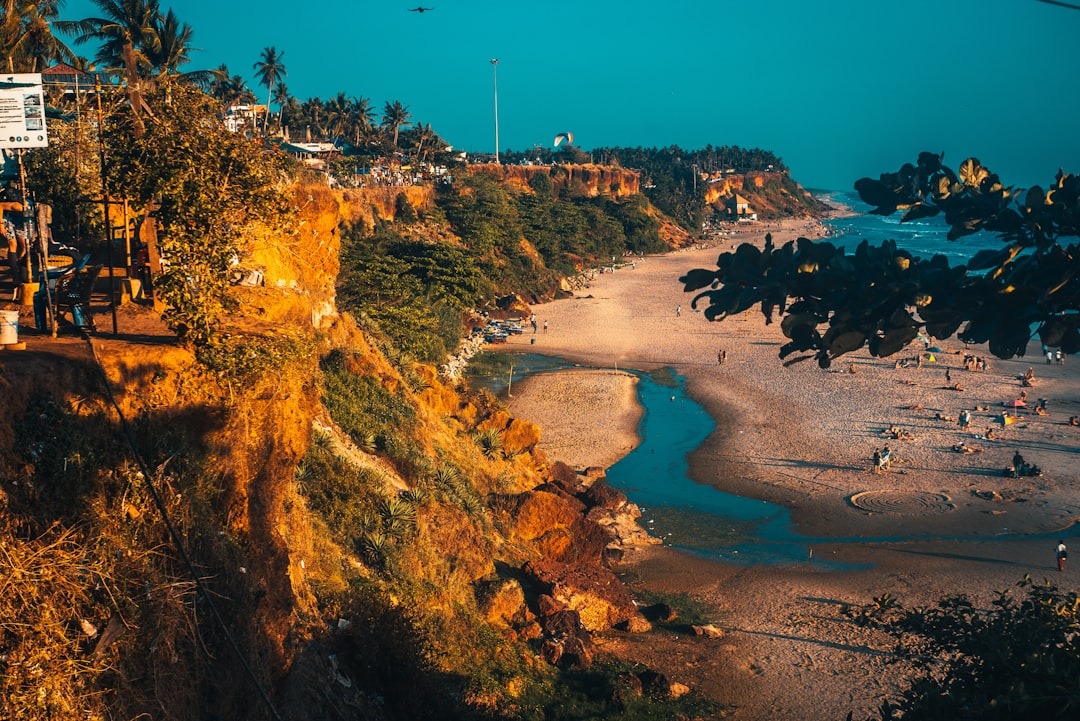
Varkala is Kerala’s cliff-and-beach town, compact enough to learn quickly. The cliff line is the signature, with views over the Arabian Sea and a string of cafés, small hotels, and shops. Away from the cliff, the town turns residential fast, with quieter streets and more local Kerala life.
Arrival is straightforward. The nearest airport is Thiruvananthapuram, TRV, about 40 km away, with a drive time commonly around 40 to 45 minutes. Varkala also has rail access through Varkala Sivagiri station, which makes it easy to combine with other Kerala stops.
Where you stay changes the terrain more than the vibe. Cliff properties trade stairs and uneven paths for sea views and immediate access to the main strip. Inland properties trade the view for flatter walking and quieter nights. Monsoon season roughens the sea and can limit swimming, so if beach time is central, timing matters.

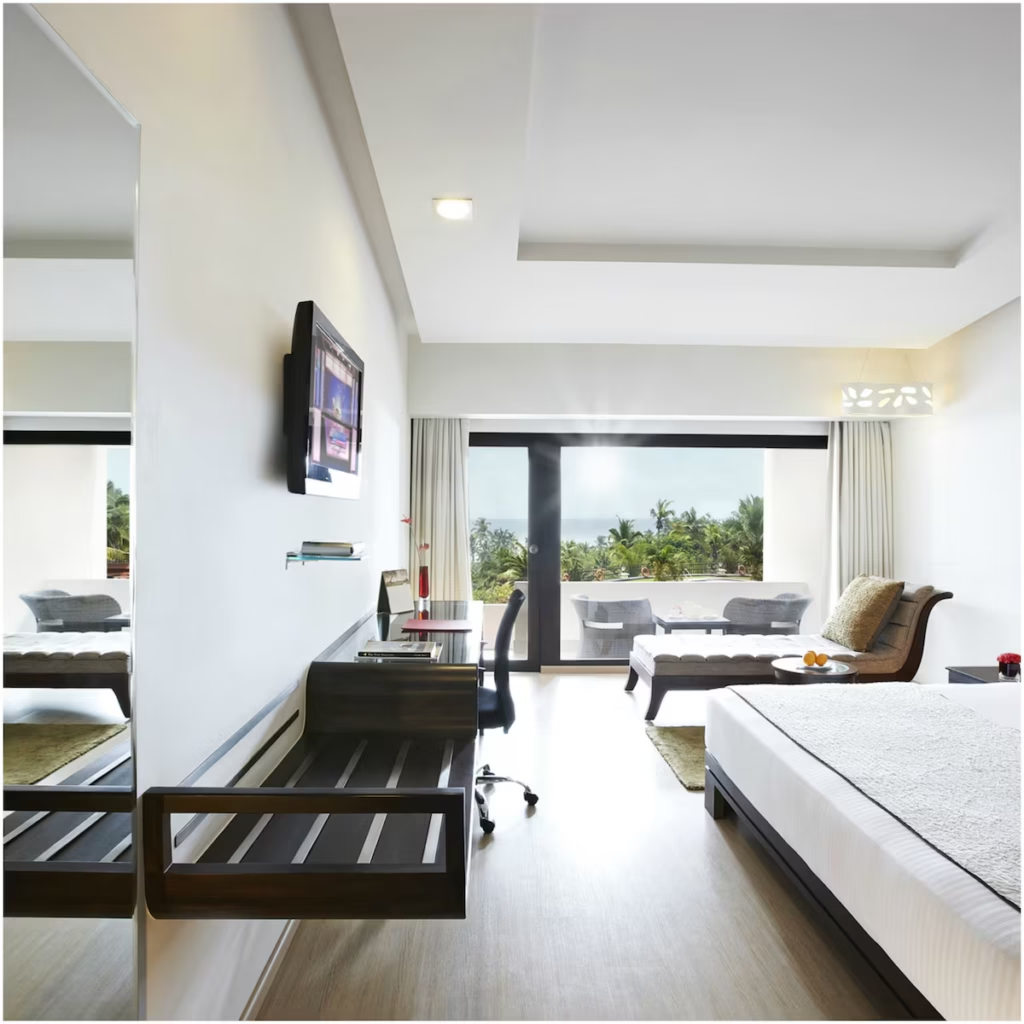
Gateway Varkala
Gateway Varkala is an upscale, garden-heavy resort on roughly 20 acres, with the kind of facilities that make sense in Varkala. An outdoor pool, a Green Leaf certified Ayurveda centre, and proper sports amenities including tennis and badminton courts. The layout is spread out, with public spaces designed for downtime, plus multiple dining and bar options on-site.
The address is Janardhanapuram, on a cliff edge above the Arabian Sea. Janardanaswamy Temple is about 0.5 km away, Varkala Beach about 0.8 km, and the main Varkala Cliff strip about 1.3 km, close enough to walk, far enough to avoid the constant cliff-front traffic under your window. Varkala railway station sits around 2 km away for onward moves.
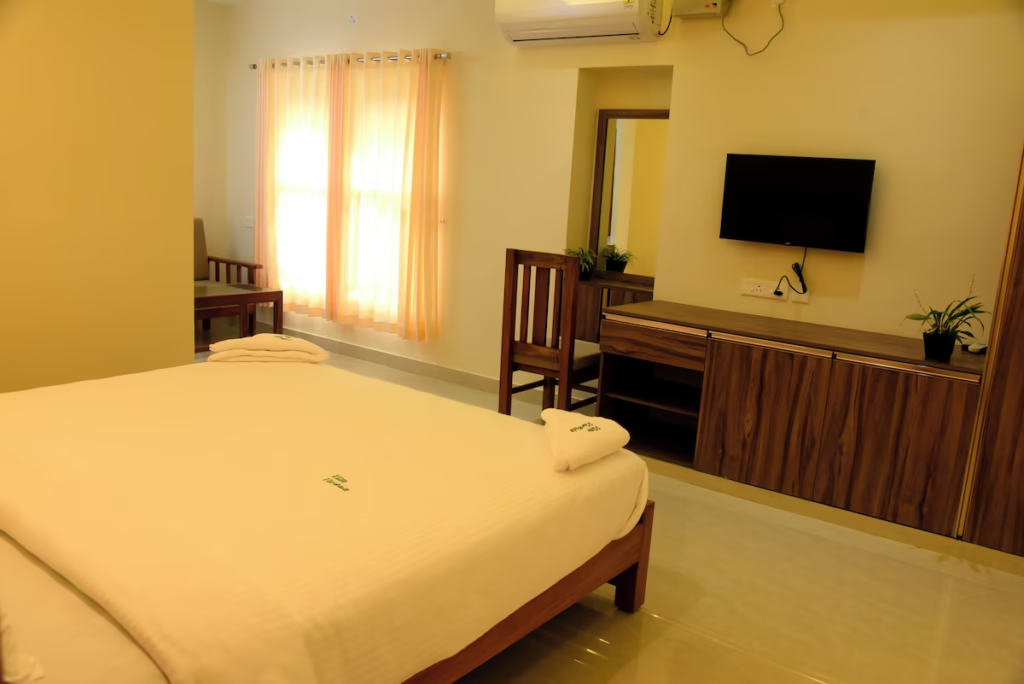
Villa Varkala
Villa Varkala is a modern, design-led property with clean rooms, a pool, and an intimate scale. It’s built for travelers who want polish without a giant resort footprint.
The location keeps you close to the cliff zone without being directly on the loudest stretch. You can reach restaurants and viewpoints quickly, and still return to a quieter pocket when the promenade is at peak traffic.
Lima Beach House
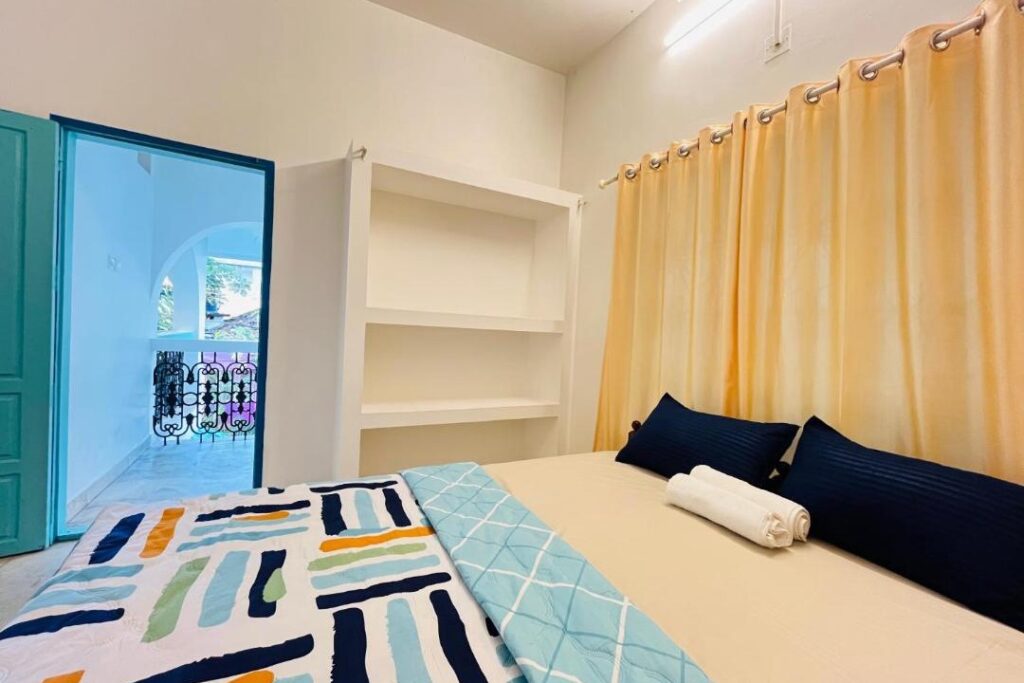
Lima Beach House is simple, tidy, and built around the basics that matter. good air-con, clean rooms, and a straightforward layout. It keeps the “guesthouse” spirit, with more consistency than many in this price band.
You are close to the cliff area’s cafes and the beach access points, so you do not need transport for daily movement. This is Varkala at walking scale, which is exactly how the town is best used.
Udaipur, water, marble, and old lanes, Rajasthan’s slowest stunner

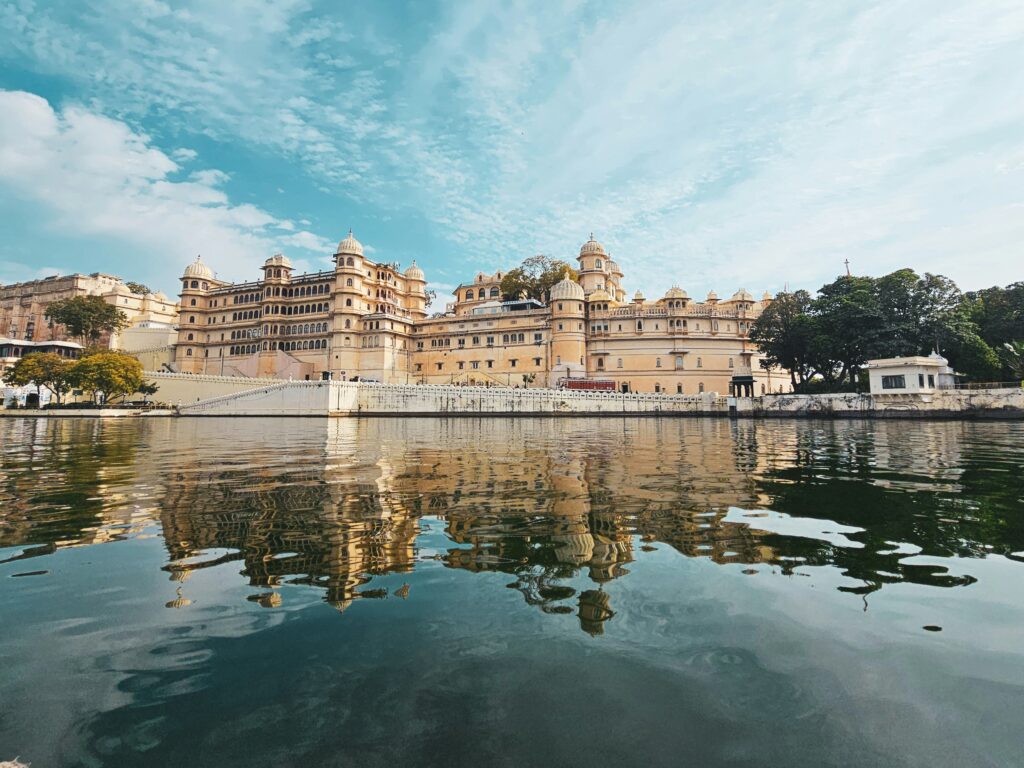
Udaipur is Rajasthan’s lake city, built around palaces, ghats, and narrow lanes that keep the old center tightly knit. Lake Pichola is the postcard core, with the City Palace complex dominating the skyline. The city also has an easy café culture by Indian standards, which makes it popular for slower travel days between faster-moving destinations.
The airport is UDR, located about 22 km east of the city. Local movement is mostly walking in the old center, plus auto rickshaws for anything beyond it. Boats connect lake sights, and the lakeside ghats act like practical landmarks for navigation.
Staying in the Old City near the lake keeps you close to the main ghats and the densest sight cluster, with tighter access for cars and more street noise. Staying around Fateh Sagar Lake gives you wider roads and more open space, with a short drive into the old core. Summer heat spikes hard in late spring, so properties with shaded courtyards or pools become more than nice-to-haves.

The Oberoi Udaivilas
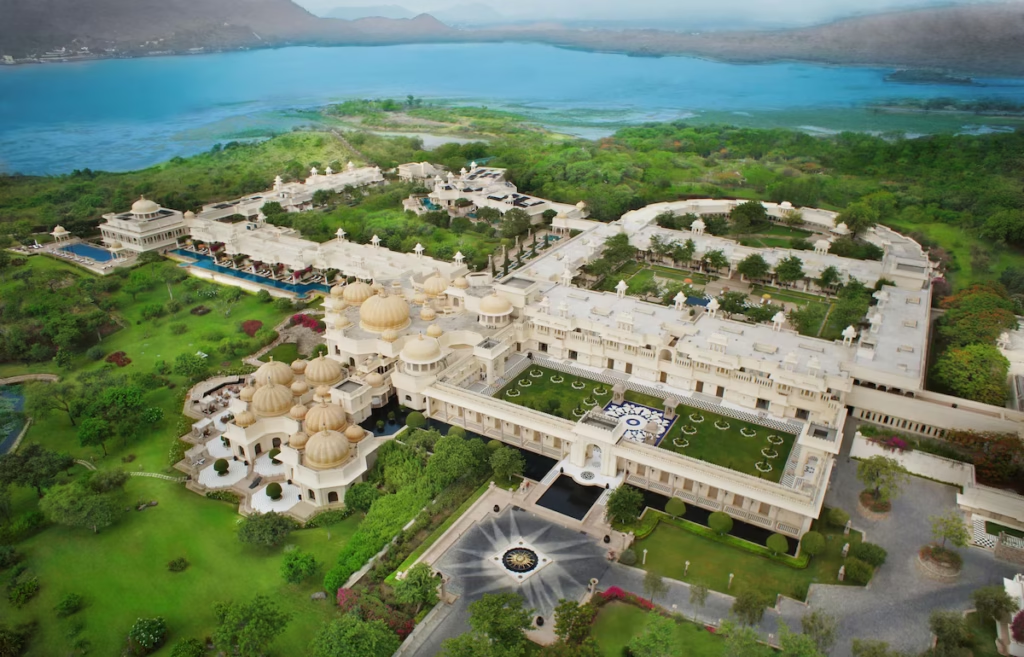
Udaivilas is one of India’s flagship luxury stays, built around domes, courtyards, and lake-facing views. Expect expansive grounds, a major pool setup, multiple dining options, and rooms designed around privacy and quiet.
It sits on Lake Pichola’s edge, which means the lake is not a day trip. It’s your immediate environment. Boat access, city palace views, and the old city’s waterfront are all close enough to keep logistics simple.

Trident Udaipur
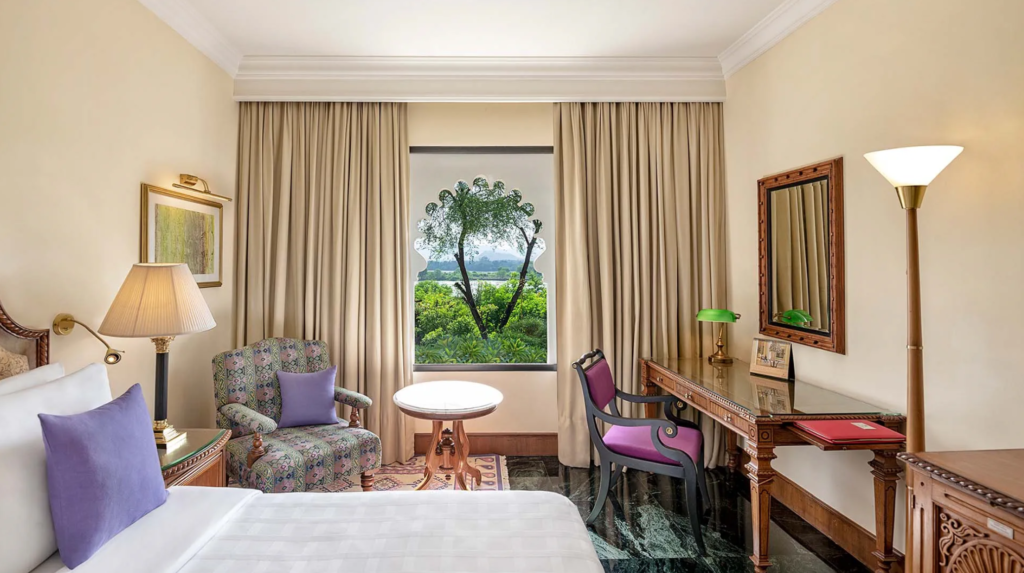
Trident is a large resort-style hotel with gardens, a big pool, and rooms that keep things modern and comfortable without going heavy on palace theater.
Its position keeps you near the lake corridor and within short drives to the City Palace and the main ghats. It’s also convenient for moving out toward quieter viewpoints and hill roads when you want Udaipur without crowds.
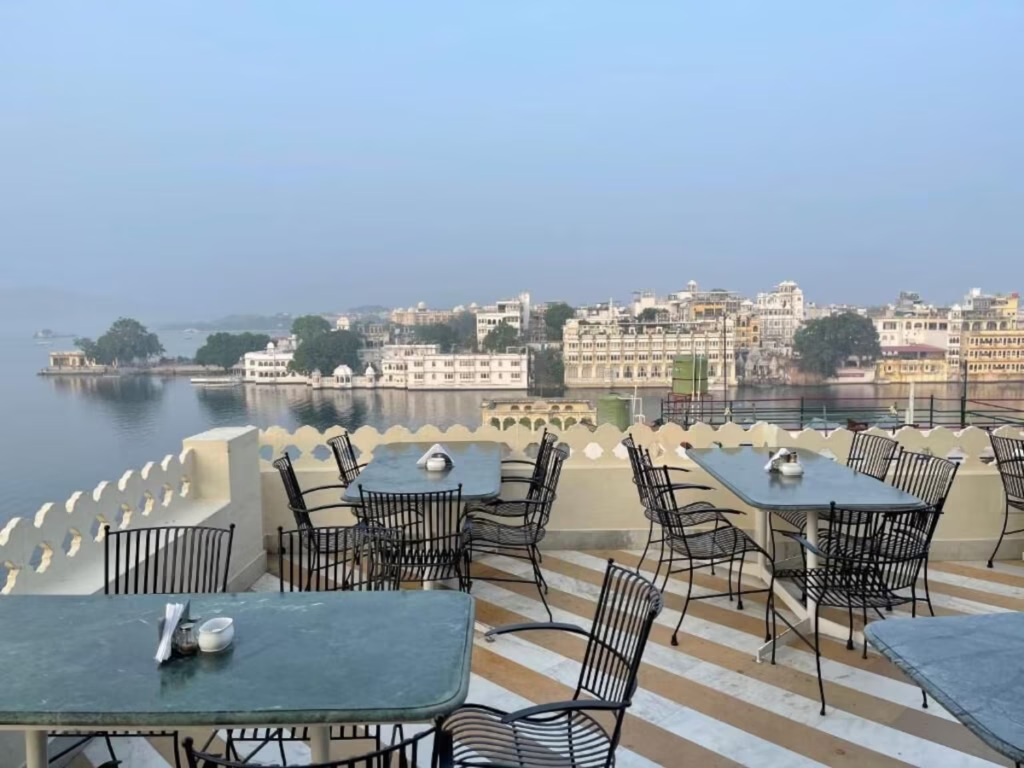
Jaiwana Haveli
Jaiwana Haveli is a smaller heritage-style stay with simple rooms, a rooftop restaurant, and a classic old-city atmosphere. Expect comfort, compact corridors, and staff used to helping travelers with practical planning.
The old city placement puts you near the lakefront ghats and walkable lanes, with quick access to the City Palace area. You trade resort grounds for being inside the historic grid, which is often what people actually want in Udaipur.

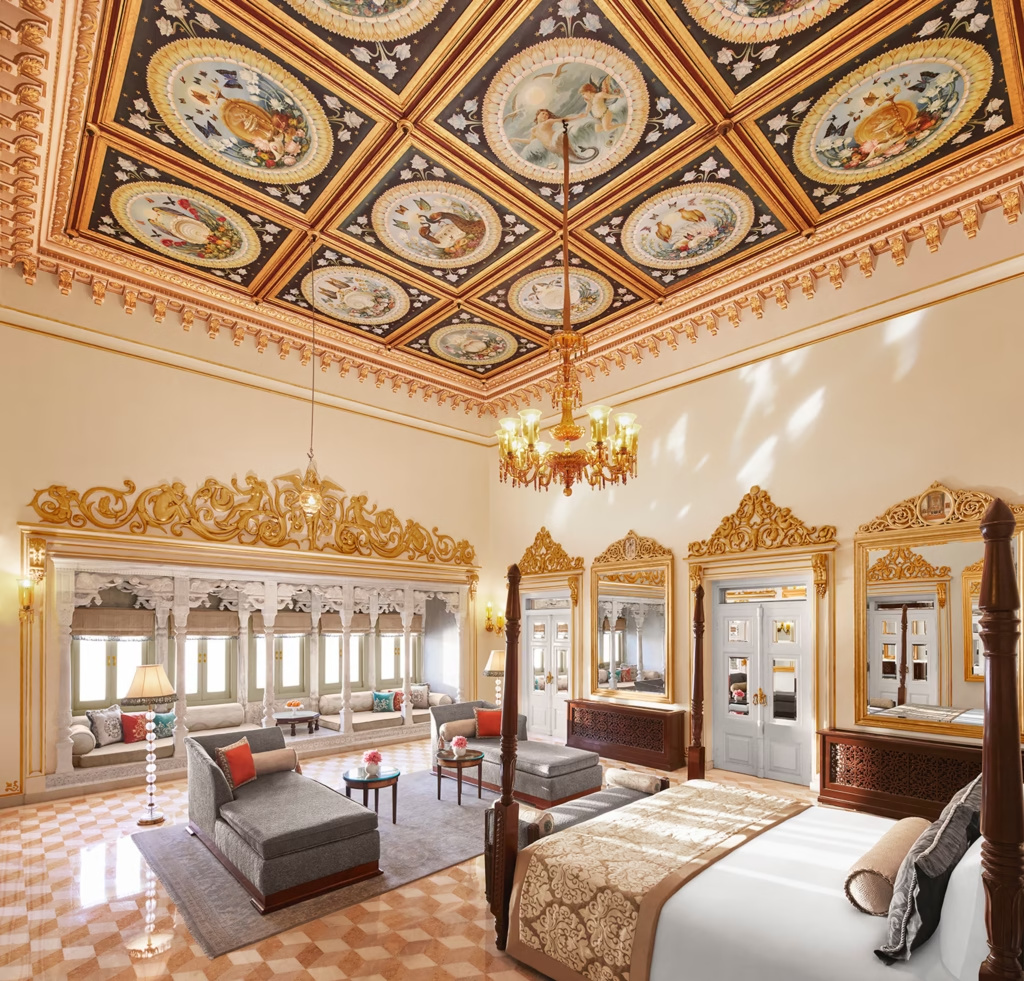
Udaipur Special Stay: Taj Lake Palace
Taj Lake Palace is the white-marble icon sitting on Jag Niwas island in Lake Pichola, originally built as a royal pleasure palace in the 1740s. It’s a full heritage hotel experience with multiple restaurants and a spa, plus the simple logistical truth that shapes everything here. Arrival is by boat. Parts of the James Bond film Octopussy were filmed here, and the hotel still leans into that piece of pop culture history without turning itself into a theme.
The location is the whole point. You are literally in the middle of the lake, with the City Palace and the old-city waterfront a short boat ride away. On land, Gangaur Ghat and the main lakefront lanes are close, so you can be in the thick of Udaipur quickly, then disappear back onto the water when you want the city at arm’s length.
Puducherry, a coastal reset without leaving the mainland
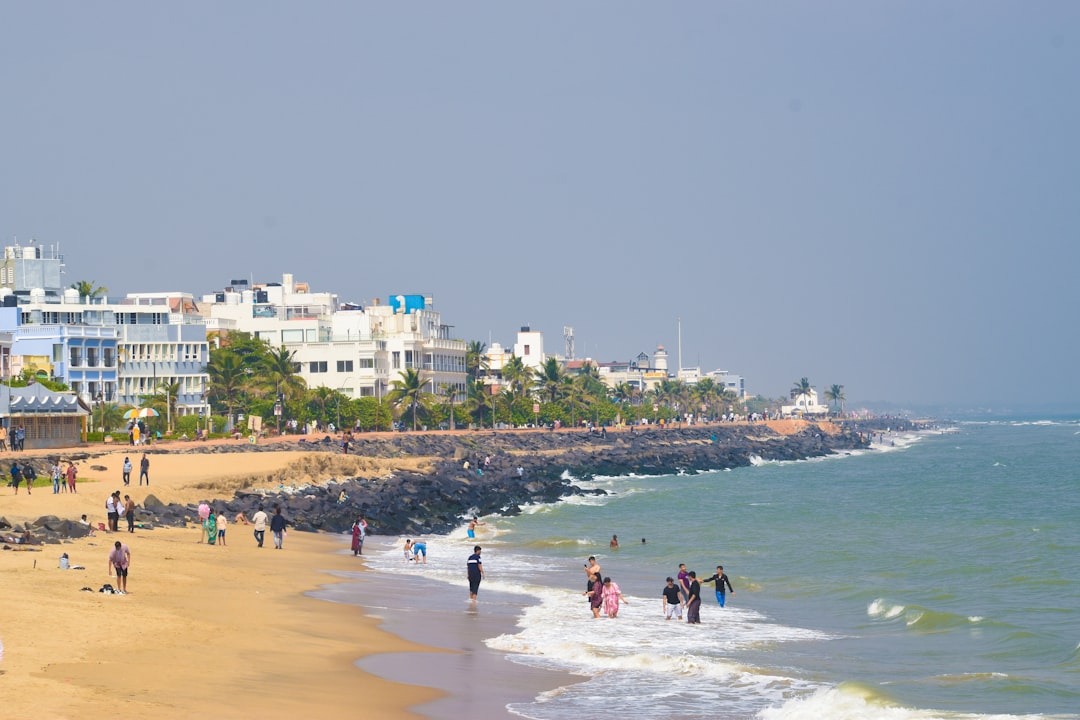
Puducherry, also called Pondicherry, is a coastal town with a split layout. White Town is the French-era grid, with colonial façades and a promenade along the seafront. Tamil neighborhoods sit around it with markets, temples, and a more typical south Indian street pattern. It’s one of the rare Indian destinations where walking is genuinely part of the appeal.
Access is flexible but uneven. Puducherry has a small domestic airport, PNY, about 6 km from the city center, with limited schedules compared with major hubs. Many travelers arrive through Chennai and come down the coast by road. Puducherry to Chennai is about 151km by road.
Location choice is simple and high-impact. White Town puts you near the promenade and the central café scene, plus quick access to the Sri Aurobindo Ashram area. Auroville sits about 10 to 15 km north of town, so staying on the north side can shorten that run. Outside White Town, hotels tend to be larger and more car-oriented, with easier parking and faster exits for beach drives.

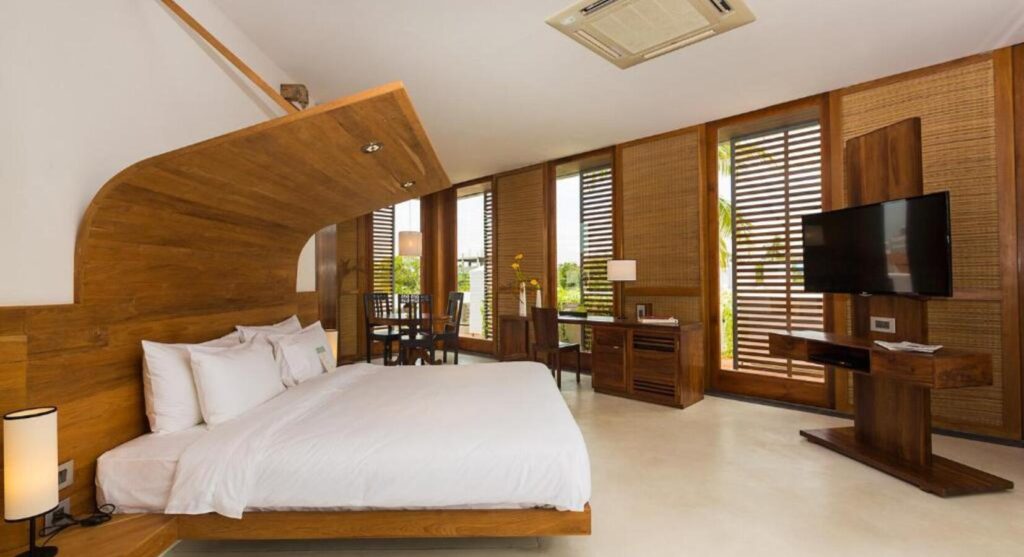
La Villa
La Villa is small, design-forward, and built around privacy. Expect a limited number of rooms, a pool, and a calm, curated interior style that suits Puducherry’s slower pace.
Its location keeps you close to the core White Town lanes, with quick walks to the promenade and the main café strip. You can also reach the busier market areas by short rides when you want a more local side.
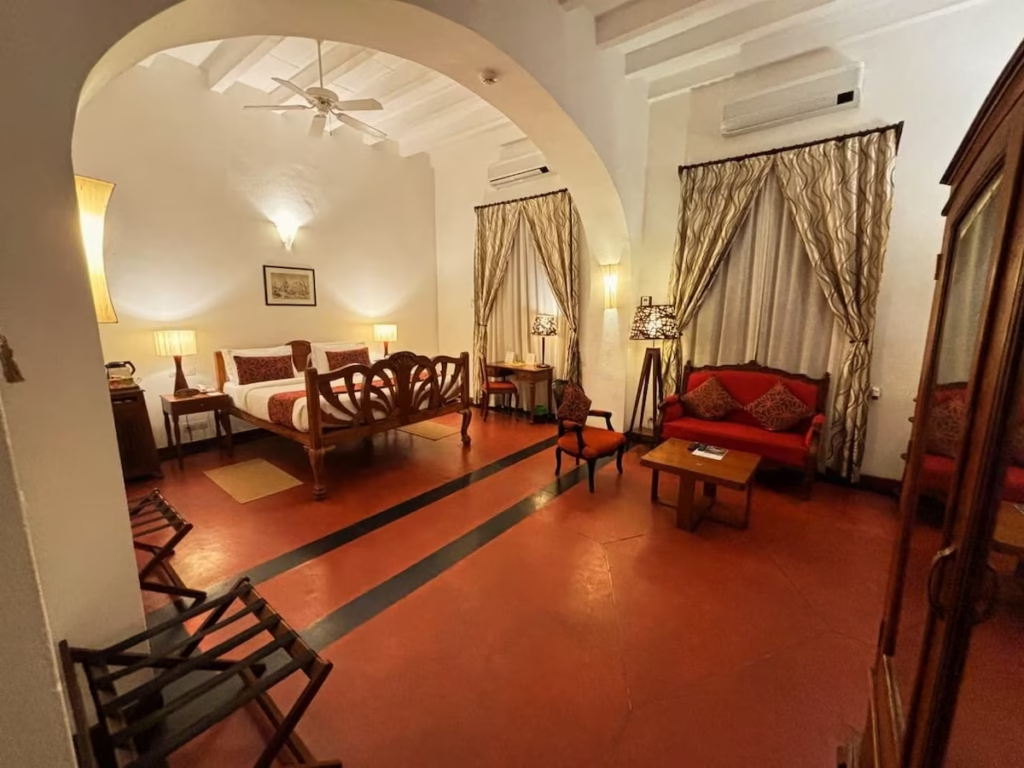
Palais de Mahe
Palais de Mahe is a heritage-style boutique hotel with a pool, refined interiors, and a quiet, inward-facing layout. Rooms lean classic, with modern bathrooms and strong air-con.
You are in White Town’s grid, close to the promenade and the French Quarter streets that most visitors come to photograph. Cafés, galleries, and the waterfront are within easy walks, and the area stays calmer than the busier Tamil neighborhoods inland.

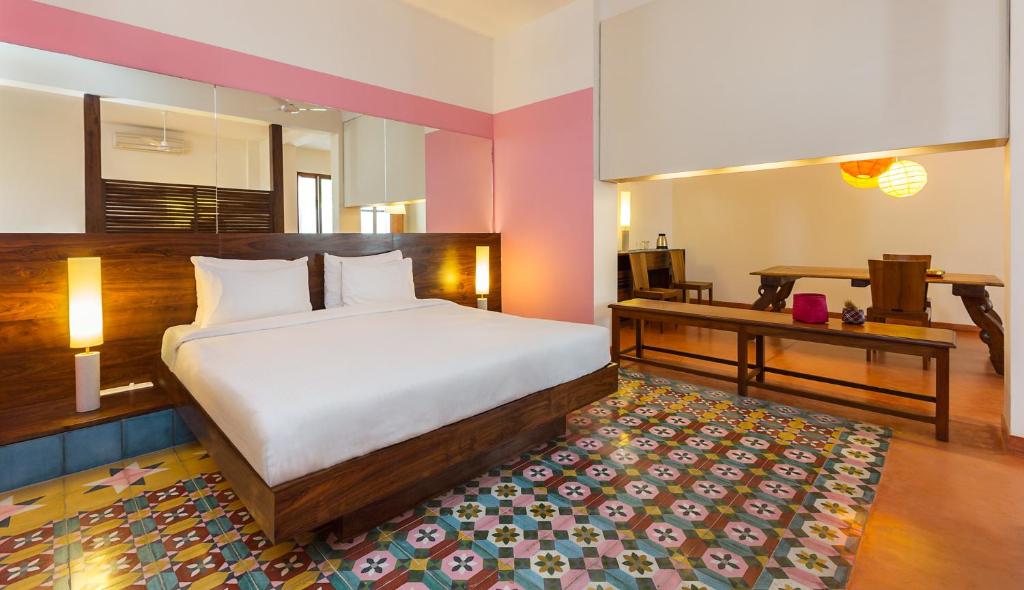
Villa Shanti
Villa Shanti is a compact heritage property with a popular restaurant and rooms that stay simple, clean, and consistent. It’s the kind of place where the lobby and courtyard do a lot of the atmosphere work.
White Town placement puts you close to the promenade and the best walking streets. It also keeps day trips. Auroville, beach roads, and the inland temples, easy to arrange without needing a full planning session.
Final Thoughts
India does not reward rushing. It rewards getting the first decisions right. The first hotel, the first neighborhood, the first city. Those choices decide whether your first 48 hours are spent trying to deal with the chaos and noise, or actually learning the country. A soft landing is not a retreat from India’s intensity. It’s a way to meet it with enough sleep, enough control, and enough breathing room to stay curious.
The pattern becomes obvious once you’ve been on the ground a few days. Big gateway cities are easiest when you pick districts that handle noise and transit for you. Delhi is manageable when the Metro is within reach and the street outside your room is not a constant horn. Mumbai becomes readable when you stop crossing the whole city for dinner. The “second section” places do something else. They narrow the frame. Leh forces pacing with altitude and scale. Dharamshala shifts the soundtrack and the slopes. Varkala simplifies the day into a cliff line and a set of steps. Udaipur and Puducherry make walking feel normal again.
India is also wildly seasonal, and that’s not trivial. Rajasthan in October is a different planet from Rajasthan in May (and I’ve been in Rajasthan in May, would not wish that upon anyone). Goa in dry season runs smoothly. Goa in monsoon gets stuck in the mud. Ladakh is a summer country. The south has its own rain logic. If you match your route to the calendar, the whole trip gets easier without becoming less interesting.
If you take one thing from this guide, make it this. Choose hotels that give you a strong arrival and a clean exit. Reliable air conditioning, real sound control, a clear pickup point, and a neighborhood you can understand within ten minutes of stepping outside. India will handle the rest. It always does.