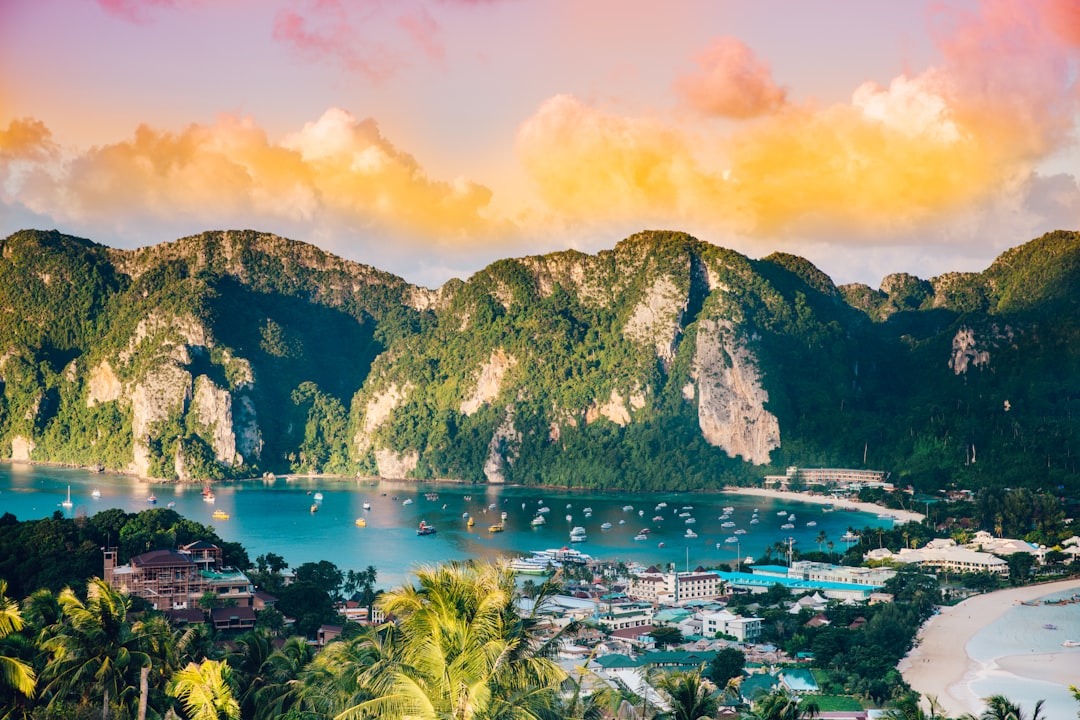
Thailand is easy to enter, and deceptively easy to mis-enter. Most international arrivals funnel through Bangkok, landing at Suvarnabhumi Airport (BKK) or Don Mueang International Airport (DMK), with DMK handling a lot of low-cost regional traffic and domestic hops.
Seasonality matters on night one because it changes the commute you are about to take. The broad pattern is drier weather in roughly November to February, and heavier rain in roughly May to October, but the Gulf side and Andaman side can peak at different times. That difference is why “quick beach” does not always mean “quick comfort.”
Thailand’s history sits right under the pavement. Ayutthaya became a major power in 1351 and fell in 1767, and the Rattanakosin Kingdom era begins in 1782 with Bangkok as the center. Temples are not side attractions here. They are living institutions, and they come with real-world etiquette, including covered shoulders and knees at many major sites.
Transport is the difference between “I arrived” and “I arrived intact.” Bangkok has two rapid transit networks. BTS Skytrain and Bangkok MRT cover a lot of what tourists need, and they do it without street-level gridlock. In most cities and resort towns, Grab is the default backup when walking stops being practical.
Money is simple, Thailand uses the Thai Baht (THB). As of writing this, 1 Euro is worth 37 THB and 1 USD is worth 32. You can buy a street food meal for 30-50 THB, or a meal at a restaurant for around 200-300 THB at a normal spot or around 500-700THB at a fancier spot. Tourist areas take cards, but plenty of small restaurants and street vendors still prefer cash. QR payments through local systems are common, but visitors should not treat them as universal on day one.
Food is the fastest way to understand the country, and it changes hard by region. Central Thai is balanced and aromatic. Northern Thai is herby and often pork-heavy. Isan brings heat, lime, sticky rice, and grilled meats. The deep south goes louder on turmeric, seafood, and ferments. On your first night, that translates into one practical rule. Pick an area where dinner is easy to find within a short walk, not a negotiation with traffic.
A “soft landing” is not a vibe. It is logistics plus sleep mechanics. That means fast airport access, predictable check-in, strong air conditioning, and an area where you can eat without planning a campaign. The destinations below are realistic first-night picks because you can reach them quickly, and because they give you an easy second day.
Quick comparison table
| Area | Style | Energy | Close to sights | Crowding | Best for |
|---|---|---|---|---|---|
| Bangkok | Big-city gateway | High | High | High | First-time arrivals, onward flights |
| Chiang Mai | Cultural north | Medium | High | Medium | Temples, cafes, slower pace |
| Phuket | Island-scale, varied | Medium to High | Medium | High | Direct flights, beaches or Old Town |
| Koh Samui | Resort island | Medium | Medium | Medium | Easy beach start with an airport |
| Krabi | Cliffs and beaches | Medium | Medium | Medium | Boats, islands, compact beach towns |
| Hua Hin | Classic seaside | Low to Medium | Medium | Medium | Low-friction coastal reset near Bangkok |
| Pattaya (Jomtien) | Urban beach strip | Medium | Low | High | Quick beach access from Bangkok |
| Khao Lak | Quiet Andaman coast | Low | Low to Medium | Low to Medium | Calm beaches, space, sleep |
| Chiang Rai | Far north, compact | Low to Medium | Medium | Low | Temples, day trips, calm city nights |
Bangkok, the landing pad that never closes.

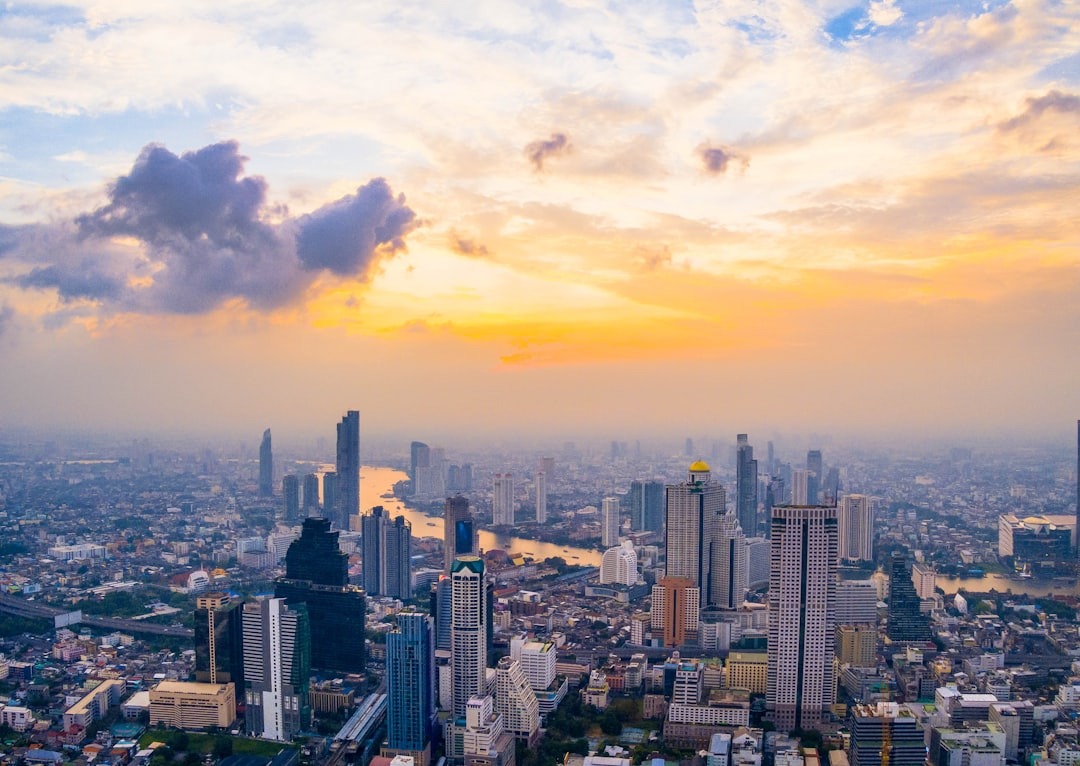
In my opinion, Bangkok is the capital of Asia, not just Thailand. Everything flows through Bangkok, and it behaves like it. International flights arrive all day, hotel staffing is built for late check-ins, and the city can absorb a jet-lagged traveler without drama. Two airports feed the city, and that alone makes Bangkok the most forgiving first night in Thailand.
The city’s real trick is that you do not need to “beat traffic” if you plan around rail. BTS and MRT can move you across central Bangkok without street-level congestion, and river boats cover the historic spine along the Chao Phraya River. When a hotel is walking distance to a station, your first night stops being a logistics puzzle.
For a soft landing, focus on three pockets. Riverside if you want quiet and water access. Siam if you want malls, easy trains, and zero friction for supplies. Lower Sukhumvit if you want dining density and quick BTS links. The wrong choice is not “too touristy.” It is “too far from transit.” As a side note, I personally never recommend Khao San for anyone, it’s loud, chaotic, and way too far from any transport that isn’t a taxi.
Bangkok cuisine. This is Thailand’s capital, and it is also Thailand’s most mixed dining city. Chinatown’s Yaowarat corridor is a famous night market zone, and the city’s everyday staples include noodle shops, curry-and-rice counters, and serious dessert culture. Bangkok also makes it easy to eat well late. That matters when your body still thinks it is in a different time zone.

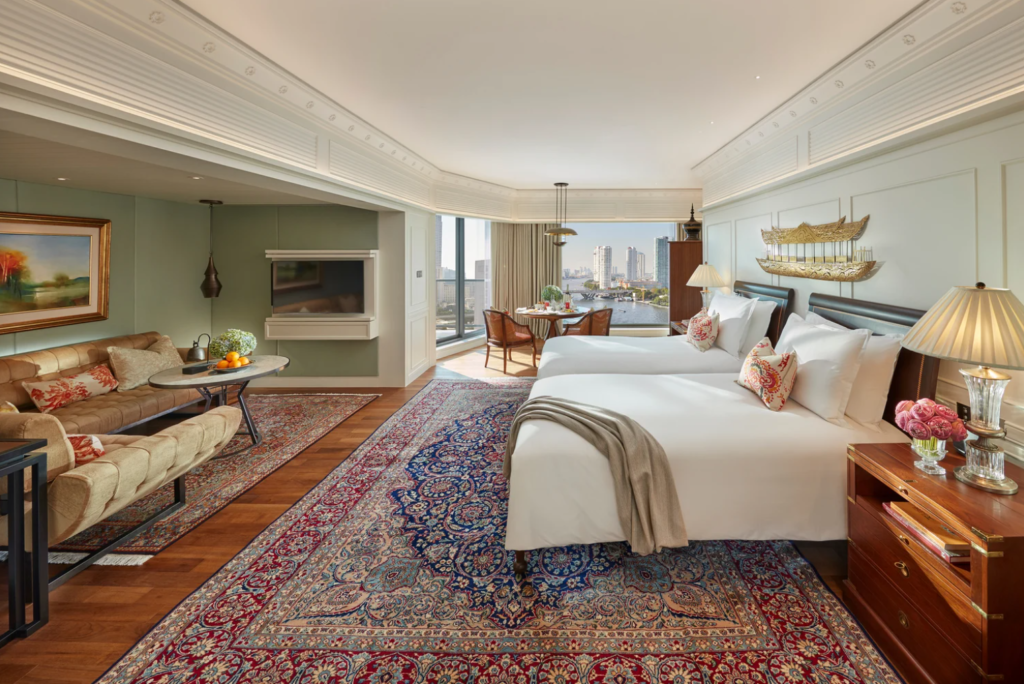
Mandarin Oriental
Bangkok’s riverside classic, with a polished old-school feel and the kind of scale you notice immediately. You’re getting a full spa, a proper fitness centre, and multiple restaurants on-site, plus rooms that are built for quiet, sleep-first comfort even though you’re in the middle of the city. If you like details that feel expensive, this is full of them: formal lobby energy, refined public spaces, and a property layout that keeps the riverfront areas calm while the city churns behind you.
If you ask me, this river stretch is Bangkok’s gentlest arrival. Saphan Taksin BTS is a 10-minute walk, and the Chao Phraya riverfront is 1 minute on foot. The hotel sits right on the water, so the city feels close without sitting in it. That 10-minute walk to the BTS is the difference between “Bangkok is loud” and “Bangkok is handled.”

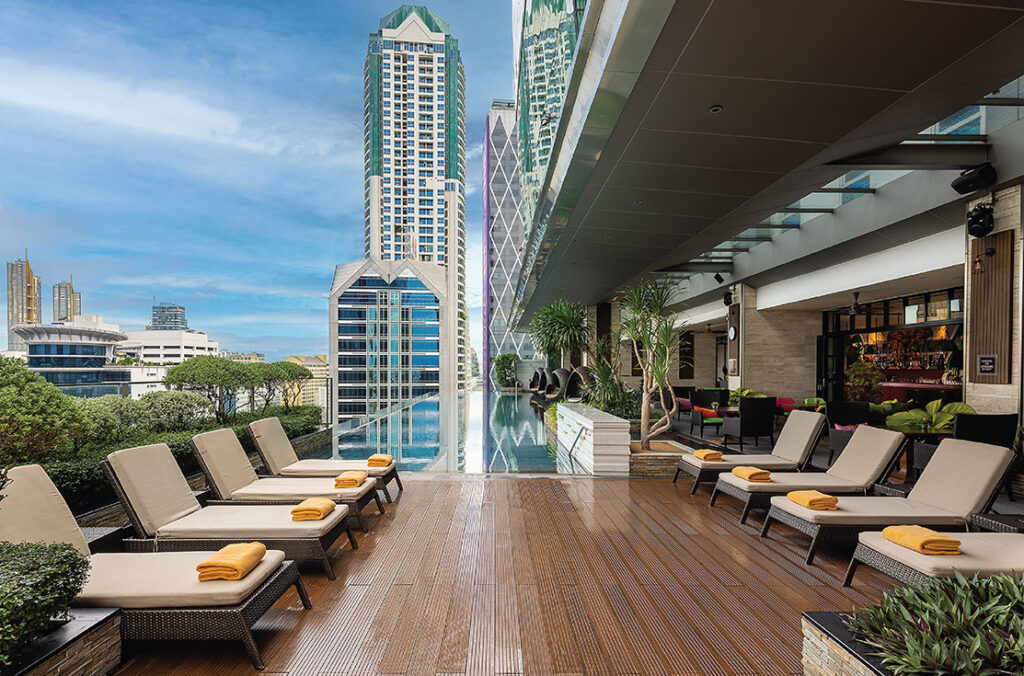
Eastin Grand Hotel Sathorn
A modern high-rise that makes first-night logistics stupidly simple. The big sell is the direct Skytrain connection via the Surasak BTS skybridge, so you can land, check in, and move around Bangkok without wrestling traffic. There’s also a rooftop infinity pool, a full gym, and contemporary rooms that go heavy on clean lines and city views, with the kind of sound insulation you’ll appreciate when Bangkok decides to be Bangkok.
You step out and you are effectively at Surasak BTS, with the hotel connected by a direct skybridge. From there, Saphan Taksin is about a 2-minute ride. That puts the river piers and the whole Chao Phraya boat network within easy reach without needing a car plan on night one. Expect more business-district energy than old-town charm, with most of the friction removed by the Skytrain access.

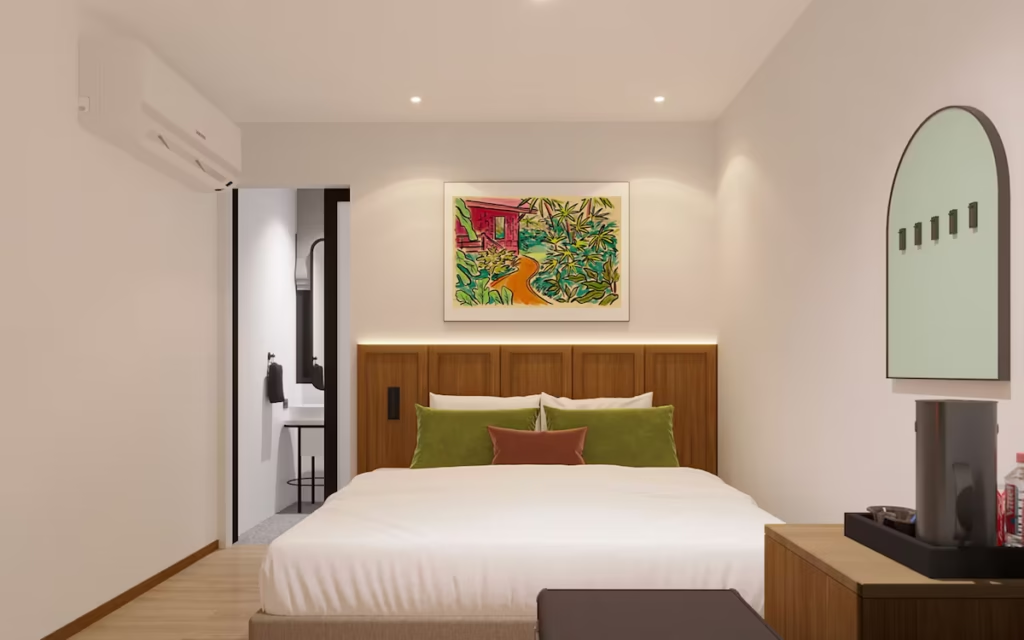
Lub d Bangkok Siam
This one treats “cheap” like a design brief, not a compromise. It’s a hostel with real private rooms and dorm setups that come with the basics that actually matter on night one: strong air-conditioning, secure storage, and beds arranged for privacy with individual lights and power points. The shared areas are big and social without being chaotic, and the overall setup is built for quick check-in, quick showers, and getting functional again after a flight.
This one wins on pure first-night convenience in the Siam core. National Stadium BTS is about a 7-minute walk, and Siam BTS is about an 8-minute walk, which means you can jump onto either line without decoding Bangkok’s road layout on arrival. The same radius also covers the “eat something normal immediately” problem, because the mall clusters start in the same walkable grid.
Chiang Mai, Café streets and temple lanes, tightly packed.

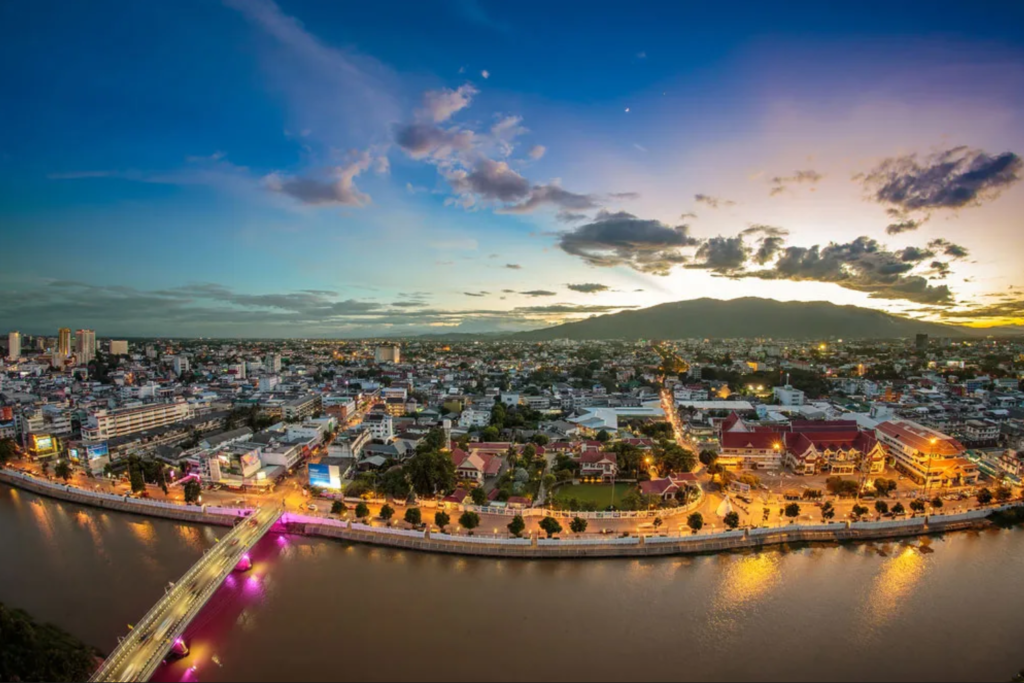
Chiang Mai is the soft-landing alternative to Bangkok if you want the north immediately. The city has its own airport, and transfers are short, so you can land and be checked in without adding another long leg. It is also one of the few Thai cities where “walkable” is not a marketing claim.
The Old City is a compact grid inside the historic walls and moat, with temples, cafes, and small hotels packed tightly together. Just outside, Nimman and the university area bring a more modern dining and coffee culture. Short distances make taxis cheap and easy, and you can do a lot on foot if you stay central.
A good first-night stay here is about quiet streets and early access to the city’s most useful lanes. Old City edges are ideal because you get temple density without being trapped in the busiest market blocks. Nimman is ideal if you want dining and modern shops immediately, with less tourist churn than the main gates.
Chiang Mai cuisine. Northern Thai food is distinct and worth prioritizing early. Look for khao soi, a coconut curry noodle soup with crunch, plus grilled sausage like sai ua and herb-heavy dips such as nam prik noom. The city also has strong night markets, which makes “easy dinner” a realistic promise.

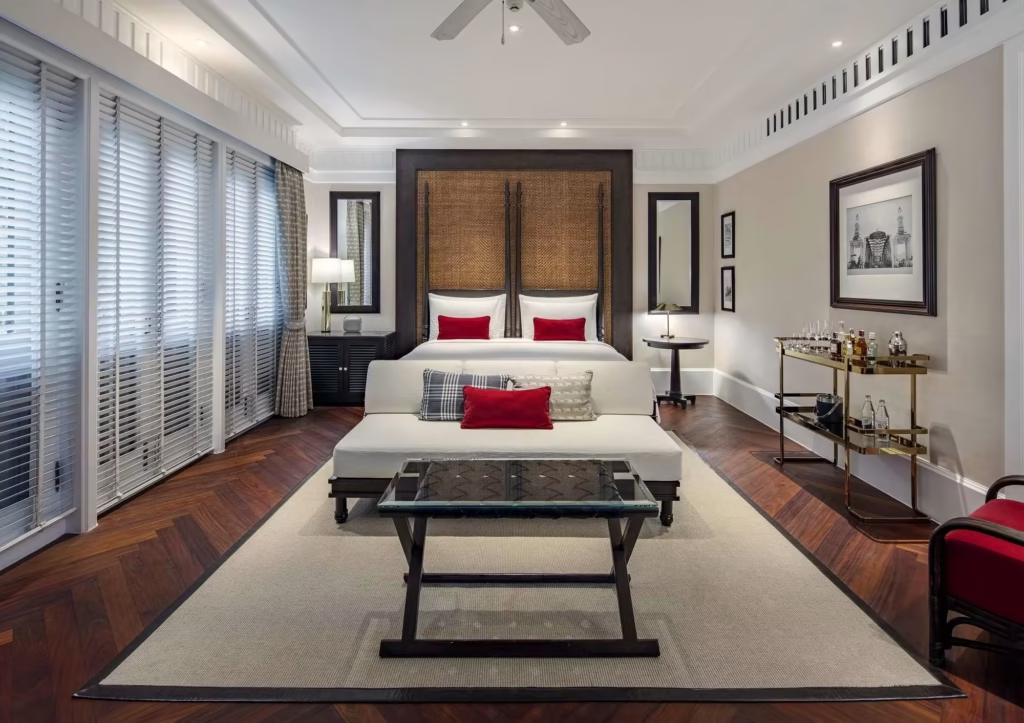
137 Pillars House
An all-suite boutique stay with a heritage-leaning look and a deliberately quiet footprint. Suites are spacious by Chiang Mai standards, and many categories come with balconies or terrace space, plus the kind of finishing that prioritizes sleep quality over flash. You also get a pool and a full-service, hotel-grade set of facilities, not a token “boutique” setup, so arriving late still feels easy and complete.
You get a quieter address, but you are not marooned. The Night Bazaar is about a 15-minute walk, so dinner and a low-effort first stroll are easy. Chiang Mai International Airport is about a 20-minute drive, which keeps the first transfer simple even if you land late or in bad weather. You are close enough to slide into the city, without being stuck in the Old City’s tighter lanes and tour-van clutter.

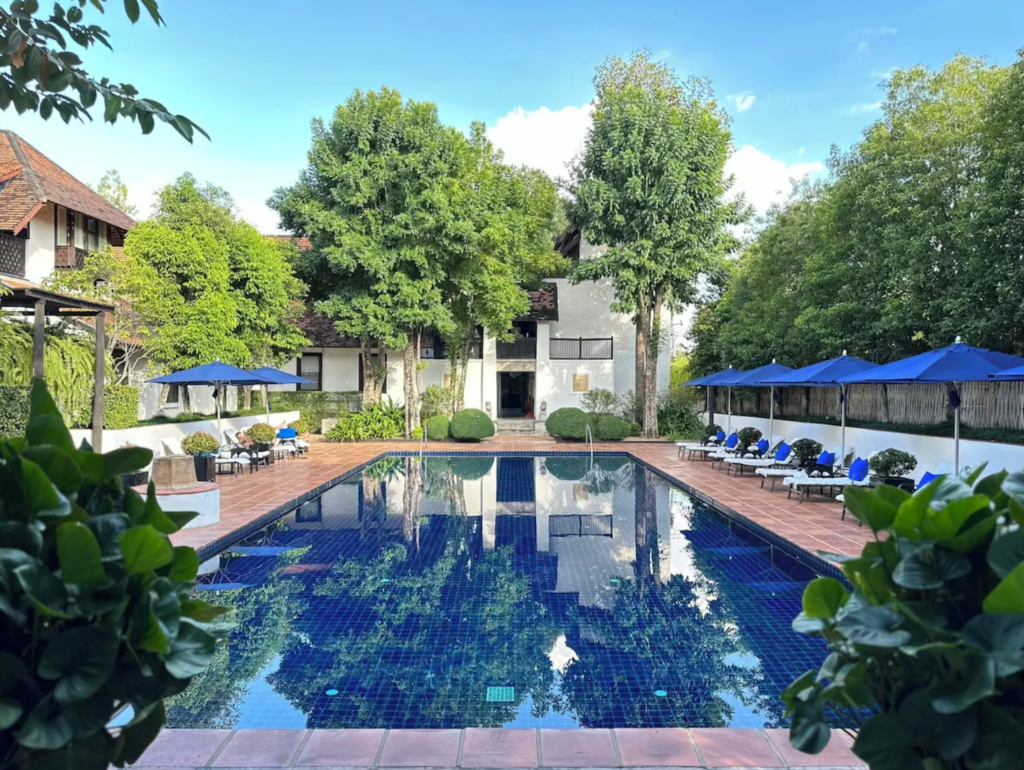
Rachamankha Hotel
This place is all about the courtyard layout. It’s a low-rise, inward-facing design with shaded walkways, enclosed gardens, and an outdoor pool that stays tucked away from street noise. The tone is restrained and gallery-like, with a library and carefully controlled public spaces, and it runs adults-first with an age policy that keeps the property noticeably quieter than most Old City hotels.
If you ask me, the Old City is Chiang Mai’s smoothest first stop. Wat Phra Singh is 1 minute on foot, and the Sunday Walking Street route is 9 minutes away. The lanes here are small and slow, so getting around feels human-scale even with luggage. Wat Chedi Luang is 7 minutes on foot, which gives you a real landmark you can navigate by on day one.

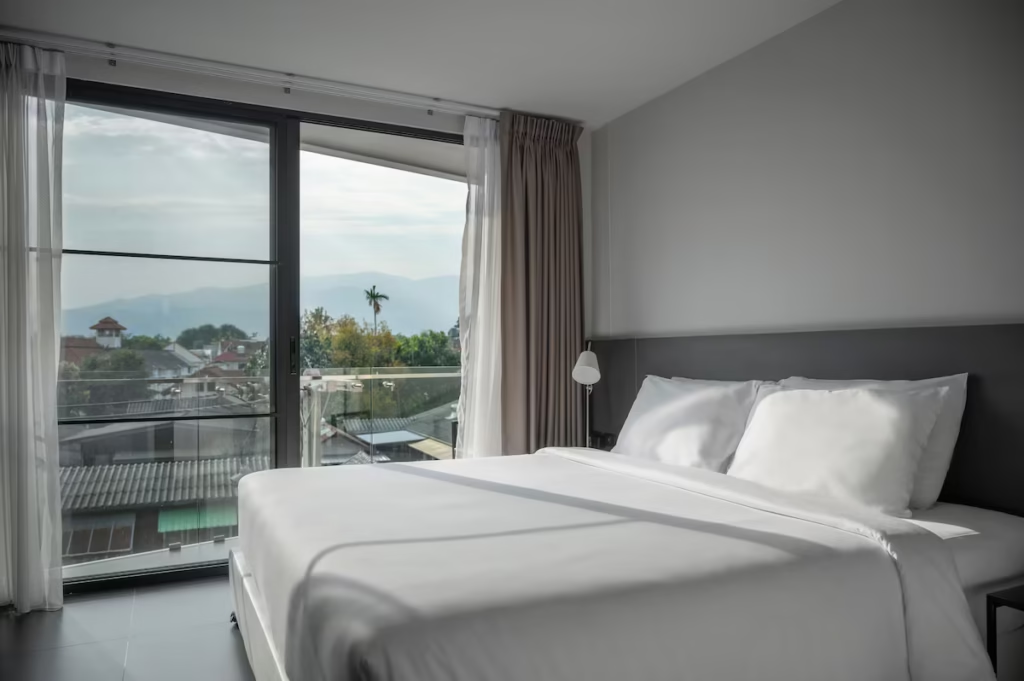
POR Thapae Gate
A compact, modern hotel that over-delivers on the small things that make the first night painless. There’s a pool, and the whole setup is geared for low-friction travel: bright rooms, efficient layouts, and a service model that includes generous inclusions like snacks and drinks that stay available beyond breakfast hours. It feels intentionally simple, but not bare, which is exactly what most people want right after landing.
For me, the gate area wins for late arrivals and easy walks. Tha Phae Gate is a 4-minute walk, and Chiang Mai Night Bazaar is 15 minutes on foot. The streets around the gate have a high density of cafés, pharmacies, and late-ish food, so you can land and function without a plan. The Old City’s main temple grid starts within that same short walk.
Phuket, Fly in, choose your coast, sleep easy.

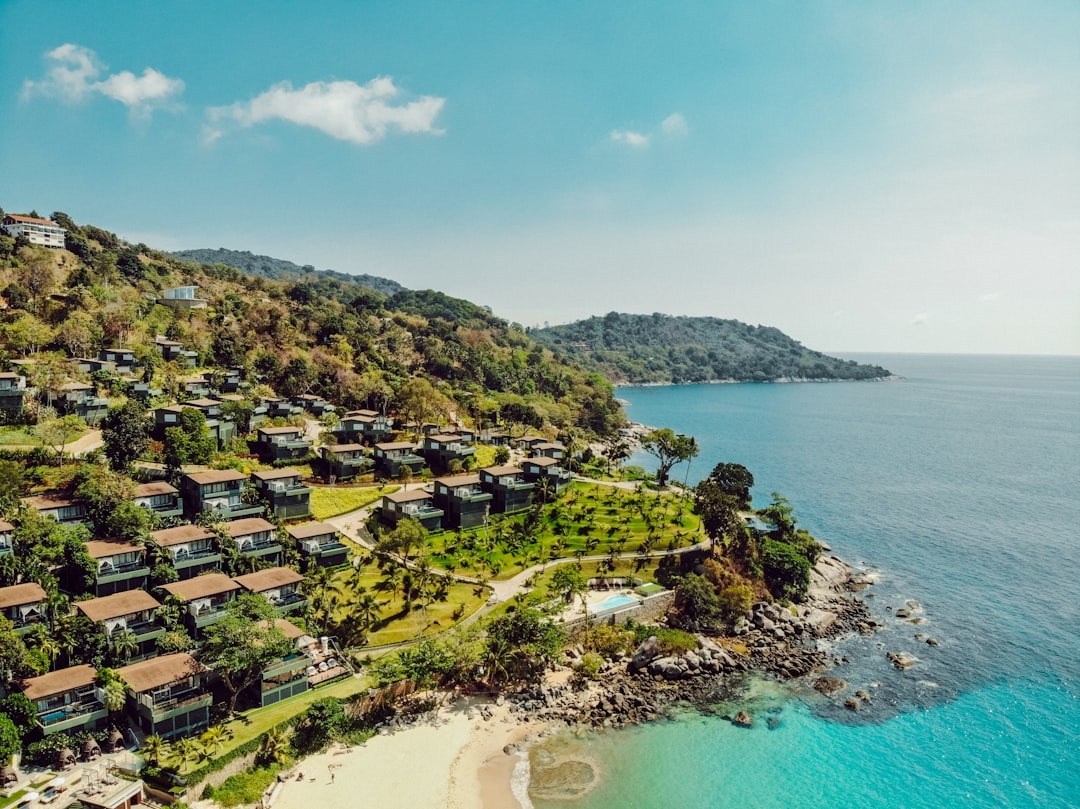
Phuket is realistic for night one because it has a major international airport and constant domestic connections. You can land here directly from abroad or connect via Bangkok, then choose between beaches, Old Town, and quieter northern sands. The wrong move is picking a beach that is far from the airport when you are tired.
The island is big enough that micro-location is everything. Old Town is cultural and compact. Patong is dense and loud. The northwest beaches near the airport are calmer and reduce transfer time. If your priority is sleep, choose calm geography, not famous geography.
For a soft landing, two patterns work. Stay near the airport on night one, then relocate south once you have your bearings. Or stay in Old Town if you want dining, architecture, and easy day trips without beach traffic. Both are low-friction starts.
Phuket cuisine. Phuket sits in southern Thailand’s flavor zone, with more seafood, more spice, and more Chinese influence than Bangkok. Old Town is known for local noodle shops and small cafes, while beach areas skew toward seafood grills and southern curries. The practical advantage is density. You can eat well without planning.
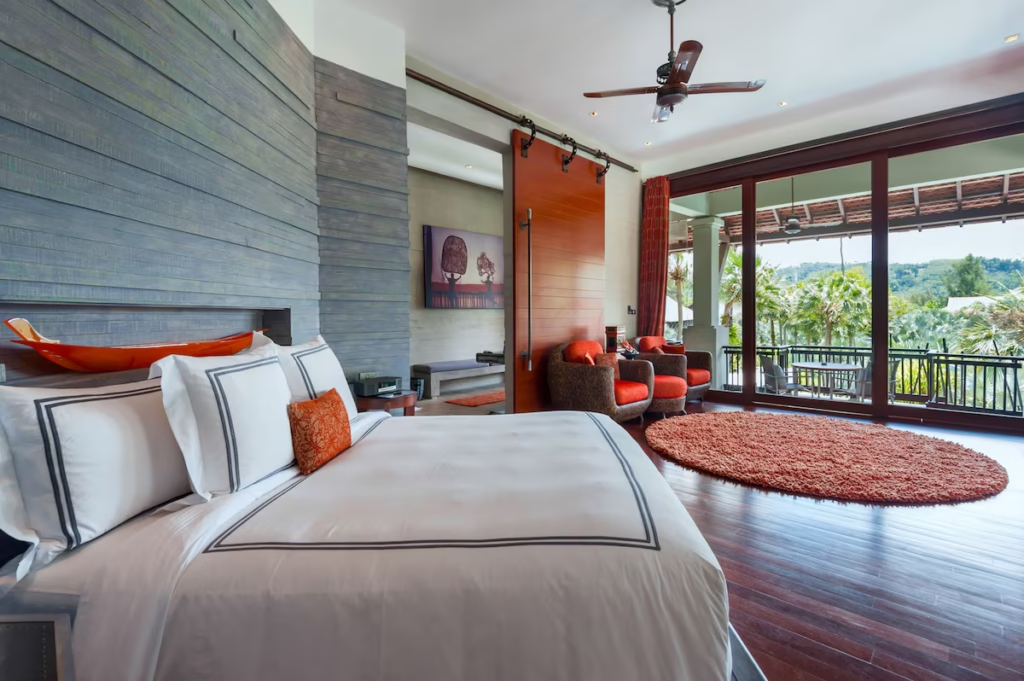
The Slate
A resort with a strong design identity and the facilities to back it up. You’re looking at multiple pools, a proper spa, and family infrastructure like a kids’ club, so it handles everything from jet-lag recovery to full beach-week mode without leaving the property. Rooms and suites skew spacious, and the overall layout is built like a real resort campus, not a single-block hotel pretending to be one.
My vote for an effortless island landing is Nai Yang. Nai Yang Beach is a 5-minute walk, and Phuket airport is a 5-minute drive. You avoid the long cross-island haul on night one, and you still get a real beach and sunset within minutes. It’s one of the few Phuket arrivals where “drop bags, eat, sleep” is genuinely quick.

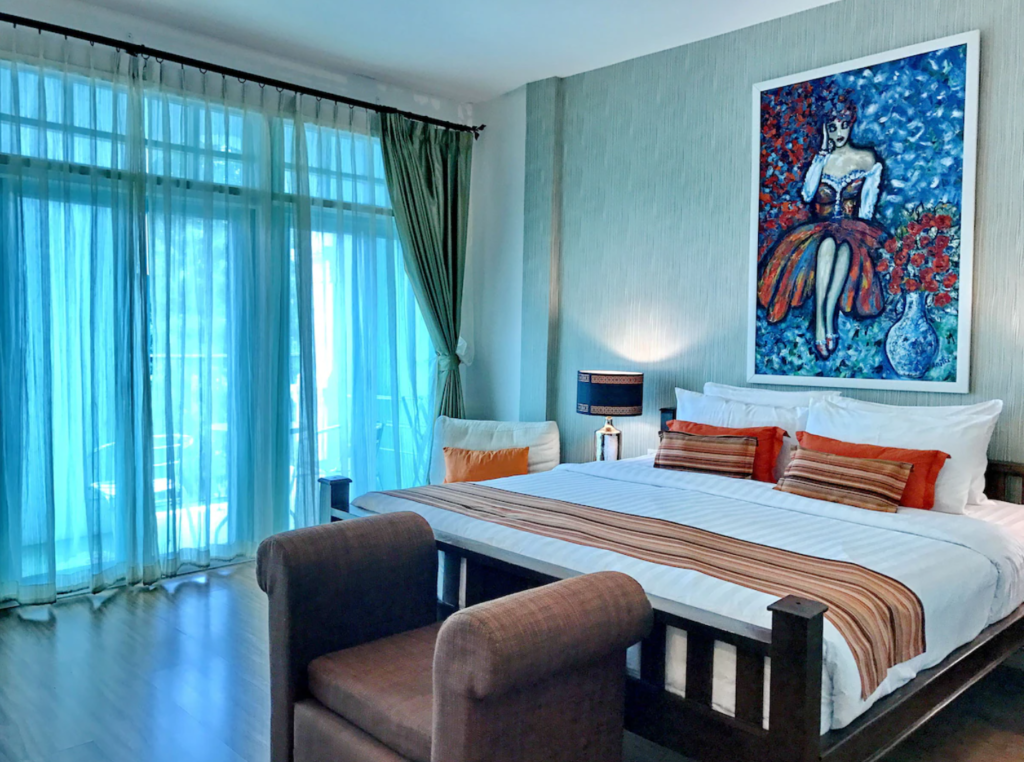
Casa Blanca Boutique Hotel
A small, heritage-styled boutique stay with a courtyard pool at its centre, which is rare in Old Town at this size. The look nods to Phuket’s Sino-Portuguese character, and the scale stays intentionally intimate, with a limited room count and a calm, residential feel. Rooms are straightforward and bright, and many categories include balcony space, which matters more than you think in humid Phuket.
If you ask me, Phang Nga Road is Old Town’s chillest address. Phuket Weekend Market is a 4-minute walk, and Phuket Sunday Night Market is 5 minutes on foot. You’re right in the Sino-Portuguese core, so cafés and casual Thai restaurants stack up quickly around you. It’s a good “arrive late, still eat well” zone because the walking radius actually works.

The Tint
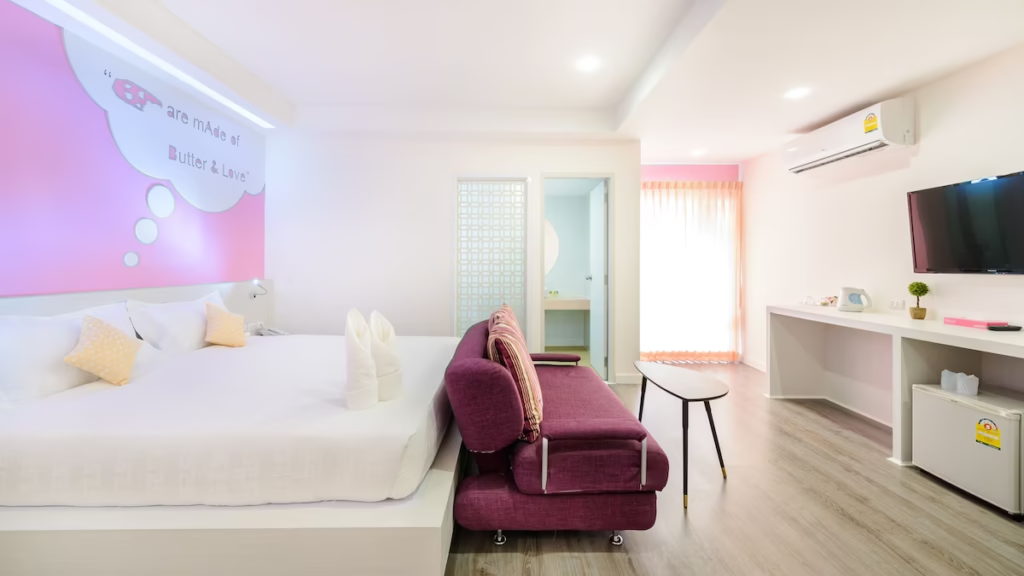
A value-focused hotel that still gives you key comforts: an outdoor pool, modern air-conditioned rooms, and balconies in many categories. It also does a rare first-night trick well, which is keeping small conveniences always available, including snacks and light breakfast items in the common area. The rooms are set up for simple recovery, with kettle and mini-fridge basics that make late arrivals feel less annoying.
If you ask me, Dibuk Road is where Old Town stays easy. Limelight Avenue is within a 5-minute walk, and the Old Town shophouse core is about 10 minutes on foot, so dinner and basic errands stay walkable even when you land late. The hotel sits on Dibuk Road itself, so you’re on a real city street, not tucked into a silent lane, but you’re still close enough to step into the quieter heritage blocks quickly. Phuket Indy Market is a couple of minutes away on foot, which is a great first-night move when you want street food without committing to a long outing.
Koh Samui, Fly in, hit the beach, keep it simple.

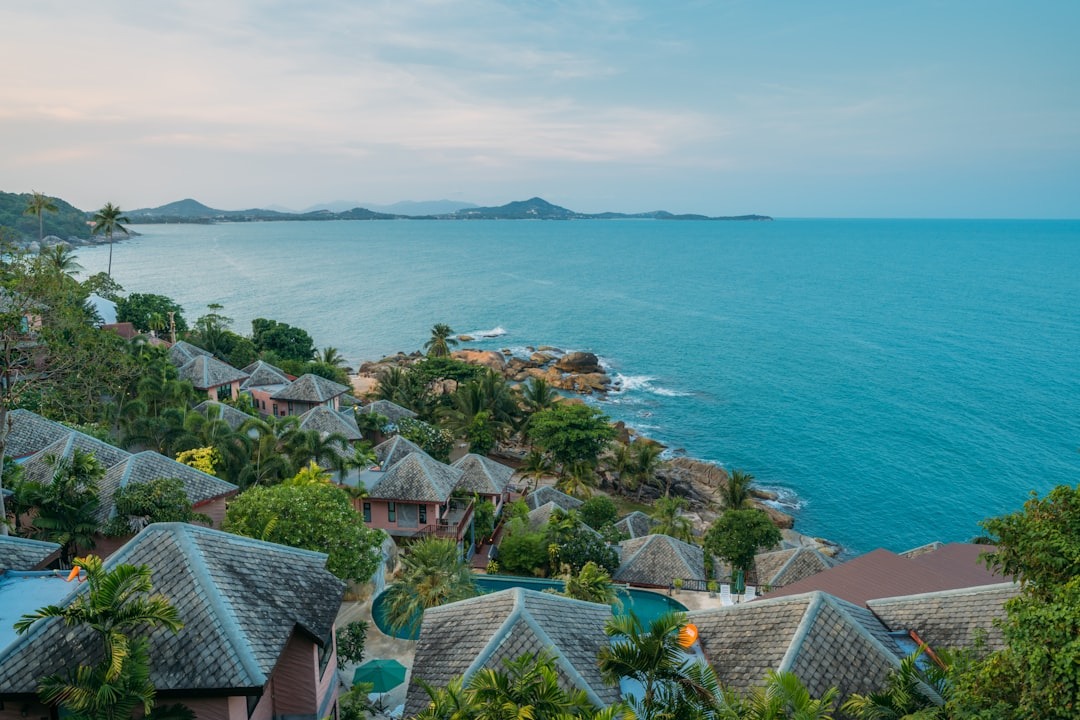
Koh Samui is one of the few Thai islands that can genuinely work as a first-night destination because it has its own airport. That cuts out the ferry problem that makes other islands, including Koh Phangan, a tougher landing after a long-haul flight.
The island is still spread out. Chaweng is the busy strip. Bophut and Fisherman’s Village are calmer and easier to navigate on foot. Choeng Mon is quieter still, with less nightlife spill. For first night, calm usually wins.
Soft landing logic on Samui is simple. Pick a beach with restaurants and minimarts within a short walk, and keep your transfer time short. Samui’s roads are not hard, but they are slower at night, and taxi costs add up fast if you place yourself badly.
Samui cuisine. You get southern Thai flavors with island seafood. Coconut-based curries, grilled fish, and spicy salads show up everywhere, and Fisherman’s Village has a reliable concentration of restaurants. The practical difference versus Bangkok is that “great street food” is less guaranteed, but “easy dinner near the hotel” is realistic in the right pocket.
W Koh Samui
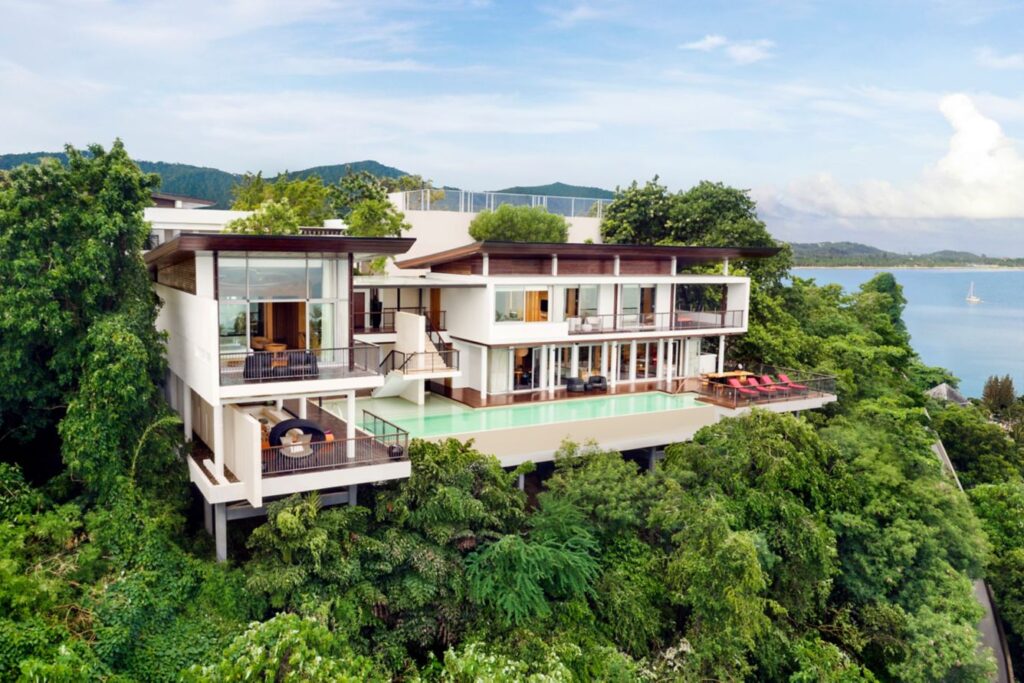
An all-villa resort where the headline feature is consistent across the board: private pools paired with big deck space, so you’re never fighting for a lounger on day one. Facilities are full-scale, with a spa, fitness centre, and a resort layout that feels self-contained without being remote. It’s the kind of place where you can land, disappear into your villa, and still have everything you need on-site.
I like Maenam for arrivals who still want Bophut access. Fisherman’s Village is a 4-minute drive, and Samui Airport is about 22 minutes by car. You get the quieter north-coast feel without cutting yourself off from the island’s best first-night dining strip. Bo Phut Beach is a 7-minute walk when you want white sands without a drive.

Anantara Bophut Koh Samui Resort
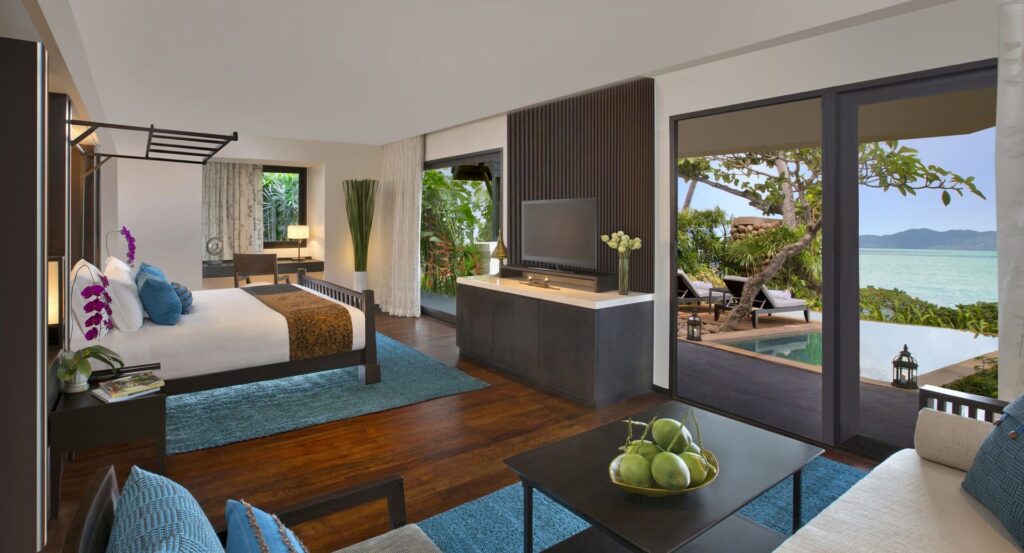
A classic beachfront resort done with polish. Rooms sit in landscaped grounds, and you get the full set of big-resort comforts: a large pool area, a well-equipped gym, and a spa that feels like a real destination inside the property. The public spaces are designed for hanging out comfortably, with restaurant options on-site so your first night doesn’t require planning or transport chess.
Bophut keeps Samui easy on night one. Fisherman’s Village is 14 minutes on foot, and Bo Phut Beach is a 6-minute walk. The whole strip works well for a first evening because dinner, massages, and convenience shops sit in the same walkable run. That 14-minute walk to Fisherman’s Village is the practical difference between “resort seclusion” and “I can actually go out.”.

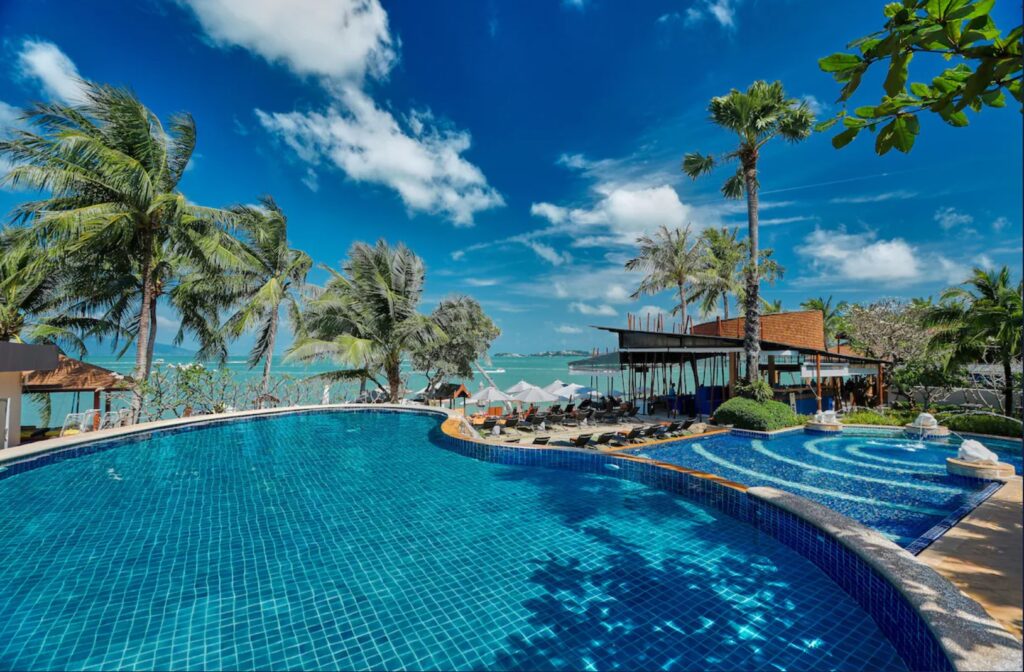
Bandara Spa Resort & Pool Villas
A 4-star resort that keeps the first night easy while staying in a saner price band. You get two pools, rooms with private balconies, and the option to upgrade into villa-style categories without jumping into ultra-luxury territory. It’s also the kind of resort that’s built for normal travel realities: quick meals on-site, plenty of shaded outdoor space, and a layout that feels relaxed instead of mega-resort sprawling.
In my experience, Bophut is Samui’s smoothest first-night coastline. Fisherman’s Village Walking Street is a 5-minute walk, and Samui International Airport is within about a 15-minute drive, so you can land, eat well, and stop thinking about logistics. The resort sits directly on Bo Phut Beach, so getting to the sand does not involve crossing a road, which matters when you’re tired and carrying bags. For a first-night hook that actually delivers, Coco Tam’s is about a 10-minute walk, and it’s one of the easiest places on the island to get dinner and a drink without booking anything.
Krabi, a beach hub built for boats and day trips.
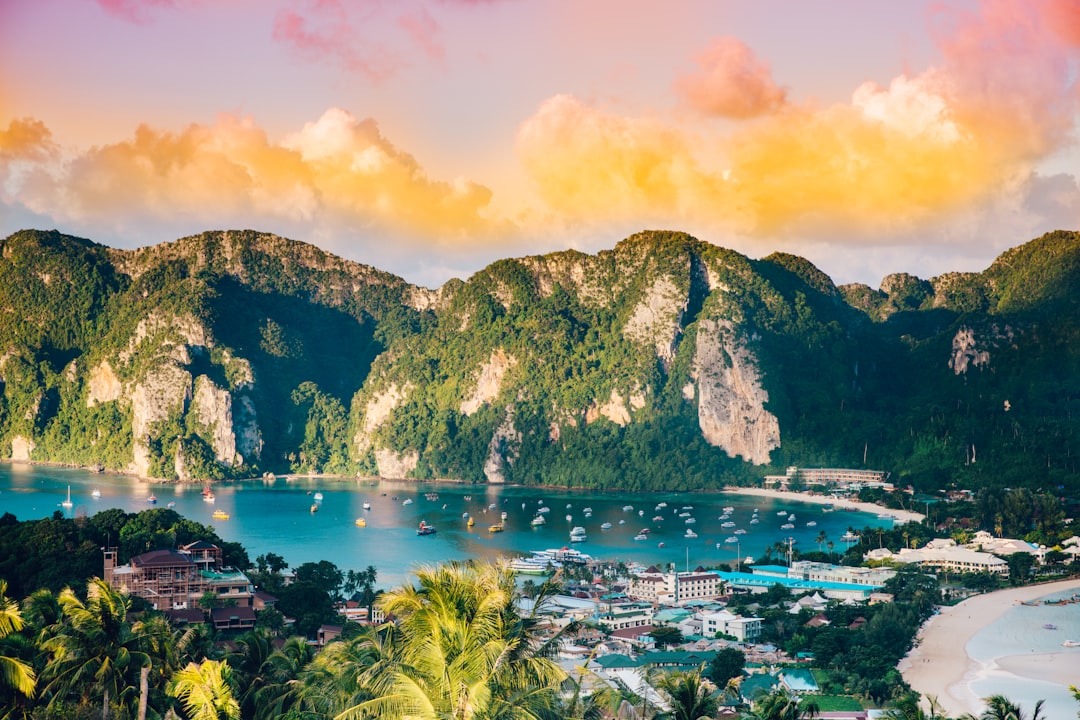
Krabi works on night one because the airport-to-beach transfer is short and simple. Krabi International Airport (KBV) connects domestically, and many travelers route via Bangkok, then land and reach Ao Nang in roughly half an hour by road.
Krabi is not one place. Ao Nang is the main hub, with boats, tour desks, and dense dining. Klong Muang is quieter and more resort-focused. Railay is beautiful but ferry-dependent, which makes it a poor first-night plan if you arrive late.
A comfortable first-night stay usually means Ao Nang for convenience, or Klong Muang for quiet. If you arrive after dark, Ao Nang makes dinner and supplies easy. If you arrive earlier and want a calmer shoreline, Klong Muang is the cleaner landing.
Krabi cuisine. This is southern Thailand, which means seafood, spice, and brighter sour notes. Expect grilled fish, rich curries, and lots of casual roti and snack stands around Ao Nang. The “easy meal” factor is high here, especially in the Ao Nang strip.
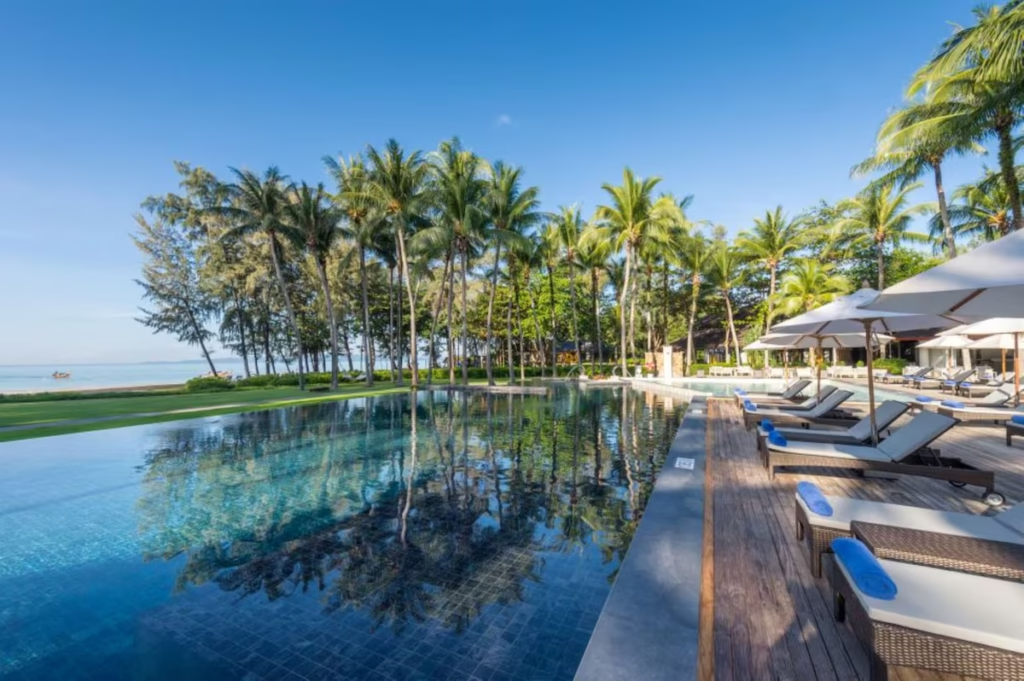
Dusit Thani Krabi Beach Resort
A full-scale beachfront resort with the infrastructure you want after a flight. Expect multiple pools, a spa, and a resort layout that spreads out enough to feel quiet even when occupancy is high. The rooms read classic Thai-resort, with balcony categories common and enough on-site dining that you can keep night one entirely contained if you want to.
I recommend Klong Muang for its calm start that still connects. The main beach area is a 10-minute walk, and Koh Kwang Beach is 17 minutes on foot. It’s quieter than Ao Nang, with fewer bars and less street noise, which helps if you’re landing jet-lagged. Those two beaches give you immediate ocean time without needing to hop in a car.

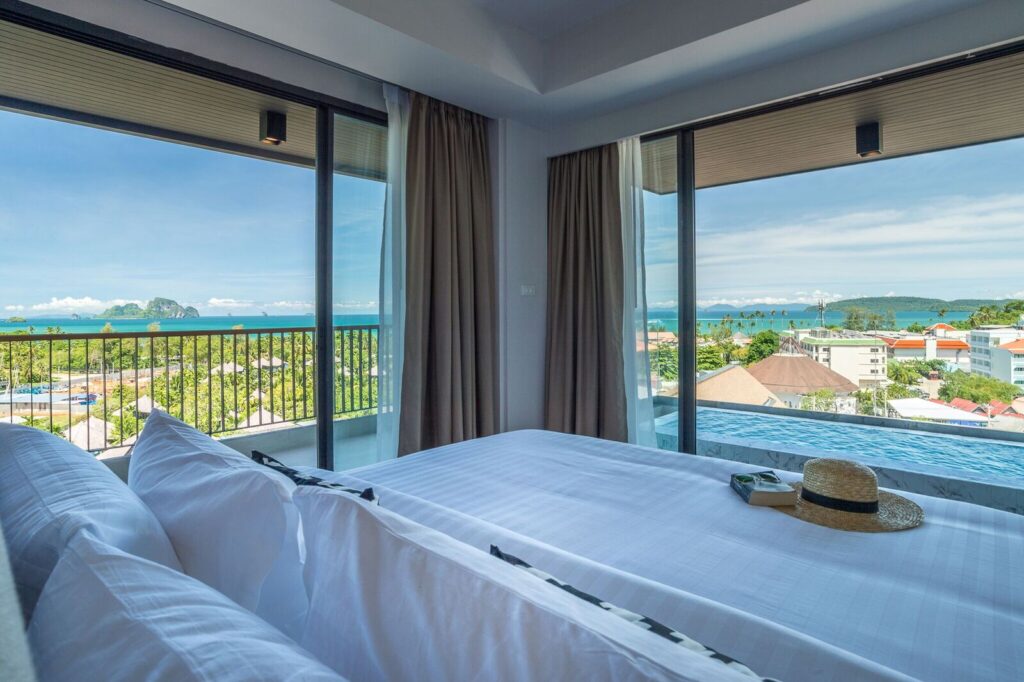
Panan Krabi Resort
A modern Ao Nang resort that’s heavy on facilities for its category. The rooftop pool is the signature feature, and room choices include options like whirlpool-style tubs and layouts aimed at couples or small families. It’s built to feel current, with a clean, contemporary finish and a property footprint that keeps everything close, from pool to lobby to restaurants.
I’d start in Ao Nang when I want everything on foot. there are many restaurants within a minute’s walk, and Ao Nang Beach is 7 minutes on foot. You’re right on the promenade zone where tour desks, minimarts, and casual restaurants cluster tightly together. That 7-minute walk to the beach also makes sunrise boat plans feel painless the next morning.
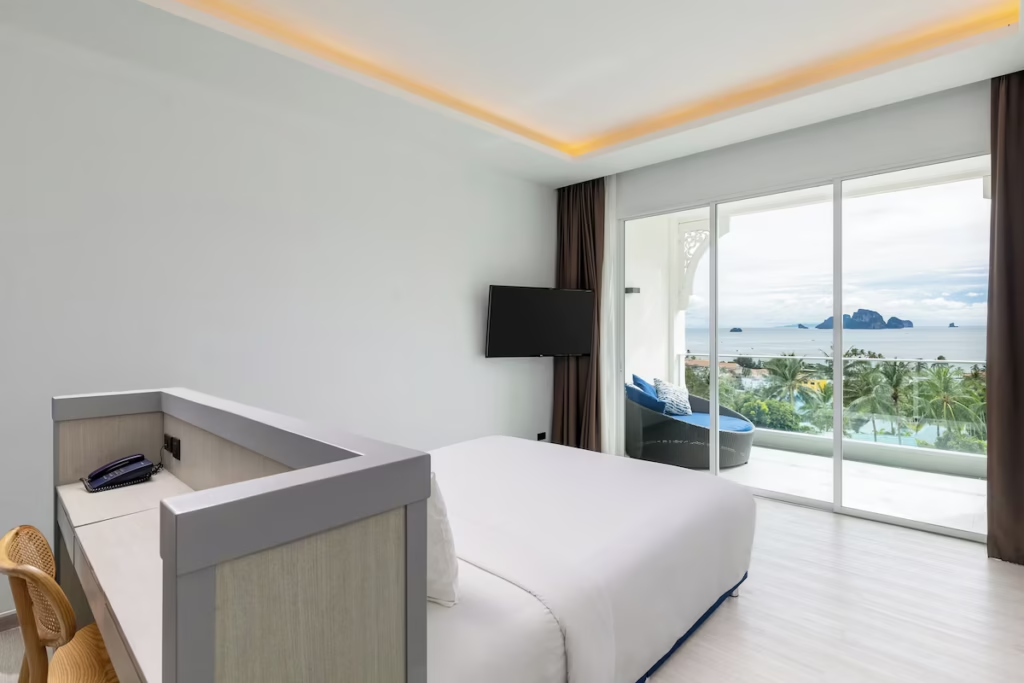
Krabi Tipa Resort
A garden-style resort that gives you more breathing room than many cheaper Ao Nang hotels. There’s an outdoor pool, a low-rise layout, and rooms that open onto greenery instead of a corridor, which helps the place feel calmer. It’s not flashy, but it covers the important mechanics: reliable air-conditioning, straightforward rooms, and enough facilities on-site to make the first night feel settled.
Mid-Ao Nang keeps the first night simple. Ao Nang Beach is within a 5-minute walk, and most restaruants 3 minutes on foot. You’re close enough to the strip for easy meals, but not so exposed that the nightlife noise keeps you awake at night. Ao Phai Plong Beach is 15 minutes on foot when you want a quieter bay without a long ride.
Hua Hin, Bangkok’s beach exit ramp.
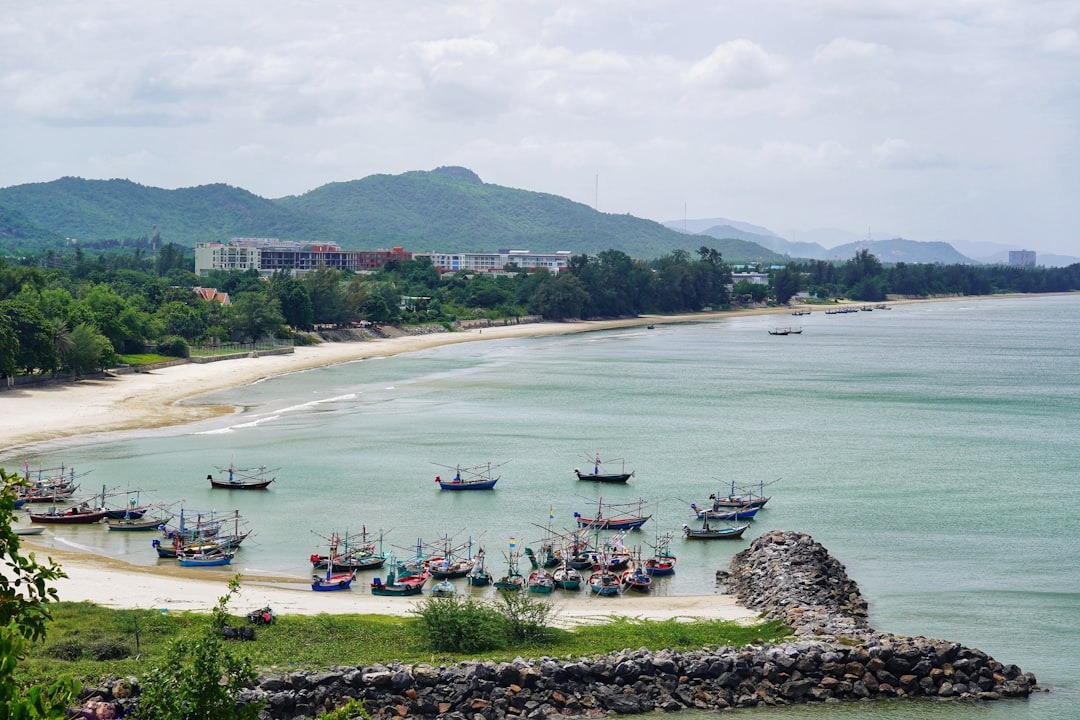
Hua Hin is the beach landing for travelers who want coast without island logistics. It sits a few hours south of Bangkok, which makes it reachable by train, bus, or private car the same day you arrive internationally. That simplicity is why it works. This is where families from Bangkok go on vacation
The town is long and linear. The beachfront runs north to south, with a central area near markets and malls, and quieter resort pockets further down. It is not an “explore everything on foot” city, but it is an easy place to rest, eat well, and reset your schedule.
For a first night, the best placement is either central Hua Hin for walkable food, or Khao Takiab for a slightly quieter beach feel with restaurants still close. Avoid being too far inland on night one unless you are in a full-service resort.
Hua Hin cuisine. Seafood is the headline, and the town is known for night market eating, grilled fish, prawns, and simple Thai comfort food done well. Compared with Bangkok, the pace is slower and dining is more concentrated into a few areas, which makes location choice more important.
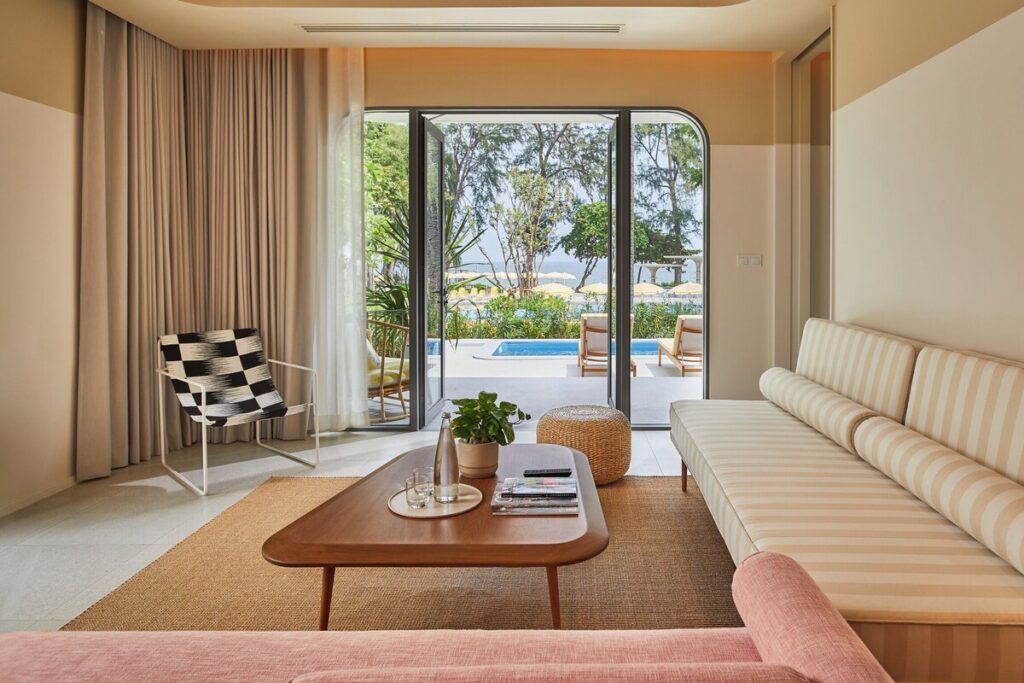
The Standard, Hua Hin
Beachfront, playful, and properly full-service. You’ve got a big central pool scene, a spa program, and the recovery kit that matters on day one, including a fitness center and sauna. Food is not an afterthought. The property runs several distinct venues, so a late arrival still gets a real meal without leaving the grounds.
It’s in central Hua Hin, which I’d put first for train-and-beach simplicity. Hua Hin Station is a 9-minute walk, and Hua Hin Beach is 8 minutes on foot although you have a private beach on property. You can arrive by rail and be checked in quickly without feeling stranded far from the sea.

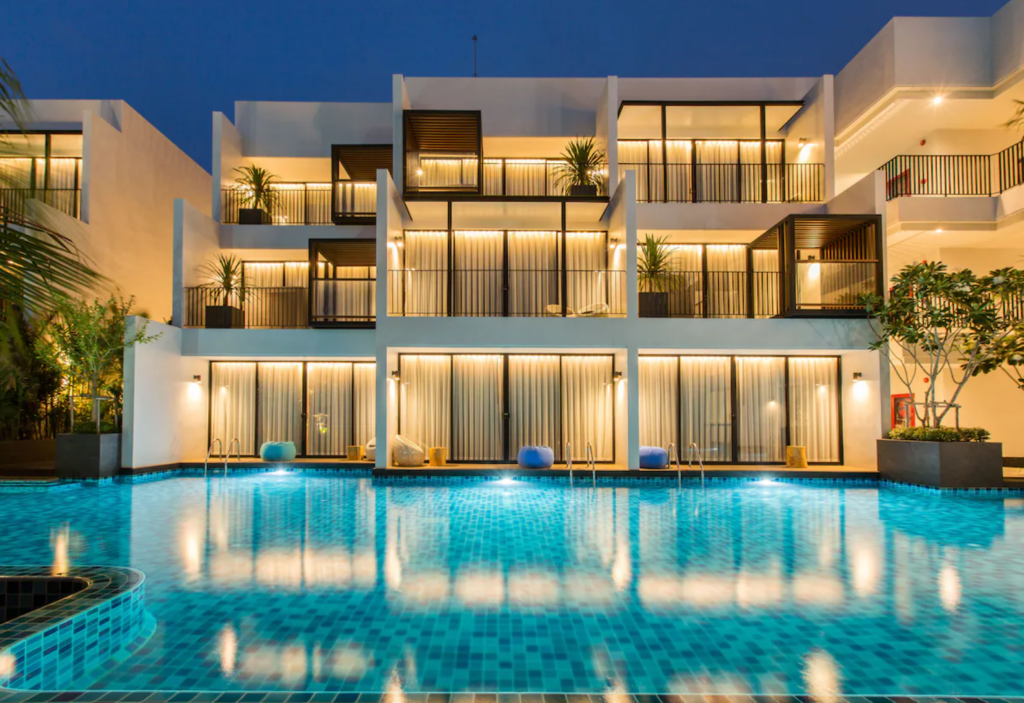
Asira Boutique Hua Hin
Pool-first and quietly set up, with the kind of small-hotel layout that’s easy to understand five minutes after check-in. There’s an outdoor pool, a fitness room, and an on-site restaurant that covers breakfast and daytime meals, so your first night doesn’t require extra planning for basics. Rooms are modern and uncluttered, and some come with balconies facing the pool, which is a simple upgrade when you want air and space without leaving the property.
I find that the north side keeps Hua Hin easier and quieter. Hua Hin Night Market is 12 minutes on foot, and Hua Hin Airport is a 6-minute drive. You’re close enough to the center for dinner, but you’re not sleeping inside the main late-night strip. That 12-minute walk is my sweet spot for “I can go out” without being surrounded by crowds.
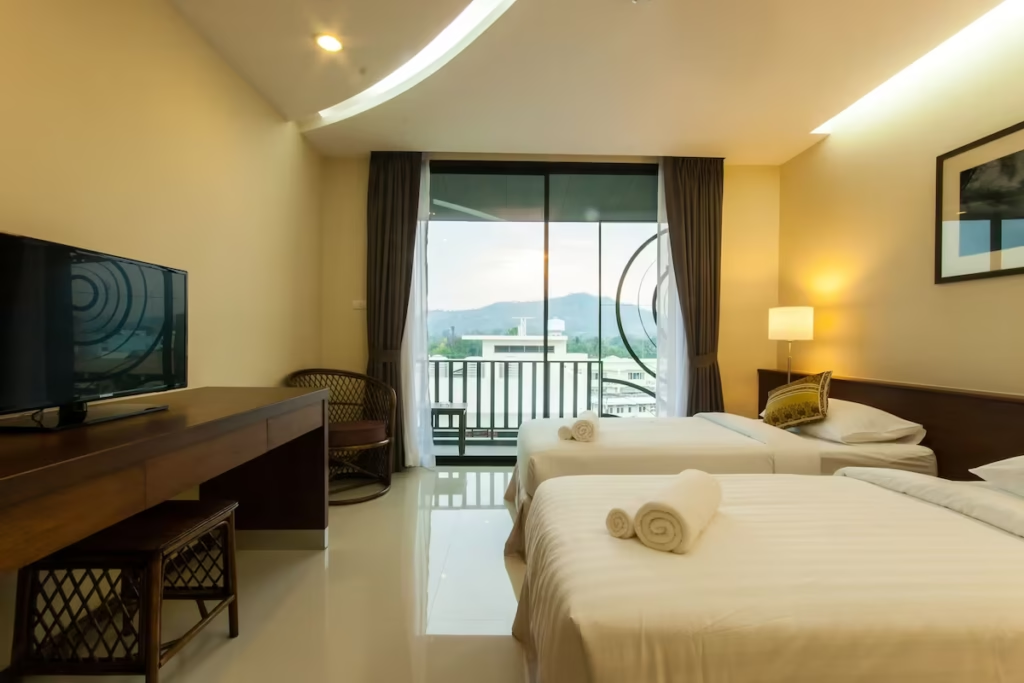
Baan Nilrath Hotel
A compact, no-drama hotel that nails the first-night essentials without trying to cosplay as a resort. Rooms come with private balconies, which is rare at this tier in Hua Hin, and the building has a pool plus an on-site restaurant for simple, contained evenings. The standout feature is the rooftop pool setup, which gives you a proper “cool off” option even if you don’t feel like heading to the beach straight away.
I keep this block in mind for walkability. Hua Hin Railway Station is a 5-minute walk, and Hua Hin Night Market is 7 minutes on foot. It’s a very straightforward part of town to navigate because the main landmarks are close and the streets are direct. Hua Hin Beach is also 7 minutes on foot, so you can do a first-morning sand walk without planning anything.
Pattaya (Jomtien), a practical first night when Bangkok can wait.
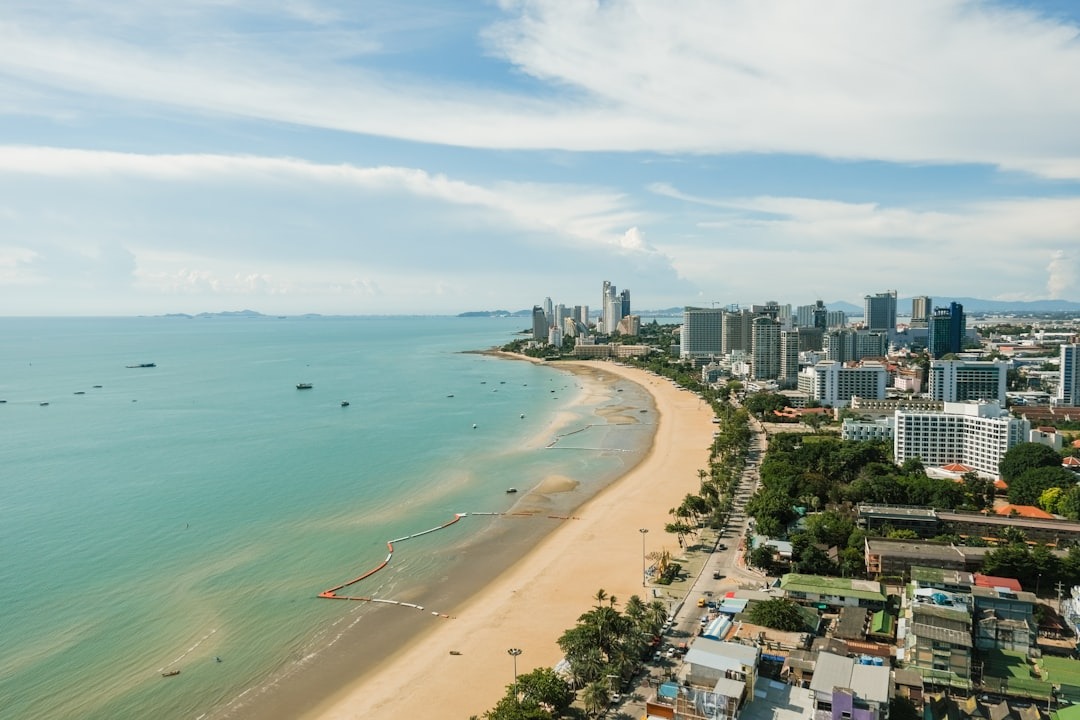
Pattaya is the quickest beach-adjacent landing from Bangkok. Buses and private transfers run constantly, and the ride is typically a couple of hours. The city itself is busy and loud in the center, which is why Jomtien is the smarter first-night target.
Jomtien sits south of central Pattaya, with a longer beach feel and fewer nightclub streets. It is still a resort city, but the volume is lower, and the roads are less chaotic. If you land tired, that difference is not philosophical. It is sleep.
For a soft landing, look at Na Jomtien and the southern end of Jomtien Beach for resorts, or the Pratumnak area for quieter streets between Pattaya and Jomtien. The center is fine for a party trip. It is a rough place to do your first Thailand check-in.
Pattaya cuisine. Seafood is everywhere along the coast, and the city also has a lot of Isan-style casual dining thanks to migration patterns. Compared with Hua Hin, the options are broader and louder, and the best meals often come from simple spots off the main beach road.

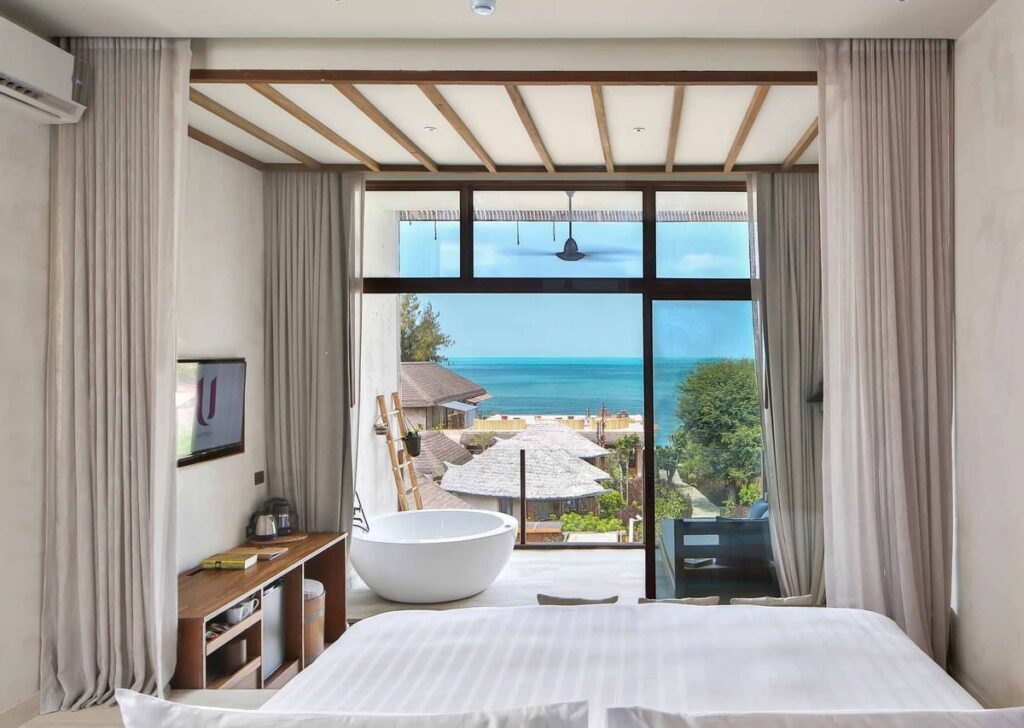
U Pattaya
Beachfront and low-rise, with a rooftop swimming pool that gives you sea views without leaving the building. The hotel leans into small-but-useful comforts, including a library, a gym, and an all-day dining setup at SALT, so a late arrival can stay contained and civilized. The signature perk is its flexible service concept. It includes “Breakfast Whenever Wherever” and a 24-hour room policy that lets you time your stay around your flight instead of the other way around.
I recommend Jomtien when Pattaya’s core feels like too much. Jomtien Beach right out the door, and central Pattaya is 20 minutes on foot. You get the sea right away, with less chaos than the main nightlife spine. That proximity to the beach matters when you arrive sweaty and tired just want to dunk yourself in the ocean and then get a drink and a meal.
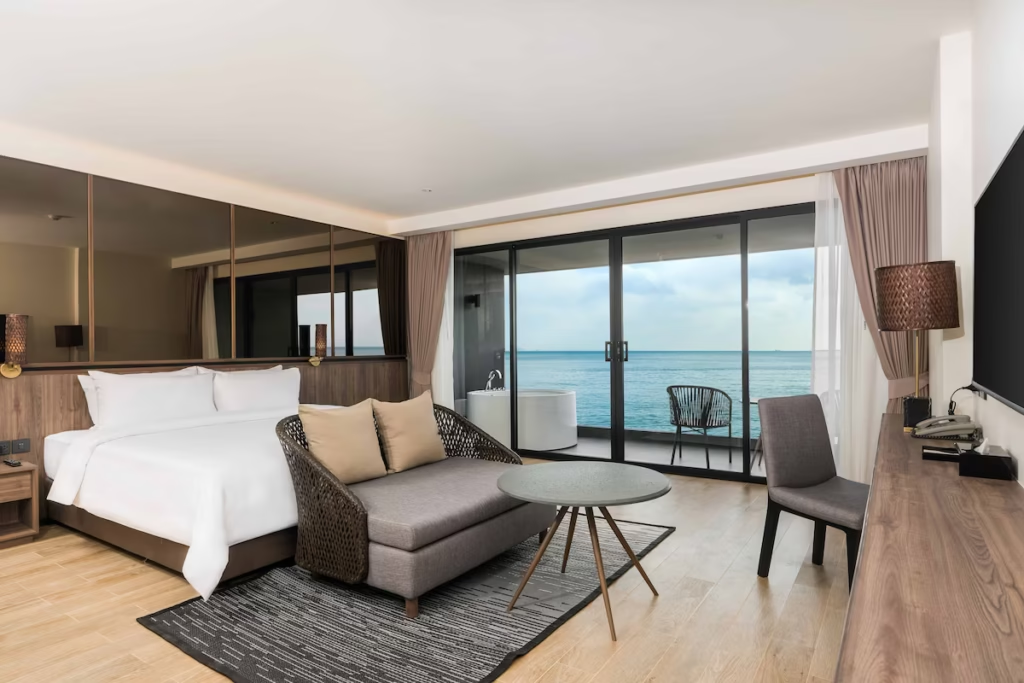
Ana Anan Resort & Villas Pattaya
A modern resort on Na Jomtien beach with a proper resort spine. Beachfront setting, multiple pools, a fitness center, and a dining lineup that runs from casual meals to rooftop cocktails, which is a real win when you arrive and want one good dinner without chasing the city. The thing it does that most Pattaya resorts don’t is mix hotel rooms with villa-style stays and “pool villa” energy, so you can go bigger without committing to a mega-chain vibe.
I like Na Jomtien for beach time without the central crush. You’re right on South Na Jomtien Beach, and Walking Street is a 15-minute drive. The resort strip here is more spaced out than central Pattaya, which keeps evenings calmer around the hotel. Mimosa Pattaya is a 20 minute swalk away if you want an easy stroll-and-snack option.

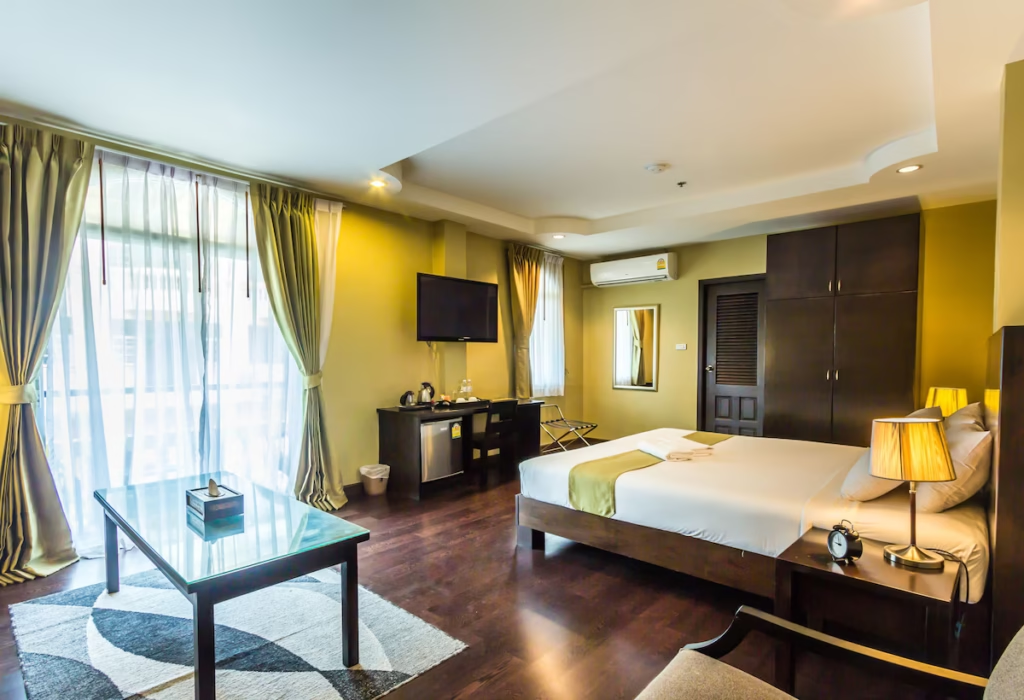
Zing Resort & Spa
This is how you keep the price down without giving up the recovery tools. You get an outdoor pool plus sauna and steam room access, which is unusually generous at this tier in Pattaya, and there’s an on-site café for quick meals when you cannot be bothered to negotiate dinner plans. The rooms are simple, air-conditioned, and built around the basics that matter after a long day. Shower, sleep, repeat.
If you ask me, inner Jomtien is almost better tha the beachside. Jomtien Beach is a 10-minute walk, and Jomtien Night Market 15 minutes. You’re far enough from the loudest parts of Pattaya, but still close to the places that make an arrival night easy, like casual dining and massage shops.
Khao Lak, resort beaches without Phuket’s noise.
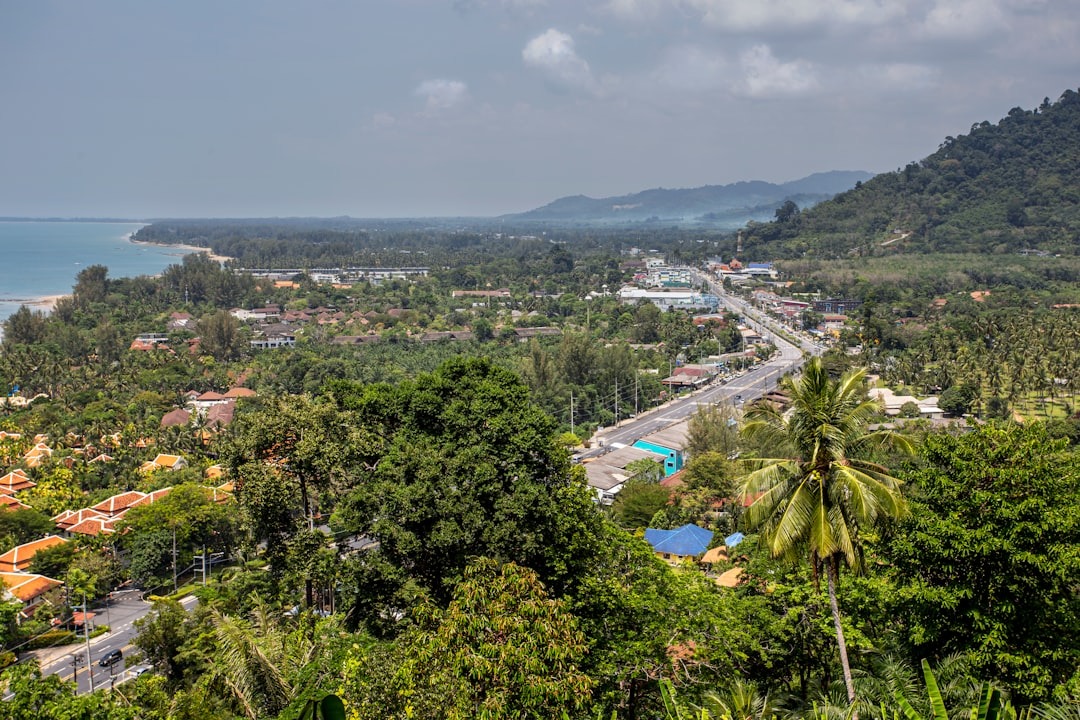
Khao Lak is the calm answer to “I want the Andaman coast, but I do not want Phuket’s traffic.” It is reached by road, usually via Phuket airport, and transfers are straightforward for travelers who want beach on night one without ferry schedules.
This is a long coastal area, not a single compact town. The main strips are Nang Thong and Bang Niang, with resorts spread along the highway and beach access points. That spread is why hotel placement matters. A resort that is isolated can become annoying fast if you want dinner off-site.
Soft landing logic here is about choosing a resort that has walkable basics nearby, or choosing a resort that is so complete you do not care. Khao Lak is excellent for sleep, but it is not built for wandering without planning.
Khao Lak cuisine. Southern Thai flavors show up hard, especially seafood, spicy soups, and rich curries. Markets and casual seafood restaurants are common around Bang Niang, and resort dining is generally stronger here than in more chaotic beach towns.
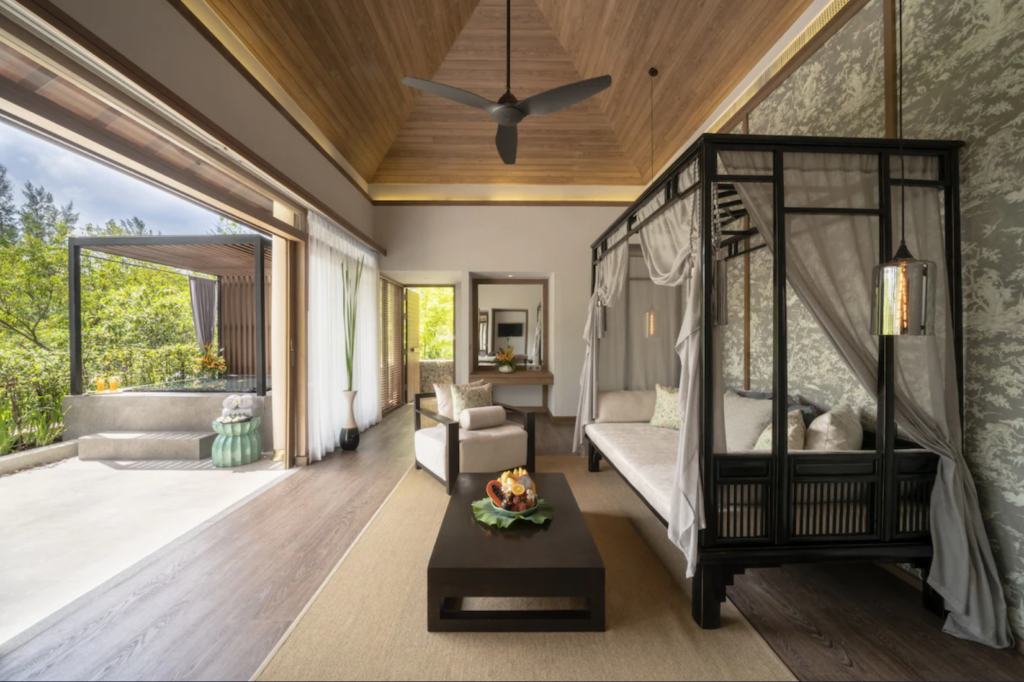
The Sarojin
This is a high-end resort designed around privacy, landscaped grounds, and a calm service rhythm. Facilities are built for staying on-site, with a large pool, a strong dining program, and rooms that feel like proper hideaways instead of standard hotel boxes. It’s the kind of property where the first night can stay simple, shower, dinner, sleep, with no extra planning.
Khao Lak’s coastline is quieter than Phuket’s busiest beaches, and this hotel is positioned to take advantage of that. You get long, calmer beach time and a more sleep-first atmosphere, without needing ferries or domestic connections on day one. The concrete advantage is recovery. After a long flight, this is the “stop moving” option.
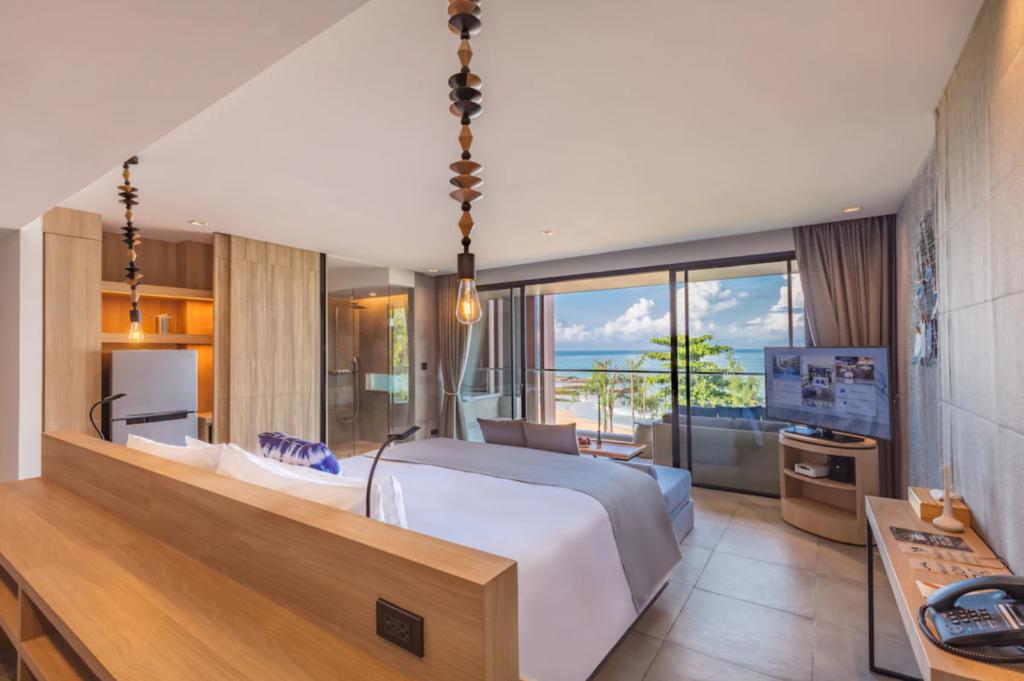
La Vela Khao Lak
A big, modern beachfront resort that feels designed for people who actually use hotel facilities. The headline is the huge free-form pool complex, plus a full-service spa and multiple dining options, including a beach club setup that makes dinner feel easy on night one. If you want something with energy but still on the sand, this is the cleanest version of it in Bang Niang.
It’s positioned in Khao Lak’s more useful zone, close enough to reach restaurants and everyday services without needing a car for every meal, since the market is about a 10 minute walk away. That makes it a soft landing even when you arrive early and want to walk, because you’re not stranded in a remote stretch of highway and sand. The actionable advantage is choice. You can stay on-site, or step out easily.
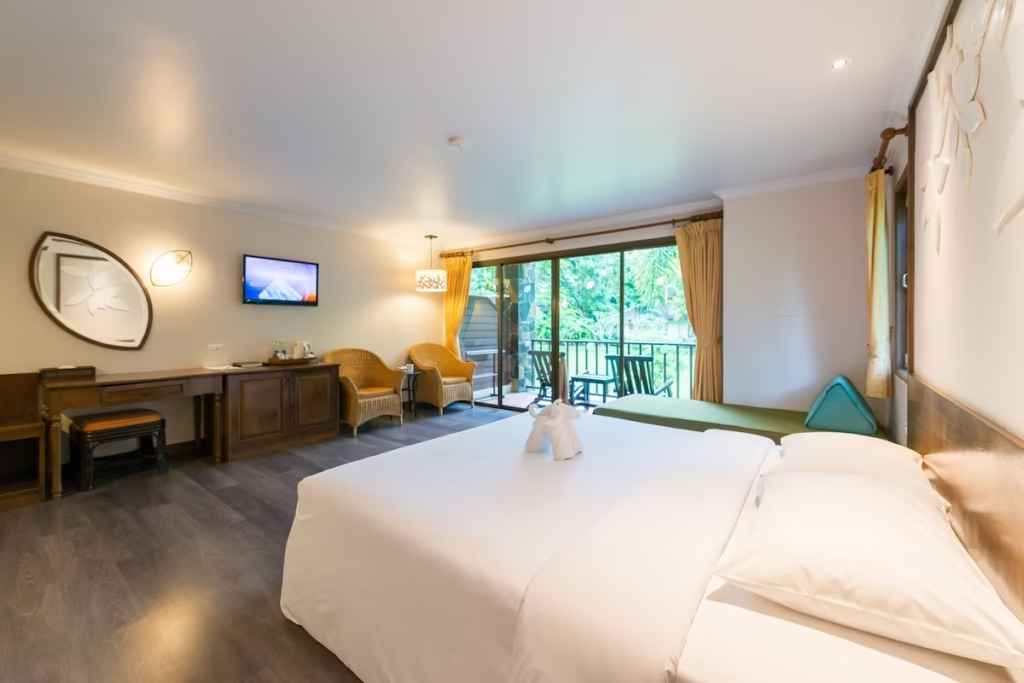
The Leaf on The Sands by Katathani
Low-rise and green, with rooms oriented toward pool or garden views instead of parking lots and back walls. You still get real facilities. Two outdoor pools, a fitness center, and an on-site restaurant, which means you can land, eat, and shut your brain off without hunting for basics. It’s built like a small resort campus, not a roadside stop.
I keep Nang Thong in mind for a simple Khao Lak start. you’re right on the beach, and central Khao Lak is 10 minutes on foot. It’s an easy stretch for first-night basics like food, minimarts, and low-key bars without the party vibe.
Chiang Rai, the north’s quiet gateway to day trips.
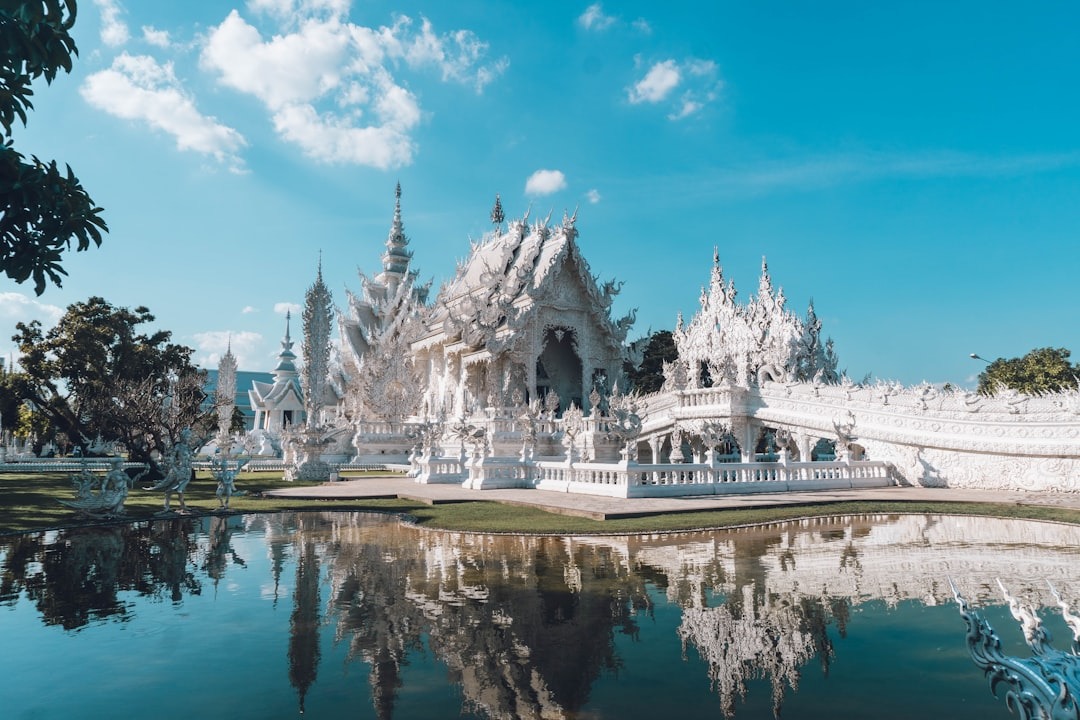
Chiang Rai is a first-night option for travelers who want the far north without building a multi-day plan. Chiang Rai International Airport (CEI) is close to town, and transfers are short, so you can land and settle quickly.
The city itself is compact, quieter than Chiang Mai, and built for day trips. That means your first night can be calm, then your second day can be full. It is also a useful staging point for the Golden Triangle region if that is on your list.
For soft landing purposes, stay near the river for calm resort energy, or stay near the central grid for easy night markets and quick exits in the morning. Chiang Rai is not a nightlife city in the Bangkok sense. It is an early-night city.
Chiang Rai cuisine. This is northern food territory, with Lanna staples and Shan influence. Expect herb-heavy sausages, chili dips, and noodle dishes that feel different from Bangkok’s sweeter central Thai profile. Night markets are a practical win here because they compress dinner choices into one easy loop.

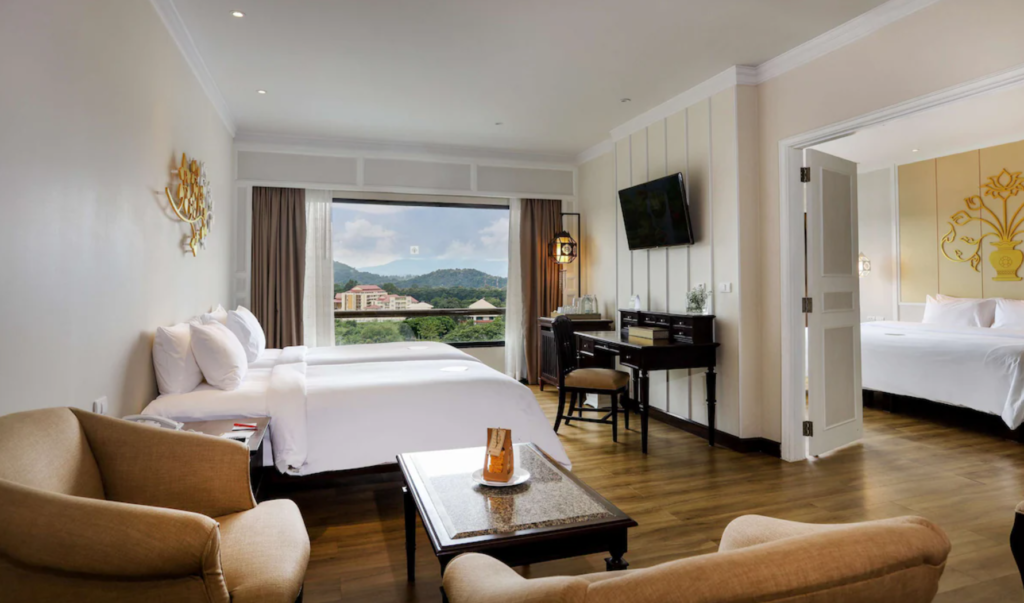
The Riverie
This is Chiang Rai’s most “full resort facilities” hotel, which matters when you want your first night to feel complete without leaving the property. You’re getting a big pool complex with family features like a water slide and aqua-play areas, plus a fitness center and riverfront walking space. It’s a large, modern setup with enough on-site structure that arriving late still feels easy.
Riverside Chiang Rai is without a doubt the easiest welcome. The famous Chiang Rai Clock Tower is 20 minutes on foot, and Chiang Rai Airport is a 15-minute drive. You’re close enough to the center to walk in for dinner, but the riverfront setting keeps the immediate surroundings calmer. Wat Phra Kaew is 10 minutes on foot for a clean first-day temple visit.
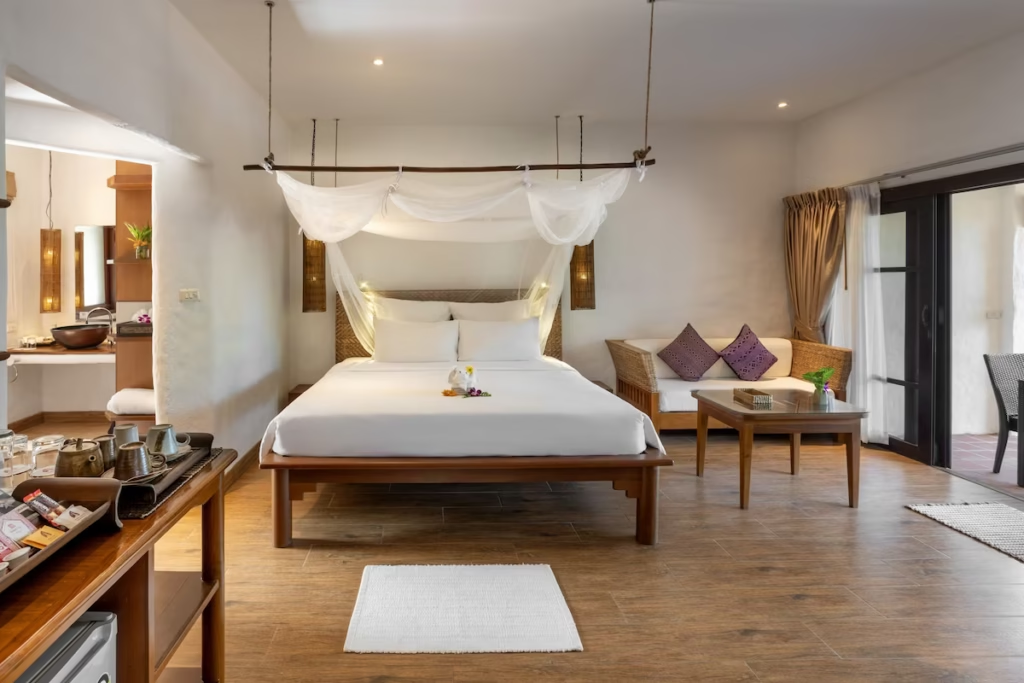
The Legend Chiang Rai Boutique River Resort & Spa
A riverside resort with a more intimate, villa-leaning feel than the big city hotels. The facility mix is strong. A spa, an infinity-edged pool, and two distinct restaurants, including a riverside one and an Italian option, which gives you real dinner choice without leaving the grounds. The vibe is lush and low-rise, with room categories that open to gardens or river views.
I’ve always liked the Kok River side for when I want space and quiet. Chiang Rai Airport is a 20-minute drive, and the city center is 10 minutes by car. It’s a softer landing than being directly downtown, especially if you want greenery and less traffic noise around the hotel. That 10-minute drive still keeps night markets and restaurants within easy reach.
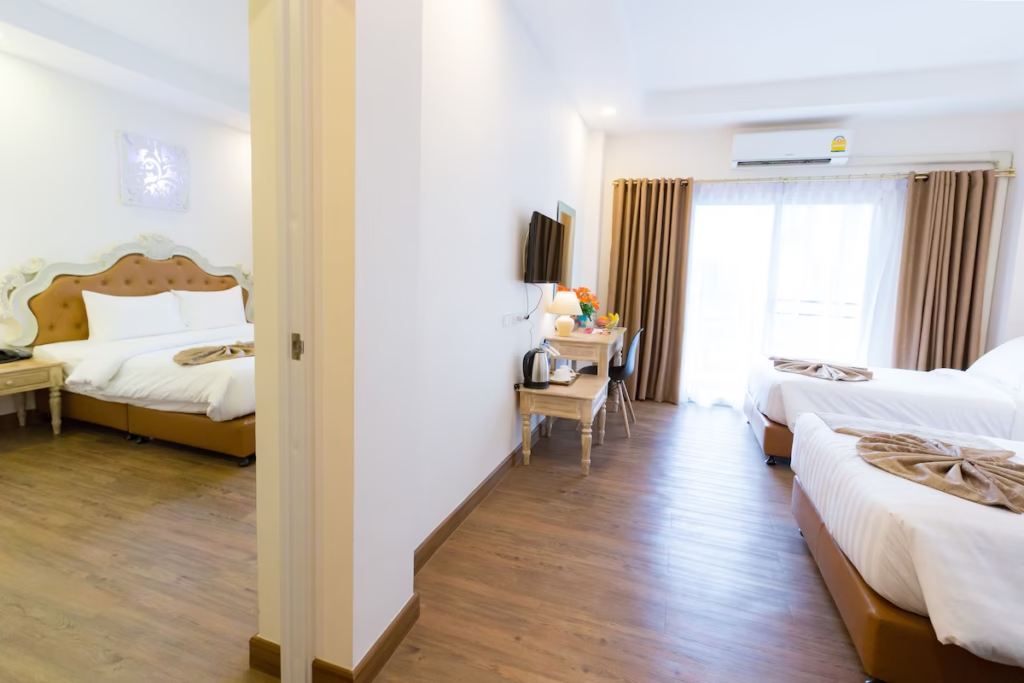
Hi Chiangrai Hotel
This is a compact city hotel built for convenience, clean rooms, and quick movement. Expect modern, air-conditioned rooms, a straightforward layout, and a front desk used to short stays and early departures. It’s the kind of place you book when you want the city to be simple and sleep to be the main event.
A compact city hotel that does one memorable thing better than most. An indoor saltwater pool set into an atrium-style lobby, so you get a swim even when the weather is ugly or you arrive exhausted. Add an on-site restaurant and small traveler-friendly touches like free bicycles, and it covers the first-night basics with a little personality.
I’d stay downtown Chiang Rai when I want everything close. Chiang Rai Night Bazaar is 8 minutes on foot, and the Clock Tower is 11 minutes away on foot. The benefit is simple. You can check in, walk to dinner, and walk back without thinking about transport at all. The Saturday Walking Street route is 11 minutes on foot when the weekend market is on.
Final Thoughts
Thailand is at its best when your first night feels handled. Not heroic. Not chaotic. Just clean, fed, cooled down, and ready for tomorrow.
The country makes that easier than most of Southeast Asia because the transport network is mature and built for visitors. Domestic flights stitch the big regions together. Long-distance buses run frequently. Tourist transfers by minivan are routine. Even the guides that usually complain about everything agree Thailand is easy to move around in.
Bangkok is the obvious landing for a reason. The city’s public transport does the heavy lifting when traffic is being dramatic. BTS and MRT cover the parts travelers actually use. River boats give you a second route through the city that can feel faster and calmer than a taxi crawl. That mix is why Bangkok can be intense and still function as a soft landing.
The coasts and islands are the other smart first-night move, as long as you pick the places that do not demand extra logistics when you are jet-lagged. Phuket and Krabi work well because you can land, transfer, and be eating the same evening. Samui is especially smooth because it has its own airport, so you skip the ferry puzzle on day one. Guidebooks and travel resources tend to describe Thailand’s transport menu the same way. Flights, trains, buses, ferries, taxis, and ride-hailing are all in the mix, so your first night choice can be based on comfort, not scarcity.
Up north, Chiang Mai and Chiang Rai are a different kind of welcome. Cooler evenings, quieter streets, and a pace that feels less caffeinated than Bangkok. Chiang Mai is also one of the easiest places to reach without friction because it has strong air connections, and the Bangkok to Chiang Mai rail route is one of the country’s best-known overland options when you want a slower, sleep-on-the-way move.
A good first-night hotel in Thailand does three things. It shortens transfers, it removes decision fatigue, and it buys you a calm start. Pick a place where dinner is not a quest, where the street outside is legible, and where tomorrow’s transport is simple to arrange. Thailand will gladly supply the temples, beaches, night markets, and late-night noodles. Your job is to arrive like a professional.