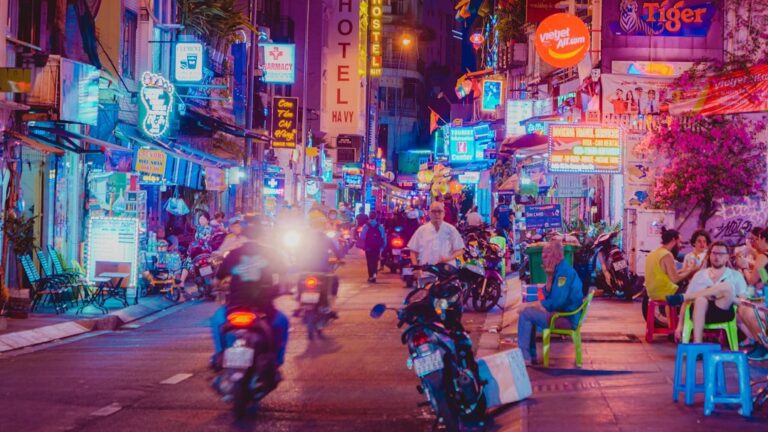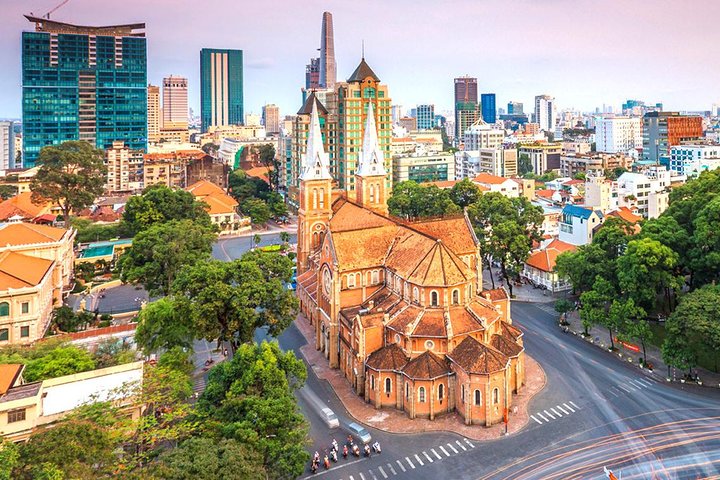
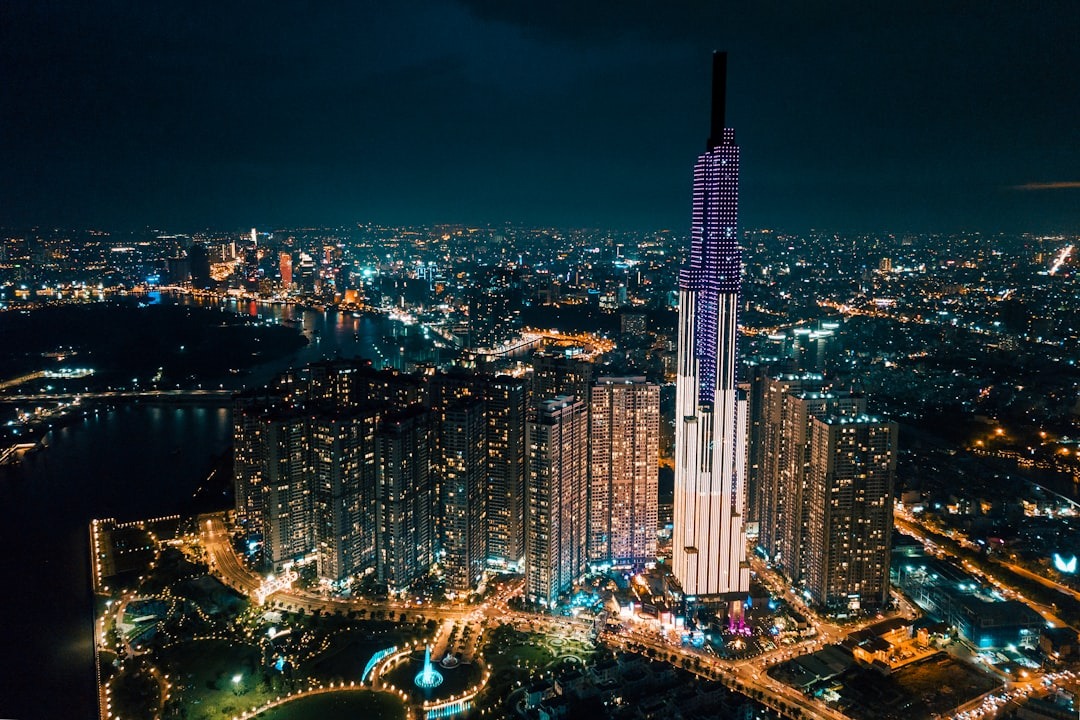
Ho Chi Minh City sits in southern Vietnam on the Saigon River, close to the Mekong Delta. It’s Vietnam’s largest city and the country’s financial and commercial engine. The city is home to more than 8 million people and spreads across roughly 2,061 square kilometers.
It has a layered history. Once the capital of French Indochina, then the capital of South Vietnam during the Vietnam War. Today it blends colonial landmarks with aggressive modern growth. You feel it everywhere, from old façades to glass towers.
I remember the drive at from the airport to my hotel in Disctrict 1 my first night in Vietnam, back in 2011, and having my “New York” moment, looking up at the skyscrapers and lights, and then the contrast with the $0.80 street Pho.
The main street in the central core is Dong Khoi, running through District 1 with shops, cafés, hotels, and a lot of the city’s “first time” energy.
Getting around: buses exist, the metro is developing, but the easiest way is Grab Car or motorbike. It is reliable, priced upfront, and it removes the language friction. Yes, you get a helmet.
Ho Chi Minh City. where to sleep
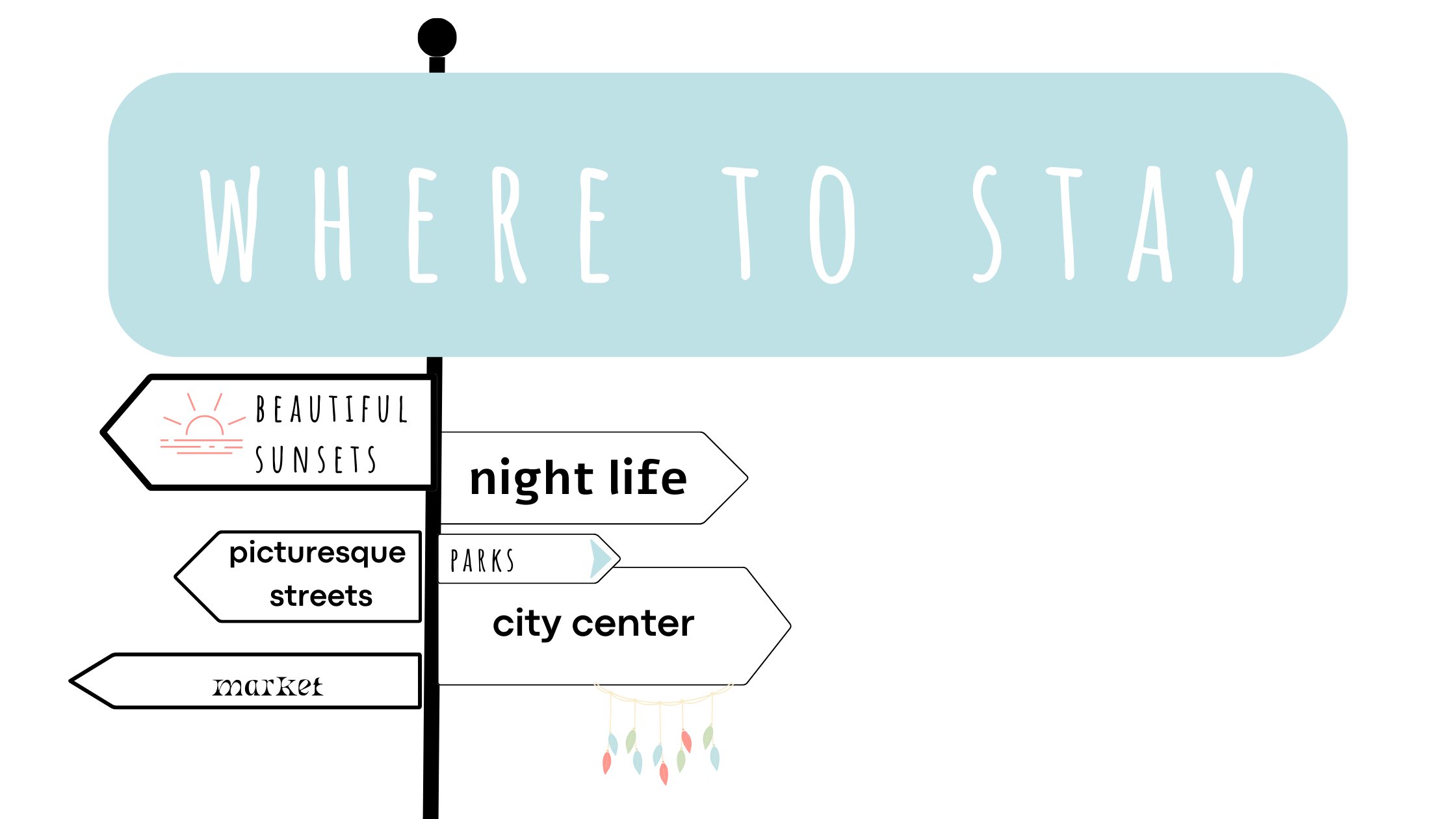
Before you choose a hotel, here are the main areas and what each one feels like:
- District 1: The central core with historic landmarks, nightlife, and the easiest base for first timers.
- District 3: Calmer, leafy streets, French colonial architecture, and a more local feel while still central.
- District 5, Cholon: Chinatown. one of the coolest areas for street food and culture.
- Phu My Hung, District 7: Modern, planned, clean, international.
- District 2: A quieter corner but still near the center, very green.
- Phu Nhuan: Where the locals hang out, a more artistic neighborhood.
- Pham Ngu Lao: inside District 1. budget heavy, backpacker energy, bars, and constant motion.
- Binh Thanh: On the river, a burging business center.
Ho Chi Minh City. 8 popular areas at a glance
| Area | Style | Energy | Close to sights | Crowding | Best for |
|---|---|---|---|---|---|
| District 1 | central, touristic | very high | top landmarks | high | nightlife, convenience, first time Saigon |
| District 3 | leafy, local | medium | quick access to D1 | medium | calmer base, good food scene |
| District 5, Cholon | Chinese Vietnamese, historic | high | markets, pagodas | high | street food, culture, atmosphere |
| District 7 | modern, upscale | low | farther out | low | space, calm, families |
| District 2 | green, quiet | low | farther out | low | relaxed stays |
| Phu Nhuan | trendy, café culture | medium | close to center | medium | coffee, neighborhoods |
| Pham Ngu Lao | budget, nightlife | very high | central | very high | cheap stays, bars, constant motion |
| Binh Thanh | mixed, developing | medium | good access | low | local feel, modern pockets |
District 1. the city’s spark plug

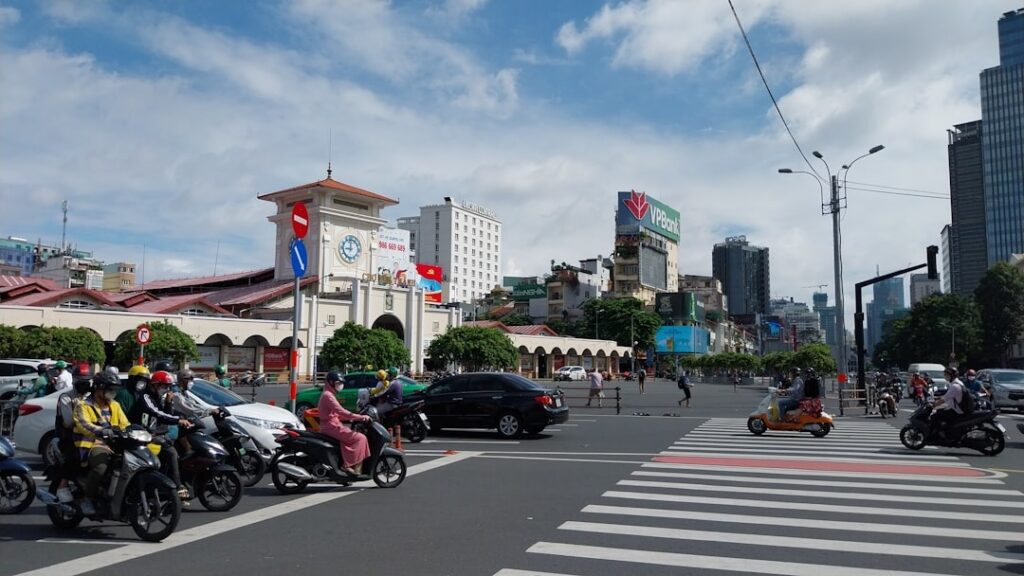
This is the bubbling center where most people naturally end up, especially the first time around. Within District 1 you have a few recognizable pockets:
• Dong Khoi: historic spine, polished, central.
• Pham Ngu Lao: budget core with nightlife and low prices for everything.
• Bui Vien: crowded, loud, bars, Western food, convenience stores open all night.
• Ben Thanh area: famous market and the square around it, often with ongoing construction nearby.
Hidden gem: Café Apartment at 42 Nguyen Hue. An old building refilled with cafés, boutiques, and concept shops stacked floor by floor.

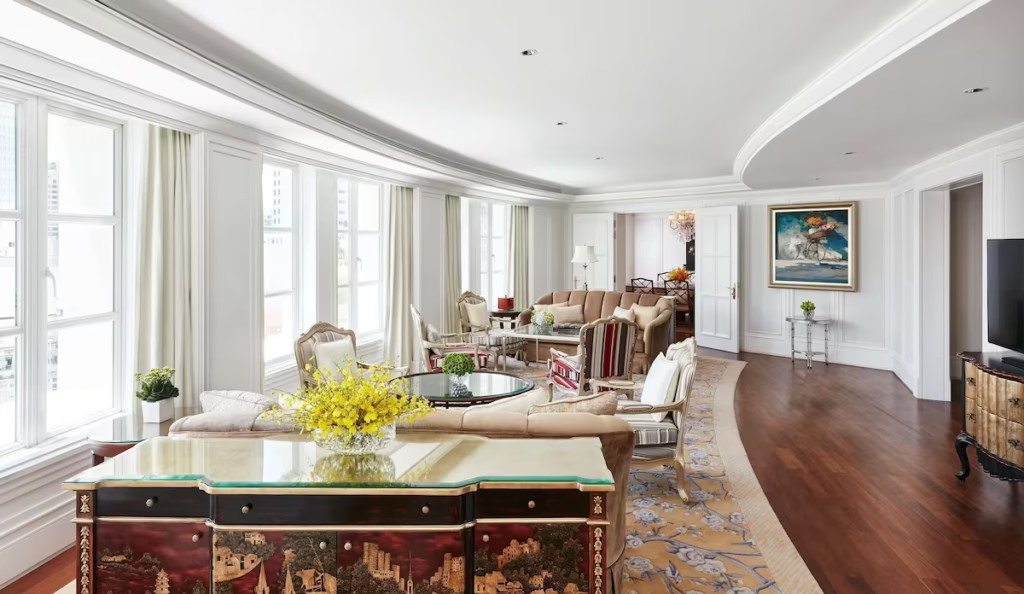
Park Hyatt Saigon
Park Hyatt occupies a rare position just off Dong Khoi, where the surrounding streets are spacious rather than compressed. The building is formal, balanced, and deliberately inward-facing. Public spaces are generous, circulation is calm, and the interior environment remains insulated from the street outside.
This is a hotel that sets tone immediately. It anchors a District 1 stay with clarity and restraint, allowing you to move through the city at full intensity and return to something calm and composed.

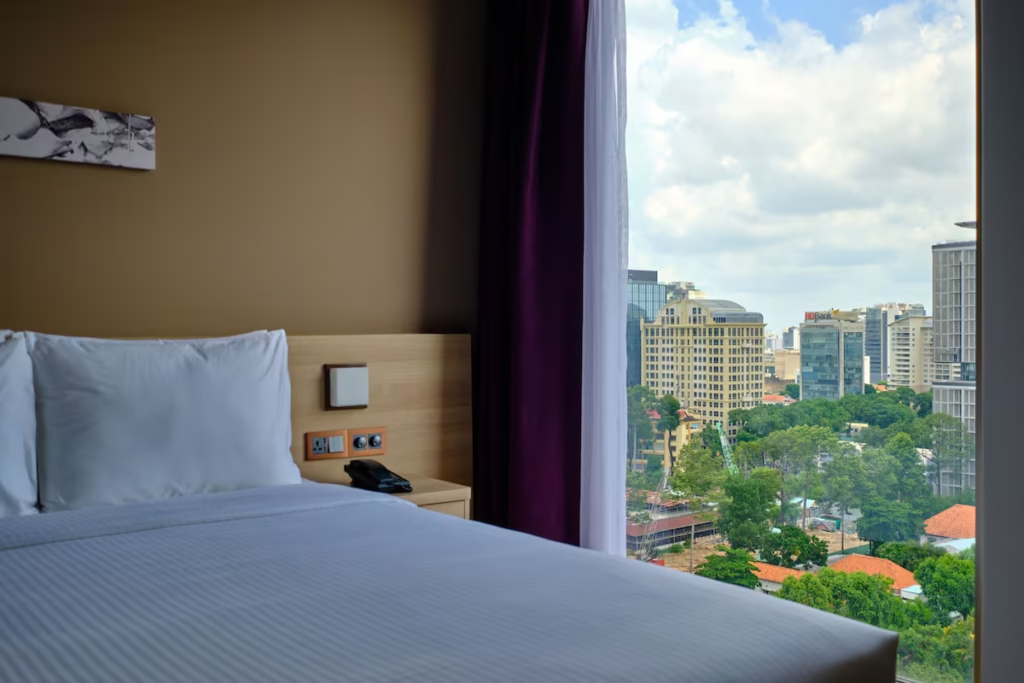
Sotetsu Grand Fresa Saigon
Sotetsu Grand Fresa is modern, efficient, and tightly run, positioned squarely within District 1’s walkable core. Rooms are minimal but thoughtfully designed, with excellent sound proofing and clean spatial logic. The operation feels precise without becoming impersonal.
It suits a stay built around movement. You step out into the city easily, then return to a space that resets you quickly and quietly, keeping the hotel firmly in service of the location.

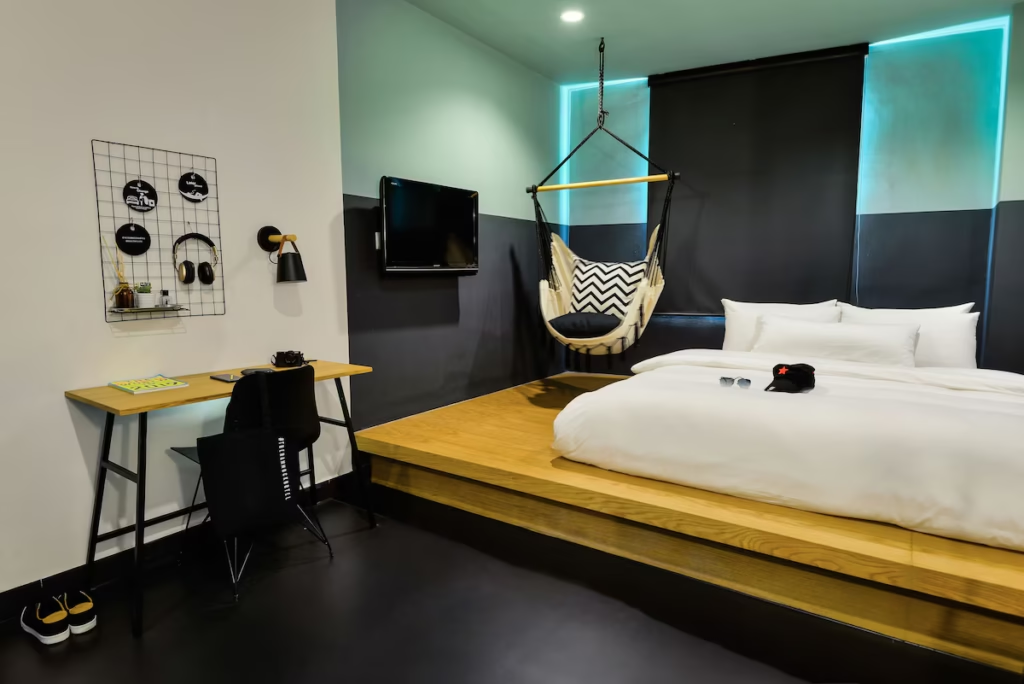
The Hammock Hotel Fine Arts Museum
The Hammock offers a softer take on central Saigon, with comfortable rooms, relaxed common spaces, and a distinctly human scale. Interiors lean warm and functional, and of course every room comes with a hammock. The hotel’s atmosphere stays calm despite its central placement.
It works well for travelers who want District 1 access without a hard-edged hotel experience. The emphasis is on ease, comfort, and a feeling of being looked after more than wooed.
District 3. central, calmer, more local
District 3 is immediately west of District 1, but the city presents itself differently here. Streets are wider, tree cover increases, and the built environment shifts toward villas, civic buildings, and long-established residential blocks. Traffic still moves quickly, but the density eases. Sidewalks function. Cafés, offices, and small restaurants rely more on regulars than turnover.
This is one of the most balanced parts of Ho Chi Minh City for staying central without living inside constant stimulation. Access to District 1 is fast and direct, yet the surrounding streets support a steadier daily cadence. District 3 works particularly well for travelers who want proximity without the stress, and who value continuity in the urban fabric over spectacle.

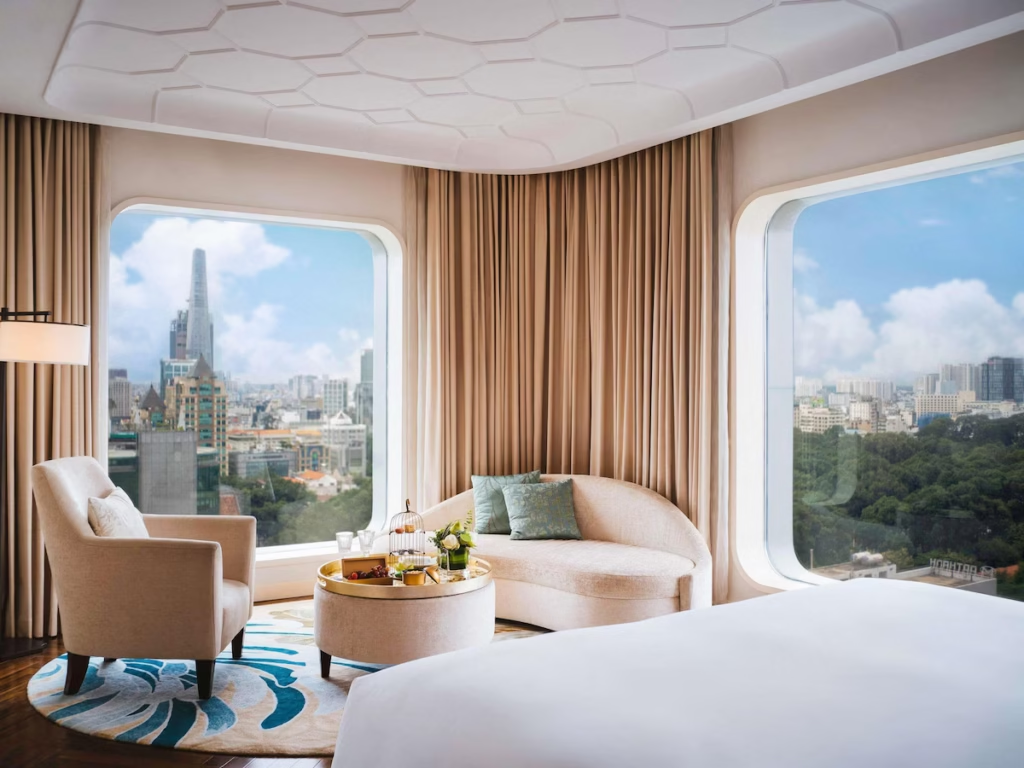
Hôtel des Arts Saigon MGallery
Hôtel des Arts is a composed, design-led property that draws on French colonial proportions and contemporary detailing. Rooms are generous, ceilings are high, and interiors are carefully resolved without leaning into nostalgia. Public areas are structured and intentional, with a rooftop pool and bar integrated into the building’s overall layout.
The hotel aligns closely with District 3’s character. It supports a stay that is central but controlled, offering a sense of order that carries through both the building and its immediate surroundings. This is a place where the hotel reinforces the district’s stability, making it easy to move into the city and retreat back without disruption.
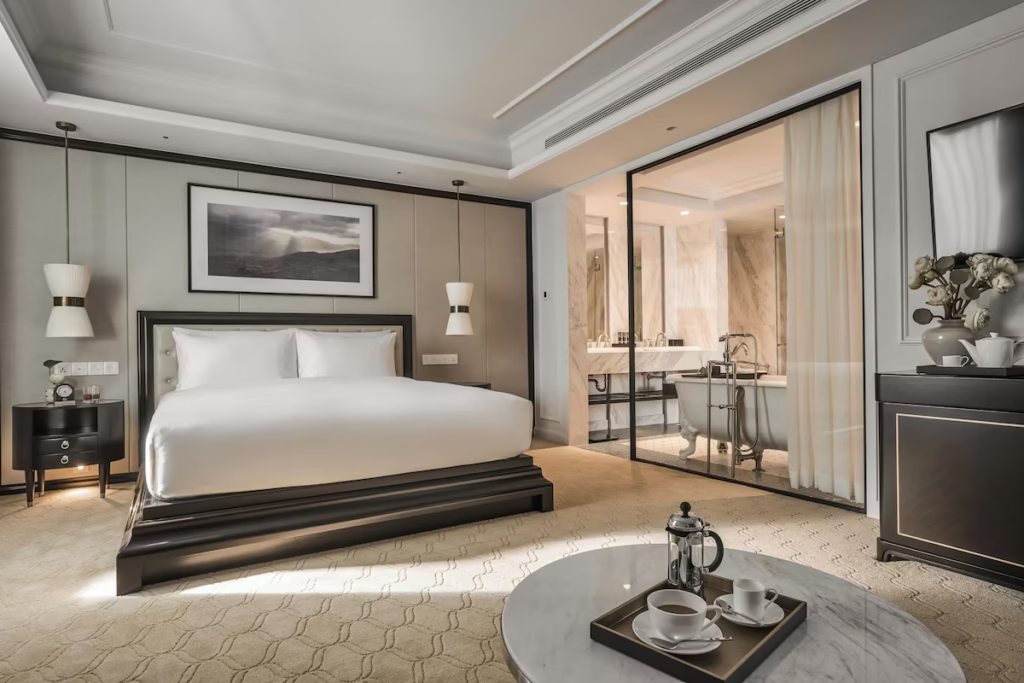
Mai House Saigon
Mai House is substantial in scale and deliberately understated in presentation. The building favors horizontal space, with wide corridors, large rooms, and a layout that prioritizes space and separation between areas. Design choices lean classic-modern, with attention placed on proportion, comfort, and durability.
Its strength lies in how seamlessly it fits into the district. The hotel supports longer stays and unhurried travelers, while remaining close enough to the center to keep logistics simple. It suits travelers who want a stable, composed base that mirrors District 3’s residential orientation and doesn’t compete with the city’s louder districts.
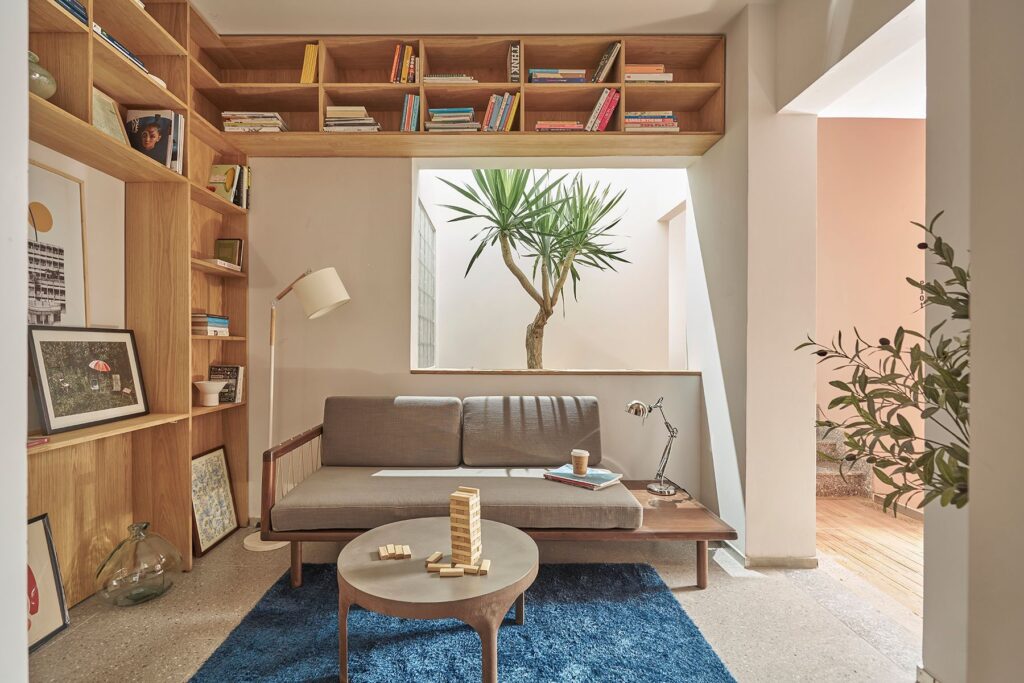
M Village Living Võ Thị Sáu
M Village Living Võ Thị Sáu operates more like a compact residential building than a conventional hotel. Rooms are clean, functional, and designed around day-to-day use rather than short-term turnover. Common areas are comfortable, and overall remain quiet and focused.
This fits naturally into District 3’s everyday structure. It supports independent stays where the city becomes the main focus, not the hotel itself. For travelers who want a modern, contained base embedded in a lived-in neighborhood, it offers clarity and consistency without distraction.
District 5, Cholon. Chinatown energy, food, and culture
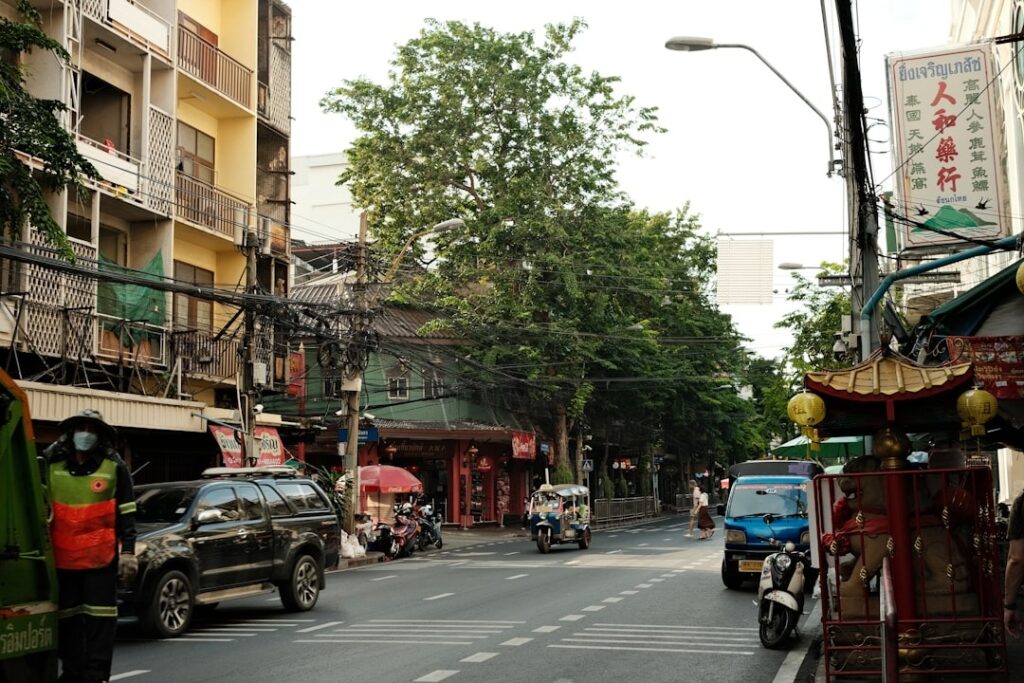
District 5 is one of the city’s oldest working cores, built around commerce. Cholon developed as a Chinese-Vietnamese trading center, and that function still defines it. Markets, medicine shops, temples, warehouses, and wholesale streets operate at close range, often layered vertically and rarely simplified for visitors. This part of the city moves through repetition and volume, not novelty.
Staying here places you inside one of Ho Chi Minh City’s most culturally concentrated areas. Daily life dominates the streets, and the urban fabric rewards attention and immersion, not speed. Hotels that work in District 5 provide structure and calm internally, allowing the surrounding intensity to remain accessible without overwhelming.
Equatorial Ho Chi Minh City
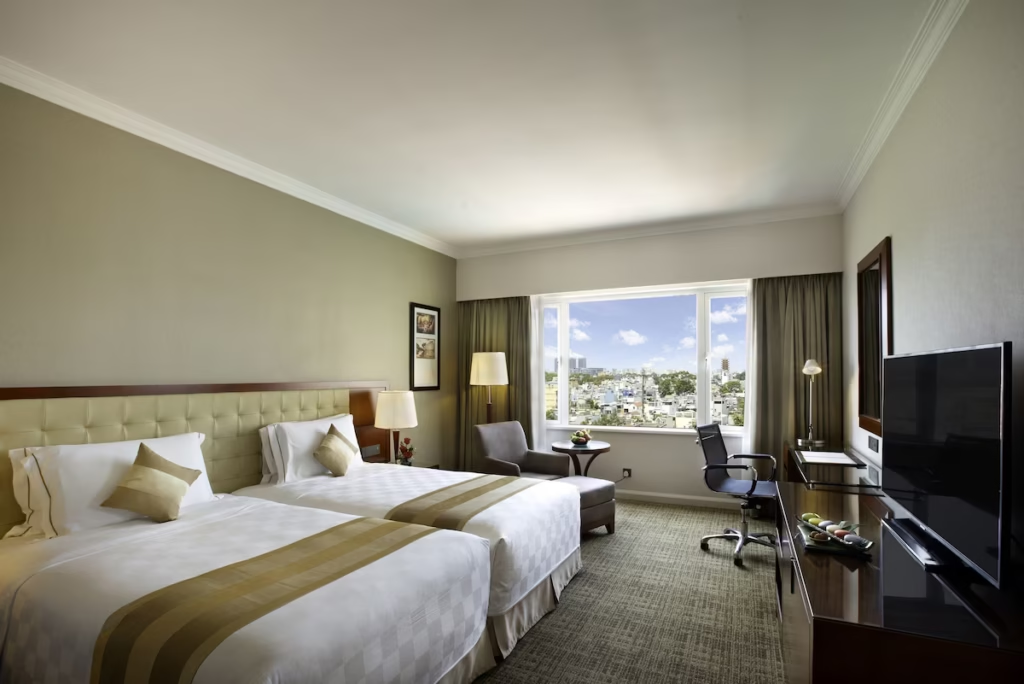
Equatorial is a large, composed hotel with the scale to absorb its surroundings. Rooms are spacious, quiet, and aimed toward comfort and separation from the street. Public areas are wide and orderly, and the hotel runs with a level of consistency in service that stands out in this part of the city.
The hotel functions as a stable anchor within Cholon’s density. It supports long walks through markets and temples by providing a clear return point that restores order and space. This placement allows full engagement with the district while keeping the accommodation experience controlled and cohesive.

Windsor Plaza Hotel Saigon
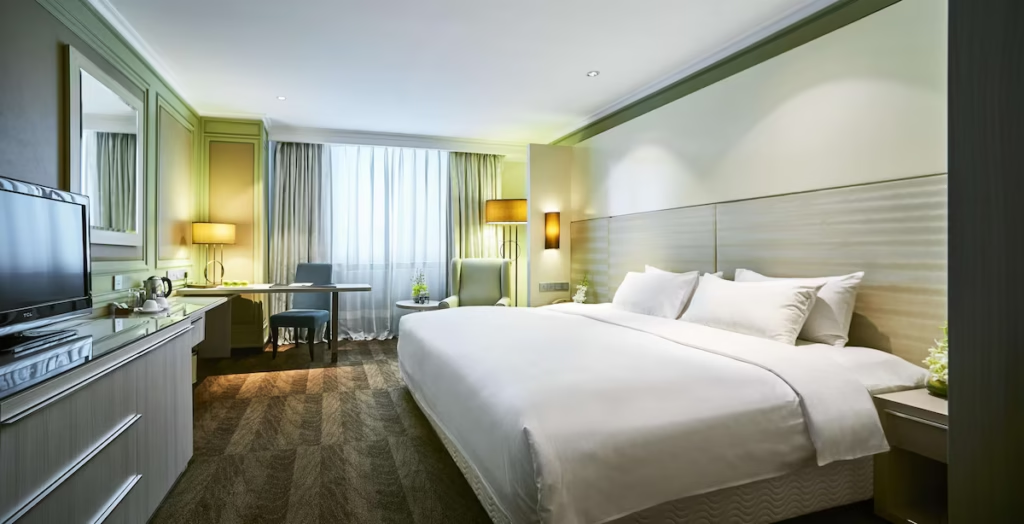
Windsor Plaza occupies a prominent block near An Dong Market, with a vertical layout that lifts rooms above street level. Interiors are straightforward and generous, with solid sound insulation and an emphasis on practicality. Facilities are extensive and well integrated into the building.
Its location makes it particularly effective for exploring Cholon on foot. Markets, pagodas, and food streets sit within easy reach, and the hotel provides a clear boundary between the external environment and the interior experience. It works well for travelers who want immersion during the day and clarity at night.
Zazz Urban Ho Chi Minh
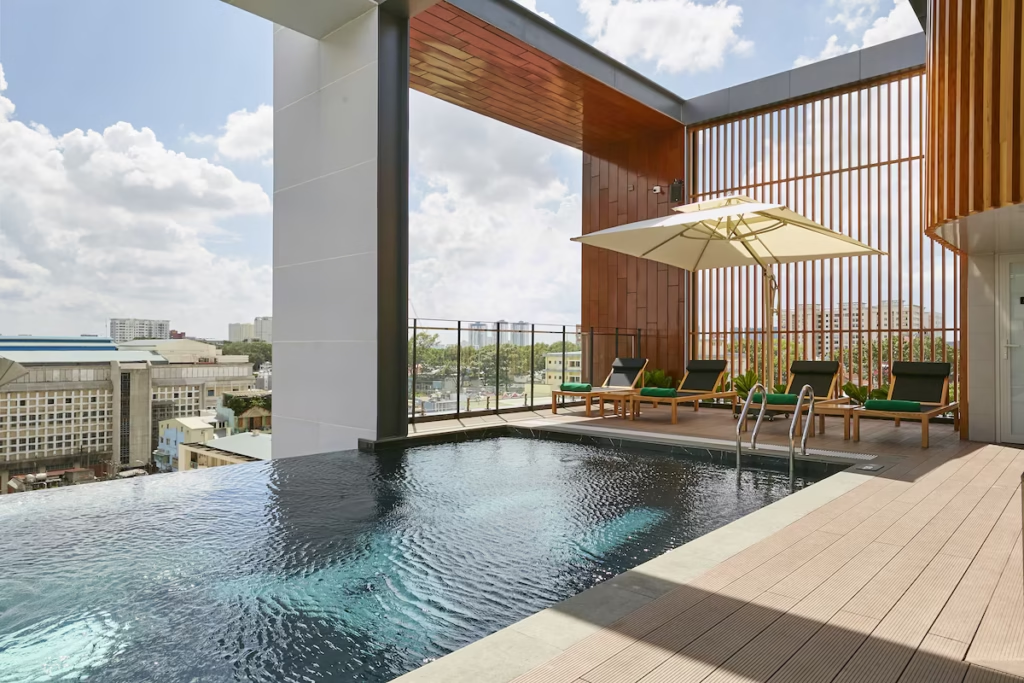
Zazz Urban introduces a contemporary option into a historically dense district. Rooms are modern, well maintained, and designed with careful attention to layout and sound control. The building includes fitness and pool facilities.
This hotel suits a stay that balances cultural exploration with modern comfort. Its presence in District 5 offers a clear, current counterpoint to the surrounding streets, supporting a stay that remains grounded in the neighborhood while maintaining a clean, composed interior environment.
District 7. modern Saigon, clean lines, breathing room
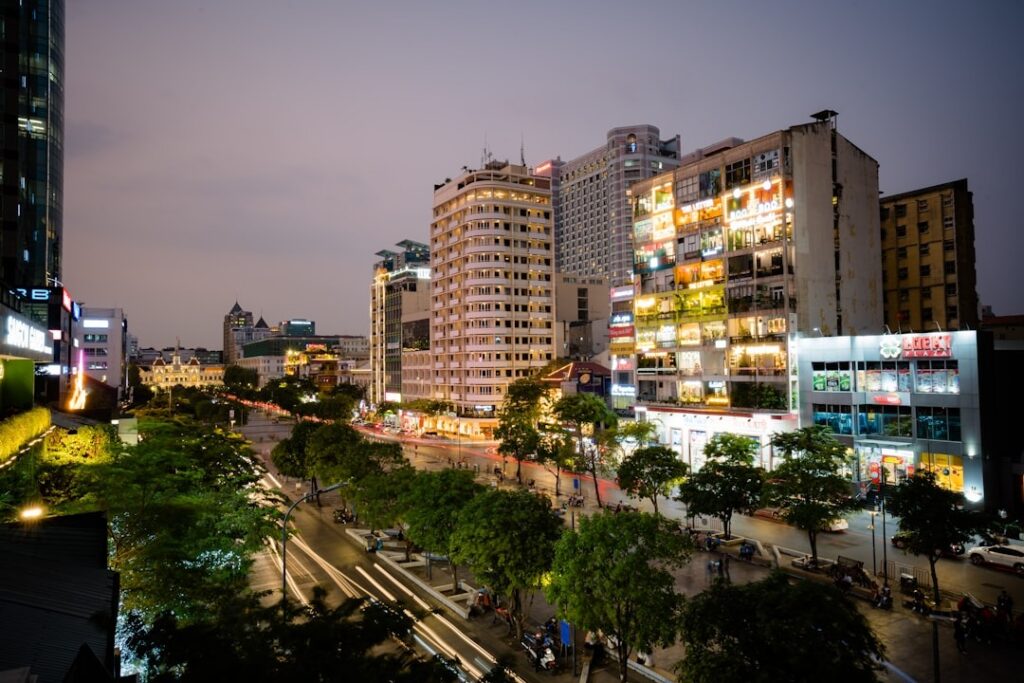
District 7 sits south of the historic core and is a deliberate departure from the rest of the city. Streets are wide, blocks are organized, and development follows a plan rather than accumulated history. Phu My Hung anchors the area with residential towers, offices, schools, and shopping centers arranged around open roads and green buffers. Traffic moves differently here. Density is managed and planned, not absorbed.
Staying in District 7 reshapes how Ho Chi Minh City opens to you. Daily logistics become simpler, noise recedes, and the city’s intensity turns into something you visit instead of inhabit. This area suits travelers who value structure, predictability, and space, and who prefer a base that supports longer routines.
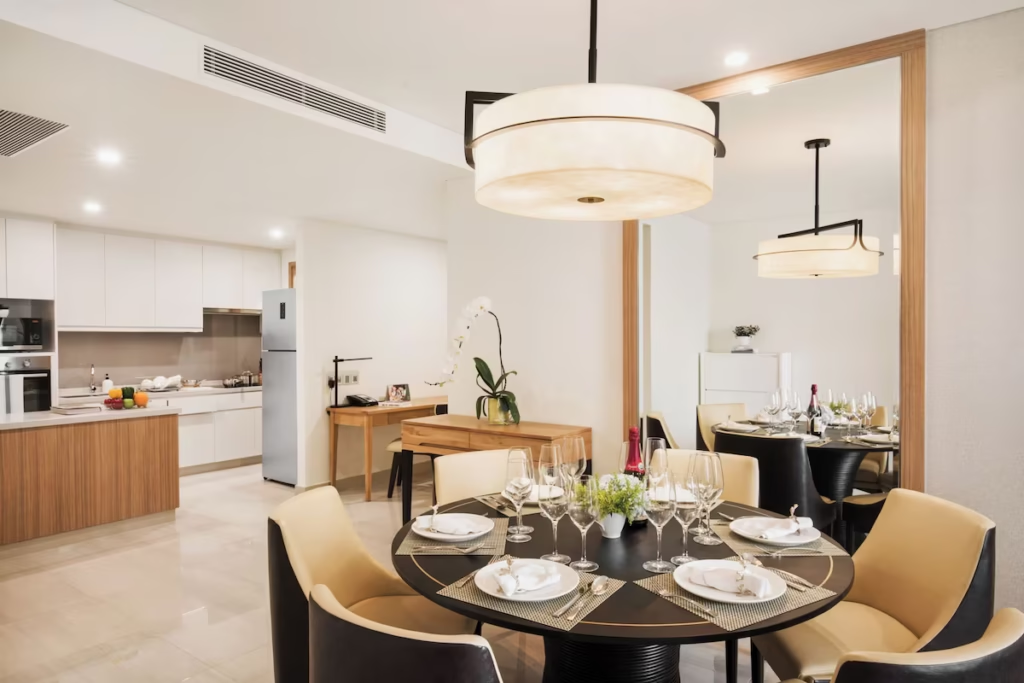
Oakwood Residence Saigon
Oakwood Residence Saigon is a modern serviced residence set within the Phu My Hung zone, designed around long-term comfort and daily use. Apartments are large, with full kitchens, living areas, and generous storage. The building includes a pool, fitness center, and shared spaces that really add to the social aspects.
The property works as a self-contained base in District 7. For travelers spending extended time in the city, it offers comfort, amenities for everyday life, and a sense of settlement and home.
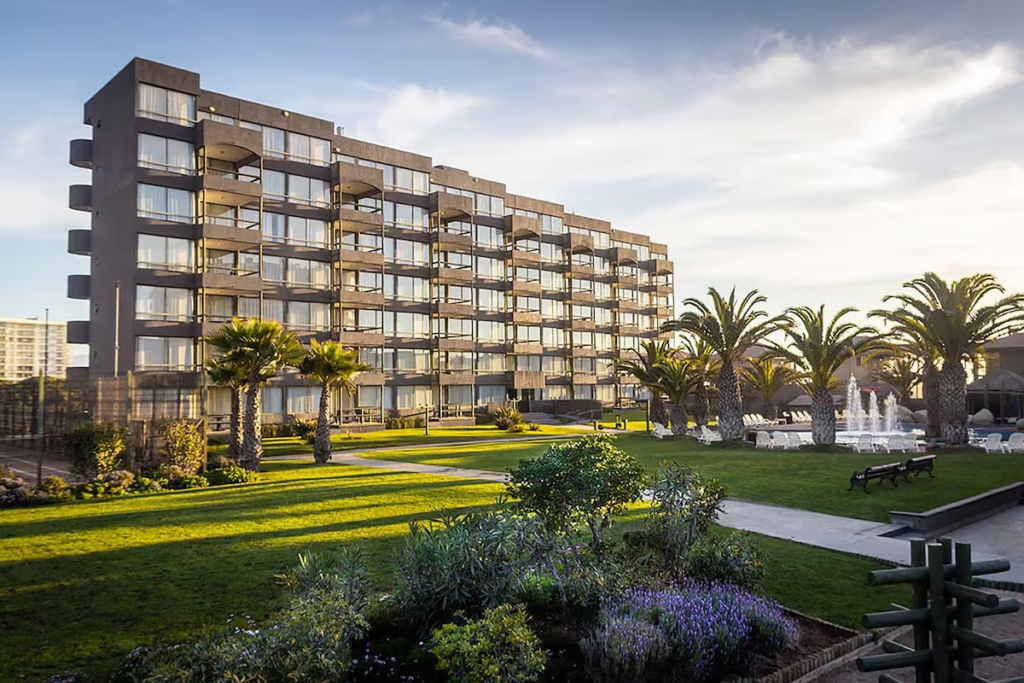
La Serena Hotel & Apartment
La Serena combines hotel services with apartment-style suites in a well-lit, well-managed building. Rooms are bright, clean, and organized for practical living. It also features many common and communal areas, and has great gardens and outdoor spaces.
The location is central in district 7’s well-ordered grid. The La Serena makes life easy, walking distance from malls, international dining, and daily errands, with quick transport into the center or any other part of the city.
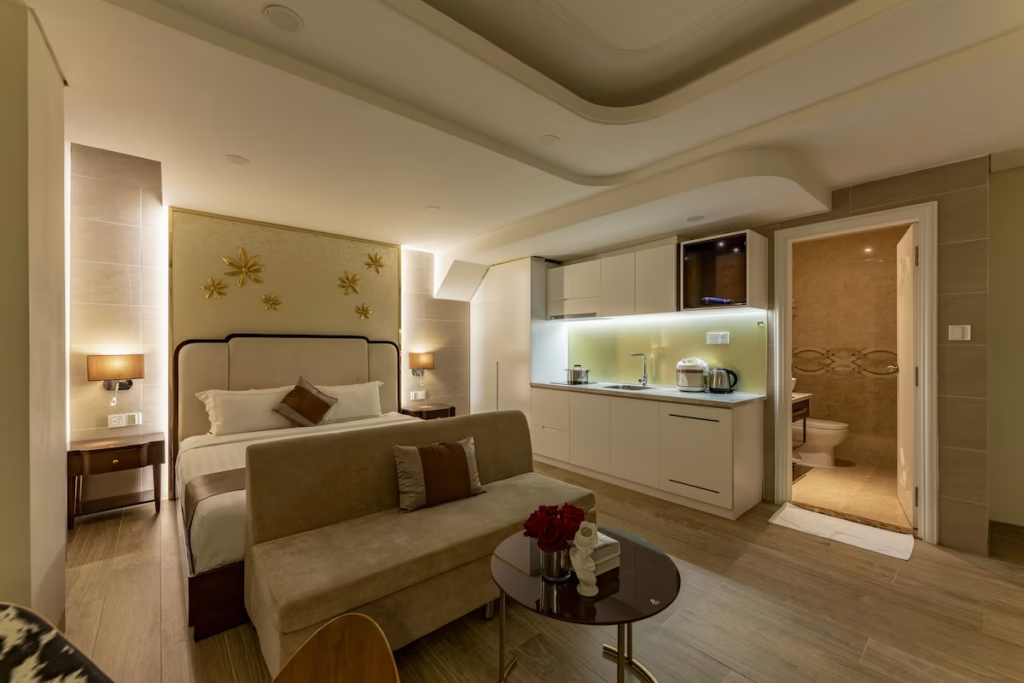
Golden Tree Hotel & Apartment
Golden Tree operates as a small hotel-apartment hybrid tucked into a calm section of District 7. Rooms have everything you need for a longer stay, are carefully maintained, and have great soundproofing. The building is quiet, with minimal shared traffic and a restrained footprint.
This hotel fits travelers who want District 7’s environment without scale or ceremony. It’s a stay that prioritizes smooth days, low noise, and routines, allowing the district’s openness and order to define the experience rather than the hotel itself.
District 2. distance, greenery, intentional separation

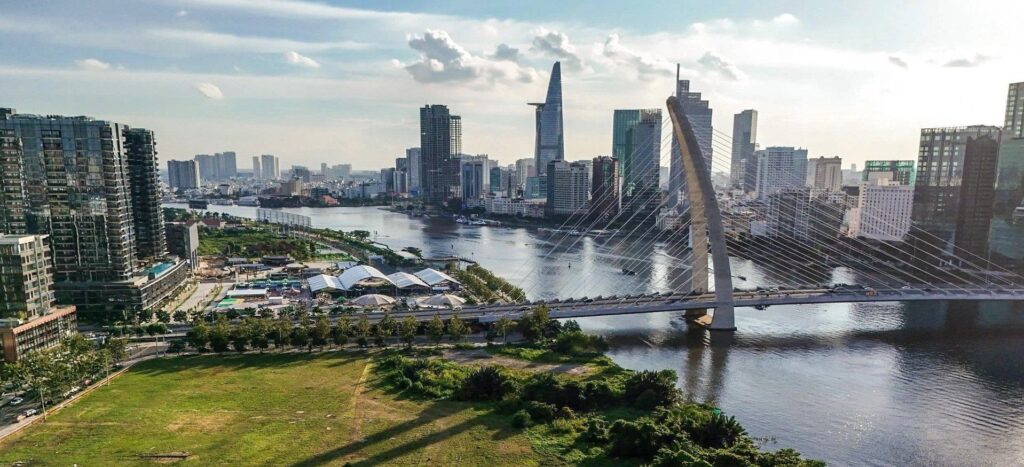
District 2 sits east of the Saigon River and operates on a different spatial logic than the historic core. Streets widen, buildings lower, and greenery becomes part of the urban structure. Thao Dien anchors the district with cafés, restaurants, and low-rise residential blocks that serve a largely international population, while quieter pockets extend toward the river and surrounding neighborhoods.
Staying in District 2 means living a little apart from the city’s main current. Days are less about stumbling into things and more about choosing where you’re going next. Most trips involve a short ride, and routines tend to stay local, with the river acting as a natural boundary between everyday life and the historic core. It’s a part of the city that rewards planning and patience, and it suits travelers who don’t need the center within arm’s reach at all times.
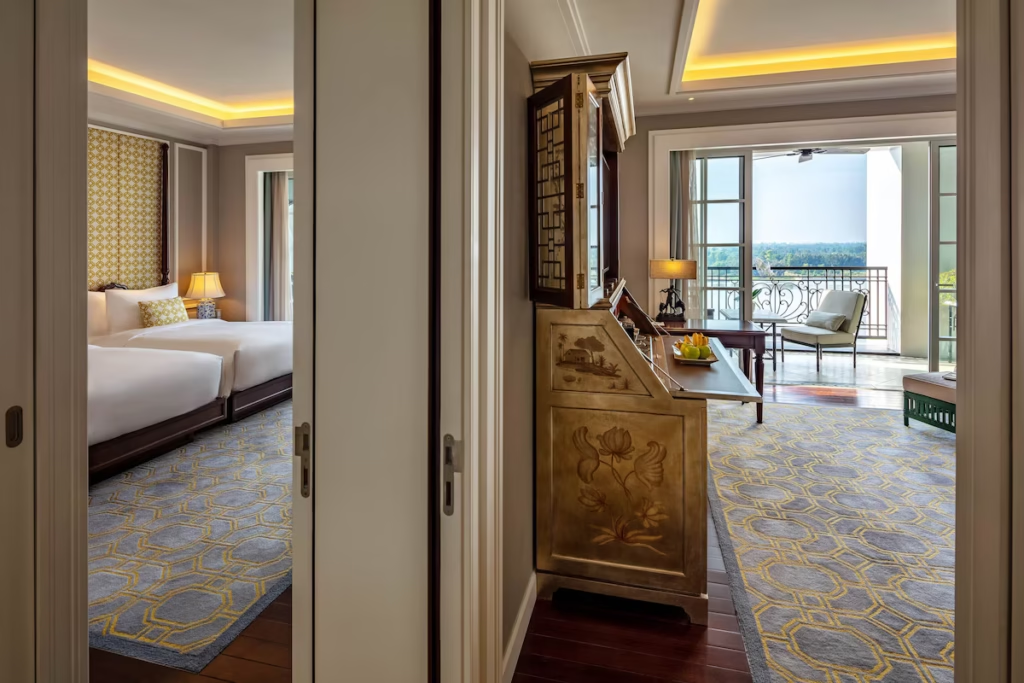
Mia Saigon Luxury Boutique Hotel
Mia Saigon is a polished, low-rise riverside hotel with a boutique scale and a clearly defined design language. Rooms are large and quietly finished, with strong sound insulation and a layout that prioritizes privacy. Public spaces are calm and self-contained, and service is attentive without being intrusive. The overall atmosphere is controlled and consistent, with an emphasis on comfort and separation from the city.
The hotel sits on a quiet stretch of the Saigon River in An Phu, set back from Thao Dien’s main commercial streets. Access is by car or taxi, with the closest activity concentrated a short drive away along Nguyen Van Huong and Xuan Thuy. The location keeps the riverfront isolated and controlled, with most dining and shopping handled off-site or about 15-20 minutes away by foot.
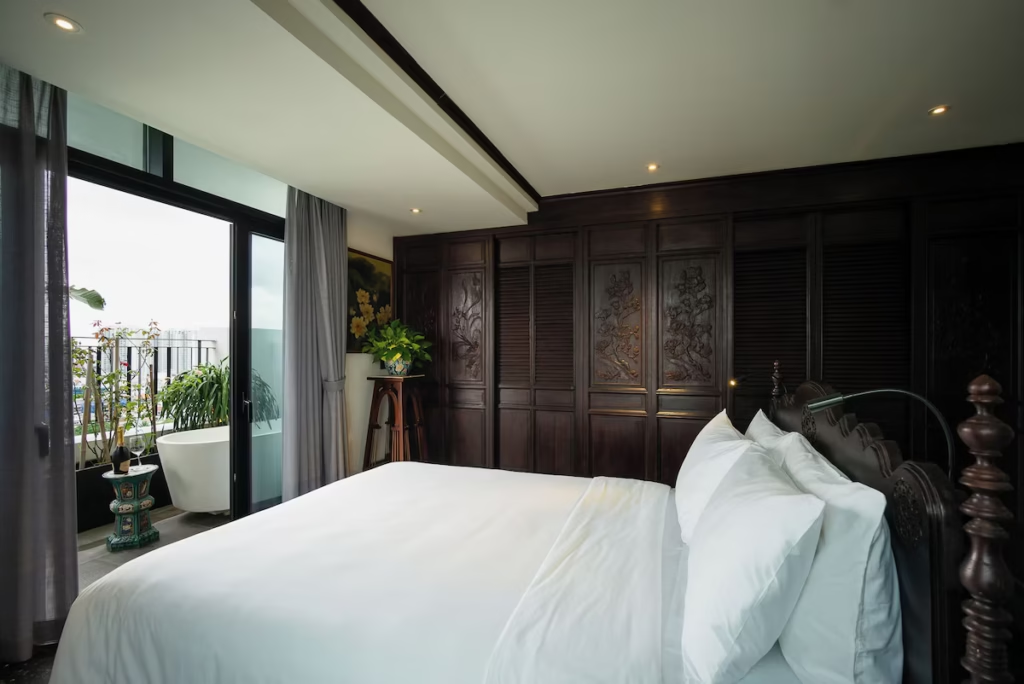
Amanaki Thao Dien
Amanaki Thao Dien combines the space and practicality of serviced apartments with hotel-level maintenance and amenities. Rooms are generously sized, modern, and set up for extended use, with kitchens and work-friendly layouts. Shared facilities, including a pool and fitness area, are compact but well kept, supporting both longer and short stays.
The property is located within Thao Dien’s main residential and café zone, close to international restaurants, bakeries, and everyday services. Streets around the hotel are walkable, and daily needs are easily handled nearby. Reaching central districts requires a short drive across the river, making the location convenient for local routines while keeping the city center at a distance.

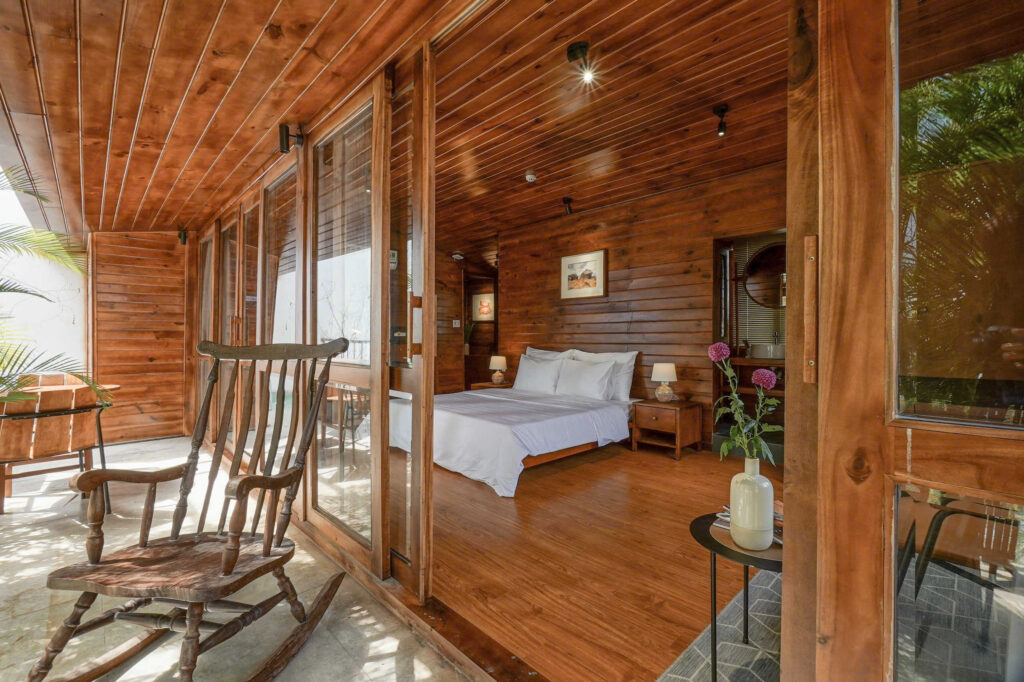
Nexus House Thao Dien
Nexus House is a small, quietly run property with a residential character and limited shared space. Rooms are bright, functional, and arranged for longer stays, with an emphasis on usable floor space and straightforward furnishings. It’s intimate, and the atmosphere remains low-key throughout the building.
The hotel is set on a side street in Thao Dien, away from major traffic and nightlife. Nearby cafés, small restaurants, and convenience stores are reachable on foot, while larger commercial areas are a short ride away. The location suits travelers who want a local setting, with easy access to the rest of the city when needed.
Phu Nhuan. connective, lived-in, everyday Saigon

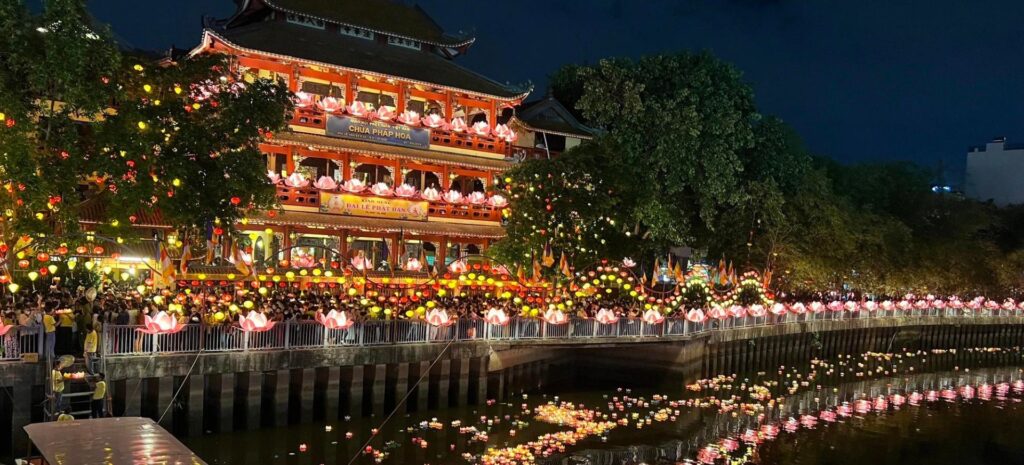
Phu Nhuan sits between the historic center and the airport corridor, functioning less as a destination and more as connective tissue. Streets are busy but familiar, shaped by schools, offices, markets, and long-standing residential blocks. Cafés, small restaurants, and neighborhood shops dominate the landscape.
Staying in Phu Nhuan places you inside the city’s daily mechanics. Movement in all directions is straightforward, and the district’s rhythm reflects how Saigon works for itself without thinking about tourists. It suits travelers who want proximity to the center without being in its most touristic zones, and who value neighborhoods that feel active without being “performative”.

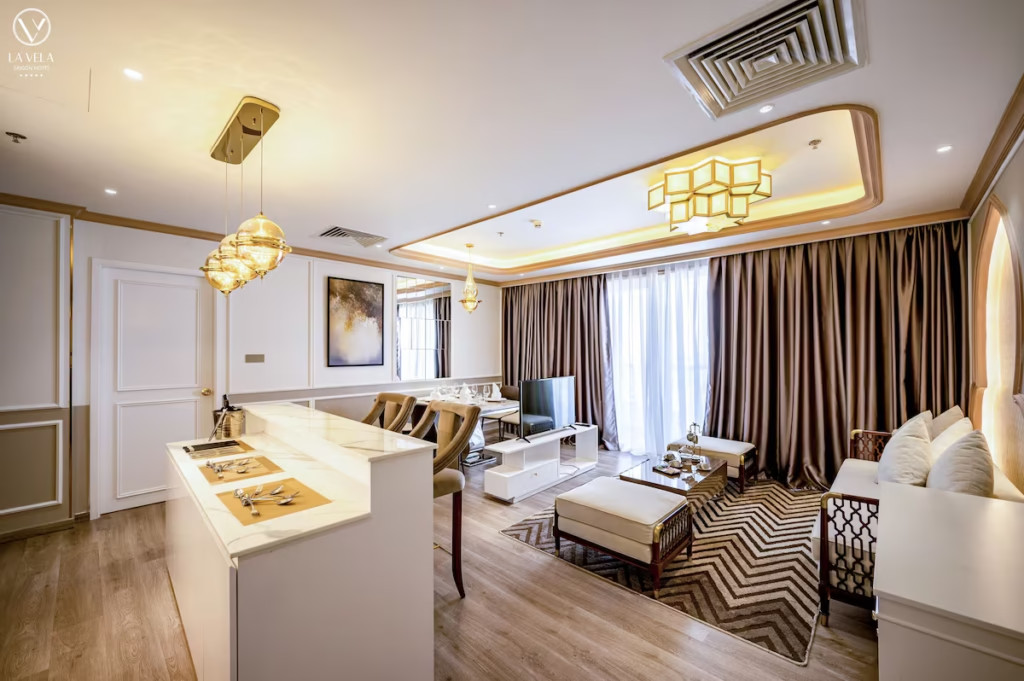
La Vela Saigon Hotel
La Vela Saigon is a large, modern high-rise with a full-service setup and a clear emphasis on comfort. Rooms are spacious, well soundproofed, and designed to make both the endings and beginnings of your days as smooth as possible. Public spaces are expansive, including a prominent rooftop pool and lounge area that’s a defining feature of the hotel.
The hotel sits along Nguyen Van Troi, one of the city’s main north–south arteries, with fast access to Tan Son Nhat Airport and central districts. Dining and cafés cluster along nearby Le Van Sy and Phan Xich Long, both reachable by a short ride. This location works well for travelers moving frequently across the city, with transport links taking priority over walkable sightseeing.
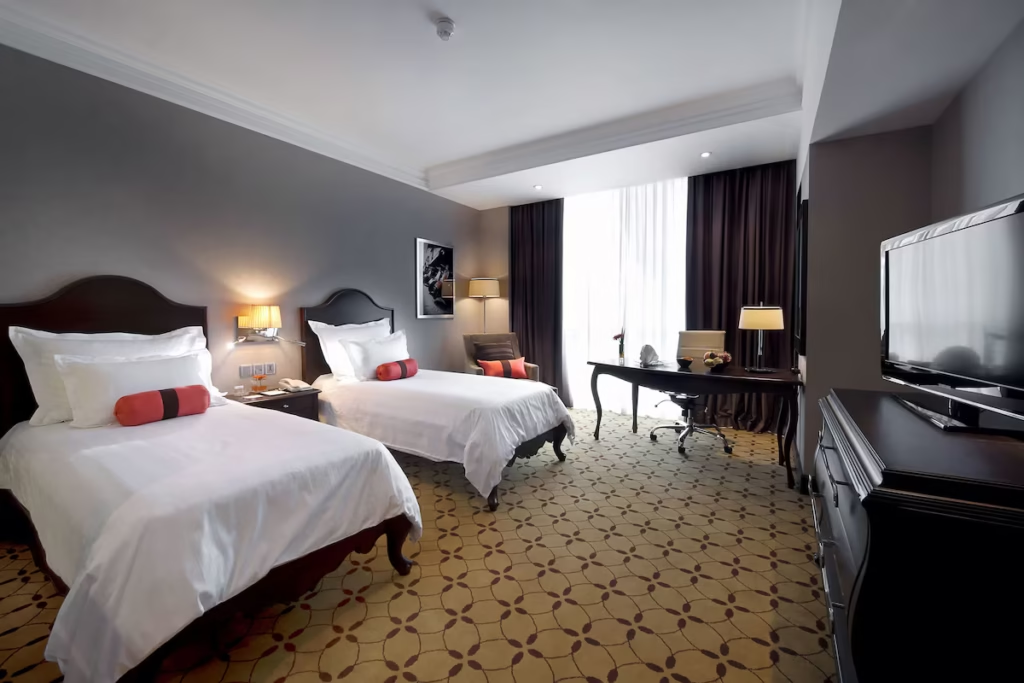
Eastin Grand Hotel Saigon
Eastin Grand is a long-established business hotel with a straightforward, professional setup. Rooms are large and well finished, with layouts geared toward rest and work, with desks and office chairs in many rooms. Facilities include a pool, fitness center, and multiple dining options, all maintained with consistency and flourish.
The hotel is located near the airport corridor, close to Nguyen Van Troi and the White Palace convention complex. Access to District 1 and District 3 is direct by car, while the immediate surroundings are largely residential and commercial. This placement suits travelers who value easy airport access and smooth cross-city movement over being close to the sightseeing areas.

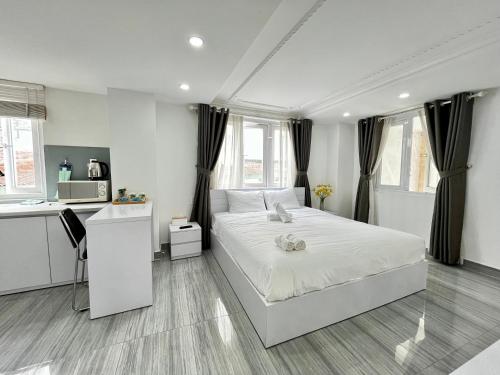
MoMo Residence
MoMo Residence is a small apartment-style property designed for independent stays. Units are compact but efficient, with kitchenettes and simple furnishings arranged for everyday use. The building stays quiet, with shared areas and a low guest turnover.
It’s set within a residential part of Phu Nhuan, close to local cafés, neighborhood restaurants, and small shops. Phan Xich Long’s busy food streets are a short ride away, and connections into central districts are easy by taxi. The location supports a local feel and short trips across the city without placing you in a tourist corridor.
Pham Ngu Lao. compression, turnover, momentum
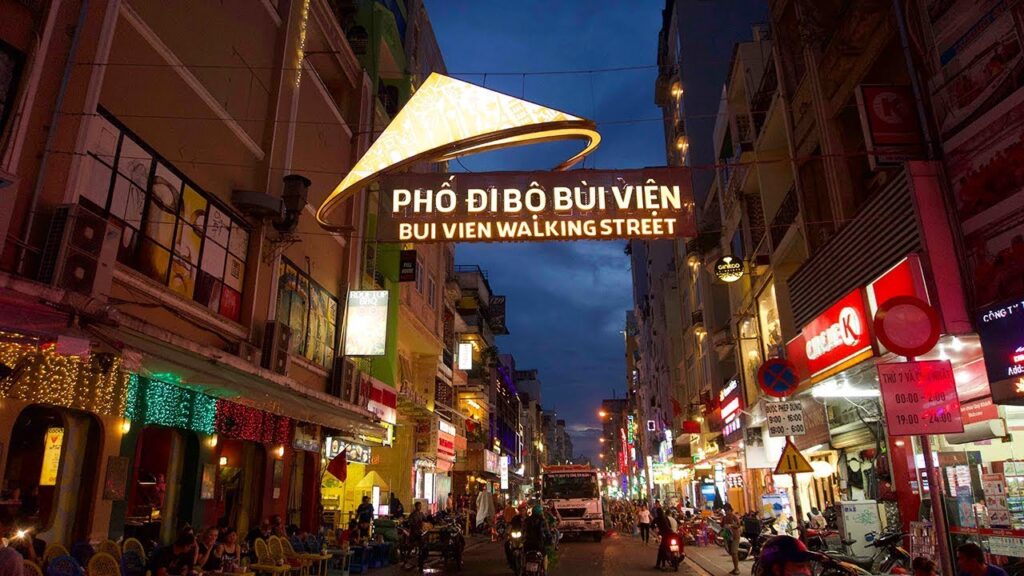
Pham Ngu Lao is the part of District 1 most associated with budget travel and backpacker infrastructure in Ho Chi Minh City. The streets around Phạm Ngũ Lão, Bùi Viện, and Đề Thám are lined with guesthouses, hostels, travel agencies, restaurants, and bars built to serve international visitors at every hour. Accommodations range from dormitories to compact hotels, and the pedestrian network is a tight grid of narrow streets and alleys that stay active late into the night. The overall pattern is high density, high turnover, and amenities clustered within a small area.
The district sits high in Ho Chi Minh City’s center, with large public spaces like September 23rd Park and historic sites such as Ben Thanh Market, the Notre Dame Basilica, and the War Remnants Museum within about 10–15 minutes’ walk. Several major bus and sleeper coach operators have ticket offices here, making this area a logistical hub for onward travel. Street food vendors, inexpensive cafés, and bars with late-night hours fill the blocks around you, while the main roads funnel traffic toward central landmarks and transport links
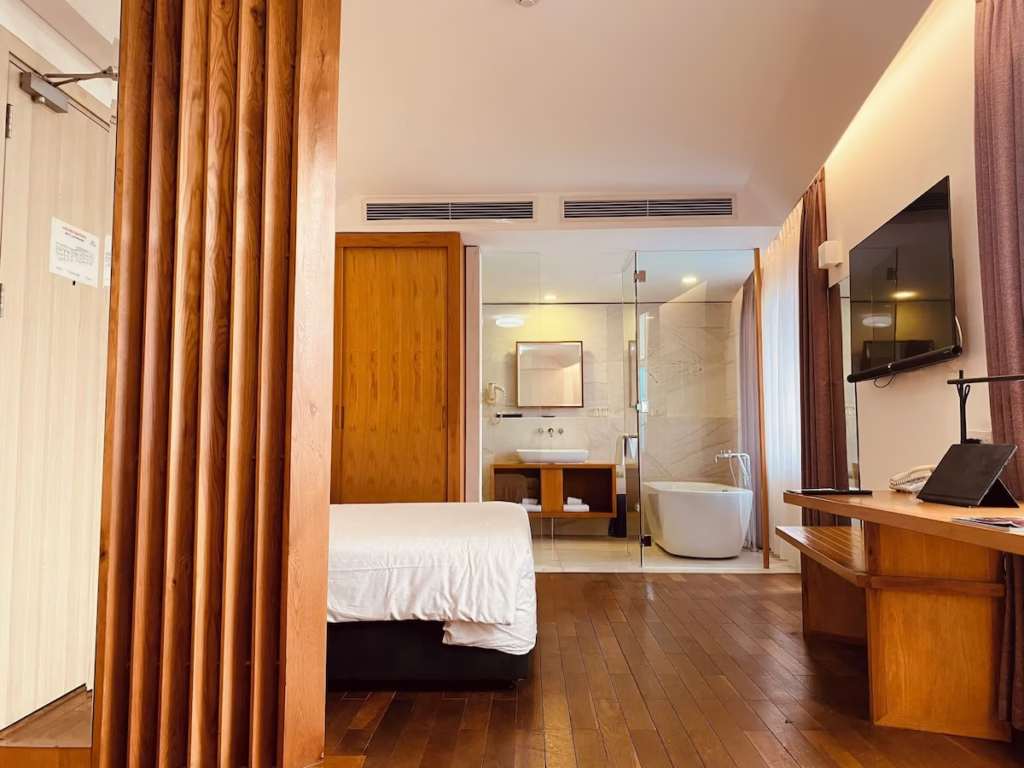
Liberty Saigon Greenview
Liberty Saigon Greenview is a mid-sized city hotel with a practical, no-frills setup. Rooms are luxurious, comfortable, and designed to block out street noise, which matters in this part of the city. Public areas are functional and clearly laid out, and the hotel runs at a scale that handles constant guest turnover without feeling chaotic.
The hotel sits at the western edge of the Pham Ngu Lao area, close to September 23 Park and within a short walk of Bui Vien and De Tham streets. You’re near bus offices, travel agencies, and late-night food, while still slightly removed from the loudest blocks. Ben Thanh Market and central District 1 landmarks are reachable on foot in about 10–15 minutes.
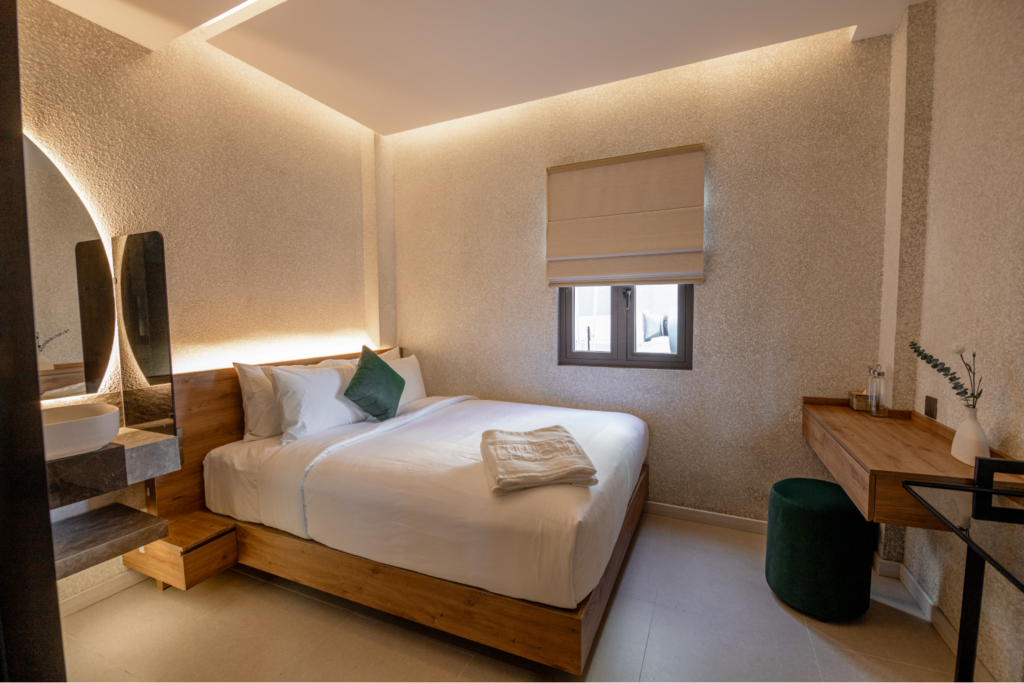
The Common Room Project
The Common Room Project is a small, modern property focused on clean design and efficient use of space. Rooms are small but well organized, with good sound insulation for the area. Shared spaces are a core part of the setup, offering a calm place to sit or work without feeling like a party hostel.
It’s located just off Pham Ngu Lao’s main streets, within easy walking distance of Bui Vien and the surrounding nightlife. Cafés, convenience stores, and travel services are scattered through the nearby blocks, and September 23 Park is a few minutes away. The location keeps you inside the action while avoiding the most congested corners.
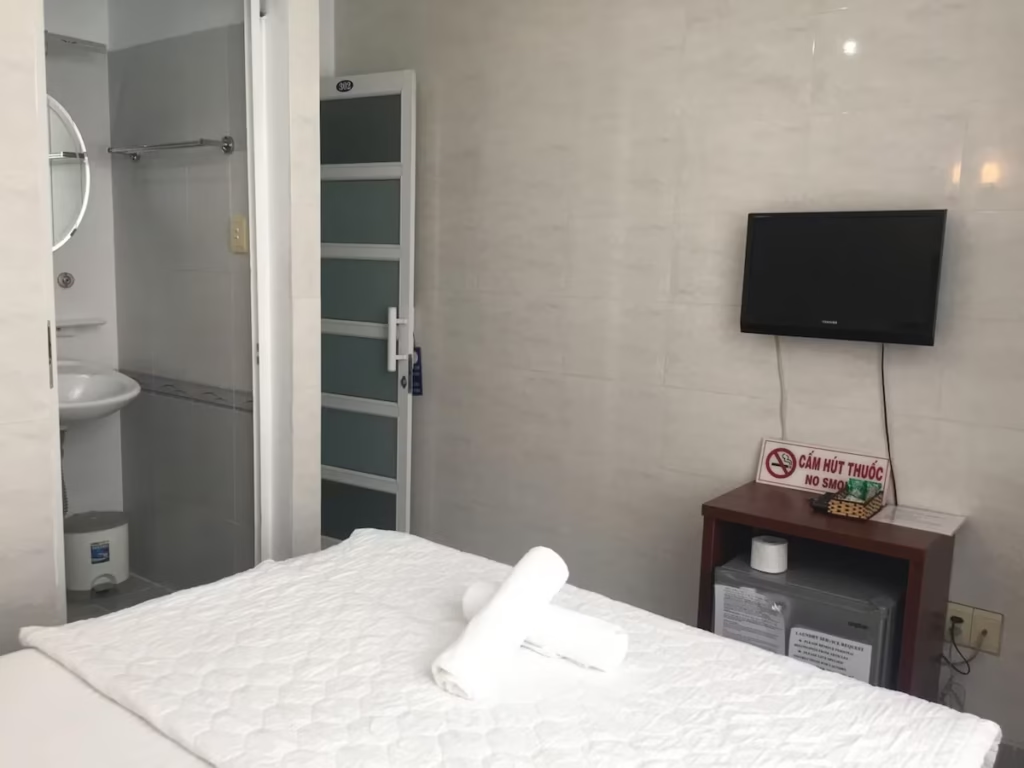
Vy Khanh Guesthouse
Vy Khanh is a long-running guesthouse known for its reliability and attentive management. Rooms are basic but clean, with straightforward furnishings and good upkeep. The scale is small, and the focus stays on clear communication and consistent standards rather than amenities.
The guesthouse is tucked into a side street near Pham Ngu Lao, close to De Tham Street and the area’s bus and tour offices. Food, bars, and services are immediately nearby, and most of District 1 is accessible on foot. The location makes it easy to move in and out of the city without relying heavily on transport.
Binh Thanh. transition, scale, daily life
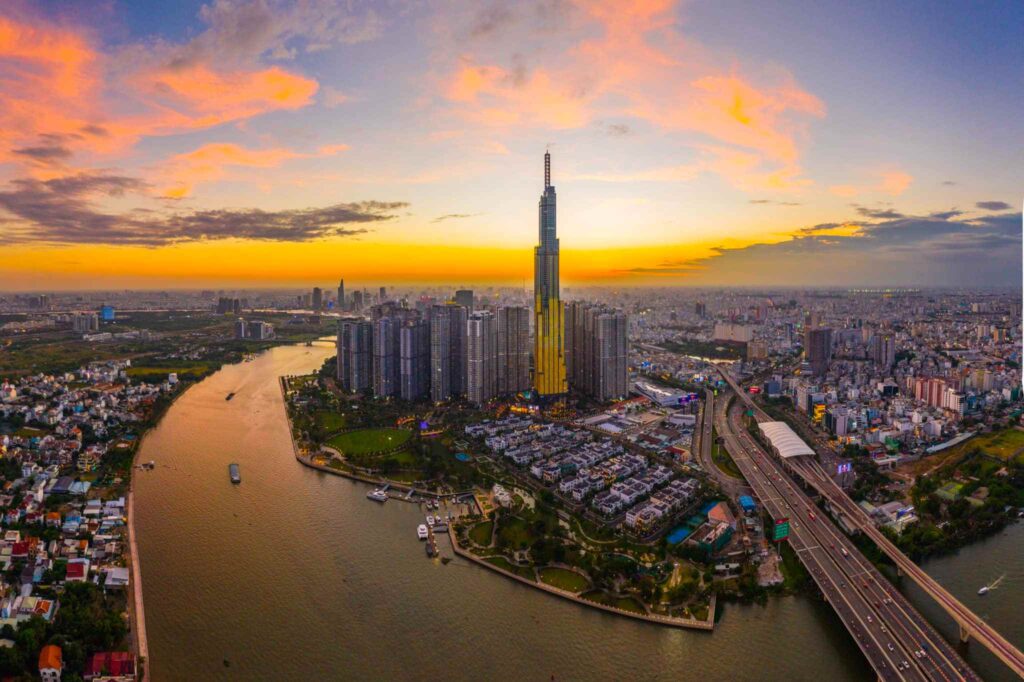
Binh Thanh sits just northeast of District 1, where the city shifts gears. Older residential streets, canal edges, and informal commerce intersect with new towers, riverside parks, and large-scale development. The district is neither fully central nor peripheral. It operates as a hinge, absorbing pressure from the core while reshaping itself upward and outward.
Staying in Binh Thanh places you close to the center without living inside its tight grid. Access into District 1 is fast, but the surrounding streets reflect a more local cadence. Cafés, small eateries, and residential pockets sit alongside major developments, creating a district defined by overlap rather than uniformity. It suits travelers who want proximity with breathing room, and who are comfortable staying where the city is actively reorganizing itself.
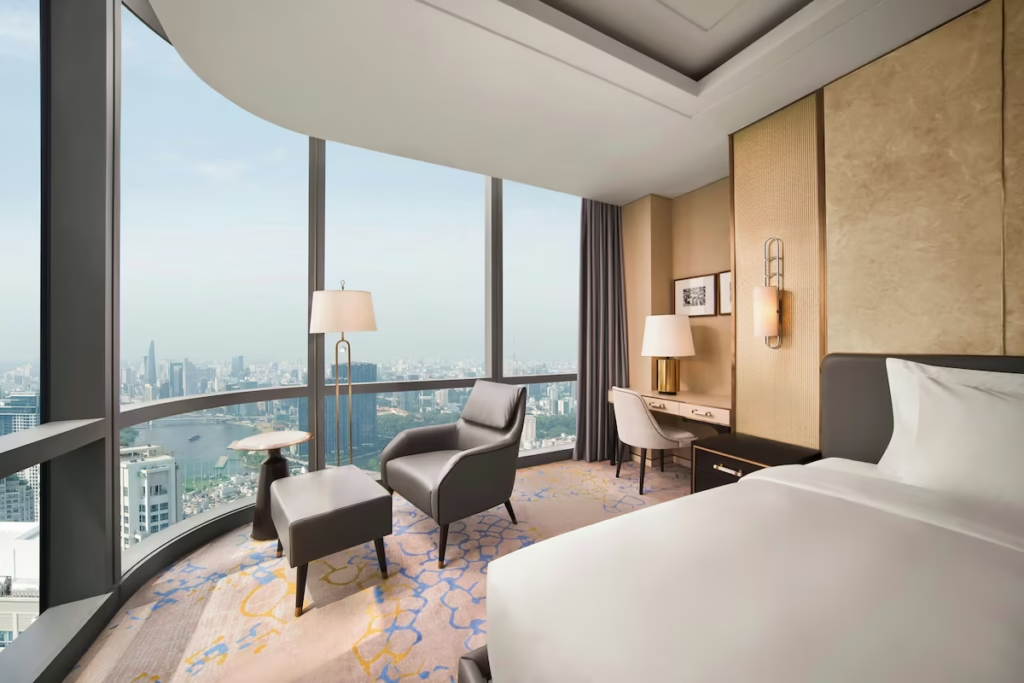
Vinpearl Landmark 81
Vinpearl Landmark 81 is a large-scale luxury hotel occupying the upper floors of Landmark 81, the tallest building in Vietnam. Rooms are expansive and modern, with floor-to-ceiling windows, contemporary furnishings, and a strong emphasis on comfort and privacy. Facilities are extensive and integrated into the tower, including multiple dining venues, a spa, fitness center, and indoor pool, all delivered with a polished, international hotel standard.
The hotel sits on the Saigon River within Vinhomes Central Park, a planned riverside development with green space, walking paths, cafés, and retail at ground level. District 1 is a short drive away across the river, while the immediate surroundings remain quieter and more residential. The location suits travelers who want riverfront space and views, with easy vehicle access into the city’s core when needed.
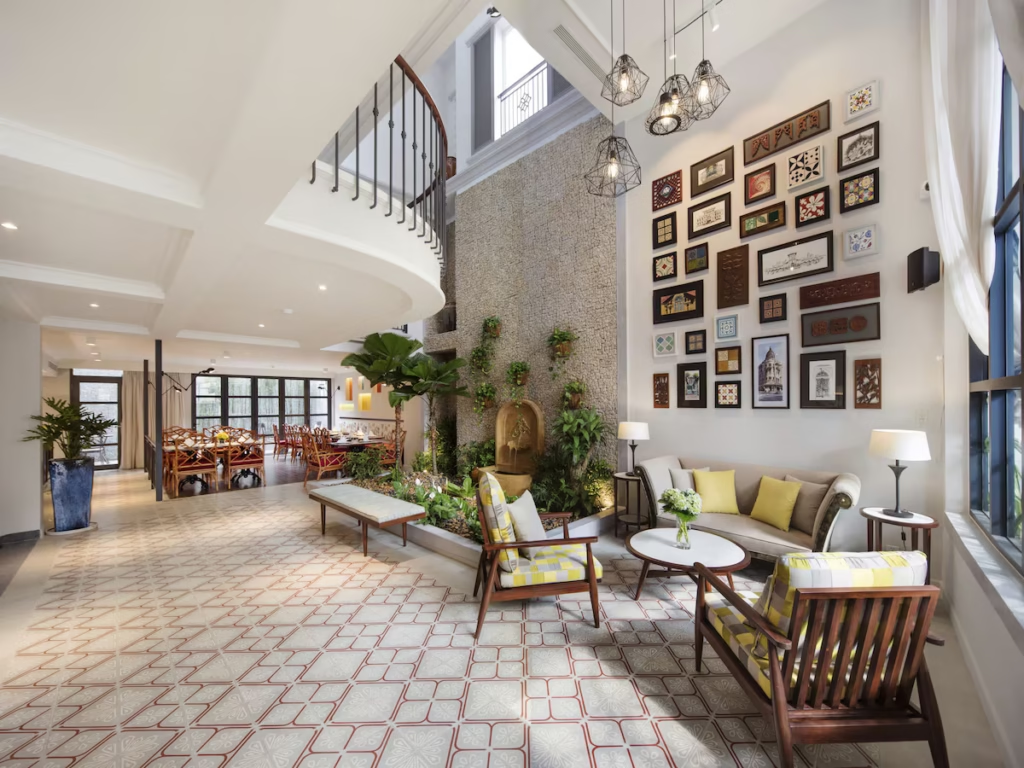
Maison De Camille Boutique Hotel
Maison De Camille is a small boutique hotel with a refined, residential character. Rooms are individually styled, well proportioned, and finished with attention to detail, focusing on comfort, light, and quiet. The scale is intimate, and service is personal, with an emphasis on calm and consistency.
The hotel is set on a quiet street in Binh Thanh, within walking distance of local cafés, small restaurants, and neighborhood shops. Landmark 81 and Vinhomes Central Park are nearby, while District 1 is easily reached by a short taxi ride. The location places you in a lived-in part of the city, close to major developments without being surrounded by them.
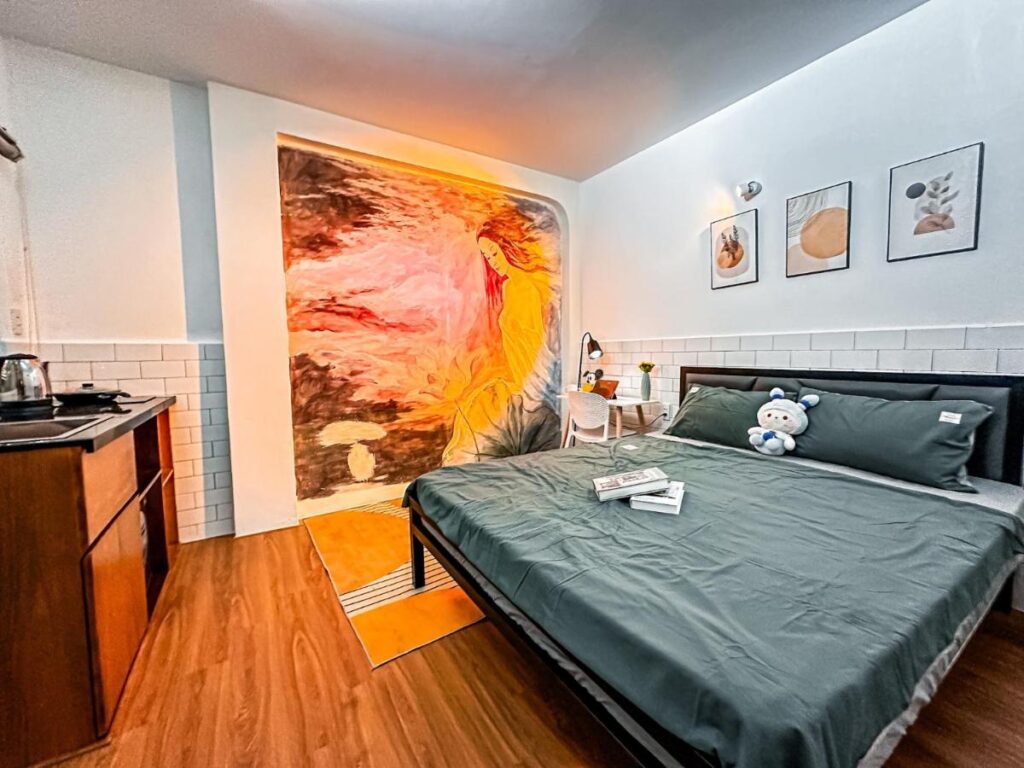
La Casa Di Dicembre
La Casa Di Dicembre is a compact, modern hotel designed around simplicity and order. Rooms are clean, functional, and well maintained, with straightforward layouts that prioritize rest and everyday use. Shared areas are limited, keeping the overall environment quiet and low-key.
The property is located in a residential part of Binh Thanh, close to local food streets and everyday services. Connections into District 1 and other central areas are quick by taxi, while the immediate neighborhood remains calm and practical. This setting works well for travelers who want easy access to the city without staying inside its busiest zones.
Saigon special stay. if you want pure design drama
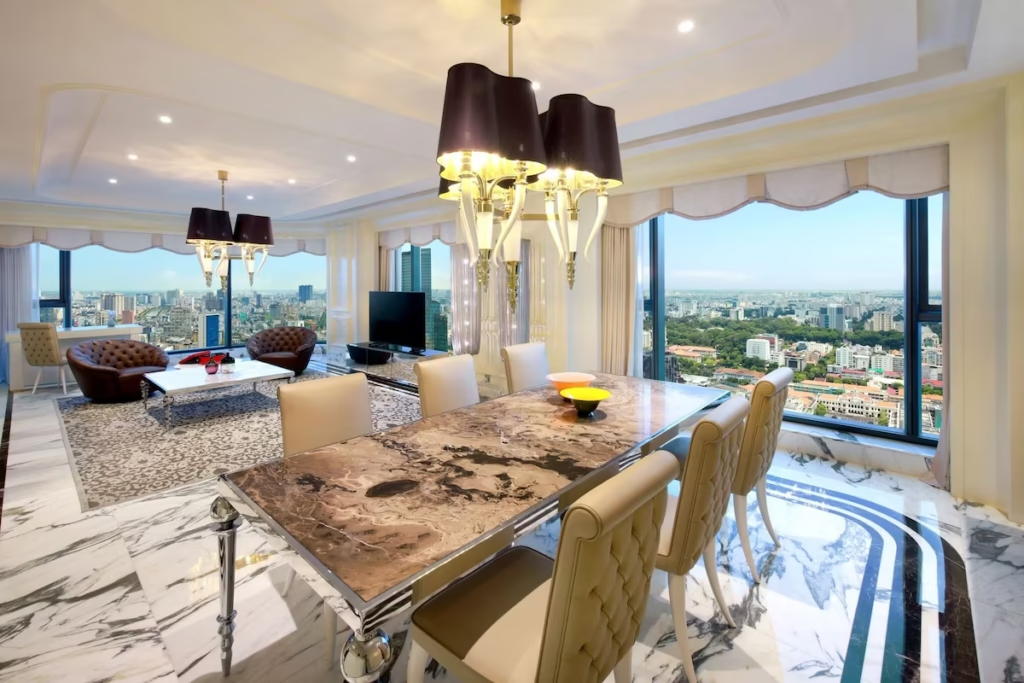
The Reverie Saigon
This is not subtle. It’s maximalist, Italian leaning, and unapologetically glamorous. If you want one night that feels like a statement, this is the one.
The reason it works is that it commits fully. You are not paying for a bed. You are paying for a mood, a skyline, and a level of polish that turns the hotel into an attraction.
Final Thoughts
Ho Chi Minh City stays with you because it refuses to resolve into a single idea. It is not orderly, not graceful, not especially forgiving. It is direct. It works. It absorbs. The city runs on movement and negotiation, on thousands of small adjustments made every minute, and once you tune into that rhythm, it becomes deeply compelling.
What I love about Saigon is its refusal to pause for presentation. Commerce comes first. Life happens out loud. Streets are built for use, not admiration, and the city doesn’t slow itself down to be understood. Sidewalks turn into cafés, repair shops, storage, conversation. Neighborhoods don’t announce themselves. You learn them by walking, by crossing the same intersection twice, by noticing which streets thicken and which ones thin out.
There is also a generosity here that isn’t performative. People make space when they can. The city teaches you how to move through it, not by instruction, but by example. You learn when to wait, when to edge forward, when to commit. It’s a place that sharpens awareness without demanding reverence.
Ho Chi Minh City rewards return visits. Not because it reveals secrets, but because it becomes legible. Patterns emerge. Shortcuts make sense. Districts stop blurring together. What once felt overwhelming turns precise. The noise becomes information. The density becomes energy. You stop trying to master the city and start moving with it.
That’s the appeal. Saigon doesn’t try to be loved. It just keeps going. And if you stay long enough, or come back often enough, you realize how much life it manages to hold at once.